Mid-December 2017 (11th-20th)

On par with the mid-December 2016 period in terms of excitement, winter rarities, unseasonal occurrences & late first-of-season arrivals abounded over the last 10 days! Top birds during this period in Virginia Beach included ICELAND GULL (KUMLIEN’S), LECONTE’S SPARROW, BLACK-LEGGED KITTIWAKE & CACKLING GOOSE, late reports for Blue-winged Teal (12 Dec), Short-billed Dowitcher (12 Dec), Northern Parula (16 Dec), Whimbrel (17 Dec) & Yellow-throated Warbler (11-20 Dec) and first-of-season arrivals for Savannah Sparrow (Ipswich) (16 Dec) & Common Goldeneye (20 Dec). 
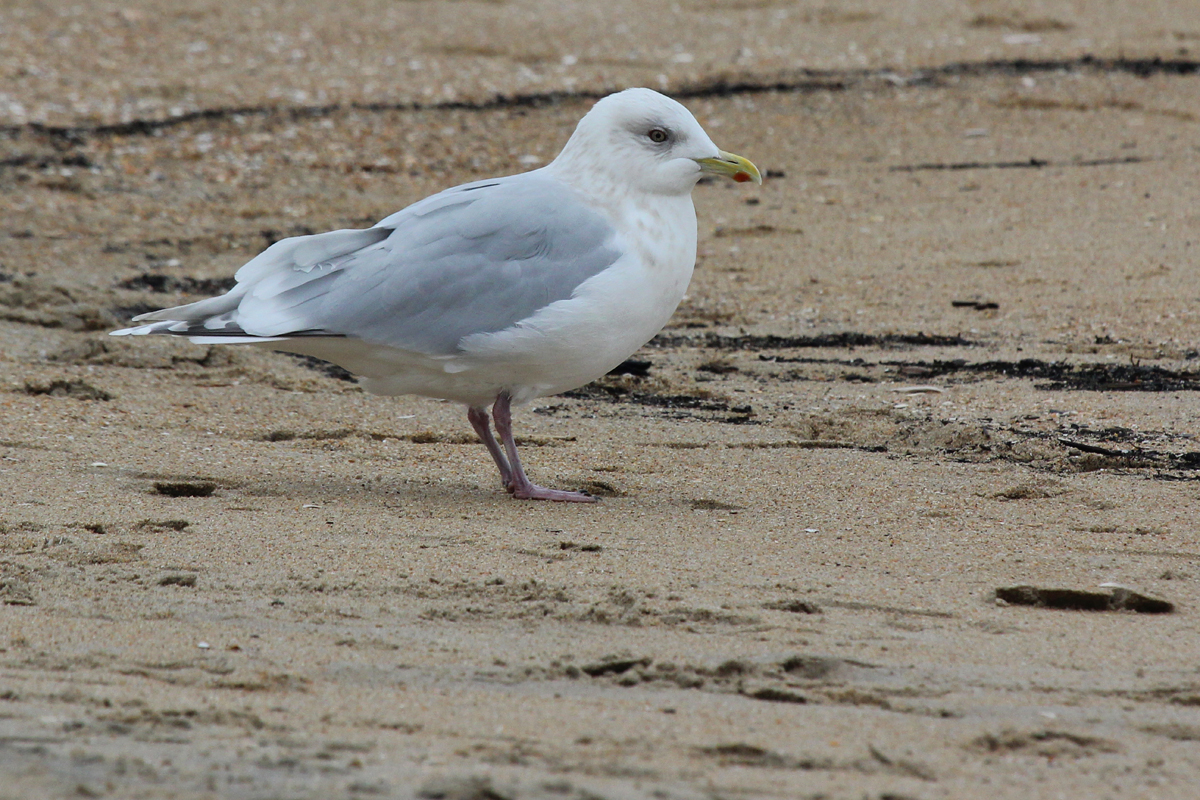
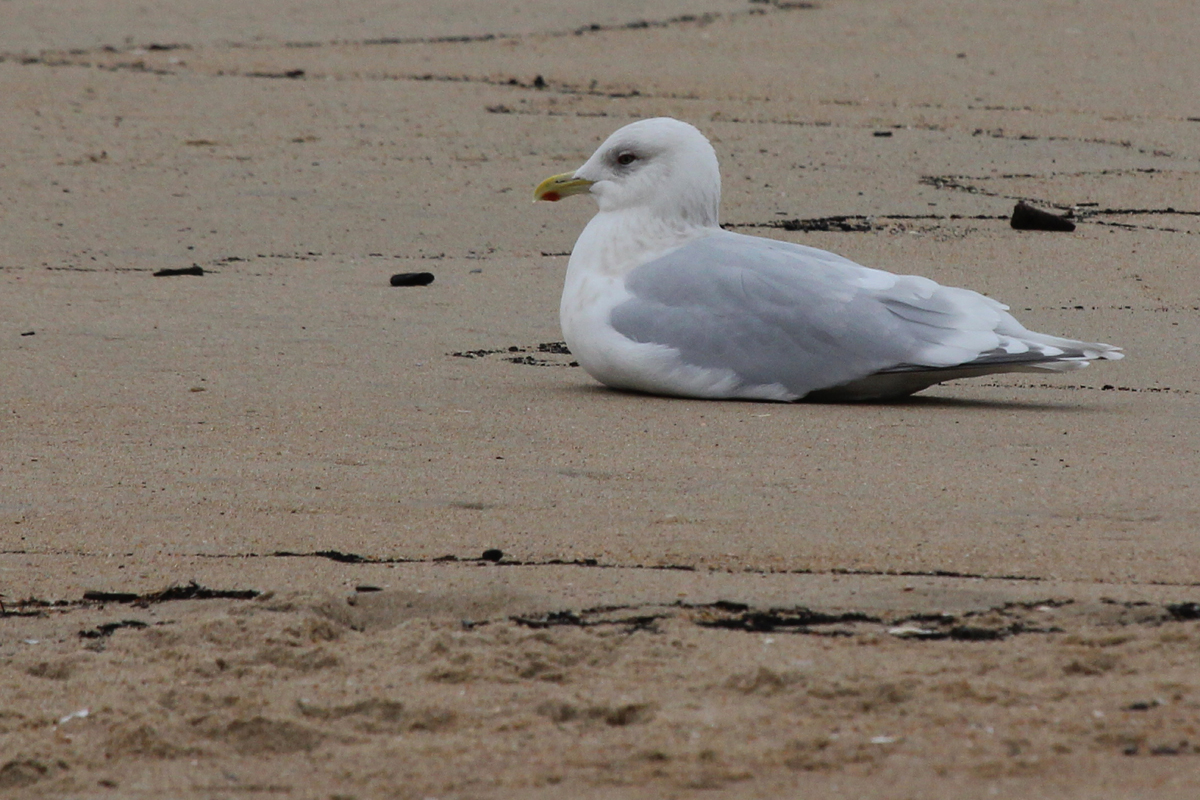
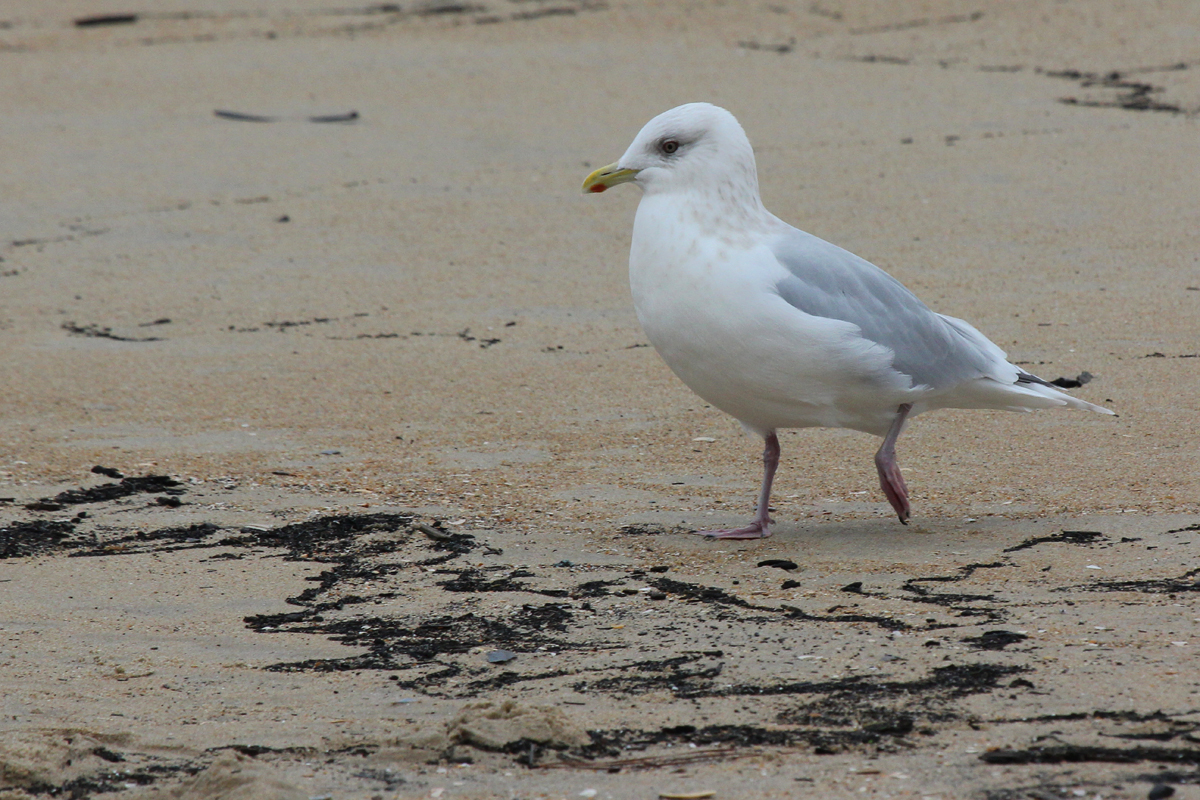
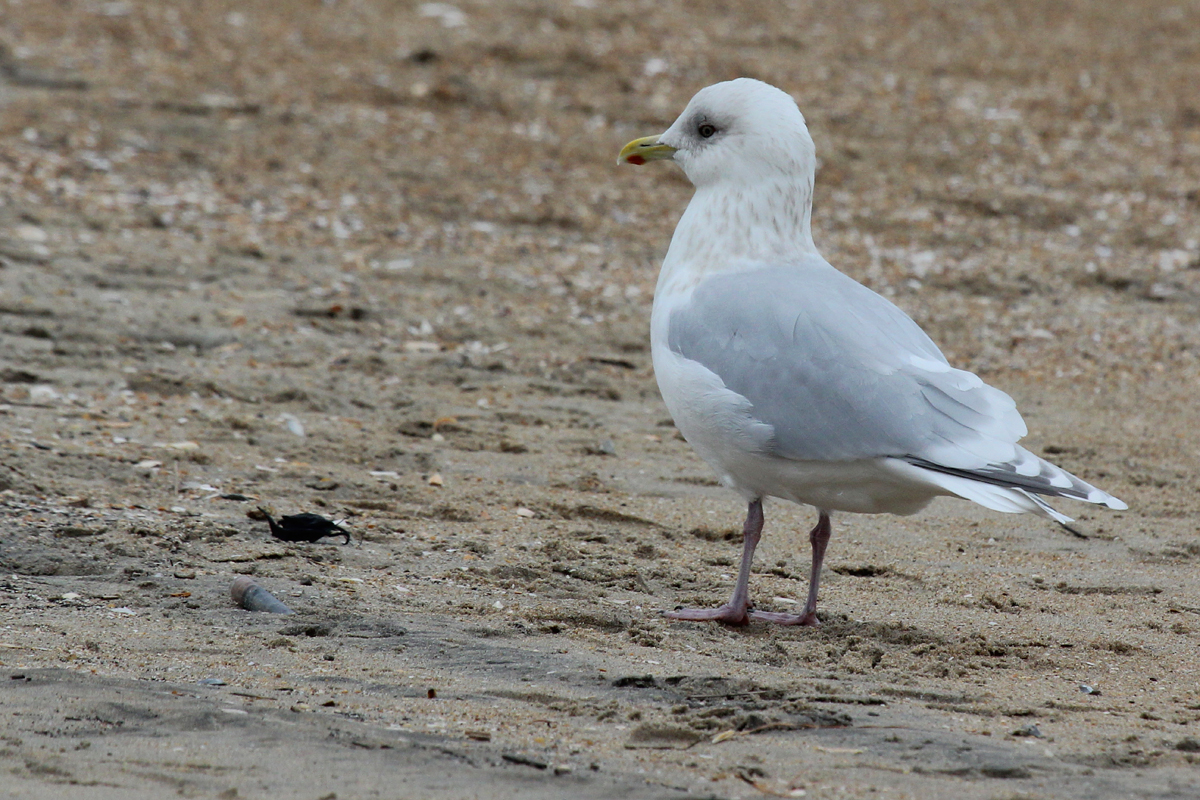
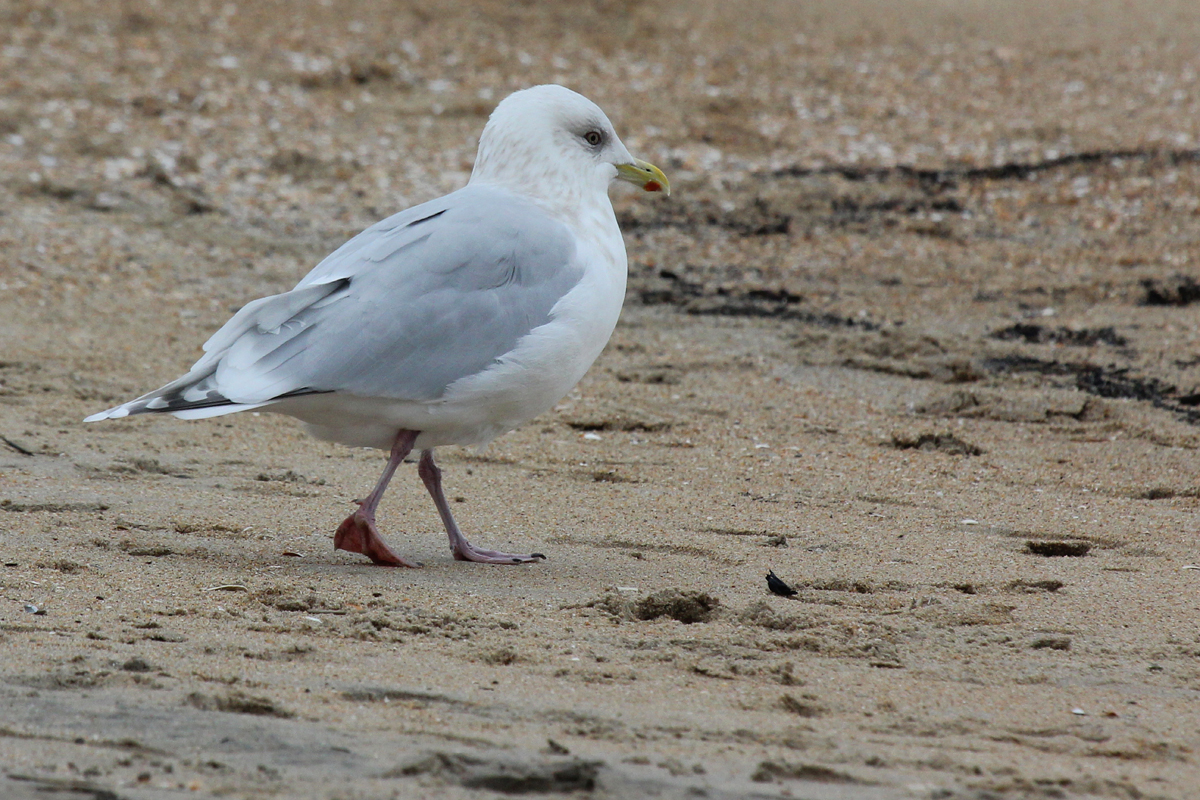
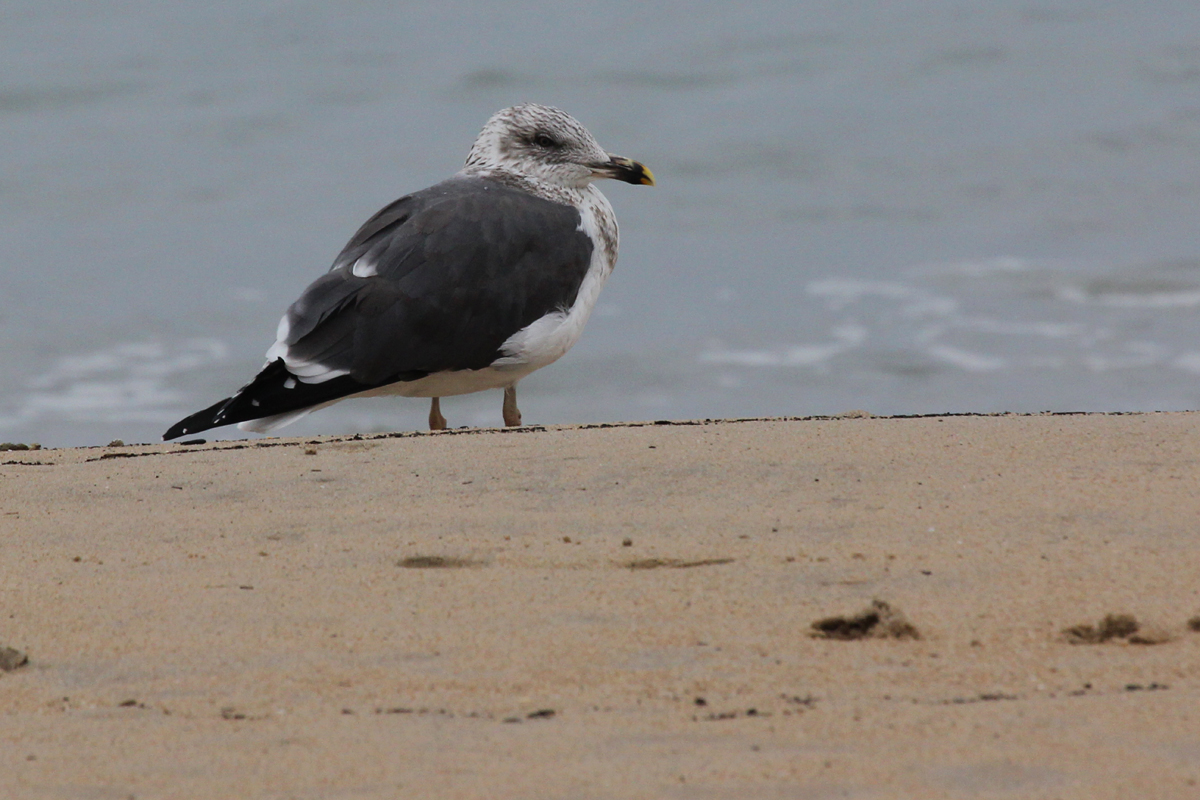
OBSERVATIONS: First and foremost, Virginia Beach finally tallied one of the ‘white-winged gull’ species for the latter half of 2017 when an adult ICELAND GULL (KUMLIEN’S) was found on the beach near Neptune Park / 31st Street at the Oceanfront / resort area (ph. Andrew Baldelli). At least one Iceland Gull was observed during the early parts of the year around the Chesapeake Bay Bridge-Tunnel, but this was a younger bird, not showing the brilliant plumage of this new-found adult. The adult was seen and extensively photographed (and video recorded) later in the morning on the beach between 39th & 40th Streets (ph. Karen & Tom Beatty / Rob Bielawski / Mike Collins). For birders hoping to catch a glimpse of this lovely species, it might be necessary to scan through a great many gulls anywhere between Rudee Inlet and the north end of the boardwalk. These flocks congregate at different areas of the beach at seemingly random intervals, but 6th Street is another important location to check, especially when the Rudee Inlet dredge pipe is operating and spilling out sand, water, and potential food for the gulls as a result. Back in July, the American Ornithological Society (formerly, the American Ornithologists’ Union), decided to lump the previously independent species Thayer’s Gull, as a subspecies of Iceland Gull. This move opened up our coastline to receiving two subspecies which is why I noted specifically that this individual was of the Kumlien’s race. According to the Gold Book (and more recent eBird data), the nominate race of Iceland Gull (glaucoides), has not yet been recorded in Virginia, but should of course be watched for since records exists to our north. Interestingly, at the time of the Gold Book’s publication (2007), there had never been a record of an adult Kumlien’s Gull in the state, but since then there have been quite a few records, scattered mostly along the coast.
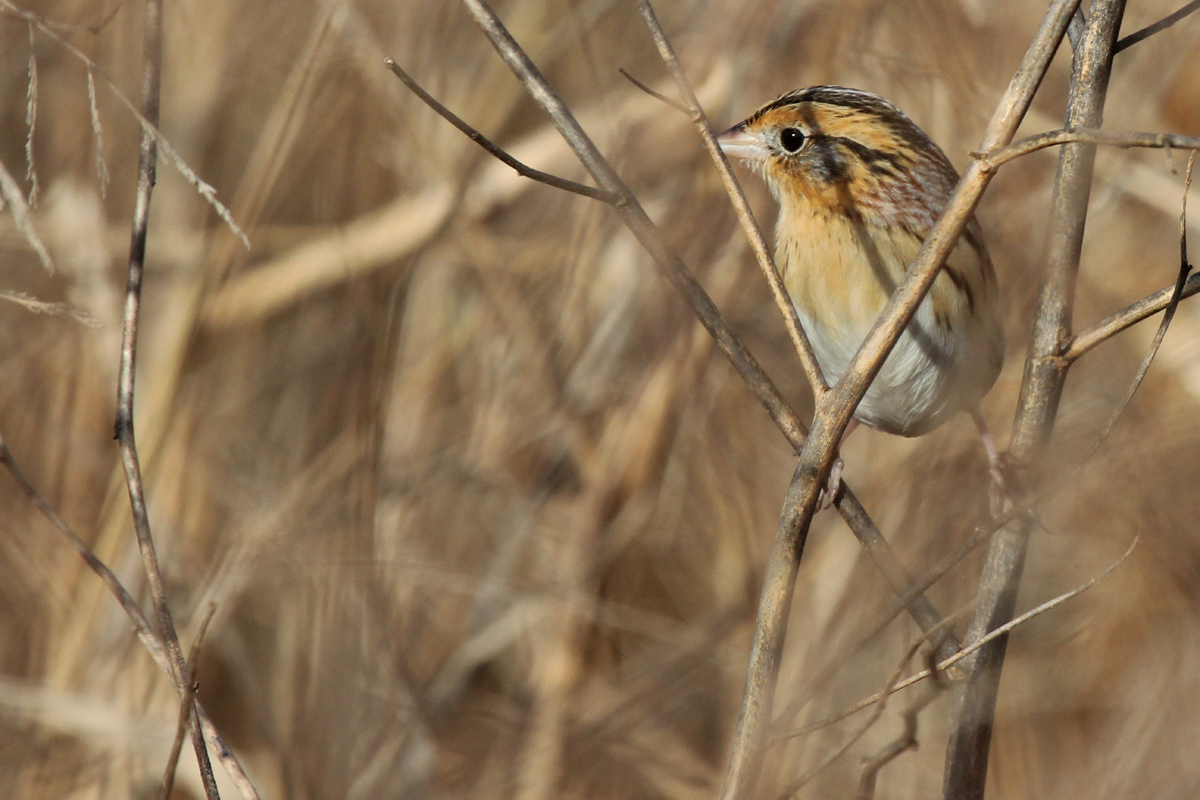
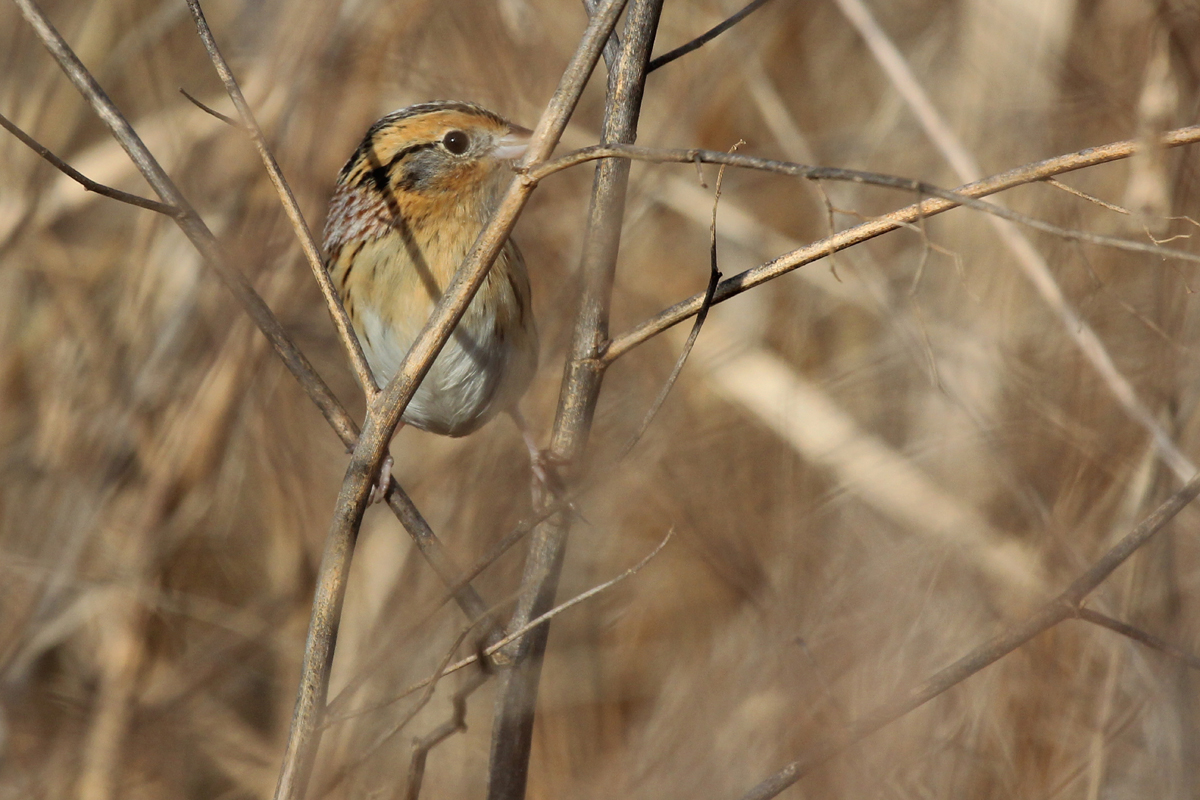
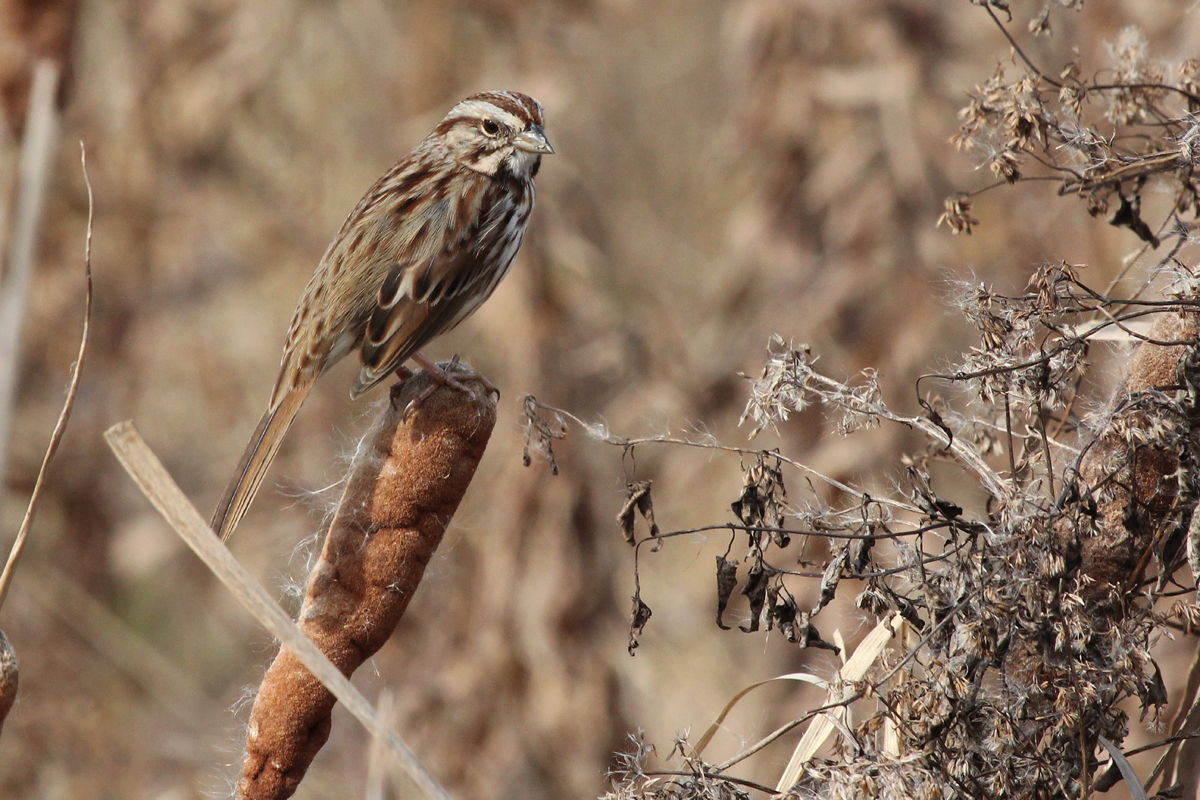
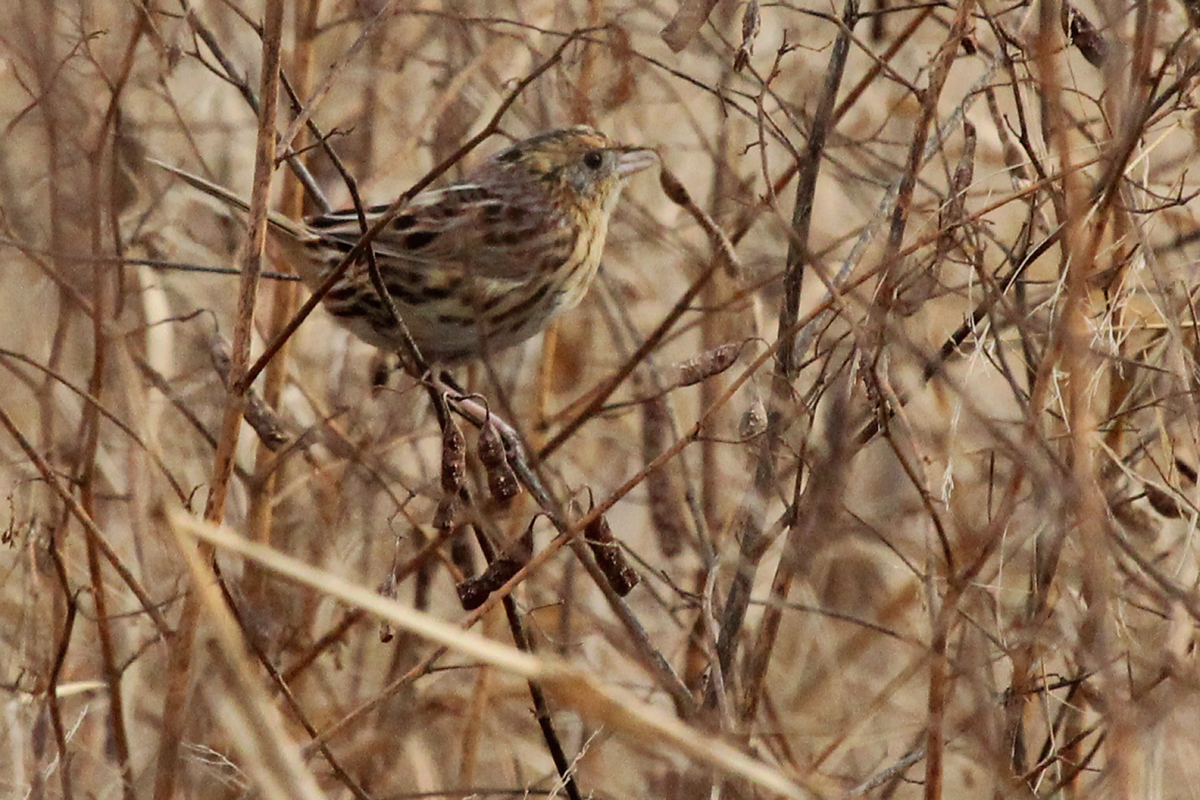
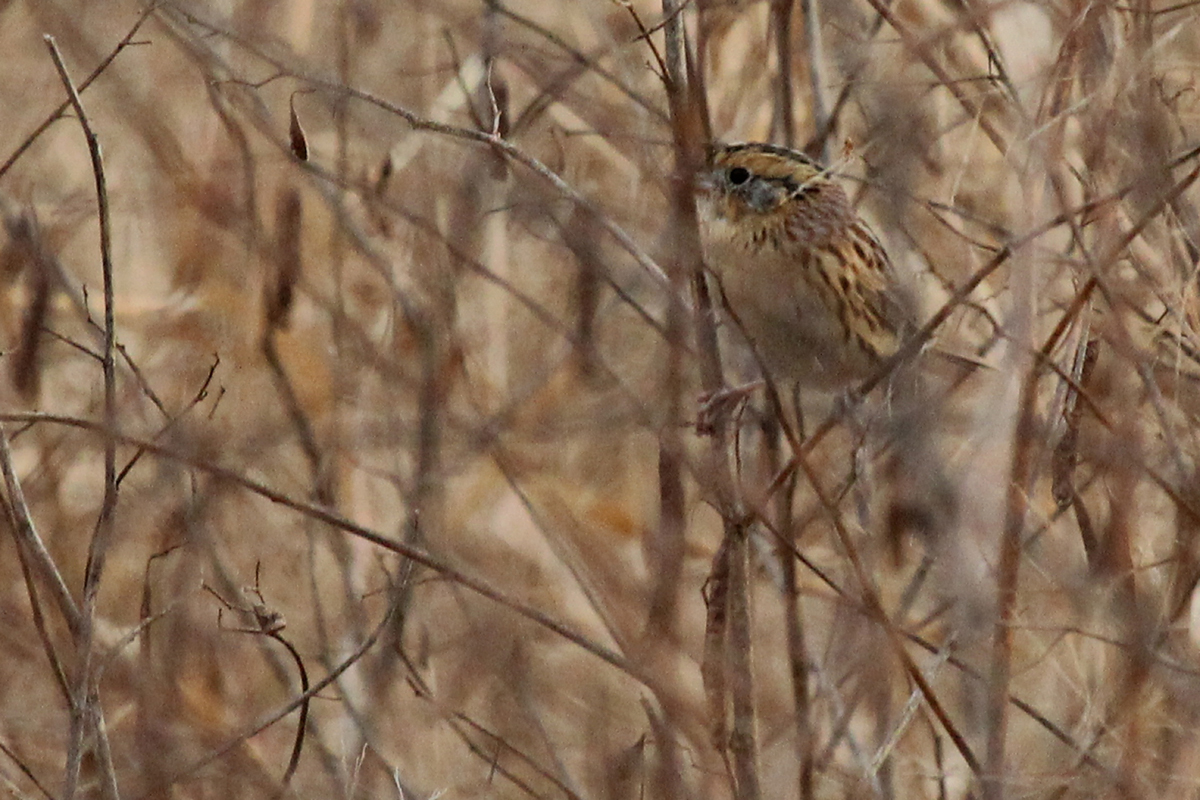
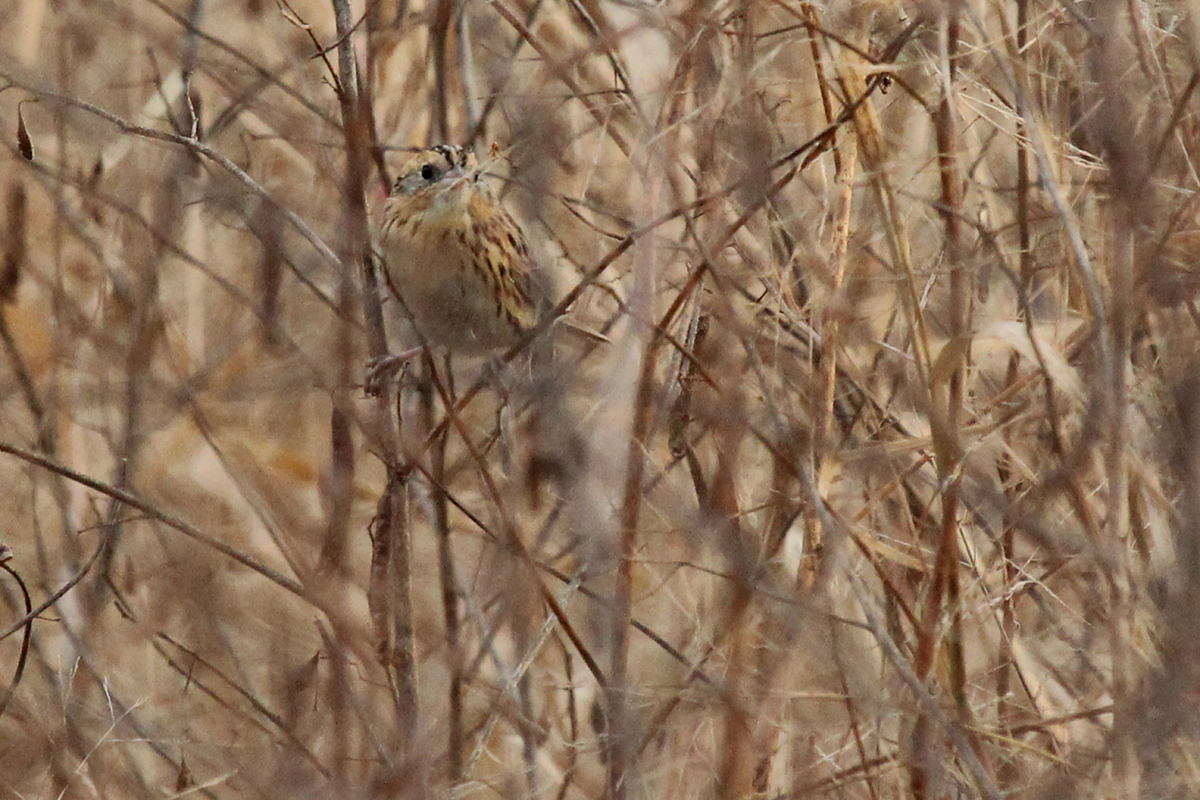
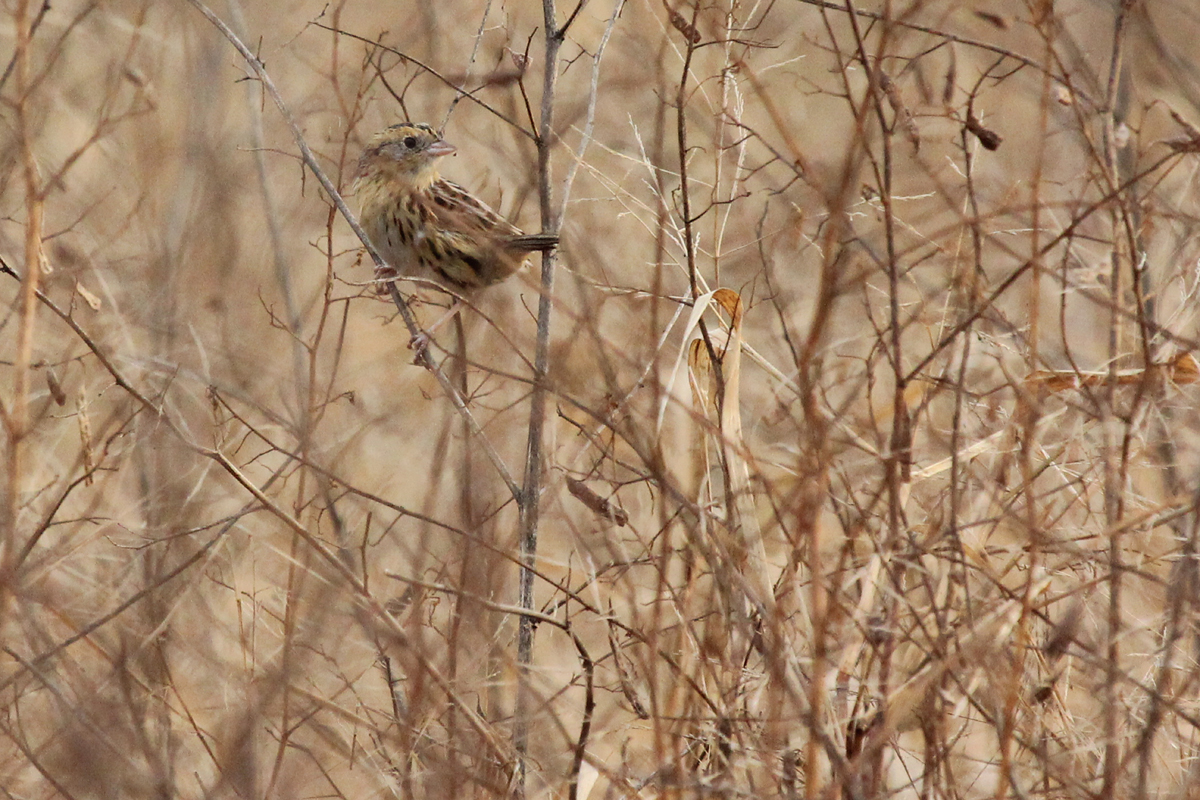
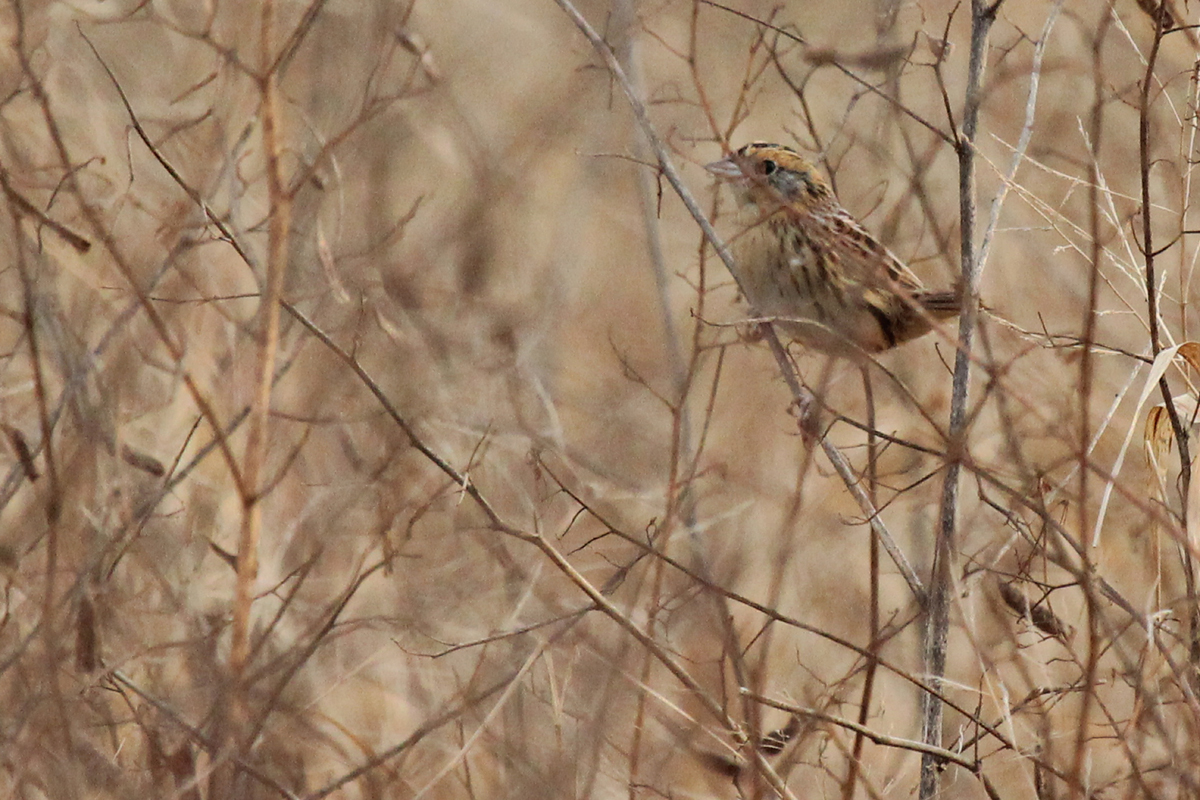
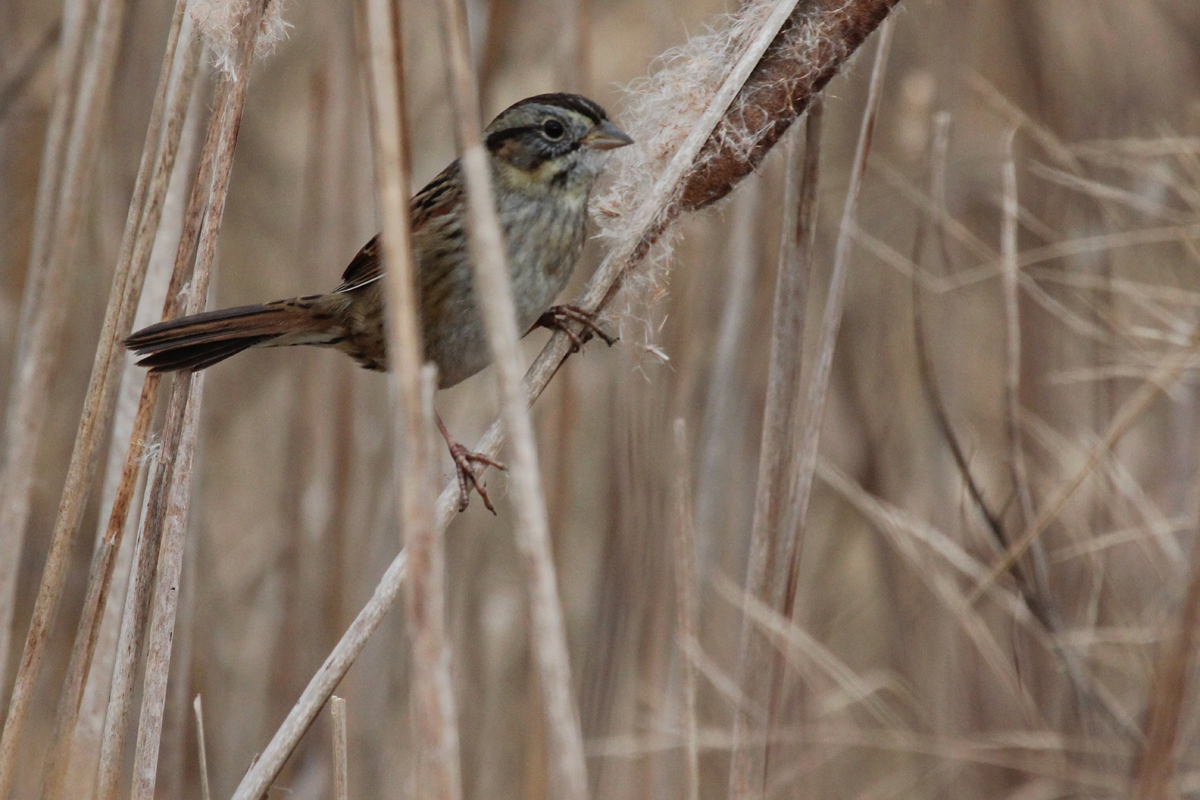
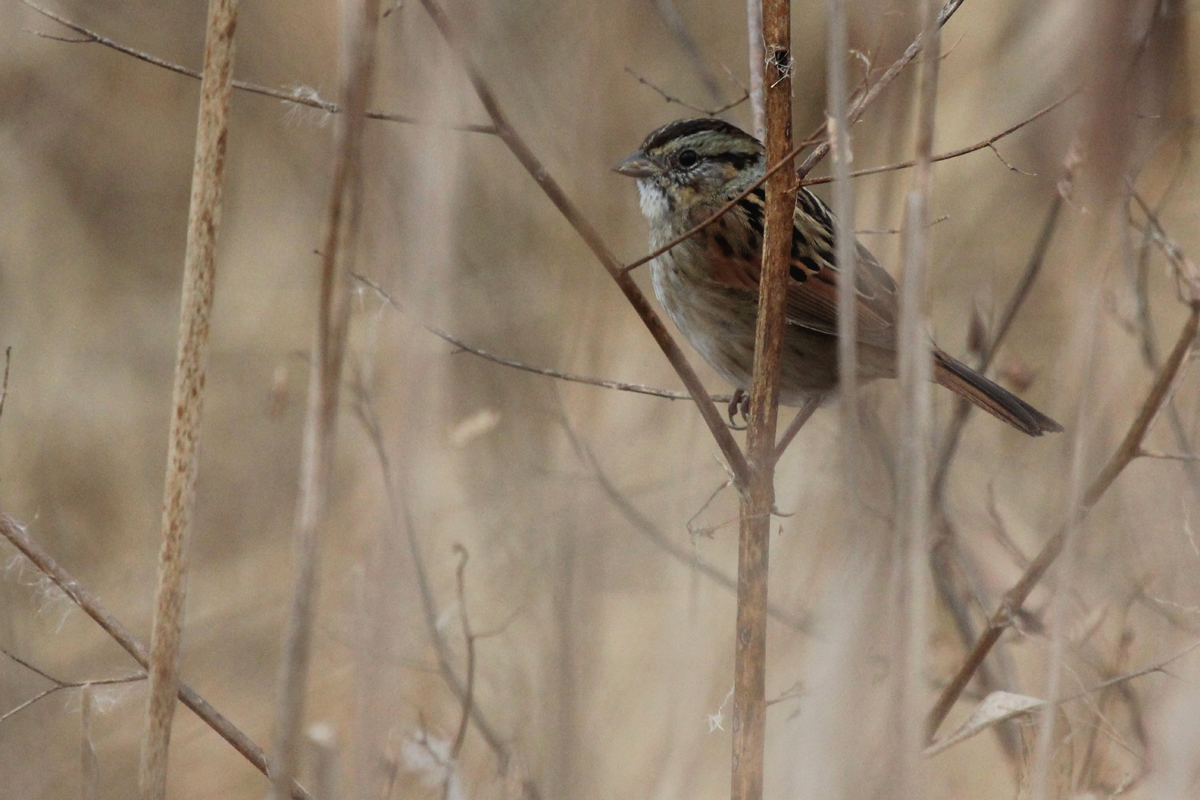
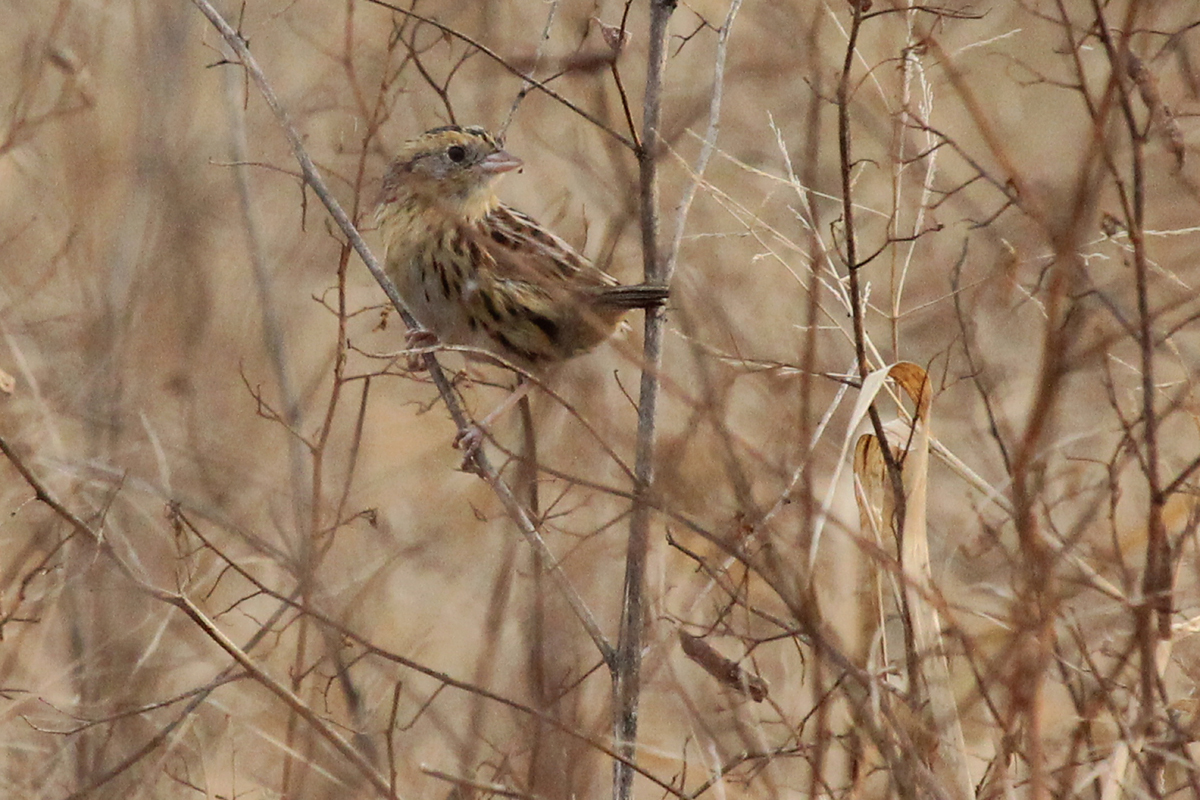
Several rarities continued from early periods into mid-December, one such bird being the LECONTE’S SPARROW that has likely taken up winter residency in the Beasley Tract of Princess Anne WMA. This bird was first found 3 Dec (ph. Andrew Baldelli & Rob Bielawski), and due to restrictions on access to the WMA which is open only on Sundays to birders who also possess a Virginia Department of Game & Inland Fisheries WMA access permit, it was not observed again until 10 Dec (obs. Tommy Maloney & Jason Schatti). The only Sunday occurring during the current period was 17 Dec, and for a third weekend in a row, it was observed in the same general area (ph. Rob Bielawski / Lisa Rose / Jason Strickland). So long as the habitat in the Beasley Tract stays the same, we might be likely to see at least one of these in the area each winter, as one (maybe the same individual?) spent the 2016-17 winter in the park as well. With the next available Sunday being Christmas Eve, it will be interesting to see if anyone makes the attempt, or re-finds this bird for the last time in 2017.
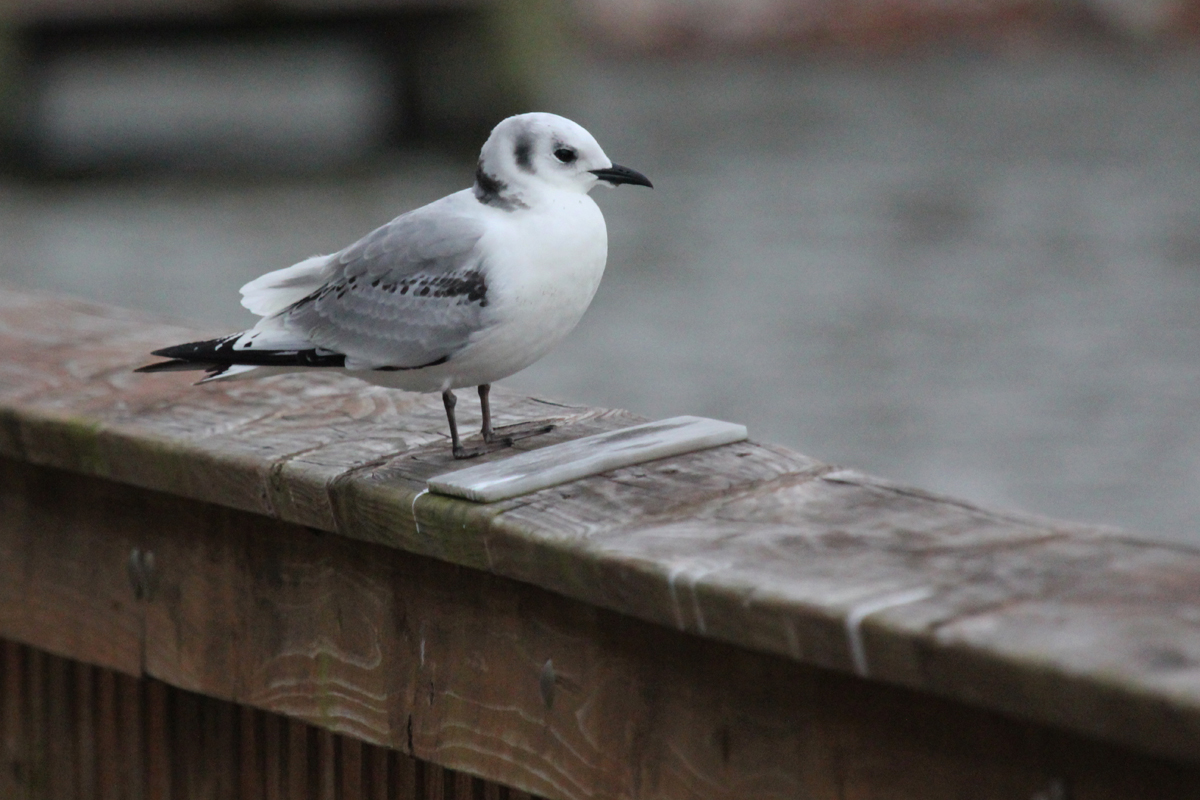
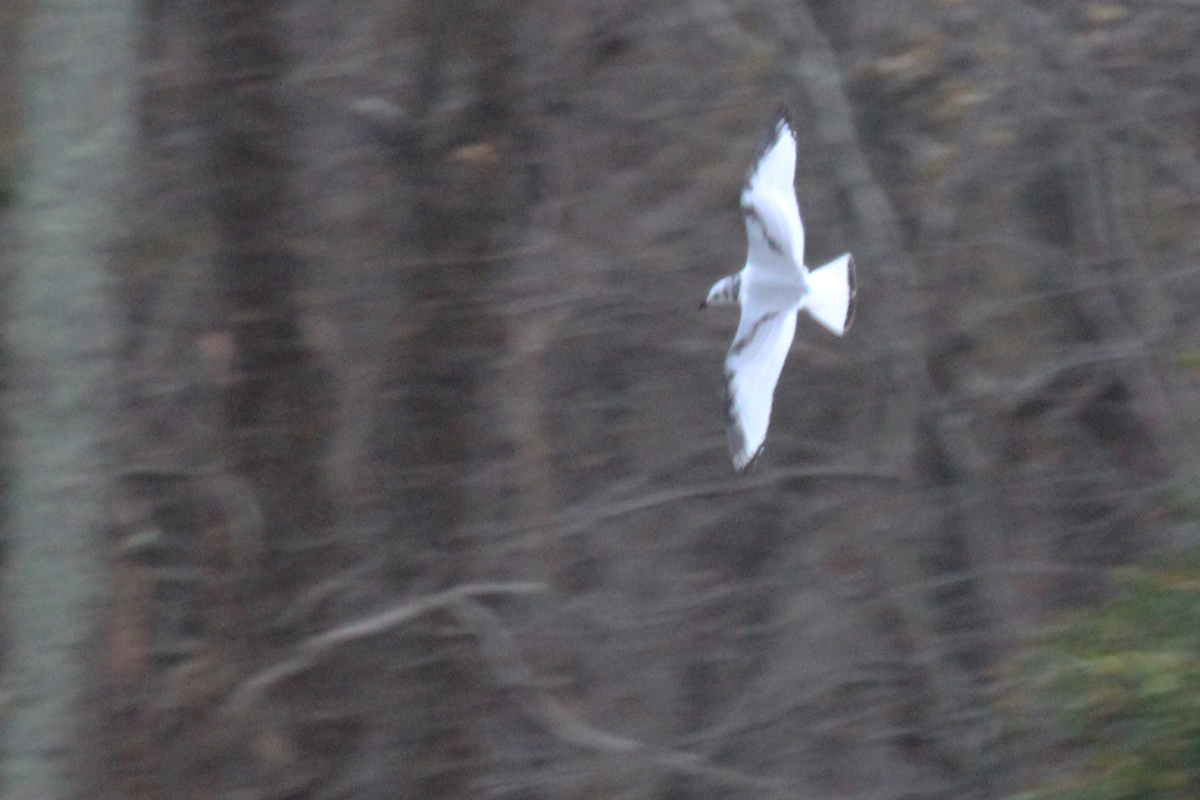
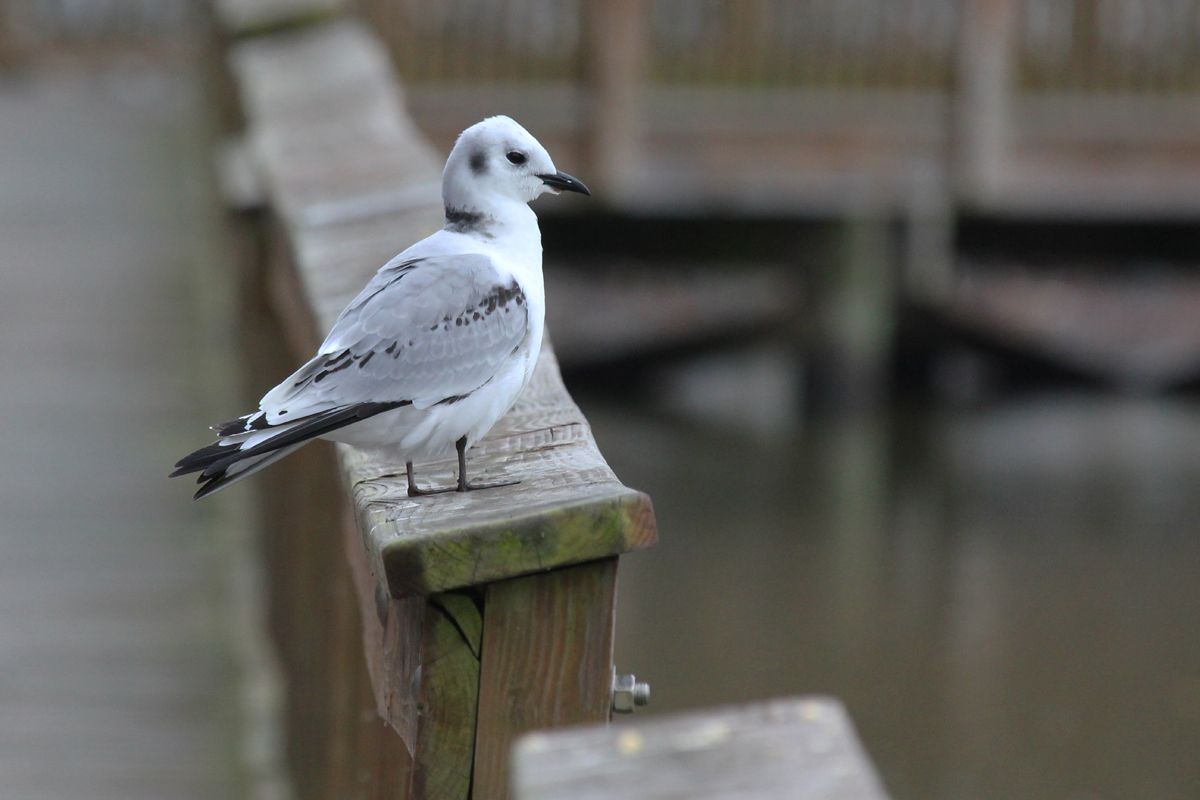
In addition to the LeConte’s Sparrow, the BLACK-LEGGED KITTIWAKE first observed 4 Dec at the Stumpy Lake Pier near Elbow Road’s junction with Indian River Road (ph. Jonathan Snyder) continued through mid-December, though was not recorded 11-13 Dec. So far, 44 eBird reports of this individual have been logged, and aside from the dates listed above, the only other day it hasn’t been reported was 20 Dec (seen again 21 Dec though, more on that next period). The last record for mid-December however, was submitted 19 Dec (ph. Marie & Ron Furnish) who observed the bird at its typical perch on the pier, as well as floating on the lake’s surface nearby. It is still unclear why this normally offshore species decided to take up residence along this inland body of freshwater, but it has been observed by many birders in flight, and even feeding on fish successfully captured from the lake. Being an immature bird, it shows the brilliant black M-pattern on the topside of the wings when in flight, and shows the black neck strap as well (when perched also). These field marks (along with its namesake black legs) help differentiate it from other Larids, with Bonaparte’s Gull being a species that could be confused for it due to the similar silhouette and black ear patch during the winter season. Just something to consider if looking at this bird, or any other gulls that might actually be Kittiwakes.

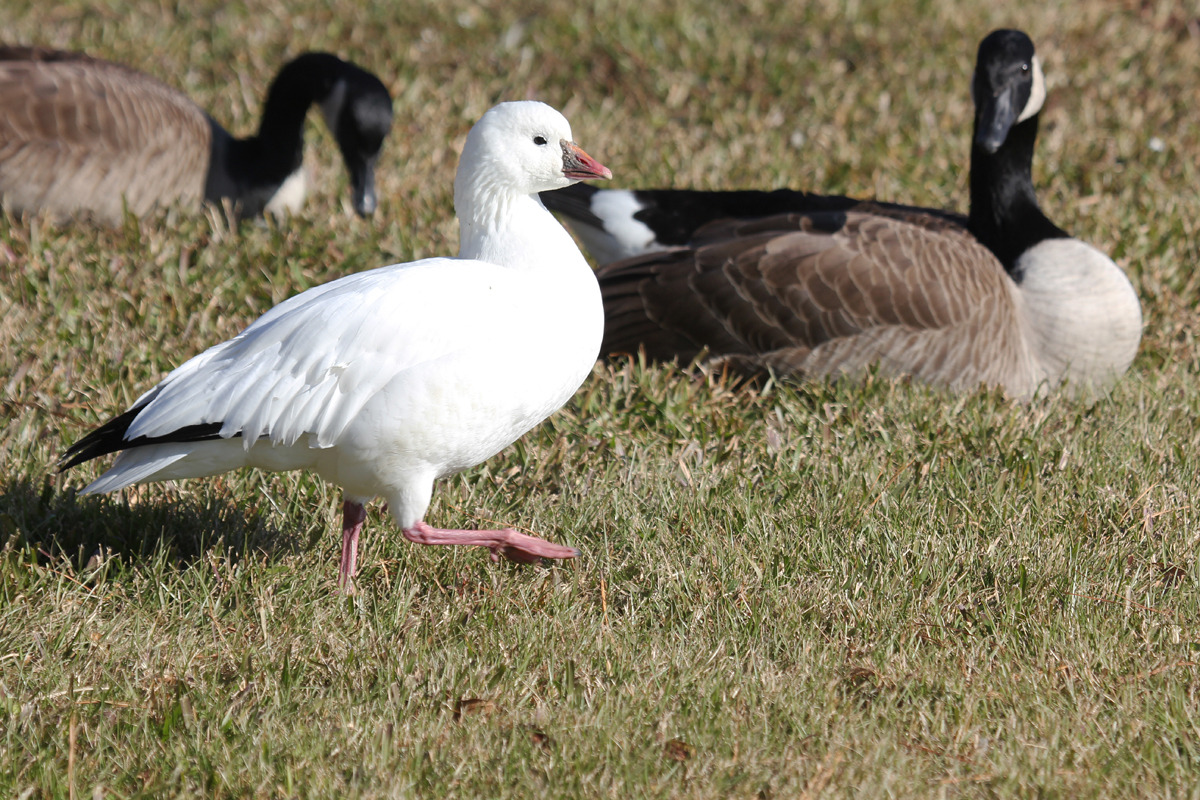
A fourth and final rarity observed this period was a CACKLING GOOSE observed in the field between Ocean Lakes High School & the HRSD Atlantic wastewater treatment plant off Firefall Drive (obs. Karen & Tom Beatty). This individual is likely the same one observed on Sherwood Lakes 26 Nov (obs. David Clark). The goose flock that rests on the lake is often seen foraging in the fields to the east and south, as well as on those off Firefall Drive (sometimes also resting on ponds in the Ocean Lakes neighborhood). It is possible that there is more than one Cackling Goose mixed in with this wintering flock, but so far only one has been reported at a time to eBird. This Cackling Goose will show a much smaller size than the Canadas (roughly the size of a Mallard), though size isn’t always obvious when viewing at a distance in fields; it is much more obvious on the water. Also, the bill is extremely short, and very different proportionally in terms of length to base height in comparison to the longer Canada’s bill. The body tends to be a silvery color instead of the deeper brown of the Canadas, and sometimes a white ring can be seen around the bottom of the neck but this isn’t always obvious. Best advice for finding one is to spend a lot of time scoping the Canada Goose flock as it rests on Sherwood Lakes. Interesting, none of the other rarer geese species (Ross’s, Greater White-fronted) were observed this period, whereas last year at this time, each caused quite a stir.

While not full-fledged rarities, we also had some seasonally unexpected occurrences this period which included Blue-winged Teal, Short-billed Dowitcher, Whimbrel, Northern Parula & Yellow-throated Warbler! By ‘seasonally unexpected’, I mean that each of these species is not annually present in Virginia Beach during the winter months. So there may be records of some in past winters, they aren’t generally expected to be reported, thus making any reports during Dec-Feb interesting! For starters, a pair of Blue-winged Teal were observed 12 Dec (obs. Karen & Tom Beatty) on Horn Point Road of Back Bay’s western shoreline. Typically, the Virginia / North Carolina border is a fitting northern limit for wintering Blue-winged Teal, showing up at Mackay Island often from Dec-Feb, but not often being reported north of there until late February when the first migrants start appearing. Occasionally, a few will winter at Back Bay NWR in the impoundments, but this area is closed to the public throughout the winter season, so they can’t be observed except for on official park surveys.

A group of 20+ dowitchers, most verifiably documented as Short-billed Dowitchers, was also observed 12 Dec along Munden Road (ph. Karen & Tom Beatty). The last winter record in Virginia Beach according to eBird data was of 11 at Back Bay NWR in January 2012 (obs. Robert Ake), making their occurrence this December all the more interesting. This species winters annually on the Eastern Shore to our north, and also along the Outer Banks to our south, but ideal habitat is not abundant in Virginia Beach by any means. Favoring mudflats and impoundments with shallow water, there just aren’t many locations that suit their needs, and even less that are publicly accessible and would allow for actual observations of the species if they are present. Fortunately, with recent flooding of impoundments at the Whitehurst Tract of Princess Anne WMA, perhaps we can expect to see more observations, and maybe this can lead to a Long-billed Dowitcher record?
Another shorebird with scant records during winter in Virginia Beach was observed this period when a Whimbrel was reported 16 Dec at Rudee Inlet (obs. Tommy Maloney). This species winters in small numbers in extensive marshes & tidal flats of the barrier island lagoon system of the Eastern Shore, but like the dowitchers described in detail above, we seem to lack the right habitat to expect them to winter here. The last eBird report for this species in winter was all the way back in 1999 (a single individual), with the next-to-last record being in 1989 (a flock of 43)! It would be wonderful if another observation of this individual took place and a photograph could be secured to help document. Back Bay NWR’s impoundments would be my bet for one to turn up, but as mentioned, those are off limits to the public until April unfortunately. Maybe Princess Anne WMA’s Whitehurst Tract will provide one?

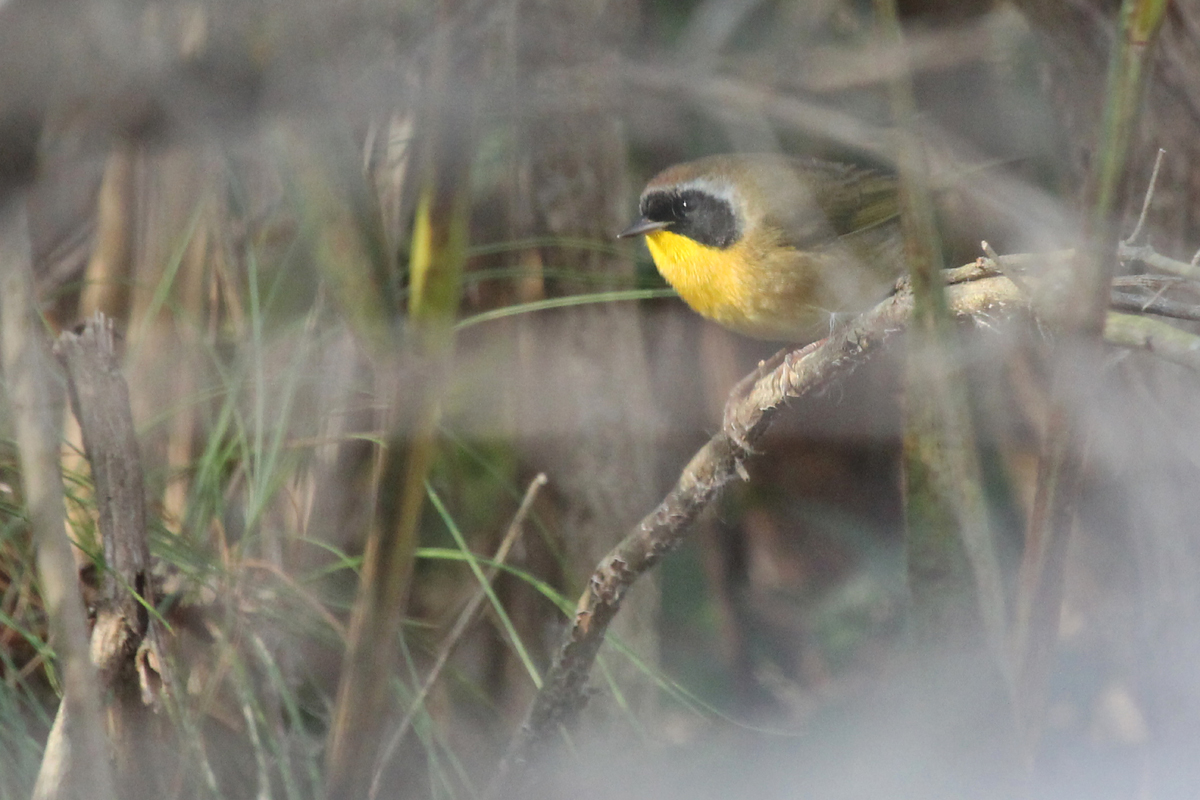
In a typical winter, there are five warbler species (Yellow-rumped, Palm, Pine, Orange-crowned & Common Yellowthroat) that spend the entire winter here in Virginia Beach, so reports of any other species are always noteworthy. Mirroring last year’s mid-December period, a Northern Parula was photographed 16 Dec at a private residence (ph. Carolyn Page). In combination with the individual photographed in Dec 2016 on Haviland Drive (ph. Rob Bielawski) this now makes a total of two winter records for the species in Virginia Beach per eBird. The Gold Book notes “about” 8 records in southeast Virginia, but doesn’t detail out the specific locations of each, though it is likely at least one, or more, of these records probably occurred in Virginia Beach. The 2017 individual has apparently continued to be seen at the same private residence after the initial sighting as well, so there may be more eBird reports to mention next period for this species.

Continuing the topic of wintering warblers from above, a Yellow-throated Warbler has also been visiting a feeder at a private residence in the central part of Virginia Beach (ph. Maggee Smith). Though reports have not yet been submitted to eBird, this individual first appeared on 5 Dec and has been seen most days since. This same property also hosted a Yellow-throated Warbler throughout the winter of 2016-17, so it seems highly plausible that this might be the same individual returning for a second winter! As soon as eBird reports with photographs are added, they’ll get linked into this report. This species has prior eBird records in late 2005, and in early 2016 also at private residences. 

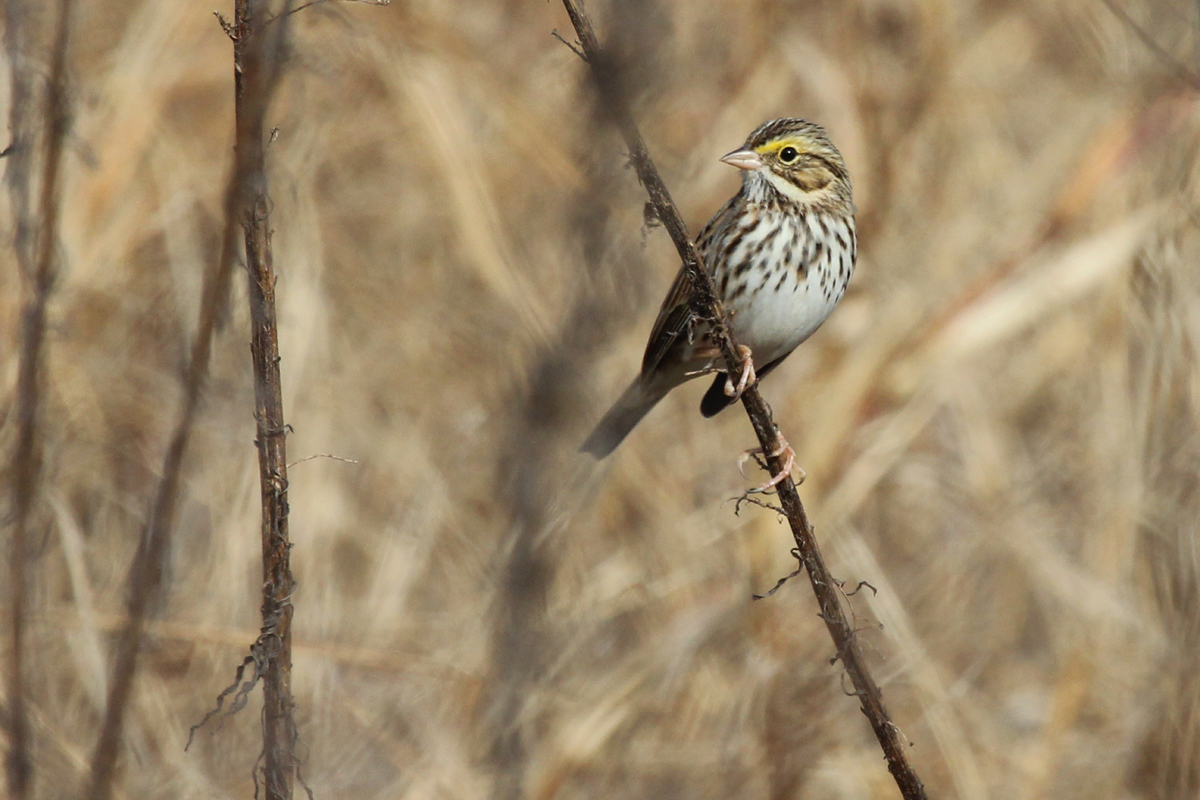
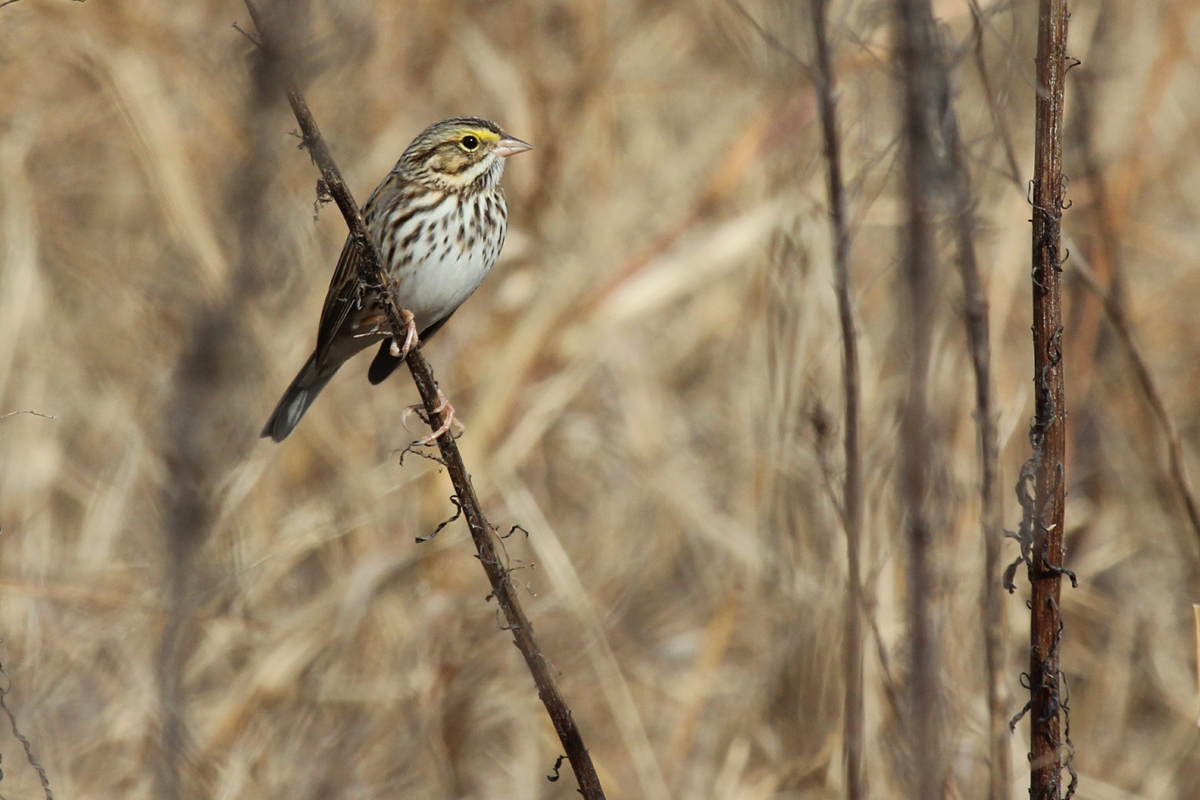
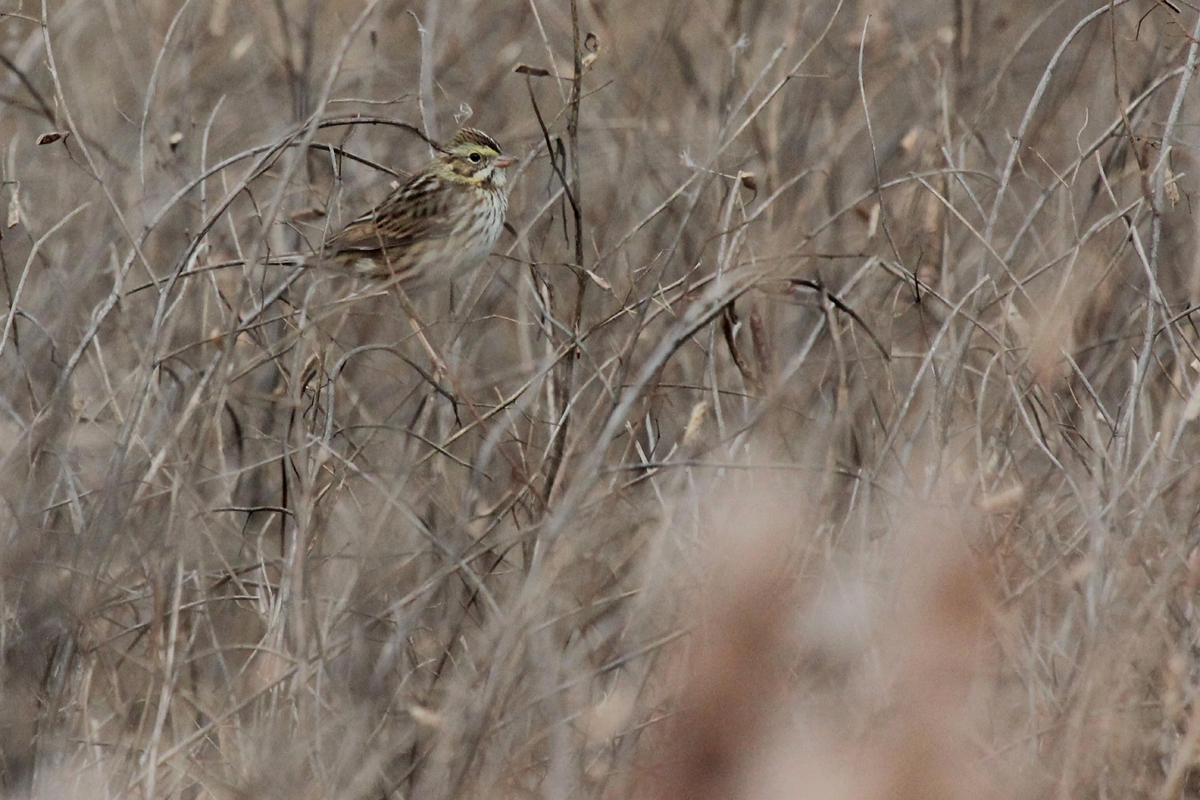
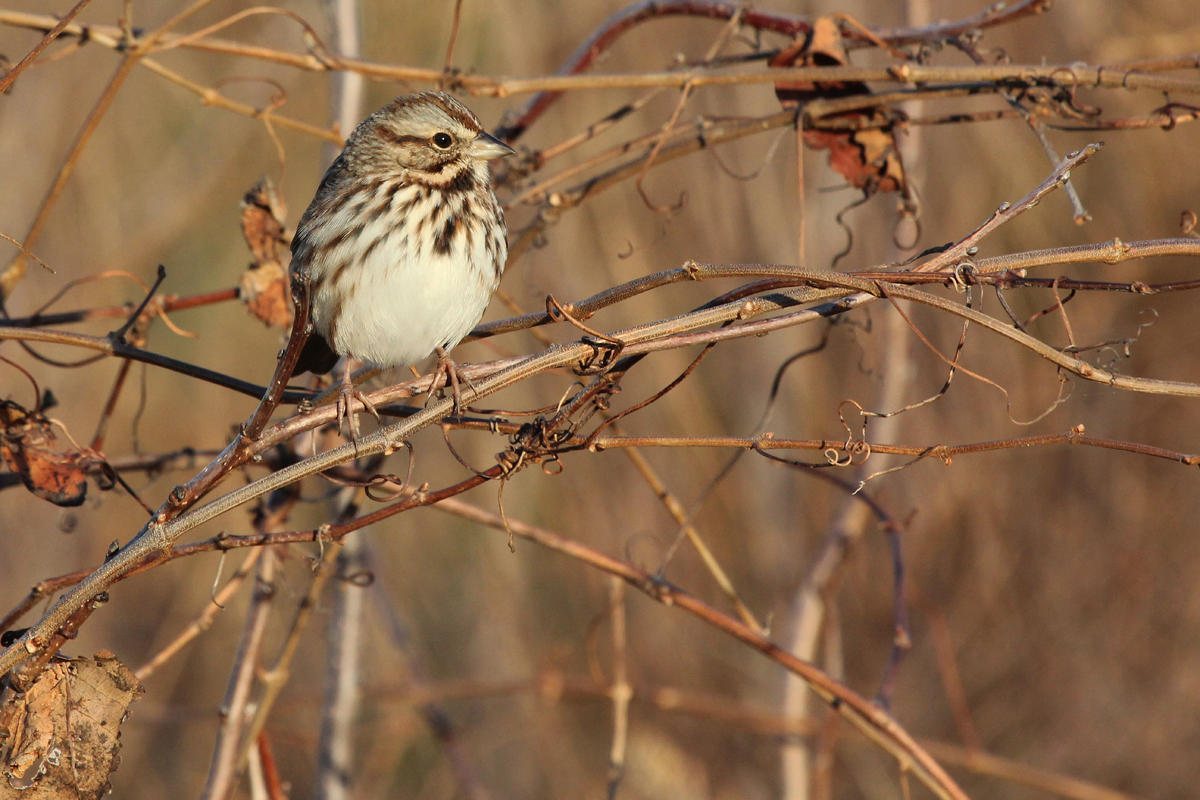
Amazingly, and in addition to all the great rarities and late occurrences, we also had two first-of-season occurrences during mid-December! Observed on 16 Dec on the Chesapeake Bay beach of First Landing SP (obs. Andrew Baldelli), our first Ipswich Sparrow was finally logged. The Ipswich is a field-identifiable subspecies / race of Savannah Sparrow that winters along the Atlantic Coast and breeds almost exclusively on Sable Island off Nova Scotia, Canada. Interestingly, a second report followed not long after, with one sighted at Pleasure House Point NA to close out the period on 20 Dec (obs. Tommy Maloney. Currently, researchers from Dalhousie & Acadia Universities in eastern Canada are performing an intensive study of Ipswich Sparrows. The project, aptly titled The Ispwich Sparrow Project, has banded 263 sparrows with color coding combinations that can be reported to their website: http://leonardlab.biology.dal.ca/ipswich/help.html. Something to keep in mind if you happen to come upon individuals of this very brightly plumaged subspecies on our coastline this winter!
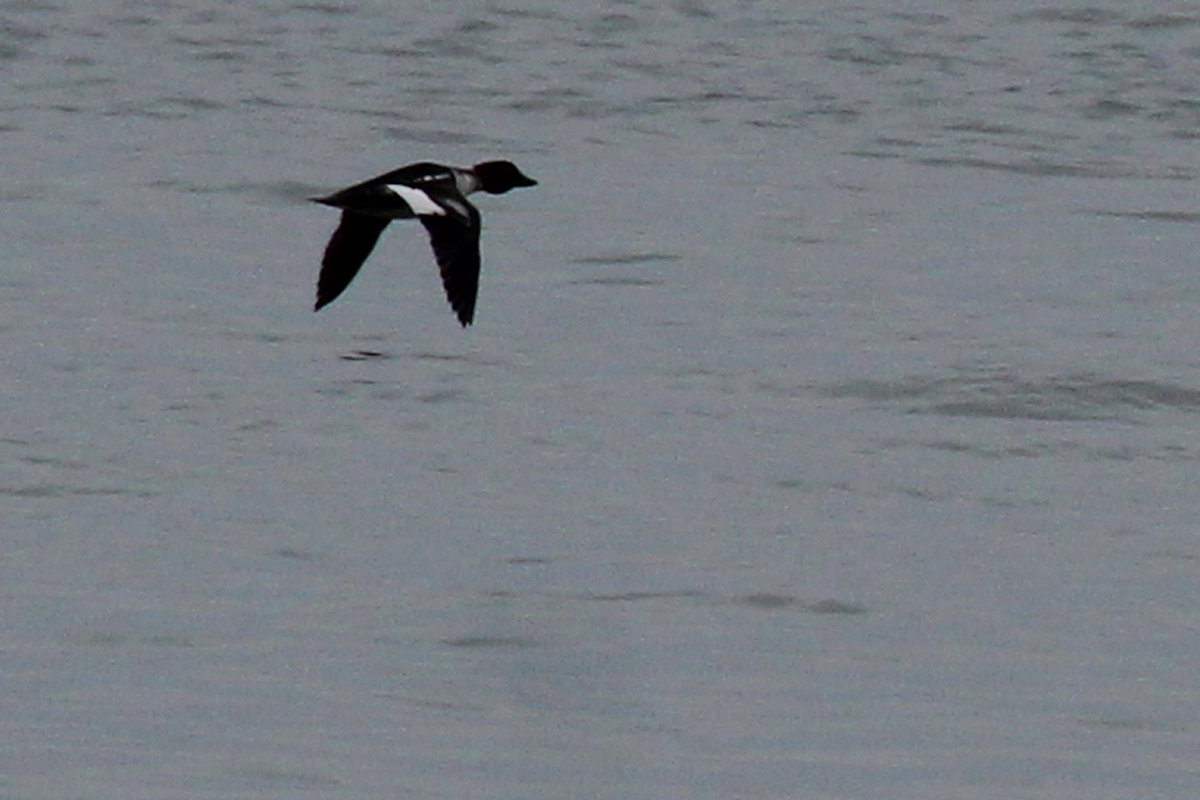
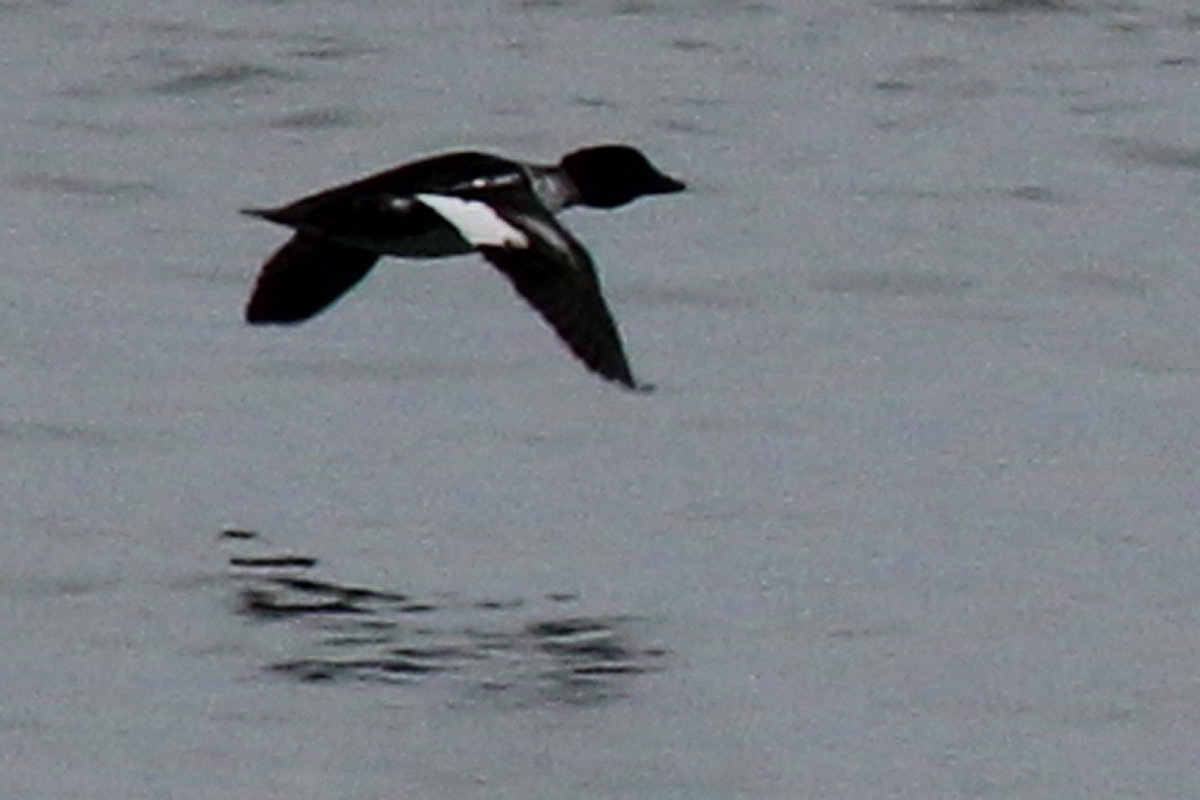
In addition to the Ipswich Sparrows, a final first-of-season arrival occurred on 20 Dec when a single Common Goldeneye was observed in rapid, southbound flight just offshore of the beach at 39th Street (ph. Rob Bielawski & Mike Collins). With only a few individuals reported each winter in Virginia Beach, it should be noted that this is only the 4th record for the city as a whole in 2017, with records only of individuals at Back Bay NWR, First Landing SP (ph. Kathy Spencer) and on the Virginia Beach side of Little Creek Inlet having occurring during the early part of 2017. Hopefully, this is just the first of more to arrive, but as mentioned, it has been a tough species to find over the last few winters, and with the Chesapeake Bay Bridge-Tunnel’s first island now being closed to the public, it makes it even more difficult.

We had quite a few other interesting reports around the city this period, and while they might not bear the same ‘noteworthiness’ as some of the above sightings, they no doubt should still be mentioned. Miraculously, a Virginia Rail was found disoriented after a building strike along Pacific Avenue on 13 Dec (ph. Keith Roberts) but is apparently scheduled to be released back after checking out medically. Ruby-throated Hummingbirds are still being observed around the city with the weather not yet reaching critically cold levels for this species. Most recently, two were observed on 14 Dec at Camp Pendleton SMR (ph. Karen & Tom Beatty). Coastal winter specialties including Common Eiders were noted at several locations during the period, with an adult male photographed at First Landing SP on 16 Dec (ph. Andrew Baldelli) and first-year males observed at the same site on 20 Dec as well as at the Virginia Beach Fishing Pier on 14 Dec (ph. Karen & Tom Beatty and perhaps the same individual off the Oceanfront on 20 Dec (obs. Mary Catherine Miguez). Baltimore Orioles continue to pop up in residential yards as has become commonplace over recent winters. As many as 5 have been observed so far with quite a few beautiful photographed listed further down in this report. Nelson’s Sparrows persist at Pleasure House Point NA, most recently sighted on 16 Dec (obs. Bob Swiader), and Cattle Egrets and Laughing Gulls are still lingering in small numbers in the right habitat.

WEATHER:  Average daily high temperatures dropped very slightly, 0.2° from 52.8° F in mid-December to 52.6° (-1.2° from prior 10-year average), with average daily low temperatures dropping a bit more sharply, 5.4° from 37.6° to 32.2° F (-4.8° from prior 10-year average). Overall, temperatures ranged from a minimum of 23° F (our coldest day of the season thus far, on 13 Dec) to a maximum of 62° (19 Dec). For the first time in a long time, no precipitation was measured this period, however, some minor snow flakes did fall on 12 Dec (a Tuesday). Maximum sustained winds at Oceana this period were 31 mph and gusts reached 44 mph (12 Dec) as a strong front passed over the region. Sunrise/sunsets varied from 7:06 AM/4:48 PM (11 Dec) to 7:12 AM/4:51 PM (20 Dec), which means over all we lost 9 minutes of daylight during this period. Preliminary tide levels (referenced to MLLW) at the Sewell’s Point gauge (NOAA) in Norfolk varied from a minimum of -0.961 (12:12 & 13:24-30 AM, 14 Dec) to a maximum of 2.838 (4:54-5:00 AM, 13 Dec).

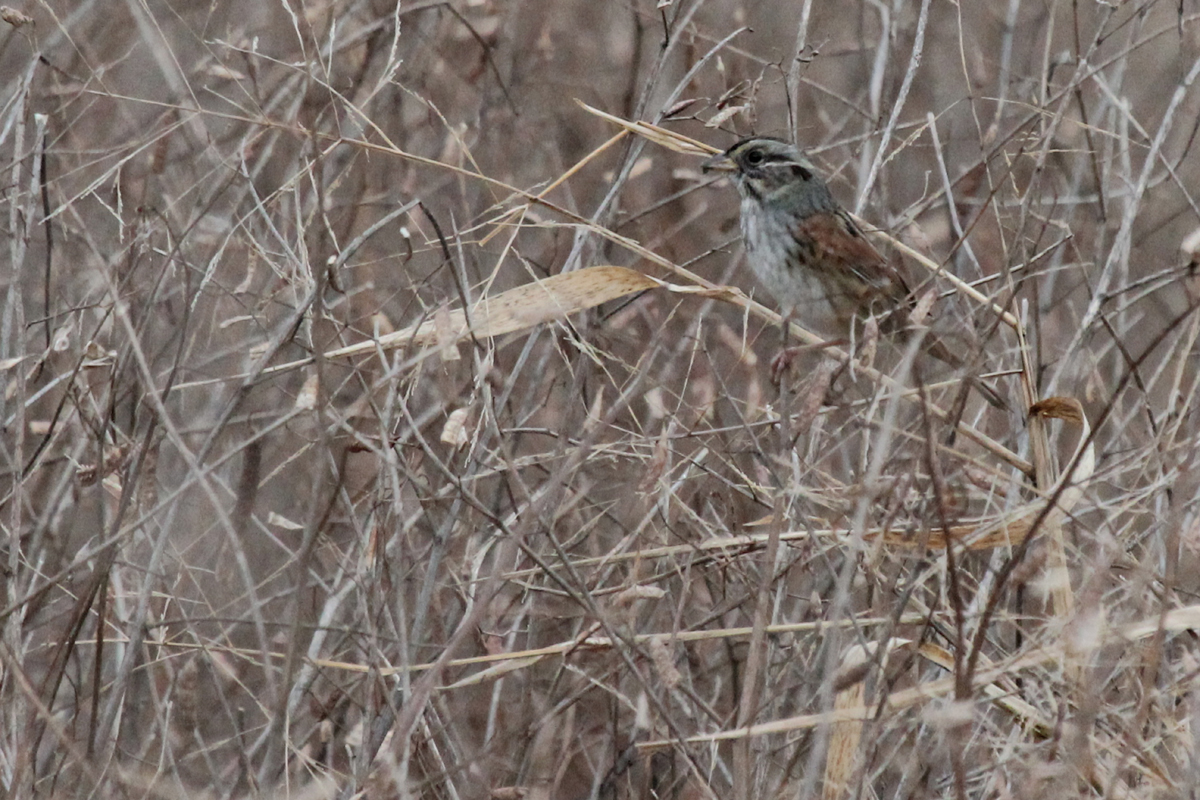
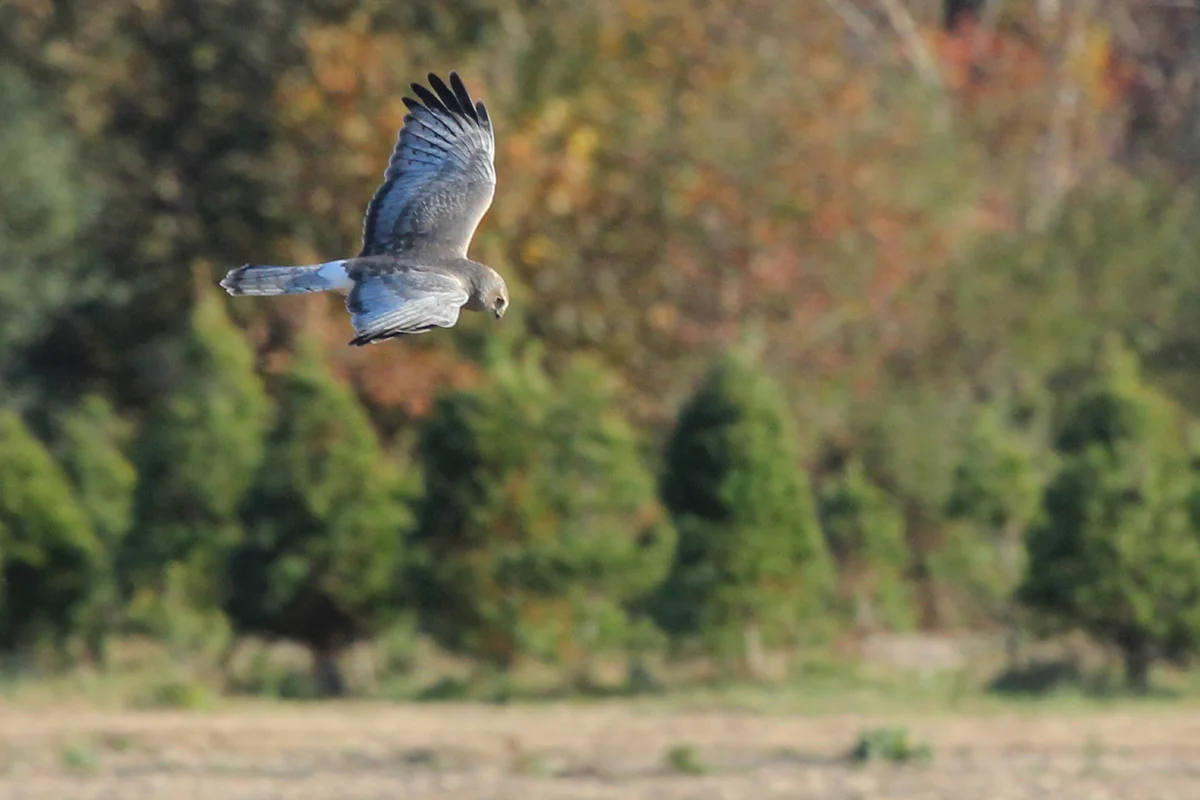
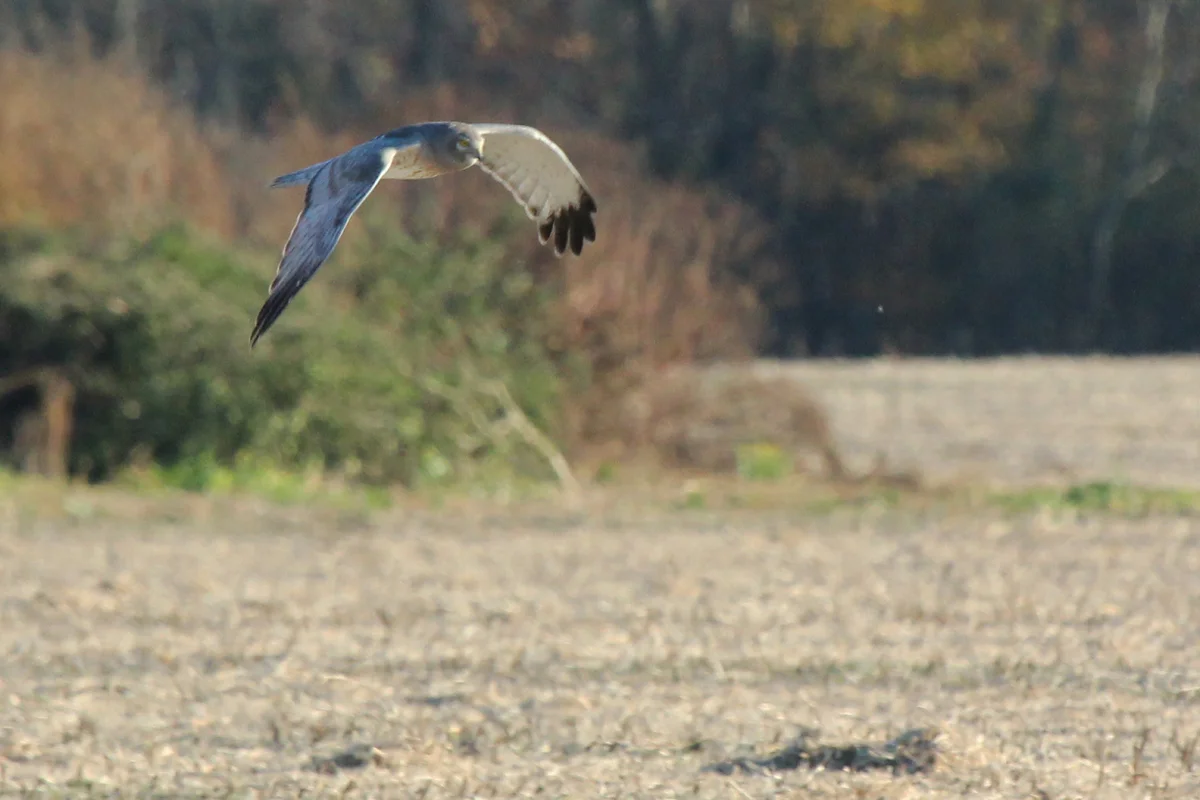
SPECIES DOCUMENTED BY MEDIA and submitted to eBird for Virginia Beach during this period included: 11 DEC – Gadwall, Mallard, Double-crested Cormorant, Great Egret, Ring-billed Gull, Red-bellied Woodpecker, Downy Woodpecker, Carolina Chickadee & Yellow-rumped Warbler (Stumpy Lake NA / Jonathan Snyder); Great Egret (Stumpy Lake Pier / Wendy Ealding); Hermit Thrush (Glenmore Hunt Tr. / Karen & Tom Beatty); Wood Duck (King Grant Lakes / Rob Bielawski). 12 DEC – Hermit Thrush [v.r.] (Glenmore Hunt Tr. / Karen & Tom Beatty); Ring-necked Duck, Red-breasted Merganser, Red-tailed Hawk & Belted Kingfisher (Sherwood Lakes / Karen & Tom Beatty); Northern Shoveler, Gadwall & American Wigeon (Bayville Farms Park / Kathy Spencer); Eastern Bluebird & Swamp Sparrow (Horn Point Rd. / Karen & Tom Beatty); Northern Harrier, Dunlin & Short-billed Dowitcher (Munden Rd. / Karen & Tom Beatty); Black-crowned Night-Heron (Lake Smith / Tracy Tate). 13 DEC – Gadwall, Great Blue Heron & Ruby-crowned Kinglet (Stumpy Lake NA / Jonathan Snyder); Mourning Dove, Carolina Chickadee, Carolina Wren, Ruby-crowned Kinglet, Pine Warbler, Yellow-rumped Warbler, Chipping Sparrow, Northern Cardinal & Baltimore Oriole (Glenmore Hunt Tr. / Karen & Tom Beatty); Virginia Rail (Pacific Ave. / Keith Roberts). 14 DEC – Yellow-bellied Sapsucker (Glenmore Hunt Tr. / Karen & Tom Beatty); Canada Goose, Hooded Merganser, Bald Eagle & Ruby-throated Hummingbird (Camp Pendleton SMR / Karen & Tom Beatty); Common Eider & Lesser Black-backed Gull (Virginia Beach Fishing Pier / Karen & Tom Beatty); Double-crested Cormorant, Great Blue Heron, Turkey Vulture, Cooper’s Hawk, BLACK-LEGGED KITTIWAKE & Ring-billed Gull (Stumpy Lake NA / Jonathan Snyder). 15 DEC – Northern Gannet, Sanderling, Laughing Gull, Ring-billed Gull, Lesser Black-backed Gull & Forster’s Tern (Rudee Inlet / Karen & Tom Beatty); BLACK-LEGGED KITTIWAKE (Stumpy Lake Pier / Rob Bielawski). 16 DEC – Common Eider (First Landing SP / Andrew Baldelli); American Bittern (First Landing SP / Anonymous); Northern Parula (Holland Rd. / Carolyn Page). 17 DEC – House Wren & Song Sparrow (Back Bay NWR / Rob Bielawski); LECONTE’S SPARROW (Princess Anne WMA Beasley Tract / Rob Bielawski); BLACK-LEGGED KITTIWAKE (Stumpy Lake Pier / Jason Strickland); BLACK-LEGGED KITTIWAKE (Stumpy Lake Pier / Rob Bielawski); BLACK-LEGGED KITTIWAKE (Stumpy Lake Pier / Julian Dymacek); Northern Shoveler, Mallard, Hooded Merganser, BLACK-LEGGED KITTIWAKE & Ring-billed Gull (Stumpy Lake NA / Jonathan Snyder); Sedge Wren (Princess Anne WMA Whitehurst Tract / Julian Dymacek). 18 DEC – Northern Shoveler, Red-tailed Hawk & BLACK-LEGGED KITTIWAKE (Stumpy Lake NA / Karen & Tom Beatty); Northern Shoveler, American Wigeon, Mallard, Northern Pintail & Ring-necked Duck (Kings Grant Lakes / Jonathan Snyder); Great Blue Heron & BLACK-LEGGED KITTIWAKE (Stumpy Lake Pier / Kathy Louthan); BLACK-LEGGED KITTIWAKE (Stumpy Lake Pier / Cindy Hamilton). 19 DEC – Gadwall, Pied-billed Grebe, Great Blue Heron, Great Egret, BLACK-LEGGED KITTIWAKE, Blue Jay, Brown Creeper & Carolina Wren (Stumpy Lake NA / Ron Furnish). 20 DEC – American Bittern (Pleasure House Point NA / Cindy Hamilton); Mourning Dove, Yellow-bellied Sapsucker, Downy Woodpecker, Blue Jay, Carolina Wren, Eastern Bluebird, American Robin, Pine Warbler, Chipping Sparrow, White-throated Sparrow, Northern Cardinal & Baltimore Oriole (Glenmore Hunt Tr. / Karen & Tom Beatty); ICELAND GULL (KUMLIEN’S) (31st Street Beach / Andrew Baldelli); ICELAND GULL (KUMLIEN’S) [v.r.] (39th Street Beach / Karen & Tom Beatty); Common Goldeneye & ICELAND GULL (KUMLIEN’S) (39th Street Beach / Rob Bielawski); Hooded Merganser & Red-winged Blackbird (Camp Pendleton SMR / Karen & Tom Beatty).

LOOKAHEAD: Late December is one of the most exciting periods for birding in Virginia Beach. The 21st is the Winter Solstice, marking the shortest day of the year, meaning very soon we will finally start gaining birding time! Additionally, both of the local Christmas Bird Counts (CBCs) take place during this period, with the Back Bay CBC occurring 29 Dec (a Friday) and the Little Creek CBC taking place on New Year’s Eve (a Sunday). Enthusiastic birders are working overtime at ‘closing out’ their remaining available species for year lists, and this often draws observers from all over the state to our region of the coast! Continue picking apart flocks of blackbirds for anything out of place (Yellow-headed Blackbird especially), goose flocks for rarer species (Cackling, Ross’s, Greater White-fronted) and seawatching for southbound waterfowl like eiders, scoters, and many other species. Any scrubby habitat could hold interesting sparrows, and any mixed woodland flocks of chickadees, titmice and kinglets are worth scrutinizing for vagrant (Townsends or Black-throated Gray) or over-wintering warblers! Lastly, regularly occurring (used synonymous with annually-occurring here) species that have not been observed yet this fall include Redhead (15 Oct), Harlequin Duck (25 Oct), and Canvasback (10 Nov). As always, make sure to report your finds to eBird so the data can be used to adjust the expected arrival dates and to view the full listing of each species’ “average expected arrival dates”!

Next Entry | Entry Index | Previous Entry | Same Period Last Year

For further information regarding this thrice-monthly, online publication, please visit the Journal Overview Page which provides an in-depth explanation of the format, layout and composition of the journal. As always, thank you for reading, and please leave me a comment below (you may use your Facebook, Gmail or other accounts to easily do so), or just click the Heart icon to the lower right of this post to let me know you stopped in!
Early December 2017 (1st-10th)

The first nor’easter of the winter season impacted coastal Virginia at the tail end of the period, and a number of interesting finds may have been related to the early arrival of wintry conditions to the coast. Top birds during this period in Virginia Beach included LECONTE’S SPARROW, BLACK-LEGGED KITTIWAKE, KING EIDER, ROSS’S GOOSE & WESTERN TANAGER, first-of-fall arrivals for American Woodcock (2 Dec) & Purple Sandpiper (3 Dec) and late reports for Semipalmated Plover (2 Dec) & Ruby-throated Hummingbird (10 Dec). WEATHER: Sunny skies dominated the first half of the period, being replaced by clouds in the latter half (even some wintry mix near the end). Average daily high temperatures this period dropped considerably, 7.0° from 59.8° F in late November to 52.8° (-3.1° from prior 10-year average), with average daily low temperatures rising slightly, 0.8° from 36.8° to 37.6° F (-1.6° from prior 10-year average). Overall, temperatures ranged from a minimum of 30° F (10 Dec) to a maximum of 66° (5 Dec). Precipitation this period amounted to 2.22”, spread across five days with measurable amounts, and a daily maximum of 1.23” (8 Dec). Maximum sustained winds at Oceana this period were 18 mph and gusts reached 24 mph (9 Dec). Sunrise/sunsets varied from 6:58 AM/4:47 PM (1 Dec) to 7:06 AM/4:47 PM (10 Dec), which means over all we lost 8 minutes of daylight during this period. Preliminary tide levels (referenced to MLLW) at the Sewell’s Point gauge (NOAA) in Norfolk varied from a minimum of -0.01 (5:18 AM, 7 Dec) to a maximum of 4.249 (1:42 PM, 9 Dec).

OBSERVATIONS: Part of the excitement in writing this journal over the years has been being able to compare what species are being found in any given period, with those species found in previous years during the same timeframe. Interestingly, and rather ironically, last year, a Le Conte’s Sparrow (the correct spelling at the time of the discovery) was found 4 Dec at Princess Anne WMA’s Beasley Tract (ph. Andrew Baldelli). Fast forward 364 days to 3 Dec 2017, and another LECONTE’S SPARROW (note the removal of the space per the AOS’s 2017 taxonomic update) was found in the same general area (ph. Andrew Baldelli & Rob Bielawski). This represents the second record for 2017 in Virginia Beach, with presumably the same individual that was found last December having been observed 9 Apr (ph. Andrew Baldelli & Rob Bielawski). It is a bit intriguing to think that perhaps this is yet again the same individual returning for the 2017-18 wintering season, but in all likelihood there could very well be more than one in this expansive habitat. The Beasley Tract has changed quite a bit over the last year, with this portion having been tilled up and planted with soy beans in the fall. Please Note: Princess Anne WMA is only open to birding on Sundays during the winter season, and a Virginia Department of Game & Inland Fisheries WMA access pass is required by anyone who wishes to attempt finding this bird. It was seen again the following Sunday, 10 Dec (obs. Tommy Maloney & Jason Schatti), so it seems to be staying put, at least for now.

A third record of 2017 for Virginia Beach, and a second for the fall/winter occurred when an immature BLACK-LEGGED KITTIWAKE was found near the Stumpy Lake Pier (corner of Elbow & Indian River Roads) on 4 Dec (ph. Jonathan Snyder). This individual, which has a noticeable growth on the underside of the lower mandible (see Mary Catherine Miguez’s up close photograph), persisted in the area throughout the remainder of the period, and was reported an incredible 26 times to eBird between the initial find and the end of the day on 10 Dec (ph. Timothy Barry)! About half of the observers have been placing the eBird pins at the Stumpy Lake Natural Area hotspot which sits a mile or so to the north of where the bird has actually been observed. For those hoping to view this bird, make sure to find your way to the Stumpy Lake Pier, rather than to the golf course / natural area / causeway portion of the lake. (Note that it has not yet been observed 11 Dec, as I’m writing this journal entry). Prior to this individual, another immature passed offshore by Back Bay NWR on 5 Nov (obs. David Clark & ph. Keith Roberts), and one was observed during the height of the alcid movement from the Oceanfront on 9 Feb (obs. Todd Day). What makes this current record particularly interesting, is that it was found, and has continued on an inland lake. So far, eBird shows no other inland records for this normally pelagic species, and even records along the immediate coastline are few and far between except during strong onshore gales or following tropical cyclones / nor’easters. In the days preceding the first observation, we experienced none of these weather patterns, so there is no telling what caused the individual to decide a freshwater reservoir like Stumpy Lake would suit its needs.

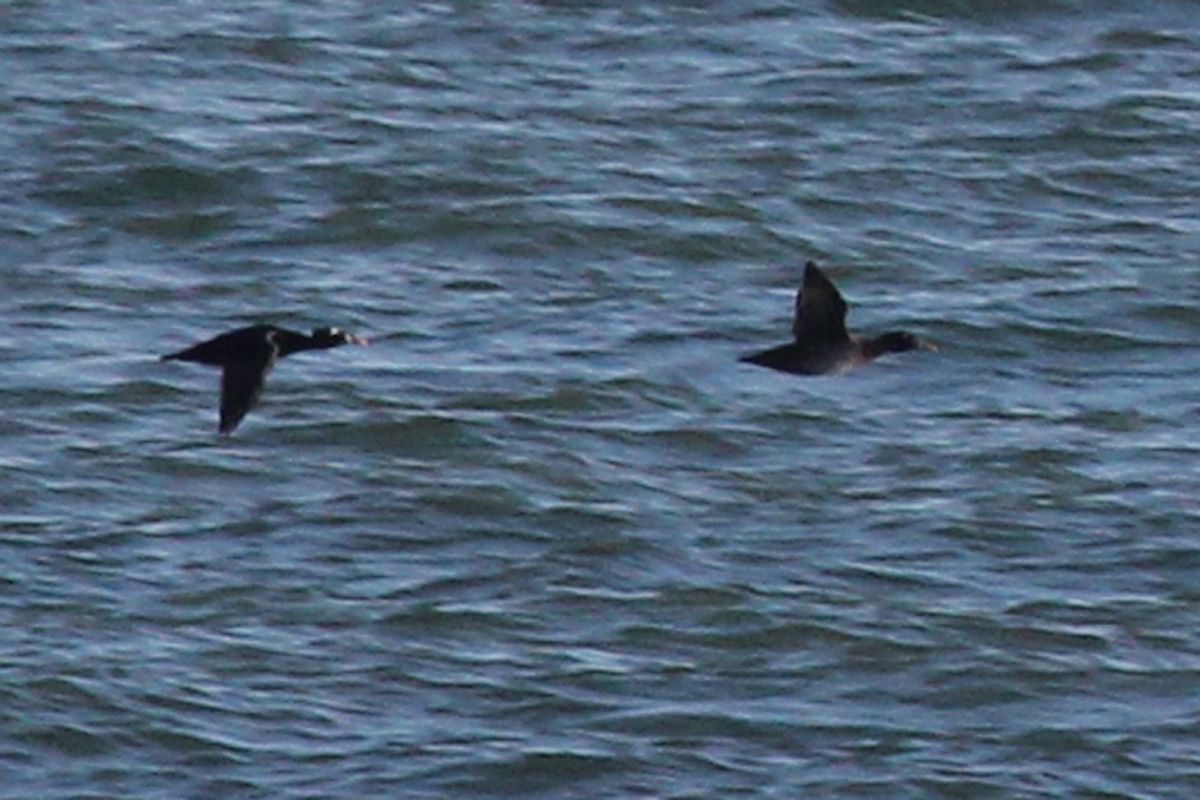
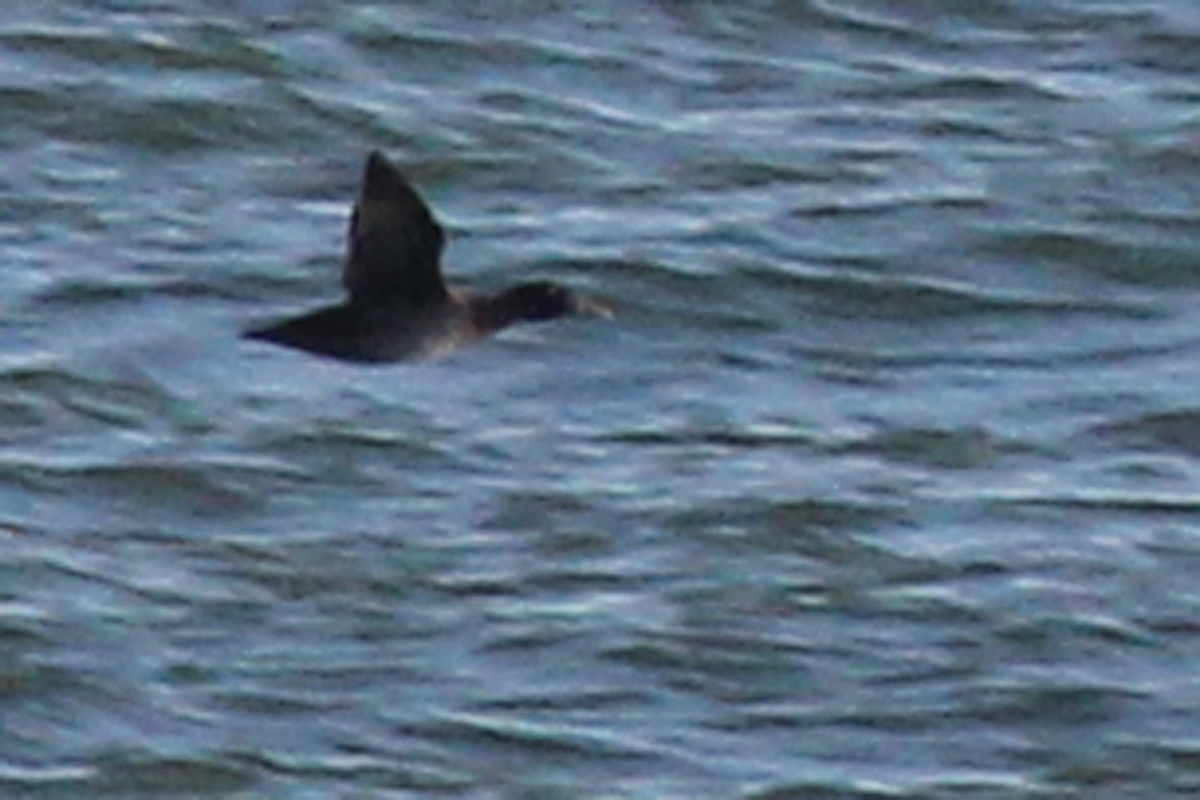
Another species that produced a third 2017 record during early December at Back Bay NWR on 2 Dec, when a subadult KING EIDER was observed flying south with a group of Surf Scoters (ph. Andrew Baldelli & Rob Bielawski). Additionally, that same morning, a total of 14 Common Eiders were observed moving southbound along the coast, so it might prove lucrative to continue seawatching in the early morning hours (maybe someone will snag the first Harlequin Duck of the winter season). Thus far, the only other King Eider report, was that of three photographed in a flock of Red-breasted Mergansers at Little Island Park on 20 Nov (ph. Joe Minor). Prior to that, only a single individual persisted around the Chesapeake Bay Bridge-Tunnel from late December into late February (original obs. Edward Brinkley). It is possible that with good numbers of both eider species already this winter, perhaps we’ll see more Kings settling along our coast. It would be wonderful to finally see an adult male here, but seeing any plumage of this species is cause for celebration regardless.

Though the ROSS’S GOOSE that was found at Kempsville Lake in late November was last reported in that same period, another individual was found along Independence Boulevard near Sentara Hospital on 3 Dec (ph. Kathy Spencer). With an individual present through the 2016-17 winter months on Sherwood Lakes through at least 23 Feb, an individual found in this same general area in early & late November, and the Kempsville Lake individual, this represent a fourth record for Virginia Beach in 2017, likely amounting to four different birds. Most of the time, Ross’s Geese have been found in large flocks of geese (Canadas and Snows) in southern Virginia Beach, so these last two records are a bit perplexing given they’ve occurred in very small flocks (say, under 100 birds), and they’ve occurred in suburban/urbanized parts of the city. The Sentara bird has not been reported again though, and it seems the best chance for observers to view this species is still to scan through the winter goose flock that forages around Sherwood Lakes and off of Firefall Drive near Ocean Lakes High School.

Likely the same individual that wintered in the Alanton Neighborhood of Virginia Beach during 2016-17, a WESTERN TANAGER was again reported 1 & 10 Dec (obs. Michelle Payne). This represents the second and third records from this private residence so far, with the first report occurring 3 Nov. Western Tanagers have been more frequent on the coast in recent years, with most records being those of female-plumaged individuals. An adult male has returned each year since 2009 to a feeder in James City County (an hour or so northwest of Virginia Beach). Also, a male was photographed at Back Bay NWR on 11 May 2016 (ph. Michelle Payne). So far in 2017, there was at least one other wintering bird being seen from 11 Feb-10 Mar (obs. Michele Sorenson), as well as individual in a Lago Mar backyard on 30 Sep (ph. Mary Catherine Miguez), and a final individual at Camp Pendleton SMR on 21 Oct (ph. Karen & Tom Beatty). This makes this a fifth Virginia Beach record, though potentially only the 4th individual bird (if it is indeed a returning winterer).

During early December, we had a pair of first-of-season arrivals, both within the expected timeframe for the species, though a bit later than normal probably due to lack of effort in attempting to find them. First off, several American Woodcocks were present near the Lotus Gardens off Sandbridge Road on 2 Dec (obs. Andrew Baldelli). This site was a reliable location to hear them in the pre-dawn hours during January as well, and their courtship displays can be visible in the first few minutes of light before the birds become inactive for the daylight hours. Last period, we added the first Great Cormorant for the winter, and it was mentioned that this species has likely just been missed since the Chesapeake Bay Bridge-Tunnel complex is now closed to the public. Due to the same issue, the first Purple Sandpiper of the season was finally observed at Rudee Inlet on 3 Dec (obs. Phil Kenny). This species is very common around the man-made islands of the CBBT, but is pretty uncommon away from that localized region of the city. Occasionally, some end up on the rock groins protecting Fort Story, and on the armored shorelines around Rudee Inlet, the likely location for most birders to now find them until the CBBT opens back up (hopefully in five years?). In addition to the two first-of-season finds, there was also a pair of late season finds, specifically for a single Semipalmated Plover found on the beach at Back Bay NWR on 2 Dec (obs. Andrew Baldelli & Rob Bielawski), and a Ruby-throated Hummingbird visiting the same feeder setup in Alanton that has attracted the Western Tanager mentioned above, on 10 Dec (obs. Michelle Payne).

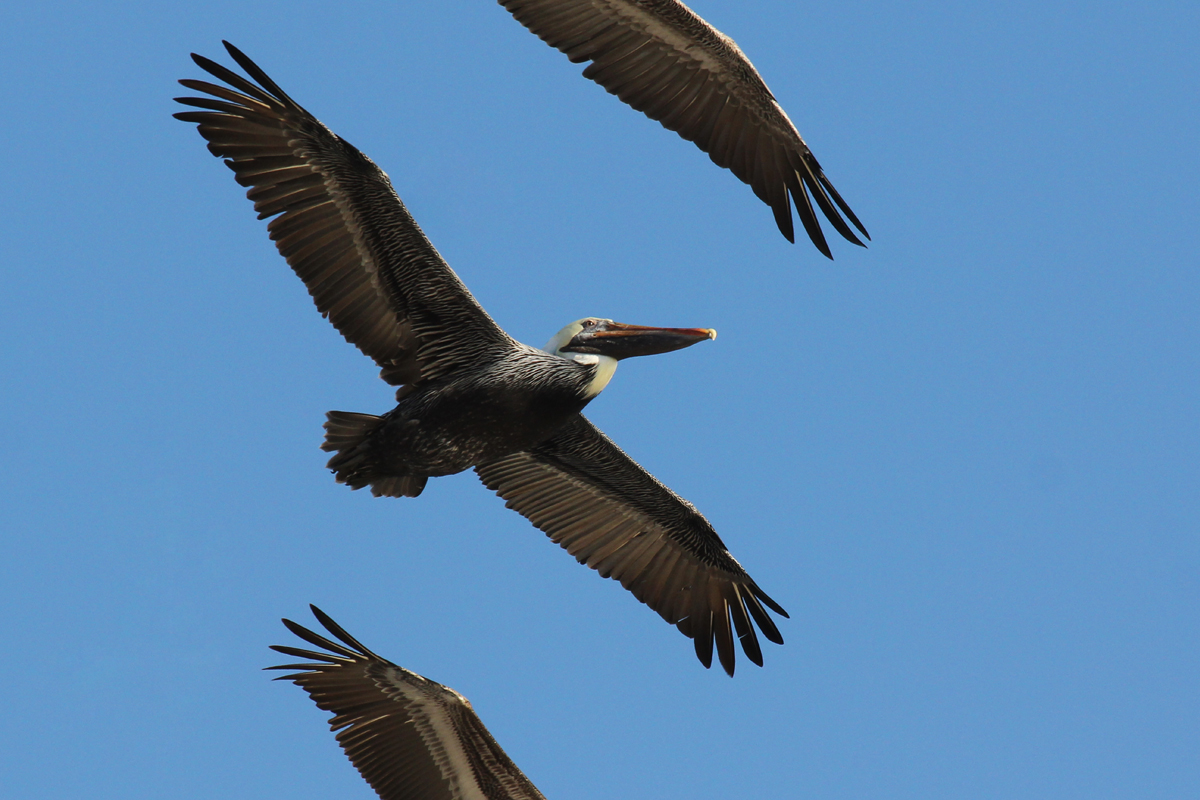
SPECIES DOCUMENTED BY MEDIA and submitted to eBird for Virginia Beach during this period included: 1 DEC – Black-bellied Plover, Dunlin, Ring-billed Gull, Herring Gull, Great Black-backed Gull, Black Skimmer & Boat-tailed Grackle (Pleasure House Point NA / Candice Lowther); Brown Pelican & Boat-tailed Grackle (Little Island Park / Chris White). 2 DEC - KING EIDER & Brown Pelican (Back Bay NWR / Rob Bielawski); Northern Shoveler, Gadwall, Hooded Merganser, Pied-billed Grebe, Double-crested Cormorant, Great Blue Heron, Red-bellied Woodpecker, Yellow-bellied Sapsucker, Blue-headed Vireo & Ruby-crowned Kinglet (Stumpy Lake NA / Eric Alton); Orange-crowned Warbler (Back Bay NWR / David Clark); Snow Goose (Princess Anne Rd. / Eric Alton); Snow Goose, Lesser Scaup, Cattle Egret, Killdeer & Eastern Meadowlark (Sherwood Lakes / Eric Alton); Ring-necked Duck, Black Scoter, Red-throated Loon, White Ibis, Brown-headed Nuthatch & Chipping Sparrow (Dam Neck NA / Karen & Tom Beatty); Bufflehead, Hooded Merganser & Osprey (Pleasure House Point NA / Laura Mae); Northern Shoveler, Mallard, Double-crested Cormorant, Great Blue Heron & Song Sparrow (Stumpy Lake NA / Jonathan Snyder); Savannah Sparrow & Song Sparrow (Big Sky Farms / Rob Bielawski). 3 DEC – Common Yellowthroat, LECONTE’S SPARROW, Savannah Sparrow (Savannah) & Swamp Sparrow (Princess Anne WMA Beasley Tract / Rob Bielawski); Ring-billed Gull & Lesser Black-backed Gull (Comfort Suites Hotel / Phil Kenny); Tundra Swan & Swamp Sparrow (Back Bay NWR / Chris White); Tundra Swan, Great Egret, White Ibis & Savannah Sparrow (Back Bay NWR / Kathy Louthan); Yellow-rumped Warbler & Red-winged Blackbird (Back Bay NWR / Laura Mae); Osprey & Song Sparrow (Pleasure House Point NA / David Clark); Black-bellied Plover (Back Bay NWR / Philip Mitchell); American Kestrel & Yellow-rumped Warbler (False Cape SP / Laura Mae); White Ibis, Turkey Vulture & LECONTE’S SPARROW (Princess Anne WMA Beasley Tract / Phil Kenny); LECONTE’S SPARROW, Savannah Sparrow & Swamp Sparrow (Princess Anne WMA Beasley Tract / Karen & Tom Beatty); LECONTE’S SPARROW (Princess Anne WMA Beasley Tract / Mike Collins); Tundra Swan, Ruddy Duck & Savannah Sparrow (Back Bay NWR / Laura Mae); Canada Goose, Tundra Swan & Great Egret (Back Bay NWR / Candice Lowther); Brown Pelican & Boat-tailed Grackle (Little Island Park / Candice Lowther); ROSS’S GOOSE (Sentara Independence / Kathy Spencer); Tundra Swan & Swamp Sparrow (Back Bay NWR / Chris White). 4 DEC – Northern Shoveler, Gadwall, Mallard, Double-crested Cormorant, Great Blue Heron & BLACK-LEGGED KITTIWAKE (Stumpy Lake NA / Jonathan Snyder); Belted Kingfisher (Pleasure House Point NA / Lee Seibert). 5 DEC – Hooded Merganser, Double-crested Cormorant & Great Blue Heron (Stumpy Lake NA / Karen & Tom Beatty); BLACK-LEGGED KITTIWAKE (Stumpy Lake Pier / Mike Collins); Bald Eagle & BLACK-LEGGED KITTIWAKE (Stumpy Lake Pier / Karen & Tom Beatty); Bald Eagle & BLACK-LEGGED KITTIWAKE (Stumpy Lake Pier / Mary Catherine Miguez); BLACK-LEGGED KITTIWAKE (Stumpy Lake Pier / Rob Bielawski). 6 DEC – BLACK-LEGGED KITTIWAKE (Stumpy Lake Pier / Jonathan Snyder). 7 DEC – Wood Duck, Northern Shoveler, Gadwall, Green-winged Teal, Pied-billed Grebe, Double-crested Cormorant, Great Blue Heron & BLACK-LEGGED KITTIWAKE (Stumpy Lake NA / Eric Alton); BLACK-LEGGED KITTIWAKE (Stumpy Lake NA / Jonathan Snyder); Double-crested Cormorant & BLACK-LEGGED KITTIWAKE (Stumpy Lake NA / Steve Myers); BLACK-LEGGED KITTIWAKE (Stumpy Lake Pier / Pamela Monahan); BLACK-LEGGED KITTIWAKE (Stumpy Lake Pier / Andrew Baldelli); BLACK-LEGGED KITTIWAKE (Stumpy Lake Pier / Loretta Silvia); BLACK-LEGGED KITTIWAKE (Stumpy Lake Pier / David Clark); Double-crested Cormorant (Stumpy Lake NA / Loretta Silvia); BLACK-LEGGED KITTIWAKE (Stumpy Lake Pier / Tommy Maloney); BLACK-LEGGED KITTIWAKE (Stumpy Lake Pier / Bert Harris). 10 DEC – Cattle Egret (Princess Anne Rd. / David Clark); BLACK-LEGGED KITTIWAKE (Stumpy Lake NA / Timothy Barry).

LOOKAHEAD: Early December started off the winter season with quite a bang, and hopefully the great sightings continue to pour in as we enter mid-month. As with the earlier part of the month, the remainder of December is typically known for rare wintering species being found around the city, and if last year is an indicator, it would behoove birders to spend time sifting through sparrows, blackbirds, and geese flocks for unusual species. Last December, in what may have been a milder early winter, there was several occurrences of warblers that don't annually winter here, including: Northern Parula, Cape May Warbler, Prairie Warbler, Black-and-white Warbler & Yellow-breasted Chat (though this one is no longer considered a warbler species). As we head towards Christmas Bird Count season, it'll be interesting to see if any species other than our five annually-wintering warblers (Common Yellowthroat, Pine Warbler, Yellow-rumped Warbler, Palm Warbler & Orange-crowned Warbler) get reported. Seawatching can also yield unusual birds like we’ve already seen with both King & Common Eiders observed multiple times. Lastly, regularly occurring (used synonymous with annually-occurring here) species that have not been observed yet this fall include Redhead (15 Oct), Harlequin Duck (25 Oct), and Canvasback & Common Goldeneye (10 Nov). As always, make sure to report your finds to eBird so the data can be used to adjust the expected arrival dates and to view the full listing of each species’ “average expected arrival dates”!

Next Entry | Entry Index | Previous Entry | Same Period Last Year

For further information regarding this thrice-monthly, online publication, please visit the Journal Overview Page which provides an in-depth explanation of the format, layout and composition of the journal. As always, thank you for reading, and please leave me a comment below (you may use your Facebook, Gmail or other accounts to easily do so), or just click the Heart icon to the lower right of this post to let me know you stopped in!
Late November 2017 (21st-30th)

Late November showcased what appears to be the finale of the fall jaeger movement along the coast, and birders began turning their attention towards the large wintering flocks of geese and blackbirds. Top birds during this period in Virginia Beach included at least two ROSS’S GEESE, a CACKLING GOOSE, COMMON GALLINULE, PARASITIC JAEGER and two POMARINE JAEGERS, on-time first-of-fall arrivals for Great Cormorant (24 Nov) and late reports for Black-and-white Warbler (23 Nov) & Ruby-throated Hummingbird (23 Nov). WEATHER: Cooler weather & peak fall colors were finally achieved during the period, and the ground is now becoming littered with fallen leaves. Average daily high temperatures this period rebounded a bit, rising 4.2° from 55.6° F in mid-November to 59.8° (+1.5° from prior 10-year average), with average daily low temperatures dropping 2.3° from 39.1° to 36.8° F (-3.0° from prior 10-year average). Overall, temperatures ranged from a minimum of 28° F (24 Nov) to a maximum of 70° (29 Nov). Precipitation this period amounted to 0.01”, spread across just one day with measurable amounts (22 Nov). Maximum sustained winds at Oceana this period were 20 mph and gusts reached 26 mph (22 Nov). Sunrise/sunsets varied from 6:48 AM/4:51 PM (21 Nov) to 6:57 AM/4:48 PM (30 Nov), which means over all we lost 12 minutes of daylight during this period. Preliminary tide levels (referenced to MLLW) at the Sewell’s Point gauge (NOAA) in Norfolk varied from a minimum of -0.568 (4:30 AM, 21 Nov) to a maximum of 3.064 (5:30 AM, 30 Nov).

OBSERVATIONS: While the best finds during mid-November mostly occurred along the immediate coastline, as we moved into late November, birders turned their eyes more inward and were rewarded with several great birds mixed in larger flocks. At least two ROSS’S GEESE were observed beginning 22 Nov. An individual was found with a small grouping of Canada Geese on the shores of Kempsville Lake off Baxter Road (ph. Brandon Holland), and another individual was found in a larger Canada Goose flock off of Firefall Drive (ph. Karen & Tom Beatty). It is quite possible that this latter individual is the same bird that was found off Princess Anne Lane on 9 Nov (obs. Andrew Baldelli), as this flock of geese tends to move between these locations, and then land on Sherwood Lakes as well.

In addition to the Ross’s Geese, a CACKLING GOOSE was picked out of a flock of 400+ Canada Geese on the northern corner of the main lake in the Sherwood Lakes neighborhood (obs. David Clark; later ph. Rob Bielawski and Karen & Tom Beatty. Likely the same individual was later observed foraging in the agricultural fields off Princess Anne Lane on 28 Nov (obs. Karen & Tom Beatty). As mentioned above, with the movement of this flock, on any given day this bird is likely to be found either floating on the surface of Sherwood Lakes, or in the fields off Princess Anne Lane or Firefall Drive near Ocean Lakes High School & the Hampton Roads Sanitation District’s Atlantic Treatment Facility. Last winter, at least one Cackling Goose was also observed in this same flock of geese through about the middle of January, so there is probably still time to try to find this bird if so desired.

At Back Bay NWR, while on the scheduled impoundment survey for the park, a COMMON GALLINULE was observed at the southern end of the B Pool (obs. Robert Ake & Loretta Silvia). This species is likely a year-round resident of the park, with winter sightings occurring often just a few miles to the southwest at Mackay Island NWR along the North Carolina border, but it’s secretive nature & preferred densely vegetated, marshy habitat, makes it a difficult bird to detect. So far in 2017, only one other record of Common Gallinule in Virginia Beach has occurred, also a single bird at Back Bay NWR, though on the southern side of the A Pool on 28 May (ph. Rob Bielawski).

While the bulk of the Jaeger movement had passed by mid-month, at least one PARASITIC JAEGER was seen from Little Island Park (ph. Joe Minor), and two POMARINE JAEGERS were as well (obs. Andrew Baldelli & Ellison Orcutt). Between October and mid-November, over 100 jaegers were logged passing southward off our coastline, and though we never did get a Long-tailed Jaeger, one was observed at the Baywatch site in Northampton on 3 Nov (obs. Edward Brinkley). December reports are hard to come by for the jaegers, so we’ve likely see the last of them until springtime, but what a show they put on especially at their peak in early November!

As a city, we only had one first-of-season arrival this period, when a Great Cormorant was reported 24 Nov off the Oceanfront (obs. Virginia Aquarium & Marine Science Center). It’s very likely that this species has been present for a few weeks around the Chesapeake Bay Bridge-Tunnel, however with the closure to Islands #1 & #2 starting back on 1 Oct for the next 5 years of construction, this species is hard to come by in Virginia Beach. The same goes for Harlequin Ducks and Purple Sandpipers, which are primarily observed around the rocky shorelines that these man-made islands provide. Seeing all three of these species will now be much more difficult, making boat trips to the islands much more important! Very rarely are individuals observed further east around Fort Story, and even more rarely south to Rudee Inlet. There was a pair of late finds this period, with a Black-and-white Warbler showing up at Honey Bee Golf Course (obs. Jessica Majors) and a Ruby-throated Hummingbird photographed at a private residence in Lago Mar the same day (ph. Mary Catherine Miguez). Lastly, though it isn’t truly a rarity here in winter, a pair of Pine Siskins were seen at Back Bay NWR on 26 Nov (obs. David Clark). This species is very irruptive from year-to-year, and since this was not predicted to be a major movement season, this species is flagging locally in eBird to help compare with years where irruptions do occur.

SPECIES DOCUMENTED BY MEDIA and submitted to eBird for Virginia Beach during this period included: 21 NOV – PARASITIC JAEGER (Little Island Park / Joe Minor); Hooded Merganser, Double-crested Cormorant, Great Blue Heron, Great Egret, Bald Eagle, Laughing Gull & Red-bellied Woodpecker (Stumpy Lake NA / Jonathan Snyder); Fish Crow, Marsh Wren, Savannah Sparrow & Song Sparrow (Back Bay NWR / Mary Catherine Miguez). 22 NOV – ROSS’S GOOSE & Bald Eagle (Firefall Dr. / Karen & Tom Beatty); Red-breasted Merganser, Common Loon, Northern Gannet & Brown Pelican (Dam Neck NA / Karen & Tom Beatty); Black Vulture (Withduck Rd. / Laura Mae); ROSS’S GOOSE (Kempsville Lake / Brandon Holland). 23 NOV – Ruby-throated Hummingbird (Lago Mar / Mary Catherine Miguez). 24 NOV – Green-winged Teal, Bufflehead, American Bittern, Snowy Egret, Belted Kingfisher, Brown-headed Nuthatch, Ruby-crowned Kinglet, Yellow-rumped Warbler, Nelson’s Sparrow, Savannah Sparrow & American Goldfinch (Pleasure House Point NA / Tamara Conklin); Gadwall & Peregrine Falcon (Bayville Farms Park / Tamara Conklin); ROSS’S GOOSE (Firefall Dr. / Karen & Tom Beatty); Red-breasted Merganser, Double-crested Cormorant & Hermit Thrush (Dam Neck NA / Karen & Tom Beatty); Common Loon & Merlin (First Landing SP / Carlton Noll). 25 NOV – Gadwall, Hooded Merganser, Great Blue Heron, Great Egret, Red-bellied Woodpecker & Northern Cardinal (Stumpy Lake NA / Jonathan Snyder); ROSS’S GOOSE (Kempsville Lake / Lisa Rose); ROSS’S GOOSE (Kempsville Lake / Tamara Conklin). 26 NOV – House Wren (Back Bay NWR / David Clark); Hooded Merganser, Great Blue Heron, Red-tailed Hawk & Red-bellied Woodpecker (Stumpy Lake NA / Tamara Conklin); Wood Duck (Back Bay NWR / David Clark); Red-throated Loon, Pied-billed Grebe, Northern Harrier, Bald Eagle, American Coot, Bonaparte’s Gull & Eastern Meadowlark (Sherwood Lakes / Tamara Conklin); Ruby-crowned Kinglet (Back Bay NWR / David Clark); Red-tailed Hawk, Northern Flicker, Eastern Phoebe, Eastern Bluebird, Palm Warbler (Yellow) & Chipping Sparrow (Ashville Park / Tamara Conklin); ROSS’S GOOSE (Kempsville Lake / Rob Bielawski); Mallard (Da Vinci Park / Tamara Conklin); CACKLING GOOSE (Sherwood Lakes / Rob Bielawski); American Bittern, Northern Mockingbird & Yellow-rumped Warbler (Princess Anne WMA Whitehurst Tract / Rob Bielawski); Wood Duck, Ring-necked Duck & Hooded Merganser (Kings Grant Lake / Tamara Conklin); Snow Goose, CACKLING GOOSE & Bonaparte’s Gull (Sherwood Lakes / Karen & Tom Beatty); ROSS’S GOOSE (Kempsville Lake / Jonathan Snyder); American Wigeon, American Black Duck, Northern Pintail & Pied-billed Grebe (Lake Joyce & Shore Dr. / Tamara Conklin); Mallard, Carolina Chickadee, Marsh Wren & Ruby-crowned Kinglet (Horn Point Rd. / Karen & Tom Beatty); Northern Harrier (Buzzard Neck Rd. / Rob Bielawski); Red-tailed Hawk (Robinson Rd. / Karen & Tom Beatty); Red-winged Blackbird (West Gibbs Rd. / Rob Bielawski). 27 NOV – Hooded Merganser, Great Blue Heron, Turkey Vulture, Osprey & Bald Eagle (Stumpy Lake NA / Jonathan Snyder); Mallard & Hooded Merganser (City View Park / Jonathan Snyder). 28 NOV – Great Blue Heron, Red-bellied Woodpecker & Carolina Wren (Stumpy Lake NA / Laura Mae); Northern Shoveler, Gadwall, Mallard, Hooded Merganser, Great Blue Heron, Laughing Gull, Ring-billed Gull & Fish Crow (Stumpy Lake NA / Jonathan Snyder); Mourning Dove, Downy Woodpecker, White-breasted Nuthatch, Brown-headed Nuthatch, Yellow-rumped Warbler, White-throated Sparrow, Song Sparrow & Northern Cardinal (Lago Mar / Mary Catherine Miguez); Bald Eagle & Red-tailed Hawk (Princess Anne Ln. / Karen & Tom Beatty); Wilson’s Snipe (Princess Anne Rd. / Karen & Tom Beatty). 29 NOV – Northern Shoveler, Gadwall, Mallard, Double-crested Cormorant, Great Blue Heron, Great Egret, Turkey Vulture & Laughing Gull (Stumpy Lake NA / Jonathan Snyder). 30 NOV – Green-winged Teal, Surf Scoter, Red-throated Loon, Common Loon, Horned Grebe, Northern Gannet & Ring-billed Gull (Little Island Park / Karen & Tom Beatty); Tundra Swan & Great Blue Heron (Back Bay NWR / Karen & Tom Beatty).

LOOKAHEAD: Early December is the first true period of ornithological winter as it is defined by most journals (the ABA, the VSO, etc.). This period is typically known for rare wintering species being found around the city, and if last year is an indicator, it would behoove birders to spend time sifting through sparrows, blackbirds, and geese flocks for unusual species. Seawatching can also yield unusual birds like we’ve already seen with both King & Common Eiders seen migrating southbound off our coast in November. Lastly, regularly occurring (used synonymous with annually-occurring here) species that have not been observed yet this fall include Purple Sandpiper (1 Oct expected arrival date), American Woodcock (10 Oct), Redhead (15 Oct), Harlequin Duck (25 Oct), and Canvasback & Common Goldeneye (10 Nov). As always, make sure to report your finds to eBird so the data can be used to adjust the expected arrival dates and to view the full listing of each species’ “average expected arrival dates”!

Next Entry | Entry Index | Previous Entry | Same Period Last Year

For further information regarding this thrice-monthly, online publication, please visit the Journal Overview Page which provides an in-depth explanation of the format, layout and composition of the journal. As always, thank you for reading, and please leave me a comment below (you may use your Facebook, Gmail or other accounts to easily do so), or just click the Heart icon to the lower right of this post to let me know you stopped in!
Mid-November 2017 (11th-20th)

After an exciting early November for seawatchers along the coast, the southbound passage of Jaegers slowed down considerably as mid-November arrived. However, a few were still noted, and large groups of waterfowl, loons, gulls and gannets continue to be observed. Top birds during this period in Virginia Beach included LITTLE GULL, SNOW BUNTING, CLAY-COLORED SPARROW, PARASITIC JAEGER & WHITE-CROWNED SPARROW, early first-of-fall arrivals of Razorbill (18 Nov) as well as on-time first-of-fall arrivals for Greater Scaup (11 Nov) & Winter Wren (12 Nov), and late reports for Rose-breasted Grosbeak (11 Nov), Caspian Tern (12 Nov) & Ruby-throated Hummingbird (19 Nov). WEATHER: Cooler weather & peak fall colors were finally achieved during the period, and now the leaves have started to drop. Average daily high temperatures this period dropped a whopping 12.3° from 67.9° F in early November to 55.6° (-5.3° from prior 10-year average), with average daily low temperatures following suit, dropping 13.4° from 52.5° to 39.1° F (-4.7° from prior 10-year average). Overall, temperatures ranged from a minimum of 30° F (11 Nov) to a maximum of 66° (19 Nov). Precipitation this period amounted to 0.41”, spread across just two days with measurable amounts (maximum on 13 Nov of 0.39”). Maximum sustained winds at Oceana this period were 22 mph and gusts reached 31 mph (19 Nov). Sunrise/sunsets varied from 6:38 AM/4:57 PM (11 Nov) to 6:47 AM/4:51 PM (20 Nov), which means over all we lost 15 minutes of daylight during this period. Preliminary tide levels (referenced to MLLW) at the Sewell’s Point gauge (NOAA) in Norfolk varied from a minimum of -0.423 (3:48 AM, 19 Nov) to a maximum of 3.983 (7:06 AM, 15 Nov).

OBSERVATIONS: Due to the incredible number of Jaegers passing by along our coast throughout the last couple of weeks, there was a high number of reports from seawatching sites during the period. As a result of this effort, the second LITTLE GULL (obs. Andrew Baldelli) of 2017 for both the city and the state as a whole was observed passing by the Little Island Pier on 19 Nov. The only other record thus far for the year came just a little to the south at Back Bay NWR when an individual was observed 8 Feb (ph. Wes Teets & Abby Walter) during the height of the major alcid movement that brought birders from all over the state to our coastline. Notably, no Little Gulls were observed in Virginia during 2016, though one was observed offshore on a Seabirding.com pelagic trip 12 Dec 2015.

On the northern reach of Virginia Beach, a SNOW BUNTING was found 14 Nov at the campground beach area of First Landing SP (ph. June McDaniels). Snow Buntings began being reported across the Chesapeake Bay in Northampton County 10 Nov, and their expected arrival date is the 15th, so this one was very much on time. Another individual was found 9 Nov offshore (ph. John Loch), but it is not known if this observation occurred within Virginia Beach or Northampton waters (the eBird list as a whole is plotted in Virginia Beach). Thus far, no other sightings of the species have occurred but it seems likely that one or more could be hanging out on the north end beaches & dunes. Last year in late November, a small flock was present at First Landing SP near the border with JEB Fort Story so perhaps more will appear next period.

Excitedly, our first observation for KING EIDER of the winter season occurred 20 Nov (ph. Joe Minor) as three individuals were observed in southbound flight past the Little Island Park pier with a grouping of Red-breasted Mergansers! This is the first record of more than one King Eider in Virginia Beach since two were seen off South Thimble Island 26 Jan 2010, and is the highest count since four were found along the CBBT 30 Jan 1993 according to eBird (other records may exist that just have never been put in!). The last King Eider to be seen in Virginia Beach was an individual found 26 Dec 2016 (obs. Edward Brinkley and later photographed 28 Dec 2016 by Mary Catherine Miguez), a subadult bird, which stayed around the Chesapeake Bay Bridge-Tunnel through the winter, with most later reports around the Northampton County portion of the bridge.

At least two CLAY-COLORED SPARROWS were observed during mid-November, with one individual (probably a continuing bird) reported at Back Bay NWR on 12 Nov (ph. Linda Chittum) and another found at Big Sky Farms (private property) on 13 Nov (obs. Andrew Baldelli & Tracy Tate). This has been a banner fall for Clay-colored Sparrows, with potentially a minimum of 10 different individuals observed in Virginia Beach dating back to 8 Sep. Incredibly, four individuals were observed in a single field of view at Back Bay on 15 Sep (ph. Mary Catherine Miguez), and this could potentially be a high count for the state of Virginia.

While early November was dominated by reports of Parasitic, Pomarine and unidentifiable-to-species Jaegers, observations of these seabirds took a bit of a backseat this period. However, PARASITIC JAEGERS continued to be noted in small numbers along the coast at Back Bay NWR on 11 Nov (obs. Ty Smith) & 18 Nov (obs. Andrew Baldelli, obs. Courtney Check / Erin Eichenberger / Megan Massa / Andrew Rapp / Faye Reid / Kolby Williams), at Little Island Park on 18 Nov (obs. Andrew Baldelli) & 19 Nov (obs. Andrew Baldelli), at Dam Neck NA on 11 Nov (obs. Karen & Tom Beatty), at the Atlantic Wildfowl Heritage Museum on 13 Nov (obs. Andrew Baldelli), and at First Landing SP on 14 Nov (obs. Andrew Baldelli & Mary Catherine Miguez). Over 100 individuals were noted during early November along the outer coast, with the Baywatch site (obs. Ned Brinkley) in Northampton County reporting similar numbers (though add a Long-tailed Jaeger which has not yet occurred in Virginia Beach for the year).

Lastly as far as rarities go this period, a pair of WHITE-CROWNED SPARROWS was discovered at Big Sky Farms on 13 Nov (obs. Andrew Baldelli & Tracy Tate). Back Bay NWR has typically been the stronghold for this species in late fall and through the winter, with 4 individuals staying into the spring this past winter. However, this report at Big Sky Farms represents the only November record thus far for 2017, and it will be interesting to see if we end up with any true wintering birds. Much more common further inland, White-crowneds are a tricky bird here in extreme southeast Virginia. Interestingly, all of the individuals seen this fall have been immature birds, and we very rarely get to see the gorgeous adults.

In addition to the above rarities, mid-November brought us first-of-season reports for Greater Scaup on 11 Nov at both Dam Neck NA (obs. Karen & Tom Beatty & Mary Catherine Miguez) and at Back Bay NWR (obs. Clark Olsen and Ty Smith). Additionally, our first Winter Wrens of the season were detected 12 Nov at Back Bay NWR (obs. Linda Chittum) and Pleasure House Point NA (obs. Logan Anderson & George Burress). Lastly, we had an early arrival for Razorbill when two were observed at Little Island Park on 18 Nov (obs. Andrew Baldelli). The expected arrival date here is 25 Nov, so this pair showed up a week ahead of schedule, and combined with the report from a couple of weeks back of a Dovekie at the park, perhaps we are in for another good alcid year on the coast (maybe we’ll get to see another Ancient Murrelet?).

Some of our fall departures managed to linger into mid-November, with a very late and unexpected Rose-breasted Grosbeak being reported at Back Bay NWR on 11 Nov (obs. Clark Olsen & Ty Smith. The Gold Book lists the extreme date for this species in the coastal plain as 19 Nov, though there is an occasional over-winterer some years. Caspian Terns were noted at Dam Neck NA (obs. Karen & Tom Beatty & Mary Catherine Miguez) on 11 Nov, and also at Pleasure House Point NA (obs. Bob Swiader) on the 12th. Typically departing by 30 Oct in an average year, these will likely be the last reports of 2017 for this species in Virginia Beach. At this point in the year, we should only be seeing Forster’s Terns (which winter here) and Royal Terns (which typically depart just after the Christmas Bird Counts at year’s end).

On an interesting note, the first-of-season Red-necked Grebe that was observed at Sherwood Lakes on 10 Nov (ph. Karen & Tom Beatty), continued into this period with a single sighting on the 11th. Lastly, several hummingbirds showed up at feeders around the city this period, which may be either Black-chinned or Ruby-throated Hummingbirds. Due to all these individuals being females or juvenile birds, it is near-impossible to tell which species they truly are without having a certified bird bander study them in the hand. A first-year male Black-chinned Hummingbird was photographed in Northampton County just a week or so ago (record hasn’t yet made it to eBird, but Rose Taylor’s photo can be viewed in the comments of this Nemesis Bird posting) about a separate Black-chinned in Pennsylvania.

SPECIES DOCUMENTED BY MEDIA and submitted to eBird for Virginia Beach during this period included: 11 NOV – White-winged Scoter & Tree Swallow (Dam Neck NA / Mary Catherine Miguez); White-winged Scoter, Bald Eagle, Lesser Black-backed Gull, Tree Swallow, Northern Mockingbird (Dam Neck NA / Karen & Tom Beatty). 12 NOV – Nelson’s Sparrow (Pleasure House Point NA / Rob Bielawski); Northern Shoveler & Bonaparte’s Gull (Pleasure House Point NA / Garrett Rhyne); Royal Tern & Nelson’s Sparrow (Pleasure House Point / Logan Anderson). 13 NOV – Red-throated Loon (Rudee Inlet / Rob Bielawski); House Sparrow (Pacific Ave. / Rob Bielawski). 14 NOV – SNOW BUNTING (First Landing SP / June McDaniels); Peregrine Falcon (Atlantic Ave. / Karen & Tom Beatty); White-winged Scoter, Northern Gannet, Double-crested Cormorant, Brown Pelican & Royal Tern (First Landing SP / Karen & Tom Beatty); Laughing Gull (Shore Dr. / Karen & Tom Beatty); Ruby-throated/Black-chinned Hummingbird (Lago Mar / Mary Catherine Miguez). 15 NOV – Yellow-rumped Warbler & Chipping Sparrow (West Landing Rd. / Karen & Tom Beatty). 16 NOV – Tundra Swan, American Bittern, Northern Harrier, Merlin & Northern Mockingbird (Back Bay NWR / Karen & Tom Beatty). 18 NOV – Red-throated Loon, Lesser Black-backed Gull & Boat-tailed Grackle (Little Island Park / Courtney Check); Lesser Black-backed Gull (Little Island Park / Megan Massa); Northern Gannet, Lesser Black-backed Gull, Great Black-backed Gull & Forster’s Tern (Dam Neck NA / Karen & Tom Beatty); Laughing Gull (Rudee Inlet / Courtney Check); Laughing Gull (Rudee Inlet / Megan Massa). 19 NOV – Red-throated Loon, Northern Gannet, Sanderling, Laughing Gull, Ring-billed Gull & Royal Tern (Little Island Park / Karen & Tom Beatty); Ruby-throated Hummingbird (Lago Mar / Mary Catherine Miguez); Peregrine Falcon (Stumpy Lake NA / Jonathan Snyder). 20 NOV – Hooded Merganser, Great Blue Heron, Great Egret & Bald Eagle (Stumpy Lake NA / Jonathan Snyder); Ruby-throated/Black-chinned Hummingbird (Lago Mar / Mary Catherine Miguez); KING EIDER & PARASITIC JAEGER (Little Island Park / Joe Minor); Turkey Vulture & Ring-billed Gull (Back Bay NWR / Jonathan Snyder).

LOOKAHEAD: Late November is typically a good time to get out to the beaches and look for Snow Buntings. Jaegers are still passing by offshore and devoted seawatchers will likely continue to report them through the end of the month. Scrubby terrain like at Back Bay NWR and Princess Anne WMA could produce rare sparrows, and the roads of southern Virginia Beach are always worth driving in November in an effort to locate vagrant flycatchers like Ash-throated & Scissor-tailed, as well as for Western Kingbird. A couple of years ago about this time, a Crested Caracara showed up near the junction of Hungarian and Blackwater Roads, and a Tropical/Couch’s Kingbird was also seen nearby (first state record). Sherwood Lakes tends to get good coverage this time of year, and the goose flock that feeds around this area will again be worth watching. So far, a single Ross’s Goose has already been observed, and maybe we’ll get treated to some more Greater White-fronted Geese or Cackling Geese like last year. Lastly, regularly occurring (used synonymous with annually-occurring here) species that have not been observed yet this fall include Purple Sandpiper (1 Oct expected arrival date), American Woodcock (10 Oct), Redhead & Great Cormorant (15 Oct), Harlequin Duck (25 Oct), and Canvasback & Common Goldeneye (10 Nov). As always, make sure to report your finds to eBird so the data can be used to adjust the expected arrival dates and to view the full listing of each species’ “average expected arrival dates”!

Next Entry | Entry Index | Previous Entry | Same Period Last Year

For further information regarding this thrice-monthly, online publication, please visit the Journal Overview Page which provides an in-depth explanation of the format, layout and composition of the journal. As always, thank you for reading, and please leave me a comment below (you may use your Facebook, Gmail or other accounts to easily do so), or just click the Heart icon to the lower right of this post to let me know you stopped in!