Late November 2016 (21st-30th)

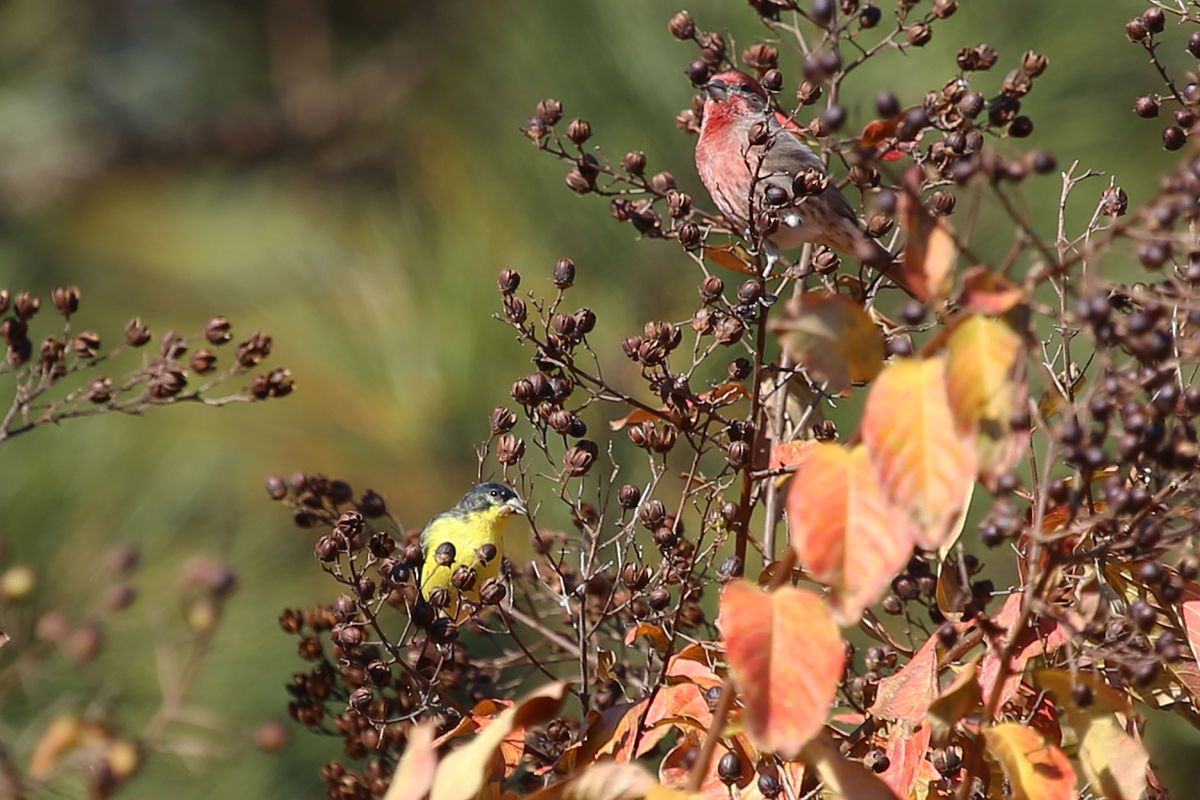
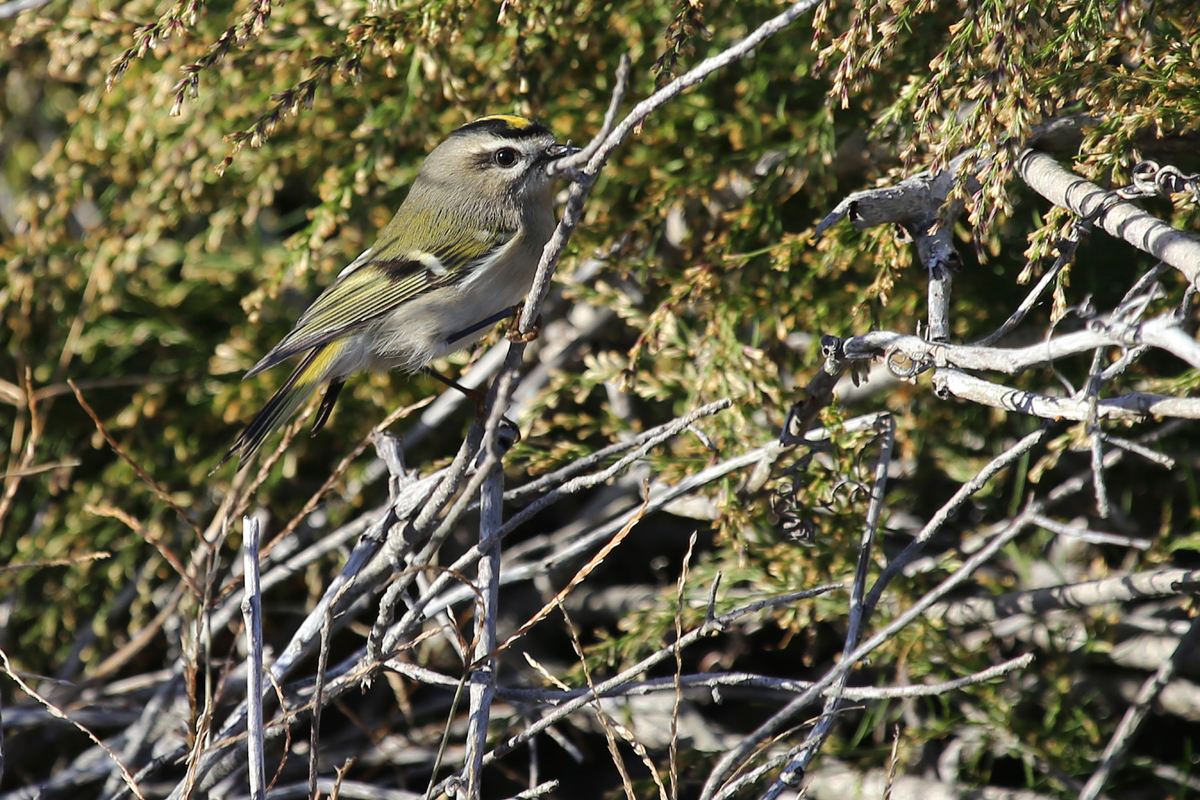
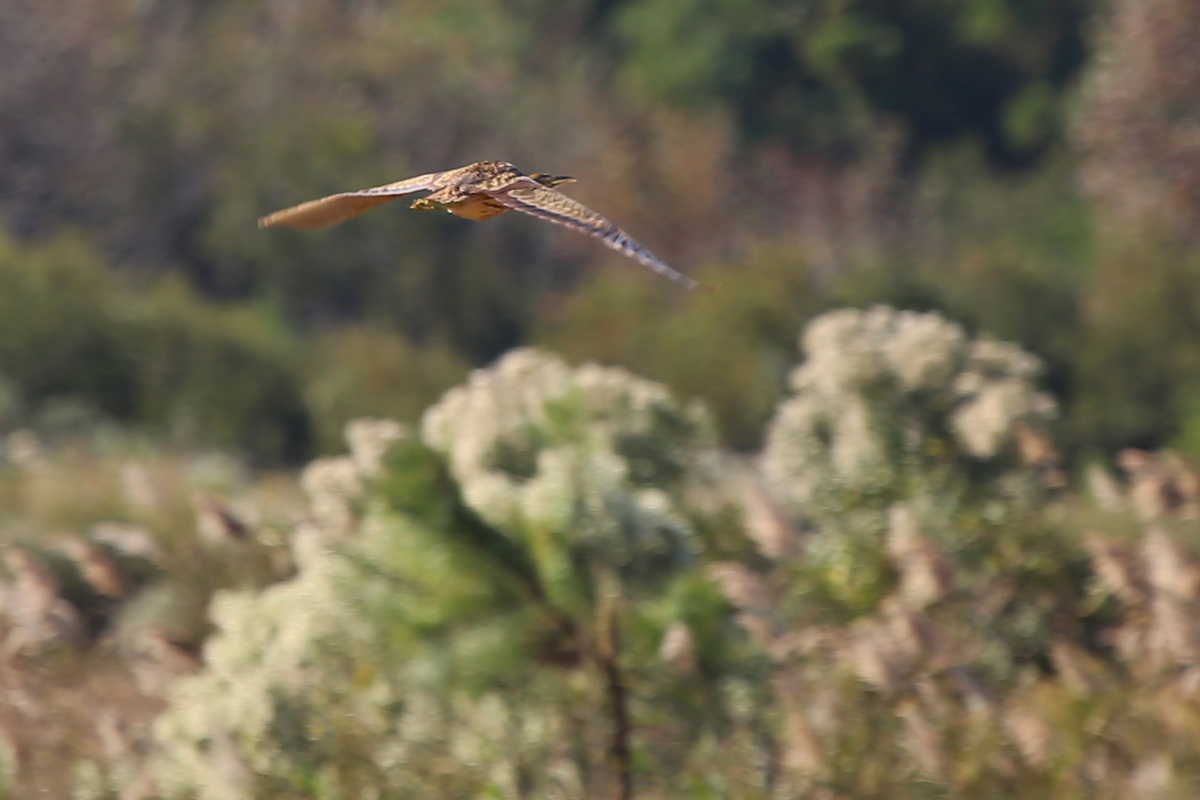
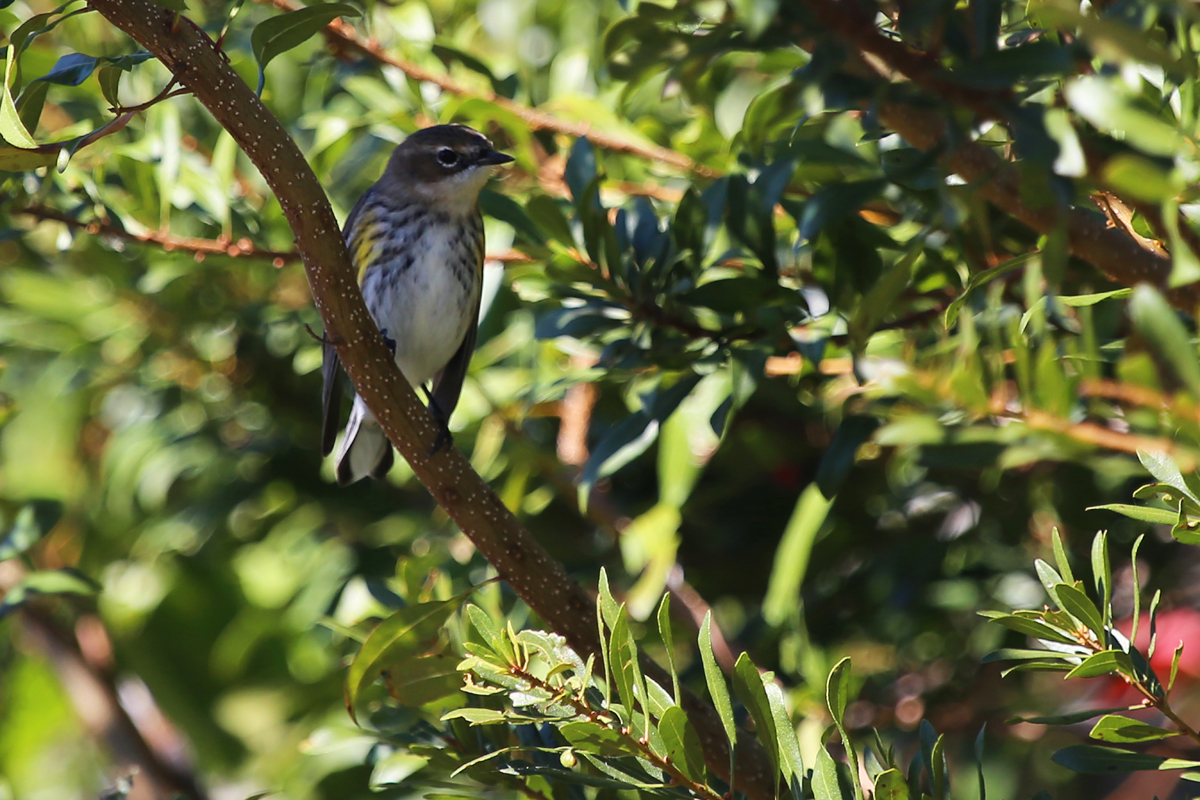
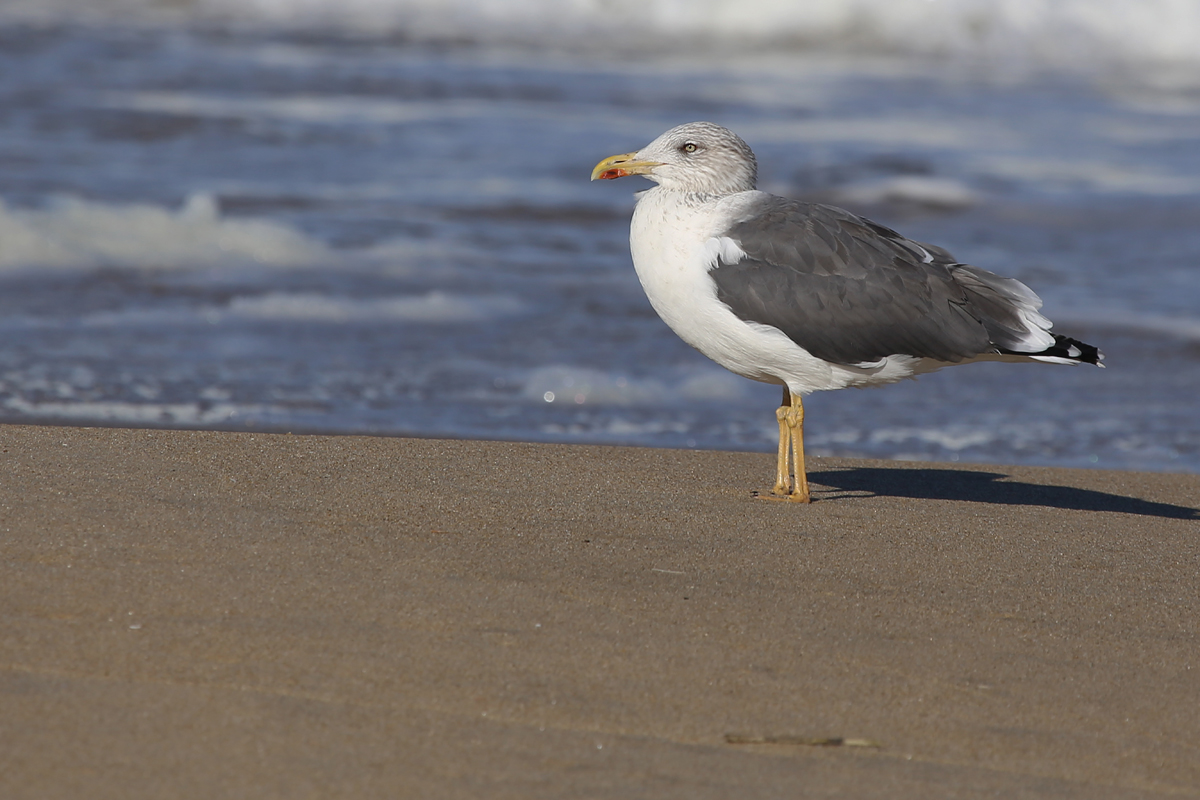
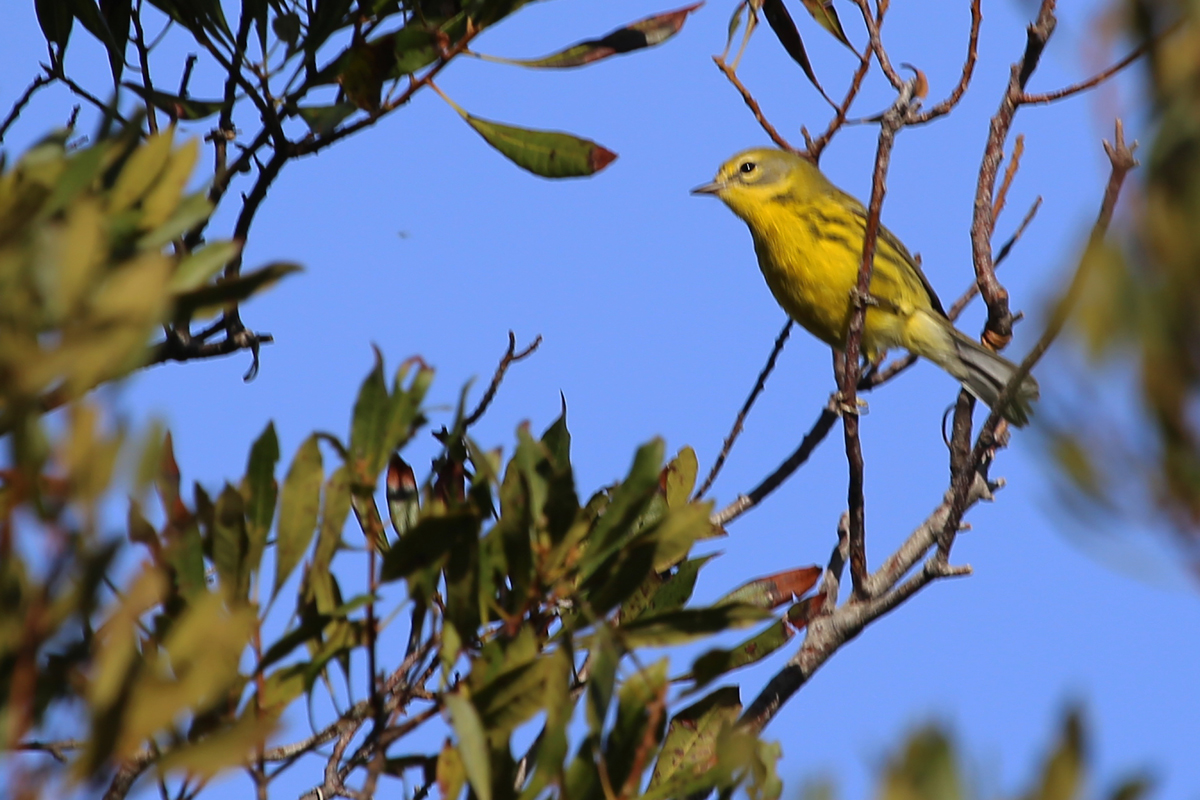
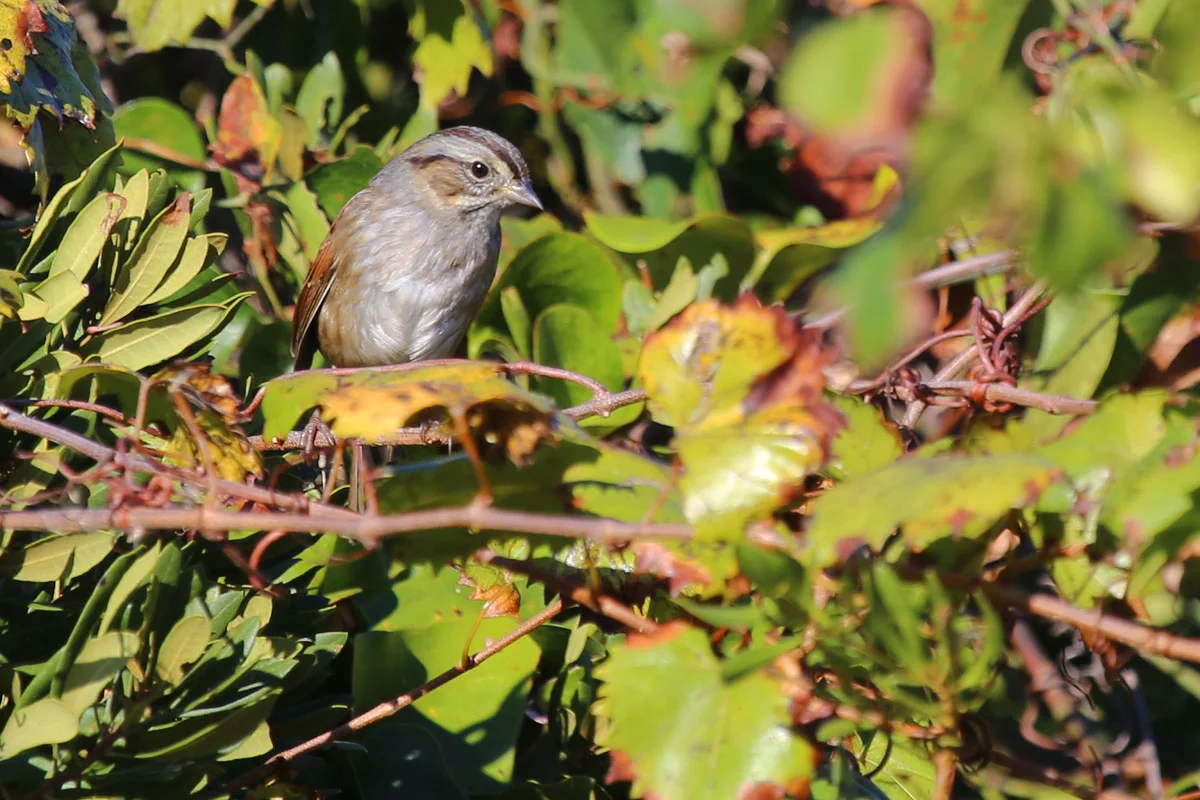
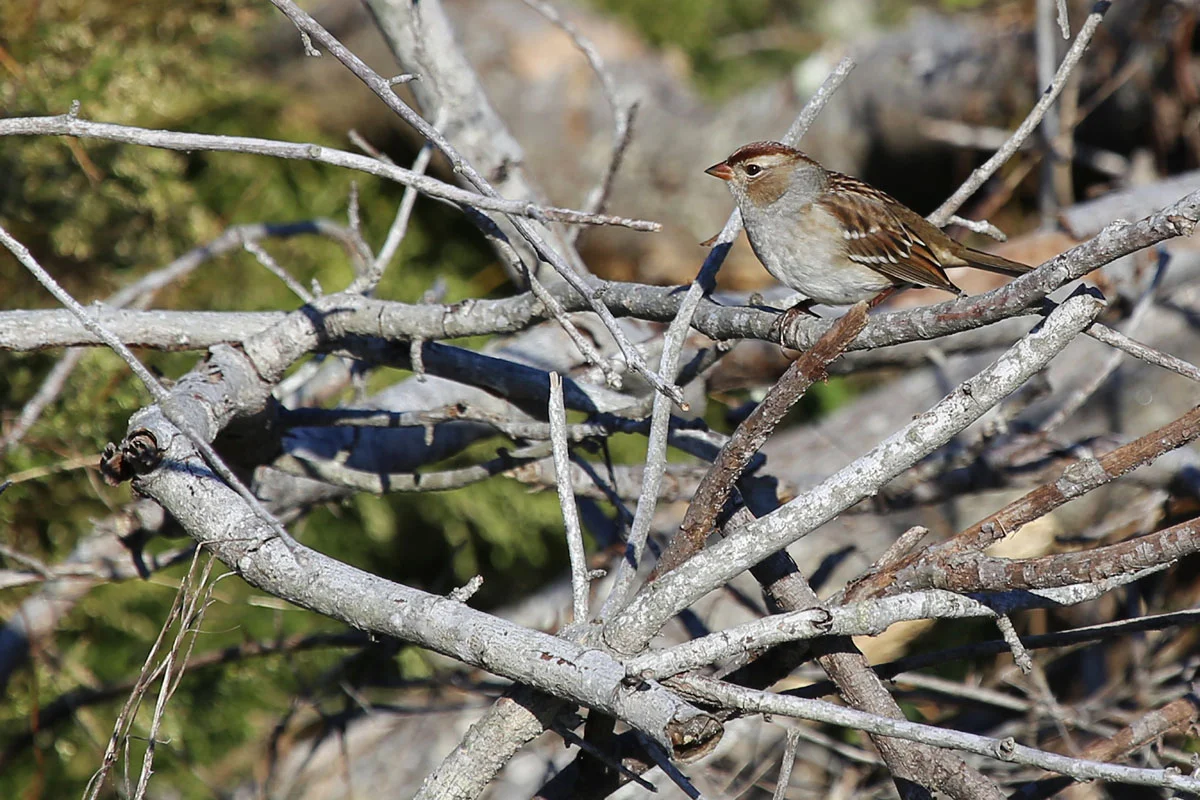
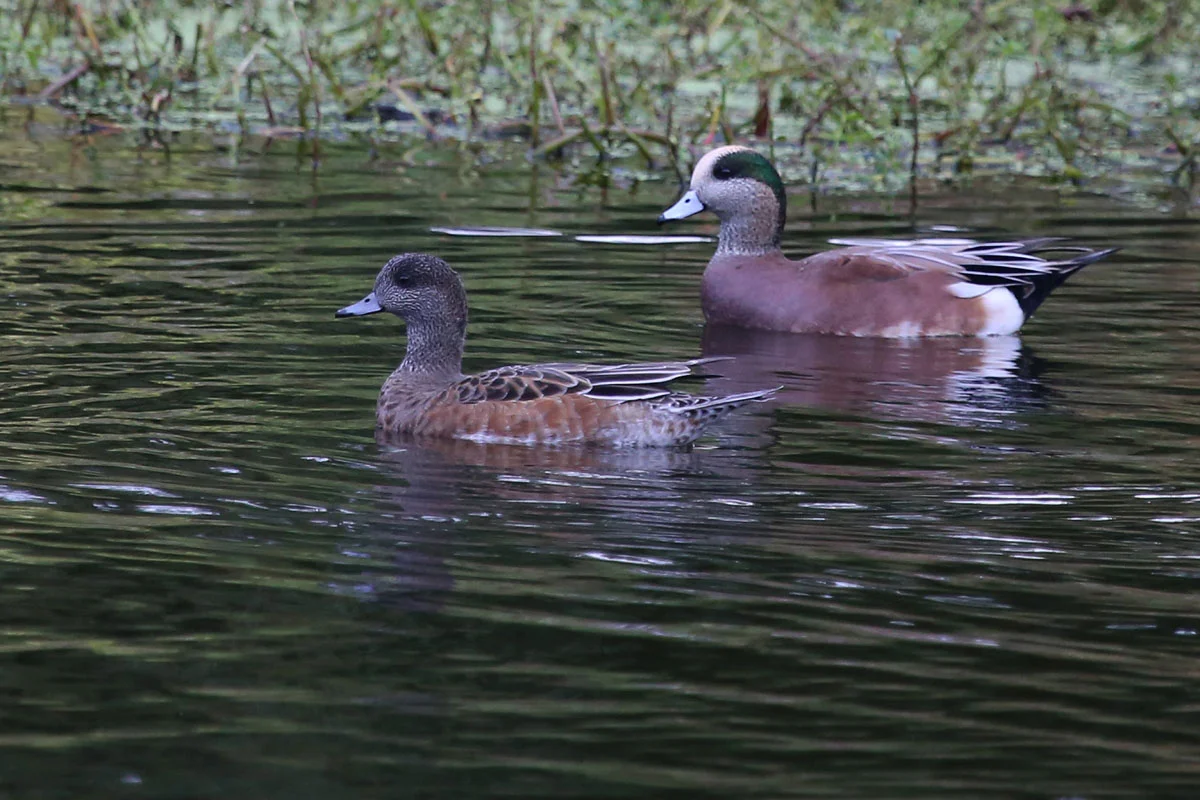
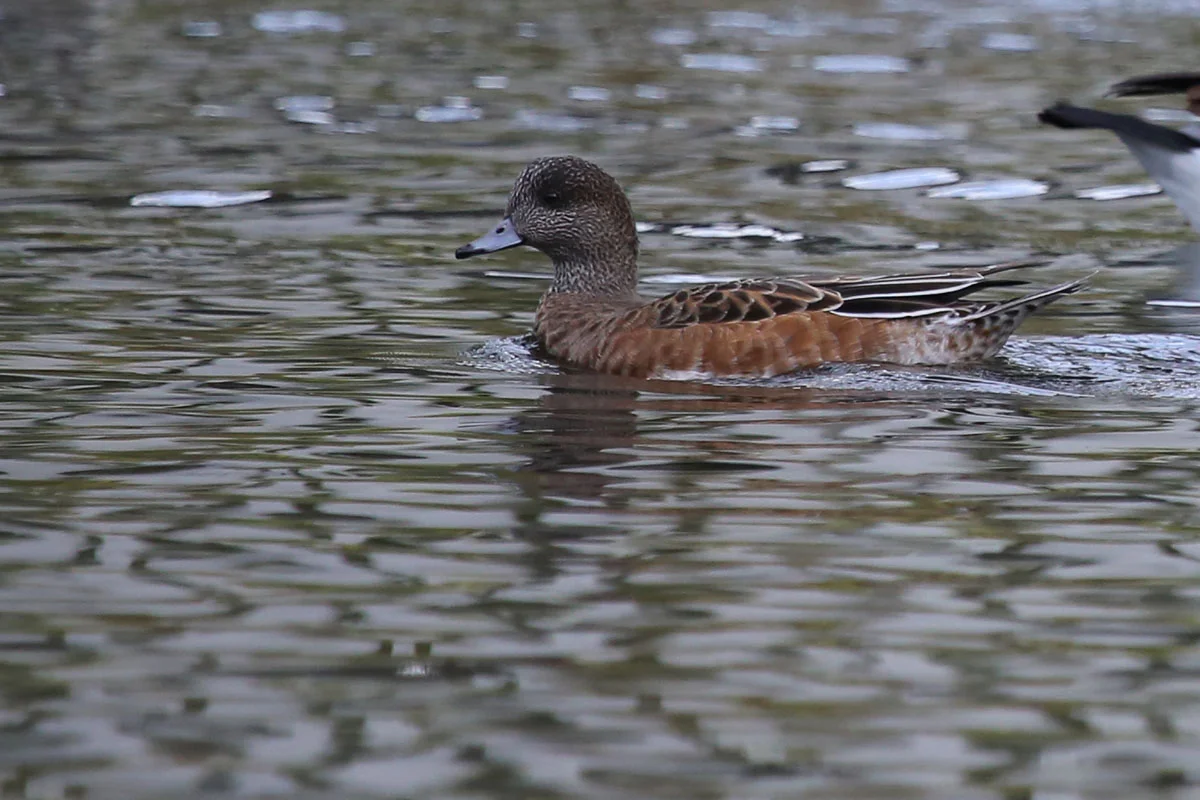
LESSER GOLDFINCH! While many other great birds were viewed this period in Virginia Beach, this will always be the headliner that late November 2016 will be remember for. Not only a first for the county, but for the entire state of Virginia (pending VARCOM acceptance, of course)! Other top finds this period included AMERICAN WHITE PELICAN, PARASITIC JAEGER, CAVE SWALLOW, SNOW BUNTING, PAINTED BUNTING and a continuing LARK SPARROW. First-of-season arrivals this period included our first-of-fall Fox Sparrow & Canvasback (23 Nov), American Pipit (25 Nov) and White-winged Scoter (27 Nov)!  Occurrences of late/lingering species were limited to a few reports of Ruby-throated Hummingbird (latest 29 Nov). We continue to see White-crowned Sparrow reports from Back Bay NWR and some cryptic species, including American Bittern, Virginia Rail, Sedge Wren, and Horned Lark were also observed during this period. WEATHER: Fall leaf color appeared to be in full peak during this period throughout Virginia Beach, and by the end of November, winds had started to bring down many of the beautifully colored leaves. Late November’s average daily high temperatures continued to (expectedly) fall, dropping to 58.3 degrees F (-2.5 degrees from the mid-November period); after a whopping 7.9 degree drop in the average daytime lows between early & mid-November, we experienced a slight rebound this period, rising to 39.4 degrees F (+1.6 degrees). The previous 10-year average daily highs & lows for the mid-November period were 58.8 & 40.3 degrees F, respectively which puts this period in 2016 at -0.5 and -0.9 degrees (very near average) when comparing to the 10-year averages. During the previous 10-year period, the maximum average daily highs & lows were 62.9 (2006) & 47.4 degrees F (2011). Though we had 4 days with measureable precipitation, a daily maximum of 0.17 inches occurred 24 Nov, and our total for the period was still relatively low at 0.34 inches.

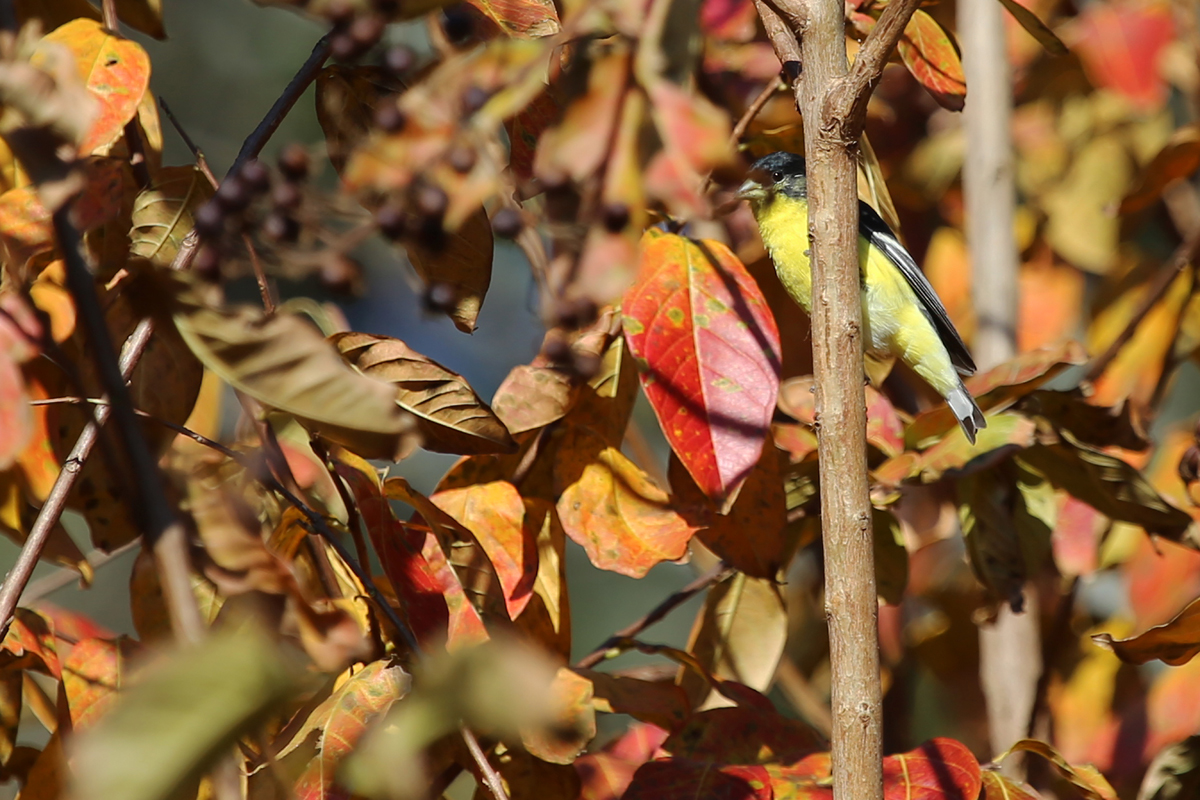
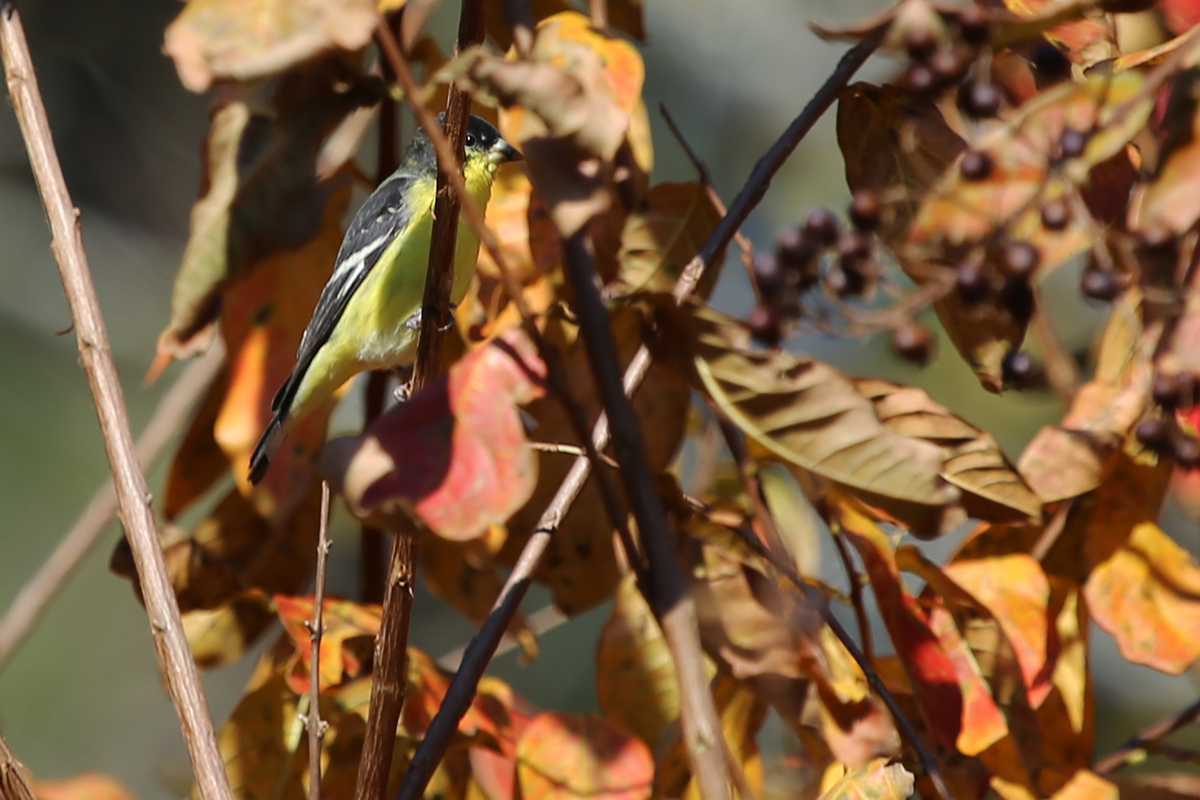
"I chose this one because THIS IS what I saw as I was on my deck refilling my feeders, this is the first of maybe 5 shots to document it forever in case it didn’t come back…I think that is why this shot is super cool... This is the one that started the story." -Mary Catherine Miguez

OBSERVATIONS (PART I):  On Saturday, 26 Nov, a highly unexpected, and very out-of-range, LESSER GOLDFINCH was observed in the backyard of a residence located in the Lago Mar subdivision of Virginia Beach, just north of Sandbridge Road by the homeowner, Mary Catherine Miguez. Identification was made quickly, and a photograph was initially sent via text message at 12:31 PM to a couple of folks to spread the word, which was closely followed by an uproar of excitement and an afternoon of hoping the bird would again be sighted. A little after 3 PM, it reappeared and was again photographically documented (Mary Catherine Miguez) with video also taken this time (Karen & Tom Beatty). In the evening hours, information had been leaked to a few folks from the immediate area with the hopes that the bird would stay overnight in the area, and by the following morning (Sunday, 27 Nov), around 9 AM, it was observed again (Matt Anthony, Edward Brinkley, James Fox & Jason Strickland). Throughout the remainder of Sunday, the goldfinch made back-and-forth trips between a Crepe Myrtle tree and a water feature. By the end of the day it had been seen by quite a number of folks, including: Andrew Baldelli, Mike Collins, Karen & Tom Beatty, Tommy Maloney & Jason Schatti, Ron Furnish & Marie Mullins, Rob Bielawski & Ruth Bielawski, Kim Harrell, James Marcum, Beth Oristian & Ellison Orcutt and Michelle Payne & Lisa Rose. At this point, it was assumed that the bird would stick around, and eBird reports were initialized to let the general populace know about the find. After which, came a flurry of excitement as folks around the state realized that a first-ever-record was potentially within reach. On Monday, 28 Nov, the bird showed itself early, but remained elusive throughout the day, much to the dismay of many travelers. Just before 4 PM, it showed itself to Robert Ake, Jeffrey Blalock, Adam D’Onofrio, Mike Stinson & Clyde Wilson. Unfortunately, the last sighting (as of this writing) occurred early on the morning of Tuesday, 29 Nov, by the initial finder, Mary Catherine Miguez. Though, this seems a fitting end to the tale of the Lesser Goldfinch in Virginia Beach, pending no one else does re-find the bird.

A report has already been submitted to VARCOM, and with all the documentation that the bird provided during its 4-day stint, hopefully it will be accepted by the committee as our 474th (or 475th species, pending the Tropical/Couch’s Kingbird ruling). The most recent addition to the Official State List for Virginia was a Dusky Flycatcher observed and mist netted in 2013 for DNA analysis to confirm species identification. However, chronologically speaking, the last species to be added was the Zone-tailed Hawk observed over the Kiptopeke Hawkwatch (after a speedy same-day flight south from Cape May, New Jersey!) and surrounding area in the fall of 2015, with the Smith’s Longspur of winter/spring 2015 the next-most-recent add. Interestingly, this is the first new state bird found in Virginia Beach since the 20 Nov 2012 occurrence of a single Northern Lapwing was discovered by an ODU field ornithology class at Back Bay NWR. A list of other recent additions to the list can be found Here on the Virginia Society of Ornithology’s website. Lesser Goldfinch is a species for there are very few records on the East Coast. In fact, so far during 2016, the closest report to this one occurred 5-6 Jan at Reelfoot Lake SP in Lake County, Tennessee, a remarkable 742 miles from Lago Mar! In the past, Lesser Goldfinch has occurred east of the Mississippi River only in these states & counties: Delaware (3 Aug 2008 in New Castle), Florida (19-26 Jul 2014 in Brevard), Kentucky (5-7 Dec 1980 in Hardin), Maine (17 Dec 1992 in Sagadahoc and 5 Aug 2015 in Piscataquis), Mississippi (15 Jan 2005 in Warren), North Carolina (2 Mar 2009 in Carteret and 27 Sep 1985 in Forsyth), Ontario (10 Aug 1982 in Toronto) and Wisconsin (11-13 Nov 1984 in Douglas). It should be mentioned that these records are based solely on eBird reporting, and there could be others out there that just haven’t made it into the system. But, given that this species does have a documented pattern of naturally occurring vagrancy in the East, it should be of benefit while the record is being reviewed by VARCOM and hopefully we will see it added to the state list soon. All of the individuals who were fortunate enough to observe (or even try to observe) this bird certainly owe a debt of gratitude to Mary Catherine Miguez for her kindness in opening up her property for observation! I highly encourage anyone who reads this to please check out Mary Catherine's professional photography page. There are very few people who have high level capability in both birding & photography, but "MC" is one of them. Frankly, she is one of, if not the best, bird photographers in Virginia Beach & we are very fortunate that this Lesser Goldfinch decided to set up a temporary residence in the yard of someone capable of properly documenting it! Of all the yards on the East Coast, it is mathematically absurd that this combination occurred.
OBSERVATIONS (PART II): Now of course, there were plenty of other great sightings during late November in addition to the one listed above! Thanks in part to all the folks who made the attempt at seeing the Lesser Goldfinch (and made other stops to-and-from) and also just the fact that the Thanksgiving holiday occurred during this period, Virginia Beach was utterly inundated with eBird reports, well in excess of 200 checklists in total over the 10-day time frame! In addition, and primarily due to the Lesser Goldfinch, a flock of 13 AMERICAN WHITE PELICANS was recorded, which otherwise would likely have gone unnoticed within Virginia Beach. The flock was viewed 28 Nov overhead of Lago Mar, around 12:51 PM (ph. Jeffrey Blalock, Adam D’Onofrio, Mike Stinson & Clyde Wilson. Interestingly, the Kiptopeke Hawkwatcher, Anna Stunkel reported having seen a group of 14 American White Pelicans over the platform travelling in the same direction (northeastward) around 2 PM, so it seems highly likely that this was the same group. Perhaps the flock picked up a straggler, or the 14th individual was out of sight over Lago Mar?

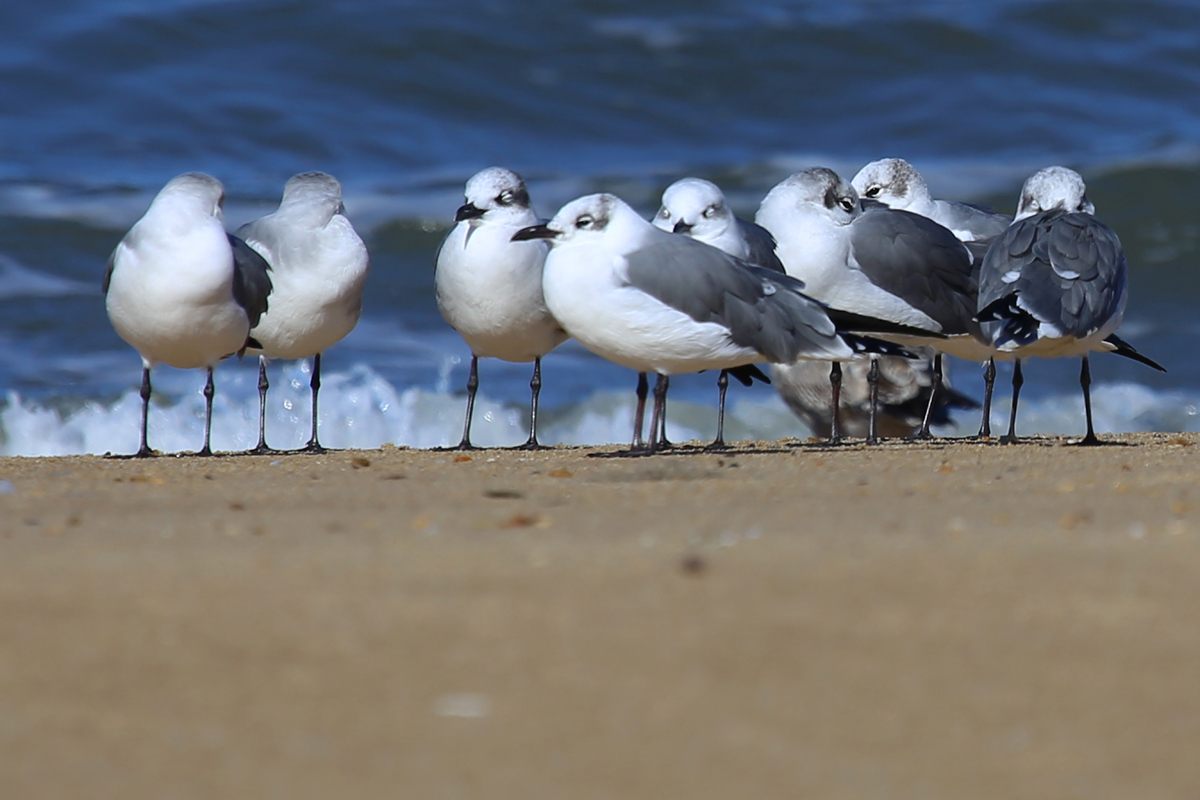
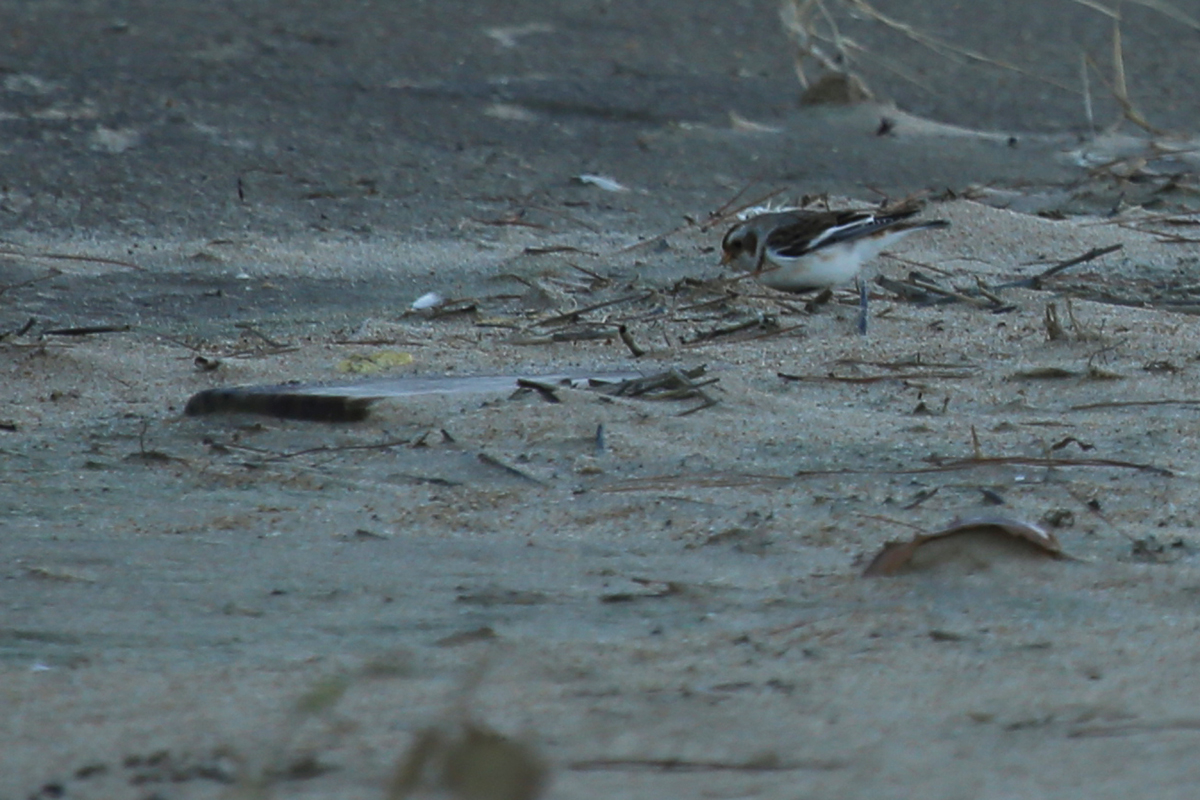
Another noteworthy flock of birds continued this period in Virginia Beach, this being the SNOW BUNTINGS found initially 19 Nov by Andrew Baldelli at First Landing SP’s beach-border with Fort Story. Many folks were in town over the holidays to seek them out since the species is very rare throughout most of Virginia, with the coast being the easiest region to pick them up. In fact, this species may be annually occurring in decent numbers along the dune-line of Virginia Beach, but eBird reports thus far don't necessarily support this. Over time, this species will likely become removed from the rarity listing though, as more folks are out searching for them in locations like First Landing SP, Fort Story, North Beach, Camp Pendleton, and Back Bay NWR. Sightings of this particular flock though, which varied from 1 to 8 individuals, occurred on 21 Nov (6, Tommy Maloney & Jason Schatti), 23 Nov (5,Kim Harrell), 24 Nov (5, Richard Korpi), 25 Nov (8, Kim Harrell & Lewis Barnett, Karen & Tom Beatty and Steve Myers), 26 Nov (2, Rexanne Bruno, 4, Janice Frye, 1, Ander Buckley / Tucker Beamer / Baxter Beamer and 7, Tracy Tate), 27 Nov (7, Logan Anderson & George Burruss and 8, Beth Oristian & Ellison Orcutt), 28 Nov (8, Mike Collins, Derek Hudgins, Natalie & WS Barbour, and 7, Loretta Silvia) and 29 Nov (6, James Marcum). Please note that only reports showing photographs have been linked in the previous discussion so anyone interested in viewing the Snow Buntings can quickly load these links.

Along the coastline of Virginia Beach, several reports surfaced of CAVE SWALLOWS during this period, with 5-7 sighted at Pleasure House Point (21 Nov / Bob Swiader), 2 at First Landing State Park (25 Nov / Kim Harrell & Lewis Barnett) and 1 at Back Bay NWR (29 Nov / Karen & Tom Beatty). Cave Swallows seem to almost be reliable finds now in coastal Virginia, with highest numbers being encountered last Fall around the Taylor Pond at Kiptopeke SP across the bay in Northampton County. These should continue to be watched for as we move into December, as last year individuals lingered all the way into the new year.

Also observed along the coast, PARASITIC JAEGERS popped up in several locations this period. With a high count of 5 observed off Back Bay NWR (28 Nov / Robert Ake), 3 were also observed from Little Island Park (25 Nov / Andrew Baldelli & Tracy Tate), and individuals were observed at Fort Story (25 Nov / Karen & Tom Beatty) and First Landing SP (26 Nov / Rexanne Bruno).

Possibly a third individual for Virginia Beach this fall, yet another female PAINTED BUNTING was found 21 Nov (Camp Pendleton / Mary Catherine Miguez) and observed later in the day (Karen & Tom Beatty) as well as again 22 Nov by the same observers. Please note that this facility is limited to military ID access only, so this one is not something ‘chaseable’.

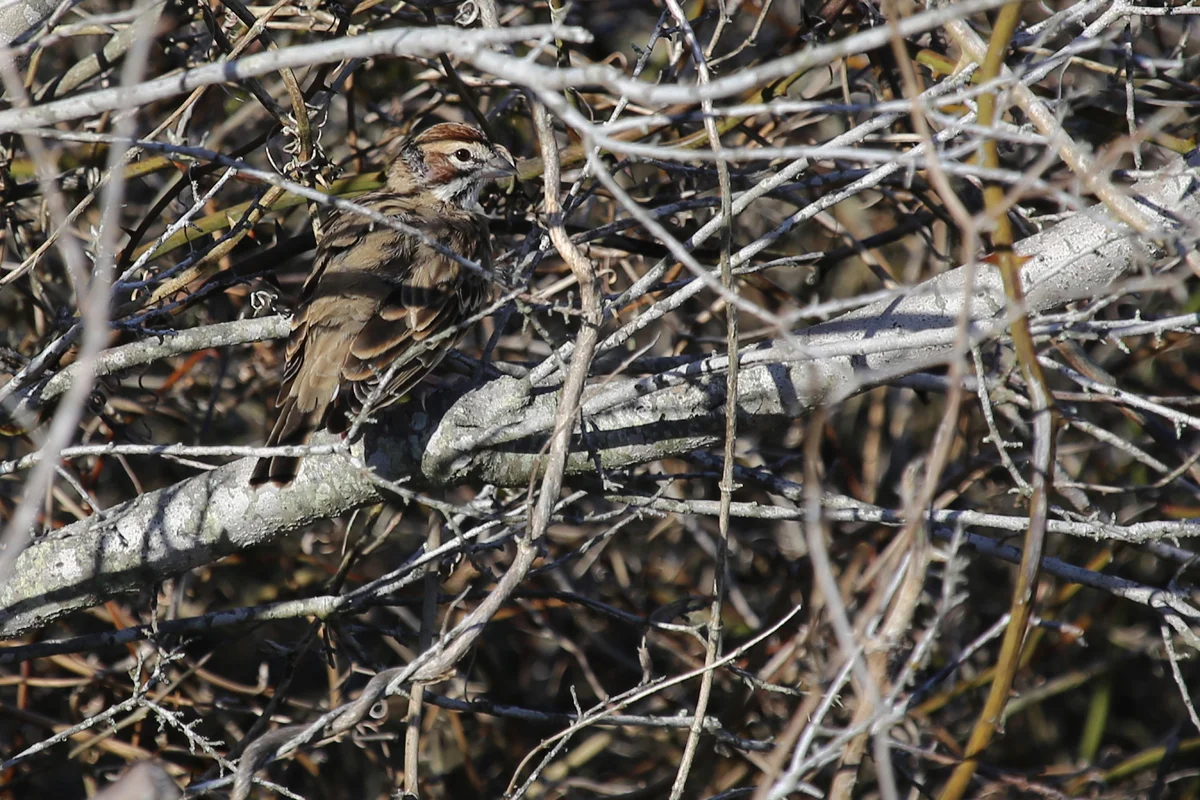
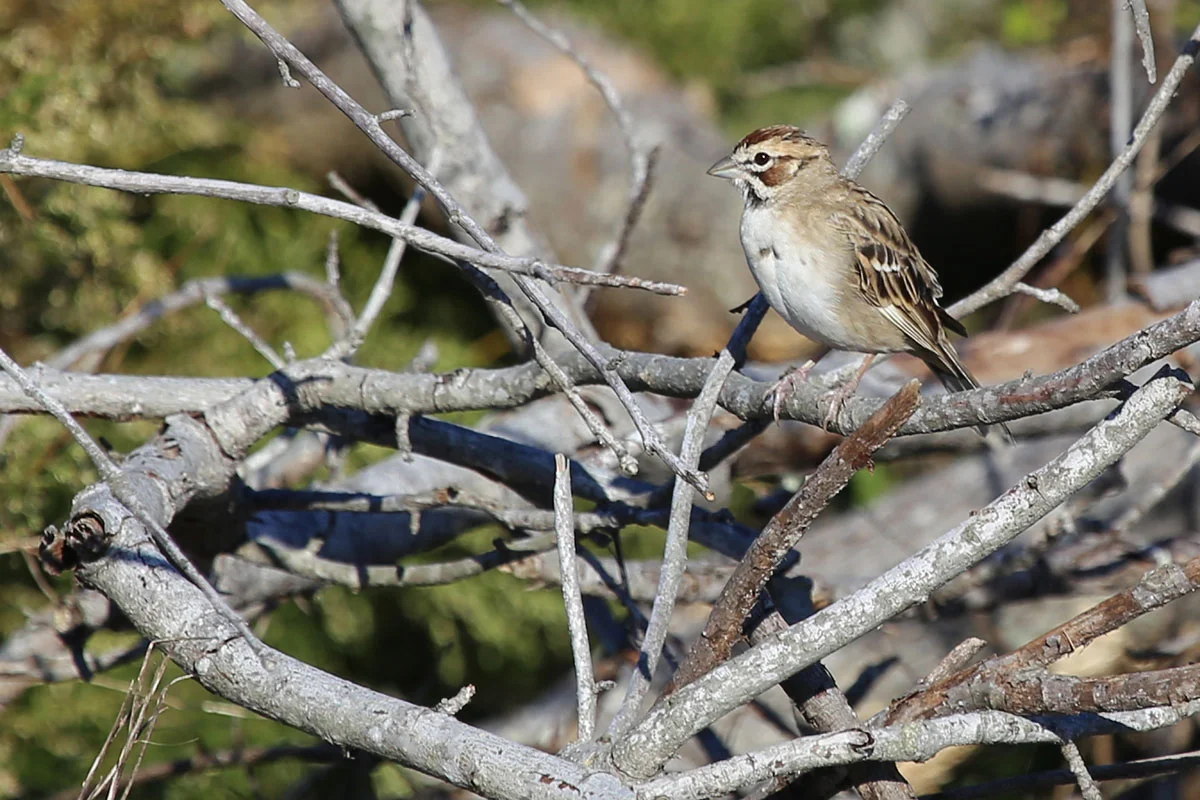
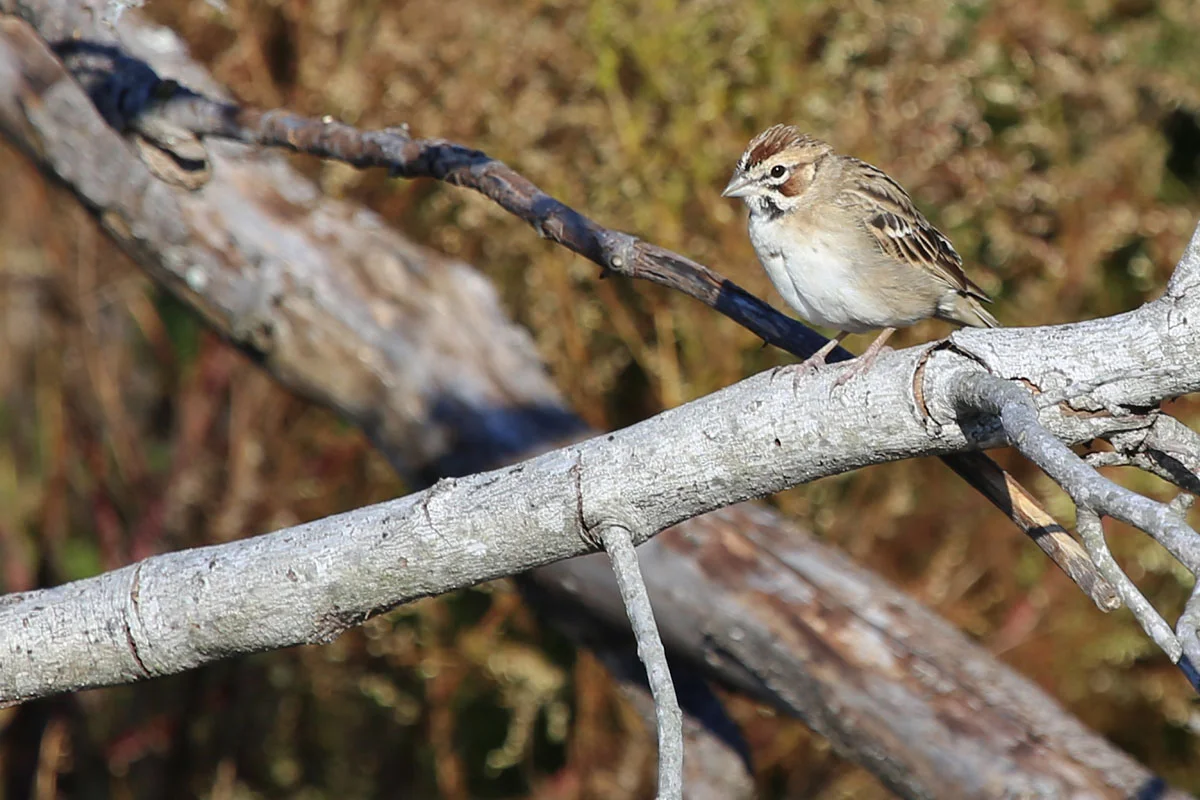
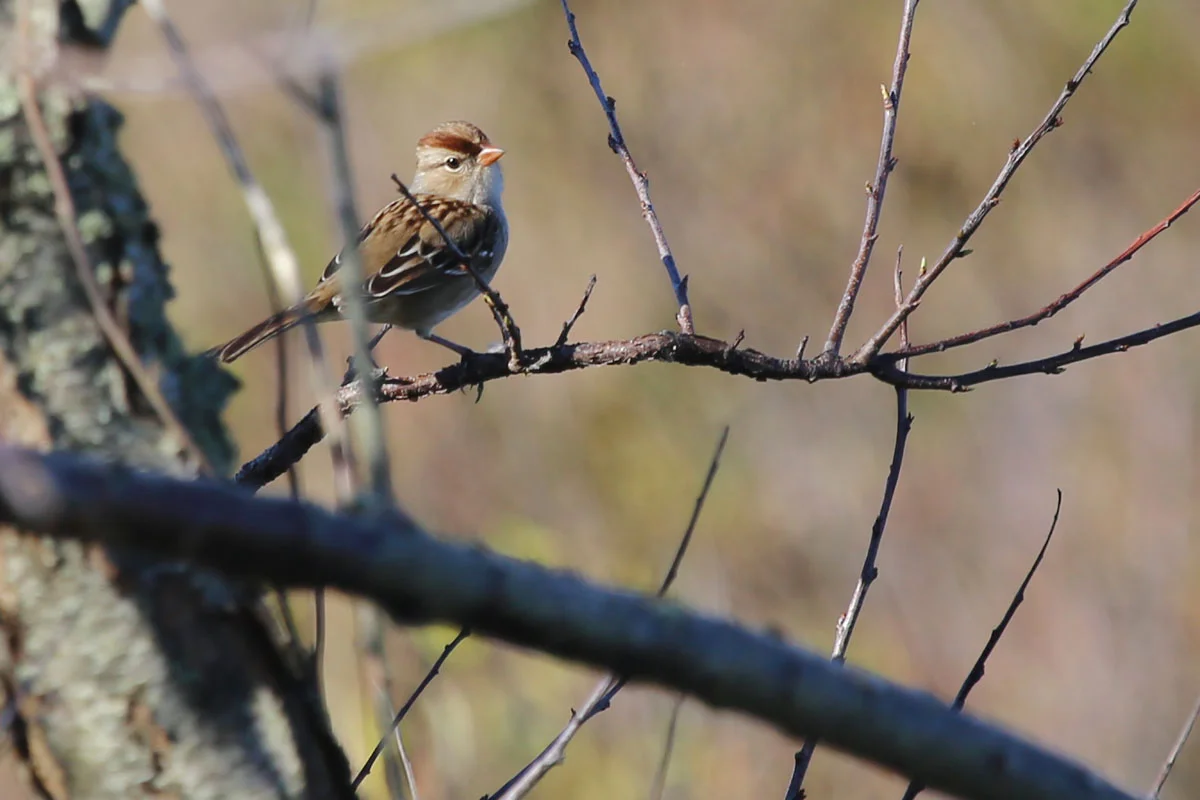
Lastly, as far as the rarities went, the LARK SPARROW which has been present at Back Bay NWR since at least 23 Oct continued through this period in the same area, being noted 27 Nov by both David Clark and Logan Anderson. This sparrow was found initially with a large wound on the back of the right side of its head, which has thankfully healed considerably, but has also provided something unique to this individual to look for in confirming that the same bird has been present.

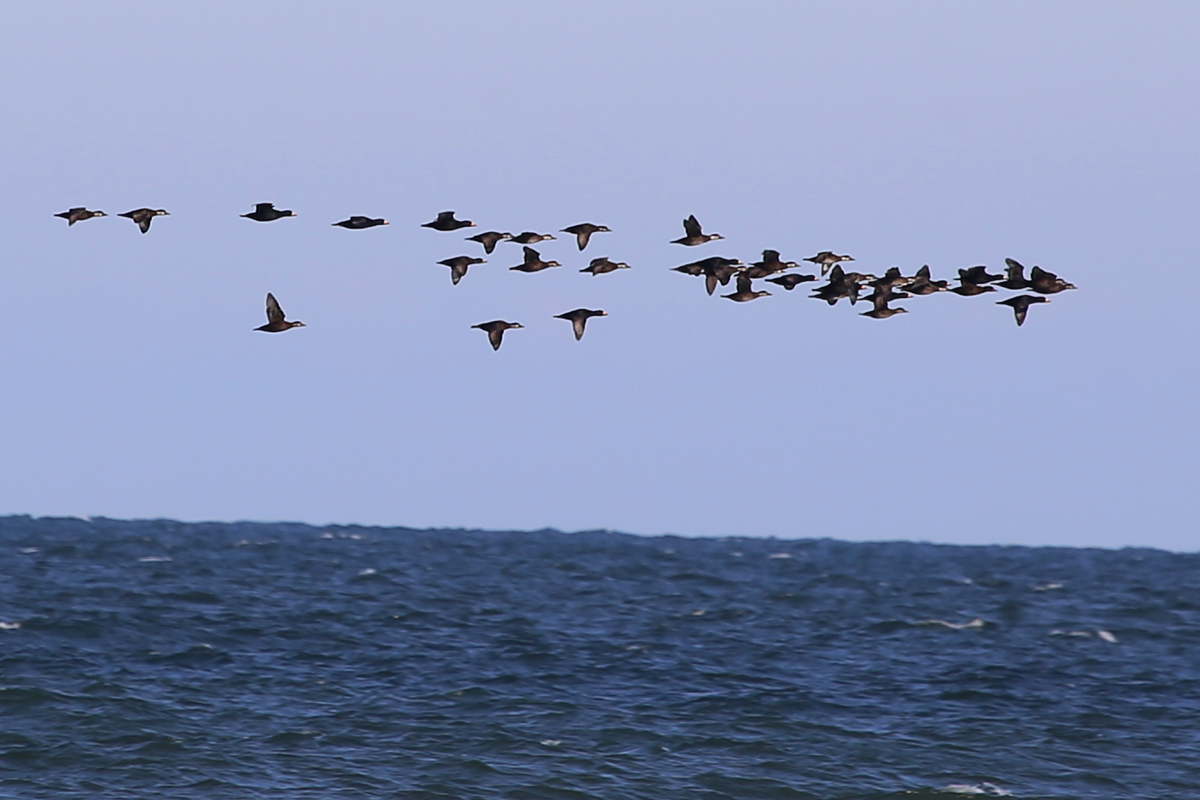
First-of-season arrivals (all within normal expectations) this period included 1 Fox Sparrow (23 Nov / Back Bay NWR / Mike Collins), a Canvasback (23 Nov / Back Bay NWR / Bruce Beck), 2 American Pipit (25 Nov / Little Island Park / Andrew Baldelli & Tracy Tate) and a single White-winged Scoter (27 Nov / Back Bay NWR / Baxter Beamer, Tucker Beamer & Paul Buckley). In addition to the first arrivals, we had several reports of lingering Ruby-throated Hummingbirds, which at this point in the year need to be scrutinized to ensure a Black-chinned Hummingbird or other species doesn’t slip by us. A lively discussion was produced on Facebook when some excellent photographs were posted of 1 of 2 hummingbirds observed at Camp Pendleton (21-22 Nov / Mary Catherine Miguez and Karen & Tom Beatty). Nothing definitive in the photographs (beyond behavioral traits such as bobbing of the tail) could be linked to Black-chinned unfortunately, and the primary flight feather shape favored Ruby-throated per this document. Another hummingbird, presumed Ruby-throated was at an Alanton residence’s feeder 29 Nov (Michelle Payne). The Coastal Virginia Wildlife Observatory also began their seawatch program during this period, with a couple of highlights being very high counts of Common Loons (758 on 25 Nov / Tracy Tate) and Black Scoter (1163 during one hour, same day, Tracy Tate)!

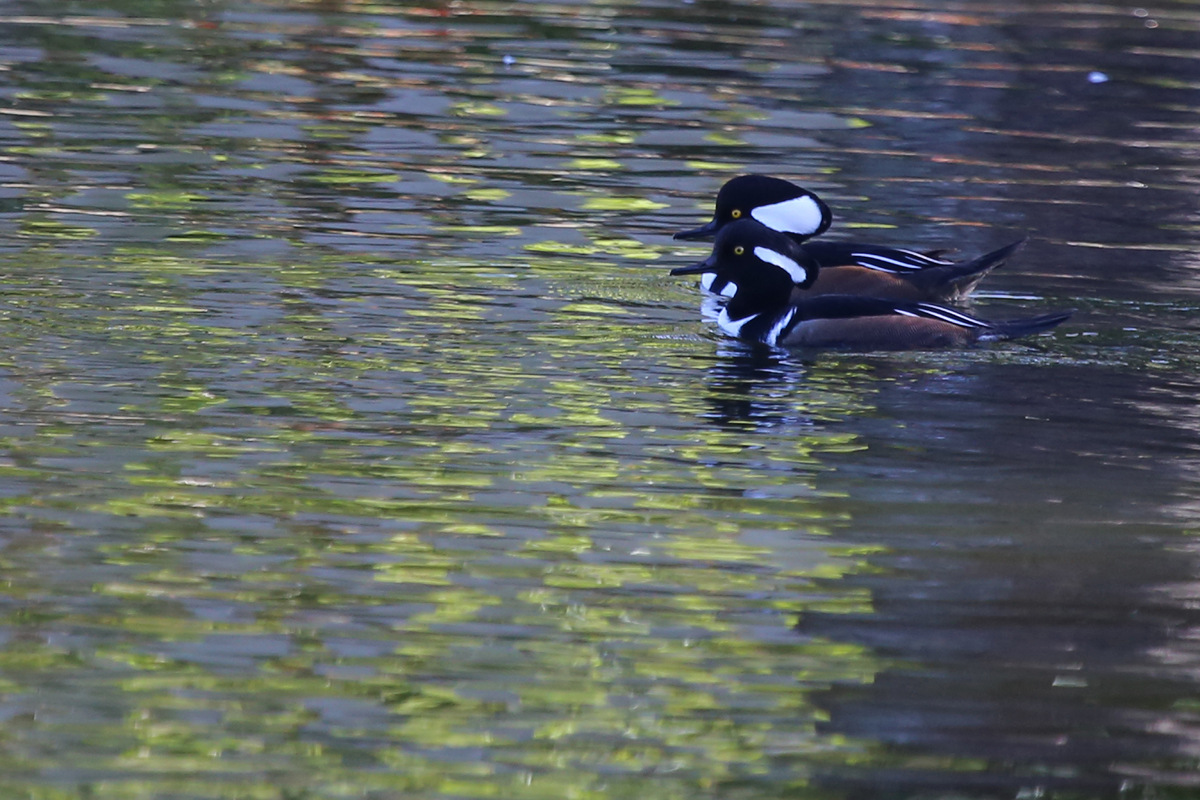
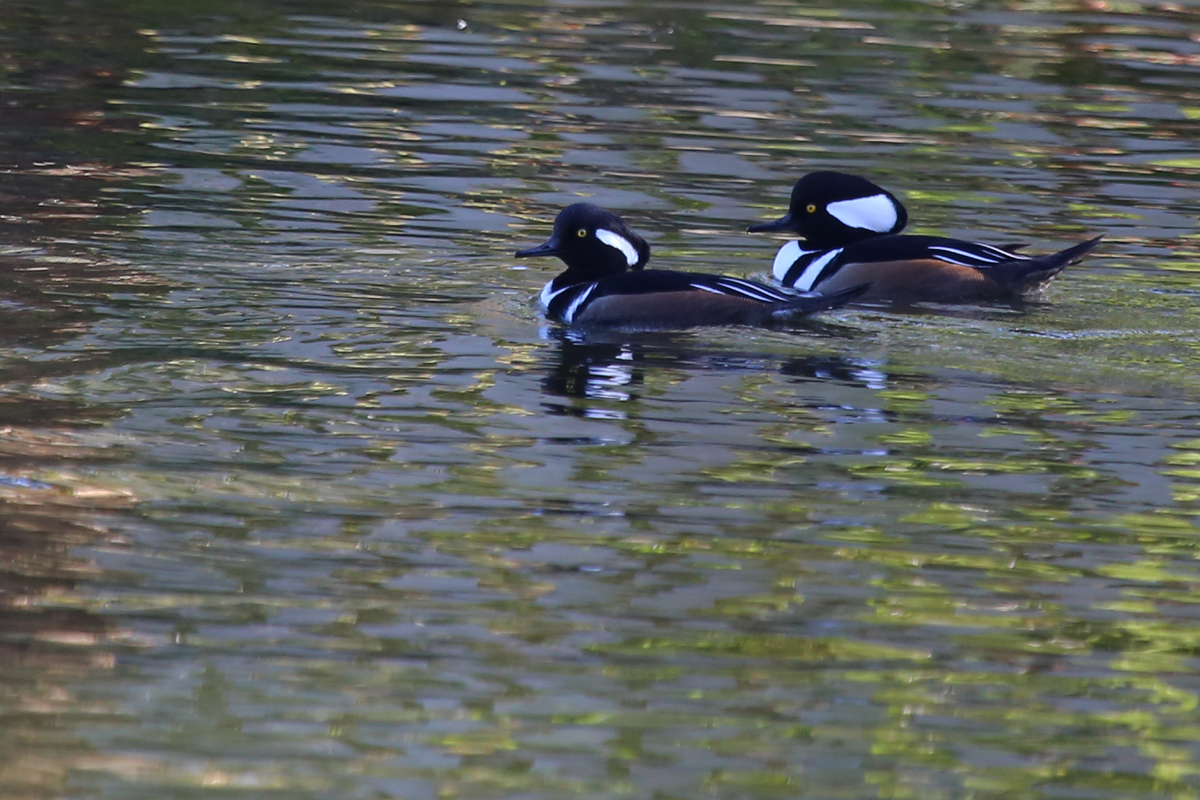
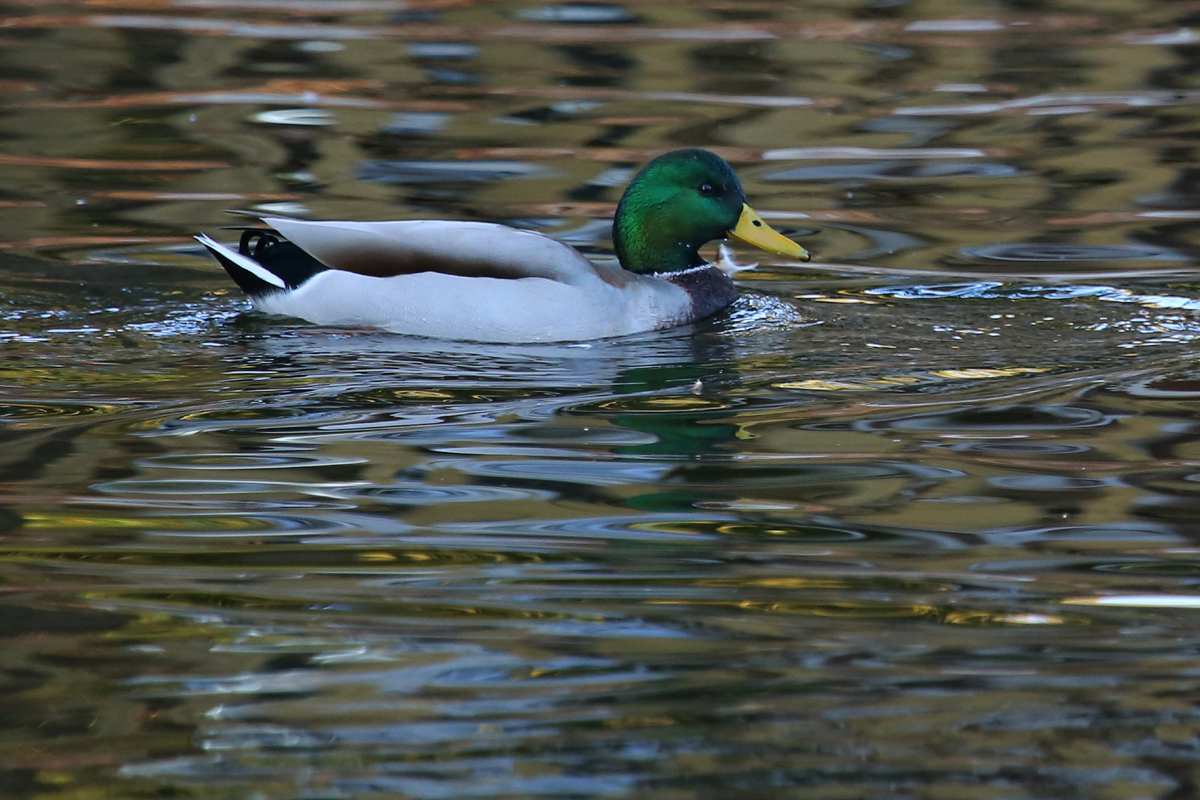
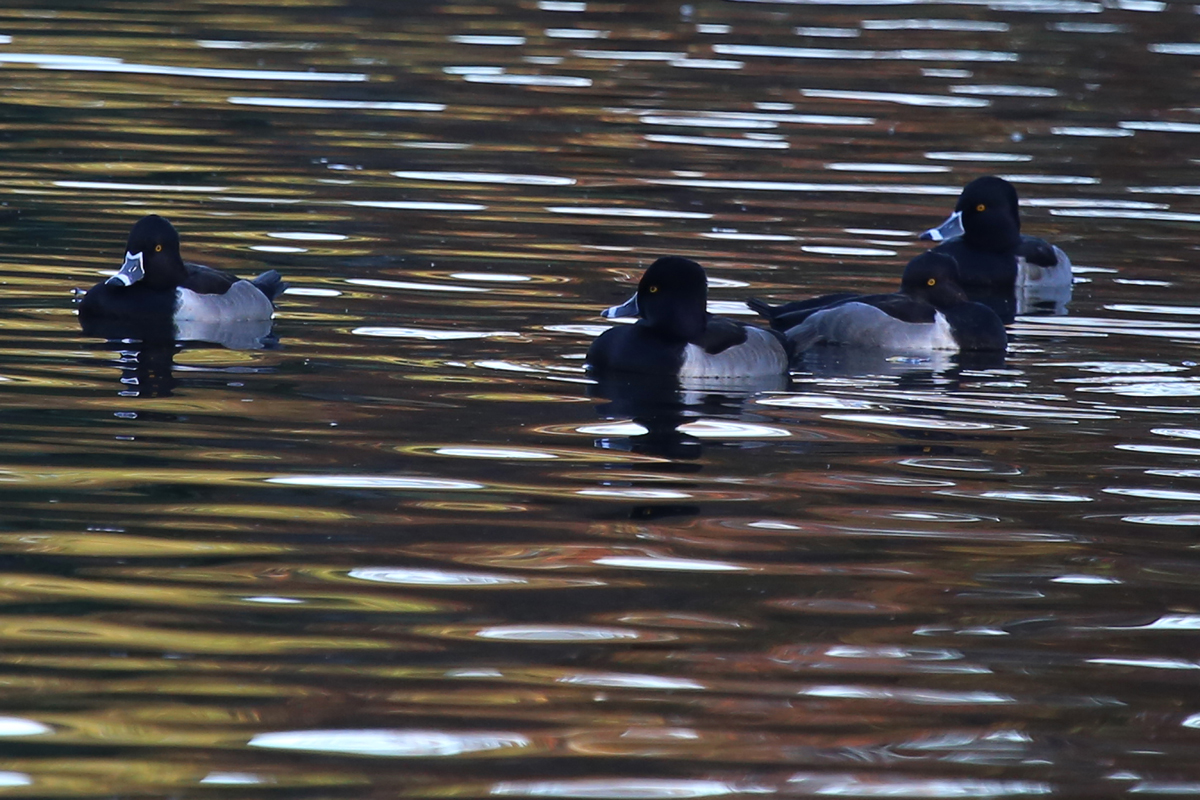
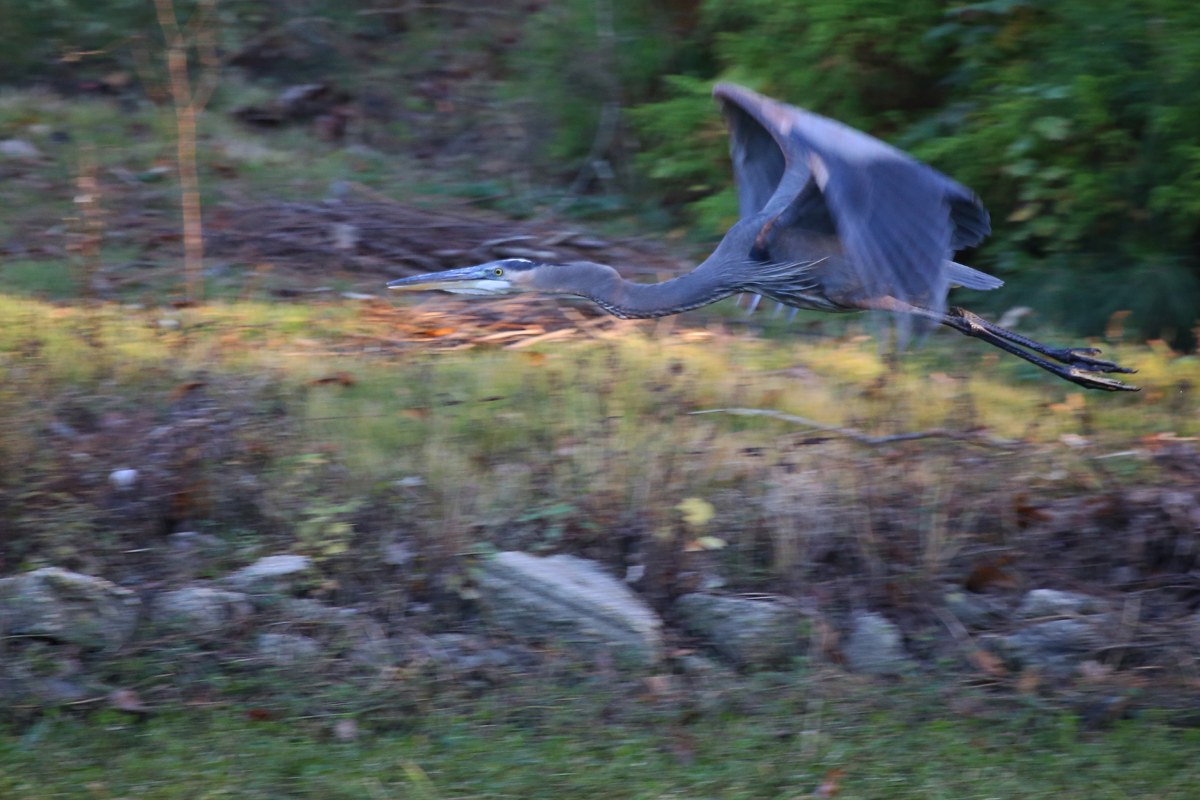
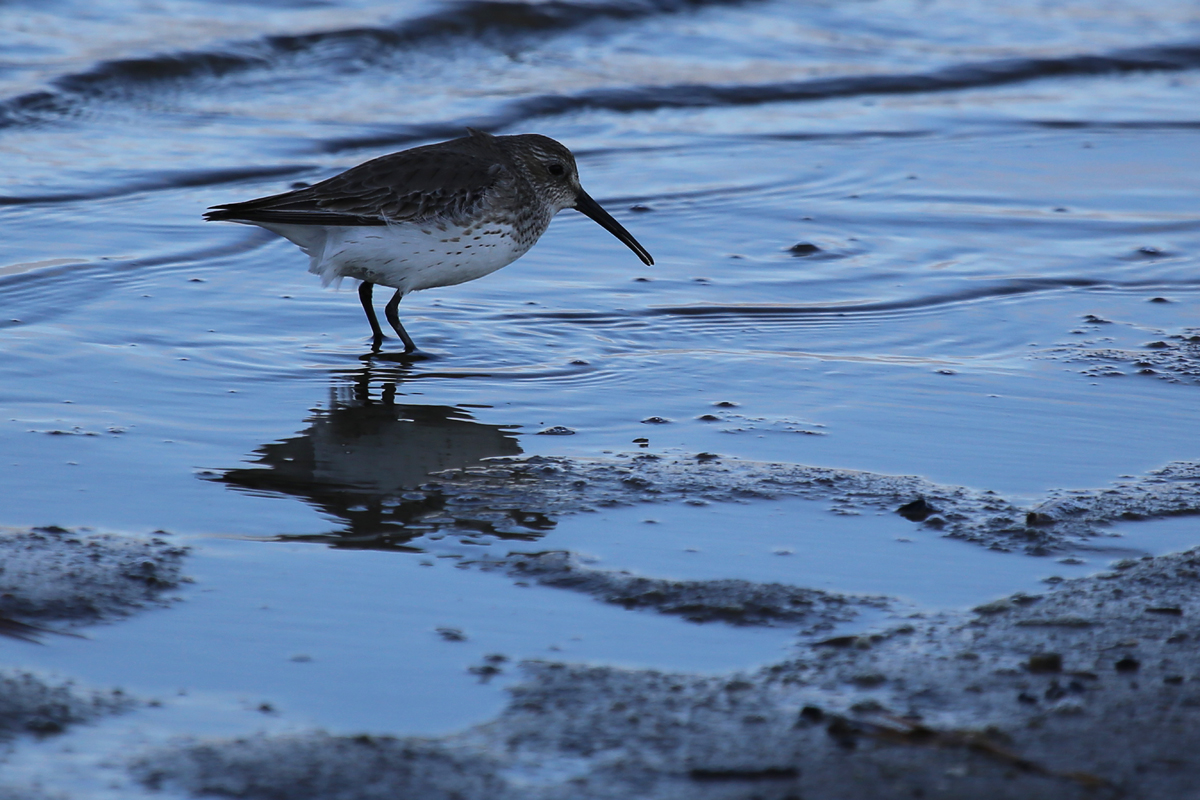
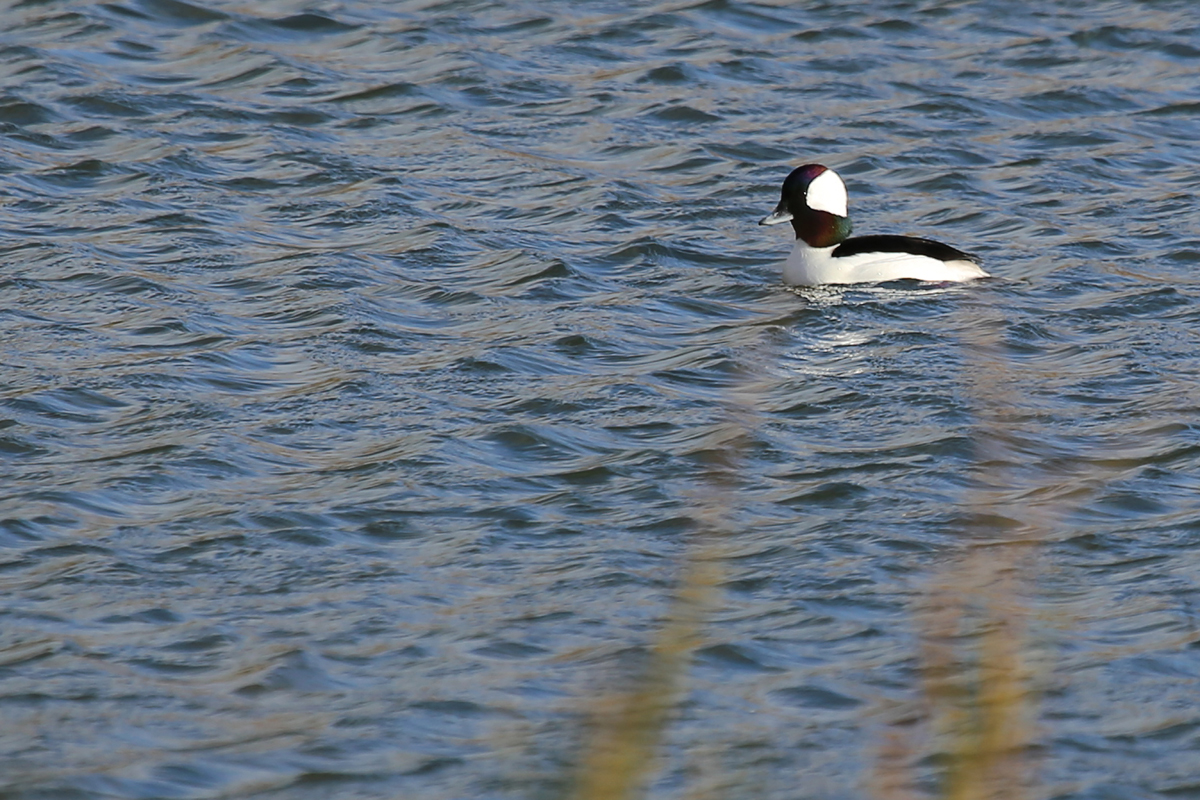
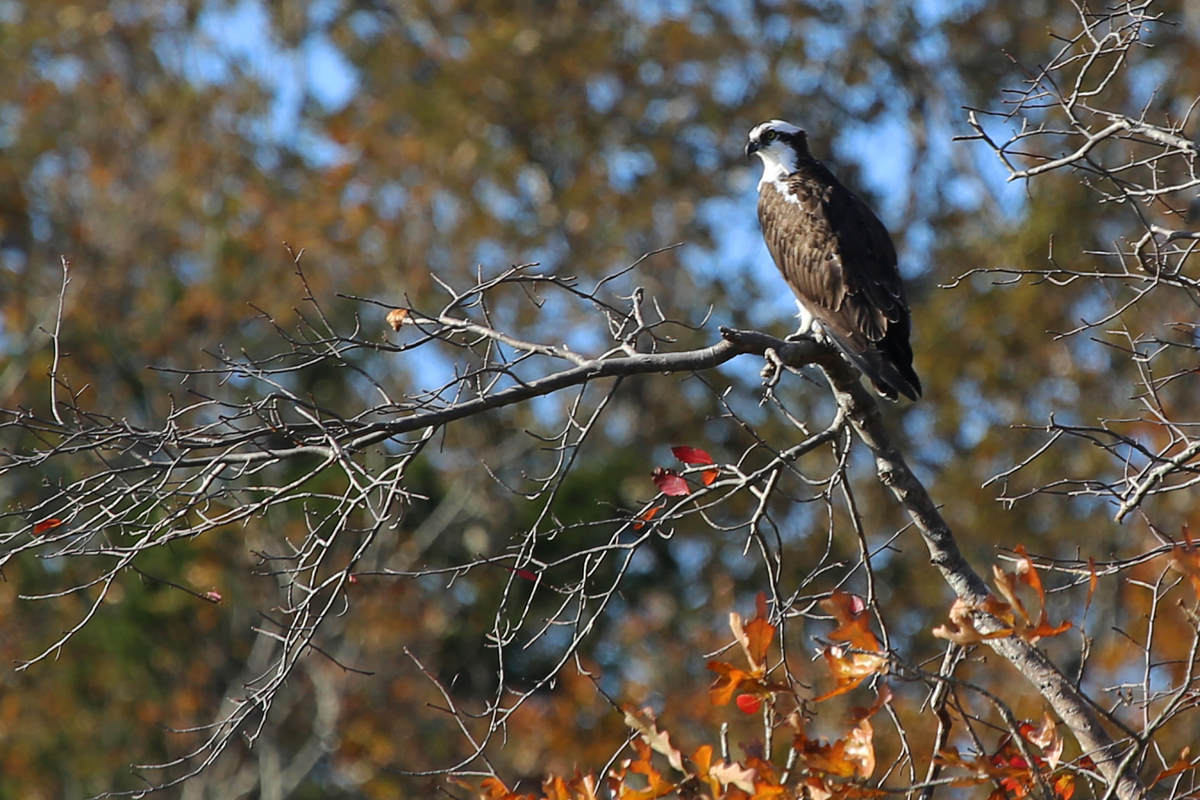
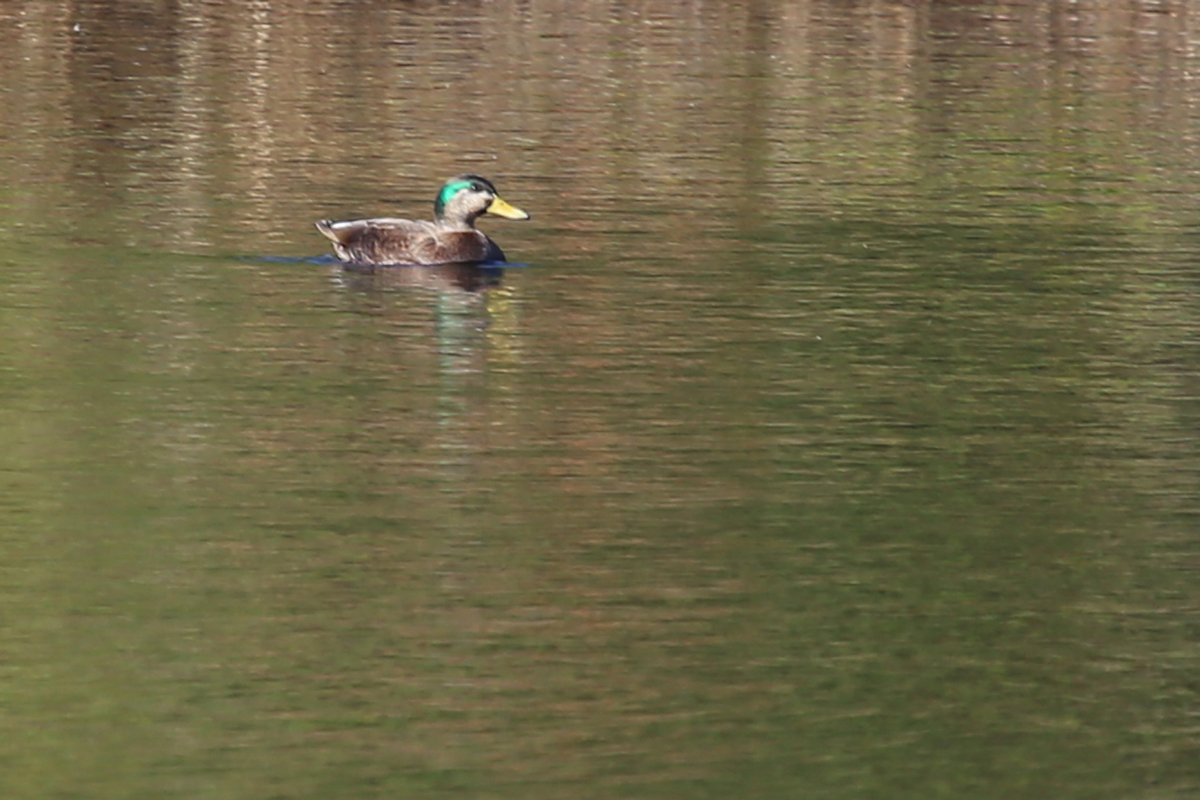
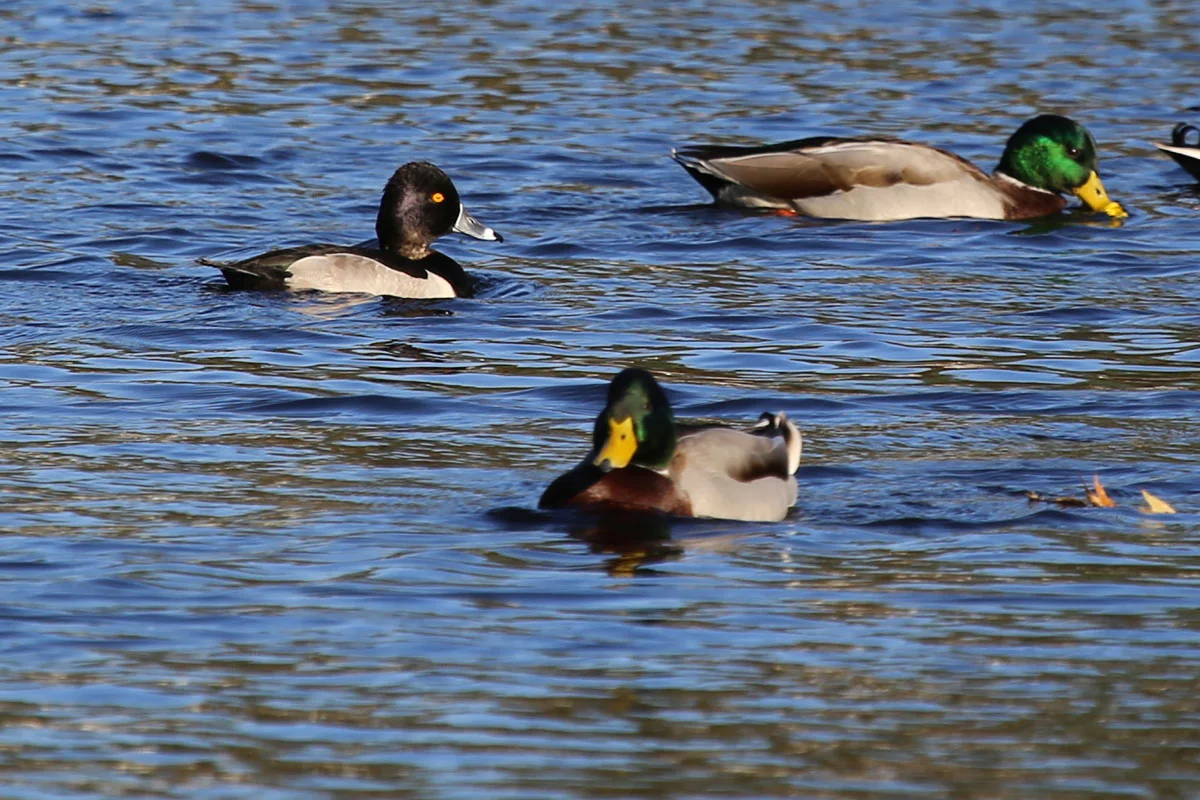
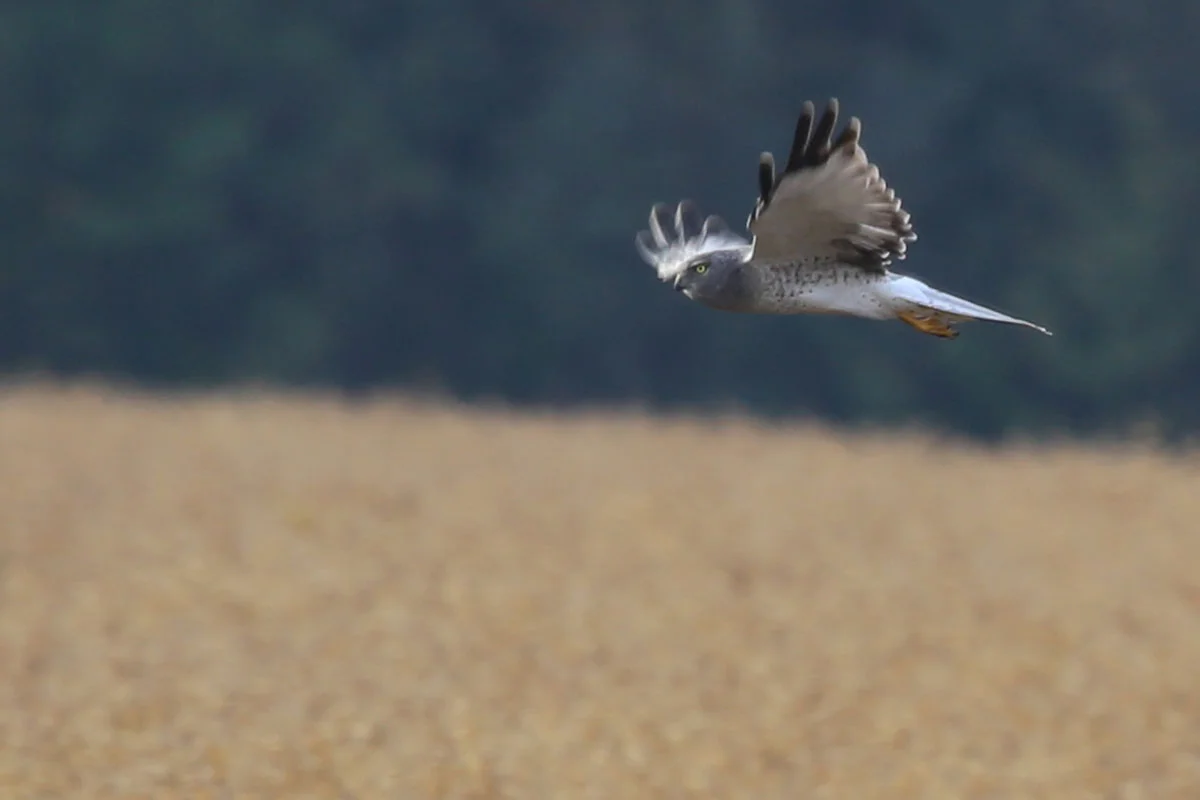
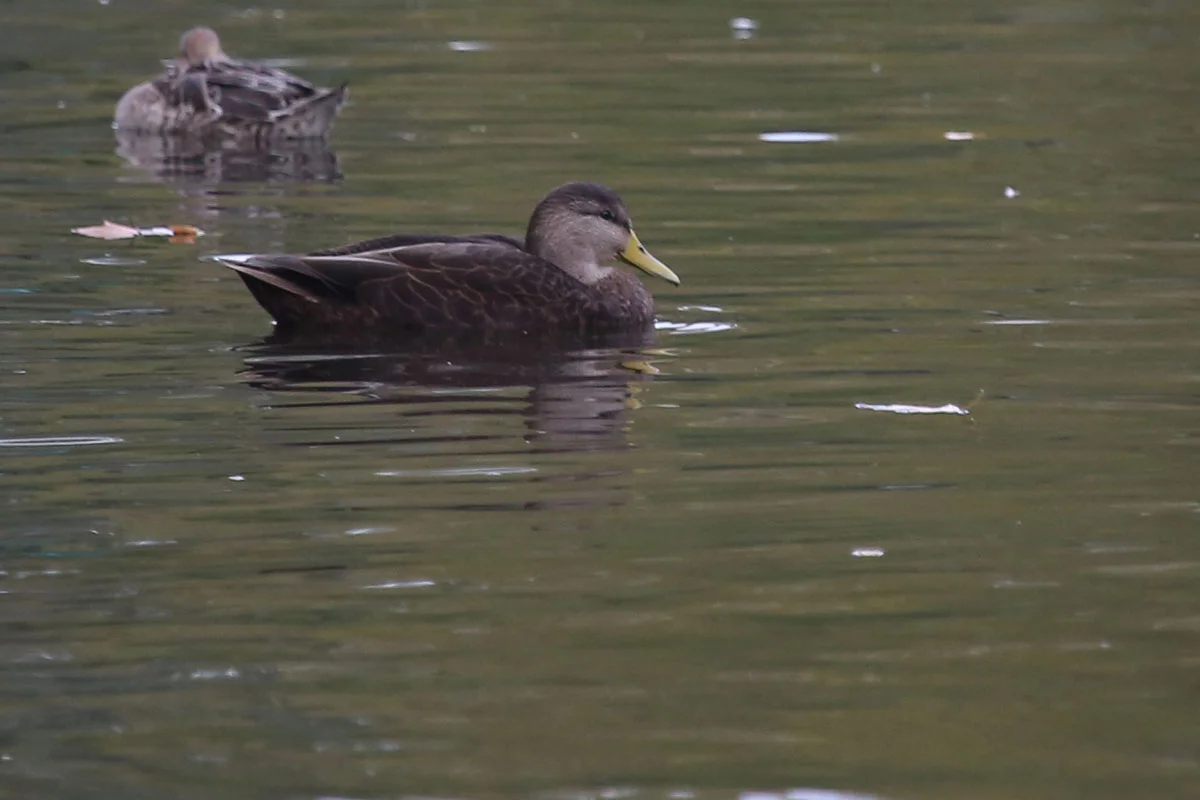
SPECIES DOCUMENTED BY MEDIA and submitted to eBird for Virginia Beach during this period included: 21 NOV – Sanderling, Dunlin & Savannah Sparrow (First Landing SP / Mike Collins); Red-tailed Hawk, Hummingbird sp. & PAINTED BUNTING (Camp Pendleton / Mary Catherine Miguez); Hummingbird sp. & PAINTED BUNTING (Camp Pendleton / Karen & Tom Beatty); 22 NOV – Ruby-throated Hummingbird & Orange-crowned Warbler (Camp Pendleton / Mary Catherine Miguez); Ruby-throated Hummingbird (Camp Pendleton / Karen & Tom Beatty). 23 NOV – SNOW BUNTING (First Landing SP / Kim Harrell); Ring-necked Duck, Common Yellowthroat, Palm Warbler & Field Sparrow (Little Island Park / Mary Catherine Miguez); 24 NOV – Gadwall, Pied-billed Grebe, Great Egret, Northern Harrier & American Coot (Back Bay NWR / Carlton Noll); Ring-billed Gull (Lake Windsor / Lisa Rose); Baltimore Oriole (Lago Mar / Mary Catherine Miguez). 25 NOV – Tundra Swan, Black Scoter, Ruddy Duck, Common Loon, Northern Gannet, Double-crested Cormorant, Sanderling & Great Black-backed Gull (Back Bay NWR / Carlton Noll); CAVE SWALLOW (First Landing SP / Kim Harrell); CAVE SWALLOW & SNOW BUNTING (First Landing SP / Lewis Barnett); Hooded Merganser (Heritage Park / Carlton Noll); Fox Sparrow (Kempsville / Una Davenhill); Black Scoter, Red-throated Loon & American Kestrel (Fort Story / Karen & Tom Beatty); Merlin (West Gibbs Rd. / David Clark); Northern Harrier (Baum Rd. / David Clark); Black-bellied Plover & SNOW BUNTING (Fort Story / Steve Myers); Brown Creeper, Carolina Wren, Dark-eyed Junco, Baltimore Oriole, Pine Siskin & American Goldfinch (Lago Mar / Mary Catherine Miguez); Brown Creeper (Prince Phillip Dr. / Ron Furnish); Merlin (Camp Pendleton / Karen & Tom Beatty); Brown Pelican (Sandfiddler Rd. / Carlton Noll). 26 NOV – Sanderling (Back Bay NWR / Logan Anderson); LESSER GOLDFINCH (Lago Mar / Mary Catherine Miguez); SNOW BUNTING (First Landing SP / Baxter Beamer); Carolina Wren, Pine Warbler & Northern Cardinal (Laurel Cove Dr. / Loretta Silvia); Nelson’s Sparrow (Pleasure House Point NA / Baxter Beamer). 27 NOV – LESSER GOLDFINCH (Lago Mar / James Fox); Red-breasted Nuthatch, Baltimore Oriole & LESSER GOLDFINCH (Lago Mar / Matt Anthony); LESSER GOLDFINCH (Lago Mar / Jason Strickland); Black-bellied Plover, Sanderling, Lesser Black-backed Gull & SNOW BUNTING (First Landing SP / Logan Anderson); Bufflehead & LARK SPARROW (Back Bay NWR / David Clark); Black-bellied Plover & Savannah Sparrow (Ipswich) (First Landing SP / George Burruss); Orange-crowned Warbler (Back Bay NWR / Logan Anderson); Mallard & Red-tailed Hawk (Back Bay NWR / David Clark); LESSER GOLDFINCH (Lago Mar / Mike Collins); LESSER GOLDFINCH (Lago Mar / Karen & Tom Beatty); Bald Eagle, Red-breasted Nuthatch, House Finch & LESSER GOLDFINCH (Lago Mar / Ron Furnish); LESSER GOLDFINCH (Lago Mar / Rob Bielawski); LESSER GOLDFINCH (Lago Mar / Kim Harrell); LESSER GOLDFINCH (Lago Mar / Ellison Orcutt); Black Scoter & Ruddy Turnstone (South Thimble Island / Logan Anderson); SNOW BUNTING & Savannah Sparrow (Ipswich) (First Landing SP / Ellison Orcutt); Clapper Rail (Pleasure House Point NA / Logan Anderson). 28 NOV – American Black Duck, Great Egret, Belted Kingfisher & Nelson’s Sparrow (Pleasure House Point NA / Jeffrey Blalock); SNOW BUNTING (First Landing SP / Mike Collins); Red-tailed Hawk (London Bridge Rd. & Dam Neck Rd. / Jeffrey Blalock); SNOW BUNTING (First Landing SP / WS Barbour); AMERICAN WHITE PELICAN & LESSER GOLDFINCH (Lago Mar / Jeffrey Blalock); LESSER GOLDFINCH (Lago Mar / Adam D’Onofrio); SNOW BUNTING (First Landing SP / Loretta Silvia); Tundra Swan (Back Bay NWR / Jeffrey Blalock). 29 NOV – Hooded Merganser (Fort Story / Loretta Silvia); Bufflehead & Ring-billed Gull (Pleasure House Point NA / Loretta Silvia). 30 NOV – Muscovy Duck (Domestic type), Mallard & Double-crested Cormorant (Lake Windsor / Loretta Silvia); Hooded Merganser, Great Blue Heron & Black Vulture (Elizabeth River at Princess Anne Rd. / Loretta Silvia); Black Skimmer (First Landing SP / Nancy Barnhart); Common Loon & Pileated Woodpecker (First Landing SP / Loretta Silvia).

LOOKAHEAD: The early December period commences with the first day of ‘ornithologic Winter’, as most journals of bird observations treat Fall migration as Aug-Nov, and the winter season as Dec-Feb. December tends to continue the vagrant season here on the coastline (perhaps to a lesser extent than November) but all birders should be aware that some interesting species still have high probabilities of being spotted this time of year. These can include Lesser Goldfinches as we all just found out this past week, Gray Kingbirds, as we have already seen here this fall, but other species to look for would be Western Kingbird (or any of the yellow-bellied-kingbird species, ie. Tropical/Couch’s/Cassin’s), Say’s Phoebe, Vermillion Flycatcher, Ash-throated Flycatcher (highly likely at Lake Windsor in mid-November), Scissor-tailed Flycatcher (like the one in Northampton last month) and even Townsend’s or Black-throated Gray Warblers (a recent report surfaced in Fairfax County as well as one ongoing in Maryland). Also, please remember that of the expected species arriving or passing through here during the fall season, we have not yet logged our first American Woodcock (early October arrival), Rusty Blackbird & Great Cormorant (mid-October arrivals), Harlequin Duck & Long-tailed Duck (late October arrivals) and Common Goldeneye (early November arrival) in Virginia Beach yet this fall. As we enter the final month of the year, I wish those who keep them, good luck in closing out your yearly birding lists!

Next Entry | Entry Index | Previous Entry

For more information on this thrice-monthly Birding Blog, please check out the Journal Overview Page on the website. It provides background information as to what sightings are considered for the blog, details about the format of the blog, and it will likely answer many other questions that readers might be wondering about as well! As always, thank you for reading, and please leave me a comment below (you may use your Facebook, Gmail or other accounts to easily do so), or just click the Heart icon to the lower right of this post to let me know you stopped in!
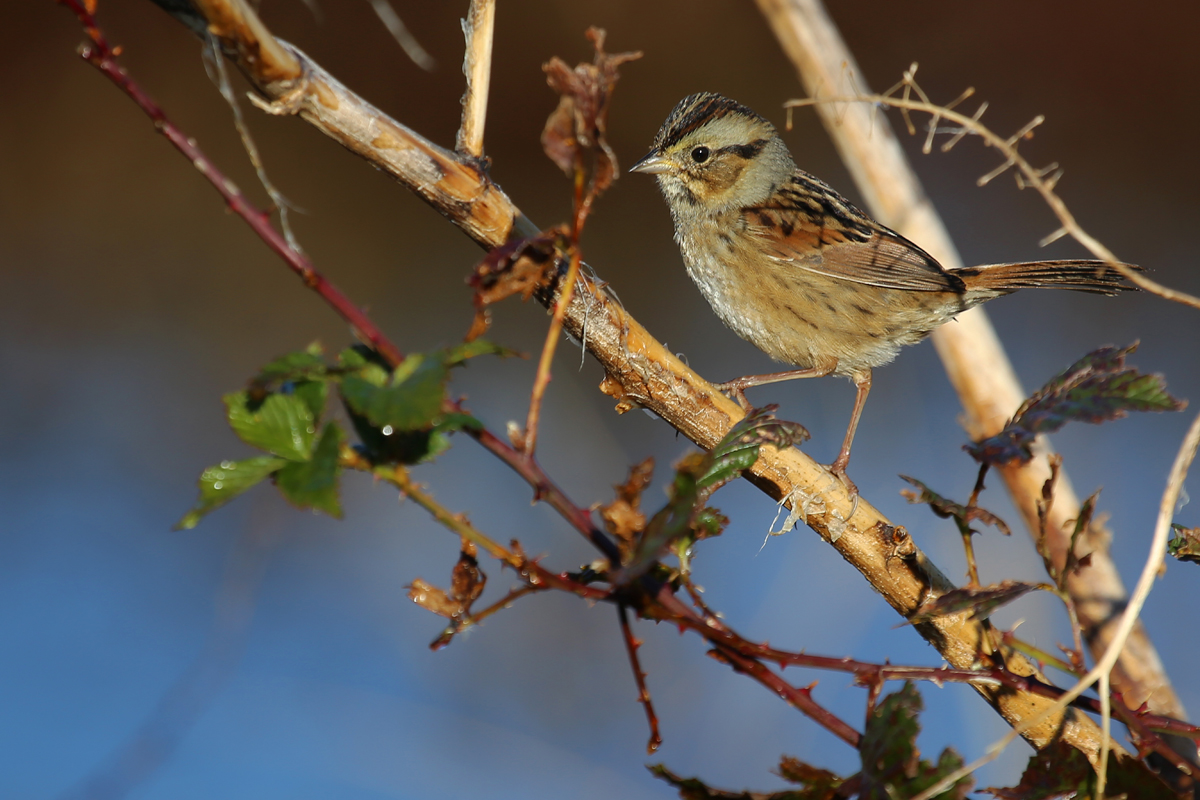
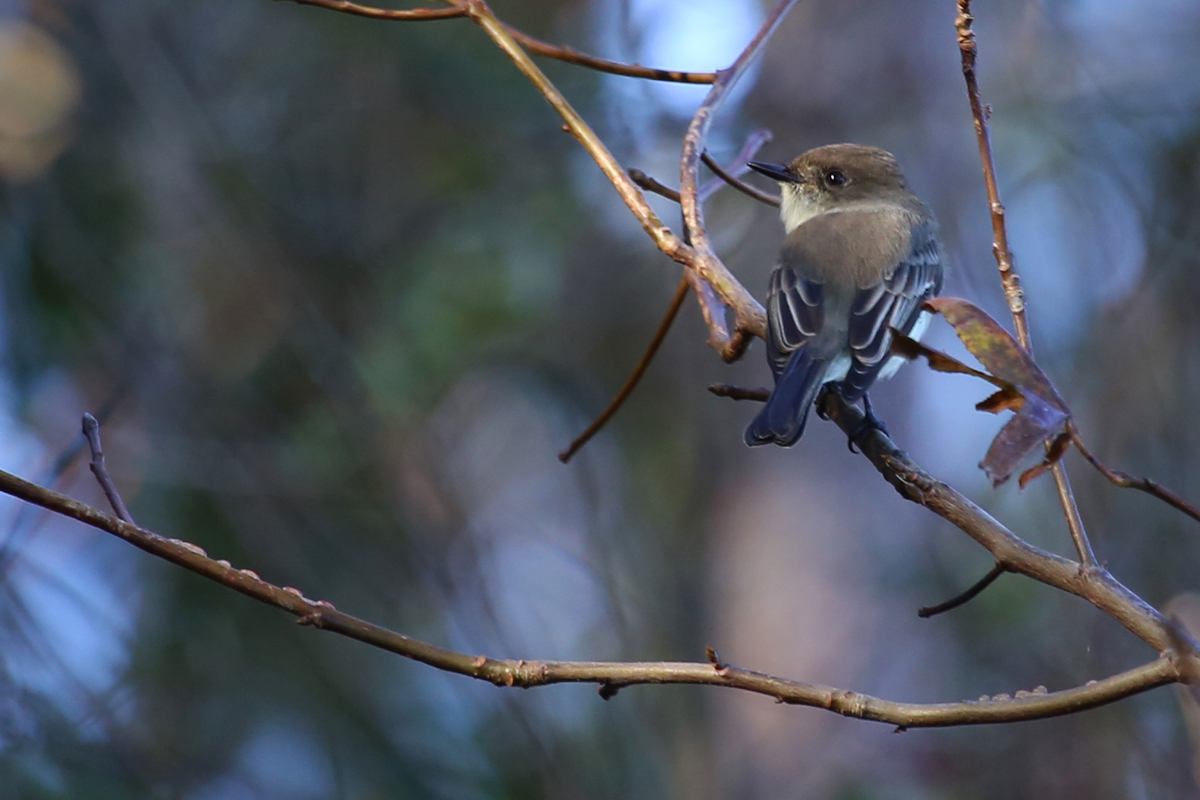
Mid-November 2016 (11th-20th)

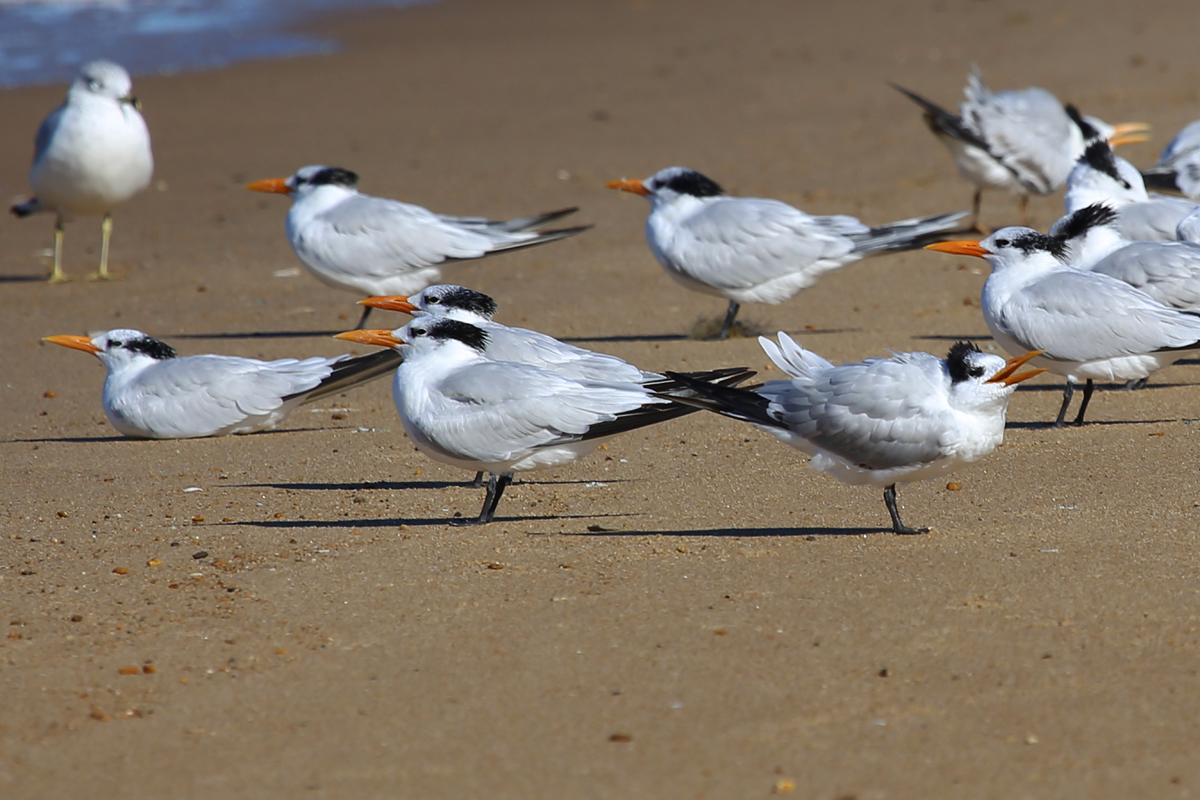
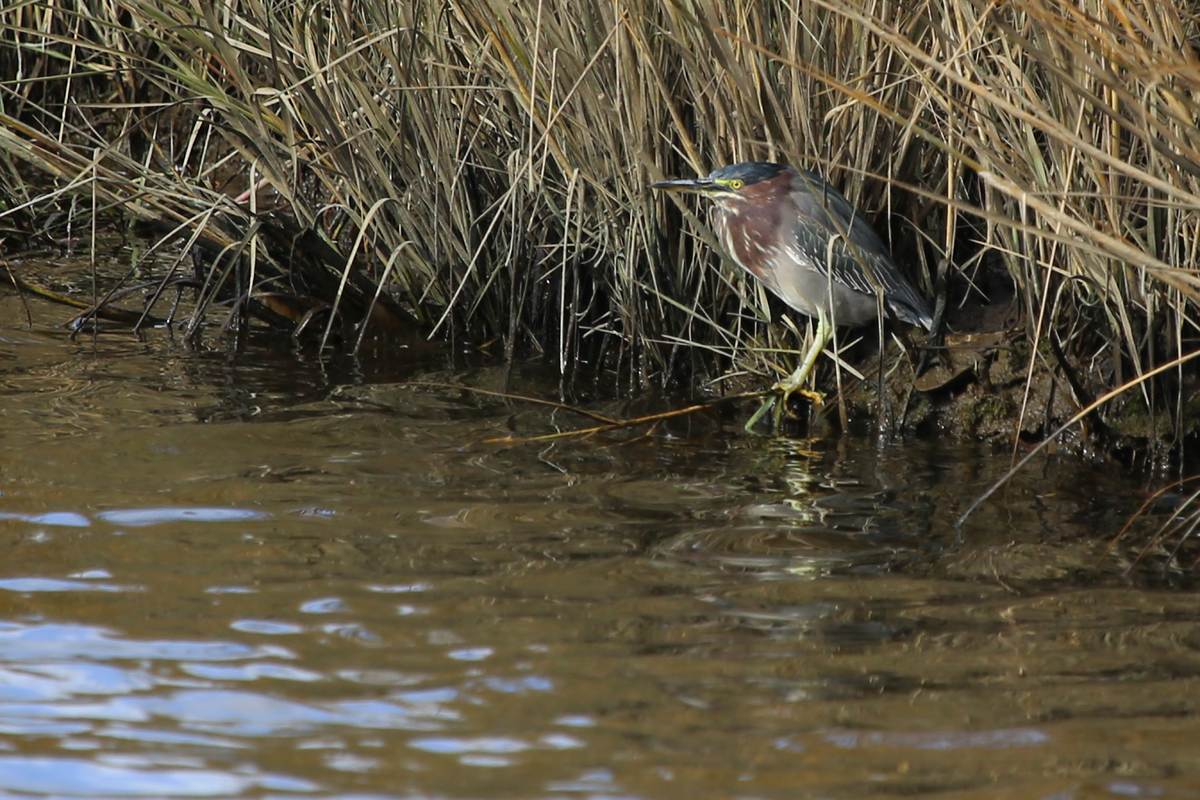
Rarities, firsts of season finds, and late/lingering individuals were all reported in abundance this period! Top birds for Virginia Beach during mid-November included PARASITIC JAEGER, CAVE SWALLOW, SNOW BUNTING, PAINTED BUNTING, SALTMARSH SPARROW, CLAY-COLORED SPARROW and a continuing LARK SPARROW. First-of-season arrivals this period included our first-of-fall Horned Grebe & Common Eider (11 Nov), Snow Goose & Horned Lark (12 Nov), Redhead (13 Nov) and Greater Scaup & Pine Siskin (14 Nov)! Occurrences of late/lingering species included Green Heron (latest 20 Nov), Yellow-crowned Night-Heron (19 Nov), Barn Swallow (15 Nov) and Nashville Warbler (14 Nov). High counts of Laughing Gulls were again reported from Pleasure House Point’s sandbars in the Lynnhaven River estuary, Royal Terns in large numbers continue at First Landing SP, and we continue to see White-crowned Sparrow (high count of 4, all immatures) reports from Back Bay NWR. Lastly, some cryptic species, including American Bittern, Virginia Rail, Sedge Wren, Horned Lark were all observed, and hybrid American Black Duck x Mallard individuals showed up at a couple of locations. WEATHER: On 13 Nov, we all awoke to the bone-chilling reality of our first frost of the season! Mid-November’s average daily high temperatures continued to (expectedly) fall, dropping to 60.8 degrees F (-3.5 degrees from the early November period); the average daytime lows also continued the downward trend, falling to 37.8 degrees F (a whopping -7.9 degrees). The previous 10-year average daily highs & lows for the mid-November period were 61.1 & 44.9 degrees F, respectively which puts this period in 2016 at -0.3 (very near average), and -7.1 degrees (very far off average) when comparing to the averages. During the previous 10-year period, the maximum average daily highs & lows were 68.2 (2015) & 52.5 degrees F (2009. Conditions remained very dry throughout the period, with only one day producing rainfall to the tune of 0.06 inches.

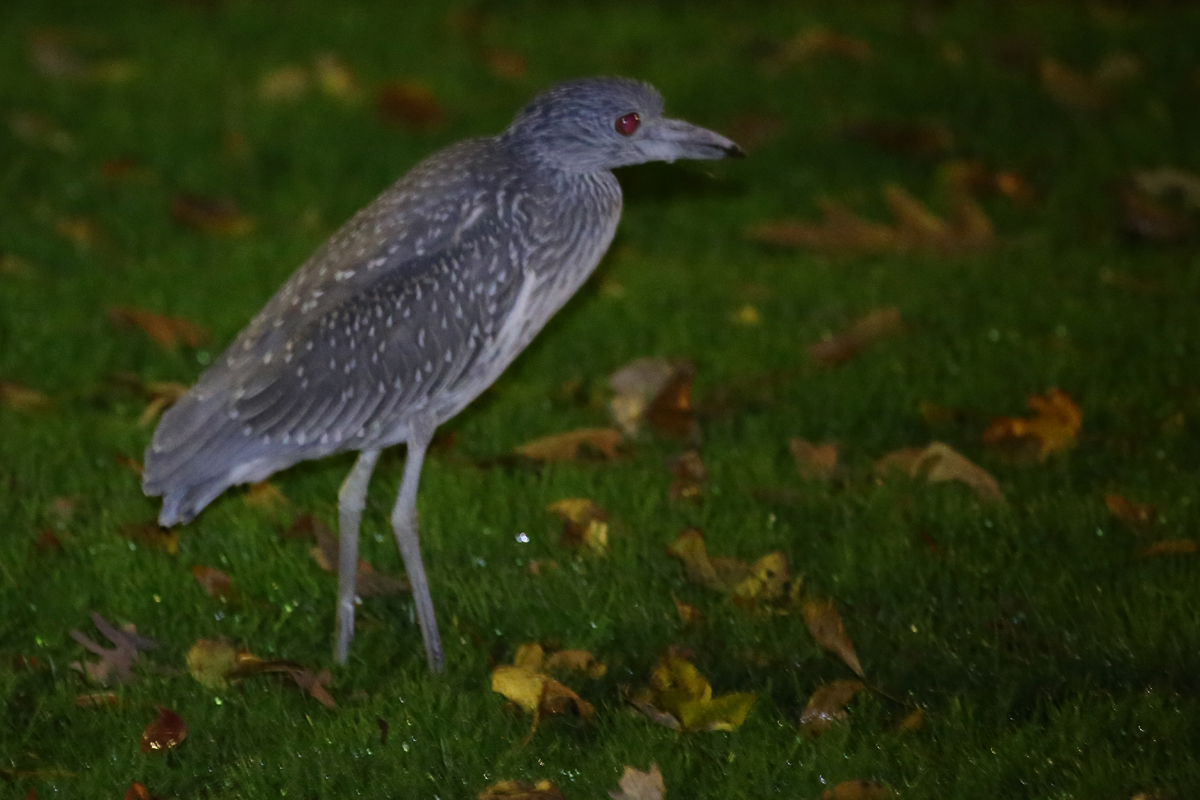
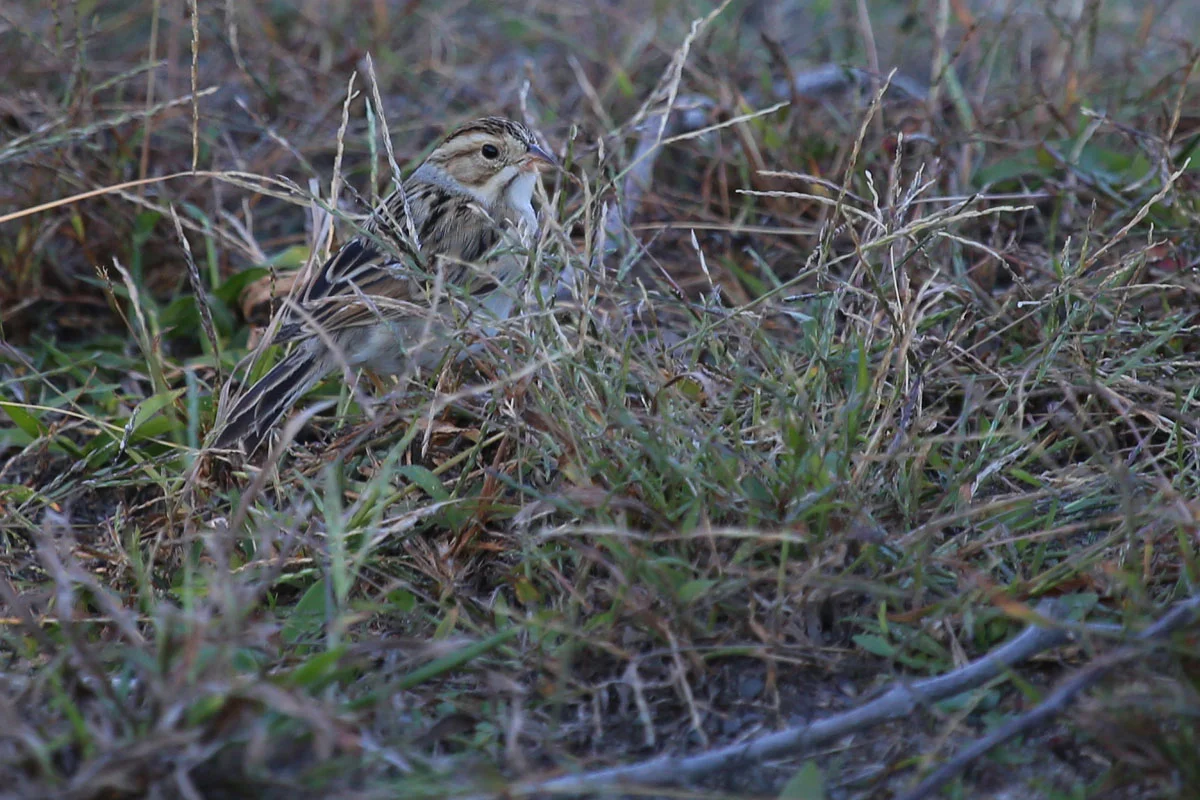
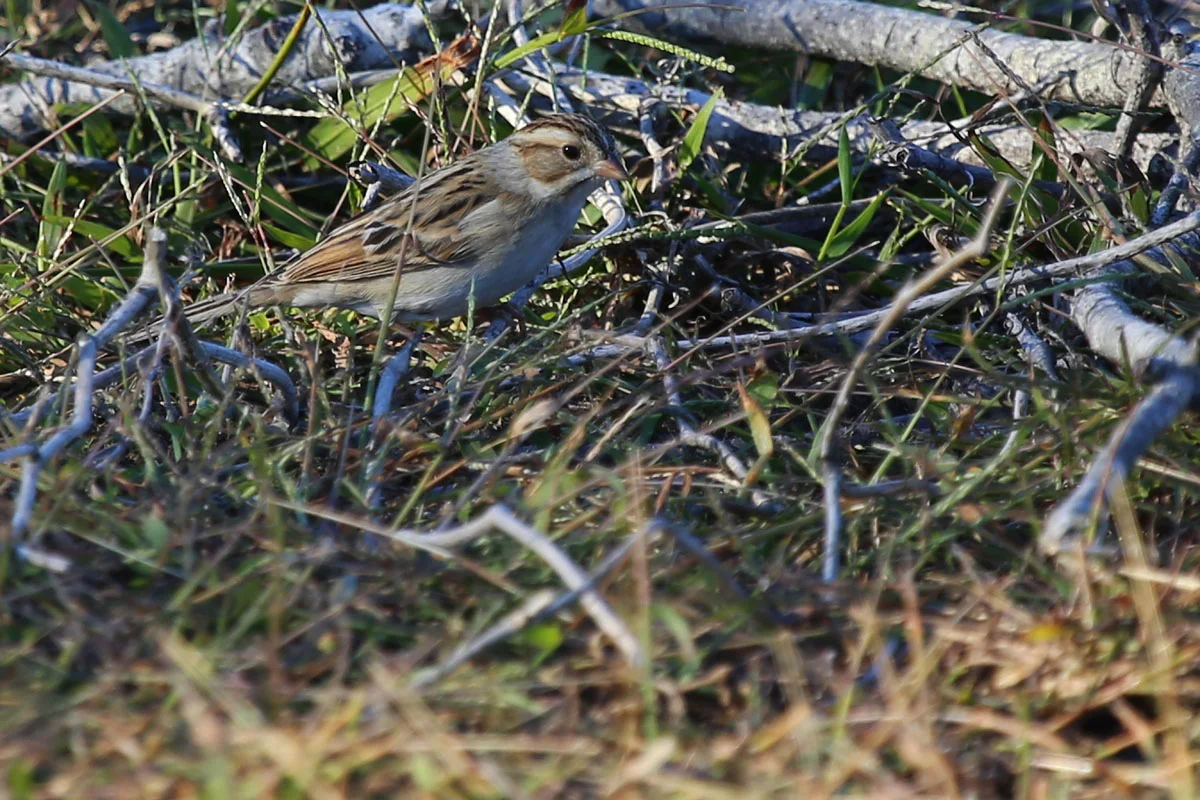
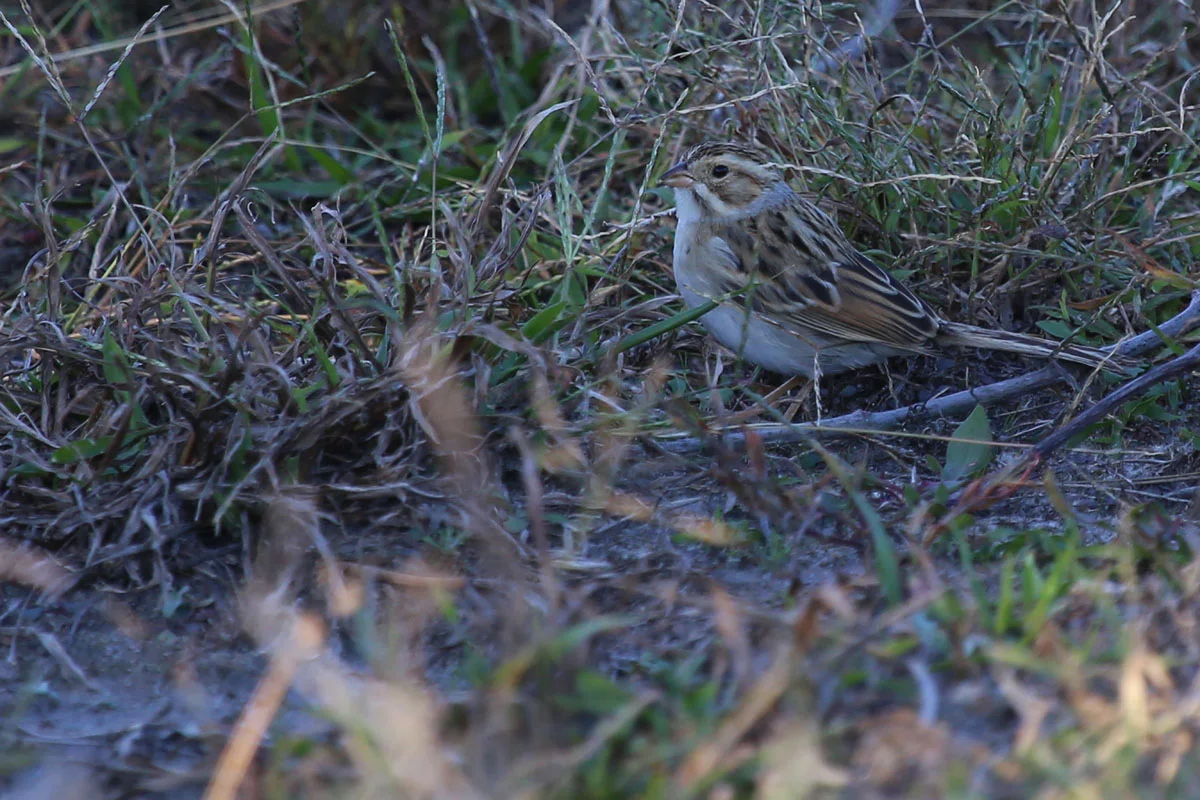
OBSERVATIONS:  First off, this was an exciting period due to the fact that we saw the number of eBird reports for Virginia Beach eclipse the 5,000 mark for 2016! We still submit a considerably lower volume of reports than Fairfax County, which is the most active eBirding county in the state, but 2016 has seen a great increase over past years here. We live and bird in one of, if not, the most exciting area of the state given our proximity to the ocean and it is great to see more folks embracing eBird as a means for sharing information on birding trips. The beginning of the period saw many birders from out of the area crossing through Virginia Beach en route to observe the vagrant Scissor-tailed Flycatcher that was present in Northampton County through the evening of 11 Nov, and also to take part in the annual Rarity Roundup set for Saturday, 12 Nov. As a result of these occurrences, a CLAY-COLORED SPARROW was detected during the morning of 11 Nov at the first island (“South Thimble Island”) of the Chesapeake Bay Bridge-Tunnel (Jacob Farmer & Andrew Thornton). Though this individual stayed at the location only for the day, it was observed/photographed by many others including: Ellison Orcutt, Arun Bose, James Fox, Lee Adams, Wendy Ealding, Jason Strickland, Elizabeth Wilkins, Matt Anthony, Wes Teets & Abby Walter, and Courtney Check, Megan Massa & Nicholas Newberry.  This now makes at least 5 Clay-colored Sparrows that have been reported in Virginia Beach during the fall season, which is more than any other year as far as eBird data is concerned. As with last period, the LARK SPARROW (ph. Linda Chittum) first logged 23 Oct, continued to be reported at Back Bay NWR, at least through 17 Nov (Mary Catherine Miguez). During the period, it was also observed/photographed by: Andrew Baldelli (11 Nov), Linda Chittum (13 Nov), the Old Dominion University BIO422 field ornithology class (15 Nov), Mary Catherine Miguez (15 Nov) and Mike Collins (16 Nov). Rarely viewable or identifiable from shore, a PARASITIC JAEGER was observed on 11 Nov (Fort Story / Andrew Baldelli & Linda Chittum), making it the first of season to be logged in Virginia Beach. Also due to a participant traveling en route to the Rarity Roundup in adjacent Northampton County, a BLACK-LEGGED KITTIWAKE was found on South Thimble Island (12 Nov / Paul Glass). This individual is the first for the county since 3 Sep as Tropical Storm Hermine brushed our coastline, and sent one cruising past the island for the slew of hopeful “storm birders” to see. On 16 Nov, a MYIARCHUS FLYCATCHER was observed near Lake Windsor (Lisa Rose), and while the photographs may not be verifiable to species, the likely “culprit” at this date is ASH-THROATED FLYCATCHER. The very similar Great Crested Flycatcher, a common transient & summer resident throughout Virginia Beach, has not been reported to eBird north of Florida during the entire month of November. Dusky-capped & Brown-crested Flycatchers are species for which Virginia has no confirmed records, but are apparently thought to be possibilities. However, given that the “most common” expectation at this date, and location, would be Ash-throated, even if Myiarchus sp. is the best identification that can be made, it is still an important find. Probably a separate individual from one seen earlier at Back Bay NWR, another female PAINTED BUNTING was reported at a backyard feeder on 14 Nov (Davenport Ln. / Tommy Maloney). Over at Pleasure House Point NA, a SALTMARSH SPARROW was observed on 16 Nov (Jeff Blalock) and another, or possibly the same individual was found on 19 Nov (James Marcum). A notoriously difficult species to differentiate from the extremely similar (and seemingly much more common here) Nelson’s Sparrow, we don’t see many Saltmarsh reports each year, though they are likely present at all times, just cryptically staying out of sight, or popping up too quickly for field marks to be readily visible. While out birding the beach at First Landing SP, a group of 5 SNOW BUNTINGS was discovered on 19 Nov (Andrew Baldelli), and thanks to spreading the word quickly, the group (only 4) was documented again the following day, 20 Nov (Rob Bielawski, Michelle Payne, Lisa Rose, Jason Strickland and later Mary Catherine Miguez). Snow Buntings are a species that might very well be present along the duneline of the immediate coast each winter. However, the last time they were logged in Virginia Beach was on 15 Jan 2015 when 6 were found during a survey by Robert Ake & Rebecca Walawender at False Cape SP/Back Bay NWR. Hopefully, this group is just a taste of more to come this winter, and birders should pay close attention to any bunting groups, with the possibility of Lapland Longspurs also being mixed in (3 were at Grandview NP in Hampton this past week). Very close to where the Snow Buntings were found, over at Fort Story a group of 5 CAVE SWALLOWS also passed by on 20 Nov (Andrew Baldelli & Tracy Tate), with 2 being seen later in the day (Mary Catherine Miguez). This is another species that has been making shifts in their late fall/early winter range east and north up the East Coast in recent years. Many were observed last year about this time, and any swallows that don’t appear to be Tree Swallows at this point in the year should be heavily scrutinized. First-of-season arrivals (all within normal expectations) this period included at least 6 Horned Grebes (11 Nov / Fort Story / Andrew Baldelli & Linda Chittum), a photographically-documented Common Eider (11 Nov / South Thimble Island / Elizabeth Wilkins), a flock of 16 Snow Geese (12 Nov / Back Bay NWR / Jessica Setter), 7 Horned Lark (12 Nov / Ashville Park / Mary Catherine Miguez), 4 Redheads (13 Nov / Back Bay NWR / Andrew Baldelli), 6 Greater Scaup (14 Nov / First Landing SP / Tracy Tate) and a single Pine Siskin (14 Nov / Davneport Ln. / Tommy Maloney). In addition to the first arrivals, we had some species reported this period that have now passed their expected dates of departure, making them late lingerers. Included among this group was a single Green Heron (20 Nov / Pleasure House Point / Rob Bielawski, Michelle Payne, Lisa Rose & Jason Strickland), which is the latest date during the calendar year for which eBird has a record of this species in Virginia Beach! Also, a juvenile Yellow-crowned Night-Heron (19 Nov / Oxford Dr. / obs. Ruth Bielawski, ph. Rob Bielawski) is likely to be the same individual sighted at this location 5 Nov under similar circumstances (night-time drive down a residential street. For some perspective, last year our final Yellow-crowned Night-Heron sighting occurred on 27 Oct, so we are almost a full month beyond that date. Also late, a Nashville Warbler was reported on 14 Nov (Davneport Ln. / Tommy Maloney). There were several occurrences of this species north of us during the period, and it seems stragglers have hung around pretty late this year. Lastly, reports of 1 to 8 Barn Swallows were input by students of the ODU BIO422 field trip to Back Bay NWR on 15 Nov, with most noting the forked tail that gives a clue to this species identity over the expected Tree Swallows present throughout the winter. In closing, quite a few other sightings warrant mention, including: a leucistic Yellow-rumped Warbler at Back Bay NWR that may be the same individual observed last winter here, up to 2 American Bitterns being reported by various individuals at Princess Anne WMA, Pleasure House Point NA, and Back Bay NWR, a Virginia Rail and a pair of Sedge Wrens (13 Nov / Back Bay NWR/ Linda Chittum), a group of 10 Horned Larks present at Ashville Park (12-15 Nov / ph. Mary Catherine Miguez), a three-nuthatch checklist at First Landing SP (16 Nov / Kathy Spencer), high counts of 4 White-crowned Sparrows at Back Bay NWR (15 Nov / Mary Catherine Miguez), a pair of “Ipswich” Savannah Sparrows at First Landing SP (20 Nov / Mary Catherine Miguez), and an American Black Duck x Mallard hybrid at Pleasure House Point (20 Nov / Rob Bielawski, Michelle Payne, Lisa Rose & Jason Strickland), with at least one other individual present at Kings Grant Lake (Rob Bielawski and Loretta Silvia).

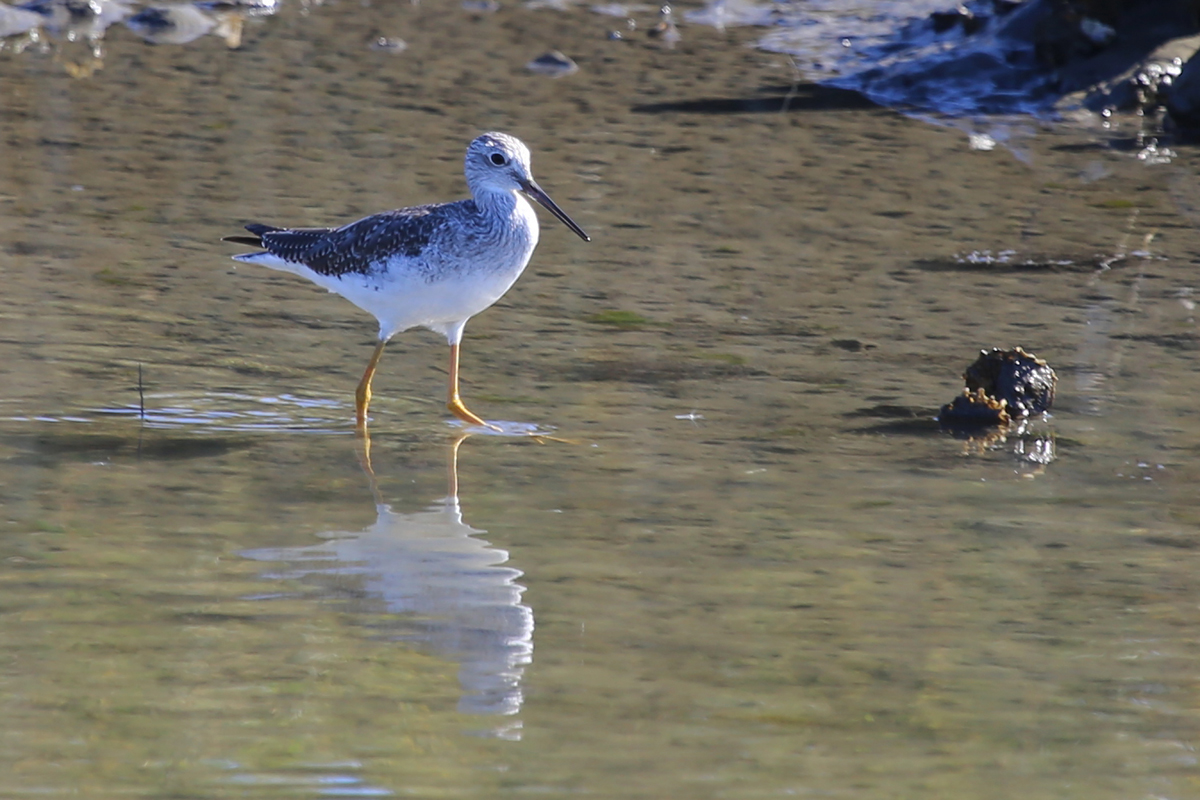
SPECIES DOCUMENTED BY MEDIA and submitted to eBird for Virginia Beach during this period included: 11 NOV – LARK SPARROW (Back Bay NWR / Linda Chittum); CLAY-COLORED SPARROW (South Thimble Island / Andrew Thornton); CLAY-COLORED SPARROW (South Thimble Island / Arun Bose); Yellow-bellied Sapsucker, Pileated Woodpecker, American Crow & American Robin (Great Neck Park / Loretta Silvia); CLAY-COLORED SPARROW (South Thimble Island / James Fox); CLAY-COLORED SPARROW (South Thimble Island / Lee Adams); CLAY-COLORED SPARROW (South Thimble Island / Jason Strickland); Common Eider & CLAY-COLORED SPARROW (South Thimble Island / Elizabeth Wilkins); CLAY-COLORED SPARROW (South Thimble Island / Matt Anthony). 12 NOV – Surf Scoter & Song Sparrow (South Thimble Island / Tamara Conklin); Northern Harrier & Savannah Sparrow (Ashville Park / Mary Catherine Miguez). 13 NOV – Carolina Wren (Laurel Cove Dr. / Loretta Silvia); Eastern Phoebe, Northern Mockingbird, Yellow-rumped Warbler & Swamp Sparrow (Princess Anne WMA / Rob Bielawski); American Kestrel (Princess Anne WMA / Charlie Bruggemann); Horned Lark (Ashville Park / Mary Catherine Miguez); Black Scoter, Laughing Gull, Lesser Black-backed Gull & Royal Tern (First Landing SP / Rob Bielawski); Greater Yellowlegs (Pleasure House Point NA / Rob Bielawski); Hooded Merganser (Kings Grant Lakes / Rob Bielawski); Mallard (Yawl Point / Loretta Silvia); Ruddy Turnstone (South Thimble Island / Cindy Burley); Surf Scoter (South Thimble Island / Kim Harrell). 14 NOV – Merlin (Ashville Park / Mary Catherine Miguez). 15 NOV – LARK SPARROW (Back Bay NWR / Ashlyn Reis); LARK SPARROW (Back Bay NWR / Tyler Haver); LARK SPARROW & White-crowned Sparrow (Back Bay NWR / Spencer Schubert); Red-tailed Hawk, American Kestrel & Eastern Meadowlark (Ashville Park / Mary Catherine Miguez); Great Blue Heron (Pleasure House Point NA / Loretta Silvia); Northern Mockingbird, LARK SPARROW & White-crowned Sparrow (Back Bay NWR / Mary Catherine Miguez). 16 NOV – MYIARCHUS SP. (Lake Windsor / Lisa Rose); LARK SPARROW (Back Bay NWR / Mike Collins). 17 NOV – Ruddy Duck (Back Bay NWR / Charlie Bruggemann); Lesser Scaup, Black Scoter, Bufflehead, Ruddy Duck, Great Blue Heron, White Ibis, Laughing Gull, Ring-billed Gull & Yellow-rumped Warbler (Back Bay NWR / Mary Catherine Miguez). 18 NOV – Great Blue Heron & Northern Mockingbird (Beach Garden Park / David Clark); Canada Goose, Mallard, Ring-necked Duck & Double-crested Cormorant (Kings Grant Lakes / Loretta Silvia); Mallard, Ring-necked Duck, Double-crested Cormorant & Great Blue Heron (Kings Grant Lakes / Rob Bielawski). 19 NOV – Black-bellied Plover, Dunlin & SNOW BUNTING (First Landing SP / Andrew Baldelli); Yellow-crowned Night-Heron (Oxford Dr. / Rob Bielawski). 20 NOV – Dunlin, Ring-billed Gull, SNOW BUNTING & White-throated Sparrow (First Landing SP / Rob Bielawski); American Black Duck x Mallard, Bufflehead, Hooded Merganser, Green Heron, Osprey, Bald Eagle, Yellow-rumped Warbler & Nelson’s Sparrow (Pleasure House Point NA / Rob Bielawski); Sanderling, Dunlin, Merlin, SNOW BUNTING & “Ipswich” Savannah Sparrow (First Landing SP / Mary Catherine Miguez).

LOOKAHEAD: Late November continues our vagrant season here on the coastline, and all birders should be aware that some interesting species have their highest probabilities of being spotted this time of year. These can include Gray Kingbirds, as we have already seen here this fall, but other species to look for would be Western Kingbird (or any of the yellow-bellied-kingbird species, ie. Tropical/Couch’s/Cassin’s), Say’s Phoebe, Vermillion Flycatcher, Ash-throated Flycatcher, Scissor-tailed Flycatcher and even Townsend’s or Black-throated Gray Warblers. Also, please remember that of the expected species arriving or passing through here during the fall season, we have not yet logged our first American Woodcock (early October arrival), Rusty Blackbird, White-winged Scoter & Great Cormorant (mid-October arrivals), Fox Sparrow, Harlequin Duck & Long-tailed Duck (late October arrivals) and Canvasback & Common Goldeneye (early November arrivals) in Virginia Beach yet this fall. We should continue to see increasing numbers of waterfowl across the city through the remainder of November, and perhaps someone will pick up our first Eurasian Wigeon of the fall season. After all, there has been wigeon reports at Chincoteague, Craney Island, and in the Outer Banks, so basically all around us. Lastly, I sincerely hope you all enjoy the Thanksgiving holiday, and maybe it will include some good birds! Best wishes!

Next Entry | Entry Index | Previous Entry

For more information on this thrice-monthly Birding Blog, please check out the Journal Overview Page on the website. It provides background information as to what sightings are considered for the blog, details about the format of the blog, and it will likely answer many other questions that readers might be wondering about as well! As always, thank you for reading, and please leave me a comment below (you may use your Facebook, Gmail or other accounts to easily do so), or just click the Heart icon to the lower right of this post to let me know you stopped in!
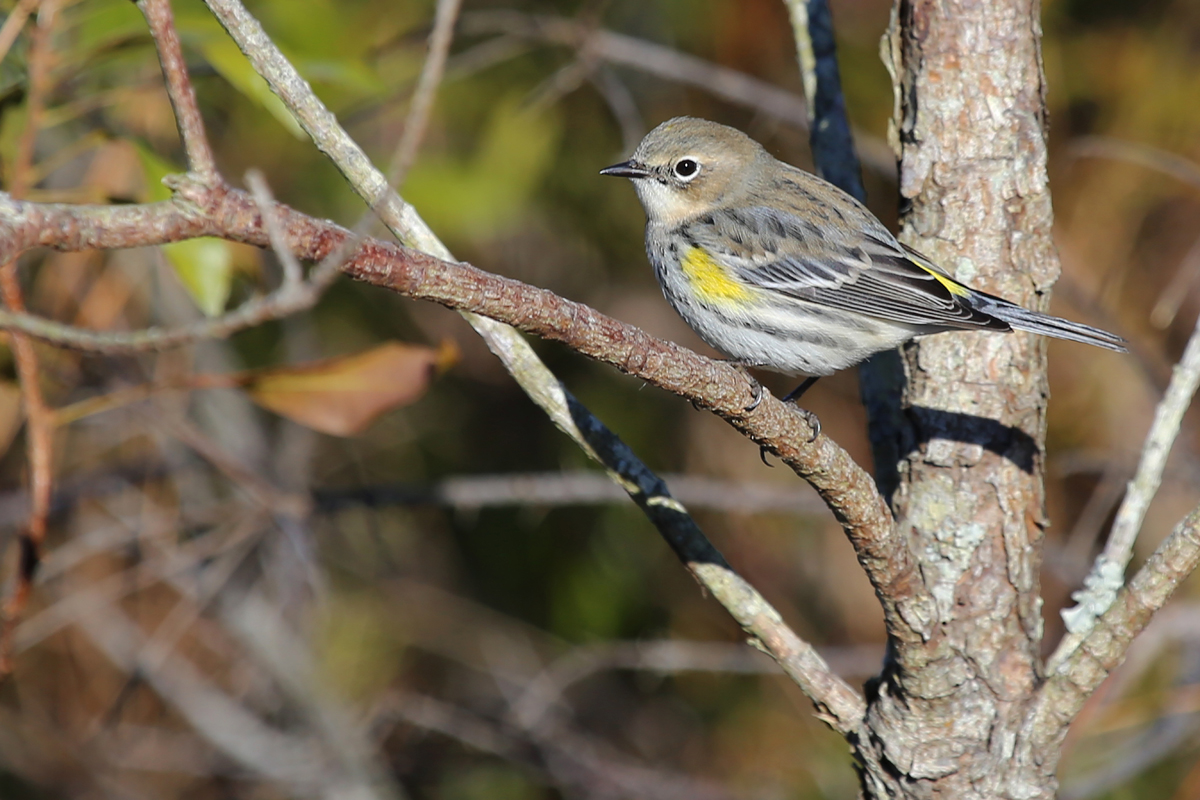
Early November 2016 (1st-10th)

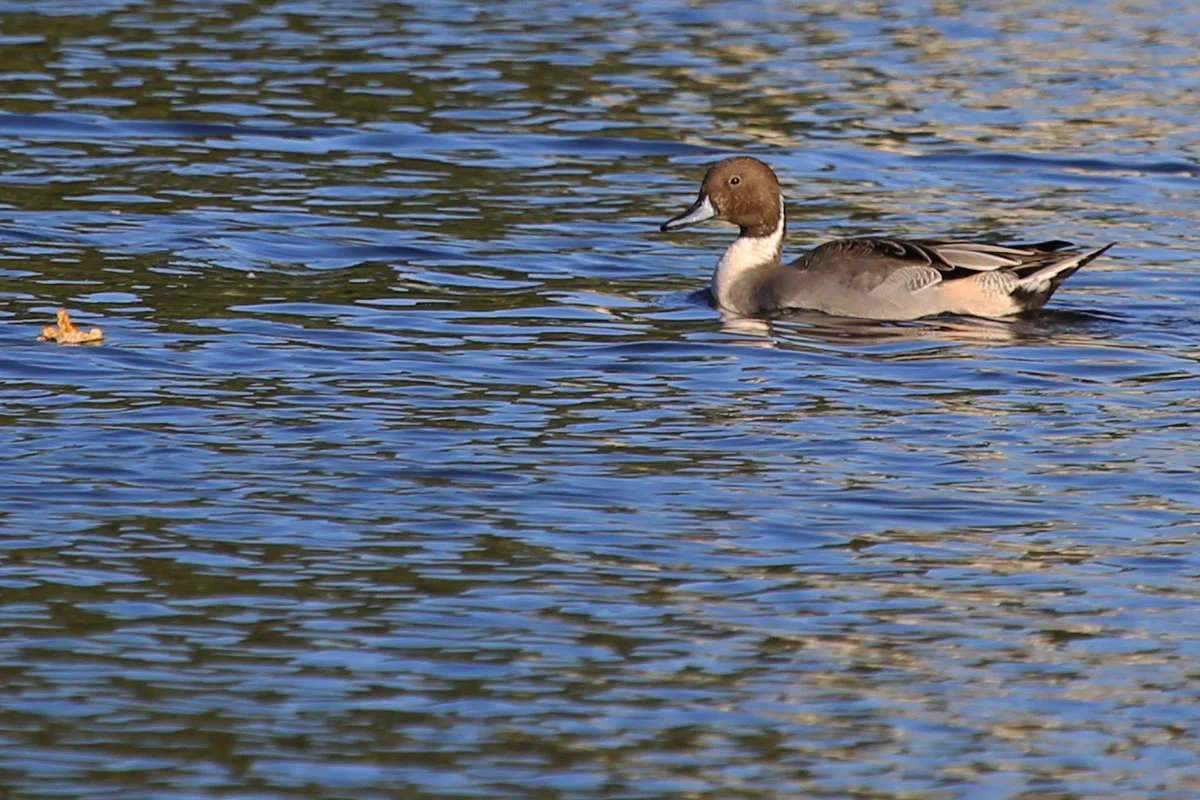
For a third straight period, dry conditions were maintained, which allowed for excellent birding opportunities. Like last period, there was a great deal of excellent finds to discuss, and top birds for Virginia Beach included PAINTED BUNTING, CLAY-COLORED SPARROW & LARK SPARROW. First-of-season arrivals this period revolved mostly around waterbirds and this trend should continue on into November; we still saw our first-of-fall Bonaparte’s Gull (1 Nov), Bufflehead & Brant (6 Nov) and Lesser Scaup, Red-throated Loon & Purple Sandpiper (10 Nov)! Early arrivals this period included “Ipswich” Savannah Sparrow (3 Nov), well ahead of their 15 Nov expected date, and occurrences of late birds included Yellow-crowned Night-Heron (latest 5 Nov), Prairie Warbler (10 Nov) & Caspian Tern (7 Nov). High counts of 2400 Laughing Gulls were reported from Pleasure House Point’s sandbars in the Lynnhaven River estuary, and we continue to see White-crowned Sparrow (high count of 3, all immatures), Red-breasted Nuthatch and Purple Finch reports around the region. WEATHER: Overall early November’s average daily high temperatures continued to fall, dropping to 64.3 degrees F (-5.6 degrees from the late October period); the average daytime lows also continued the downward trend, falling to 45.7 degrees F (-2.6 degrees). The previous 10-year average daily highs & lows for the early November period were 62.7 & 46.5 degrees F, respectively which puts this period in 2016 at +1.6, and -0.8 degrees (so fairly typical) when comparing to the averages. Also during the previous 10-year period, the maximum average daily highs & lows were 72.7 & 59.2 degrees F (2015), so we came in much lower comparably this year. Conditions remained fairly dry throughout the period, with only two days producing measurable rainfall to the tune of 1.55 inches (with 0.68” falling 4 Nov, and 0.87” on 9 Nov).

OBSERVATIONS:  Despite Daylight Savings Time having reached its end on 6 Nov, and with the earlier sunsets, there was still a considerable number of checklists reported to eBird this period. Back Bay NWR continued to be the primary producer of rarities during early November, providing both a female PAINTED BUNTING and a LARK SPARROW. Perhaps the same individual that was originally detected at the park on 13 Oct (Andrew Baldelli), the PAINTED BUNTING (this time missing its tail feathers) was observed on 5 Nov (Tommy Maloney & Jason Schatti) near the base of the Kuralt Trail. It is possible that this is a different bird, but without photographs to attempt a comparison, there’s no way to be certain and any discussion is purely speculative. However, given that it wasn’t detected for several weeks, and this area of Back Bay NWR gets a considerable number of observers, it doesn’t seem out of the question that it could be a separate individual. Near this same area, a LARK SPARROW (5 Nov / ph. Mary Catherine Miguez) that has been present since at least 23 Oct (and possibly as early as 19 Oct) afforded many observers great views (and some excellent photographs) throughout the period. This individual was noted back on 23 Oct as having an injury/wound to the back of the right side of the head. The obvious mark has made it easy to confirm the same individual has stayed at this spot, and fortunately it seems to be foraging and getting around just fine, so hopefully it will overcome the injury. So far this season, we’ve had at least 3 different Lark Sparrows take up temporary residence at the park, and with the individual from February-March added in, we’ve had at least 4 at Back Bay NWR in 2016 (with 5 total for Virginia Beach due to a final individual noted at the Princess Anne Athletic Commons during the winter). Continuing the sparrow trend from the previous periods, a CLAY-COLORED SPARROW was also found along Ashville Park Boulevard foraging with a mixed group of sparrows and warblers near Flanagans Lane (5 Nov / Mary Catherine Miguez). Given that we’ve had Clay-colored Sparrows at Taste Bayville, Back Bay NWR, and Little Island Park already this season, this now makes 4 separate individuals that have been found within Virginia Beach. This number sits in stark contrast to the remainder of Virginia, where only one other individual has been observed this fall, at Sky Meadows SP in Fauquier County. The Gold Book notes that this species’ Coastal Plain distribution is that of a “rare but regular fall transient and early winter visitor along coast, with 3-5 (rarely as many as 10) reported in the region most year”. Records become much rarer in the Piedmont, and in the Mountains & Valleys regions of the state. Pretty spot on! A border-line rarity also showed up at Pleasure House Point NA in the form of our first-of-season “Ipswich” Savannah Sparrow (3 Nov / ph. Mary Catherine Miguez & also obs. Tommy Maloney). This race/subspecies of Savannah Sparrow breeds exclusively on Sable Island, Nova Scotia, Canada, and pops up here along the coast during the winter. What makes this an even more interesting record though, is that it was 12 days ahead of the expected arrival date of 15 Nov listed in the Gold Book (though still within the extreme dates for records). This race is an annual visitor to the outer coastline, but becomes increasingly rare as you move further inland. Other first-of-season arrivals (all within normal expectations) included a pair of Bonaparte’s Gull (1 Nov / South Thimble Island / Janis Stone), a small group of 3 Bufflehead (6 Nov / Pleasure House Point NA / Bryan Barmore), a flock of 22 Brant (6 Nov / Sandy Bay Dr. / Timothy Barry), 7 Lesser Scaup & a single Red-throated Loon (10 Nov / Little Island Park / Andrew Baldelli), and lastly, a pair of Purple Sandpiper (10 Nov / Rudee Inlet / Karen & Tom Beatty). These species should all become increasingly common as the temperatures continue to drop and winter starts to take hold. It won’t be long before Red-throated Loons will be counted in massive numbers from the coastline, and Buffleheads should start populating any open waters as well. The Brant winter annually around the Lynnhaven River, but can be tough at times to actually see, since they will forage out among the marshy islands offshore, and with no real elevated terrain nearby to view from, they can easily get missed. To that point, the brand new westbound span of the Lesner Bridge is set to open on Friday, 11 Nov, and this might provide a bit of altitude to view the estuary from so there’s always the chance to catch a group in flight out of the corner of your eye while crossing. Given that the Purple Sandpipers have now arrived at Rudee Inlet, they should also be reported soon from the Chesapeake Bay Bridge-Tunnel, Fort Story, and possibly East Beach. In fact, one was even reported at Grandview in Hampton last week. Anywhere with armored shorelines will draw these lovely shorebirds in, with the CBBT being their most densely populated space in Virginia Beach. In addition to the early & first arrivals, we had some species reported this period that have now passed their expected dates of departure, making them late lingerers. Included among this group was a single Yellow-crowned Night-Heron (5 Nov / Oxford Dr. / Rob Bielawski), a Prairie Warbler at Back Bay NWR (6 Nov/ Rob Bielawski) and what is likely a second Prairie Warbler at Little Island Park just to the north (10 Nov / Mary Catherine Miguez), and lastly a pair of Caspian Terns at First Landing SP (7 Nov / Shawn Callahan). For some perspective, last year our final Yellow-crowned Night-Heron sighting occurred on 27 Oct, and our last Caspian Tern was on 6 Nov. The Prairie Warbler is an interesting one, with a more-storied-history, as an individual was present during the Rarity Roundup at Back Bay NWR on 14 Nov 2015 (Matt Anthony & Nicholas Newberry), with another, possibly the same one, still there on 30 Dec 2015 (Tommy Maloney). In fact, another was even photographed in mid-winter 2016 at First Landing SP, on 1 Feb (J. Aguiar) making it only the second February record for Virginia in eBird. So, the Prairie Warblers do seem to stay later each year, but it is still a rare occasion to find one after October, or before April. In 2015 it seemed to make a bit of sense, as temperatures stayed considerably higher at this point in the season, so we’ll see what the weather heading into winter this time around does to the species. Lastly, a couple other items of interest, we had a very high count of 2400 Laughing Gulls reported from Pleasure House Point (6 Nov / Bryan Barmore) which is a major late fall staging area for their southerly migration, and a pair of American Bitterns was present at Princess Anne WMA’s Whitehurst Tract (6 Nov / Rob Bielawski) which falls into the “neat” but not necessarily noteworthy category (like Sora, or Virginia Rail, or owls & nightjars that just aren’t often reported, but are present). American Bitterns are a species that is highly sought after for statewide birders, and this park & Back Bay NWR have been the most reliable for them. Observing one American Bittern makes for a great day, two makes it excellent. During this particular visit, the park staff was out mowing the impoundments to prepare them for waterfowl, so hopefully we will finally start to see some ducks, geese & potentially even Tundra Swans out using them. A quick note on Princess Anne WMA: This park is closed Monday-Saturday for wildlife management and hunting purposes, and is only open on Sunday for wildlife viewing (included birding) during Sep-Apr. For more information, visit the official park website, and keep in mind that a WMA access pass is required here as well.

SPECIES DOCUMENTED BY MEDIA and submitted to eBird for Virginia Beach during this period included: 1 NOV – Red-breasted Nuthatch (Laurel Cove Dr. / Loretta Silvia); Northern Harrier & Boat-tailed Grackle (Little Island Park / Karen & Tom Beatty); Golden-crowned Kinglet, Hermit Thrush & Palm Warbler (Back Bay NWR / Karen & Tom Beatty); Ruddy Turnstone, Sanderling & Royal Tern (South Thimble Island / Janis Stone). 2 NOV – Cooper’s Hawk (Sandy Bay Dr. / Timothy Barry). 3 NOV – Northern Harrier & Eastern Phoebe (Back Bay Landing Rd. / Karen & Tom Beatty); Nelson’s Sparrow, White-throated Sparrow, Savannah Sparrow (Ipswich & Savannah races) & Song Sparrow (Pleasure House Point NA / Mary Catherine Miguez); Peregrine Falcon (Atlantic Ave. / Mary Catherine Miguez). 4 NOV – Hermit Thrush (Francis Land HP / David Clark). 5 NOV – Brown-headed Nuthatch, Savannah Sparrow & Swamp Sparrow (Back Bay Landing Rd. / Karen & Tom Beatty); Double-crested Cormorant, Great Egret, Black Vulture, Osprey, Laughing Gull, Belted Kingfisher, Red-bellied Woodpecker, Downy Woodpecker, American Crow, Carolina Chickadee, Brown Creeper & Yellow-rumped Warbler (Stumpy Lake NA / David Weisenbeck); Golden-crowned Kinglet, Gray Catbird, Palm Warbler & LARK SPARROW (Back Bay NWR / Karen & Tom Beatty); Ring-necked Duck (Lake Tecumseh / Mary Catherine Miguez); Eastern Phoebe (Back Bay Landing Rd. / Rob Bielawski); Sharp-shinned Hawk, Golden-crowned Kinglet, Gray Catbird, Northern Mockingbird, Yellow-rumped Warbler, LARK SPARROW & Song Sparrow (Back Bay NWR / Mary Catherine Miguez); Yellow-crowned Night-Heron (Oxford Dr. / Rob Bielawski). 6 NOV – Bald Eagle & Savannah Sparrow (Princess Anne WMA Beasley Tract / Andrew Baldelli); American Bittern & Yellow-rumped Warbler (Princess Anne WMA Whitehurst Tract / Rob Bielawski); Black Scoter, Brown Pelican, Lesser Black-backed Gull, Golden-crowned Kinglet, Prairie Warbler & LARK SPARROW (Back Bay NWR / Rob Bielawski). 7 NOV – Purple Finch (Glenmore Hunt Tr. / Karen & Tom Beatty); LARK SPARROW, White-crowned Sparrow & Swamp Sparrow (Back Bay NWR / Pamela Monahan). 8 NOV – Canada Goose, Double-crested Cormorant, Great Blue Heron, Great Egret, Laughing Gull, Yellow-bellied Sapsucker, Downy Woodpecker, Northern Flicker, American Crow & Yellow-rumped Warbler (Stumpy Lake NA / David Weisenbeck); Red-bellied Woodpecker, Yellow-bellied Sapsucker, Downy Woodpecker, Carolina Chickadee, Red-breasted Nuthatch, White-breasted Nuthatch, Carolina Wren, Yellow-rumped Warbler, Dark-eyed Junco, Northern Cardinal & House Finch (Lago Mar / Mary Catherine Miguez); Boat-tailed Grackle (Rudee Inlet / David Clark). 9 NOV – Gray Catbird, LARK SPARROW, White-crowned Sparrow & Song Sparrow (Back Bay NWR / Karen & Tom Beatty); Mallard (Laurel Cove Dr. / Loretta Silvia). 10 NOV – Ruddy Turnstone (South Thimble Island / Kim Harrell); Mallard, Cooper’s Hawk, Palm Warbler, Prairie Warbler & Boat-tailed Grackle (Little Island Park / Mary Catherine Miguez); Black Scoter & Lesser Black-backed Gull (Rudee Inlet / Karen & Tom Beatty).

LOOKAHEAD: As with last period, temperatures are likely to bounce around a bit, but the overall trend will continue to drive in cooler weather through mid-November. November is vagrant-seeking time here on the coastline, and all birders should be aware that some interesting species have their highest probabilities of being spotted this time of year. These can include Gray Kingbirds, as we have already seen here this fall, but other species to look for would be Western Kingbird (or any of the yellow-bellied-kingbird species, ie. Tropical/Couch’s/Cassin’s), Say’s Phoebe, Vermillion Flycatcher, Ash-throated Flycatcher, Scissor-tailed Flycatcher (one is currently in Northampton County!), and even Townsend’s or Black-throated Gray Warblers. Also, please remember that of the expected species arriving or passing through here during the fall season, we have not yet logged our first American Woodcock & Horned Grebe (early October arrivals), Rusty Blackbird, Redhead, Greater Scaup, White-winged Scoter & Great Cormorant (mid-October arrivals), Fox Sparrow, Harlequin Duck, Snow Goose, Common Eider, Long-tailed Duck & Red-breasted Merganser (late October arrivals), Canvasback & Common Goldeneye (earlyNovember arrivals) and Snow Bunting (mid-November arrivals) in Virginia Beach yet this fall. We should begin to see more waterfowl in the coming period as well, since thus far they have been rather nonexistent; though, perhaps they’re present, and most birders just haven’t focused on their habitat when birding due to the songbird movements.

Next Entry | Entry Index | Previous Entry

For more information on this thrice-monthly Birding Blog, please check out the Journal Overview Page on the website. It provides background information as to what sightings are considered for the blog, details about the format of the blog, and it will likely answer many other questions that readers might be wondering about as well! As always, thank you for reading, and please leave me a comment below (you may use your Facebook, Gmail or other accounts to easily do so), or just click the Heart icon to the lower right of this post to let me know you stopped in!
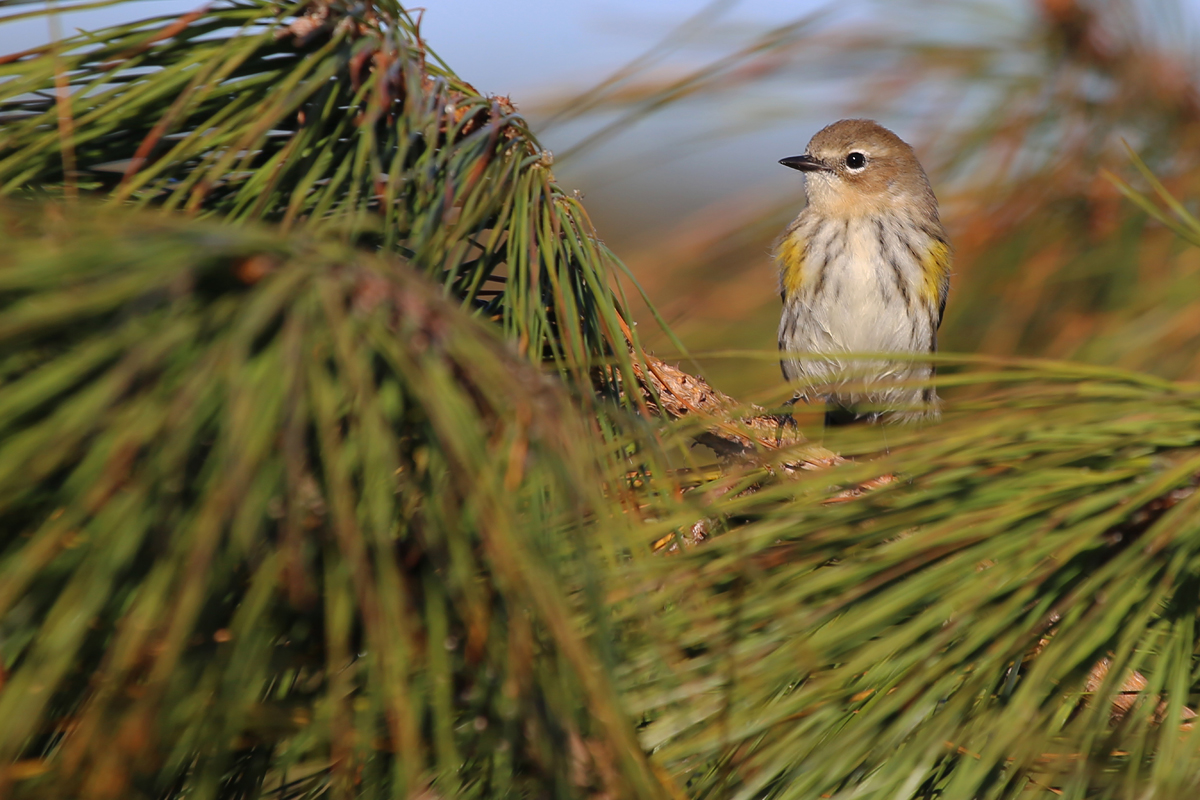
Late October 2016 (21st-31st)

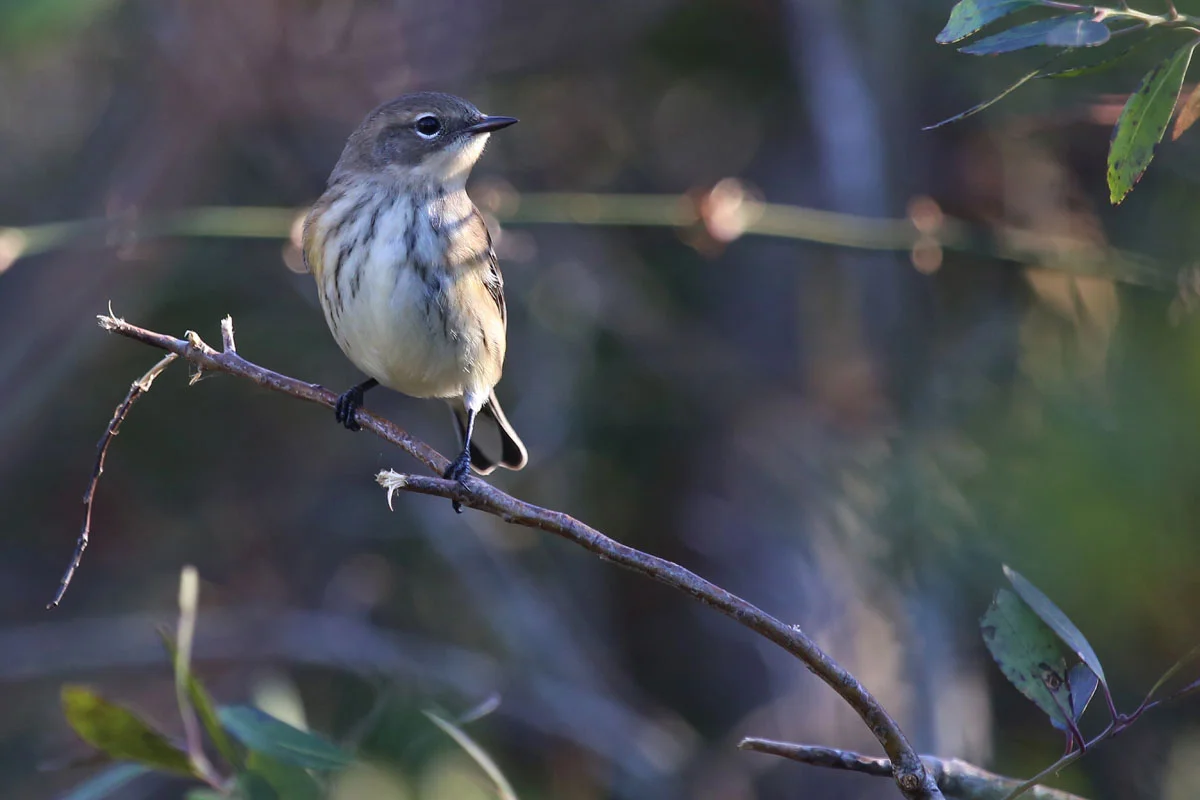
Dry weather continued through late October, and allowed for most areas of the city to finally shed the remnants of standing water still present from Hurricane Matthew's deluge to kick the month off. Like last period, there was a great deal of excellent finds to discuss, and top birds for Virginia Beach included SHORT-EARED OWL, CLAY-COLORED SPARROW & LARK SPARROW. First-of-season arrivals this period revolved mostly around waterbirds and this trend should continue on into November; we still saw our first-of-fall Orange-crowned Warbler (22 Oct), Common Loon (23 Oct), Northern Pintail, Ring-necked Duck & Hooded Merganser (24 Oct) and Greater/Lesser Scaup (27 Oct)! Early arrivals this period included Tundra Swan (23 Oct) and occurrences of late birds included Blackpoll Warbler (latest 28 Oct), American Redstart (27 Oct), Black-and-white Warbler (23 Oct) & Black-throated Blue Warbler (23 Oct). As in mid-October, we saw very high counts of Pied-billed Grebe & Northern Flicker but numbers of American Robin, Yellow-rumped Warblers & White-crowned Sparrows also were bolstered during late October. WEATHER: Overall, late October’s average daily high temperature dropped back towards normal at 69.9 degrees F (-6.4 degrees from the mid-October period); the average daytime lows also dropped considerably to 48.3 degrees F (-7.5 degrees). The previous 10-year average daily highs & lows for the late October period were 68.7 & 50.6 degrees F, respectively which puts this period in 2016 at +1.2, and -2.3 degrees when comparing to the averages. Also during the previous 10-year period, the maximum average daily highs & lows were 73.8 & 57.0 degrees F (2007). Conditions remained very dry throughout the period (a good thing for the region right now), and accumulations of only 0.20 inches of rainfall occurred at Oceana over the 11-day period.

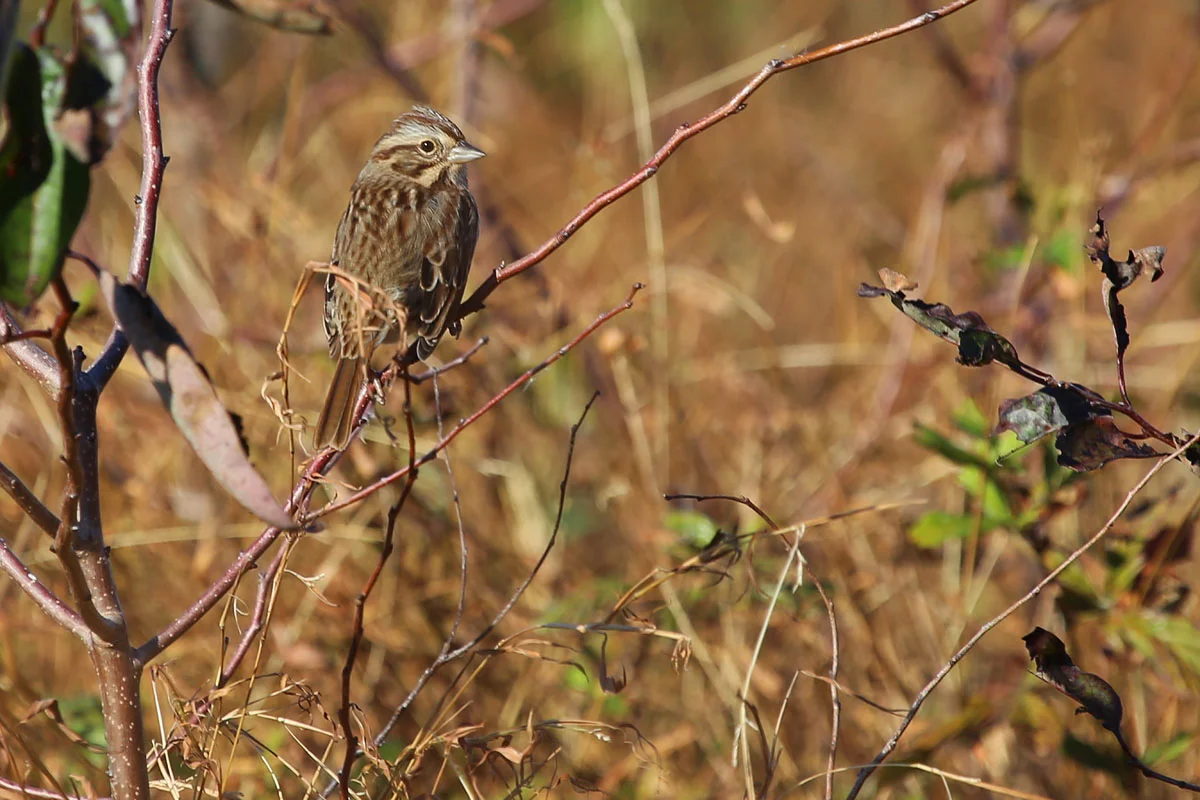
OBSERVATIONS:  With mid-October having been dominated by exciting reports of rare species of sparrows, it was no surprise that our most recent period kicked off in similar fashion. During the afternoon of the very first day of the period (Friday, 21 Oct), our second CLAY-COLORED SPARROW of the fall season was discovered & photographed at Little Island Park (Mary Catherine Miguez). This individual stayed put through the next day, when it was again observed & photographed (Karen & Tom Beatty) at the same location. After apparently going undetected the following pair of days, it was again observed 26 Oct, though this would be the last time it was reported. Not too far away from Little Island, and early on the morning of 23 Oct, a third CLAY-COLORED SPARROW was also observed at Back Bay NWR (Andrew Baldelli). This one was at the same location where many other sparrow species have been foraging together just north of the visitor’s center. This sparrow did not appear to be the same individual seen at Little Island Park after reviewing the photographs taken of each. The Back Bay individual was observed & photographed (Kim Harrell and Rob Bielawski) later in the evening of the 23rd but the refuge was closed for hunting 24-25 Oct so there is no way to tell if it stayed put to start off the week. However, it was again reported 29 Oct (Jason Schatti), though with the time gap between observations, and no photographs acquired after 23 Oct, it is difficult to say whether it was the same individual for certain, though it seems quite likely. As a comparison, in 2015 there was only one CLAY-COLORED SPARROW observed in Virginia Beach, occurring also at Back Bay NWR (Ron Furnish & Marie Mullins). So we’ve had quite the fall season for this species so far, and the potential for finding others still remains moving forward. Additionally, the LARK SPARROW first observed 19 Oct (Karen & Tom Beatty) at Back Bay NWR was again observed (James Marcum) and photographed (27 Oct / Tina Trice) and again 30 Oct (Lisa Rose and Matt Anthony & Nicholas Newberry). A second individual joined it 23 Oct (Karen & Keith Roberts) though that report didn’t get input to eBird. One of these individuals appeared to have a wound on the right cheek (ph. Kim Harrell), where either blood was visible, or the feathers had been torn away leaving the skin visible. I make mention of this so that anyone who observes a Lark Sparrow at the site in the coming days can look for this mark to see if the same individual is still present, or if a different bird has moved in. This site has had at least 3 different individuals move through it this fall so far. The last rarity observed this period came in the form of a SHORT-EARED OWL found during an official impoundment survey at Back Bay NWR (26 Oct / Rebecca Walawender). This species is likely an annual winter resident within Virginia Beach but is seldom searched for and probably just ends up going unnoticed. However, as Sibley’s field guide notes, any area that holds Northern Harriers during the daytime is likely to hold these owls during the night. Short-eareds are also known for being active at dawn and dusk so maybe with some effort over the coming months, more of these gorgeous owls will be discovered locally. After all, they’re found each winter to our south at Alligator River NWR in North Carolina, and they appear north of us on the Eastern Shore often in winter as well! First-of-season arrivals occurred throughout the period, some early, some right on time. These included an Orange-crowned Warbler (22 Oct / Little Island Park / Karen & Tom Beatty), Common Loon (23 Oct / Little Island Park / Andrew Baldelli), Northern Pintail & Ring-necked Duck (24 Oct / Kings Grant Lakes / Rob Bielawski), Hooded Merganser (24 Oct / Turtle Lake / Una Davenhill) and Greater/Lesser Scaup (27 Oct / Back Bay NWR / James Marcum). While Common Loons do often linger throughout the summer months here along the coast, it has been a while since one was sighted, so it is fair to call this one a first-of-season bird even though they probably should be considered a permanent resident in Virginia Beach. An early Tundra Swan was observed at Back Bay NWR (23 Oct / David Clark) and we also had our first groups of Northern Shoveler (5 / 30 Oct / Back Bay NWR / Lisa Rose) and Ruddy Ducks (25 / 27 Oct / Back Bay NWR / James Marcum) though we had first-of-season individuals earlier. Late lingerers this period were also noted with some frequency and included individual Black-and-white Warblers at Stumpy Lake NA (21 Oct / James Marcum) & Back Bay NWR (23 Oct / Kim Harrell). We are right at the northern edge of where these warblers often attempt to winter, and as such, this might not be the last individuals reported this year here. Other late sightings included a pair of Black-throated Blue Warblers (23 Oct / Little Island Park / Andrew Baldelli), Blackpoll Warblers at Back Bay NWR (28 Oct / Rob Bielawski), First Landing SP (28 Oct / Jason Schatti) & at Little Island Park (26 Oct / Karen & Tom Beatty), and lastly a female American Redstart at Back Bay NWR (27 Oct / James Marcum). Northern Flickers (215), American Robins (475) and Yellow-rumped Warblers (1500) were all very high counts at Little Island Park (23 Oct / Andrew Baldelli) as they continue to stream through the region. Additionally, 5 White-crowned Sparrows at Back Bay NWR (29 Oct / Rob Bielawski) represents the highest count for this species on the year here. Interestingly, all of them were first-year birds, and we haven’t had an adult White-crowned Sparrow logged in Virginia Beach yet this fall! Last, but certainly not least, some species I’ll just refer to as “neat” were also seen this period. A Sora at Little Island Park (26 Oct / Karen & Tom Beatty), and Sedge Wrens at Little Island Park (1 / 28 Oct / Jesse Anderson) and Back Bay NWR (2 / 30 Oct / Lisa Rose) made for excellent finds of secretive species that around present all winter long, but can be very tough to actually observe. Folks around the area continue to report Red-breasted Nuthatches and this year is proving to be quite an irruption year for that species. Additionally, Nelson’s and Seaside Sparrows continue to observed around the salt marshes at Pleasure House Point, and we’re right in the peak period to observe these reed-dwelling sparrows. Next period should bring us more waterfowl, as land bird migration winds down! Keep in mind that the first Sunday (6 Nov) of the period is when our clocks will be moved back an hour due to the ending of Daylight Savings Time, which means the opportunity for earlier morning birding but at the expense of losing evening birding. Also, Back Bay NWR has now closed the East Dike for the season (as of 1 Nov). The Dikes will remain closed until 1 Apr 2017, when the West Dike is the typical route to be first opened. The beach remains open year-round to False Cape SP and the trails adjacent to the visitor center, as well as the entry road and gravel road up to the dike gates are also open. 
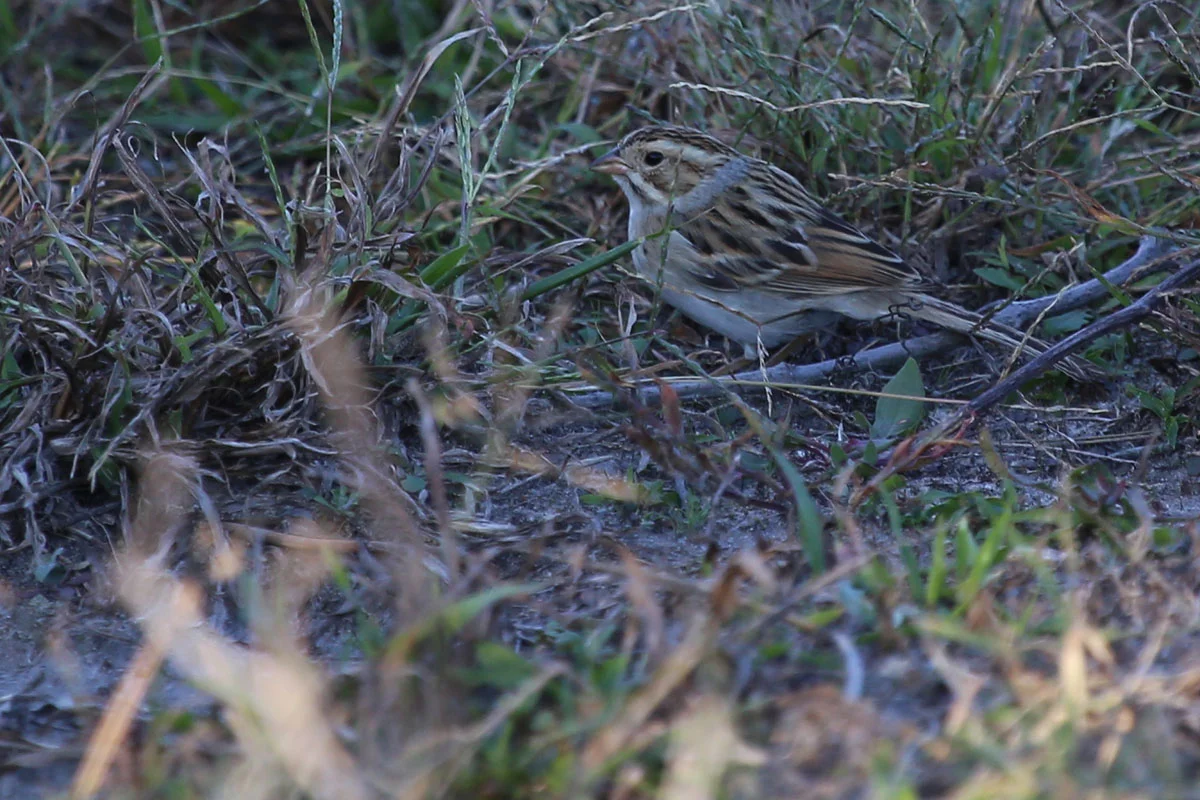
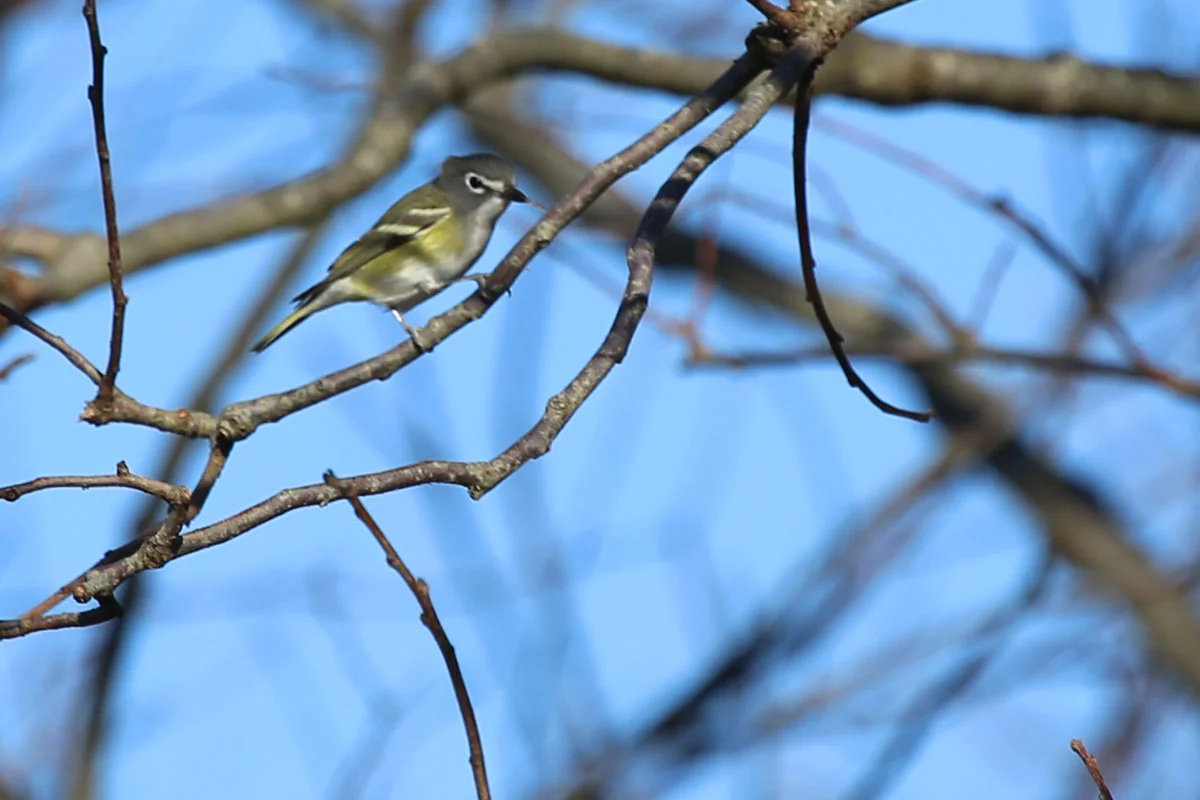
SPECIES DOCUMENTED BY MEDIA and submitted to eBird for Virginia Beach during this period included: 21 OCT – American Kestrel (Dam Neck Station Rd. / David Clark); CLAY-COLORED SPARROW, Field Sparrow & Song Sparrow (Little Island Park / Mary Catherine Miguez). 22 OCT – Blue-winged Teal, Ruby-crowned Kinglet, Northern Mockingbird, Orange-crowned Warbler, White-crowned Sparrow, Savannah Sparrow & Northern Cardinal (Little Island Park / Karen & Tom Beatty); LARK SPARROW (Back Bay NWR / Karen & Tom Beatty); CLAY-COLORED SPARROW, White-crowned Sparrow & Savannah Sparrow (Little Island Park / Karen & Tom Beatty). 23 OCT – Lesser Black-backed Gull & Northern Flicker (Back Bay NWR / David Clark); Northern Flicker, Black-and-white Warbler, CLAY-COLORED SPARROW, Field Sparrow, LARK SPARROW & White-crowned Sparrow (Back Bay NWR / Kim Harrell); Swamp Sparrow (Little Island Park / Rob Bielawski); Northern Flicker, Blue Jay, CLAY-COLORED SPARROW, LARK SPARROW & White-crowned Sparrow (Back Bay NWR / Rob Bielawski); Wood Duck & American Wigeon (Kings Grant Lakes / Rob Bielawski). 24 OCT – Yellow-bellied Sapsucker, Downy Woodpecker, Carolina Chickadee, Carolina Wren, American Robin, Northern Mockingbird, Yellow-rumped Warbler, Northern Cardinal & House Finch (Glenmore Hunt Tr. / Karen & Tom Beatty); Hooded Merganser (Turtle Lake / Una Davenhill); Greater Yellowlegs, Ruby-crowned Kinglet & Yellow-rumped Warbler (Pleasure House Point NA / Matthew Echaniz); Nelson’s Sparrow (Pleasure House Point NA / Karen & Tom Beatty); Northern Pintail & Ring-necked Duck (Kings Grant Lakes / Rob Bielawski). 26 OCT – Sora, American Coot, Common Yellowthroat, Blackpoll Warbler & White-crowned Sparrow (Little Island Park / Karen & Tom Beatty). 27 OCT – LARK SPARROW (Back Bay NWR / Tina Trice). 28 OCT – Great Blue Heron, Blue-headed Vireo, Blackpoll Warbler, Yellow-rumped Warbler, White-crowned Sparrow & Song Sparrow (Back Bay NWR / Rob Bielawski). 29 OCT – Yellow-rumped Warbler (Little Island Park / Rob Bielawski); Turkey Vulture, American Coot, Eastern Phoebe, Ruby-crowned Kinglet, Northern Mockingbird, Palm Warbler, Yellow-rumped Warbler, White-crowned Sparrow & Song Sparrow (Back Bay NWR / Rob Bielawski). 30 OCT – Sedge Wren, Gray Catbird, LARK SPARROW, White-crowned Sparrow & White-throated Sparrow (Back Bay NWR / Lisa Rose); Hermit Thrush & Swamp Sparrow (Back Bay NWR / Una Davenhill); White Ibis (Princess Anne WMA Whitehurst Tract / Rob Bielawski); Northern Harrier (Morris Neck Rd. / Rob Bielawski); American Wigeon, American Black Duck & Ring-necked Duck (Kings Grant Lakes / Rob Bielawski).

LOOKAHEAD: Temperatures will likely bounce around a bit, but the overall trend will continue to drive in cooler weather through early November. We have now arrived at the Fall Vagrant Season along the East Coast and from now through probably December, reverse migrants from the West Coast are more likely to visit our area as they travel northward along the Atlantic coast. These species can include Gray Kingbirds, as we have already seen here this fall, but other species to look for would be Western Kingbird (or any of the yellow-bellied-kingbird species, ie. Tropical/Couch’s/Cassin’s), Say’s Phoebe, Vermillion Flycatcher, Ash-throated Flycatcher, Scissor-tailed Flycatcher, and even Townsend’s or Black-throated Gray Warblers. Also, please remember that of the expected species arriving or passing through here during the fall season, we have not yet logged our first Purple Sandpiper, Brant, American Pipit, American Woodcock, Bonaparte’s Gull & Horned Grebe (early October arrivals), Rusty Blackbird, Redhead, Greater Scaup, Lesser Scaup, White-winged Scoter & Great Cormorant (mid-October arrivals), Fox Sparrow, Harlequin Duck, Red-throated Loon, Snow Goose, Common Eider, Long-tailed Duck, Bufflehead & Red-breasted Merganser (late October arrivals) and Canvasback & Common Goldeneye (early November Arrivals) in Virginia Beach yet this fall. We should begin to see more waterfowl in the coming period as well, since thus far they have been rather nonexistent; though, perhaps they’re present, and most birders just haven’t focused on their habitat when birding due to the songbird movements.

Next Entry | Entry Index | Previous Entry

For more information on this thrice-monthly Birding Blog, please check out the Journal Overview Page on the website. It provides background information as to what sightings are considered for the blog, details about the format of the blog, and it will likely answer many other questions that readers might be wondering about as well! As always, thank you for reading, and please leave me a comment below (you may use your Facebook, Gmail or other accounts to easily do so), or just click the Heart icon to the lower right of this post to let me know you stopped in!