Virginia Month Listing: February 2025
/February tends to be a tougher month for diversity of species than January with the CBC and holiday season over with, with fewer lingering birds surviving another month of winter, and with spring migration not really starting for the bulk of species until March at the earliest. That said, this February still managed to hold its own with some excellent surprises. In total, 220 species produced accepted records in eBird for the state, 170 of which were species that had been recorded every February throughout the prior decade (2015-2024), and 50 of which were recorded less than annually over that span purely during the month of February. We ended up above the prior 10-year average value of 216 species recorded during Februarys (the prior 10-year median value was 217.5, for those who like to compare medians instead of averages). The prior decade of Februarys ranged from a low of 203 species in 2015 & 2018 up to a high of 227 species in 2021. Clearly, any monthly iteration can vary depending on the weather, and a lot of other factors. Alcids produced the highest total (5 species) for that group compared to the prior 10-year Februarys mark of 4 (this was obviously aided by the pelagic trip that added Atlantic Puffin & Common Murre, but it was an onshore Thick-billed Murre that got us over the hump, chronologically speaking). Tubenoses tied the high mark set in 2017 of two species, with both Manx & Sooty Shearwaters seen offshore on the aforementioned pelagic trip. Sparrows (17 species) managed to tie the prior 10-year Februarys high mark set also in 2015, 2018, 2021 & 2024. Other groups were all around average, with more discussion at the bottom of this posting.




To showcase some of the unusual species documented in the state this month, the following is a list of the species that were recorded to eBird in February 2025 that were recorded in less than ten of the prior ten Februarys. Clicking on a species name will load up the February 2025 map in eBird, so records can be easily viewed. Please note that this is solely based on eBird records, and this isn’t an analysis of what “should/shouldn’t” be present in the state during February. Subspecies, slashes & spuhs were not investigated. This is simply intended to be an enjoyable look at what was recorded this month across the state in comparison to prior Februarys; it’s not scientific, but it helps to showcase some of the unusual records based on time of year, and 33 total cities/counties are represented by records here as well. Please enjoy!
Four species observed in Feb 2025 had not been recorded to eBird in any of the prior ten Februarys:
Crested Caracara (Rockingham; this is the first-ever February record for the state according to eBird; species was not recorded in Virginia at the time of publication of the Gold Book)
Least Bittern (Virginia Beach; this is the first-ever February record for the state according to eBird & the Gold Book)
Lark Bunting (Fluvanna; 1932 was the last, and only other February record in the state according to eBird & the Gold Book)
Sooty Shearwater (Virginia Beach; 2006 was the last year with a February record in eBird for the state)
Two species observed in Feb 2025 had been recorded to eBird in only 1 of the prior ten Februarys:
Atlantic Puffin (Northampton; 2017 was the only year out of the prior ten with a record)
Common Murre (Northampton & Virginia Beach; 2024 was the only year out of the prior ten with a record)
Six species observed in Feb 2025 had been recorded to eBird in only 2 of the prior ten Februarys:
Summer Tanager (Chesapeake; 2018 & 2021 were the only other years out of the prior ten with a record)
Grasshopper Sparrow (Fluvanna; 2020 & 2021 were the only other years out of the prior ten with a record)
Rose-breasted Grosbeak (Virginia Beach; 2016 & 2022 were the only other years out of the prior ten with a record)
Little Gull (Virginia Beach; 2017 & 2023 were the only other years out of the prior ten with a record)
Say's Phoebe (Rockingham; 2019 & 2023 were the only other years out of the prior ten with a record)
Thick-billed Murre (Virginia Beach; 2015 & 2024 were the only other years out of the prior ten with a record)
Five species observed in Feb 2025 had been recorded to eBird in only 3 of the prior ten Februarys:
Common Gallinule (Northampton; 2019, 2021 & 2022 were the only other years out of the prior ten with a record)
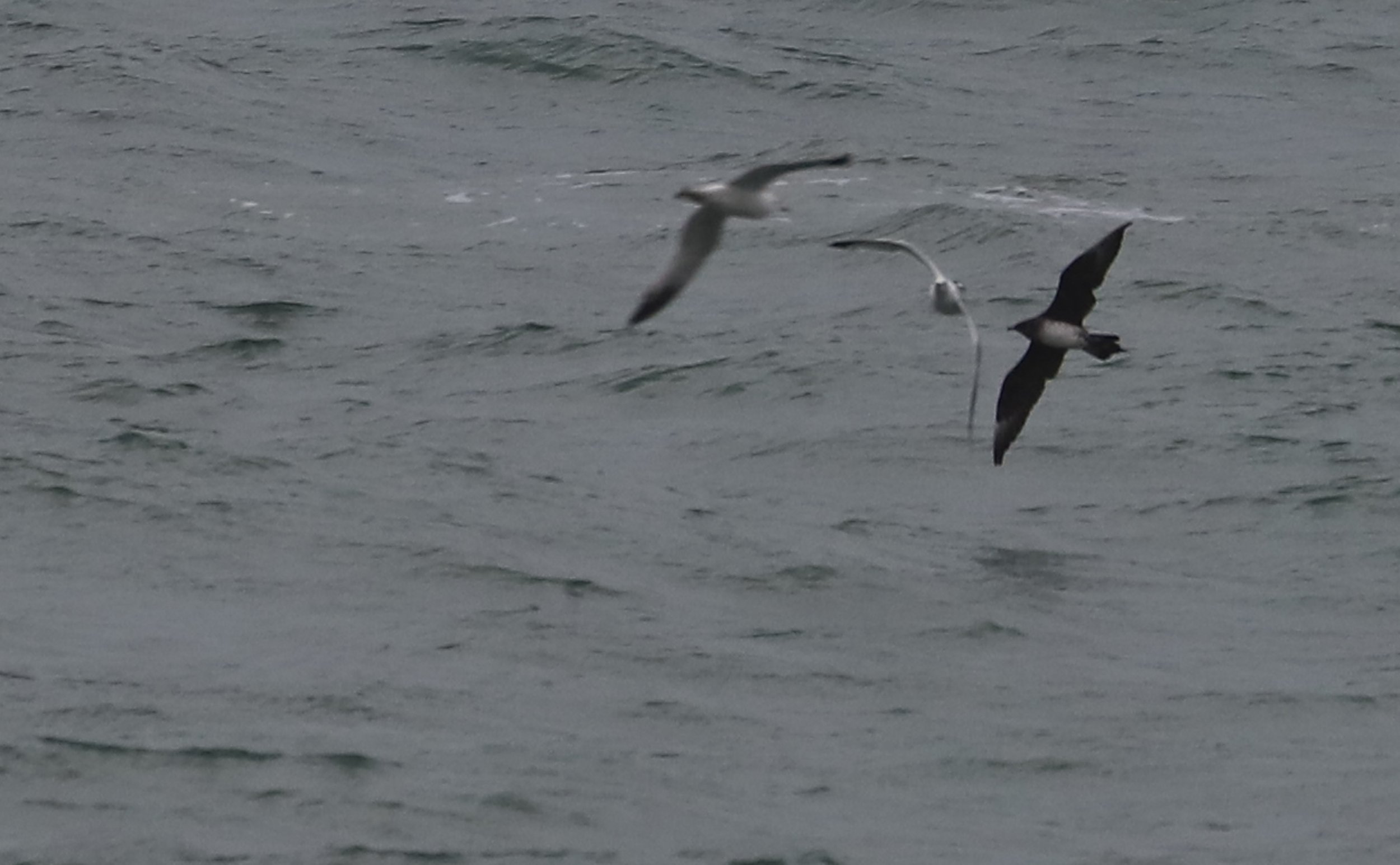
Parasitic Jaeger (Virginia Beach; 2017, 2019 & 2023 were the only other years out of the prior ten with a record)
Black-legged Kittiwake (Virginia Beach; 2016, 2017 & 2024 were the only other years out of the prior ten with a record)
Manx Shearwater (Northampton & Virginia Beach; 2017, 2020 & 2024 were the only other years out of the prior ten with a record)
Whimbrel (Accomack & Northampton; 2022, 2023 & 2024 were the only other years out of the prior ten with a record)
Two species observed in Feb 2025 had been recorded to eBird in only 4 of the prior ten Februarys:
Evening Grosbeak (Richmond City)
Cape May Warbler (Henrico)
One species observed in Feb 2025 had been recorded to eBird in only 5 of the prior ten Februarys:
Rufous Hummingbird (Charlottesville)
Five species observed in Feb 2025 had been recorded to eBird in only 6 of the prior ten Februarys:
Yellow-throated Warbler (James City)
Lapland Longspur (Accomack & Augusta)
Red Knot (Accomack)
Ruby-throated Hummingbird (Newport News, Norfolk & Virginia Beach)
Green Heron (Fairfax City)
Four species observed in Feb 2025 had been recorded to eBird in only 7 of the prior ten Februarys:
Vesper Sparrow (Northampton)
Clay-colored Sparrow (Amherst)
Black-headed Gull (Virginia Beach)
Dovekie (Accomack, Northampton & Virginia Beach)
Five species observed in Feb 2025 had been recorded to eBird in only 8 of the prior ten Februarys:
Snow Bunting (Northampton & Virginia Beach)
Common Eider (Northampton & Virginia Beach)
American White Pelican (James City, Mathews, Northampton, Surry & Virginia Beach)
Least Sandpiper (Lunenberg, Newport News & Portsmouth)
Sedge Wren (Accomack, Hampton & Virginia Beach)
Sixteen species observed in Feb 2025 had been recorded to eBird in only 9 of the prior ten Februarys:
Rough-legged Hawk (Augusta & Pittsylvania; missed only in 2024)
Seaside Sparrow (Hampton; missed only in 2022)
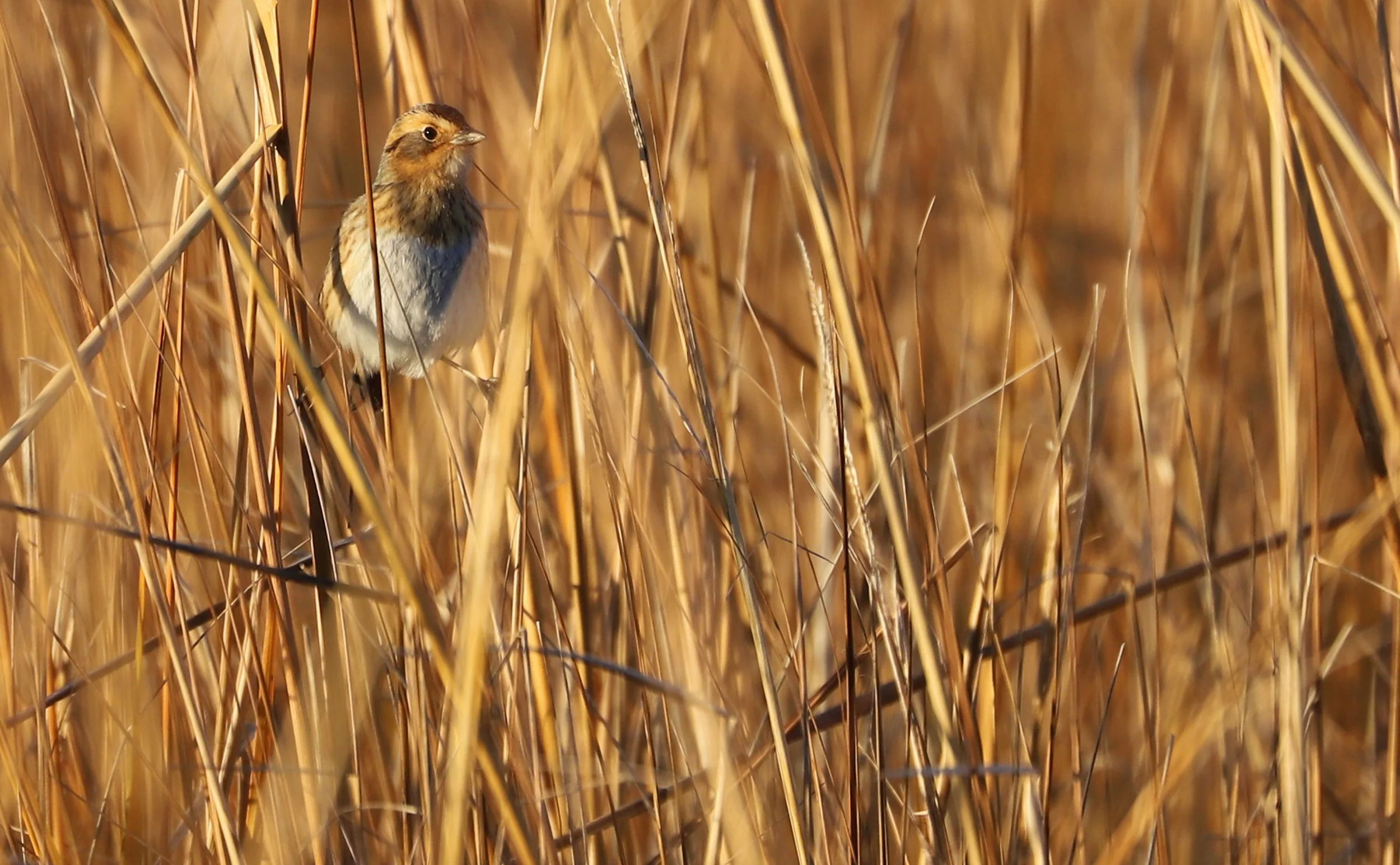
Nelson’s Sparrow (Accomack, Northampton & Virginia Beach; missed only in 2020)
Saltmarsh Sparrow (Accomack & Northampton; missed only in 2019)
Western Tanager (Isle of Wight, Portsmouth & Virginia Beach; missed only in 2019)
Tricolored Heron (Accomack, Northampton & Virginia Beach; missed only in 2018)
Red-cockaded Woodpecker (Sussex; missed only in 2017)
Short-eared Owl (Accomack, Alleghany, Augusta, Hampton, Fauquier, Louisa, Poquoson, Rockingham, Staunton, Tazewell & Virginia Beach; missed only in 2016)
Black-and-white Warbler (Chesapeake, James City, Newport News & Virginia Beach; missed only in 2016)
Blue-winged Teal (Virginia Beach; missed only in 2015 so will not be included next February if recorded in the state)
Sora (Accomack & Virginia Beach; missed only in 2015 so will not be included next February if recorded in the state)
Sandhill Crane (Augusta, Loudoun, Page & Rockbridge; missed only in 2015 so will not be included next February if recorded in the state)
American Avocet (Portsmouth; missed only in 2015 so will not be included next February if recorded in the state)
Laughing Gull (Accomack, Gloucester, Newport News, Norfolk, Northampton & Virginia Beach; missed only in 2015 so will not be included next February if recorded in the state)
Little Blue Heron (Accomack & Hampton; missed only in 2015 so will not be included next February if recorded in the state)
Red Crossbill (Augusta; missed only in 2015 so will not be included next February if recorded in the state)

Of course, it is also fun to look at what species were missed for the month that had occurred in some of the prior ten Februarys (and to reminisce about when those birds were observed). 63 such species were not recorded in Virginia this month. Starting with the worst misses, here are the species not recorded to eBird in Feb 2025 that had been recorded in all 10 of the past 10 Februarys (clicking on the names below will open this month’s eBird map to showcase where the species actually did get recorded):
Brewer's Blackbird (the reliable flock in Virginia Beach was last reported 12 Jan)
One species not recorded to eBird in Feb 2025 that had been recorded in 9 of the past 10 Febuarys:
Lincoln's Sparrow (missed only in 2016)
Two species not recorded to eBird in Feb 2025 that had been recorded in 8 of the past 10 Febuarys:
Long-billed Dowitcher (missed in 2015 & 2019)
Glaucous Gull (missed in 2018 & 2023)
Five species not recorded to eBird in Feb 2025 that had been recorded in 6 of the past 10 Febuarys:
Five species not recorded to eBird in Feb 2025 that had been recorded in 5 of the past 10 Febuarys:
Species not recorded to eBird in Feb 2025 that had been recorded in less than half of the prior 10 Februarys are as follows…
The Fours (6): Lark Sparrow, White-winged Dove, Yellow-headed Blackbird, Eared Grebe, Blue-gray Gnatcatcher & Snowy Owl. The Threes (8): Piping Plover, Long-billed Curlew, Bullock’s Oriole, Royal Tern, LeConte’s Sparrow, American Goshawk, Black Skimmer & Northern Shrike. The Twos (7): Western Kingbird, Purple Martin, Calliope Hummingbird, Wilson’s Warbler, Redpoll, Prairie Warbler & Yellow-crowned Night Heron. The Ones (28): Gray-crowned Rosy-Finch (only recorded in February 2024), Ash-throated Flycatcher (only in 2024), White-faced Ibis (only 2024), Anhinga (2024), Limpkin (2024), Yellow Warbler (2023), Heermann’s Gull (2022), Indigo Bunting (2021), Blue Grosbeak (2021), Tennessee Warbler (2021), Ovenbird (2020), Scott’s Oriole (2020), Anna’s Hummingbird (2020), Common Ground Dove (2020), American Redstart (2019), Bar-tailed Godwit (2019), Tufted Duck (2019), Harris’s Sparrow (2018), Magnificent Frigatebird (2017), Great Shearwater (2017), Ancient Murrelet (2017), Pectoral Sandpiper (2017), King Eider (2017), Lazuli Bunting (2016), Townsend’s Solitaire (2016), Cave Swallow (2016), Smith’s Longspur (2015) & Vega Gull (2015).
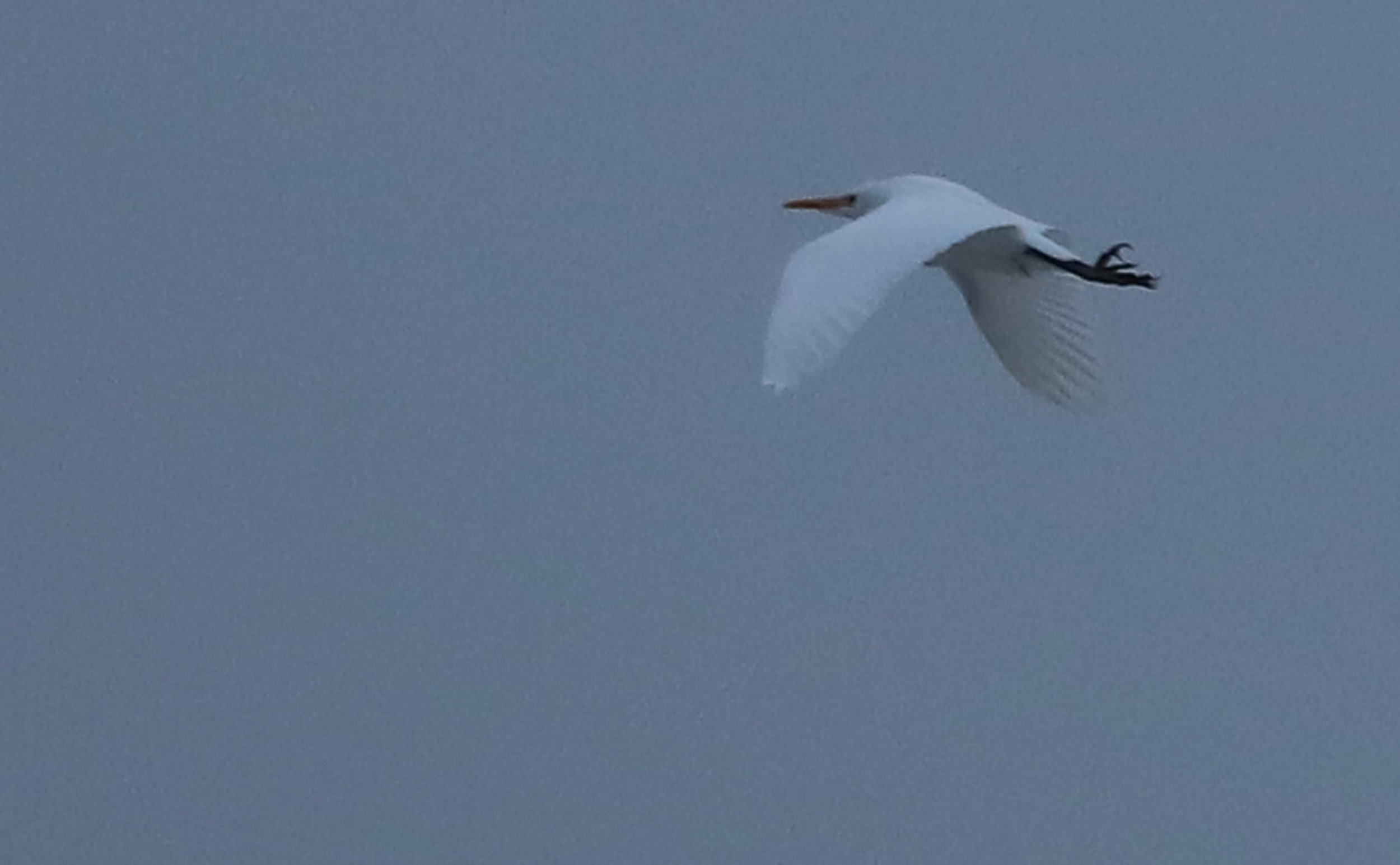
Looking more at selected groups of birds: Waterfowl diversity matched the average & median 10-year mark with 36 species (prior 10-year data ranged only from 35-37 species, so only 1 more add would have tied the high, but 1 less would have tied the low; in any case, a Cinnamon Teal, King Eider or Tufted Duck would have been nice). Hummingbirds were above average with 2 species, just 1 less than the 3 logged in 2021 & 2024. Shorebird diversity (21 species) matched the average but fell just short of the 21.5 median. Gulls & Terns (11) also matched the average, and the median (prior range 9-12). Waders (10) exceeded the average & median values of 9 & 9.5, falling just shy of the 11 species observed in 2020 (a Western Cattle-Egret would have tied us up, but they all vanished with the January snows in the southeast). Flycatchers (2) matched the average, and exceed the median of 1, falling short of only the 3 observed in 2024. Finches were also average with 6 species (prior range 5-7, with the 7 in 2021 only) and exceed the median of 5.5. Warblers came in below average with 8 species (range 7-11), for which 9 & 8.5 had been the average & median, respectively. Overall, passerine diversity was just slightly below average with 80 total species (range 77-88; high mark was in 2021) and non-passerines produced records for 140 species, slightly above the 10-year average of 135 (prior range 125-143) and median of 136.5. So, everything points to February 2025 being a slightly above average month compared to the prior ten iterations, and there were plenty of exciting birds beyond even what the discussion above includes.
Species diversity tends to start its ascent in March, peaking in May across Virginia, so we should see a higher species tally this coming month. It’ll be interesting to see what is found throughout the state in the ensuing 31 days!