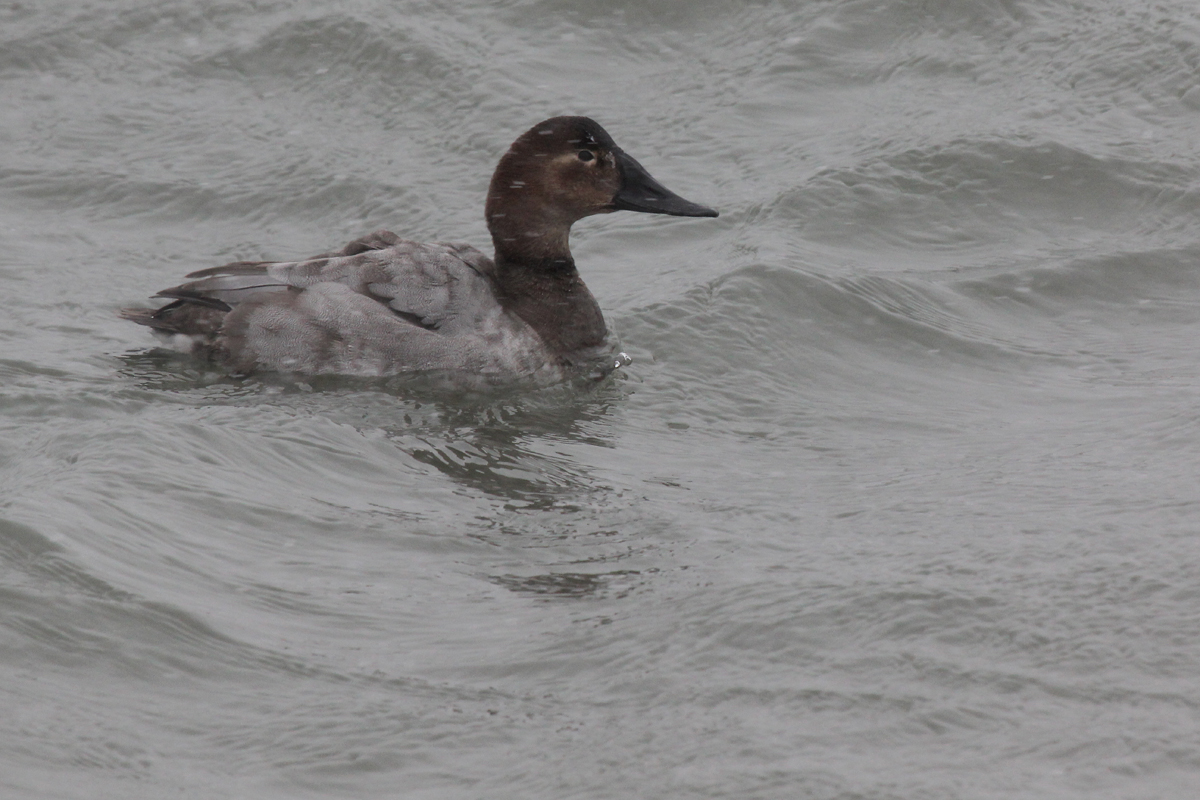
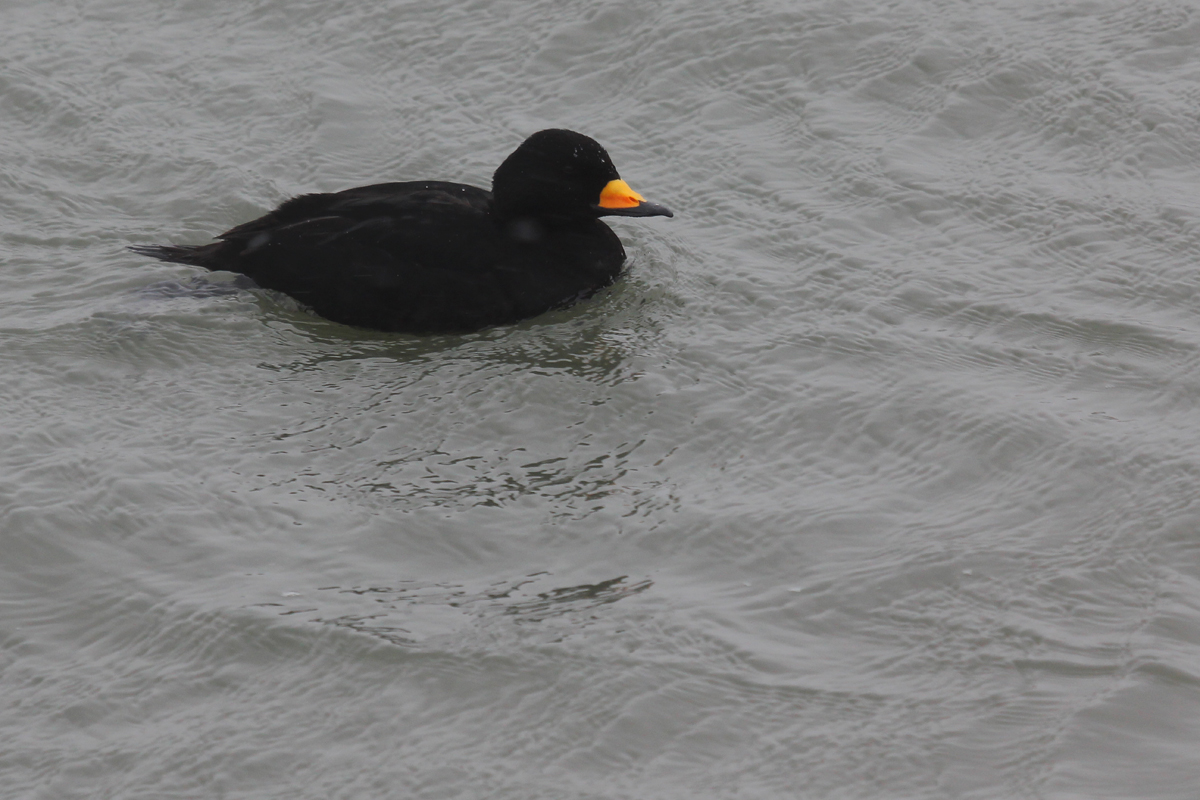
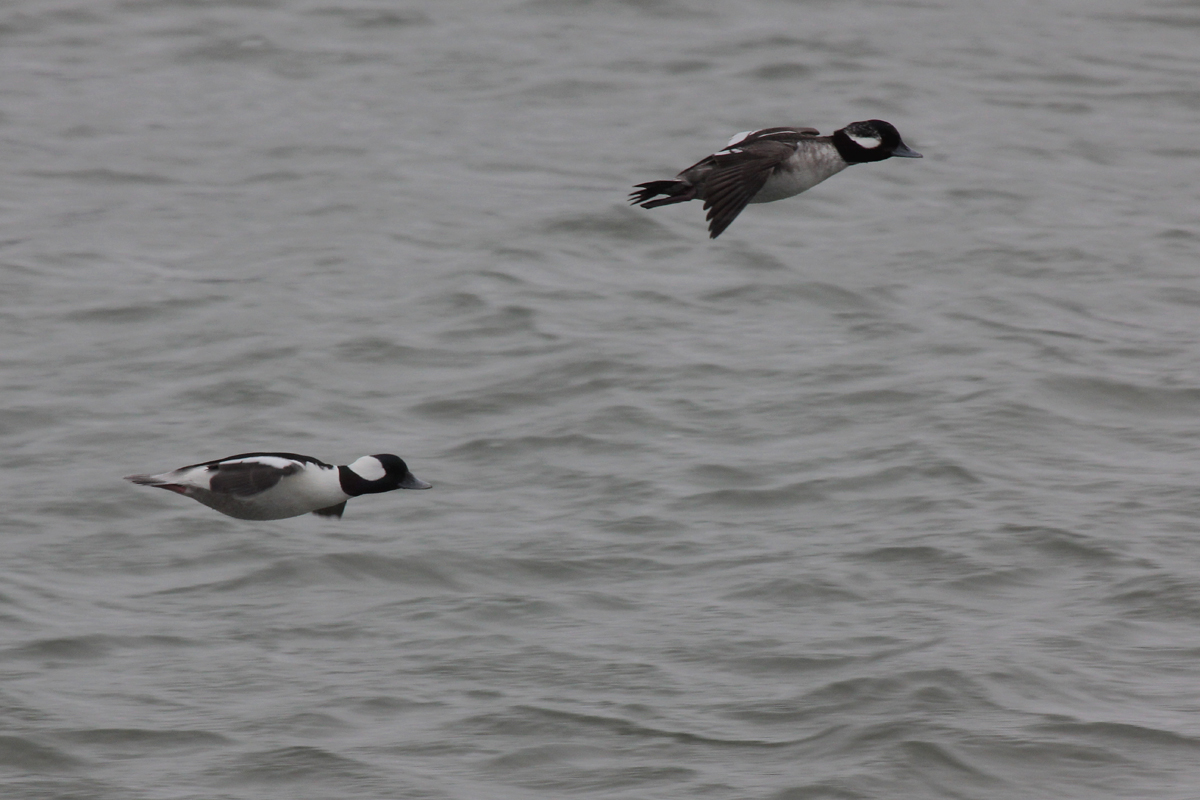
Late January 2018 (21st-31st)

With a warm start to late January (72° F), temperatures eventually dropped to near-normal values. For a third straight period in a row, we received snowfall accumulations, with yet another nor’easter sliding past us on 30 Jan. The Winter Wildlife Festival took place from 26-28 Jan, which helped add some records to eBird, but overall, rarity observations were down a bit from the madness that early & mid-January raised the bar to. Top records for late January included new records for BLACK-HEADED GULL & AMERICAN WHITE PELICAN, continuing reports of CACKLING GOOSE, GREATER WHITE-FRONTED GOOSE, COMMON MERGANSER, WESTERN TANAGER, BREWER’S BLACKBIRD and an ongoing unseasonal occurrence of YELLOW-THROATED WARBLER!

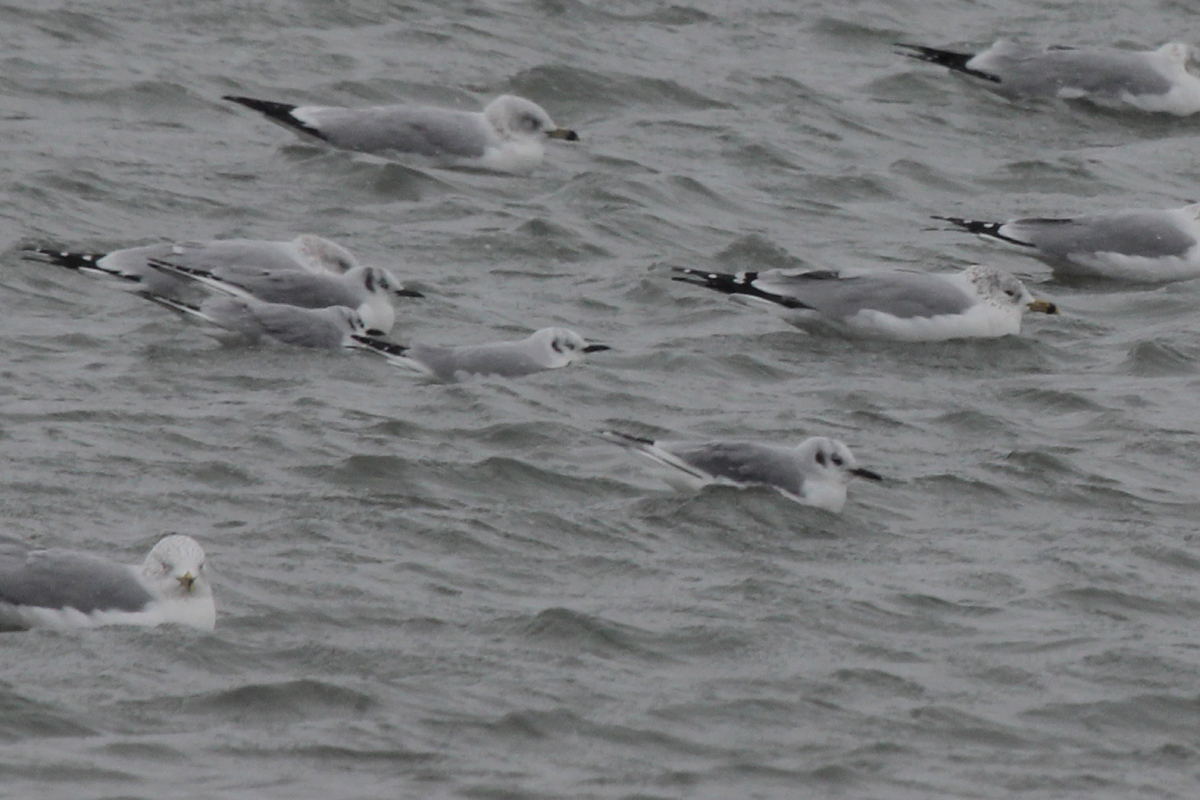
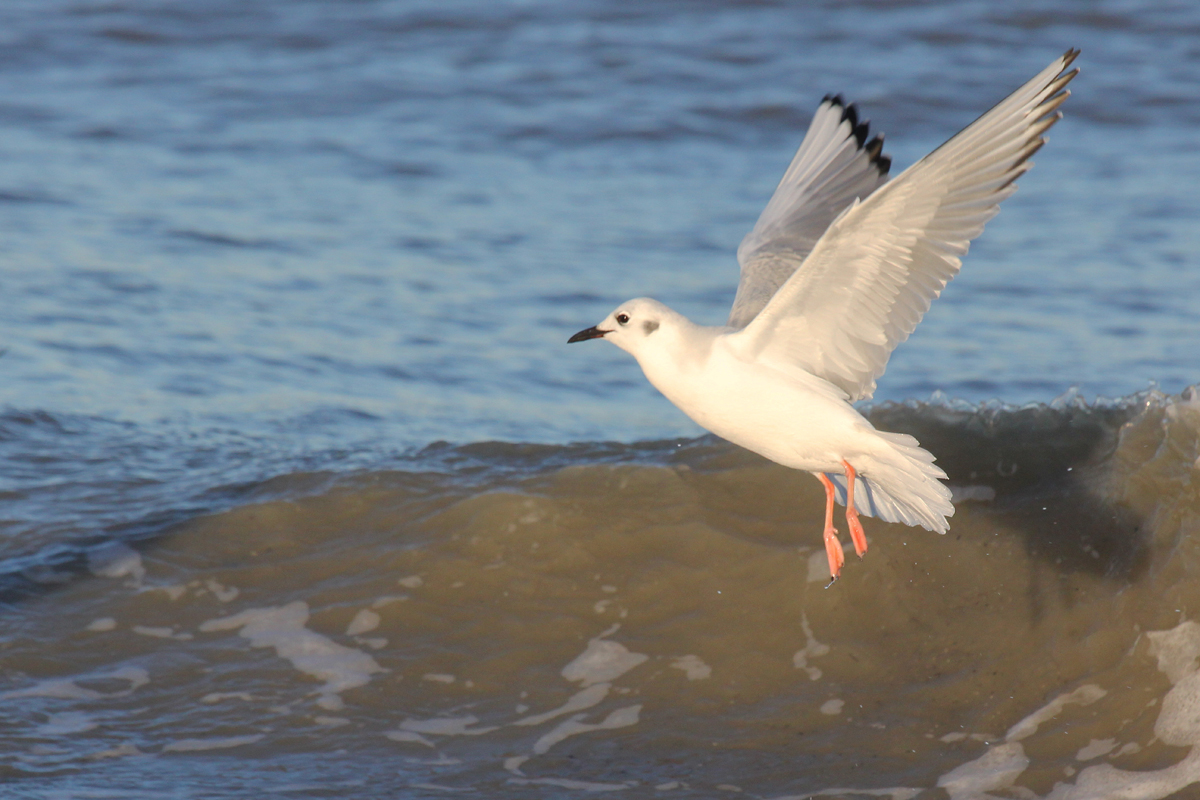
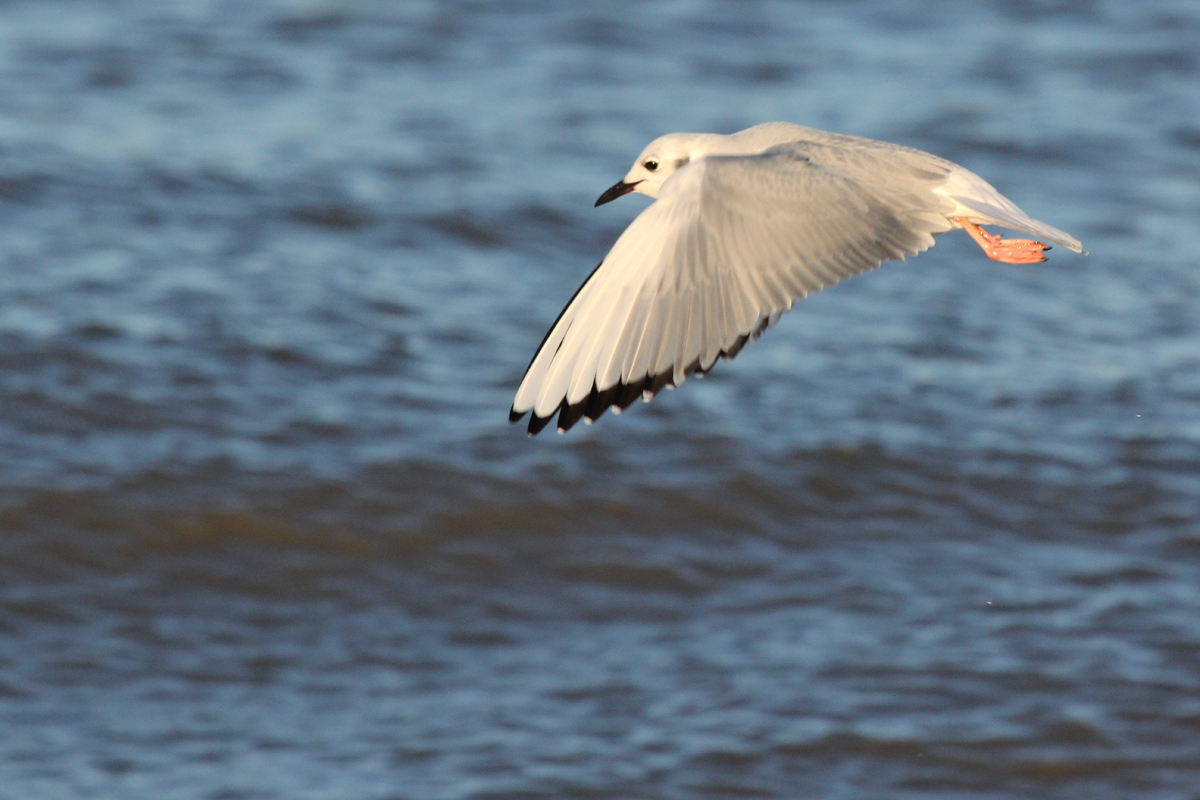
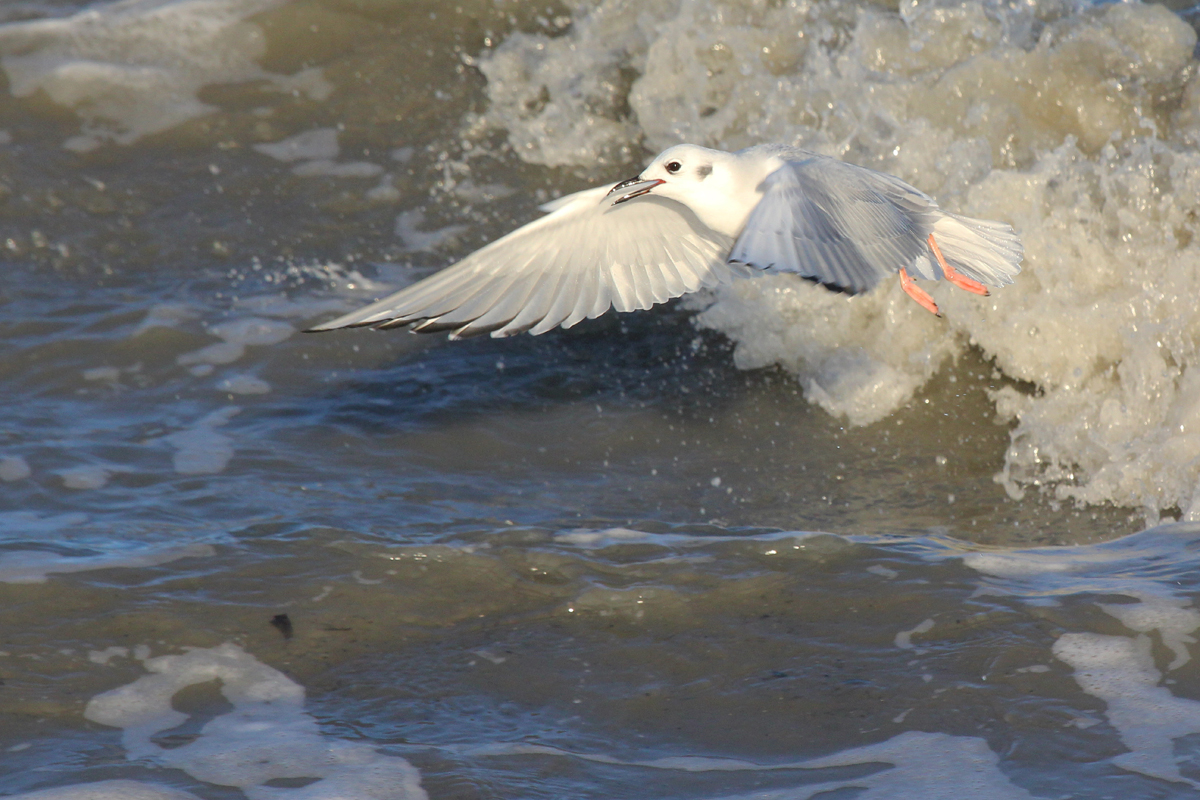
For the first time in just over a year, a BLACK-HEADED GULL was found at Rudee Inlet on 31 Jan (ph. Andrew Baldelli). Incredibly, this first cycle bird (meaning still in its first year of life after hatching this past spring, so not yet one year old) was not the only occurrence, as an apparent adult bird was also found later in the day on the exposed sand flats at Pleasure House Point NA (ph. Andrew Baldelli). The last time one of these was found in Virginia Beach was back on 24 Jan 2017 when one was observed in flight on South Thimble Island (obs. Robert Ake). As of this writing on 2 Feb, the Rudee Inlet bird has been present off and on throughout each day since the initial identification was made.

Bringing the count of verified AMERICAN WHITE PELICANS in 2018 from just one lone individual to nine birds now, a report was submitted from Pleasure House Point NA on 26 Jan of 8 birds (ph. June McDaniels). Unfortunately this flock was in transit and hasn’t been picked up anywhere else along the Virginia coast, but it’s still very possible that it turns up somewhere. Pleasure House Point was birded quite heavily through the ensuing weekend though, as the Winter Wildlife Festival occurred and at least one bird walk was scheduled here. The only other report thus far in 2018 is that of the single bird that showed up on the smaller pond at Sherwood Lakes on 12 Jan (ph. Mike Collins).

The CACKLING GOOSE first noted at Sherwood Lakes on 26 Nov 2017 (obs. David Clark, ph. Karen & Tom Beatty) was again reported on 27 Jan afternoon (ph. James Marcum & Pamela Monahan). With several hundred Canada Geese typically present at the lake or in the nearby agricultural fields, this single Cackling Goose is likely to continue through the winter, and is simply a matter of effort and patience in order to find it!

Our other continuing rare goose species, the GREATER WHITE-FRONTED GOOSE, was reported just once during late January behind Ocean Lakes High School on 27 Jan (obs. Karen & Tom Beatty). This species has been present in the city since at least 3 Jan when a pair was photographed at Sherwood Lakes (ph. Karen & Tom Beatty), with a high count of 3 occurring 13 Jan (obs. Andrew Baldelli / Linda Chittum / Tracy Tate) back at the fields off Firefall Drive near the high school.

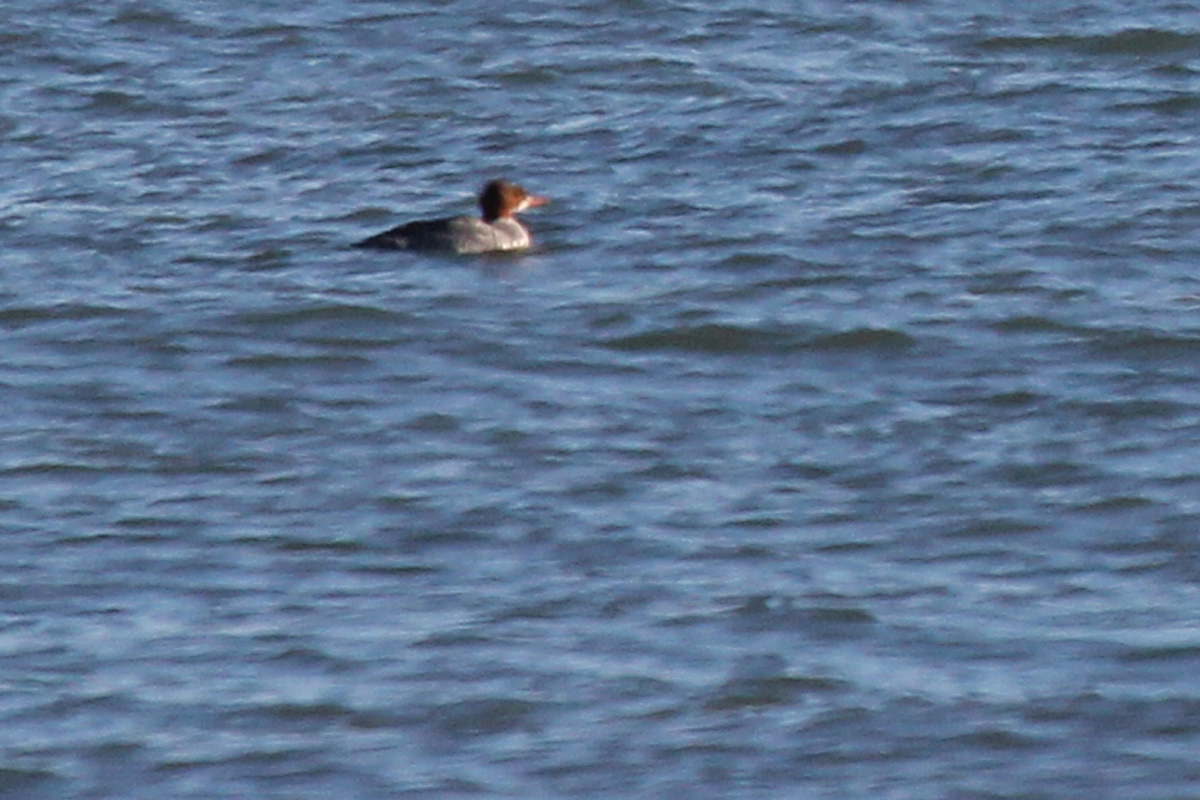
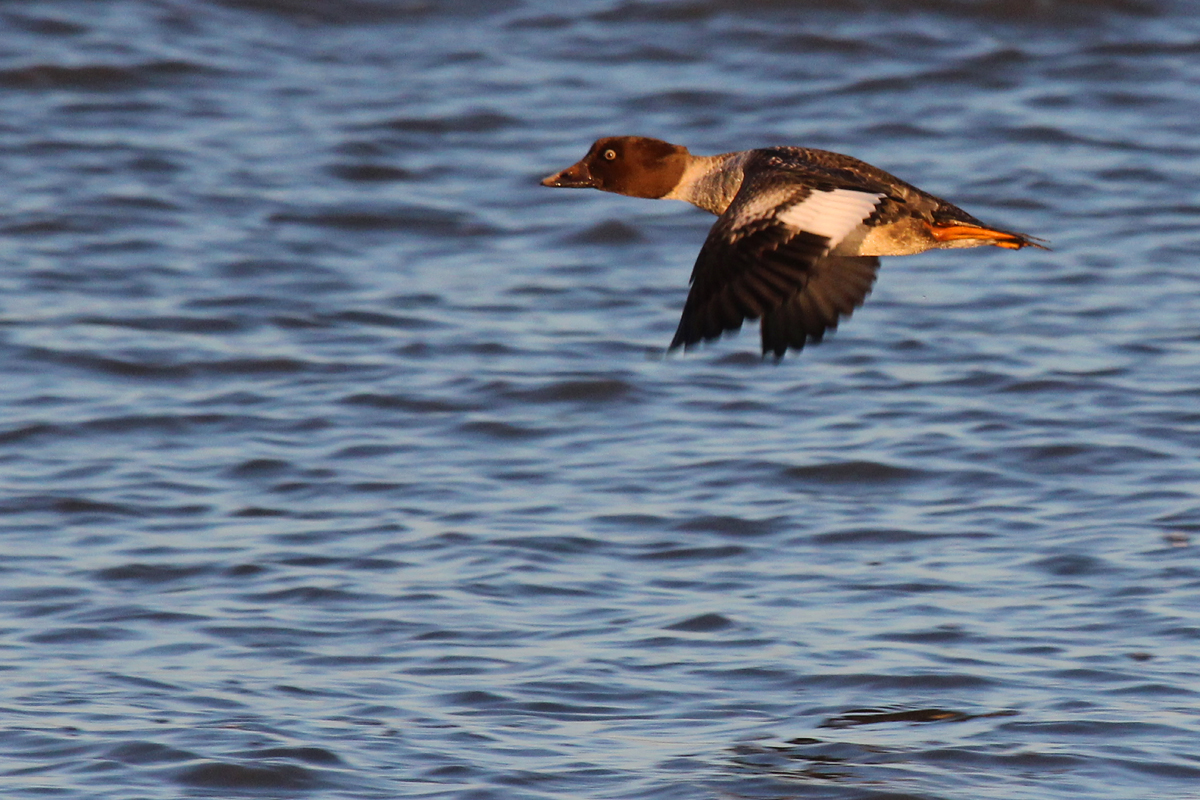
The group of at least a dozen COMMON MERGANSERS first reported 3 Jan at Sherwood Lakes (ph. Carson Lambert / Andrew Rapp / Robert Wood) continued through 27 Jan when 7 individuals were observed in the morning (ph. Matt Anthony / Rob Bielawski / Todd Day) and 4 were seen in the afternoon (ph. James Marcum & Pamela Monahan). As mentioned last period, Sherwood Lakes has been a hotbed for reports of this species in recent years (though reports of Red­-breasted Mergansers still outnumber Commons about 1000:1, which is why Commons flag in eBird), due primarily to it’s resistance to freezing (due to its depth, being a former sandpit), and its clarity, which Common Mergansers prefer in their normal winter range of swiftly flowing, clear rivers where fish make plentiful prey.

The two continuing WESTERN TANAGERS first noted at a private residence in Alanton 3 Nov (1, obs. Michelle & Taryn Payne) & 21 Jan (2, obs. Michelle Payne) continued into late January with one report on 23 Jan (ph. Andrew Baldelli & Tracy Tate). One individual stayed at this same location in 2017 through 10 Apr, so it is likely we haven’t seen the last of the reports for what has now become two different birds returning to the feeders at this residence.

The BREWER’S BLACKBIRDS present at Breeze Farms along West Gibbs Road continued to be observed through the period, with a pair of females photographed on 21 Jan (ph. Diane Lepkowski & Greg Moyers). These birds are being observed on private property, so for anyone who attempts to view them from the public roadway, please be respectful of the land owners. Sometimes, the flock sets up nicely in the trees along the road, but more often they are viewed on the muddy grounds of the horse stables.

After a jam-packed mid-January for unseasonal occurrences, late January brought only one species, the continuing YELLOW-THROATED WARBLER first noted 7 Dec 2017 (ph. Maggee Smith) at a private residence in the Aragona Village. Excitingly, after not being reported for almost a week after the snowfall event on 17 Jan, the bird magically reappeared on 24 Jan, and was observed through 26 Jan according to eBird reports. One wonders where the bird may have retreated to for that week, but what’s important is that it did survive the blizzard!

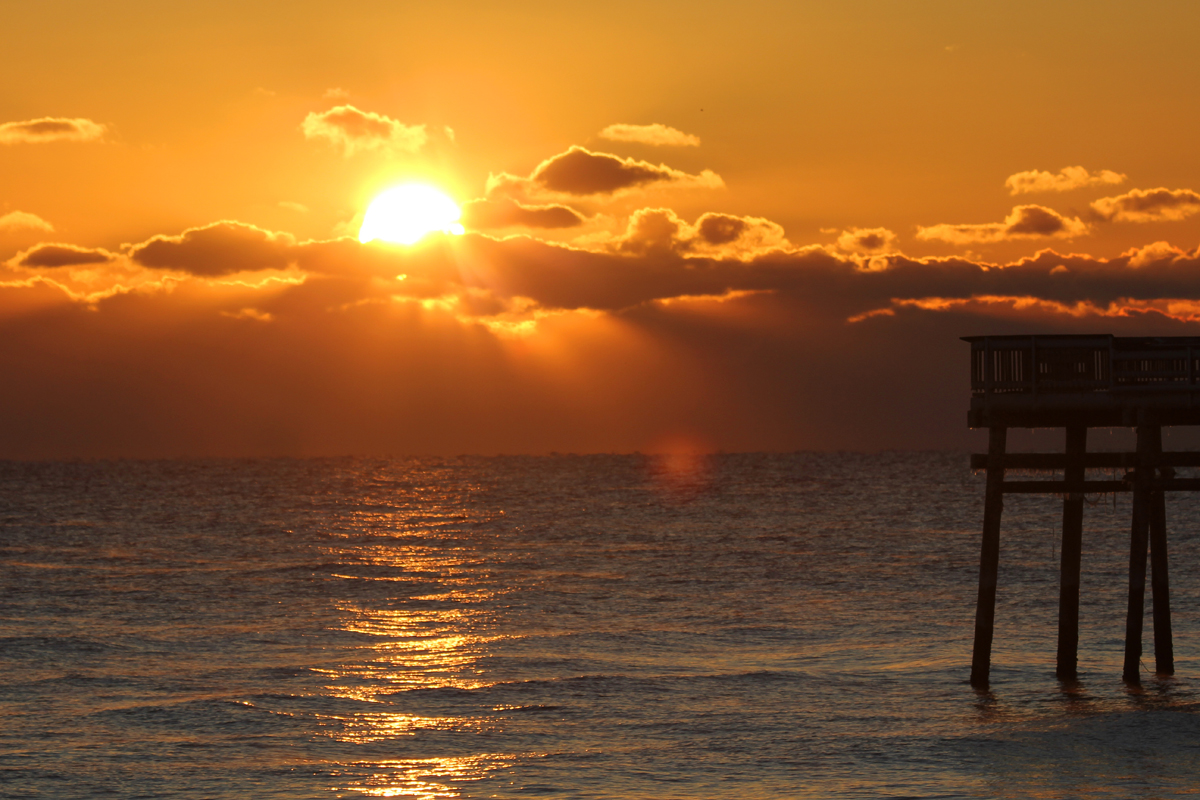
Sunrise / 27 Jan / Little Island Park

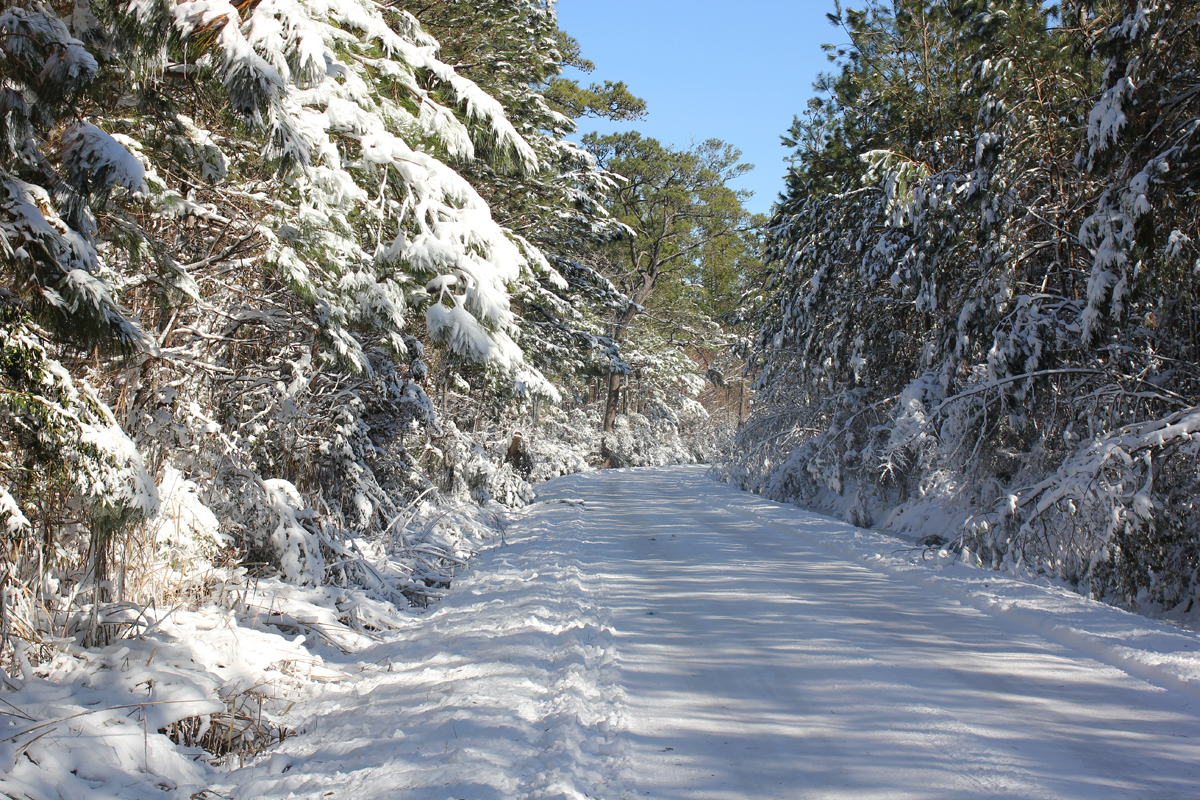
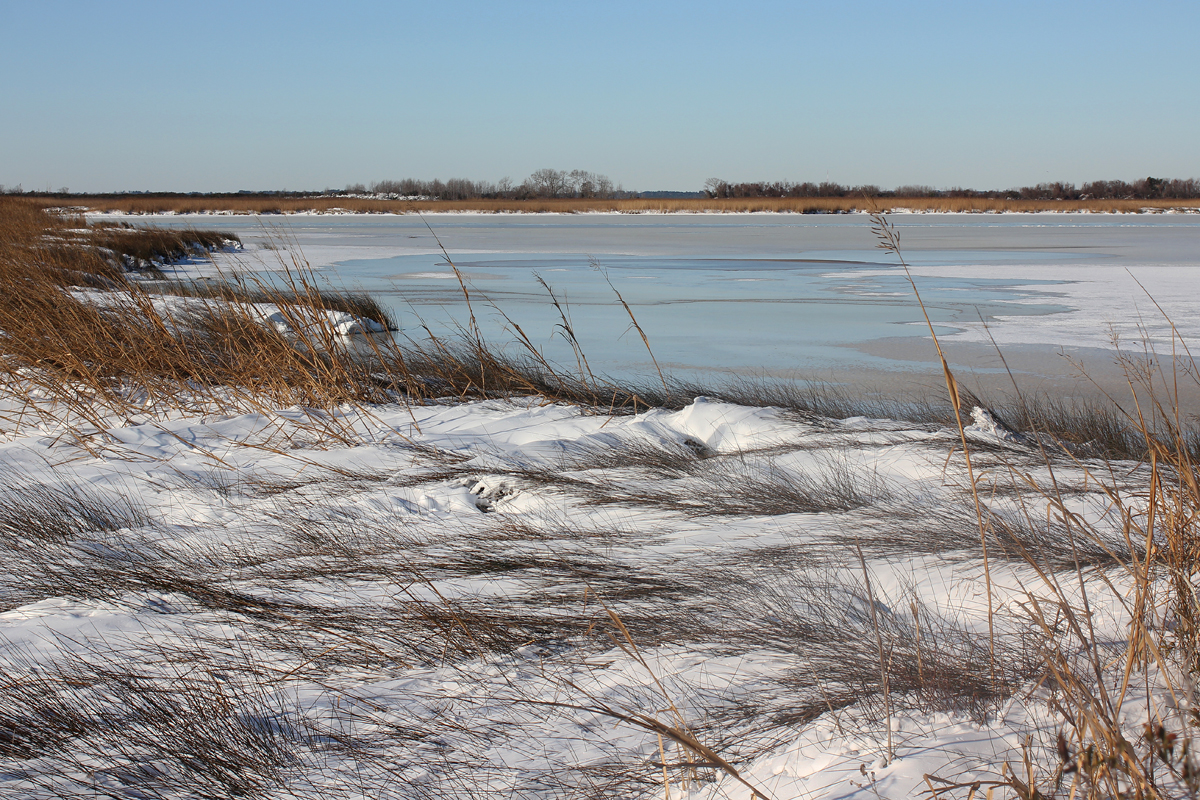
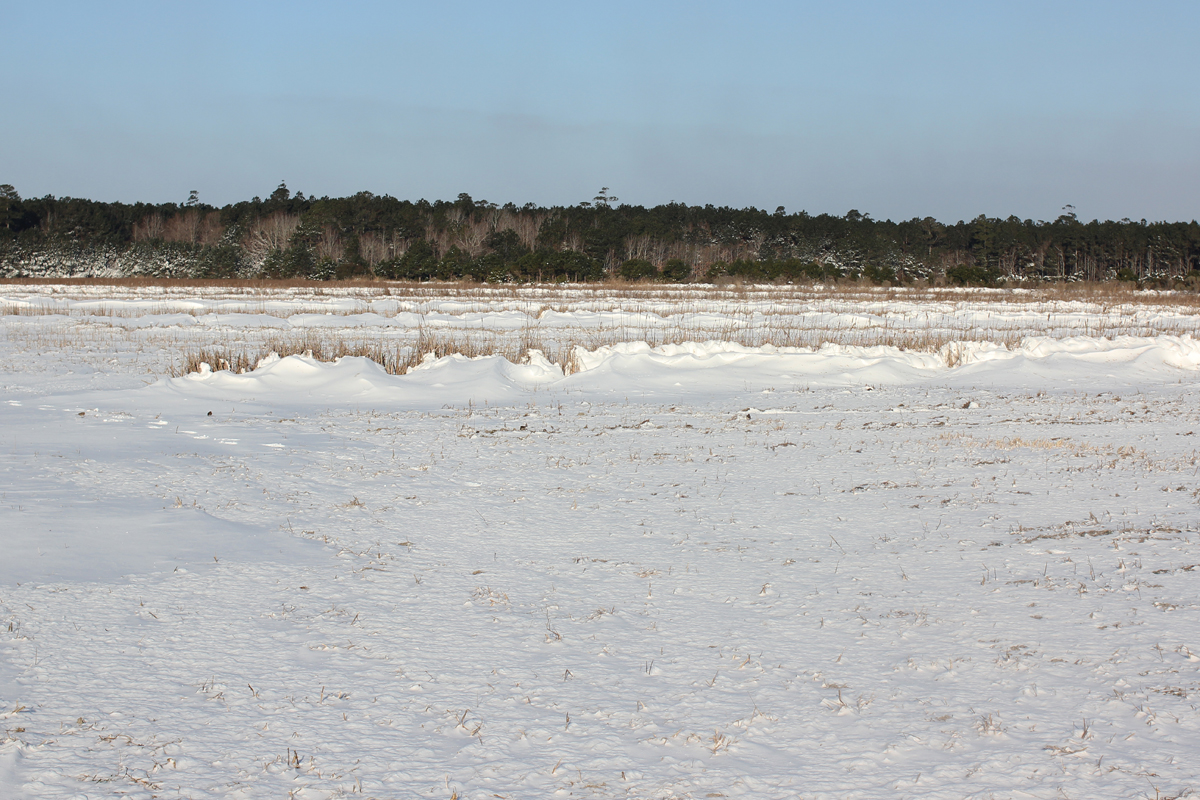
WEATHER:  In a typical year, late January is expected to be the coldest of the thrice-monthly periods here in Virginia Beach, however thanks to a very unseasonal first few days this was strangely the warmest period of 2018 thus far. Average daily high temperatures rose 1.7° from 50.4° F in early January to 52.1° (+4.0° from prior 10-year average), with average daily low temperatures also increasing 2.2° from 31.8° to 34.0° F (+3.3° from prior 10-year average). Overall, temperatures ranged from a minimum of 24° F (on both 26 & 31 Jan) to a maximum of 72° (23 Jan). A total of 1.72” of rain fell during the period, with 1.03” recorded on Monday, 29 Jan. Minor snowfall accumulations occurred on 30 Jan as a minor nor’easter impacted the region. Maximum sustained winds at Oceana this period were 26 mph and gusts reached 37 mph (23 Jan). The highest predicted (harmonic) tide was to be 3.075 feet (8:48 AM on 31 Jan), however, due to the nor’easter brushing us, the maximum observed tide was 4.114 feet (8:00 AM on 30 Jan), the highest value so far in 2018; a maximum storm surge (observed minus predicted) of 1.513 feet occurred at 10:42 AM on 30 Jan. Sunrise/sunsets varied from 7:13 AM/5:17 PM (21 Jan) to 7:07 AM/5:28 PM (31 Jan), which means over all we gained 17 minutes of daylight during this period!

For those hoping to view every photograph submitted for Virginia Beach, please see this complete listing for the month of January located on eBird’s Media explorer by clicking here! Please remember, anyone with an eBird account also has the ability to rate these photographs (1-5 stars), and based on the aggregate rating, this is how eBird populates anything photograph driven on the website, particularly the Illustrated Checklists! So if you're one of the many folks who enjoy looking at photographs of birds, take some time to click them all and rate them, it helps make eBird better and better each day!

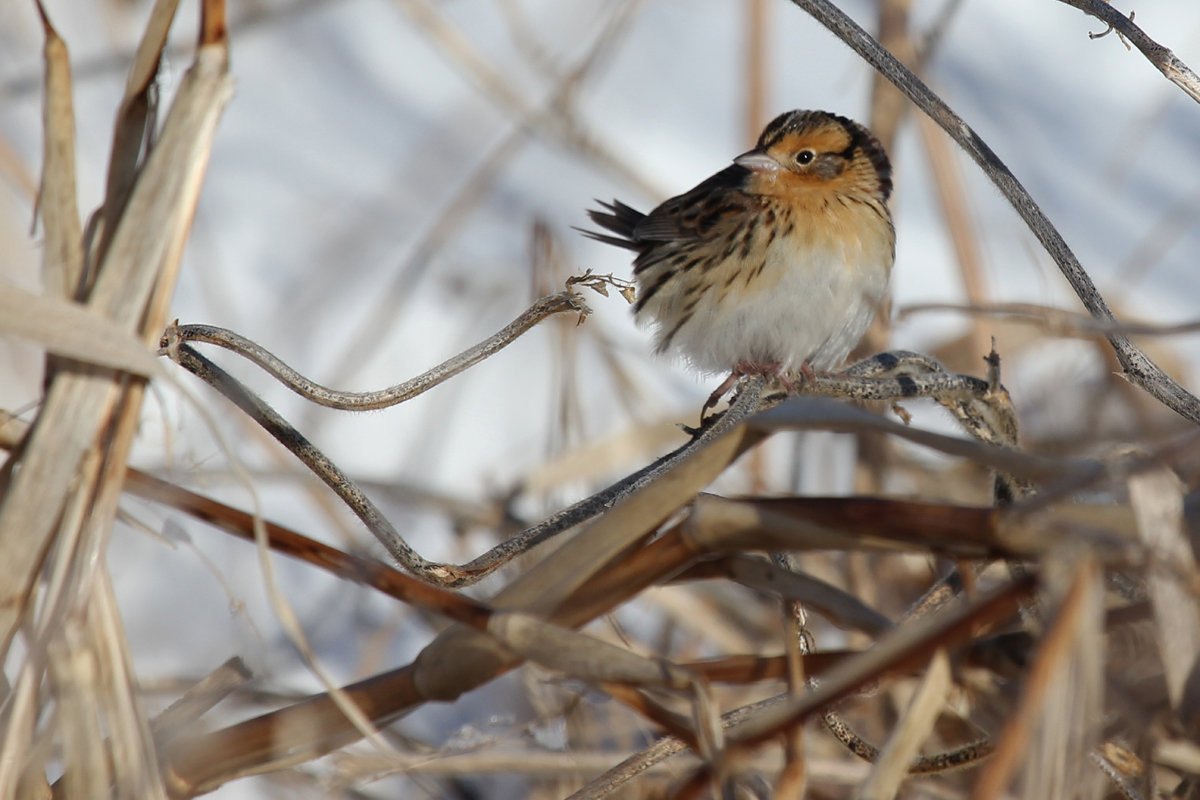
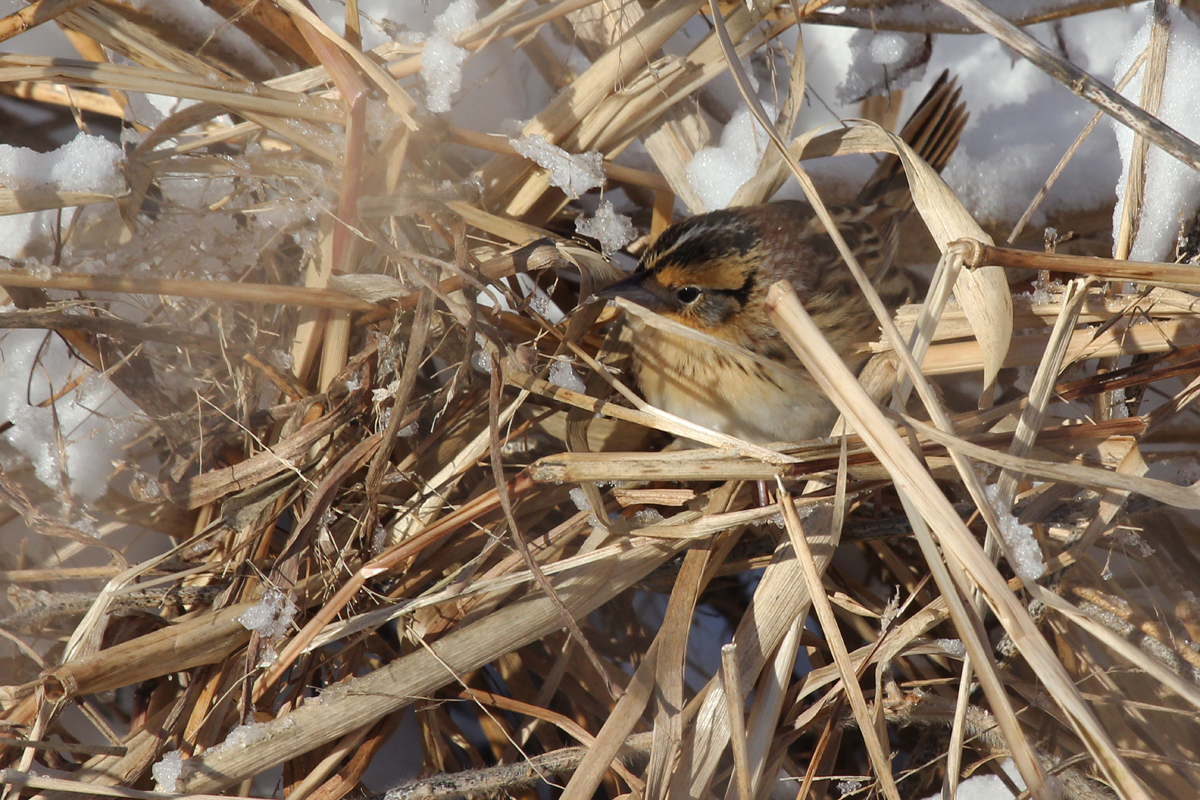
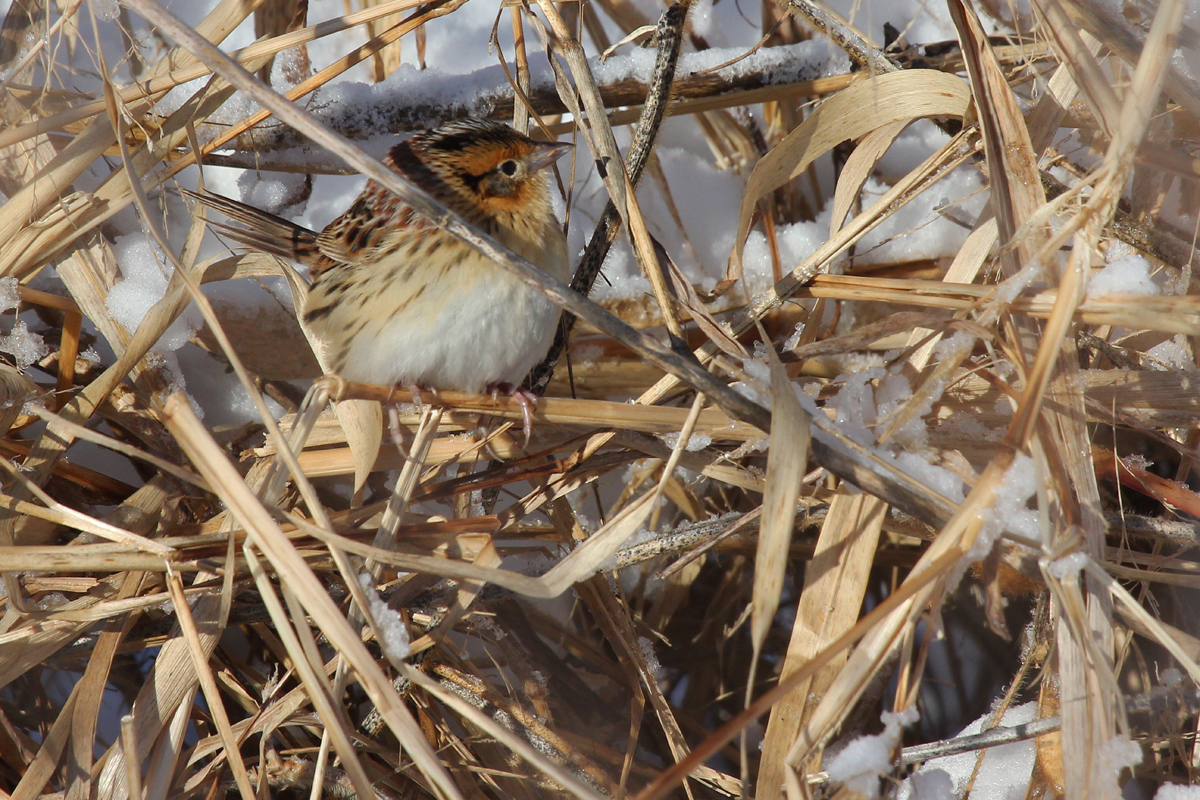
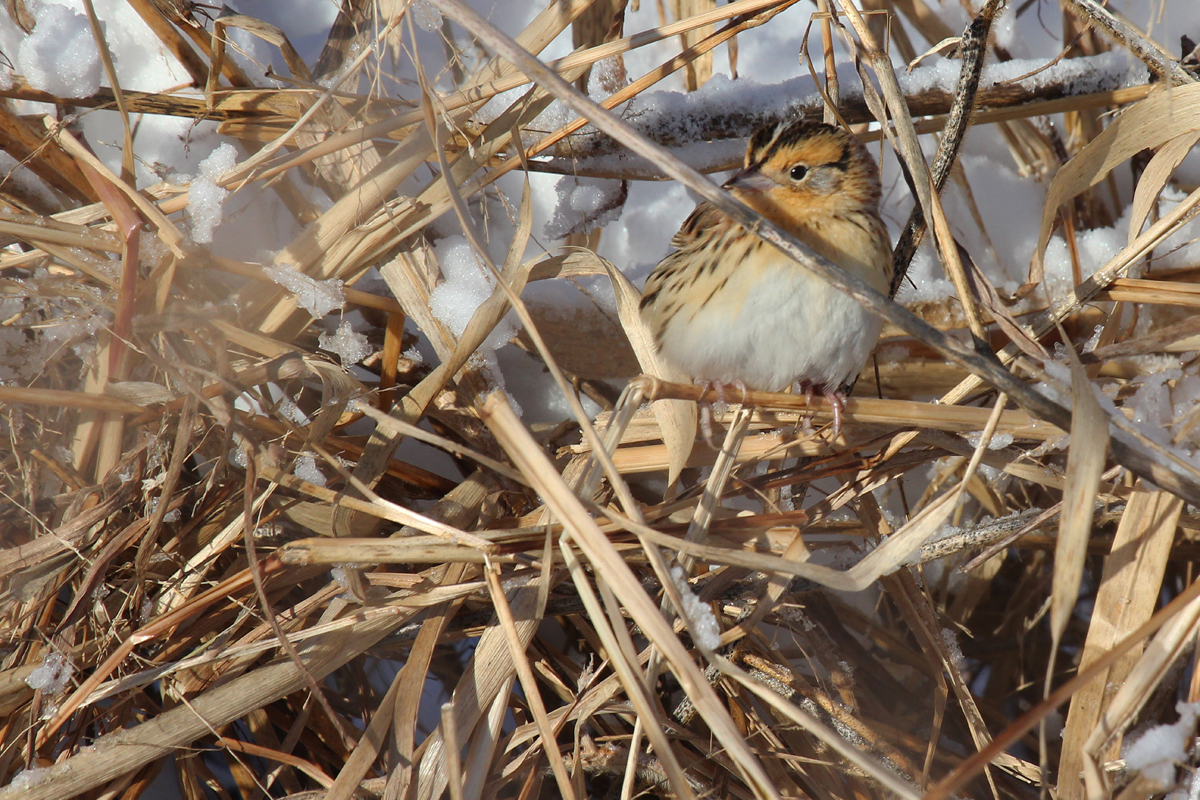
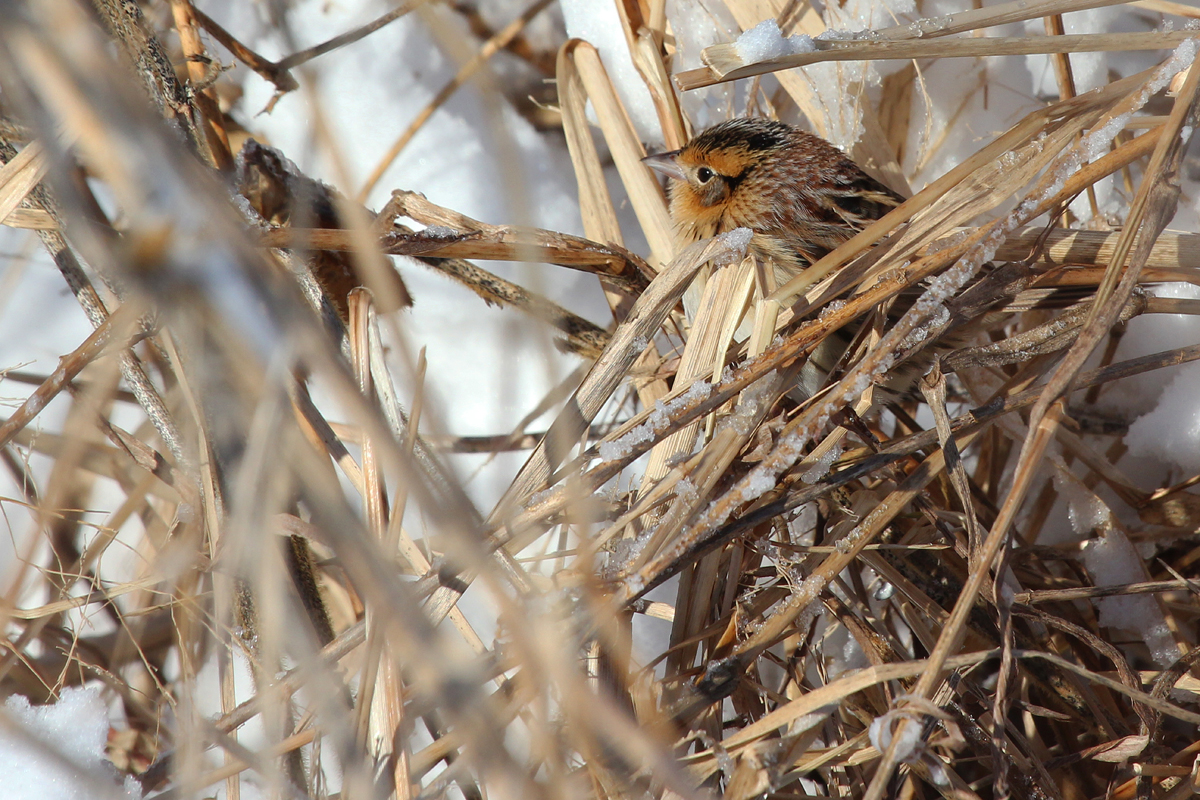
LOOKAHEAD:  While their numbers seem to have dwindled with the late month melting of the ice on freshwater lakes, the remaining gull and duck flocks along the coast need continual checking, and there are likely some rare birds unbeknownst to all of us hiding right in plain sight. Rudee Inlet is still providing great birds, as Razorbills have shown up recently though in single digit counts only not like last year when during early February thousands were being observed just off the coast. Though the LeConte’s Sparrow has not been observed at Princess Anne WMA recently, it is likely still somewhere in the Beasley Tract, among many other sparrows. We don’t have any expected arrivals for the near future, but as soon as spring arrives, that information will begin being posted here again. As always, make sure to report your finds to eBird so the data can be used to adjust the expected arrival dates and to view the full listing of each species’ “average expected arrival dates!

Next Entry | Entry Index | Previous Entry

For further information regarding this thrice-monthly, online publication, please visit the Journal Overview Page which provides an in-depth explanation of the format, layout and composition of the journal. As always, thank you for reading, and please leave me a comment below (you may use your Facebook, Gmail or other accounts to easily do so), or just click the Heart icon to the lower right of this post to let me know you stopped in!

Mid-January 2018 (11th-20th)

Following the arctic-style freeze we felt throughout early January, the middle third of the month actually began with several unseasonably-warm days (reaching 71°F). It was short-lived however, and another snowfall event associated with our second coastal nor’easter of the season moved in on the 17th/18th, though accumulations were anywhere from 1-3” across the city, rather than the 8-12” seen back on the 3rd/4th. Bolstered by a pair of bird club boat trips to the Chesapeake Bay Bridge-Tunnel, this period featured a staggering number of reports, and top records included new records for AMERICAN WHITE PELICAN, WESTERN TANAGER, CLAY-COLORED SPARROW, COMMON MERGANSER, HARLEQUIN DUCK, continuing reports of CACKLING GOOSE, GREATER WHITE-FRONTED GOOSE, ICELAND GULL, PAINTED BUNTING & BREWER’S BLACKBIRD and unseasonal occurrences of TRICOLORED HERON, LEAST BITTERN, YELLOW-THROATED WARBLER & WHITE-CROWNED SPARROW!

For the first time in 2018, an AMERICAN WHITE PELICAN was found within Virginia Beach out on the smaller of the two Sherwood Lakes on 12 Jan (ph. Mike Collins). While this individual was only observed through the following morning of 13 Jan (last observation, ph. David Clark), January is prime time for this species to pop up along the coastline. In 2017, there was only one report outside of January, when an in-flight flock of 8 was observed at Camp Pendleton SMR on 27 Oct (obs. Mary Catherine Miguez). This same flock was very possibly the same group of 8 observed over the Kiptopeke Hawkwatch later in the day, and on 31 Oct at Blackwater NWR in Maryland. In 2017, the last winter record for the species in Virginia Beach occurred 29 Jan at Back Bay NWR when the large group of 30+ birds that had been present for a week or so was last observed (ph. Rob Bielawski).

At least one WESTERN TANAGER was observed during this period, another first for the year! A single individual had been noted visiting a private feeder in the Alanton section of the city dating back to 3 Nov 2017 (obs. Michelle & Taryn Payne), and while it went unrecorded at the location after 28 Dec 2017, this could potentially be the same individual, showing up at the feeder of a separate private residence in northern Virginia Beach (ph. Kathy Spencer). The vivid white wings bars stand out brilliantly against the yellow of the bird in this photograph, and it is great to have a photo-documented record for the year in the city.

While the species has been predictably found during early Sep-early Nov the past couple of years in Virginia Beach, a single report of a CLAY-COLORED SPARROW on Pocahontas Club Road on 18 Jan (obs. Andrew Baldelli) represents the first record for the 2017-18 winter season. This particular find was likely made possible due to the 1-3” of snow that fell the night prior, which likely forced all the sparrows out of their usual thickets to the roadsides to forage on the open ground for seeds and grit. During the larger snowstorm in early January, a great many sparrows were observed in similar, yet grander conditions, but no Clay-coloreds were turned up unfortunately, though an equally-rare Lincoln’s Sparrow was observed.

The group of at least a dozen COMMON MERGANSERS first reported 3 Jan at Sherwood Lakes (ph. Carson Lambert / Andrew Rapp / Robert Wood) continued through at least 17 Jan when three were observed at the same location (ph. Pamela Monahan). This departure date coincides with the approach of the coastal storm that brought 1-3” of accumulating snowfall to the region, so it is likely the mergansers moved further south, or further inland. Sherwood Lakes has been a hotbed for reports of this species in recent years (though reports of Red­-breasted Mergansers still outnumber Commons about 1000:1, which is why Commons flag in eBird), due primarily to it’s resistance to freezing (due to its depth, being a former sandpit), and its clarity, which Common Mergansers prefer in their normal winter range of swiftly flowing, clear rivers where fish make plentiful prey.

The last newly recorded rarity for the year was discovered on a Monticello Bird Club boat trip to the Chesapeake Bay Bridge-Tunnel (CBBT) when a group of five HARLEQUIN DUCKS was found off of North Thimble Island (also known as CBBT island #2) on 13 Jan. The report indicates the birds were sticking close to the rocks of the island, and thus no photographs have populated eBird reports at this point. This species is annually occurring during the winter months around the four manmade islands of the CBBT, but essentially anywhere else in Virginia it is considered a rare find. Interestingly, a single report early this winter (rather, this Fall) occurred at Grandview Nature Preserve in Hampton on 19 Nov (ph. Eric Alton & Tamara Conklin). The occurrence of this species away from the CBBT provided a nice VARCOM record!

Rife with the potential for inaccurate identification is the first continuing rarity of the period, the CACKLING GOOSE. Over the past couple of months throughout not only Virginia Beach, but Virginia as a whole, there have been a great many hopeful reports of Cackling Geese that have turned out to just small Canada Geese. For those who take the time to read this report (I hope there’s a few of you!), please understand that true Cackling Geese are rare in the state as a whole, even moreso along the coast than their larger, much more abundant counterparts. To secure this ID, it is imperative that the silvery/gray back, proportionally small and downward-pointing bill, and Mallard-equivalent size are observed & noted. Reports simply stating, “smaller than surrounding Canadas” is not typically sufficient to eliminate small Canadas from ID contention. Thus far only a single individual has been confirmed in Virginia Beach, originally noted 26 Nov 2017 (obs. David Clark, ph. Karen & Tom Beatty). During mid-January, a single report by several observers on 13 Jan indicated that the species is still present among the goose flock that moves between Sherwood Lakes and the agricultural fields near Firefall Dr. / Ocean Lakes High School. Finding this Cackler is truly a matter of effort, patience, and careful observation, though it is much easier to pick out when floating on the water where all the geese are bound to the same surface elevation. When the group is foraging in agricultural fields, the elevation is ever changing, and this makes gauging true size much more difficult.

Mixed in with the very same goose flock mentioned above, at least three GREATER WHITE-FRONTED GEESE were recorded during mid-January foraging among a large flock of Canadas near Ocean Lakes High School / Firefall Drive (obs. Andrew Baldelli / Linda Chittum / Tracy Tate). These individuals continued to be observed until 14 Jan, with the last photographic record occurring 13 Jan (ph. Rob Bielawski & Mary Catherine Miguez) behind Ocean Lakes High School. Previously, this species was essentially absent from eBird reports in the county, with the first occurring in 2014 at Baybreeze Farms off Sandbridge Road for only two days. Last year, a group spent the majority of the winter around Sherwood Lakes / Firefall Drive, and perhaps this is a more regular occurrence than current reports indicate. However, this has been an exceptional year for the species in Virginia, and for many species of waterfowl, so more study is needed here.

Potentially the same first cycle individual found at Rudee Inlet on 4 Jan during the height of the first nor’easter of 2018 (obs. Andrew Baldelli), an immature ICELAND GULL was observed near South Chesapeake Island in Northampton County, and later viewed by many observers as it followed the Williamsburg Bird Club boat into Virginia Beach waters on 20 Jan (ph. Williamsburg Bird Club). It is very possible that this is the same bird observed on 8 Jan near the Lynnhaven Fishing Pier (ph. Andrew Baldelli & Tracy Tate, later ph. Kathy Louthan), and also the bird seen at Rudee Inlet on 15 Jan (ph. Linda Chittum).

Though a drabber plumage than their vivid male counterparts, a female PAINTED BUNTING was photographed in central Virginia Beach on 13 Jan (ph. Andrew Baldelli / Linda Chittum / Tracy Tate), and this is likely one of several individuals that have taken up winter residency within the city. The dapper male Painted Bunting observed during the Back Bay CBC on Mill Landing Road (ph. Karen & Tom Beatty) has unfortunately not been reported since the initial find though is likely to still be hanging around the same area just north of Pleasant Ridge Road. This species is particularly interesting because it is an annual winterer, but then moves south in the springtime to breed. Typically, the reverse occurs here, with birds moving further north from their wintering grounds to breed. However, breeding evidence was observed on the Eastern Shore this past summer by a participant of the 2nd Virginia Breeding Bird Atlas, an incredible first record for anywhere north of North Carolina!

The BREWER’S BLACKBIRDS present at Breeze Farms along West Gibbs Road continued to be observed through the period, with a seasonal high count of 10 occurring 14 Jan (ph. Baxter & Tucker Beamer / Ander & Paul Buckley), and the most recent report on 20 Jan of 4 individuals (obs. Clark Olsen). These birds are being observed on private property, so for anyone who attempts to view them from the public roadway, please be respectful of the land owners. Sometimes, the flock sets up nicely in the trees along the road, but more often they are viewed on the muddy grounds of the horse stables.

While not year-round rarities, several seasonally unexpected species were reported during mid-January, including: TRICOLORED HERON, LEAST BITTERN, YELLOW-THROATED WARBLER and WHITE-CROWNED SPARROW! Being the first record for the species since 8 Oct, a pair of TRICOLORED HERONS was a surprise find along Marvin Road on 18 Jan (obs. Andrew Baldelli) following the nor’easter induced snowfall that occurred the prior night. This species winters regularly on the Eastern Shore, primarily at Chincoteague NWR, and also to our immediate south at Mackay Island NWR but is not typically observed with any regularity during the winter months in Virginia Beach. Usually records begin popping up in late March/early April, so any January record is certainly worth noting.

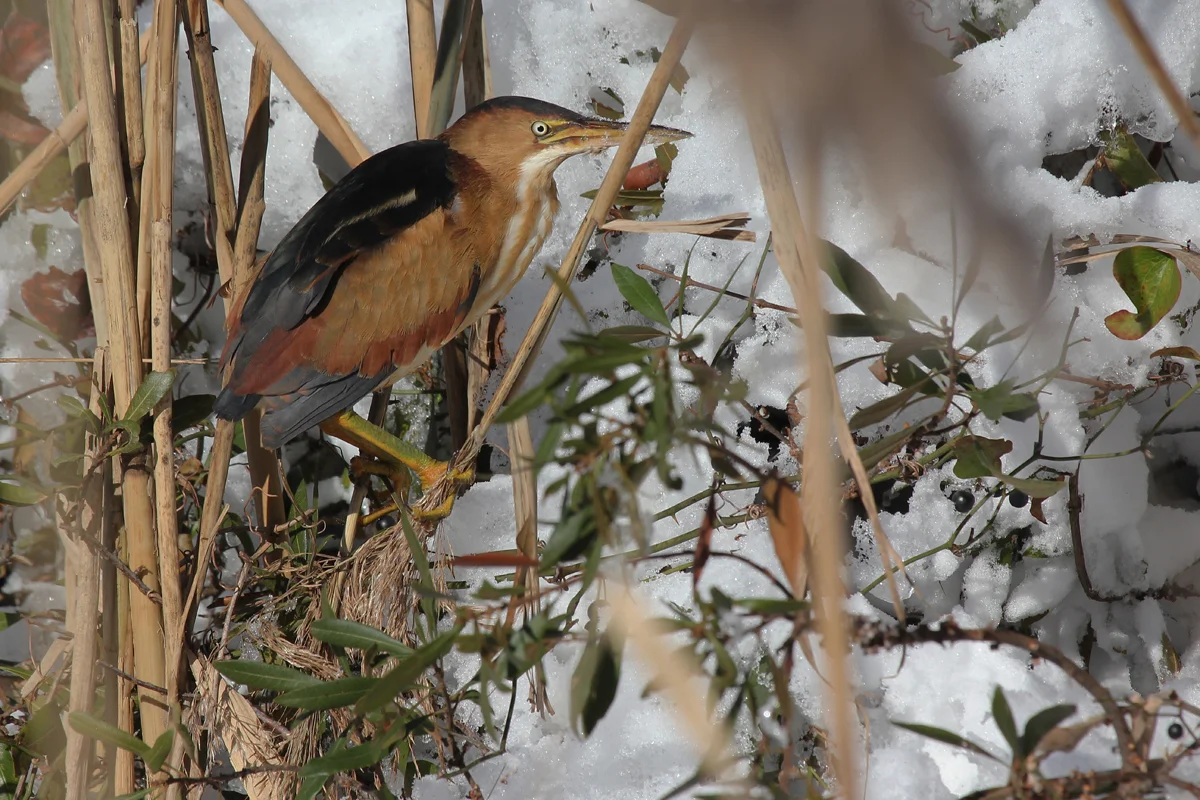
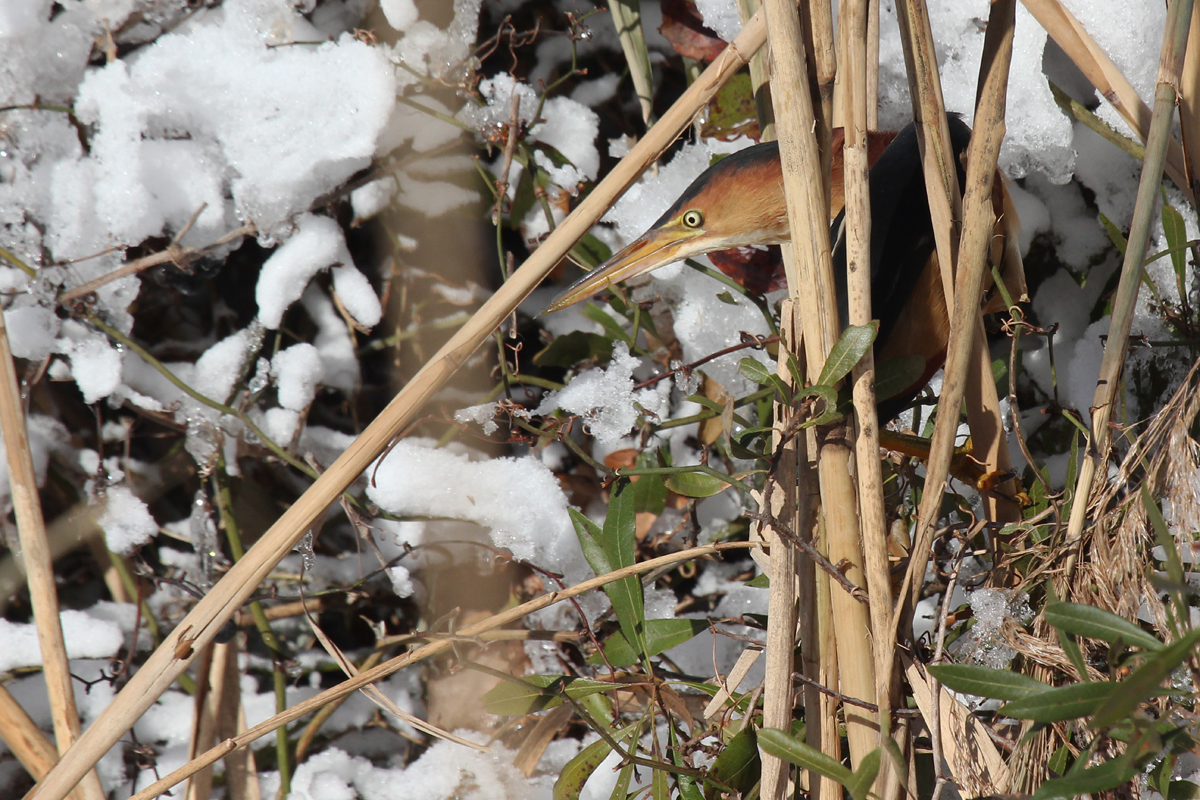
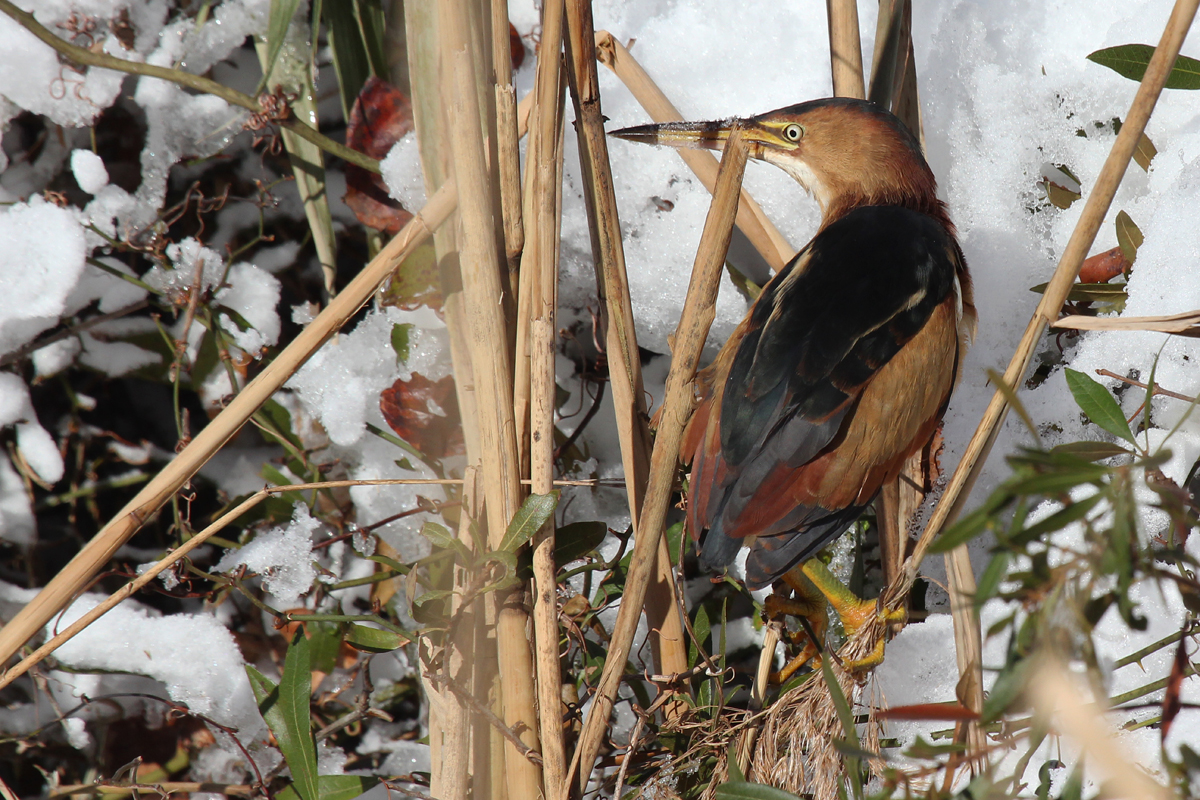
At least one of the two LEAST BITTERNS found at Little Island Park on 6 Jan (ph. Andrew Baldelli / Rob Bielawski / Mike Collins) has persisted around the small trickle of water near the kayak launch to Back Bay through 18 Jan (ph. Loretta Silvia). Very sadly, the other individual was found deceased at the site on 9 Jan following several weeks of icy conditions, and an assumed lack of available water to find food in. With the weather having warmed, hopefully the individual still being reported will be able to survive the remainder of the winter here. Least Bitterns are a common summer resident in the freshwater marshes that line Back Bay’s shoreline, but winter records in the city, and the state as a whole, are few and far between.

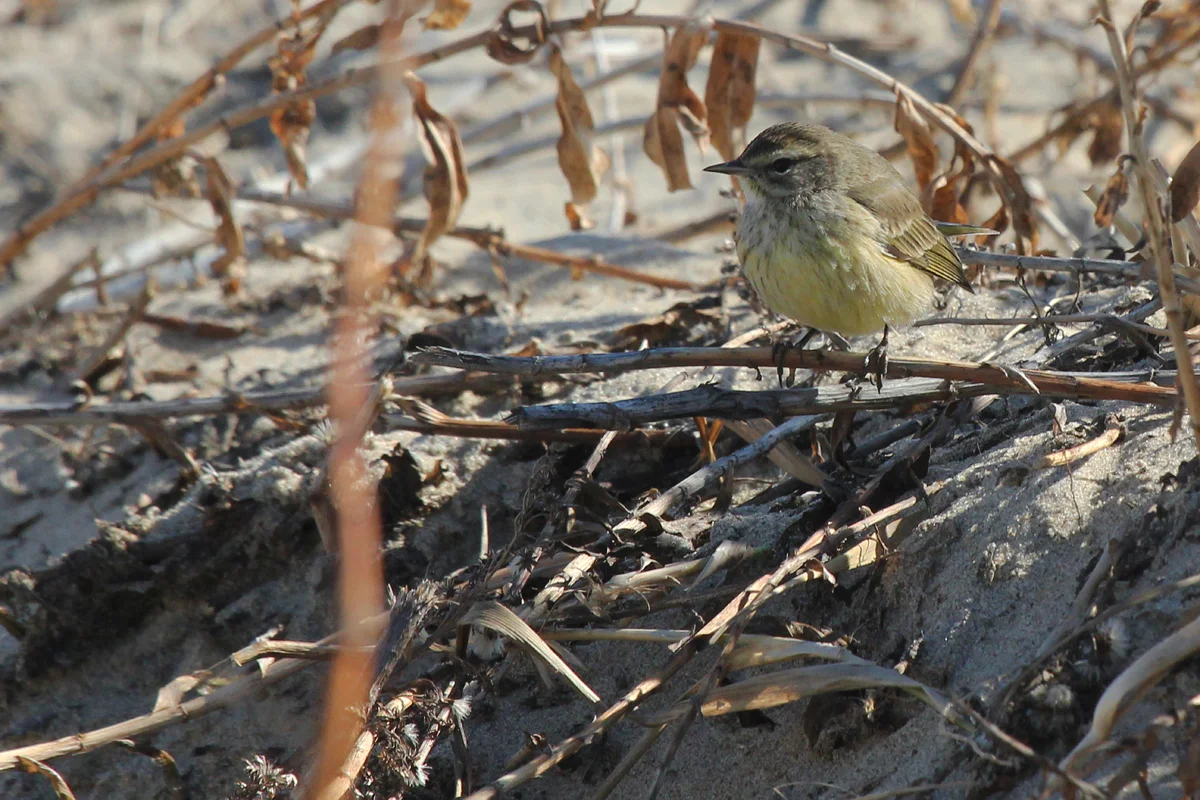
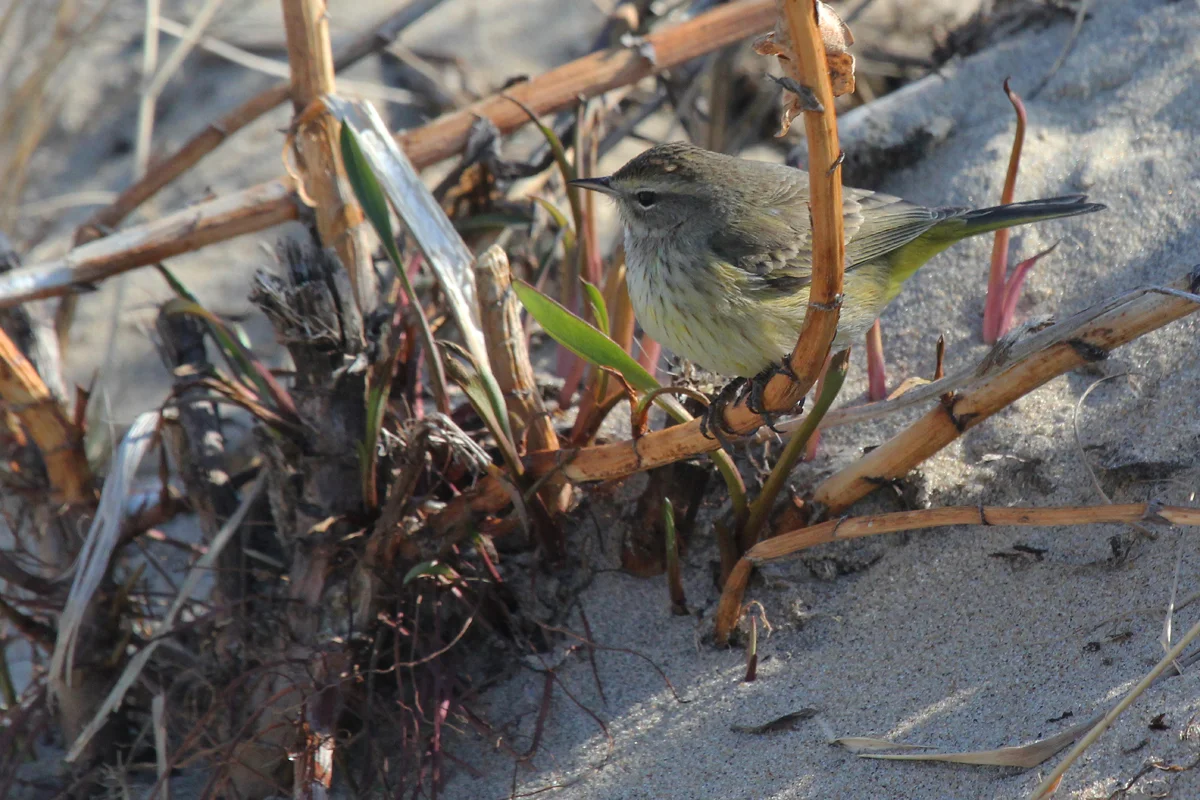
The YELLOW-THROATED WARBLER first noted 7 Dec 2017 (ph. Maggee Smith) at a private residence in the Aragona Village survived the blizzard on 3-4 Jan though it appears to have vanished now, with perhaps the final report having occurred on 17 Jan ahead of the second snowfall event of the year. It is possible the bird has persisted, and simply found a new location to spend the winter, but the strong cold snaps and snowfall tend to be very hard on our non-wintering warblers. In a typical year, the only warblers that spend the entirety of winter in the city are Pine, Palm, Yellow-rumped, Orange-crowned Warblers and Common Yellowthroat. Interestingly, no one has reported a Common Yellowthroat thus far in 2018, with the last record occurring on the Back Bay CBC on 29 Dec (ph. Rob Bielawski).

Outnumbered about a thousand to one during the winter in Virginia Beach by the similar White-throated Sparrow, we appear to be hosting at least two WHITE-CROWNED SPARROWS in the city. The first has been present at Ashville Park since the Back Bay CBC on 29 Dec (obs. Andrew Baldelli & Tracy Tate), and was most recently observed on 13 Jan (obs. Chrissy Barton). The second was observed following our snowfall event on 18 Jan at Dam Neck NA (obs. Karen & Tom Beatty). This species has been difficult to find since their normal period of transience in the fall, and unlike last winter when four juveniles were observed almost daily at Back Bay NWR, the reports have all been of single birds (no adults yet either).

Aside from the rarities and the unseasonal occurrences, there has been plenty of other excitement around the city over the last ten days. Mentioned earlier, but probably not expanded upon much, two bird clubs hosted boat trips out to the four islands of the Chesapeake Bay Bridge-Tunnel complex during this period. The first, the Monticello Bird Club, toured the islands on 13 Jan, finding the typical winter specialties like Purple Sandpiper, which is now a much more difficult bird to find in the state due to the closure of island one to the public this past October. Common Eider, King Eider, and Harlequin Ducks were all observed as well, though only the Harlequins occurred in Virginia Beach waters (islands three and four are in Northampton County). The second trip, the Williamsburg Bird Club, turned up mostly the same species, missing King Eider, but adding Iceland Gull and Red-necked Grebe. These ~4 hour trips are absolutely worth the small fee, and they provide a unique view of the islands that can’t be appreciated from land.

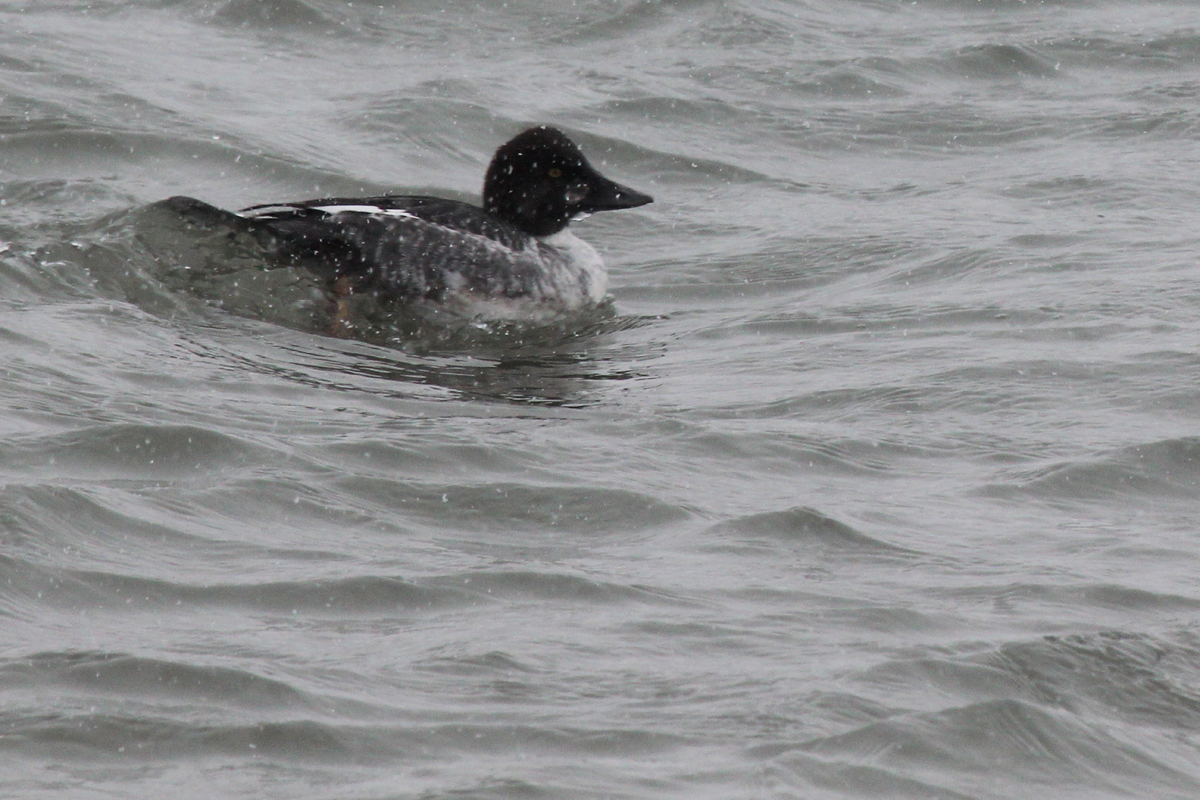
Towards the end of the period, the ice cover that had persisted for several weeks finally gave way across much of the state, allowing for some of our concentrations of waterfowl to move back inland to now-open bodies of freshwater. January has been remarkable on the coast for waterbirds, with more Red-necked Grebe and Common Goldeneye reports already this year than in all of 2017. In fact, there wasn’t a single Common Goldeneye reported in Virginia Beach last January, but there are around 100 records so far in 2018, incredible. Horned Grebes are grouping up on the Chesapeake Bay in huge numbers, with counts of over 500 viewed from Norfolk. At least one Eared Grebe has continued on the Newport News waterfront not terrible far from us, and it is always possible that we will find one of these associating with Horneds off our coast. White-winged Scoters have been much more numerous this year, following in the path of the goldeneyes. However, where the waterfowl numbers and variety have exploded in 2018, irruptive species like Red-breasted Nuthatch, Pine Siskin and Purple Finch have essentially been nonexistent. Thus far, only Pine Siskin has been reported in the city this year, and there are only a couple of reports. Last winter was a major invasive year for the nuthatches, so viewing the eBird maps of last vs. this year shows quite a stark contrast.

WEATHER:  After an extremely frigid early January, temperatures return to more normal levels in mid-January, rising a drastic 18.2° from 32.2° F in early January to 50.4° (+0.6° from prior 10-year average), with average daily low temperatures also steeply increasing 16.4° from 15.4° to 31.8° F (-2.1° from prior 10-year average). Overall, temperatures ranged from a minimum of 24° F (on both 14 & 18 Jan) to a maximum of 71° (12 Jan). A total of 0.35” of rain fell during the period, with 0.34” recorded on Friday, 12 Jan. As mentioned above, we also received anywhere from 1-3” of snow depending on the specific location in the city during the coastal nor’easter that brushed past us on 17/18 Jan. Maximum sustained winds at Oceana this period were 25 mph (18 Jan) and gusts reached 40 mph (13 Jan). The highest predicted (harmonic) tide was to be 2.553 feet (9:18 AM on 17 Jan), however, due to the nor’easter brushing us, the maximum actual tide was 3.548 feet (9:30 AM on 17 Jan); a maximum storm surge (observed minus predicted) of 1.418 feet occurred at 3:30 AM on 18 Jan. Sunrise/sunsets varied from 7:16 AM/5:07 PM (11 Jan) to 7:14 AM/5:16 PM (20 Jan), which means over all we gained 11 minutes of daylight during this period! Incredibly, some remnants of snow remain in ditches and shaded areas, though the ice cover has disappeared entirely at this point.

For those hoping to view every photograph submitted for Virginia Beach, please see this complete listing for the month of January located on eBird’s Media explorer by clicking here! Please remember, anyone with an eBird account also has the ability to rate these photographs (1-5 stars), and based on the aggregate rating, this is how eBird populates anything photograph driven on the website, particularly the Illustrated Checklists! So if you're one of the many folks who enjoy looking at photographs of birds, take some time to click them all and rate them, it helps make eBird better and better each day!

LOOKAHEAD:  Gull and duck flocks along the coast need continual checking, and there are likely some rare birds unbeknownst to all of us hiding right in plain sight. Rudee Inlet is still providing great birds, as Razorbills have shown up recently, perhaps Dovekies are next. Though the LeConte’s Sparrow has not been observed at Princess Anne WMA recently, it is likely still somewhere in the Beasley Tract, among many other sparrows. We don’t have any expected arrivals for the near future, but as soon as spring arrives, that information will begin being posted here again. As always, make sure to report your finds to eBird so the data can be used to adjust the expected arrival dates and to view the full listing of each species’ “average expected arrival dates!

Next Entry | Entry Index | Previous Entry

For further information regarding this thrice-monthly, online publication, please visit the Journal Overview Page which provides an in-depth explanation of the format, layout and composition of the journal. As always, thank you for reading, and please leave me a comment below (you may use your Facebook, Gmail or other accounts to easily do so), or just click the Heart icon to the lower right of this post to let me know you stopped in!

Early January 2018 (1st-10th)

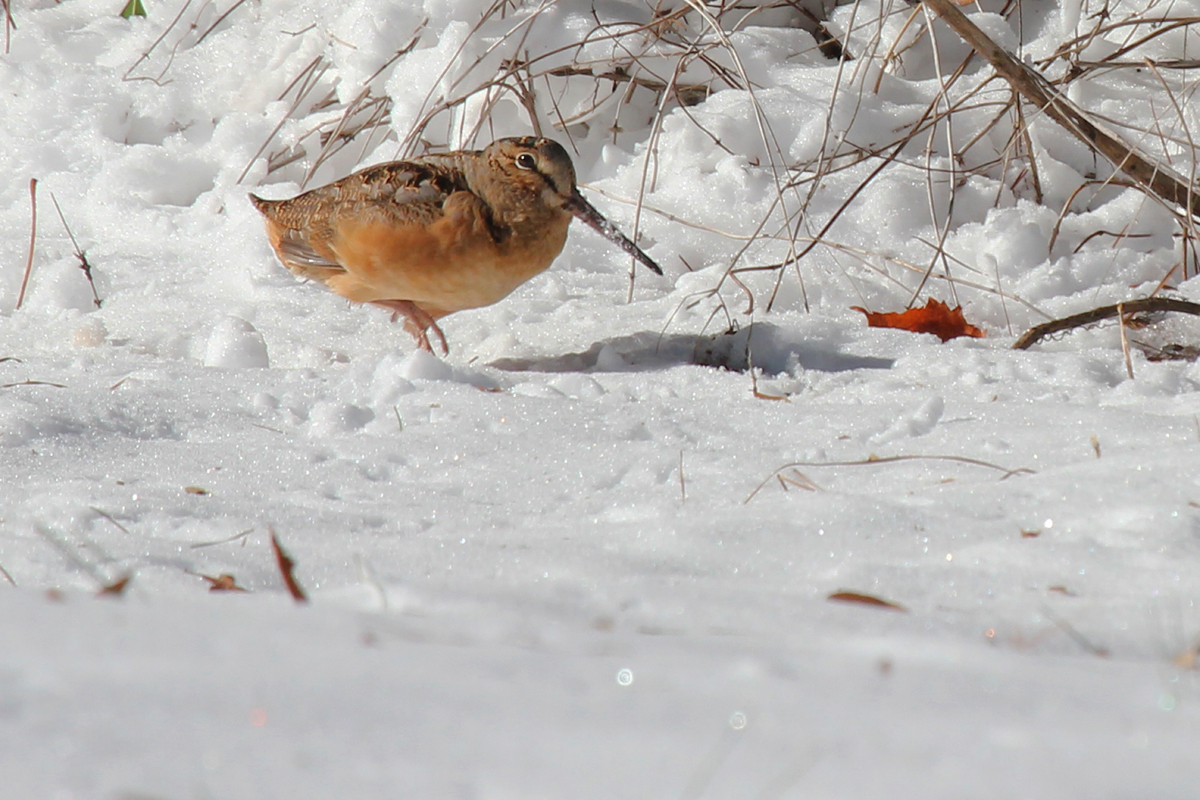
The first reporting period of the new year proved to be one of, if not, the most exciting periods I’ve ever had the good pleasure to be a part of since beginning this journal back in 2014! Wholly dominated by the effects of a powerful coastal nor’easter (unofficially dubbed Winter Storm Grayson by outlets affiliated with The Weather Channel), this period was utterly jam packed with rarities, and an explosion of waterfowl also occurred as most inland bodies of water iced over completely and forced many species to the coast. Heavy snowfall impacted Virginia Beach from about 7 PM on Wednesday, 3 Jan through about 3 PM on Thursday, 4 Jan, leaving anywhere from 8-12 inches on the ground depending on the specific location within the city. Normally cryptic/secretive species were pushed out into the open as available foraging habitat became swiftly constricted by the snow cover. The plethora of incredible reports was topped by new records for COMMON MERGANSER, GREATER WHITE-FRONTED GOOSE, ICELAND GULL, GLAUCOUS GULL, BREWER’S BLACKBIRD & LINCOLN’S SPARROW, continuing reports of CACKLING GOOSE, LECONTE’S SPARROW & BLACK-LEGGED KITTIWAKE, unseasonal occurrences of Blue-winged Teal, Least Bittern, Yellow-throated Warbler & Ruby-throated Hummingbird, and late reports for Cattle Egret!

For starters, high winds and localized snowfall kicked off 2018 as a ‘Chesapeake Streamer’ impacted the southern and eastern portion of the city. Amusingly, accumulations of about a half inch occurred on some roads along Back Bay’s western shore, but even a few miles to the west, no snow fell. Frigid temperatures persisted from late December into early January, with lakes icing up by the first of the year, even in locations that haven’t iced up completely for years. Prior to the arrival of an extremely powerful coastal nor’easter in the morning hours on 3 Jan, a flock of 12 COMMON MERGANSERS was discovered on Sherwood Lakes (ph. Carson Lambert / Andrew Rapp / Robert Wood). This is the second report of the species in Virginia Beach this winter, as a group of three were previously observed in flight off Back Bay NWR on 29 Dec during the Christmas Bird Count (obs. Edward Brinkley). Sherwood Lakes, thanks to its depth and volume of water was able to stay ice-free even in the persistent sub-freezing temperatures of early January. Due to this, it became a true haven for waterfowl and other waterbirds like Coots and Grebes. In past years, the lakes (north & south ponds) have been the most reliable place in this city to observed Common Mergansers, which are probably outnumbers here by Red-breasted Mergansers about ten thousand to one. The flock continued through the remainder of the reporting period, with most observations occurring on the smaller southern pond. In addition to the Sherwood Lakes flock, a single COMMON MERGANSER was also found on the ocean waters just off of Little Island Park on 6 Jan (ph. Andrew Baldelli & Rob Bielawski).

As a direct result of the Common Mergansers being found on Sherwood lakes, on 3 Jan, our first GREATER WHITE-FRONTED GOOSE report of the season was logged when a pair was found on the north pond (ph. Karen & Tom Beatty). Last winter, the first individual observed at this location occurred on 4 Dec, with thirteen then being found on 18 Dec and a high count of 15 eventually being reached before the sightings stopped on 6 Jan ahead of a strong snowstorm. Prior to this past winter, only one other report exists for the species in eBird within Virginia Beach, that being an individual present on the field at Baybreeze Farms off Sandbridge Road on 14-15 Feb 2014 (obs. Robert Ake). So with two winter seasons in a row showing this species, perhaps this will become a more regular occurrence. Or, perhaps it is a regular occurrence, and the goose flock around Sherwood Lakes simply didn’t receive the same attention in past years? In either case, it is exciting to know this species again has a presence in the city, and reports continued for the pair on 6 Jan (ph. Marie & Ron Furnish) and 7 Jan (obs. Nick Newberry).

At least two different ICELAND GULLS were observed during early January, with an immature bird found at Rudee Inlet on 4 Jan (obs. Andrew Baldelli) while the heavy bands of snowfall impacted the region. Potentially the same individual, or a second immature, was observed at the Lynnhaven Fishing Pier on 8 Jan (ph. Andrew Baldelli & Tracy Tate, and later ph. Kathy Louthan). Lastly, what is most likely the same adult Kumlien’s Gull found initially on 20 Dec 2017 (ph. Andrew Baldelli) was observed again at 57th Street Beach among a large flock of gulls that were actively feeding on the immediate shoreline in the wake of the nor’easter on 5 Jan (obs. Andrew Baldelli). This individual seems to be moving around along the Oceanfront and anyone interested in tracking it down basically needs to start around Rudee Inlet, and slowly work north, spot checking the beach every few blocks to see if large groups of gulls are around that may be concealing this rarity.

Interestingly a second ‘white-winged gull’ species was observed along with the Iceland Gulls mentioned above. An immature GLAUCOUS GULL was observed at Rudee Inlet on 4 Jan (obs. Andrew Baldelli), and in a perfect mirror of the Iceland Gull reports, an adult Glaucous was found at 57th Street Beach on 5 Jan (obs. Andrew Baldelli). Unfortunately, those were the only two reports for these separate individuals during the report period, but it is likely that the birds are still present somewhere along the immediate coastline. This species has been observed in the past on the armored shorelines of the Chesapeake Bay Bridge-Tunnel and at Rudee Inlet, so it would seem that these locations as well as Fort Story might be likely spots to find this species as we head deeper into the winter.

Likely present for quite some time but unnoticed due to lack of coverage during the Back Bay CBC this season, three BREWER’S BLACKBIRDS were found at Breeze Farms on West Gibbs Road on 9 Jan (obs. Andrew Baldelli & Tracy Tate). This location held up to 16 Brewer’s Blackbirds during the 2016-17 winter, having first been observed during the Back Bay CBC (ph. Andrew Baldelli & Arun Bose). Please remember that this farm is all private property, and thus viewing must be done from the public roadway. Often times, these birds will retreat to the dark cover in the horse stalls making them difficult to track down, and often requiring more than one attempt to view. However, some folks have gotten lucky and had the birds simply perched in the trees near the road. The females perhaps stand out the most, with their dark eyes and dark bodies looking different than all other blackbird species/plumages. The male are a bit glossy like a grackle, but showing the short tail of a blackbird.

Rarely observed anywhere in Virginia during the winter months, a LINCOLN’S SPARROW found in the Ashville Park residential development on 9 Jan (ph. Mary Catherine Miguez) currently represents the only 2018 record for the state! Last winter, a single individual was also known to be present in Virginia Beach, having been discovered at Back Bay NWR during the CBC on 29 Dec 2016 (obs. Edward Brinkley & Paul Sykes), and continuing until 16 Jan 2017 in the scrubby field to the west of the Visitor Contact Station. So far, only the single report for the 2018 individual exists, but hopefully as time goes on, it continues to be observed. Wintering records for this species are very worth keeping close tabs on, to help further our knowledge of whether individuals survive the entire winter season here, or not.

A third waterfowl rarity has persisted into 2018 as well, with at least one CACKLING GOOSE still present in the goose flock that moves between Sherwood Lakes and the fields off Firefall Drive to the northeast. There have been a number of reports for Cackling Geese, but given that a few small-race Canada Geese are also present, it would greatly behoove observers to try to photographically document the birds suspected as Cackling Geese. While their size usually helps them stand out from the Canadas (especially when on the water), size alone is not a perfect differentiator. The proportions of the bill, almost taller at the base than it is long, and a much silvery/grayish plumage coloration are also important identification factors. At least one was documented on the north pond going back as far as 26 Dec (obs. David Clark), and it is likely that this same individual is the one being reported.

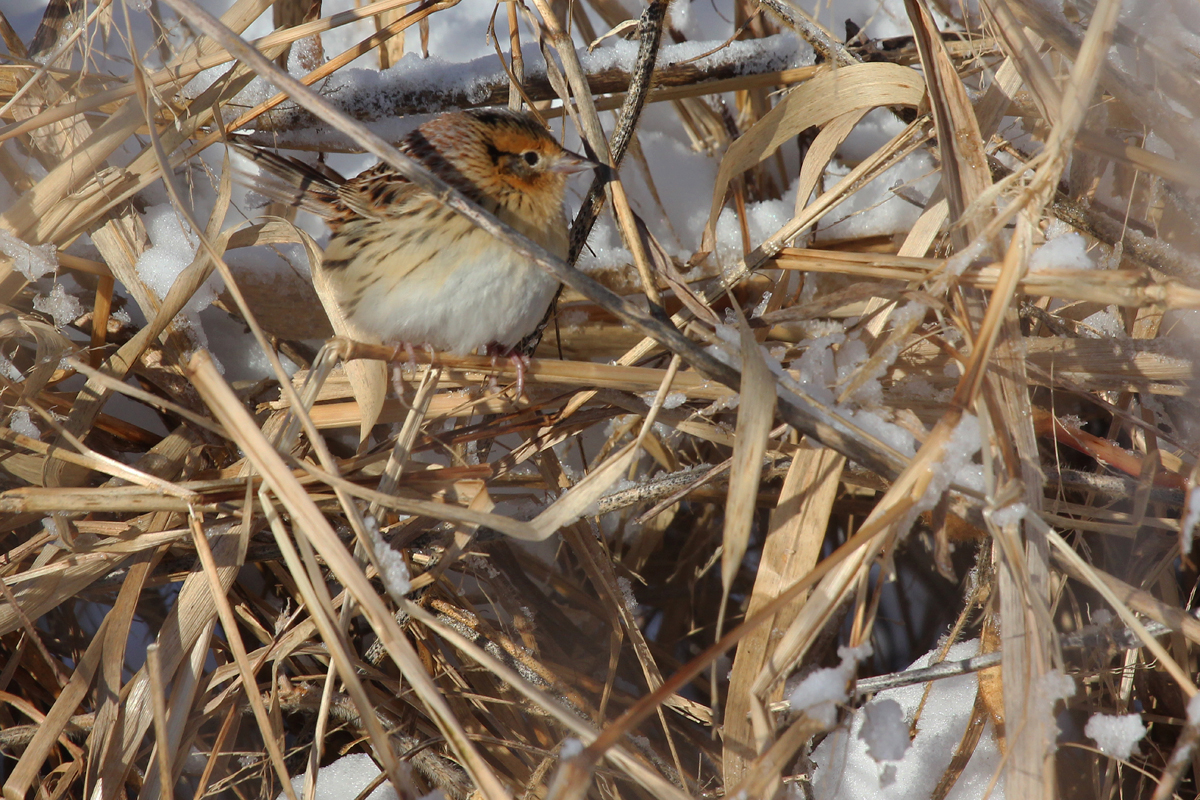
Another species of rare sparrow was observed this period, that being the continuing LECONTE’S SPARROW at Princess Anne WMA’s Beasley Tract north of Munden Road. Originally observed 3 Dec 2017 (ph. Andrew Baldelli & Rob Bielawski) in the southern impoundment of the park, the individual was observed again on 7 Jan (ph. Rob Bielawski & later obs. Nick Newberry), though this time with about 10 inches of snow covering the ground! This species has now been observed in Virginia Beach in three straight calendar years, though with records across two winter seasons. One has to wonder if this individual is the same one that wintered at this location in 2016-17, or if this is a different bird altogether. Last winter, the final observation for the season occurred on 9 Apr (ph. Andrew Baldelli & Rob Bielawski), so it is likely that this individual will persist for several months, especially given that it has successfully made it through our first major snowstorm of the season.

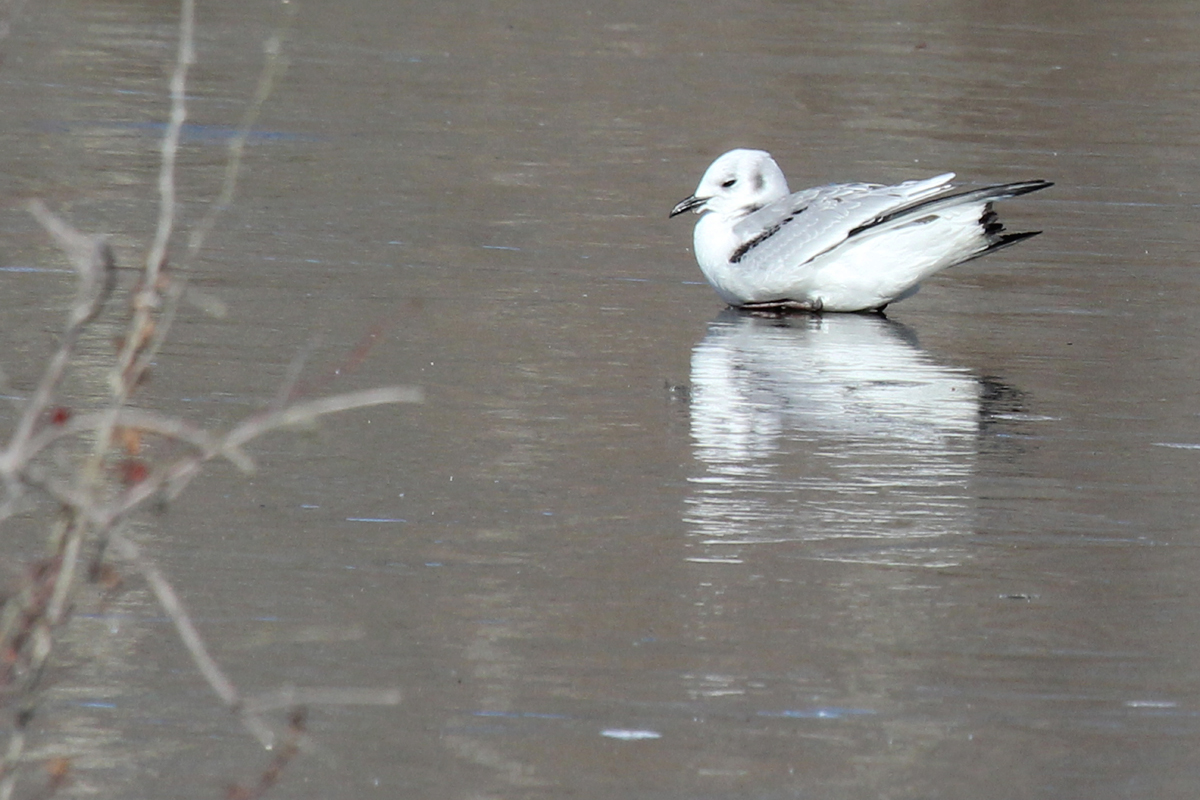
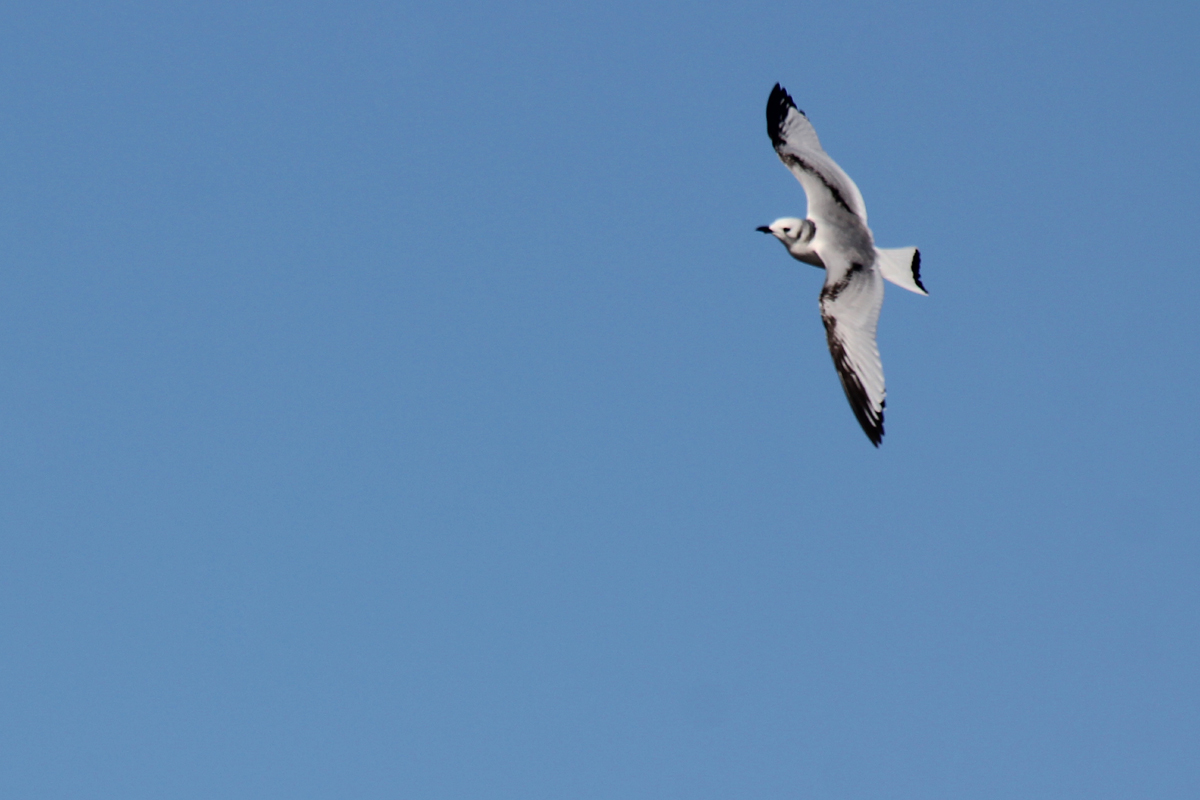
Lastly for the true rarities in the city this period, the immature BLACK-LEGGED KITTIWAKE that has been present at Stumpy Lake NA since 4 Dec 2017 (ph. Jonathan Snyder) was observed by many birders on 1 Jan, but has not been reported since. On the first of the year, the bird spent most of its time loosely associating near a flock of Ring-billed Gulls on the ice around the causeway leading the natural area / golf course. Whether the bird survived the nor’easter on 3-4 Jan or simply moved out of the area is not known, but hopefully birders continue to look for this individual now that the ice has begun melting to end the period.

While not year-round rarities, several seasonally unexpected species were reported during early January, including: Blue-winged Teal, Least Bittern, Yellow-throated Warbler & Ruby-throated Hummingbird. First off, for the teal, at least two reports came in, with a single individual at Back Bay NWR on 3 Jan (obs. Karen & Tom Beatty) and a pair found at First Landing SP on 2 Jan (obs. Marie & Ron Furnish). With the icing up of most inland lakes, and of Back Bay, it isn’t a surprise that reports for this species occurred into the new year.

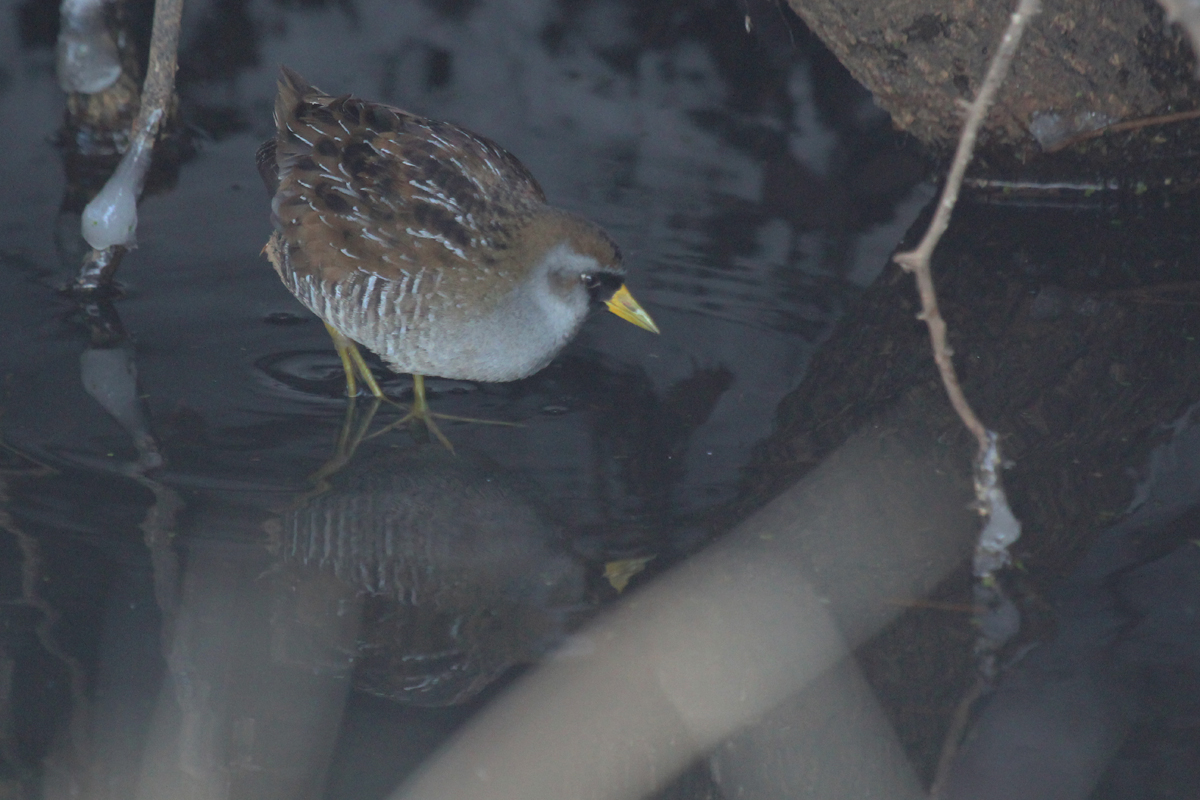
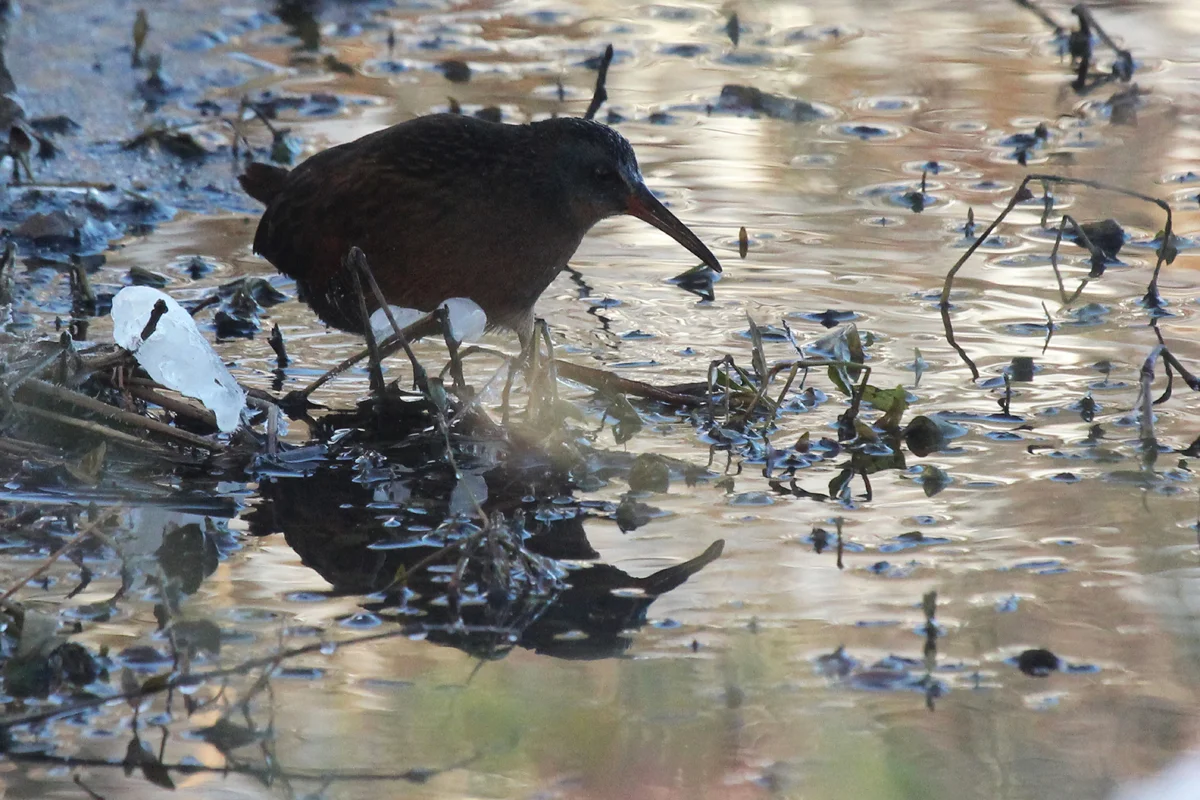
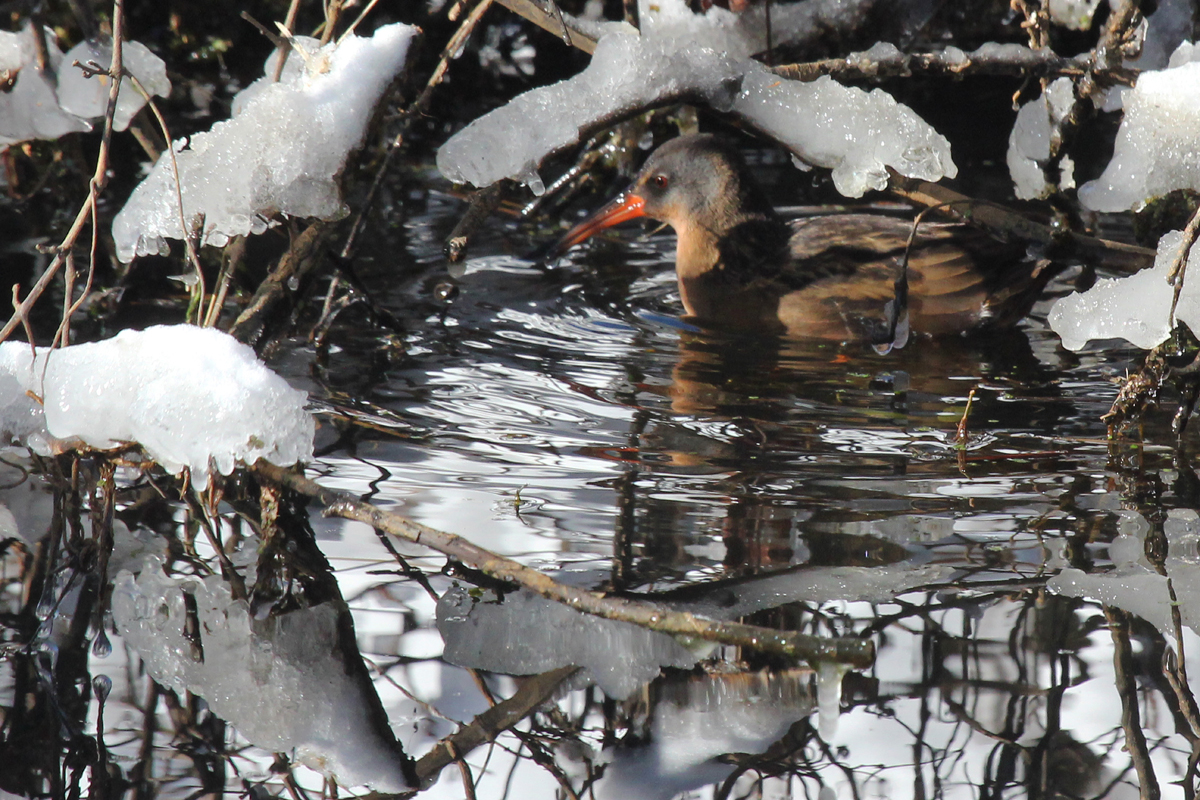
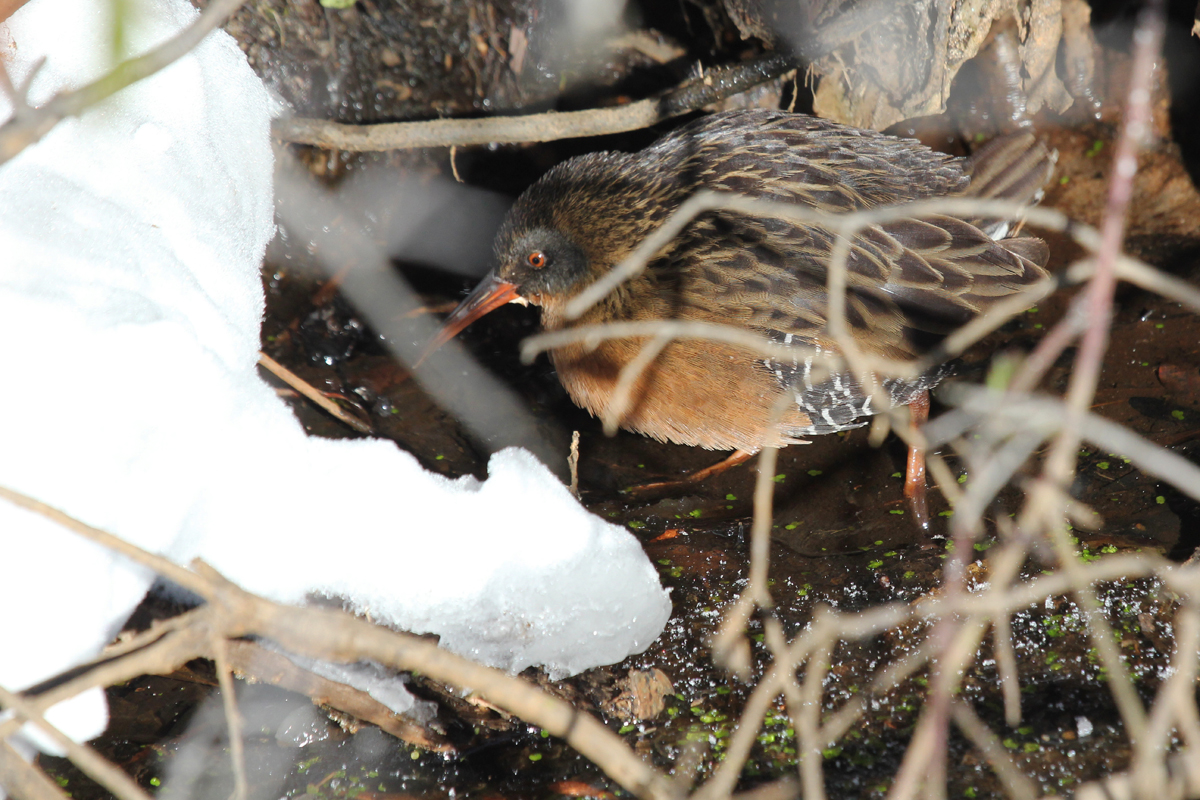
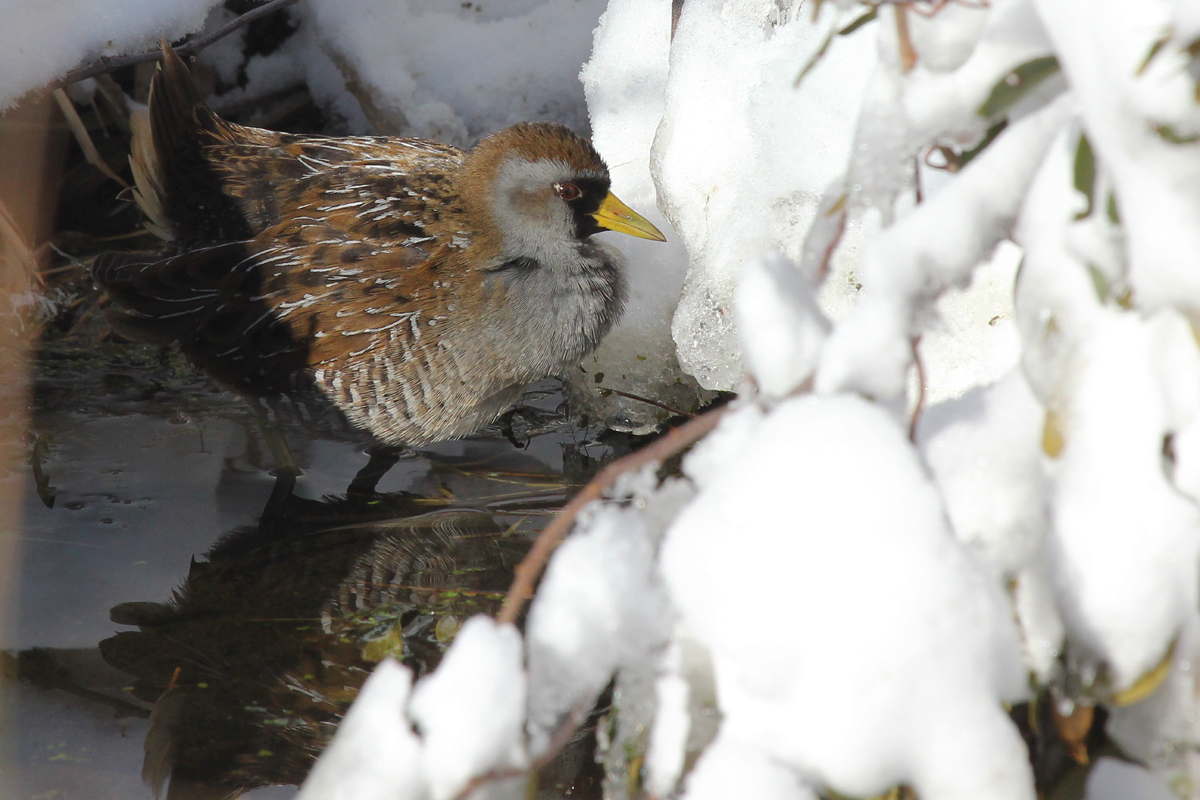
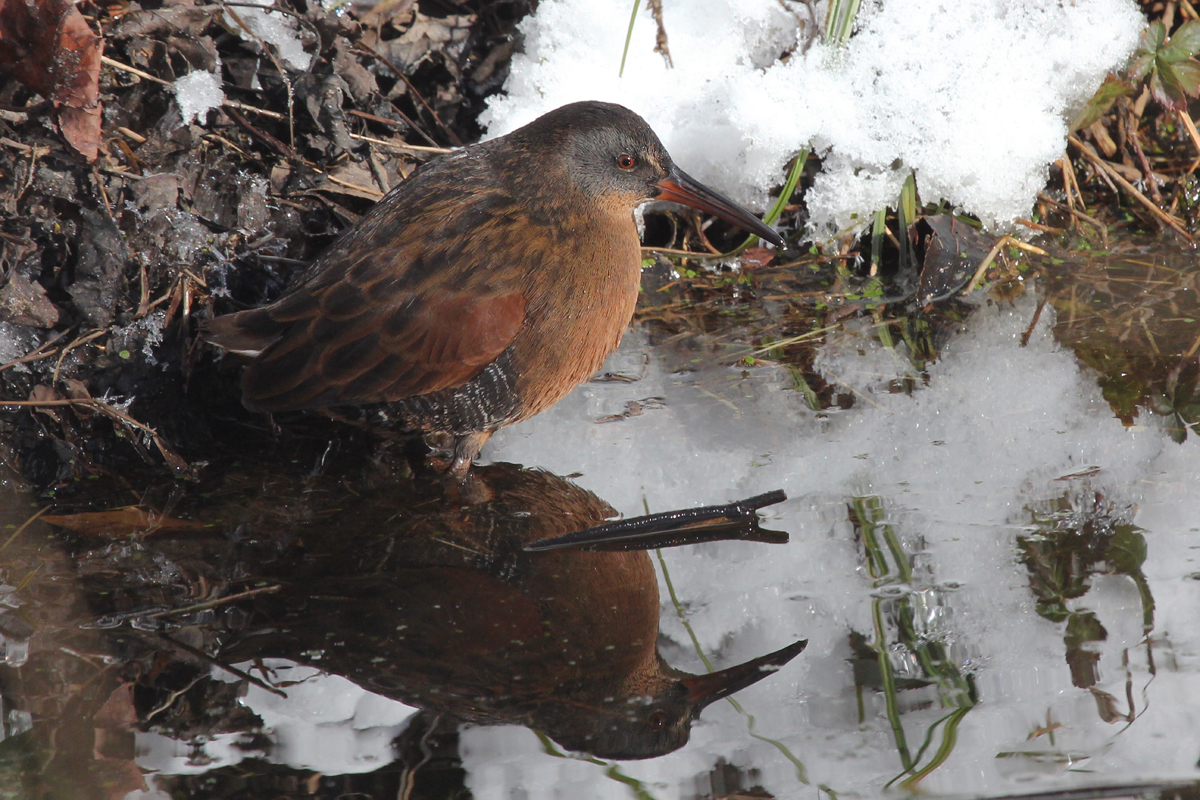
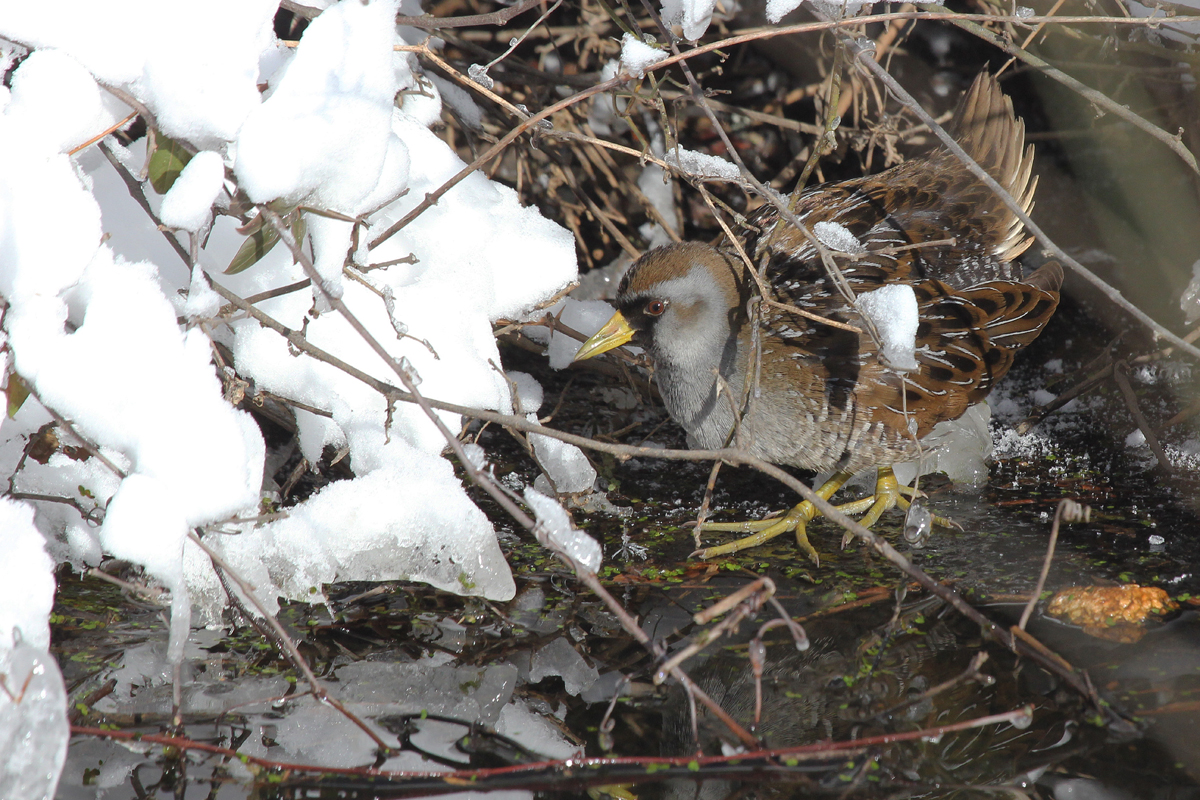
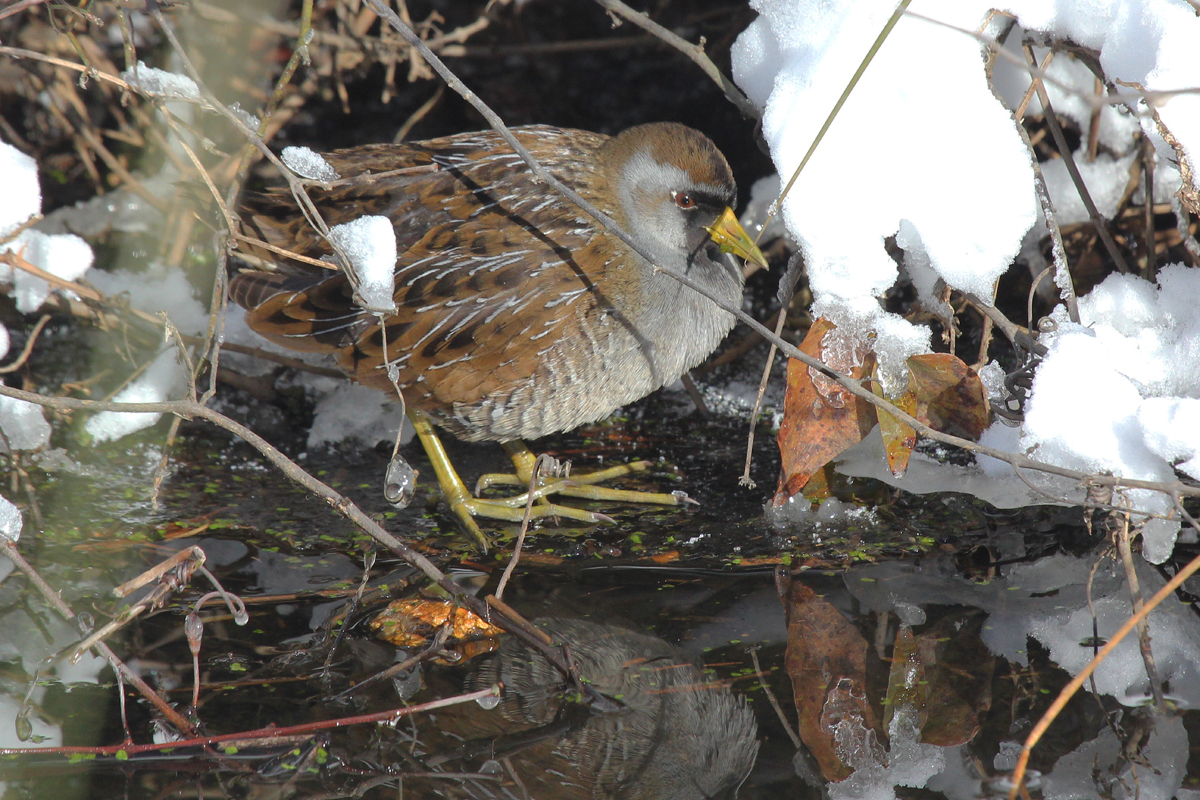
Also due to the recent ice up of almost all the available fresh water in southeastern Virginia, not one, but two Least Bitterns were found along the small ditch at the Little Island Park kayak launch on 6 Jan (ph. Andrew Baldelli / Rob Bielawski / Mike Collins). A single report occurred during January of 2017 as well when a group of North Carolina-based birders observed a single individual at this very same location. Perhaps the species attempts wintering around the shoreline of Back Bay more often than is noted simply due to being a very secretive species, with most summertime observations being only known due to vocals. According to The Gold Book, only 3 other winter records exist in Virginia as a whole, with one in Chesapeake (1961), one in Portsmouth (1981), two at Back Bay (1985), and a single eBird record on the west shore of Back Bay from 2007). Reports continued through the remainder of the reporting period as many observers visited the site to see these birds, as well as the Virginia Rails and Soras that were also noted in this open water ditch.

The Yellow-throated Warbler first noted 7 Dec 2017 (ph. Maggee Smith) at an Aragona Village private residence continuing through the reporting period as well, and surprising wasn’t hindered at all by the snowfall event of 3-4 Jan. It appears also that we’re down to only one Ruby-throated Hummingbird being reported to eBird in the city, with a persistent individual at a private residence (ph. Debbie Schroeder) being reported most recently on 3 Jan in advance of the heavy snowfall, but not reported since.

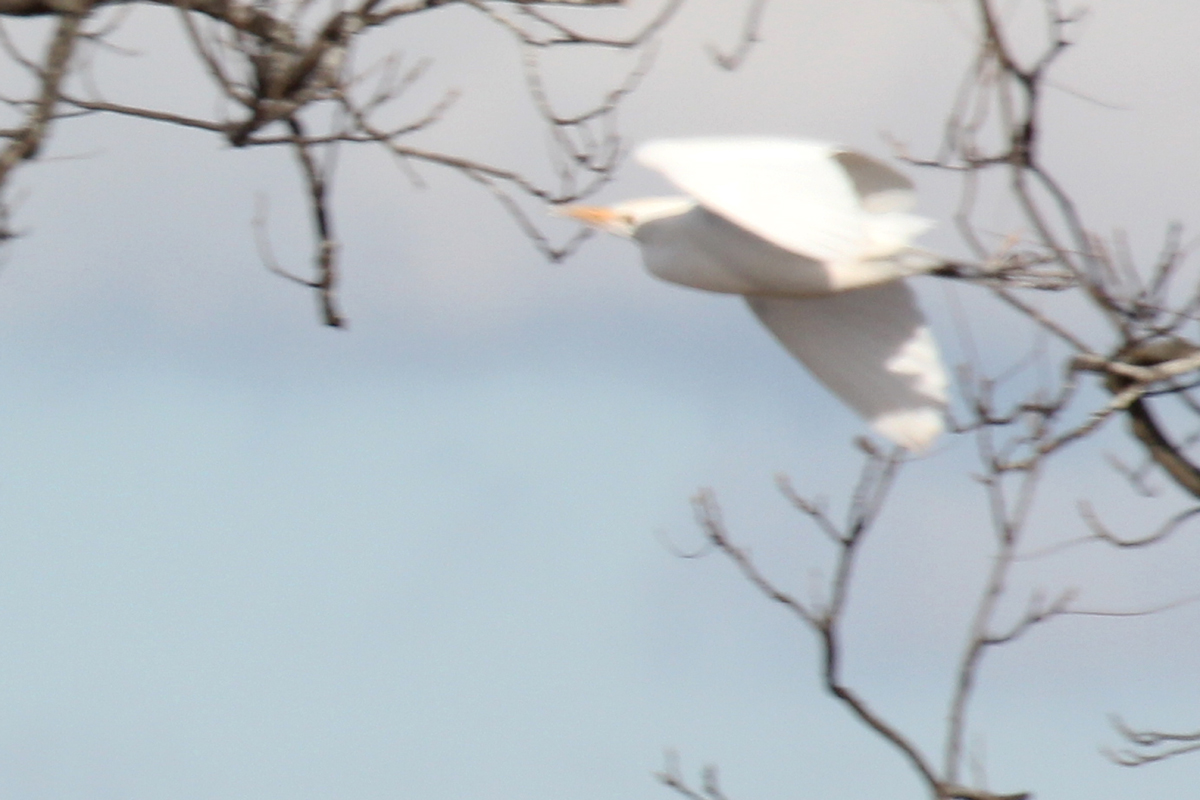
Since we finished up the expected arrivals for the season in late December, with Canvasback being the final species, now we just have to worry about late/lingering individuals. During early January, only one such species was noted, that being Cattle Egret, with a typical departure date  of 31 Dec, any January records are worth mentioning. This small flock of egrets continued along Princess Anne Rd. after being logged on the Back Bay CBC to close out the year. At least 1 individual persisted until 3 Jan at Sherwood Lakes of all places (ph. Karen & Tom Beatty), but it is likely we’ve seen the last of this species within the city’s borders until early April when they typically return for the spring.

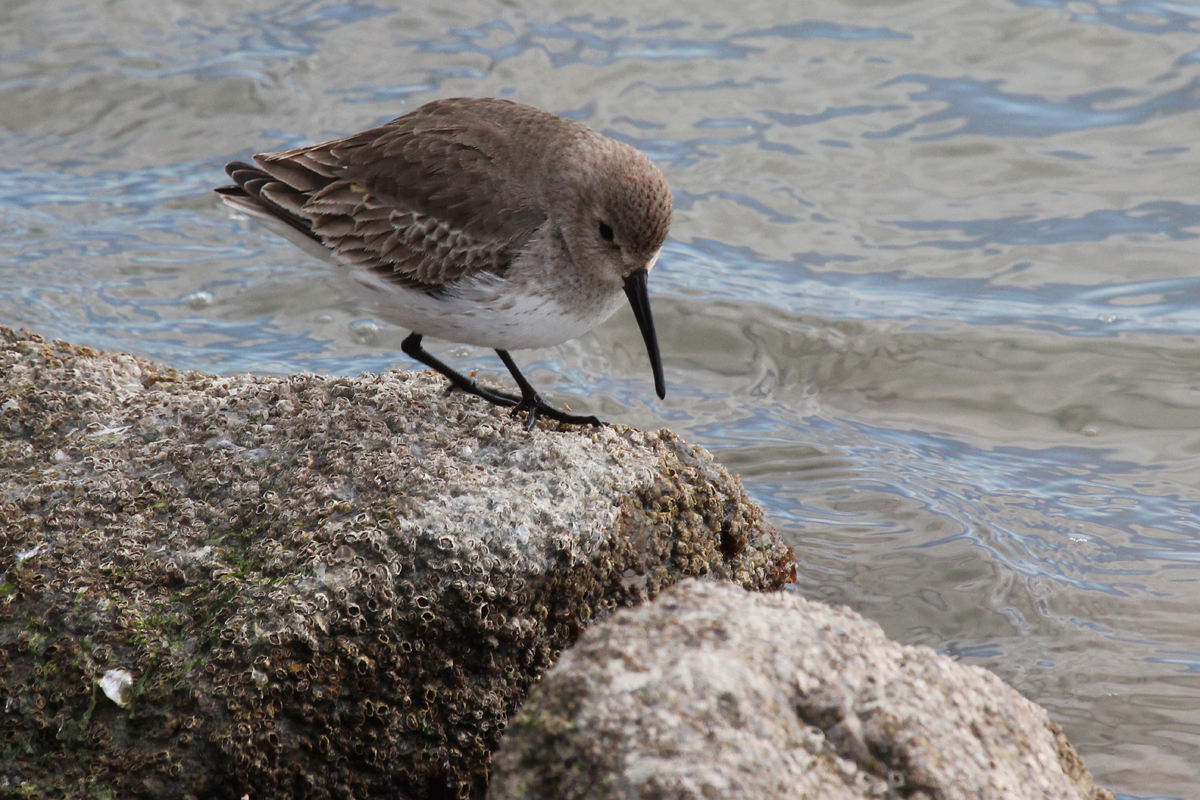
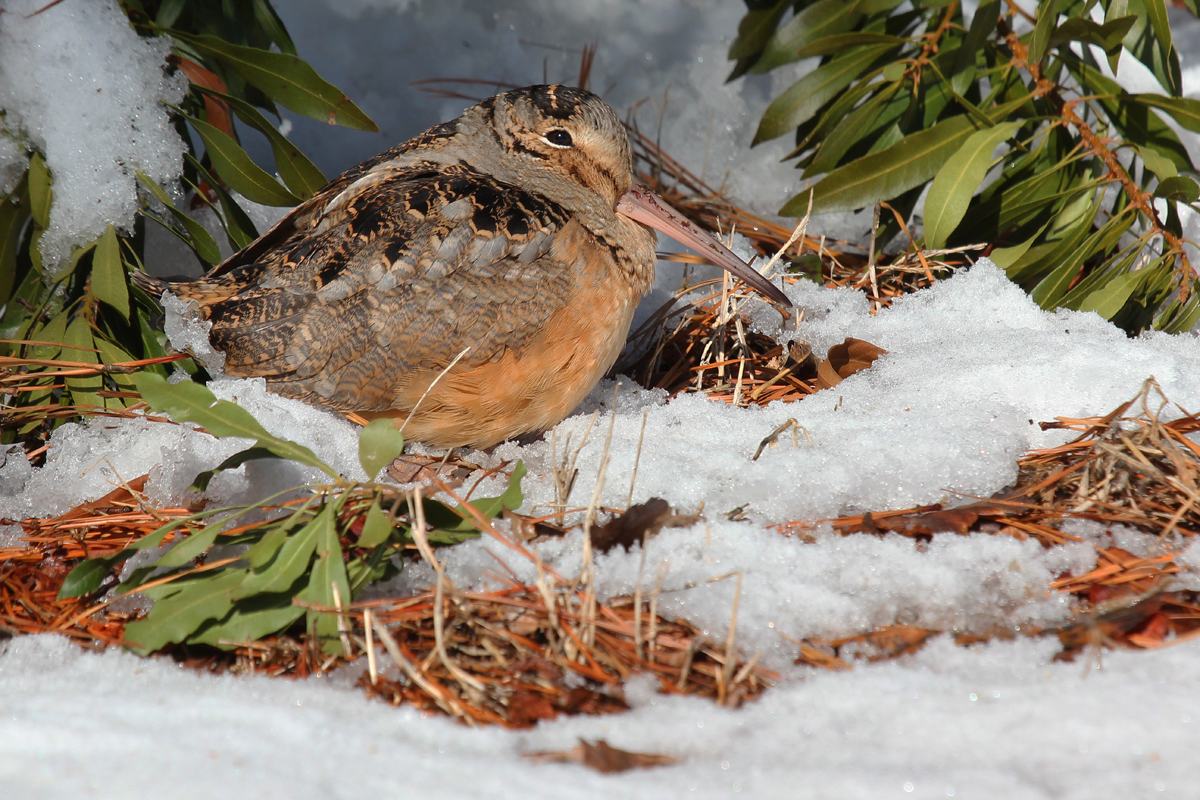
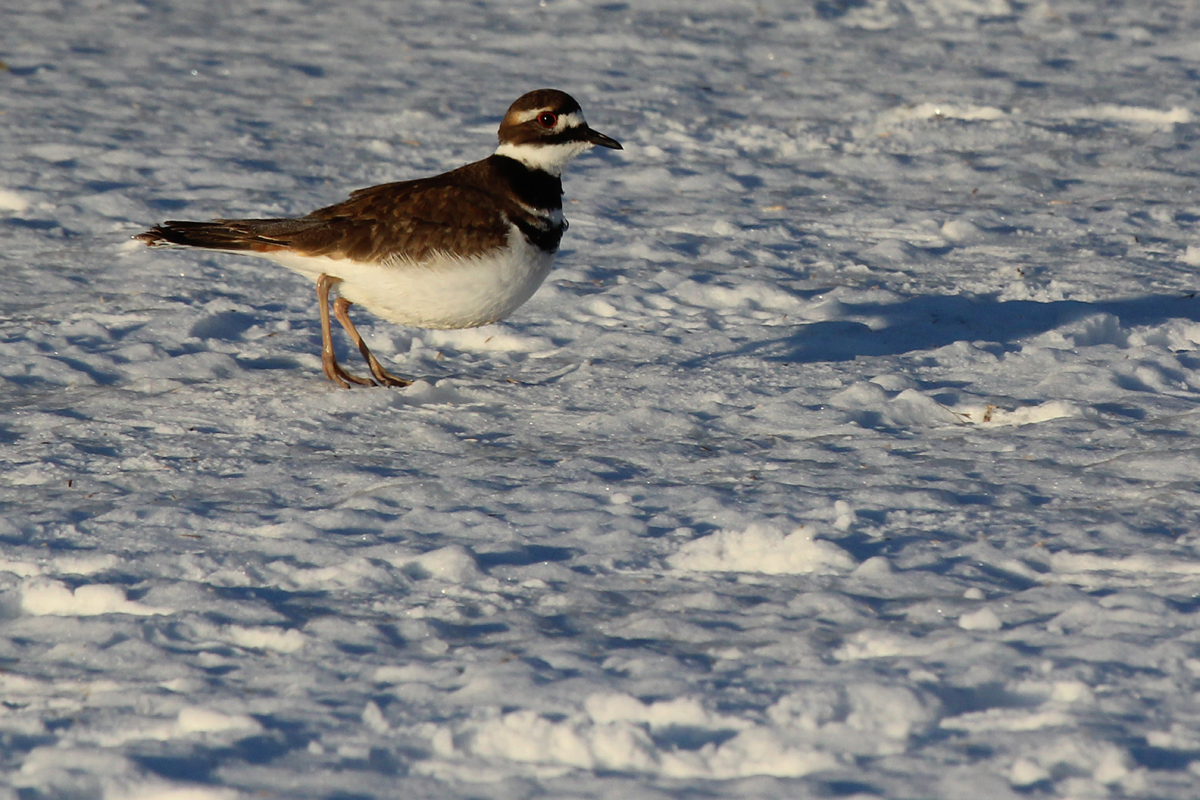
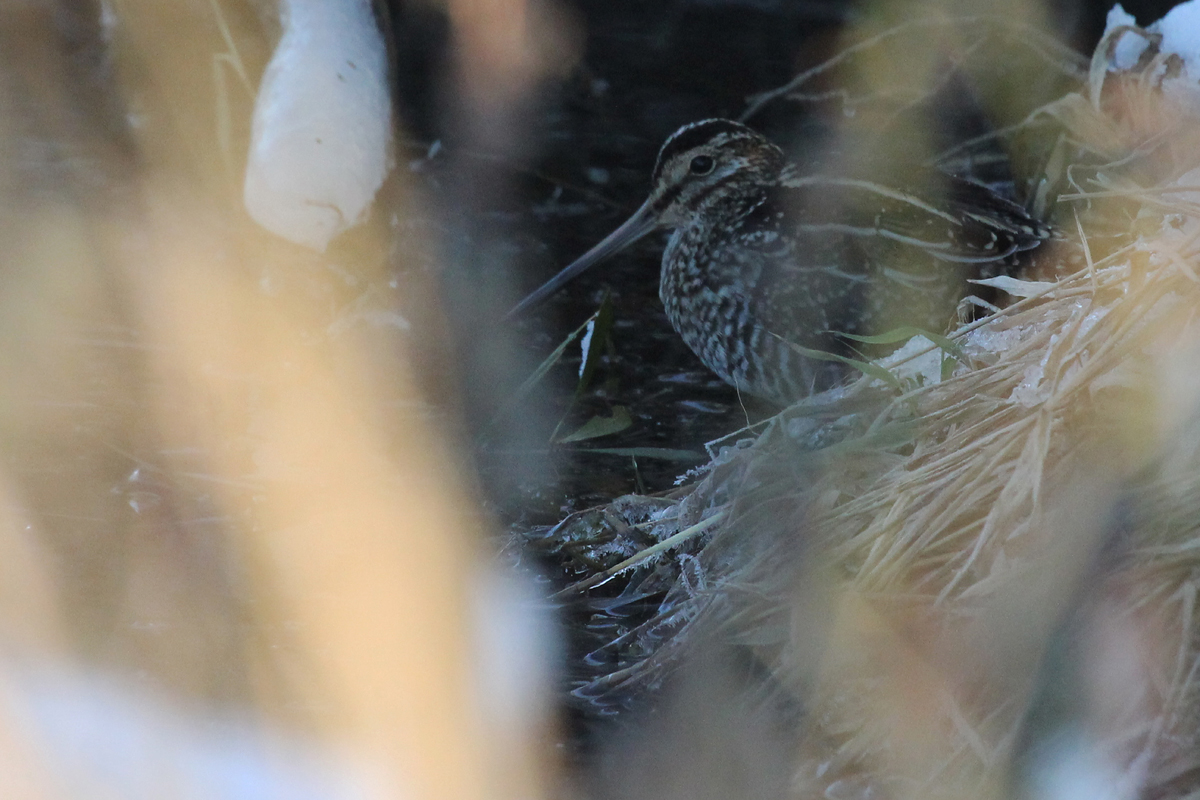
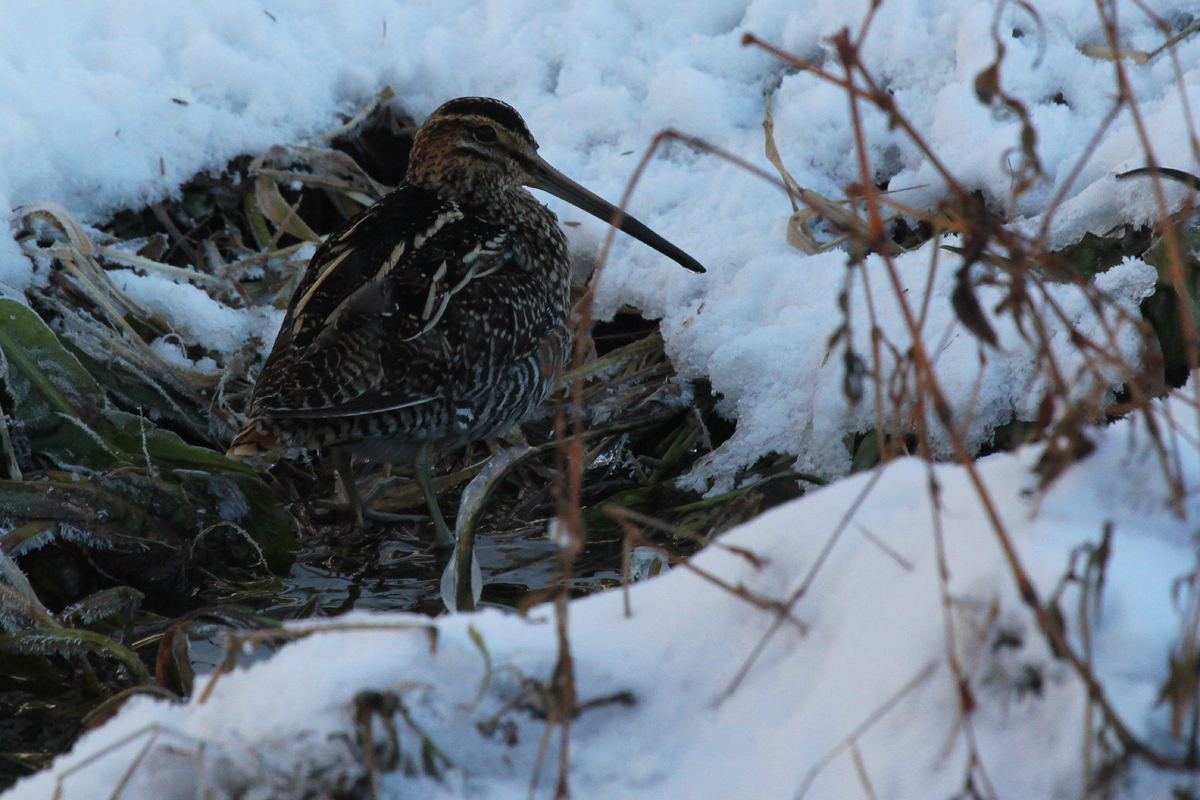
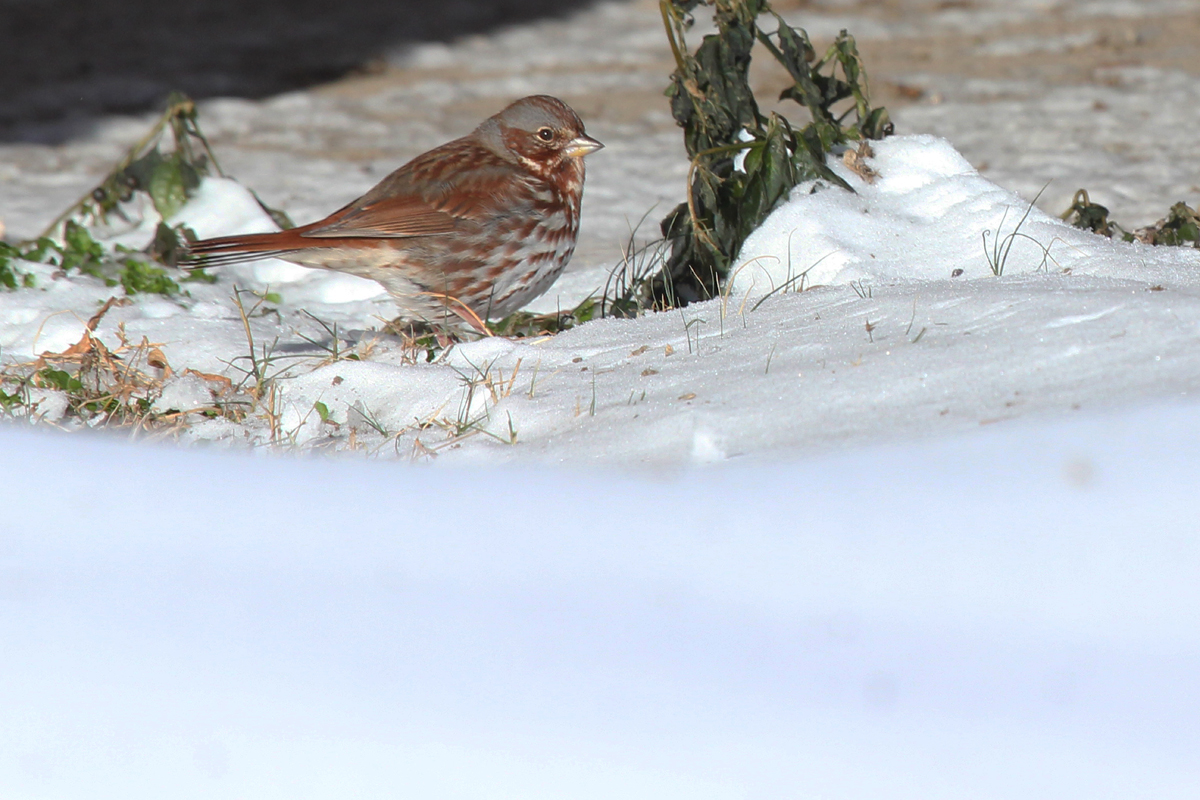
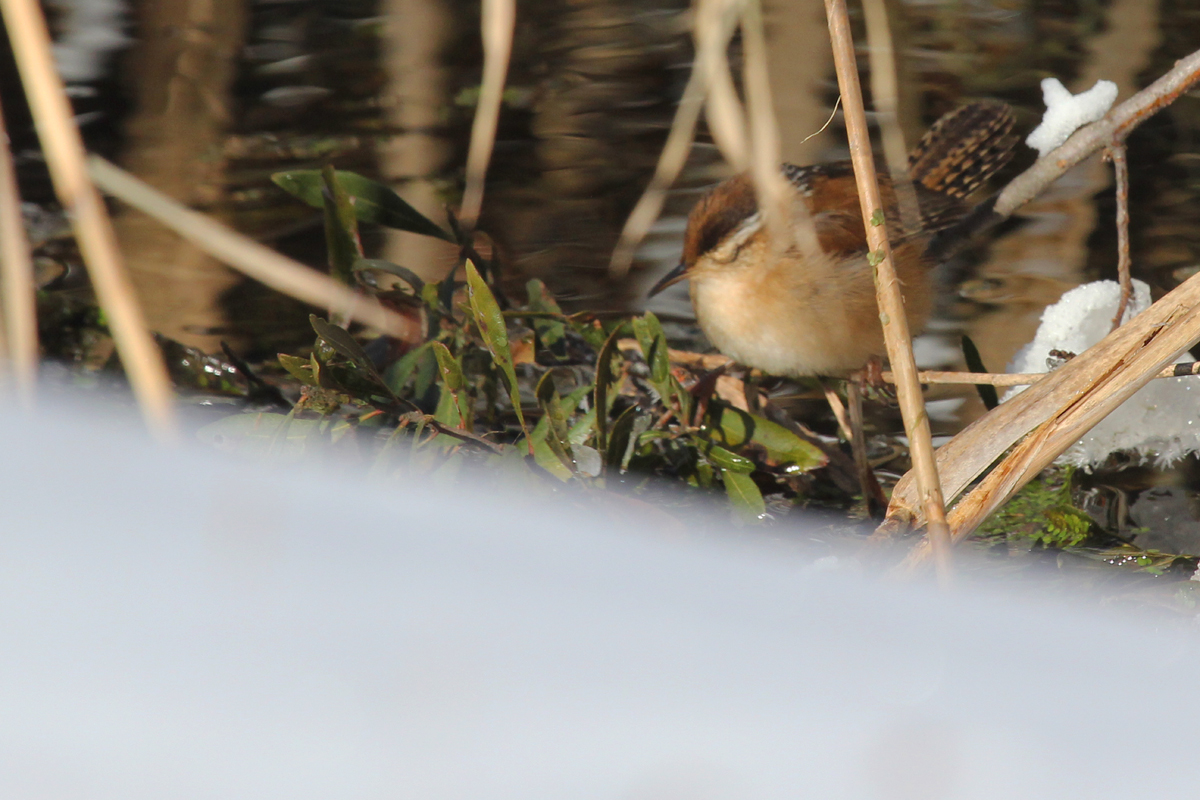
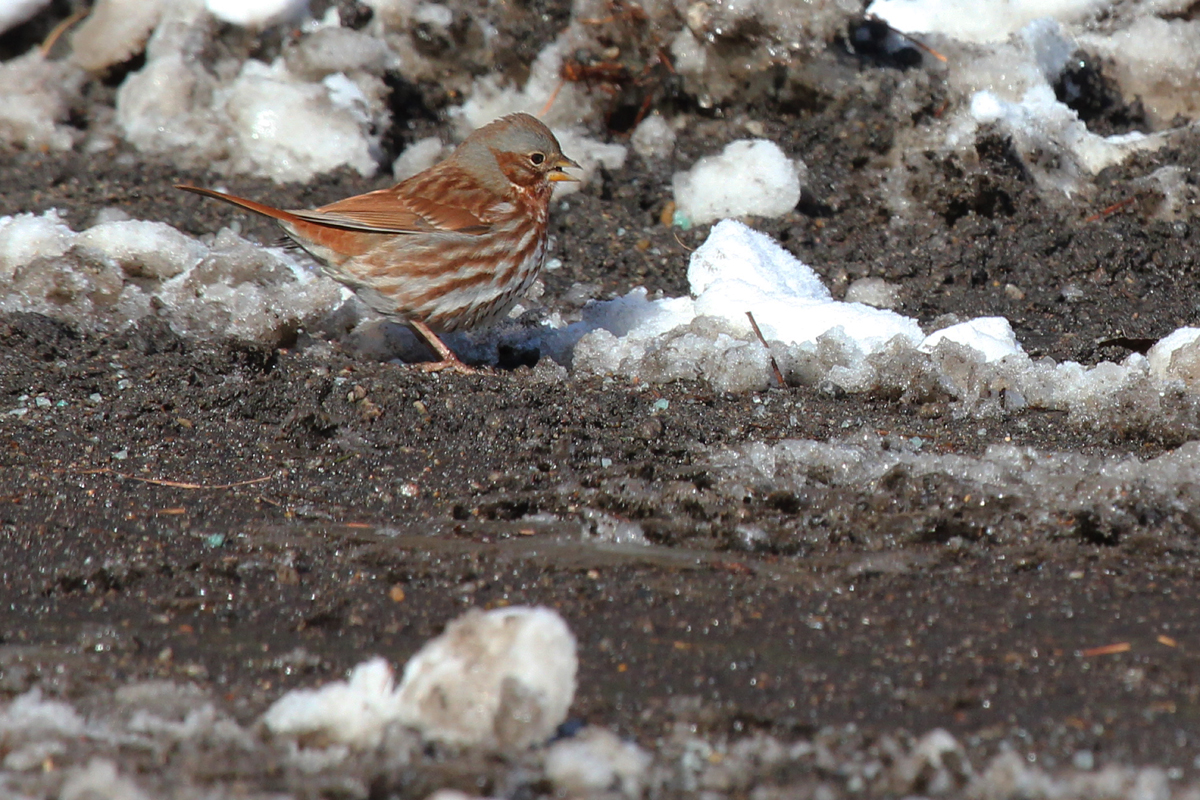
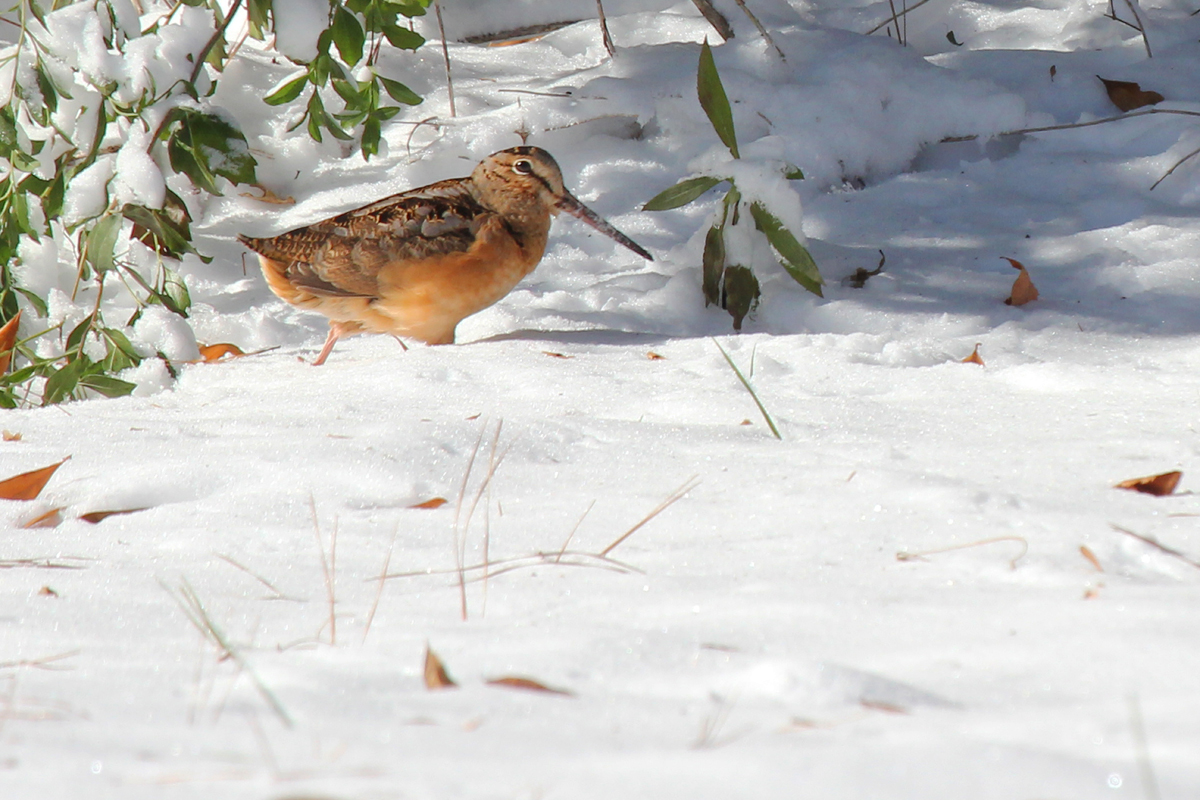
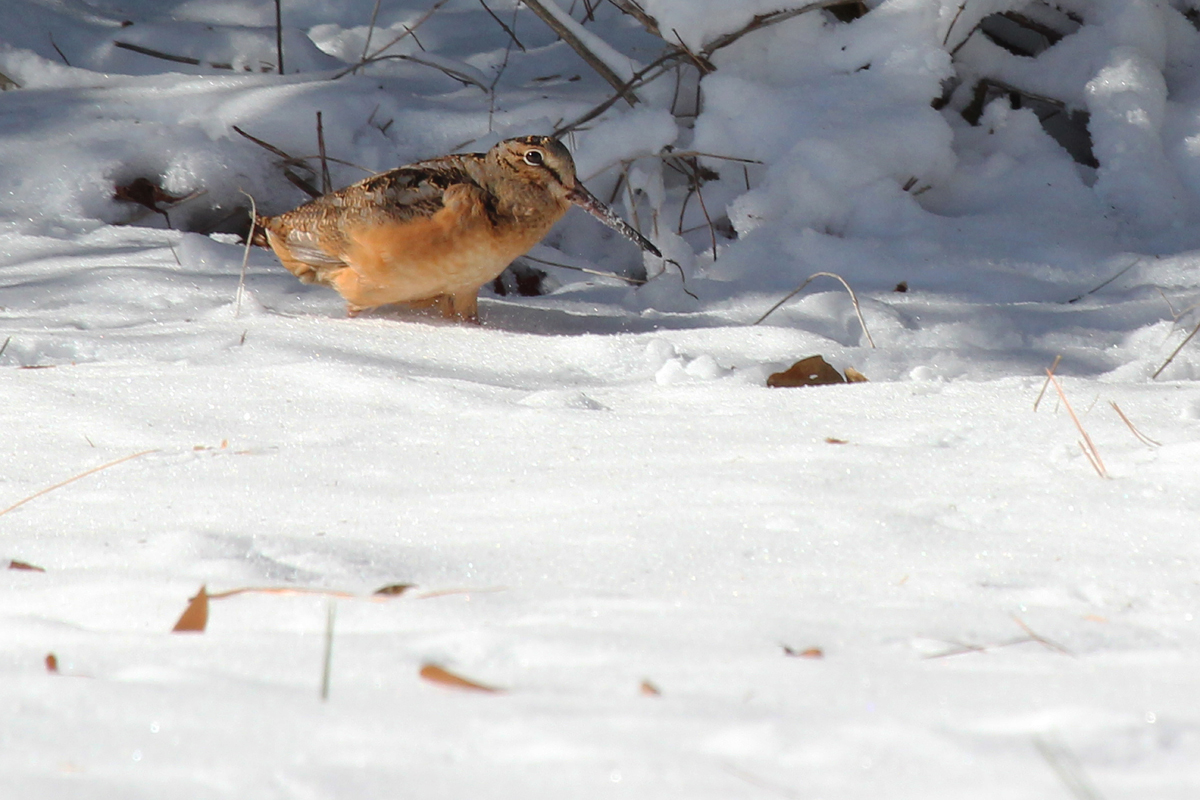
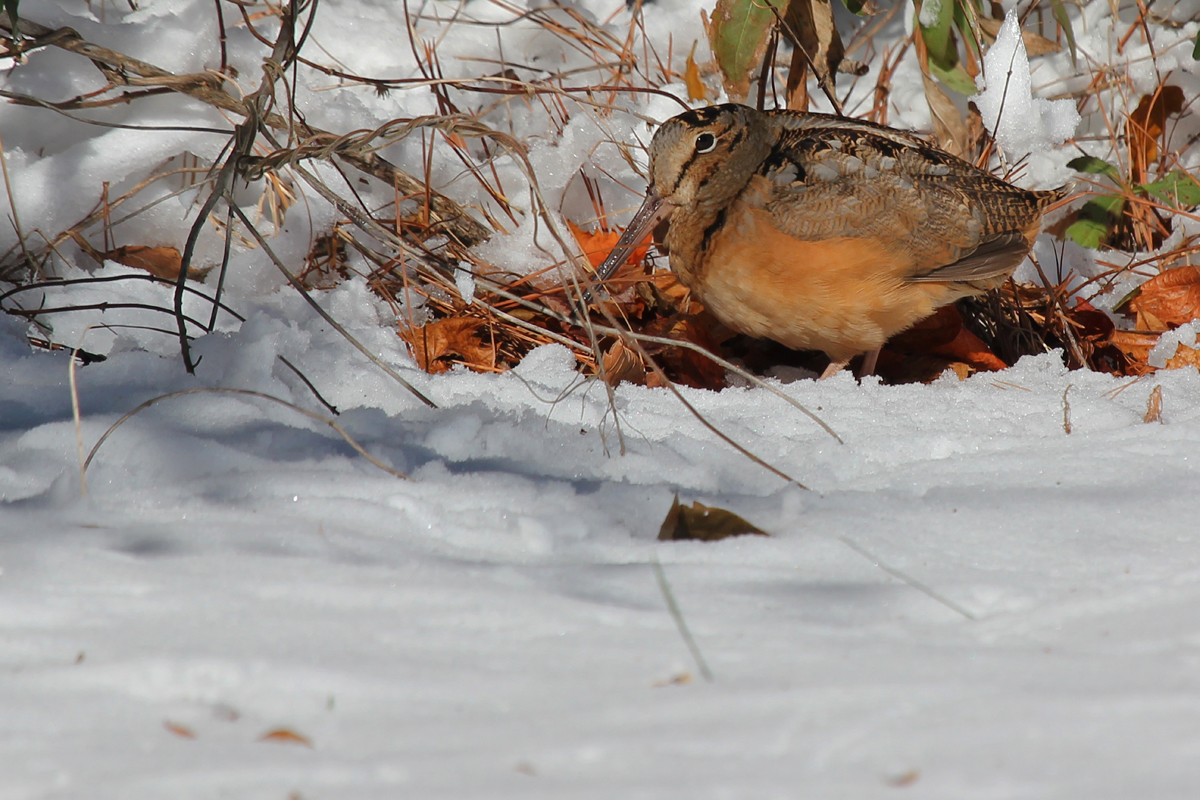
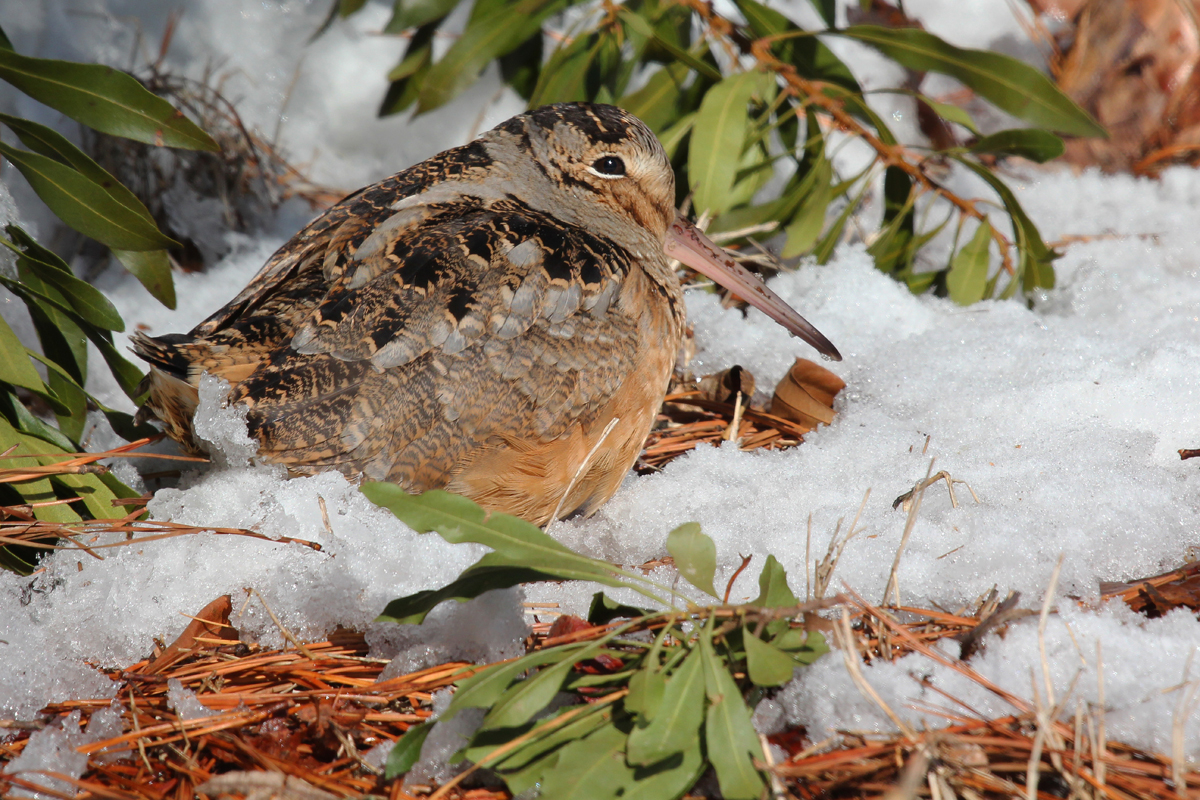
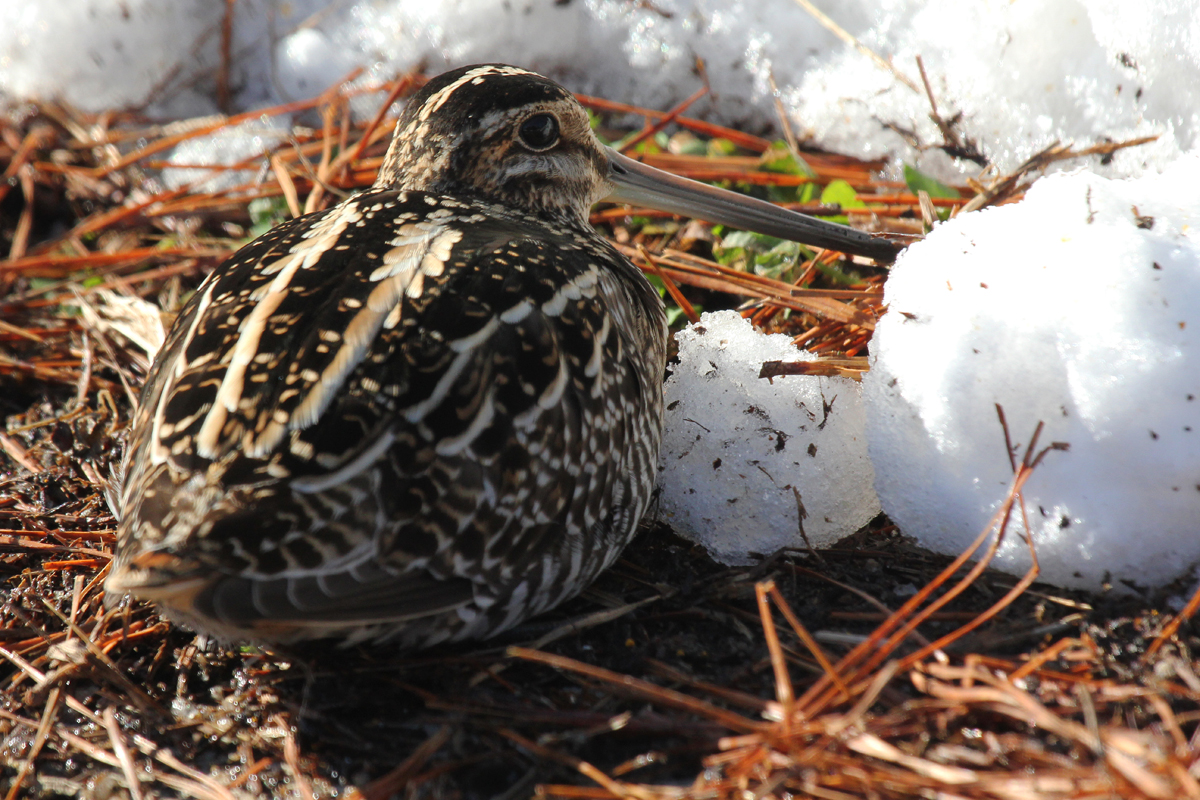
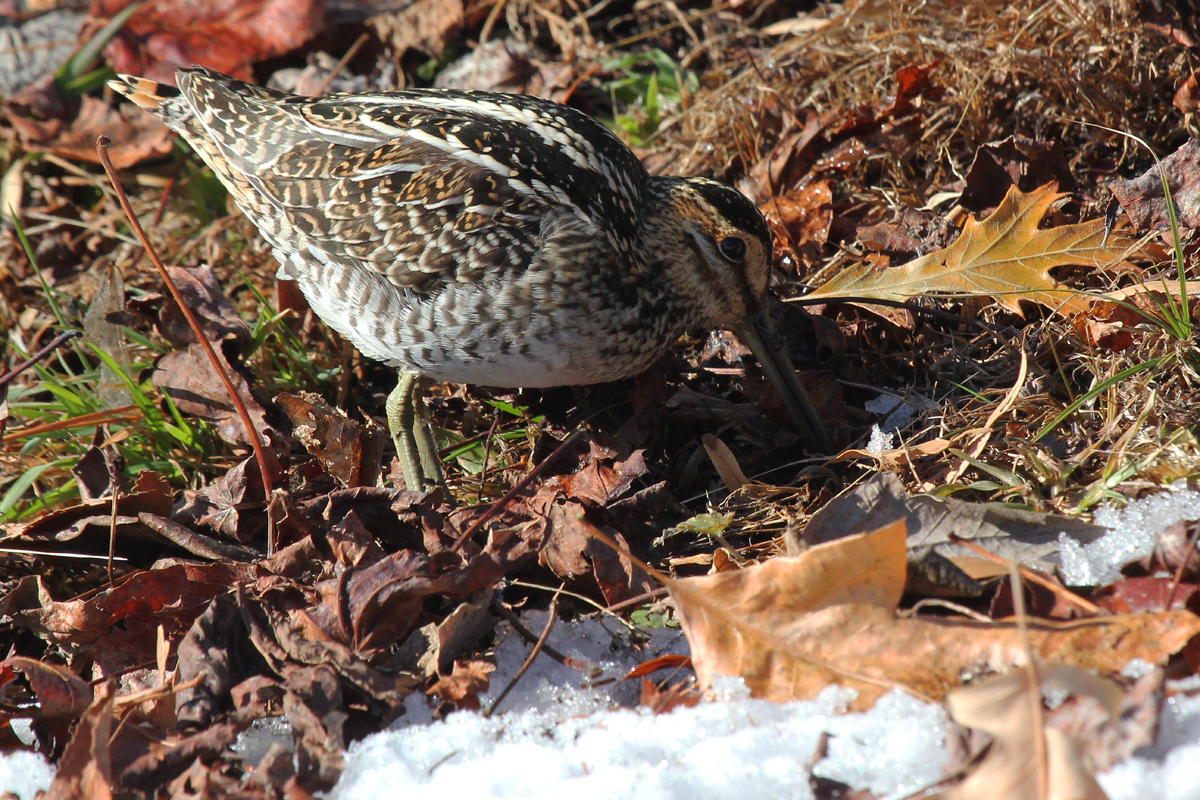
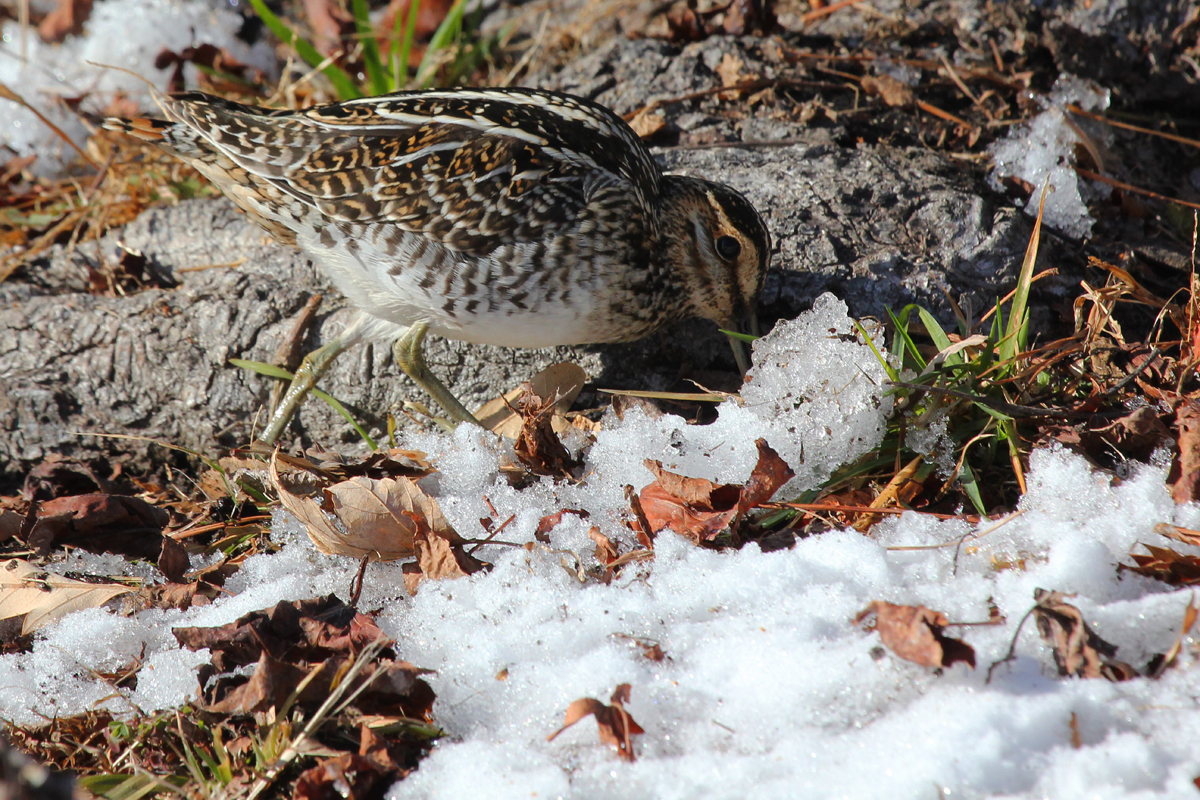
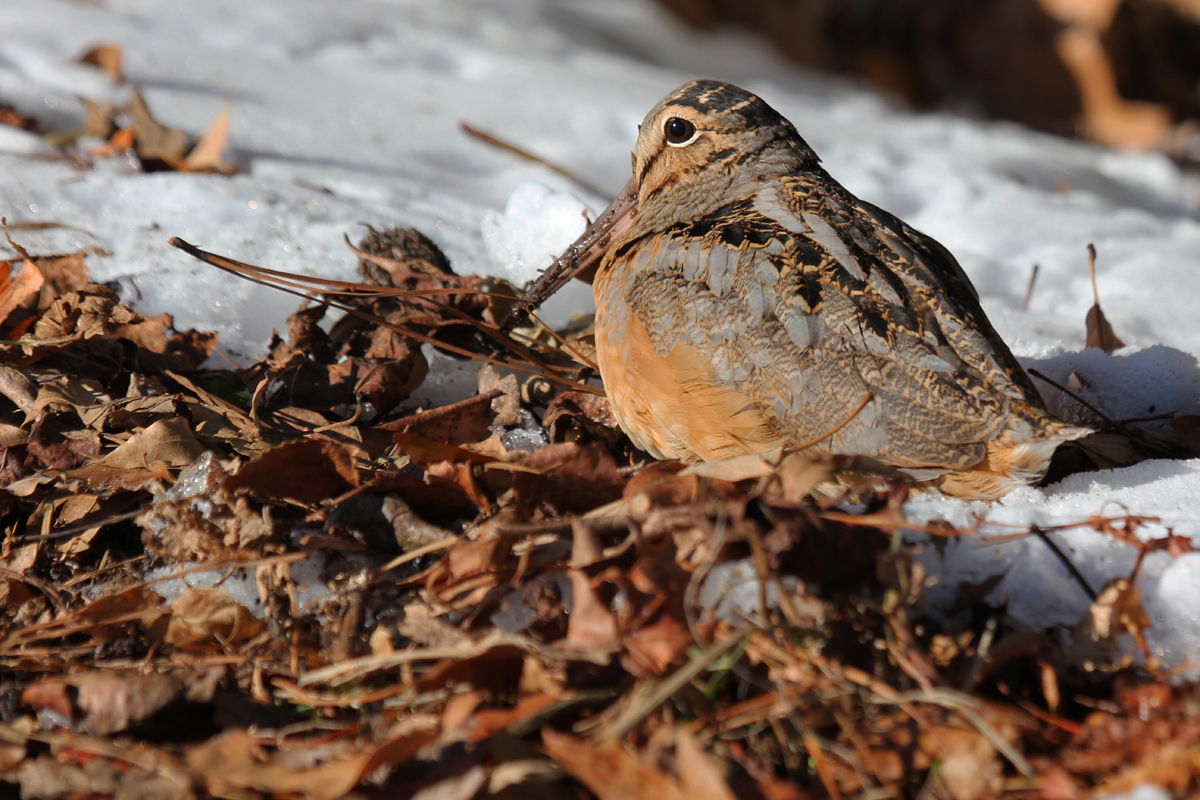
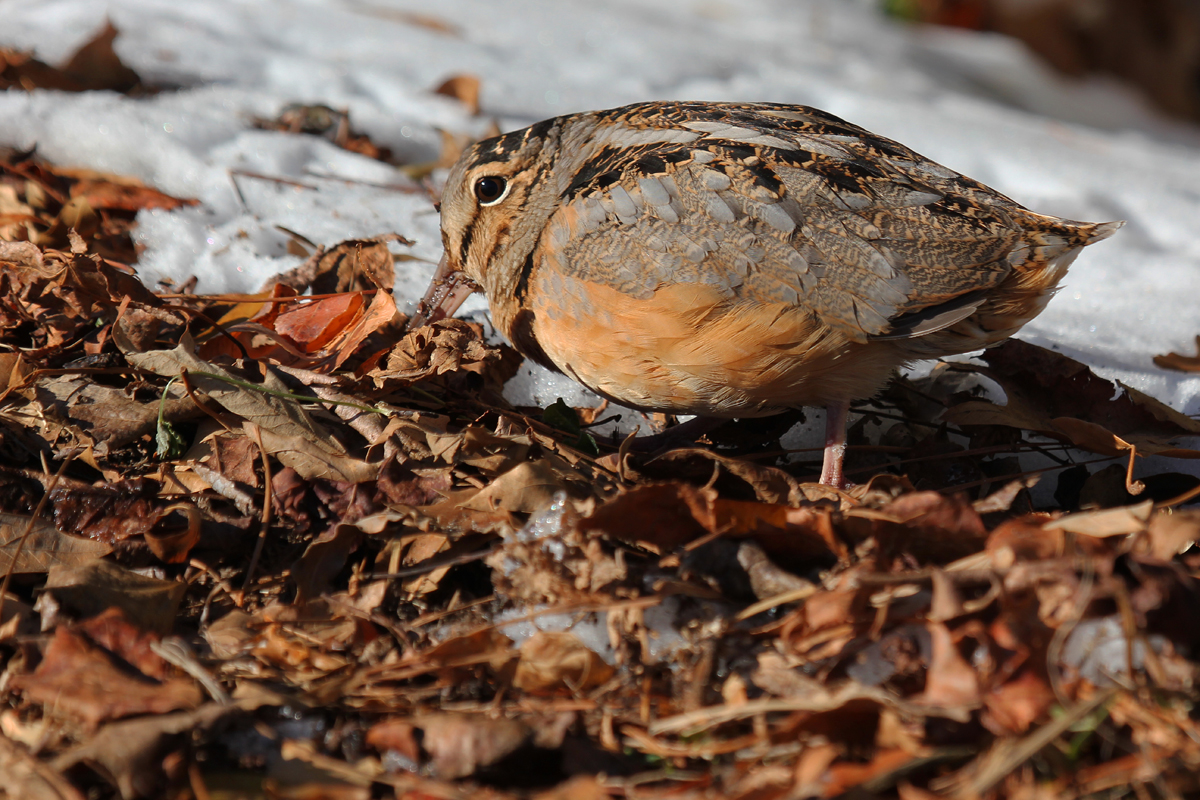
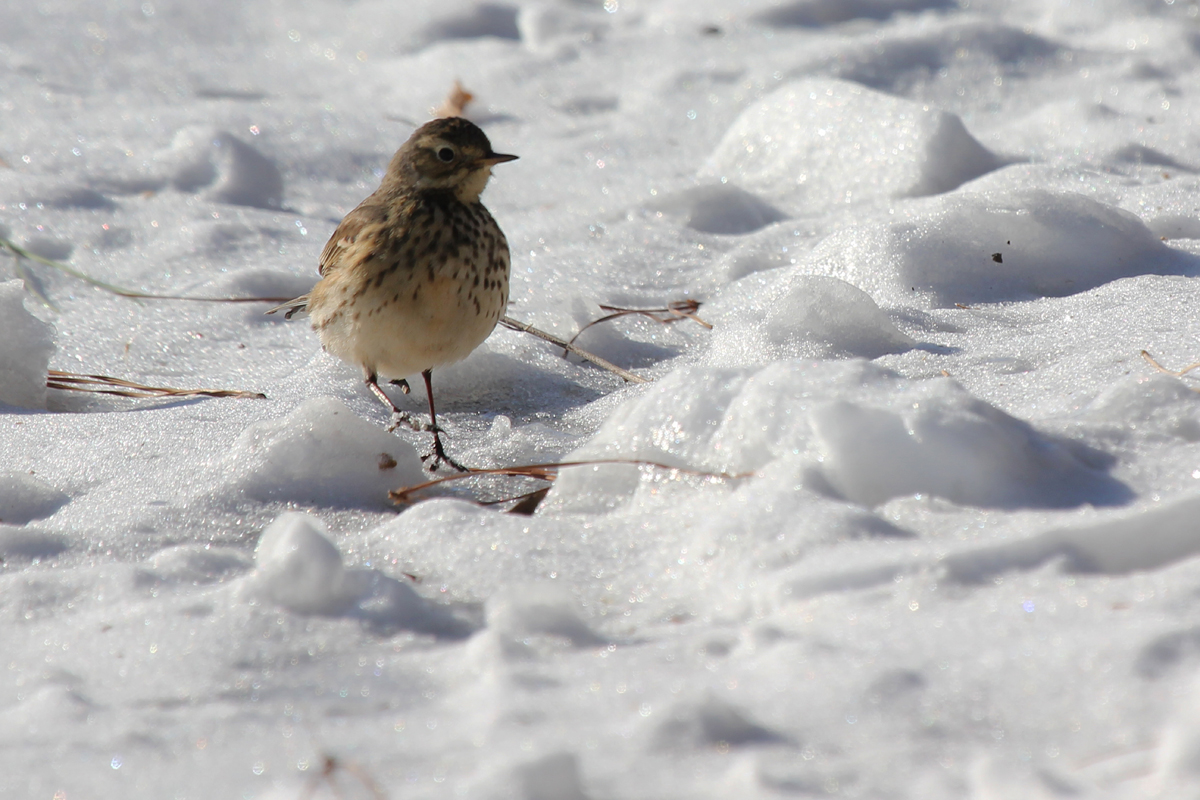
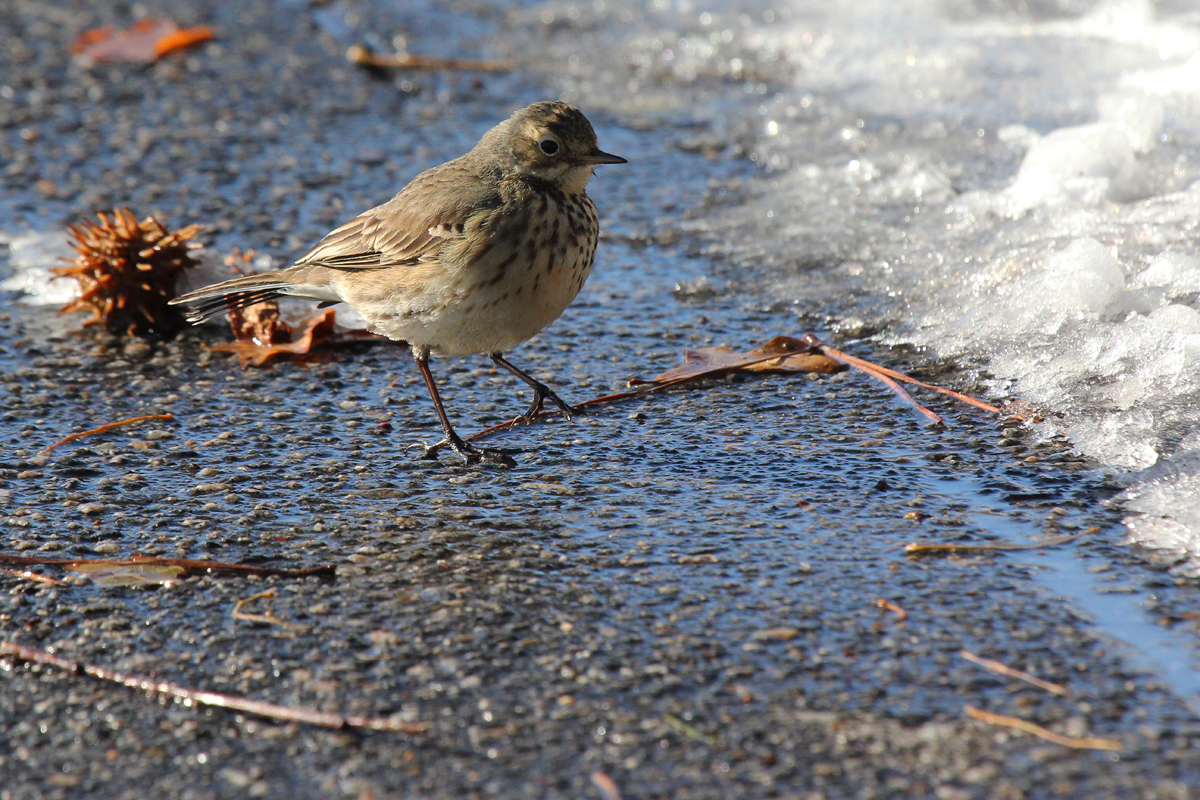
With the inlands waterways being covered in ice, and with the effects of the nor’easter felt throughout the period, an incredible number of interesting reports were submitted this period to eBird. The heavy snowfall forced a great many normally secretive species out of typical habitat, with loads of observations occurring for American Woodcock, Wilson’s Snipe, Sora, Virginia Rail, King Rail, Fox Sparrow, American Pipit and Hermit Thrush. Waterfowl are present in numbers and variety not seen in Virginia Beach in many years it seems, with a great many reports for White-winged Scoter, Common Goldeneye, Common Eider, Canvasback and Redheads. Many of these species have typically been difficult to come by out here, Goldeneye in particular only had a couple of records in the winter of 2016-17 compared to dozens this winter! Shorebird observations have included plenty of Dunlin and Black-bellied Plovers, the latter of which hasn’t held many records during the winter months here. One inland report of a Dunlin occurred on 7 Jan at Kempsville Lake (obs. Brandon Holland) which seems interesting enough to note here. Pine Siskins were noted at a private residence (obs. Karen & Tom Beatty) and also at Back Bay NWR. This irruptive species has not provided many reports this winter to date, nor have Purple Finch or Red-breasted Nuthatches, two other irruptive species. With over 400 eBird checklists submitted for Virginia Beach during this period, tallying around 150 species of birds, I likely missed some things, but, what an incredible kickoff to the new year. Get outside and enjoy it if you have the time, and if not, make the time!

WEATHER:  Average daily high temperatures plummeted an incredible 12.5° from 44.7° F in late December to 32.2° (-18.3° from prior 10-year average), with average daily low temperatures reaching a level of cold not felt here in many years… 15.0° from 30.4° to 15.4° F (-18.1° from prior 10-year average). Overall, temperatures ranged from a minimum of 9° F (our coldest days of the season thus far, on both 6 & 8 Jan) to a maximum of 50° (10 Jan). We haven’t seen temperatures this cold during early January in at least 12 years (the extend of the data I have on hand), and likely much more than that! No measurable rainfall was recorded this period but 8-12” of snowfall did occur on 3-4 Jan. Maximum sustained winds at Oceana this period were 43 mph and gusts reached 55 mph during the height of the nor’easter on 4 Jan. Sunrise/sunsets varied from 7:16 AM/4:58 PM (21 Dec) to 7:17 AM/5:06 PM (20 Dec), which means over all we gained 7 minutes of daylight during this period! Preliminary tide levels (referenced to MLLW) at the Sewell’s Point gauge (NOAA) in Norfolk varied from a minimum of -1.614 (7:30-7:36 PM, 6 Jan) to a maximum of 3.911 (10:24 AM, 4 Jan) as the tide was guided upward by the nor’easter. Most of the snowfall had begun to melt by the close of the period, but ice persisted on most waterways. With temperatures expected to stay above freezing, both should eventually disappear.

Due to the sheer volume of photographs being submitted to eBird in Virginia Beach nowadays, I’ve had to cut this section from my thrice-monthly reports in lieu of hopefully a better alternative. For those hoping to view everyone else’s photographs, please see this complete listing for the month of January located on eBird’s Media explorer by clicking here!

LOOKAHEAD:  As we head further into 2018 remember that goose flocks around Sherwood Lakes, Firefall Drive and Princess Anne Lane need to be checked regularly, as do all the blackbird flocks that are happened upon. This winter season is shaping up to be an incredible time period for waterfowl reports in the area, given the already-low temperatures and icing up of freshwater bodies to our north. The Great Lakes are freezing rapidly, which is likely to send large numbers of ducks, geese and other waterbirds towards the East Coast. All open bodies of water will become goldmines for these birds, and rarities are likely to be found in tightly packed flocks moving forward. As always, make sure to report your finds to eBird!

Next Entry | Entry Index | Previous Entry

For further information regarding this thrice-monthly, online publication, please visit the Journal Overview Page which provides an in-depth explanation of the format, layout and composition of the journal. As always, thank you for reading, and please leave me a comment below (you may use your Facebook, Gmail or other accounts to easily do so), or just click the Heart icon to the lower right of this post to let me know you stopped in!

Late December 2017 (21st-31st)

Christmas Bird Counts, the end of the year, and some unseasonably cold & windy weather all came into play during Late December! Top birds during this period in Virginia Beach included a pair of new records for PAINTED BUNTING & COMMON GALLINULE, continuing reports of previously occurring ICELAND GULL (KUMLIEN’S), BLACK-LEGGED KITTIWAKE, ROSS’S GOOSE, CACKLING GOOSE, WESTERN TANAGER, unseasonal reports for Blue-winged Teal (31 Dec), Spotted Sandpiper (31 Dec) & Yellow-throated Warbler (21-31 Dec) and first-of-season arrivals for Redhead (28 Dec) & Canvasback (29 Dec).
OBSERVATIONS: One of the most brilliantly colored birds to grace Virginia Beach with its presence each winter, the PAINTED BUNTING, was reported at two different locations during late December! The first report came in from an undisclosed location (ph. Karen & Tom Beatty) on 21 Dec, a lovely adult male! Then, during the Back Bay Christmas Bird Count (CBC) on 29 Dec, a second individual (also an adult male) was observed as it flew across Muddy Creek Road in the Pungo Sector of the count circle (ph. Karen & Tom Beatty). Ironically (and incredibly) a Painted Bunting was observed last year on the count as well, by the same observers, on the same day, though this individual was a female or younger male and thus not showing the intensely colorful plumage of the 2017 bird. Unfortunately, the Muddy Creek Road individual was not observed in the following days, though several birders made the attempt, so it is possible it has found another location to spend the winter season. But, if anything, this report shows that it is possible to find one of these beauties by putting in the effort and simply covering a lot of ground in the southern half of the city.
With only two prior reports during 2017, and the most recent on 24 Nov, it came as a surprise when a COMMON GALLINULE was found along Munden Road between the Beasley & Whitehurst Tracts of Princess Anne WMA on 26 Dec (obs. Karen & Tom Beatty). This species has been reported in past years around this location, with the impoundments and proximity to Back Bay providing extensive habitat in all seasons. Unfortunately, by 29 Dec, the ditch this individual was observed in had frozen over, and the bird likely moved towards portions of the surrounding marsh where open water still exists.

During mid-December, an adult ICELAND GULL (KUMLIEN’S) was found on the beach near Neptune Park / 31st Street at the Oceanfront (ph. Andrew Baldelli). This same individual appears to have lingered along the resort beach into late December and was again found (this time at 61st Street Beach) on 30 Dec (ph. Lisa Rose / Dixie Sommers / Jason Strickland). It is likely that this Kumlien’s Gull will persist along the Oceanfront into the new year, observers will simply need to be vigilant about checking various locations from Rudee Inlet up to Fort Story. Note however that this bird was not logged on the Little Creek CBC, and it was likely to have been looked for by whomever was birding that territory.

Amazingly, the BLACK-LEGGED KITTIWAKE first observed 4 Dec at the Stumpy Lake Pier near Elbow Road’s junction with Indian River Road (ph. Jonathan Snyder) continued to be reported throughout the entirety of the late December period in what was best described by one accomplished eBirder as “vastly inappropriate habitat”! Since being discovered near the pier, the bird was observed 22 Dec for the first time (at least in terms of being noted by a report) along the causeway leading into the golf course / natural area (ph. Eric Alton & Tamara Conklin). Observers looking to see this “tarrock” (another term for juvenile kittiwakes) should spend some time at both locations, though it seems to be a bit more reliably reported in the afternoon hours thus far. It tends to stay near a flock of Ring-billed Gulls, but doesn’t seem to mix into the group, lingering typically towards the outside edges.

Though a single ROSS’S GOOSE has been known to be wintering in the Sherwood Lakes / Princess Anne Lane / Firefall Drive triangle since 9 Nov (obs. Andrew Baldelli), the late December period yielded the first multi-count report for this species on the season. While viewing the goose flock on the north pond of Sherwood Lakes on 21 Dec, three Ross’s Geese were found (ph. Karen & Tom Beatty, and shortly after ph. Mary Catherine Miguez)! This is reminiscent of the winter of 2016-17 when there was typically a single individual present, but a high count of three was eventually reached as well. One wonders if any of these might be the same birds from last year returning, or if this is a completely new batch just passing through as cold weather continues to overtake the open water to our north, turning it to an icy habitat unsuited for waterfowl.

As with the Ross’s Geese, the same flock of geese has also yielded an individual CACKLING GOOSE roaming over the same general area since 26 Nov (obs. David Clark). However, two individuals were noted in the flock while it rested also on the north pond of Sherwood Lakes on 21 Dec (obs. Karen & Tom Beatty). The key ID points to this species are finding the goose that is roughly half the size of the surrounding Canadas (about the size of a Mallard), and shows a very grayish brown overall color with a tiny bill. It is very likely that these birds will stay in the vicinity of the lake and agricultural fields nearby, so long as the weather doesn’t drive them further south.

Lastly in terms of year-round rarities, the female WESTERN TANAGER that has been visiting the feeders at an Alanton private residence since 3 Nov (obs. Michelle & Taryn Payne) was also spotted most recently on 28 Dec accompanied by a small group of Baltimore Orioles. This tanager was observed at the same location during the winter of 2016-17, persisting until at least 10 Apr, so this is another rarity likely to be observed and reported into 2018.

While not year-round rarities, several seasonally unexpected species were reported during late December, including: Blue-winged Teal, Spotted Sandpiper & Yellow-throated Warbler! By ‘seasonally unexpected’, I mean that each of these species is not annually reported (some might be annually occurring however) in Virginia Beach during the winter months. So there may be records of some in past winters, they aren’t generally expected to be reported, thus making any reports during Dec-Feb interesting! Each of these species was represented by only a single individual, with a male Blue-winged Teal being sighted 31 Dec on the second-to-northernmost impoundment of Princess Anne WMA’s Whitehurst Tract (ph. Rob Bielawski). Typically in the winter months, Blue-winged Teal are only likely to be found on Back Bay’s inaccessible waters or in the off-limits-to-the-public impoundment at Back Bay NWR, so any reports away from those areas are worth mentioning.

On the 31 Dec Little Creek CBC, an immature Spotted Sandpiper was found (ph. Andrew Baldelli / Adam D’Onofrio / Lisa Rose) along Long Creek in First Landing State Park along the Fox Run Trail’s shoreline! Currently, eBird only has one other December record for this species in Virginia Beach, that being an individual at Back Bay NWR on 1 Dec 1985 (obs. Edward Brinkley). It would be highly worth the effort to try and keep tabs on this bird to see just how long it persists in the area, and hopefully there will be more observations, as there isn’t a single January eBird report for the species.

Last but not certainly not least, a Yellow-throated Warbler has continued to visit the feeders of an Aragona Village private residence all the way through the period, and dating back to 7 Dec (ph. Maggee Smith). Since this report is being written after the new year has already begun, it should be mentioned that it has persisted into 2018 as well! Interestingly, last year the Little Creek CBC also produced a Cape May Warbler and Black-and-white Warbler, but it appears this Yellow-throated Warbler is the only non-typical wintering warbler currently known to be residing in Virginia Beach. In a usual winter, Yellow-rumped Warblers, Pine Warblers, Palm Warblers, Orange-crowned Warblers & Common Yellowthroats are the only expected species, so any outside of these five species would be well worth reporting to eBird.

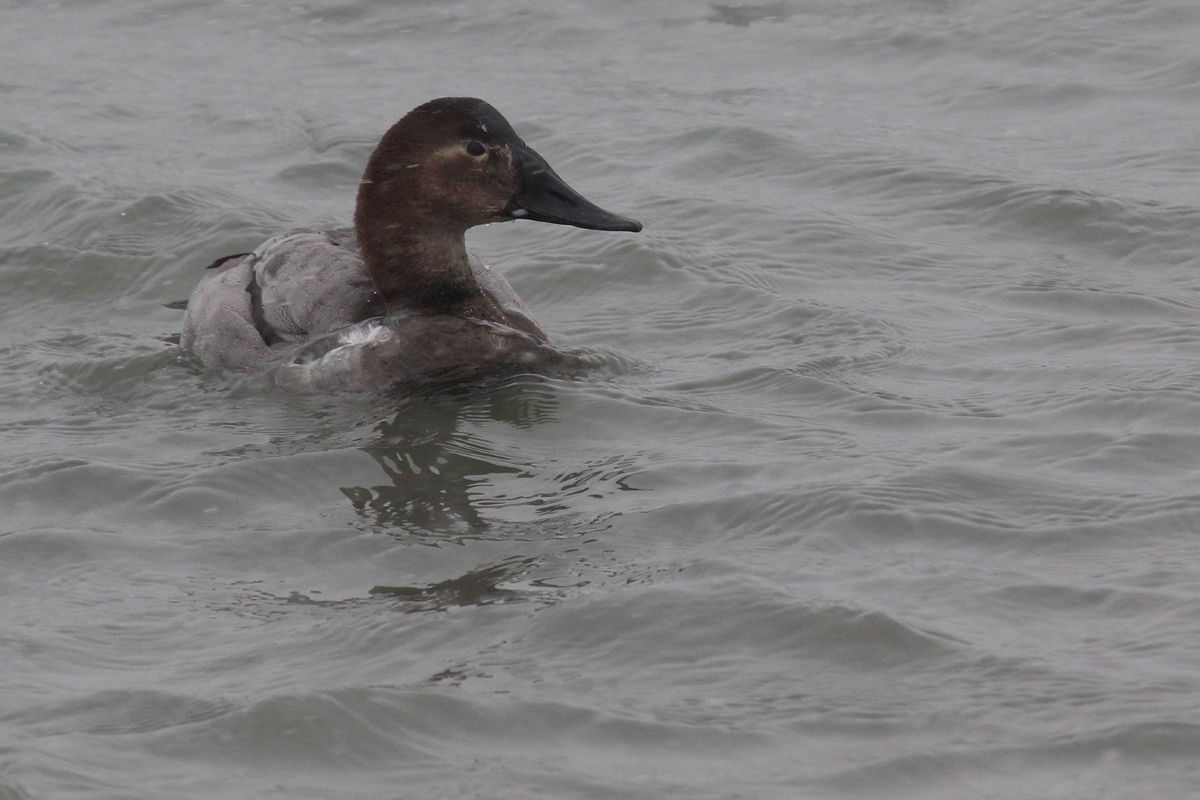
Only one first-of-season arrival was detected this period, but it was a long overdue species: Redhead! The first individual was reported 28 Dec at Dam Neck Naval Annex (ph. Karen & Tom Beatty). This species is usually detected starting in late November around here, but appears to be behind the times this season, along with Canvasback, which also had its first arrival of the season on 29 Dec during the Back Bay CBC (obs. Andrew Baldelli & Tracy Tate) in the Sigma Sector! With freezing of lakes beginning towards the end of the period, it is likely that we’ll see more waterfowl reports from the larger tracts of water that stay open during the colder winters, so these will be worth watching.

Lastly, in the not-necessarily-noteworthy, but very interesting section of the report, we had quite a few species pop up that are worth a quick mention. Single-count Blue-headed Vireos were reported at Lake Smith on 22 Dec (obs. Tracy Tate), at Pleasure House Point on 26 Dec (obs. Bob Swiader) and also along Colechester Road in the Sigma Sector during the Back Bay CBC on 29 Dec (obs. Andrew Baldelli & Tracy Tate). Also, two were reported in the Cypress Point neighborhood on Christmas Day, 25 Dec (obs. Debbie Schroeder). Typically, this species is difficult to locate away from First Landing SP in winter, but it clearly exists in more areas and likely just is skillful at going undetected. At least two White-crowned Sparrows were found during the Back Bay CBC on 29 Dec with one along Robinson Road (obs. Karen & Tom Beatty) and one in Ashville Park (obs. Andrew Baldelli & Tracy Tate). Last winter, we were all blessed with the continued occurrence of four first-year White-crowned Sparrows at Back Bay NWR that stayed through the season; this year, the species has been much harder to find, and no adults have been logged this winter within our borders. “Ipswich” Savannah Sparrows were detected at Pleasure House Point NA on 26 Dec (obs. Bob Swiader). A pair of Great Cormorants was observed at Stumpy Lake on 23 Dec during a stakeout of the Black-legged Kittiwake (obs. Arun Bose). Unfortunately the kittiwake did not cooperate that day, but an inland report of Great Cormorant was actually more unexpected after the kittiwake has persisted for almost a month now! At least two Ruby-throated Hummingbirds were still being observed into late December, with one present 25, 29 & 31 Dec in Cypress Point (ph. Debbie Schroeder) and another hummingbird (likely Ruby-throated) in Alanton on 28 Dec (obs. Michelle Payne). A single report for Razorbill came in as well, on 30 Dec offshore (obs. Curtis Hart). Finally, a small flock of Cattle Egrets has continued through December along Princess Anne Road’s west side, just north of Pleasant Ridge Road. This is likely the last remaining group in the state of Virginia, and I hope birders continue to seek them out in order to log their exact departure date. In the 2016-17 winter, the flock seemed to depart on 2 Jan (with one further report of two on 7 Feb), and returned on 1 Apr for the spring season; something worth watching this year to compare.

WEATHER:  Average daily high temperatures plummeted a whopping 7.9° from 52.6° F in mid-December to 44.7° (-10.4° from prior 10-year average), with average daily low temperatures dropping as well, 1.8° from 32.2° to 30.4° F (-8.3° from prior 10-year average). Overall, temperatures ranged from a minimum of 18° F (our coldest day of the season thus far, on 29 Dec) to a maximum of 69° (23 Dec). This was the first period since Early January to boast an average daily low temperature below freezing! Additionally, we haven’t seen temperatures this cold during late December since 2010 where the average daily low was a frigid 25.4°! Only a minor amount of precipitation (0.1”) fell during the period, scattered between 23/24 Dec (0.08”/0.02”). Maximum sustained winds at Oceana this period were 23 mph and gusts reached 34 mph on Christmas Day (25 Dec), and strong north/northwesterly persisted through the remainder of the period. The Winter Solstice, the shortest day of the year for the northern hemisphere, occurred on 21 Dec, so we are fortunate to now be seeing a slow increase in day length which will continue through the Summer Solstice in June. Sunrise/sunsets varied from 7:13 AM/4:51 PM (21 Dec) to 7:16 AM/4:57 PM (20 Dec), which means over all we GAINED 3 minutes of daylight during this period! Preliminary tide levels (referenced to MLLW) at the Sewell’s Point gauge (NOAA) in Norfolk varied from a minimum of -0.945 (2:06 AM, 27 Dec) to a maximum of 3.412 (11:42 AM, 31 Dec) as the tide was guided upward by persistent northerly winds across the Chesapeake Bay. Continuous freezing temperatures have caused most freshwater to begin freezing, and astonishingly, on 31 Dec Back Bay was entirely frozen over (as viewed from the refuge, and from Mill Landing Boat Ramp on the western shore).

SPECIES DOCUMENTED BY MEDIA and submitted to eBird for Virginia Beach during this period included: 21 DEC – Tufted Titmouse, White-breasted Nuthatch, Carolina Wren, American Robin, Pine Warbler, Yellow-rumped Warbler, YELLOW-THROATED WARBLER, Chipping Sparrow, Dark-eyed Junco & Northern Cardinal (Aragona Village / Maggee Smith); Northern Shoveler, Gadwall, American Wigeon, Pied-billed Grebe, Double-crested Cormorant, Great Blue Heron, Turkey Vulture, Downy Woodpecker, Carolina Chickadee, Carolina Wren, Brown Thrasher, Northern Cardinal & American Goldfinch (Stumpy Lake NA / Jonathan Snyder); Bald Eagle, Downy Woodpecker, Eastern Bluebird, Pine Warbler, Song Sparrow & Baltimore Oriole (Kempsville / Betty Sue Cohen); Hooded Merganser, Great Egret & Black-crowned Night-Heron (Middle Lake Holly / Karen & Tom Beatty); PAINTED BUNTING (Undisclosed Location / Karen & Tom Beatty); ROSS’S GOOSE (Sherwood Lakes / Karen & Tom Beatty); BLACK-LEGGED KITTIWAKE (Stumpy Lake Pier / Courtney Check); Snow Goose & ROSS’S GOOSE (Sherwood Lakes / Mary Catherine Miguez); Canada Goose, Mallard, Northern Pintail & Ring-necked Duck (Kings Grant Lakes / Jonathan Snyder); BLACK-LEGGED KITTIWAKE (Stumpy Lake Pier / Jason Schatti); BLACK-LEGGED KITTIWAKE (Stumpy Lake Pier / Nancy Barnhart). 22 DEC – Downy Woodpecker, Carolina Chickadee, Carolina Wren, Pine Warbler, Yellow-rumped Warbler, YELLOW-THROATED WARBLER & Northern Cardinal (Aragona Village / Maggee Smith); BLACK-LEGGED KITTIWAKE (Stumpy Lake Pier / Audrey Whitlock); Common Loon (Sherwood Lakes / Eric Alton); BLACK-LEGGED KITTIWAKE (Stumpy Lake NA / Eric Alton). 23 DEC – Red-bellied Woodpecker, Downy Woodpecker, Carolina Chickadee, Tufted Titmouse, White-breasted Nuthatch, Carolina Wren, Pine Warbler, Yellow-rumped Warbler, Yellow-throated Warbler, Northern Cardinal & House Finch (Aragona Village / Maggee Smith); Red-breasted Merganser, Red-throated Loon, Great Blue Heron, Forster’s Tern, Peregrine Falcon & Eastern Bluebird (Camp Pendleton SMR / Karen & Tom Beatty). 24 DEC – YELLOW-THROATED WARBLER (Aragona Village / Maggee Smith). 25 DEC – Red-bellied Woodpecker, Tufted Titmouse, White-breasted Nuthatch, Yellow-rumped Warbler, Northern Cardinal & American Goldfinch (Aragona Village / Maggee Smith). 26 DEC – Red-throated Loon, Rock Pigeon, Orange-crowned Warbler & Yellow-rumped Warbler (Little Island Park / Jonathan Snyder); Brown Pelican, Tree Swallow & Yellow-rumped Warbler (Back Bay NWR / Jonathan Snyder); Orange-crowned Warbler & Eastern Towhee (Back Bay NWR / Eric Alton); Common Loon, Bald Eagle & American Coot (Sherwood Lakes / Karen & Tom Beatty); White-throated Sparrow (Munden Rd. / Karen & Tom Beatty); Eastern Meadowlark (Sherwood Lakes / David Clark); BLACK-LEGGED KITTIWAKE (Stumpy Lake NA / Jonathan Snyder); YELLOW-THROATED WARBLER (Aragona Village / Maggee Smith); BLACK-LEGGED KITTIWAKE (Stumpy Lake NA / David Clark). 27 DEC – Red-bellied Woodpecker, YELLOW-THROATED WARBLER & Northern Cardinal (Aragona Village / Maggee Smith); Canada Goose, Northern Shoveler, Gadwall, Mallard, Hooded Merganser, Double-crested Cormorant, Great Blue Heron, Red-bellied Woodpecker, Pileated Woodpecker, Tufted Titmouse & Northern Cardinal (Stumpy Lake NA / Jonathan Snyder); Snow Goose, ROSS’S GOOSE, Canada Goose & Mallard (Firefall Dr. / Karen & Tom Beatty); BLACK-LEGGED KITTIWAKE (Stumpy Lake NA / Jeff Kietzmann). 28 DEC – Cooper’s Hawk, Mourning Dove, Red-bellied Woodpecker, Yellow-bellied Sapsucker, Carolina Chickadee, Tufted Titmouse, Brown-headed Nuthatch, Carolina Wren, Eastern Bluebird, Brown Thrasher, Yellow-rumped Warbler, Chipping Sparrow, Dark-eyed Junco, White-throated Sparrow, Northern Cardinal & House Finch (Glenmore Hunt Tr. / Karen & Tom Beatty); Yellow-bellied Sapsucker (Quail Pointe Cove / Cindy Hamilton); Downy Woodpecker, Carolina Chickadee & Yellow-throated Warbler (Aragona Village / Maggee Smith); Redhead (Dam Neck NA / Karen & Tom Beatty); Northern Shoveler, Gadwall, Ring-necked Duck, Hooded Merganser, Great Blue Heron, Ring-billed Gull & Northern Mockingbird (Stumpy Lake NA / Jonathan Snyder). 29 DEC – Red-shouldered Hawk, Red-tailed Hawk, American Kestrel, American Robin, Gray Catbird, Brown Thrasher, Northern Mockingbird, American Pipit, Common Yellowthroat, Palm Warbler (Yellow), Yellow-rumped Warbler, Fox Sparrow & Song Sparrow (Various / Rob Bielawski); Carolina Chickadee, YELLOW-THROATED WARBLER, Northern Cardinal & American Goldfinch (Aragona Village / Maggee Smith); PAINTED BUNTING (Muddy Creek Rd. / Karen & Tom Beatty); PAINTED BUNTING (Muddy Creek Rd. / Rob Bielawski); Carolina Chickadee (Horn Point Rd. / Karen & Tom Beatty); Bald Eagle, Yellow-rumped Warbler & American Goldfinch (Charity Neck Rd. / Karen & Tom Beatty); Northern Harrier (Princess Anne Rd. / Karen & Tom Beatty); Merlin (Malbon Rd. / Karen & Tom Beatty); Double-crested Cormorant, Great Blue Heron & BLACK-LEGGED KITTIWAKE (Stumpy Lake NA / Jonathan Snyder). 30 DEC – YELLOW-THROATED WARBLER (Aragona Village / Maggee Smith); ICELAND GULL (KUMLIEN’S) (61st Street Beach / Lisa Rose); Common Eider (First Landing SP / Dixie Sommers); Common Goldeneye (Buccaneer Rd. / Rob Bielawski). 31 DEC – SPOTTED SANDPIPER (First Landing SP / Andrew Baldelli); BLUE-WINGED TEAL, Hooded Merganser, Golden-crowned Kinglet & Ruby-crowned Kinglet (Princess Anne WMA Whitehurst Tract / Rob Bielawski); Ruby-throated Hummingbird (North Point Ct. / Debbie Schroeder); SPOTTED SANDPIPER (First Landing SP / Adam D’Onofrio); Eastern Bluebird, Pine Warbler & American Goldfinch (Private Residence / Kathy Spencer); Gadwall, American Black Duck, Hooded Merganser, Red-breasted Merganser, Killdeer & Song Sparrow (Pleasure House Point NA / James Shelton); BLACK-LEGGED KITTIWAKE (Stumpy Lake Natural Area / Pamela Monahan); Sanderling (First Landing SP / James Shelton).

LOOKAHEAD: The year 2017 has now come to a close, and an incredible number of interesting bird reports have been brought forth across Virginia Beach over the last 365 days! As we head into 2018 and the mid-winter month of January, remember that many of the birds observed in late December are important to track to check for wintering status. Goose flocks around Sherwood Lakes, Firefall Drive and Princess Anne Lane need to be checked regularly, as do all the blackbird flocks that are happened upon. This winter season is shaping up to be an incredible time period for waterfowl reports in the area, given the already-low temperatures and icing up of freshwater bodies to our north. The Great Lakes are freezing rapidly, which is likely to send large numbers of ducks, geese and other waterbirds towards the East Coast. All open bodies of water will become goldmines for these birds, and rarities are likely to be found in tightly packed flocks moving forward. As always, make sure to report your finds to eBird so the data can be used to adjust the expected arrival dates and to view the full listing of each species’ “average expected arrival dates!

Next Entry | Entry Index | Previous Entry | Same Period Last Year

For further information regarding this thrice-monthly, online publication, please visit the Journal Overview Page which provides an in-depth explanation of the format, layout and composition of the journal. As always, thank you for reading, and please leave me a comment below (you may use your Facebook, Gmail or other accounts to easily do so), or just click the Heart icon to the lower right of this post to let me know you stopped in!