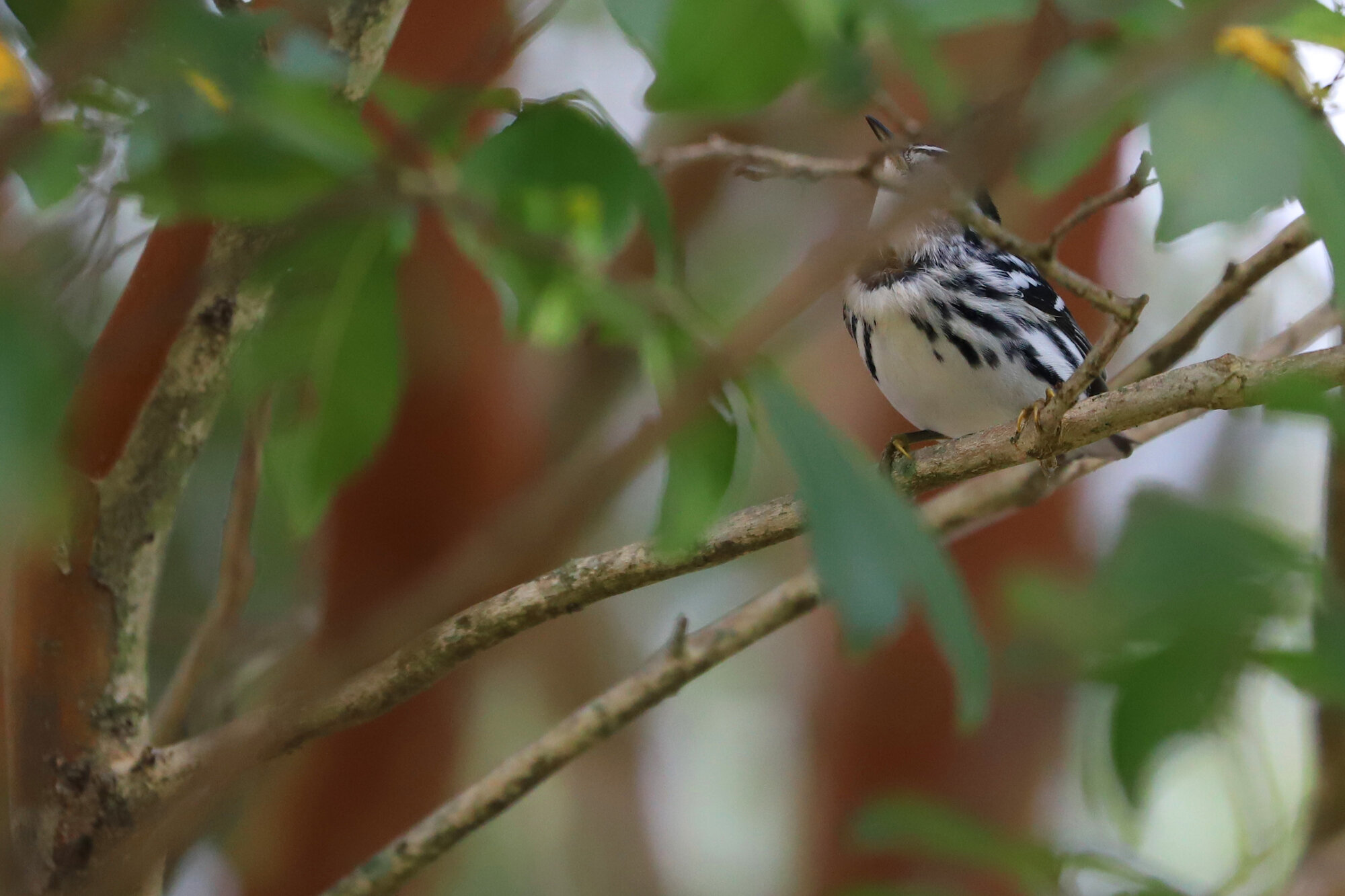
October 2019

Providing the most exciting month of birding in recent memory, October 2019 truly raised the bar for all future fall migration seasons in Virginia Beach! The weather was wild, with drought conditions carrying over from mid-September through about mid-October. The offshore passage of Post Tropical Cyclone Melissa finally brought the region some much needed rain, and its strong wind field buffeted our coastline with northeasterly winds and sizeable waves for several days. Later, Post Tropical Cyclone Nestor made landfall in northwest Florida, proceeded to move straight across the southeastern states, and later passed right over the region before blitzing its way across the North Atlantic. To say the birding was also wild, would be a marked understatement. Over the course of its thirty-one days, a total of 199 species were logged to eBird during October, which was a significant increase from the 183 species logged last month (September) but was a very slight drop-off from the 201 species logged during October last year. Virginia Beach has now logged records for 299 species to eBird during 2019 (a massive +17 compared with last year’s 282 species through the same timeframe, and already a hefty improvement on 2018’s total of 290 species). Additionally, on 22 Oct we collectively surpassed the number of complete eBird checklists submitted in 2018 (8,489) within Virginia Beach, and we went on to finish the month at 8,711 so far for 2019! This is now a new calendar-year high mark for the city, and we’re still on pace to top the 10,000 mark for the very first time, which would put us with Fairfax County as the only two municipalities to have accomplished this feat. With just 61 days left in the year, it’ll certainly take a community-wide effort to achieve this five-digit mark!
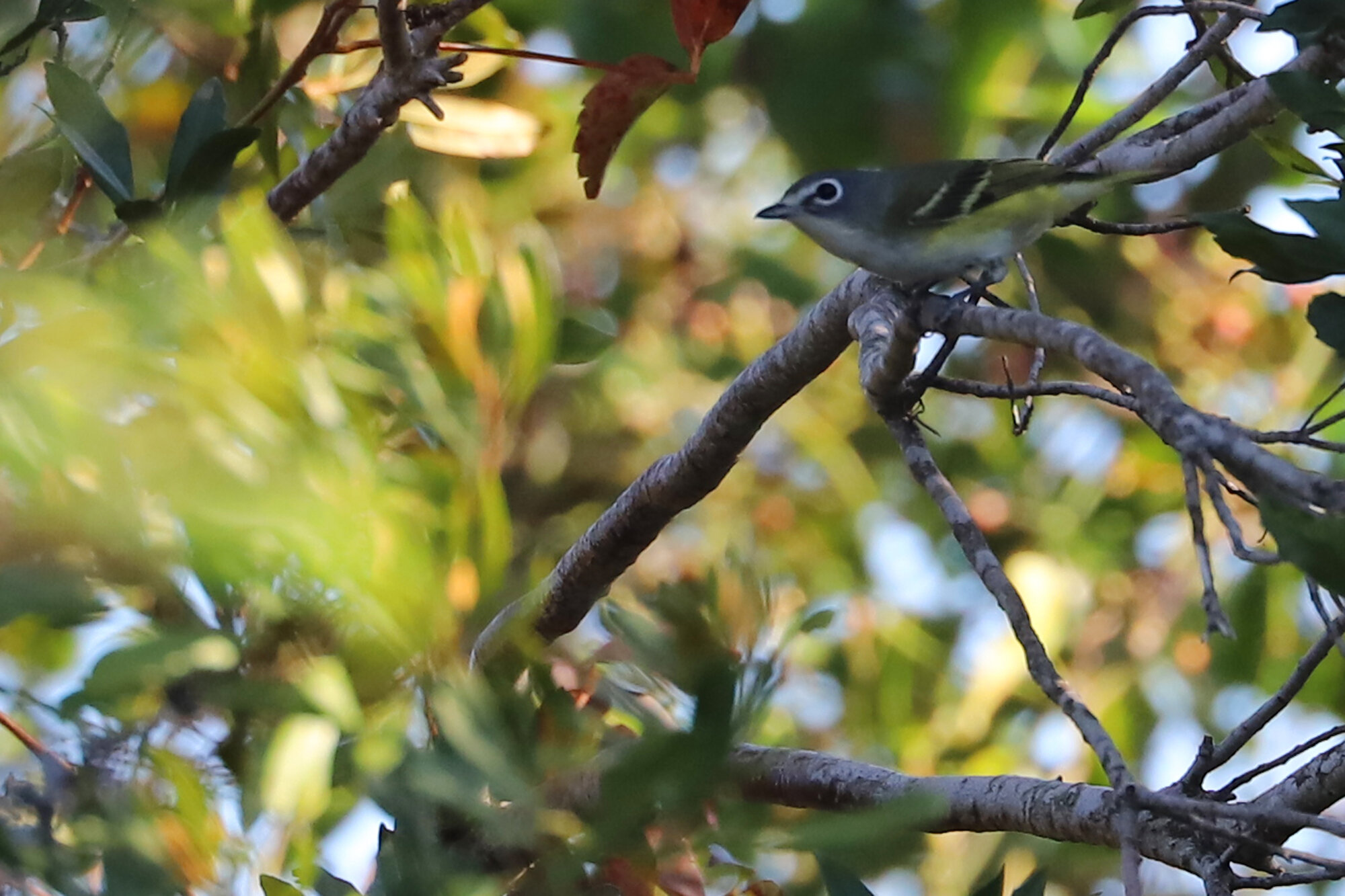
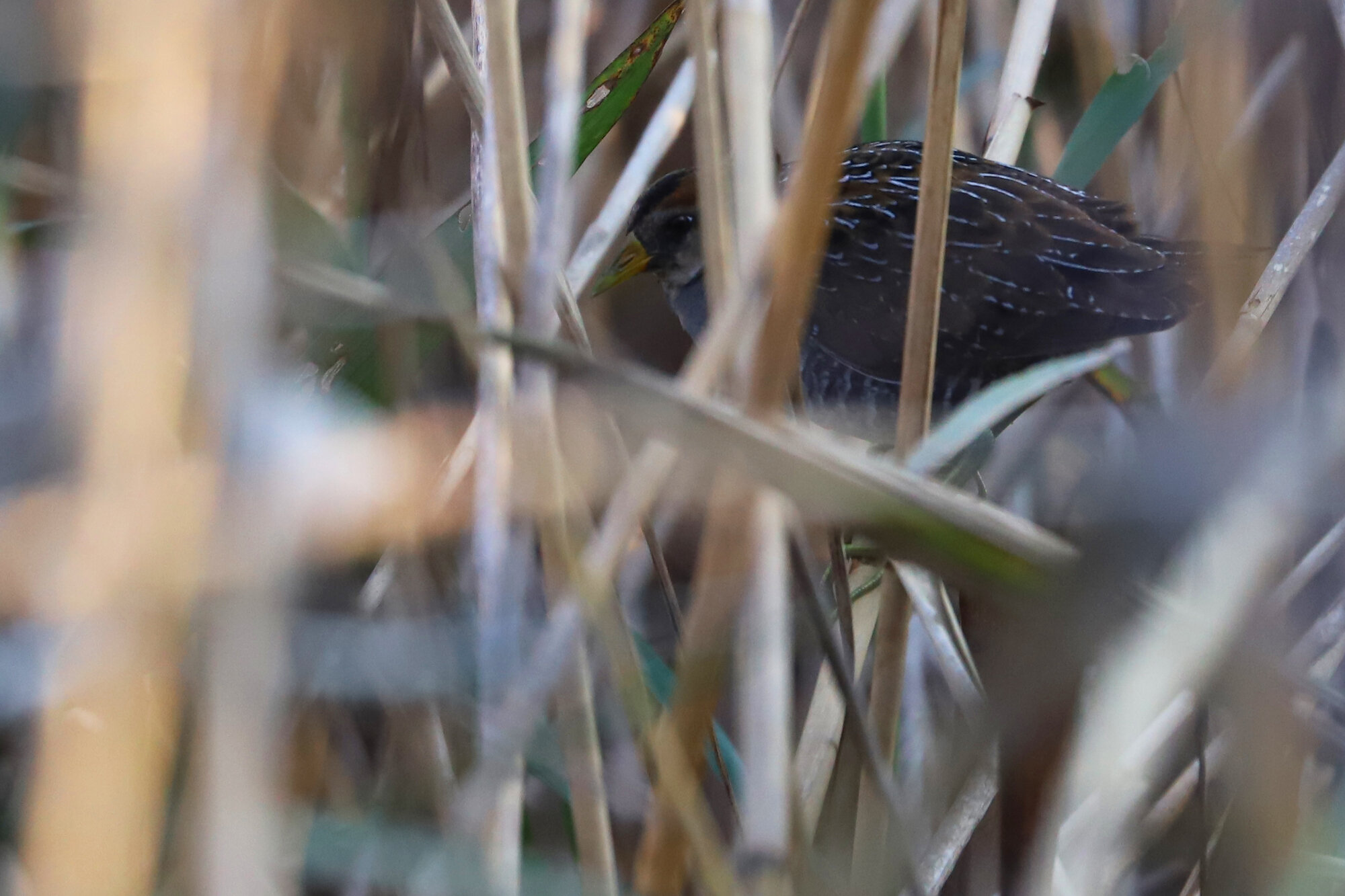
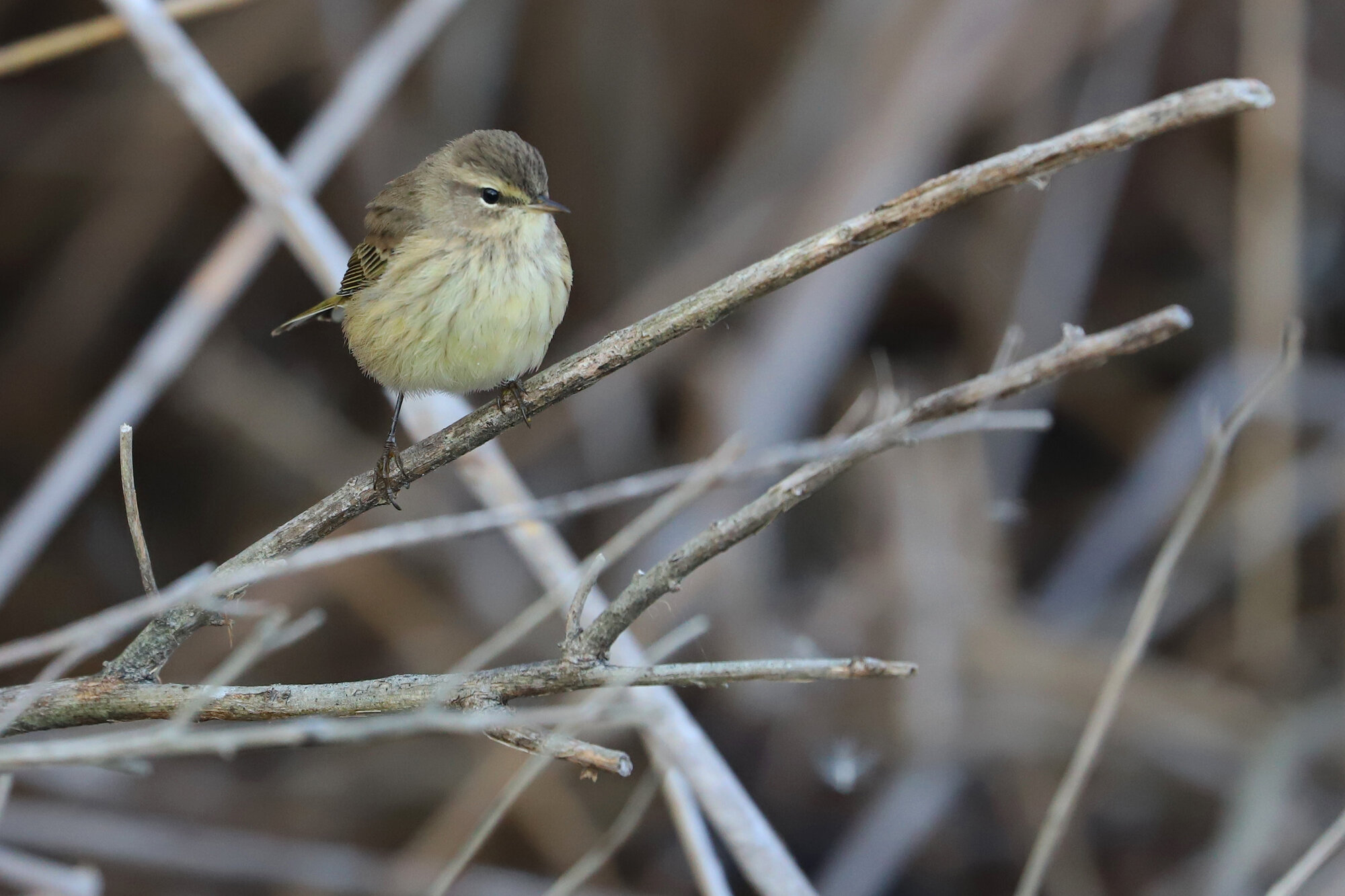
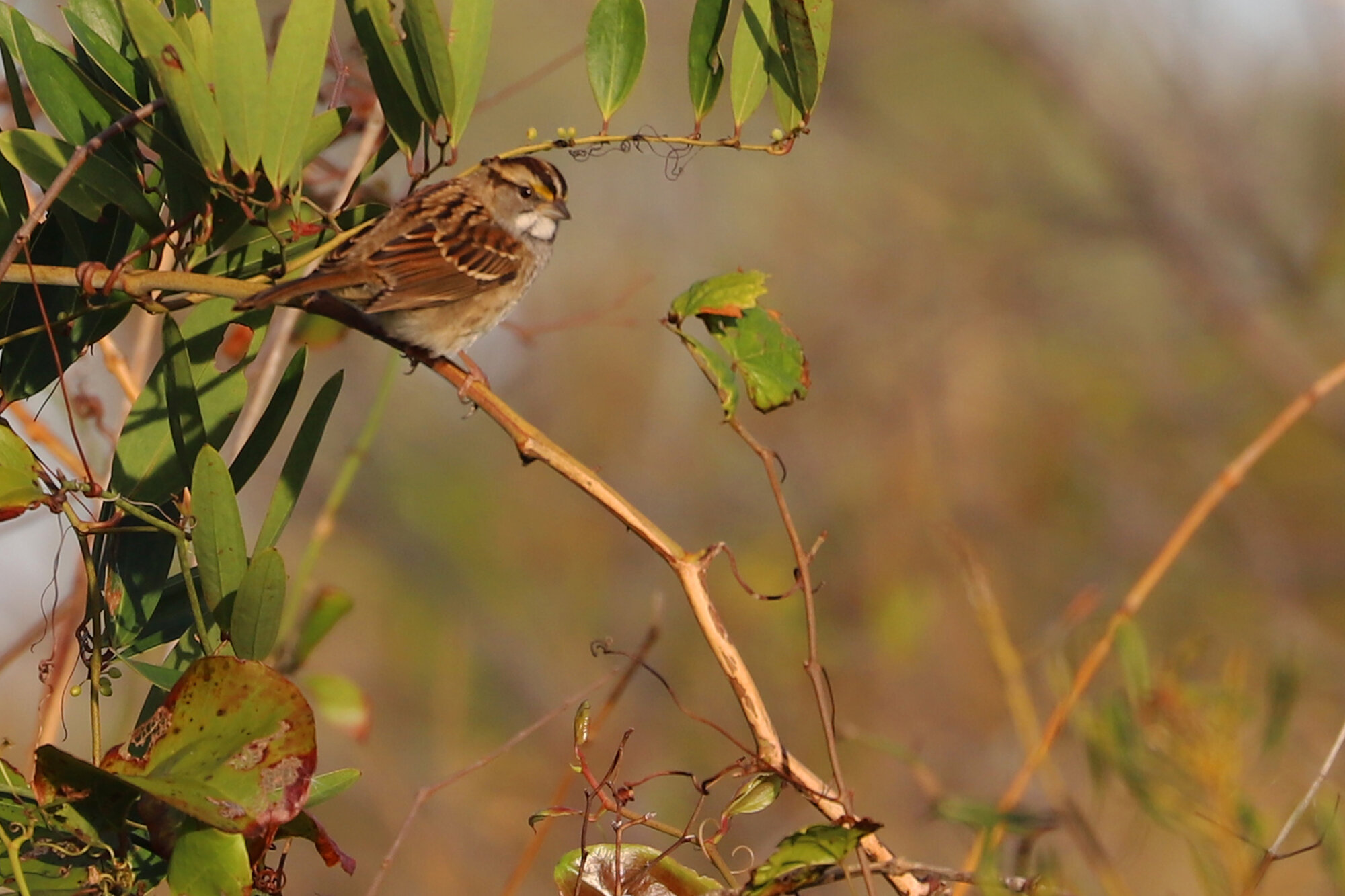
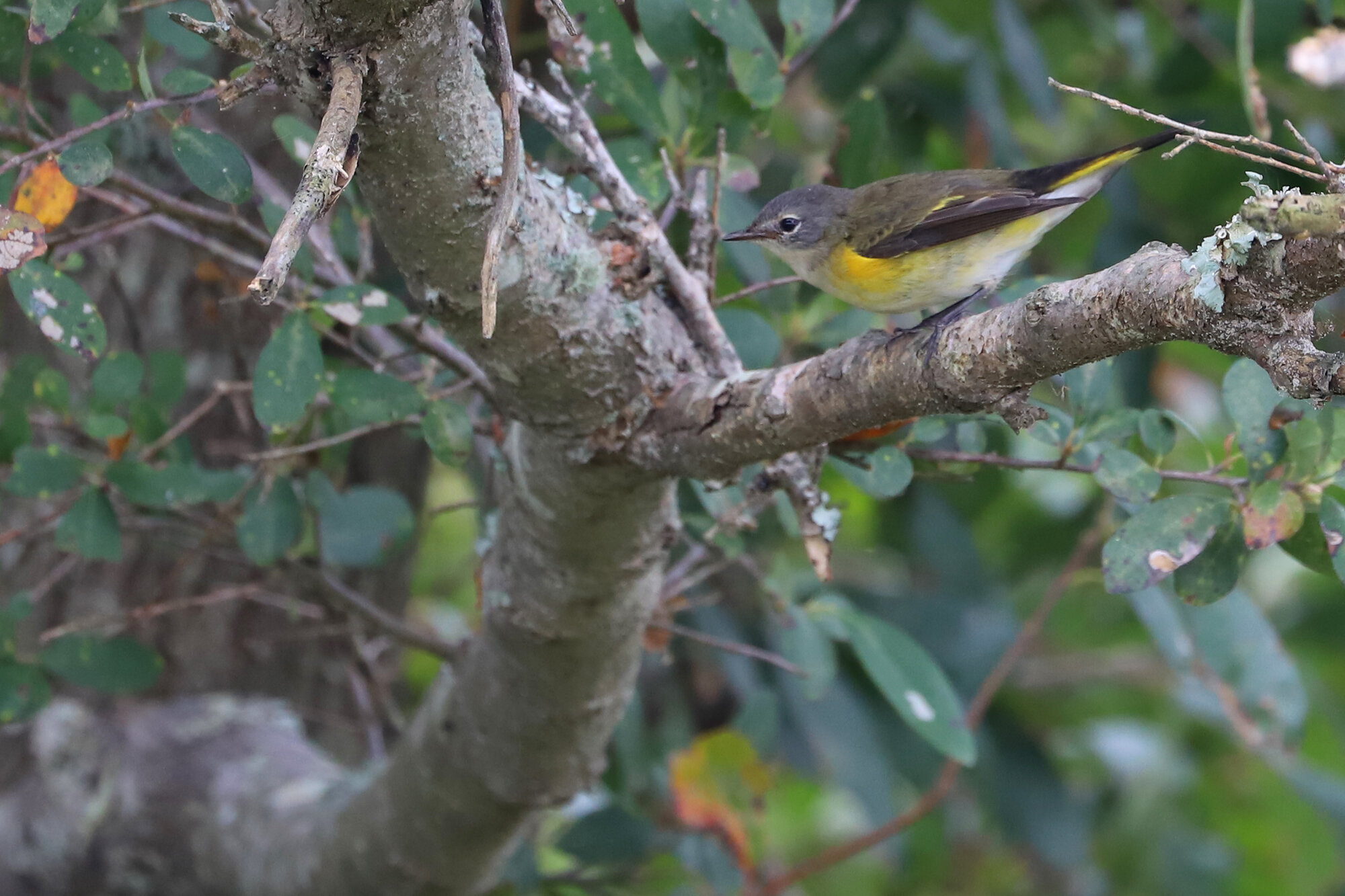
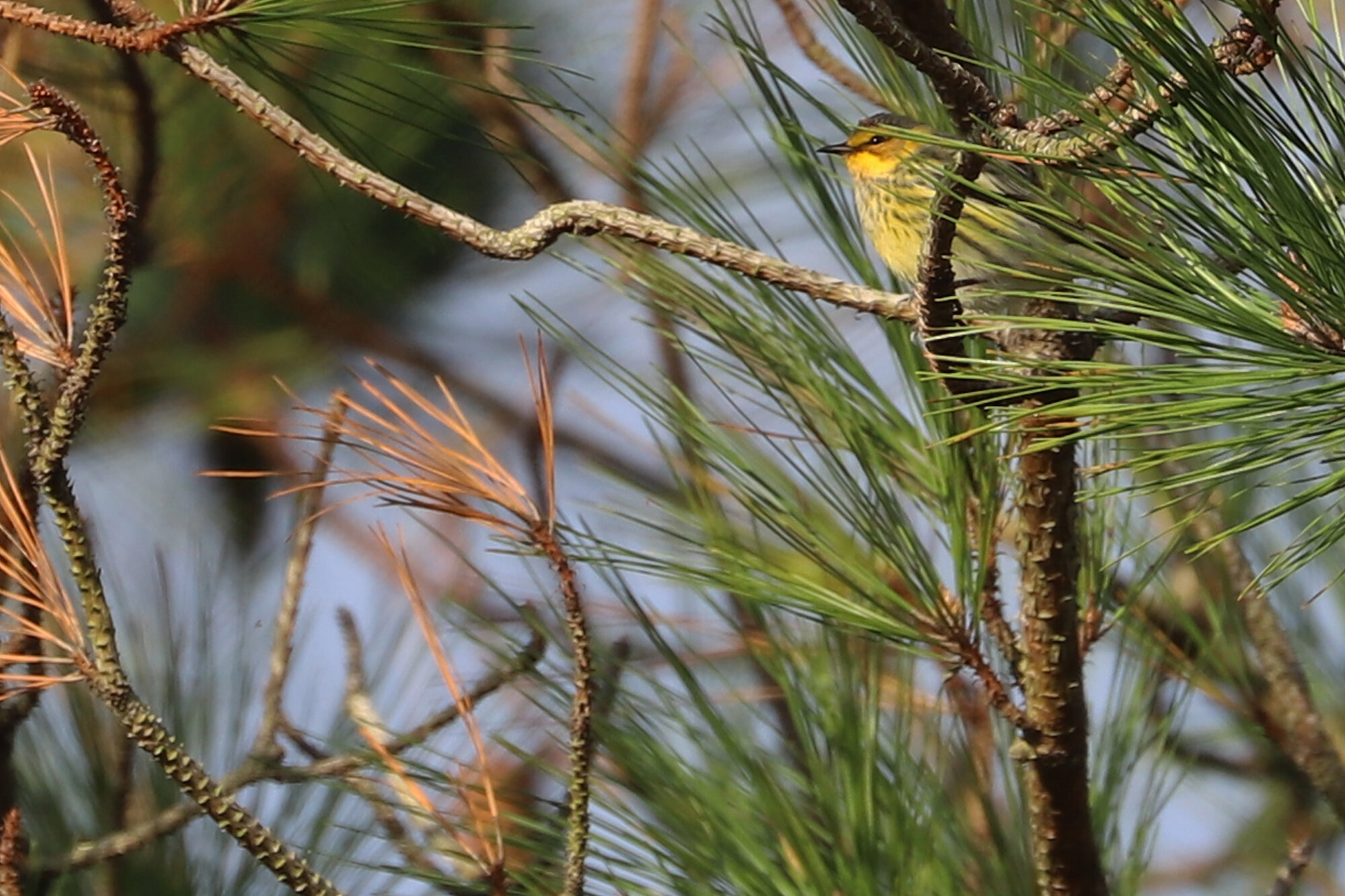
With the increase in species diversity came a corresponding rise in species highlights this month! Standout rarities for October included: Kirtland’s Warbler, Hudsonian Godwit, Connecticut Warbler, Purple Gallinule, Buff-breasted Sandpiper, Yellow-throated Vireo, Bay-breasted Warbler, Saltmarsh Sparrow, Black-billed Cuckoo, Harlequin Duck, American Avocet, Painted Bunting, Philadelphia Vireo, Chestnut-sided Warbler, Long-billed Dowitcher, White-crowned Sparrow, Sedge Wren, Yellow-throated Warbler, Parasitic Jaeger & Anhinga. Additionally, October provided the city with first-of-season records for expected fall arrivals which, in order of arrival date, included: Dunlin, Ruby-crowned Kinglet, Ruddy Duck, Hermit Thrush, Yellow-bellied Sapsucker, Common Loon, Dark-eyed Junco, White-rumped Sandpiper, Gadwall, Black Scoter, Orange-crowned Warbler, Swamp Sparrow, Nelson’s Sparrow, White-throated Sparrow, Blue-headed Vireo, Snow Goose, American Wigeon, Golden-crowned Kinglet, Northern Gannet, Bonaparte’s Gull, Ring-necked Duck, American Coot, Surf Scoter, Red-breasted Nuthatch, Winter Wren, Hooded Merganser, Red-throated Loon, Brown Creeper & Bufflehead! Lastly, we also had some other exciting records this month for Nashville Warbler, Semipalmated Sandpiper, Seaside Sparrow, Stilt Sandpiper, Scarlet Tanager, Cape May Warbler, Piping Plover, Red Knot, Northern Bobwhite, Black-crowned Night-Heron, Lesser Yellowlegs, Glossy Ibis, Blackpoll Warbler, Rose-breasted Grosbeak, American Redstart & Magnolia Warbler!

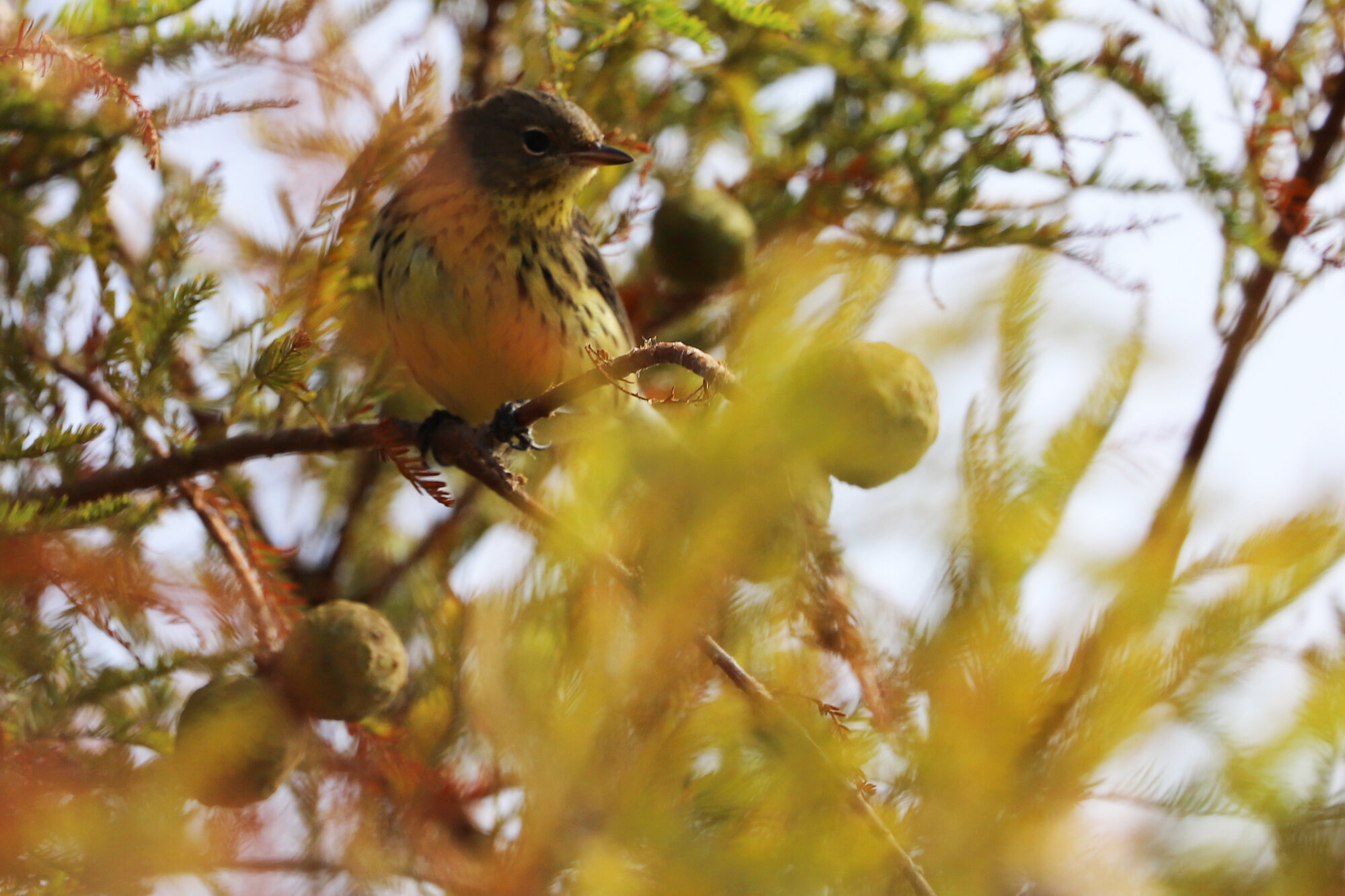
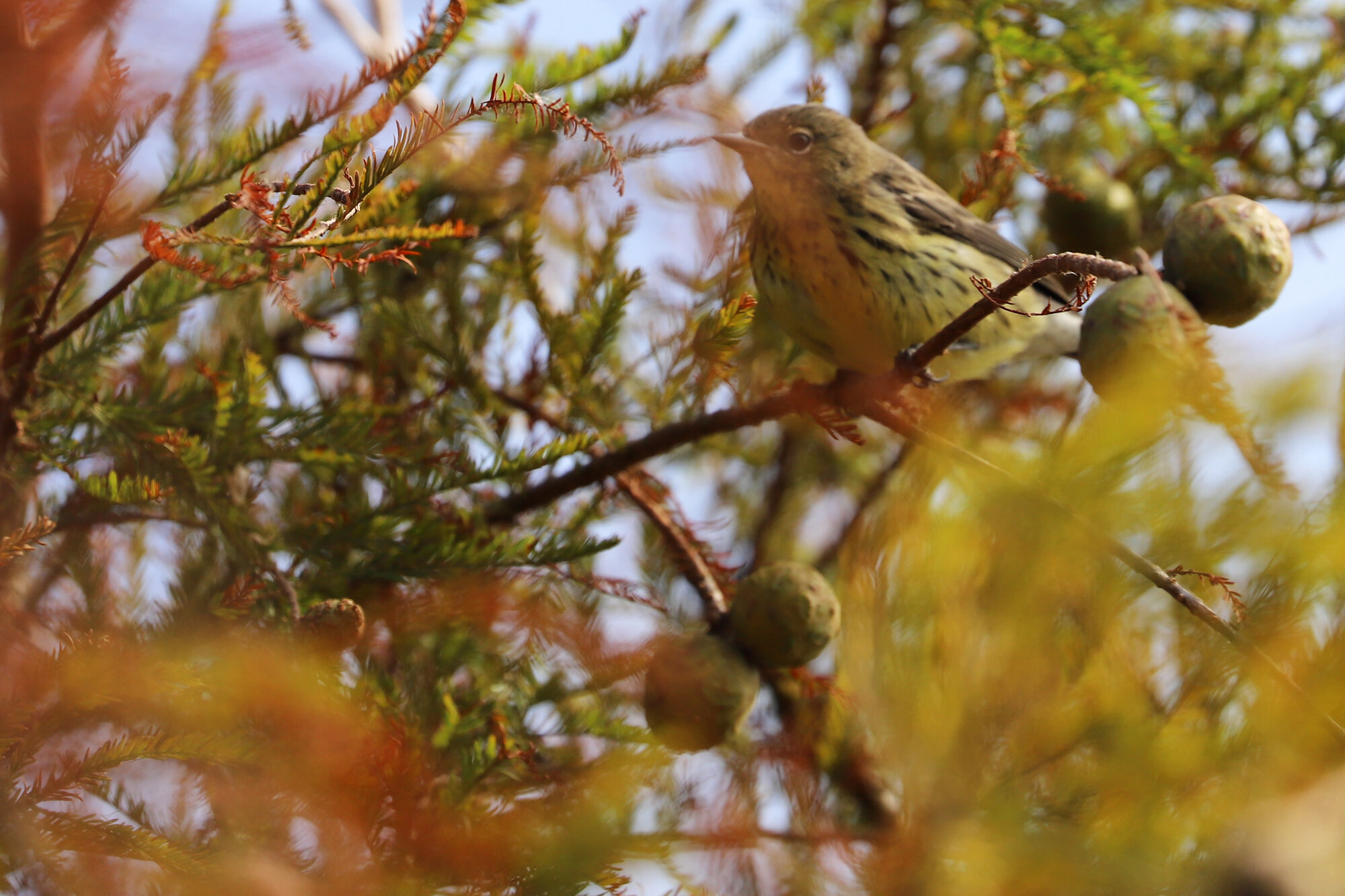
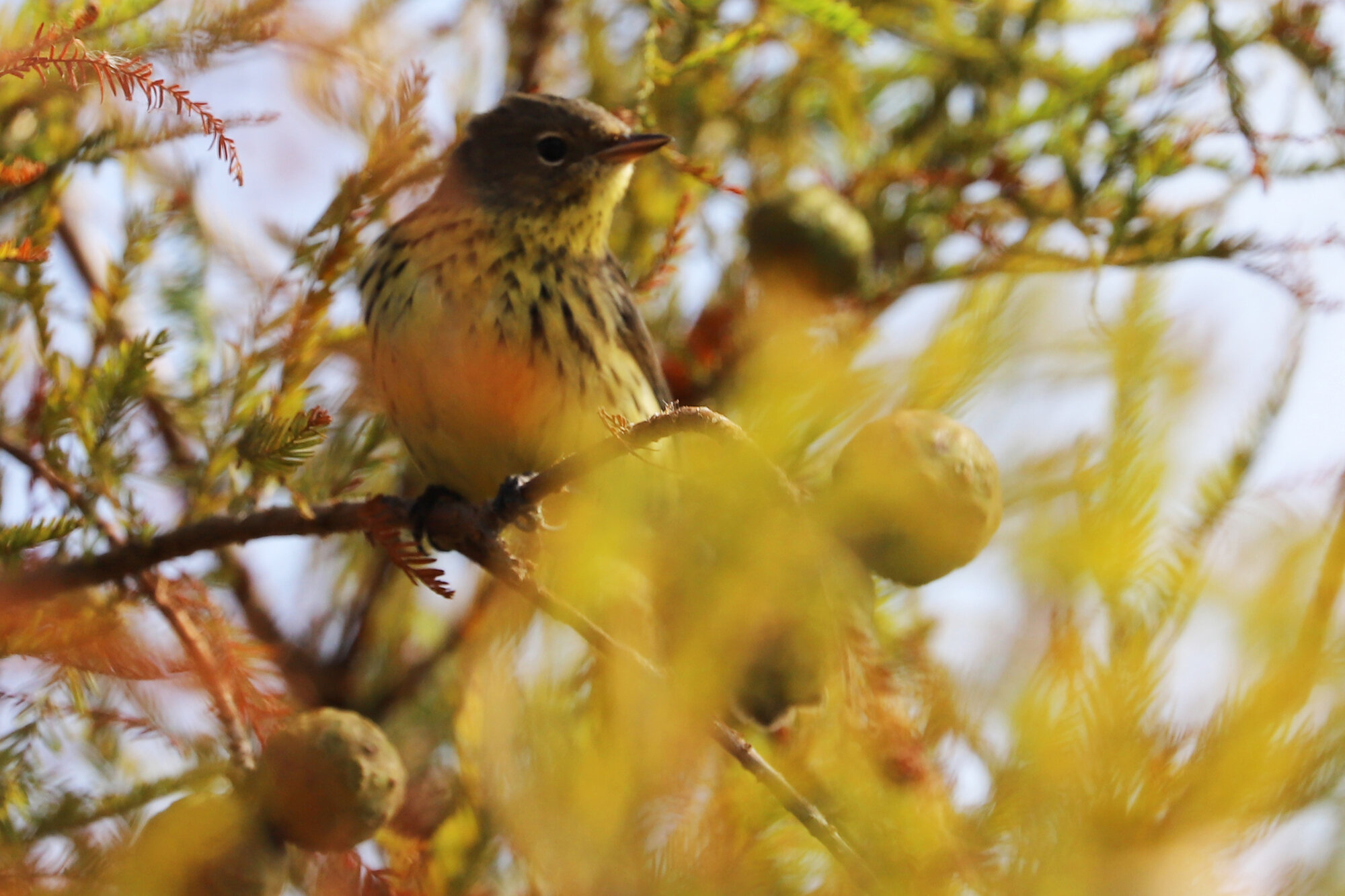
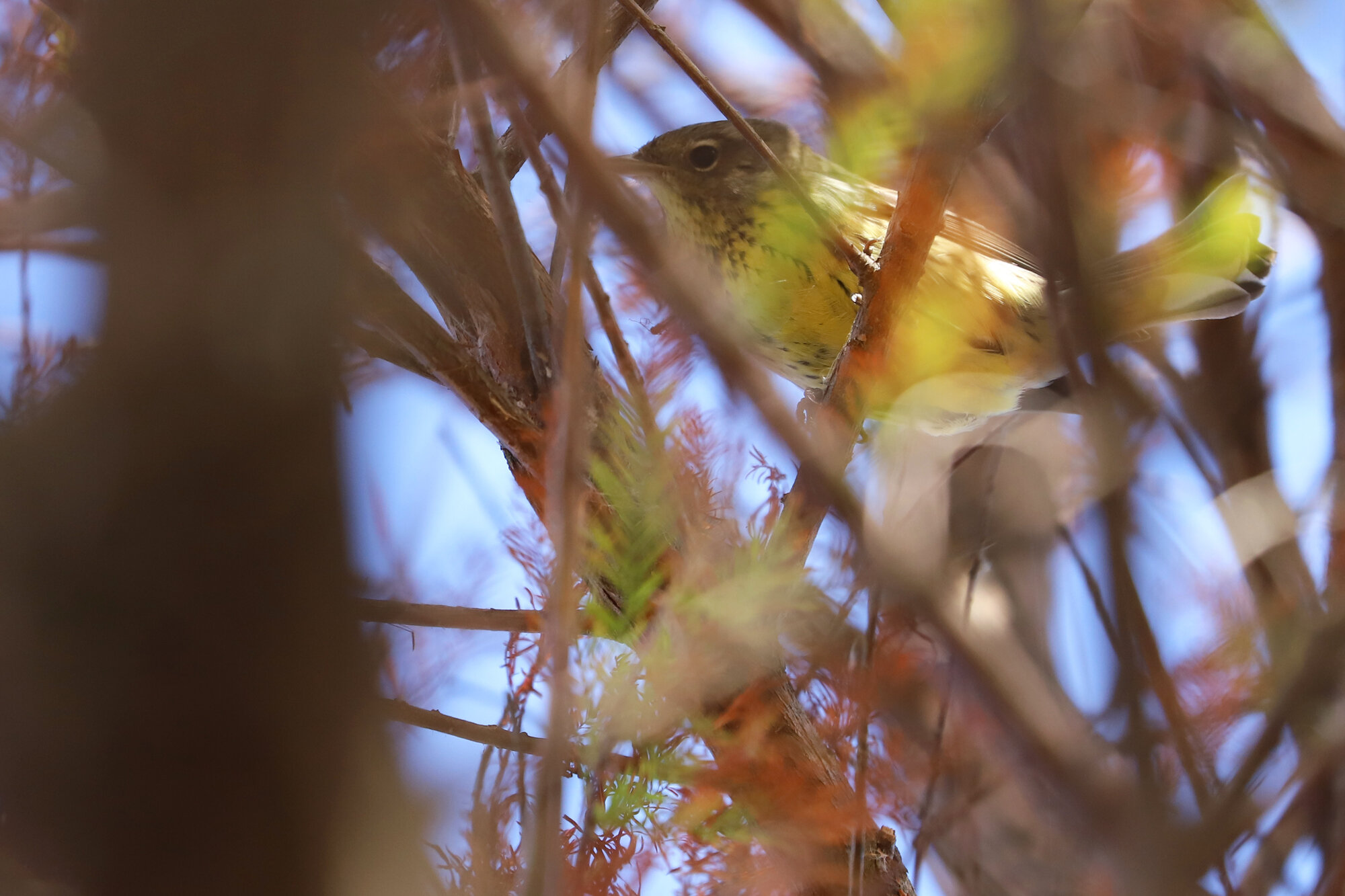
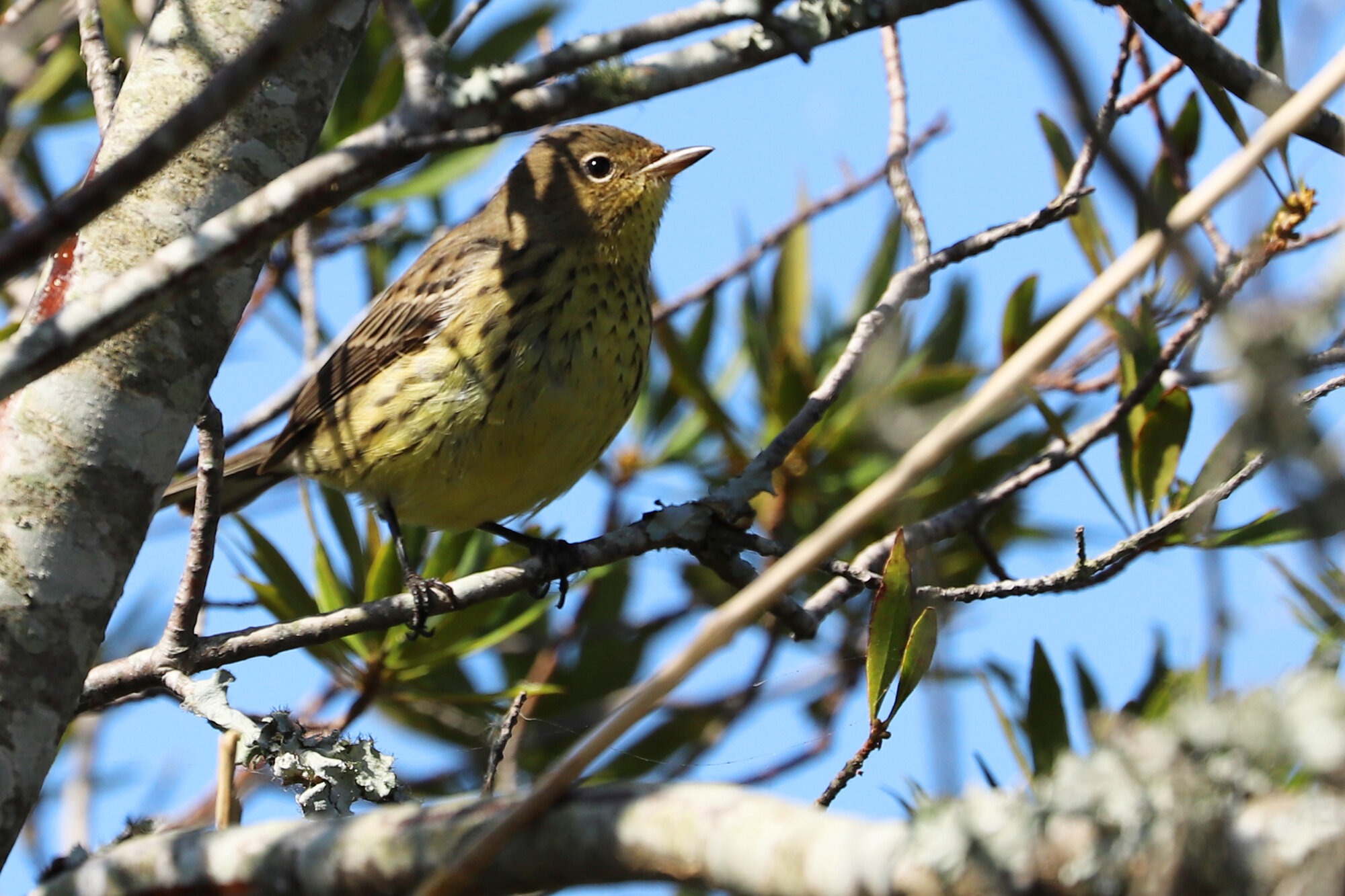
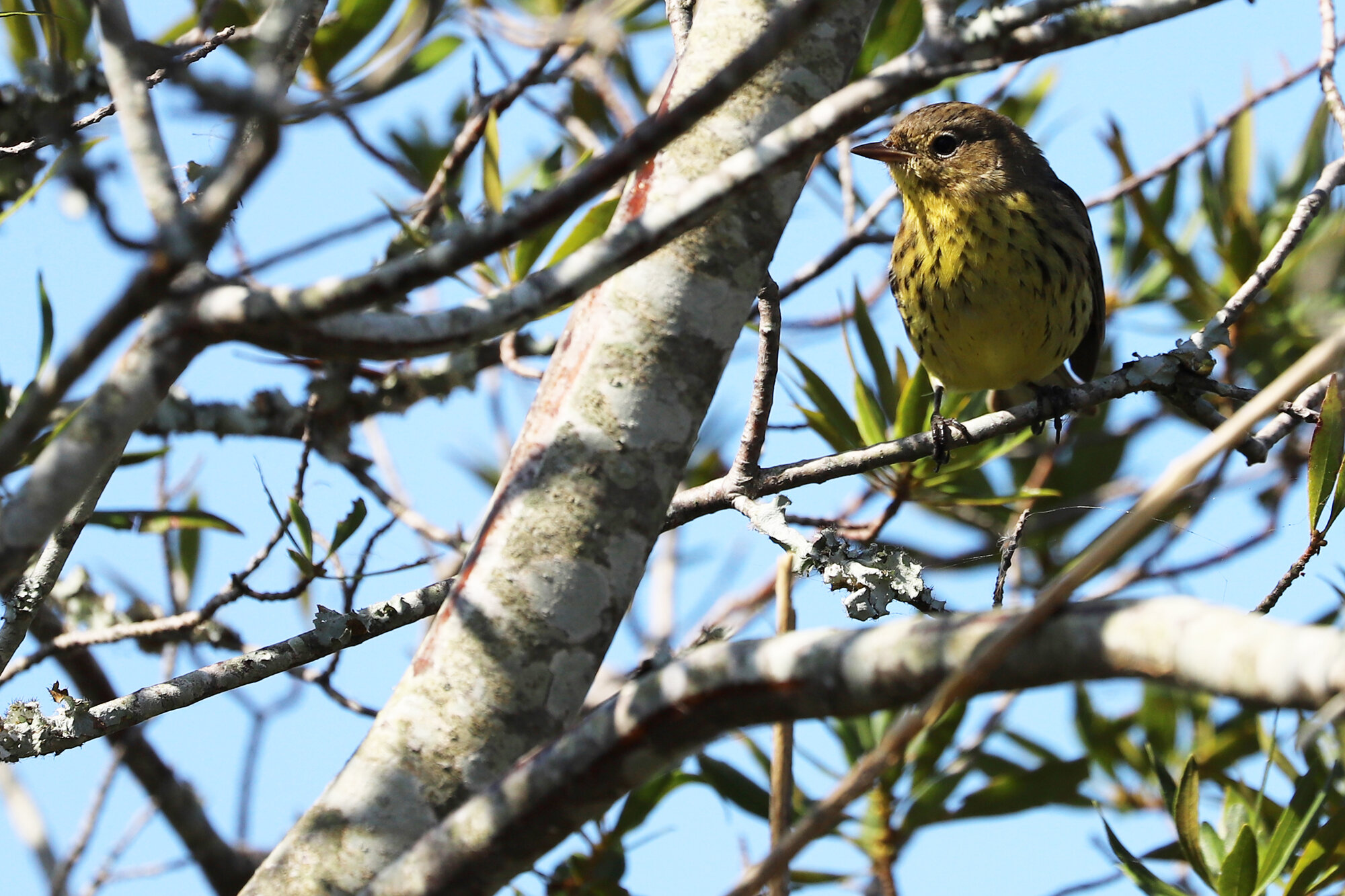
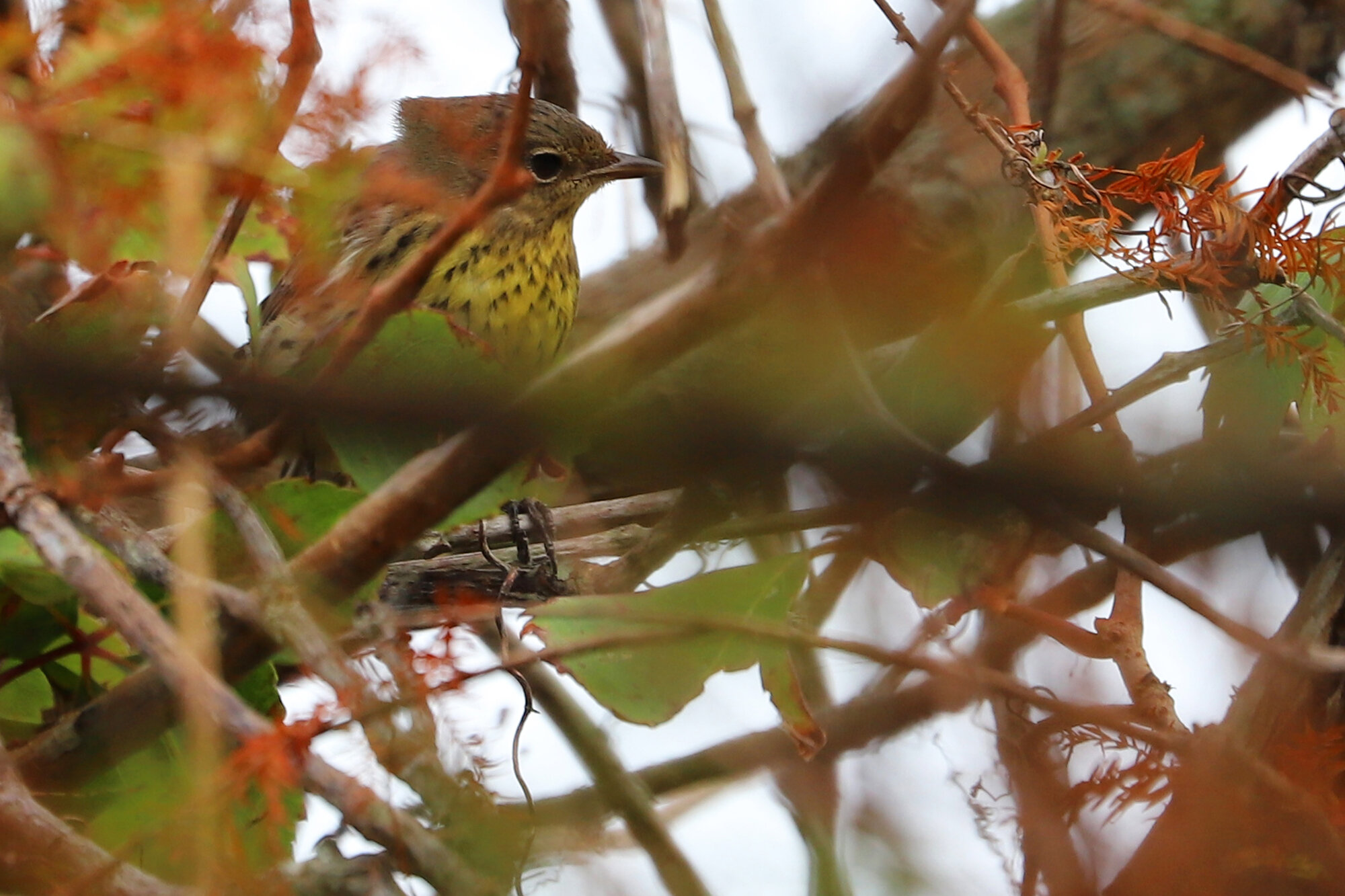
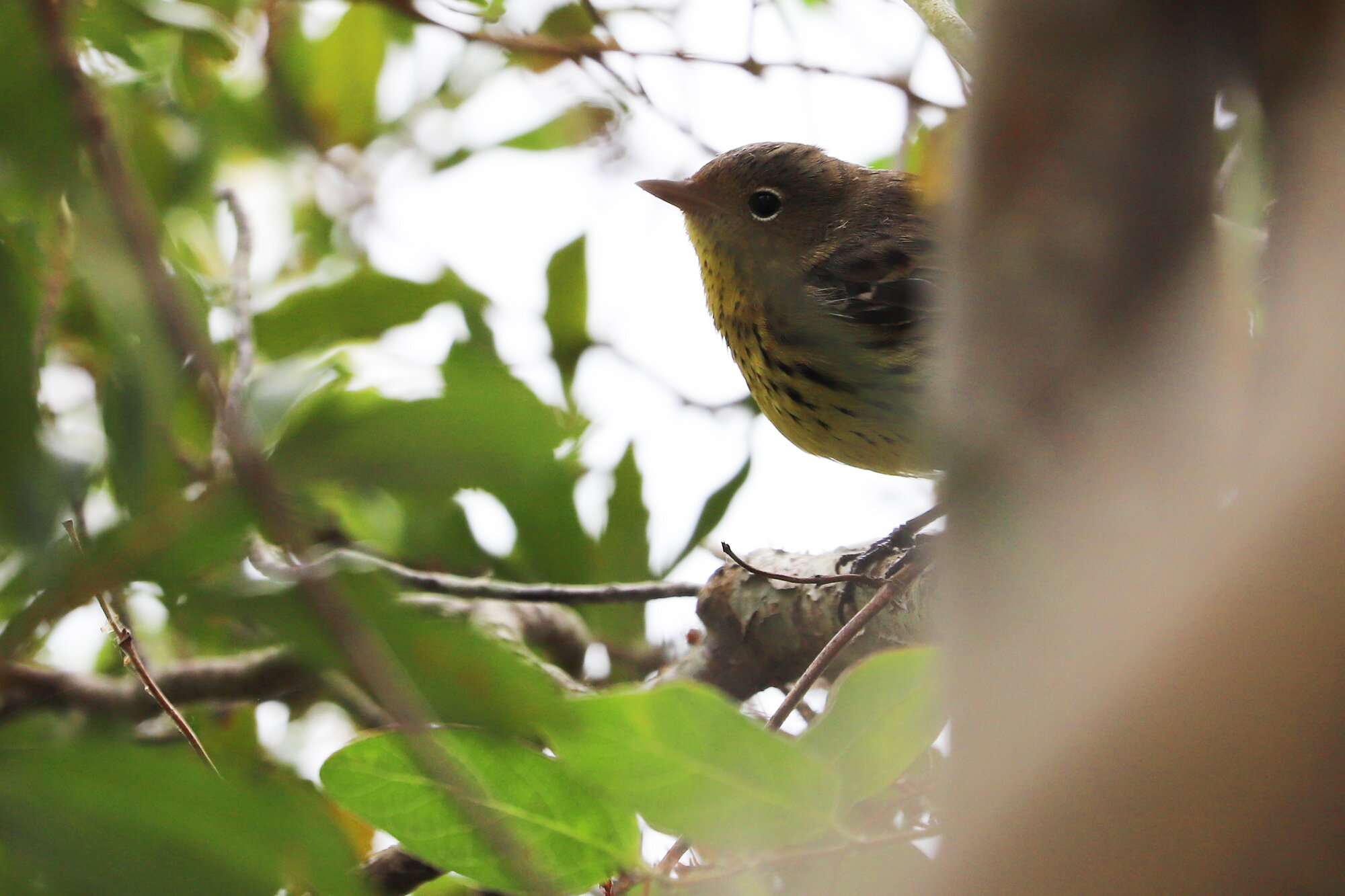
Topping an absolutely mind-boggling, star-studded list of rarities this month, the clear highlight of October was the young KIRTLAND’S WARBLER found at Back Bay NWR on 4 Oct (ph. Amy & Steve Myers)! There truly are no words to adequately describe the excitement that shot across the birding community when word of this miraculous find first went out across varying social media & messaging platforms. Marking the very first time this species has ever been photographically documented in the state of Virginia, it was astonishing that this was able to occur within Virginia Beach. While there are several sight reports for the species, and even an audio recording of an adult male singing (per The Gold Book) during spring migration out in the southwestern portion of the state, a coastal record surely caught everyone off guard. For those unfamiliar with Kirtland’s Warbler, seeing as this isn’t a species that gets brought up around here (ever), they breed primarily in jack pine forests of central Michigan with some breeding in adjacent states due to intensive conservation efforts over the last couple of decades. The species winters exclusively on the islands of the Bahamas, and therefore it’s spring and fall migration route likely has it passing through Virginia’s airspace. However, to have one on the ground as opposed to just passing over in the dark of night at high altitude, and then to also have an observer present to witness the bird’s existence is nothing short of a statistical anomaly. An anomaly that many of us had the fine pleasure of being a part of thanks to Amy & Steve. Since this is such an unusual find, it’s worth mentioning that all of the photographs (50+) taken by observers on 4 Oct of the bird can be viewed Here over at eBird! A timely sighting, within a week of the observation, Kirtland’s Warbler was officially de-listed from the federal Endangered Species List, after its numbers have risen considerably since first being listed. More information on the population statistics, conservations efforts, and the formal de-listing process can be found here on the U.S. Fish & Wildlife Service website dedicated to Kirtland’s Warbler.
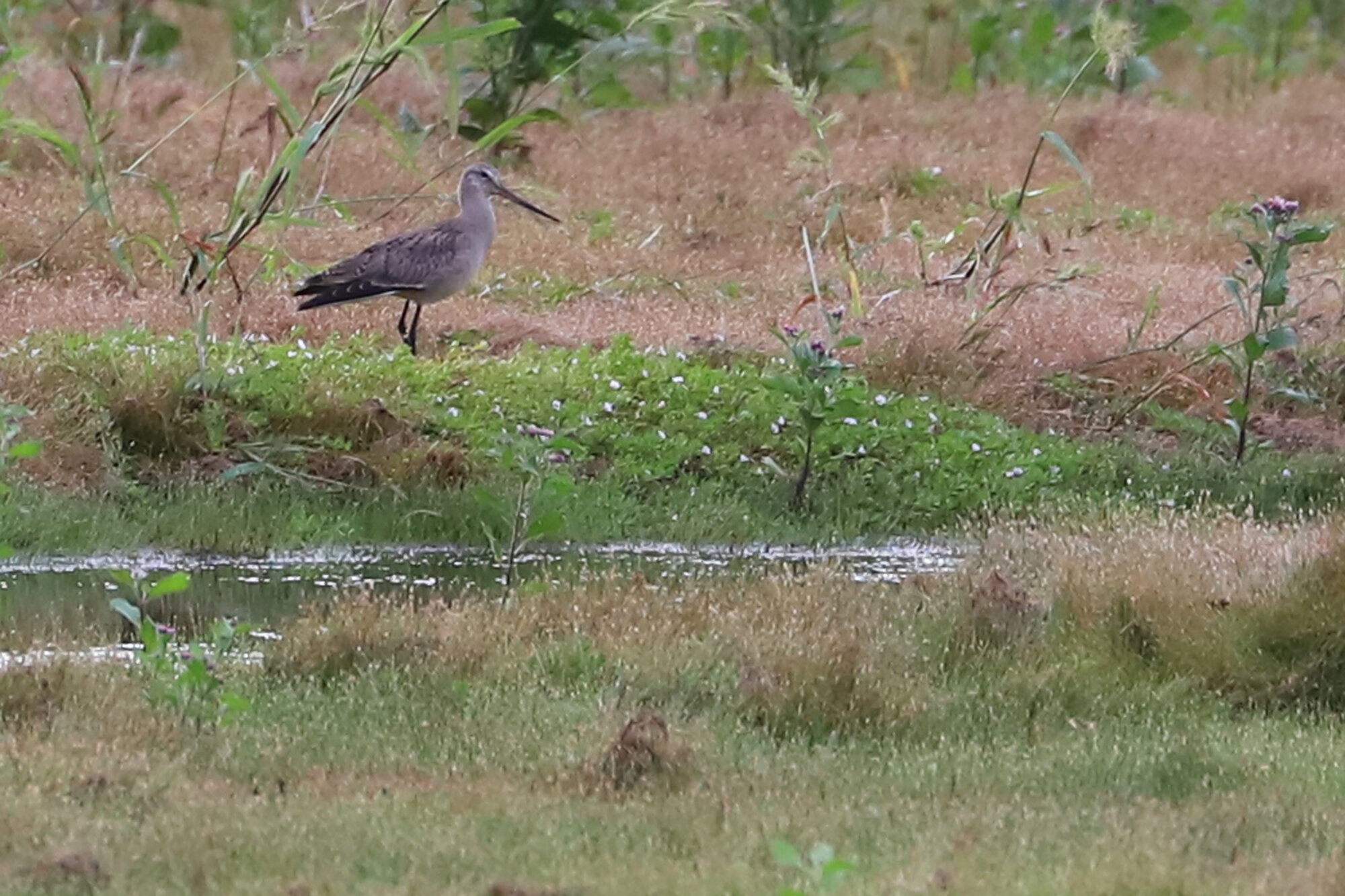
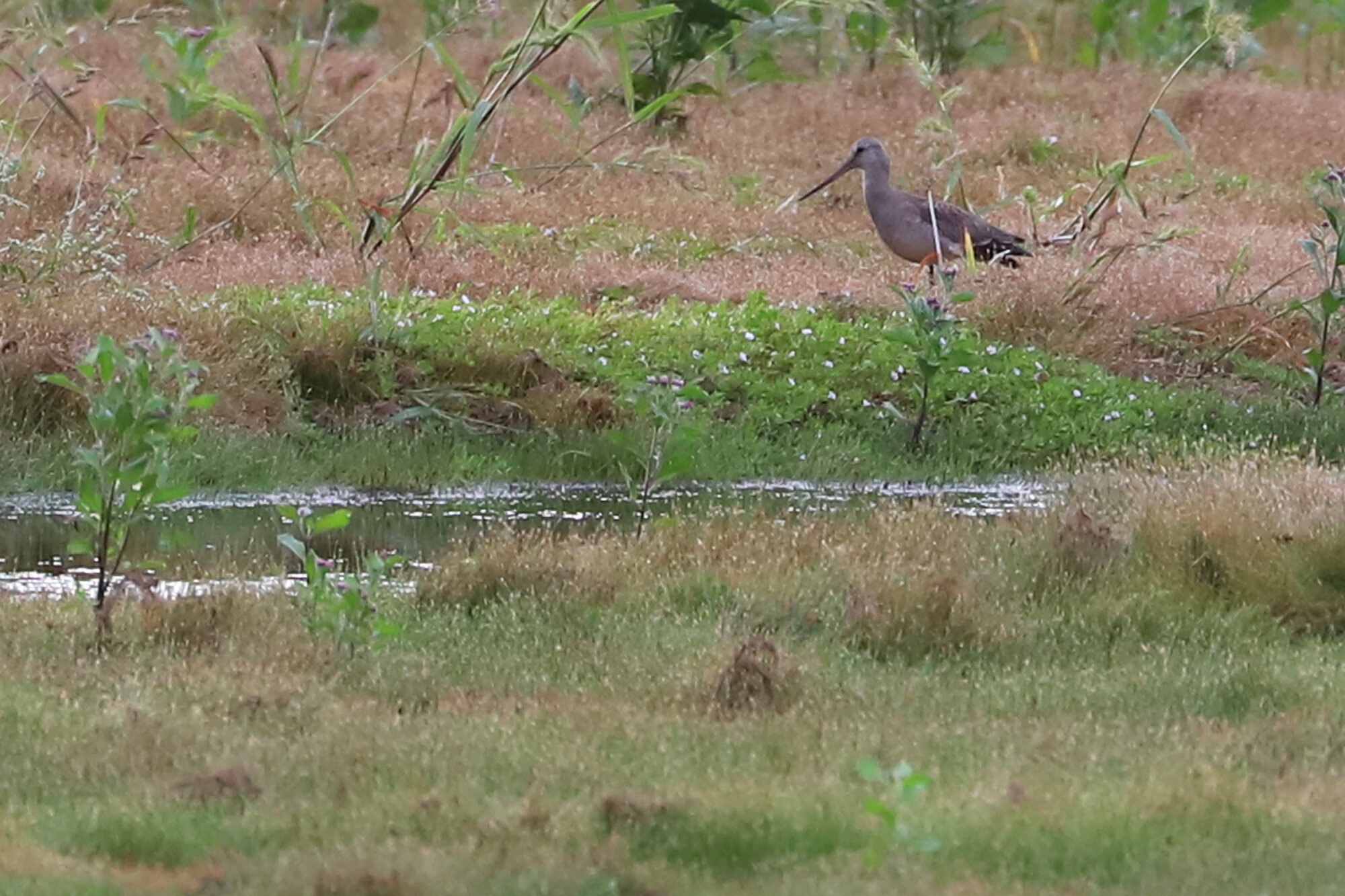
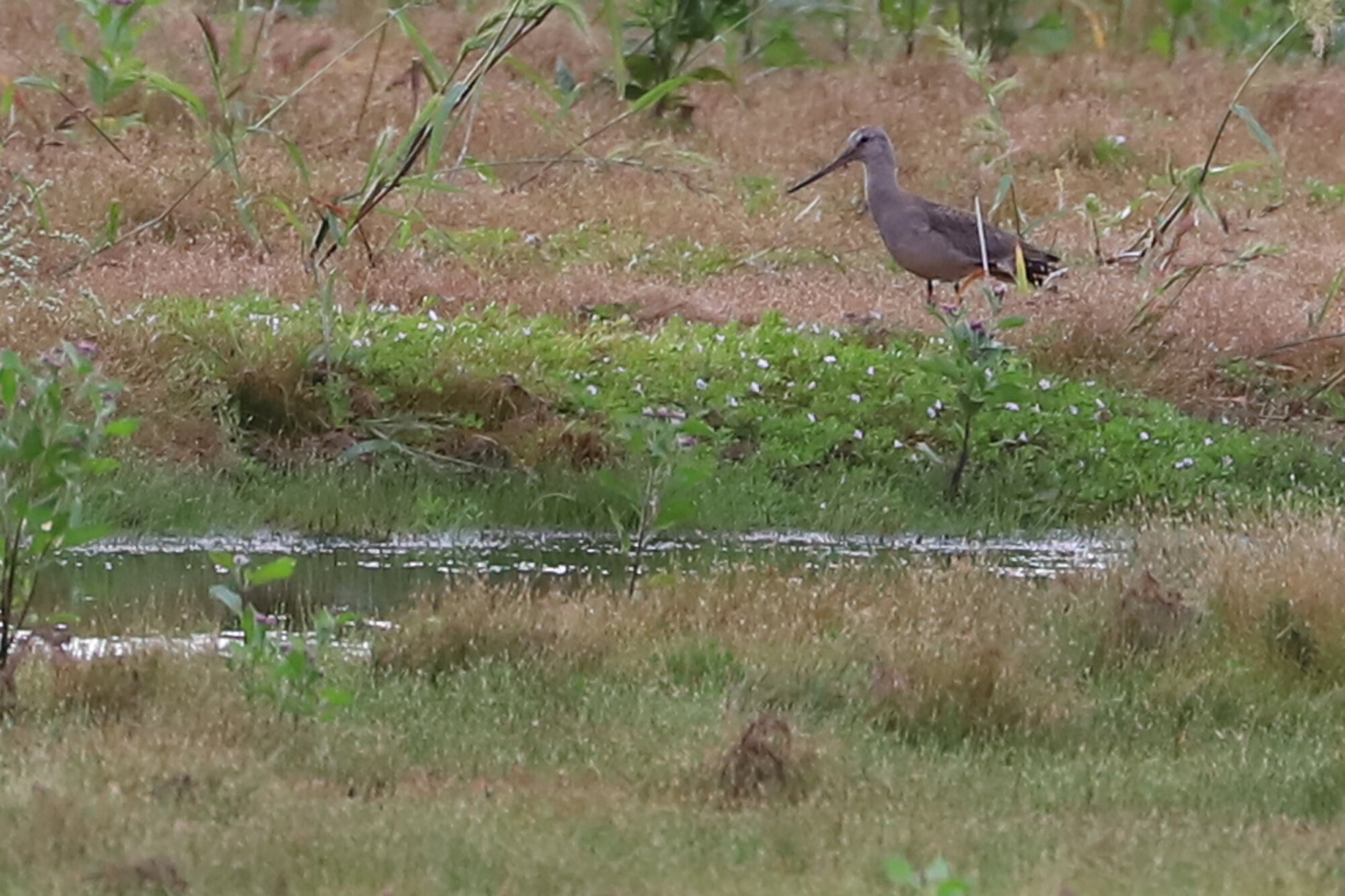
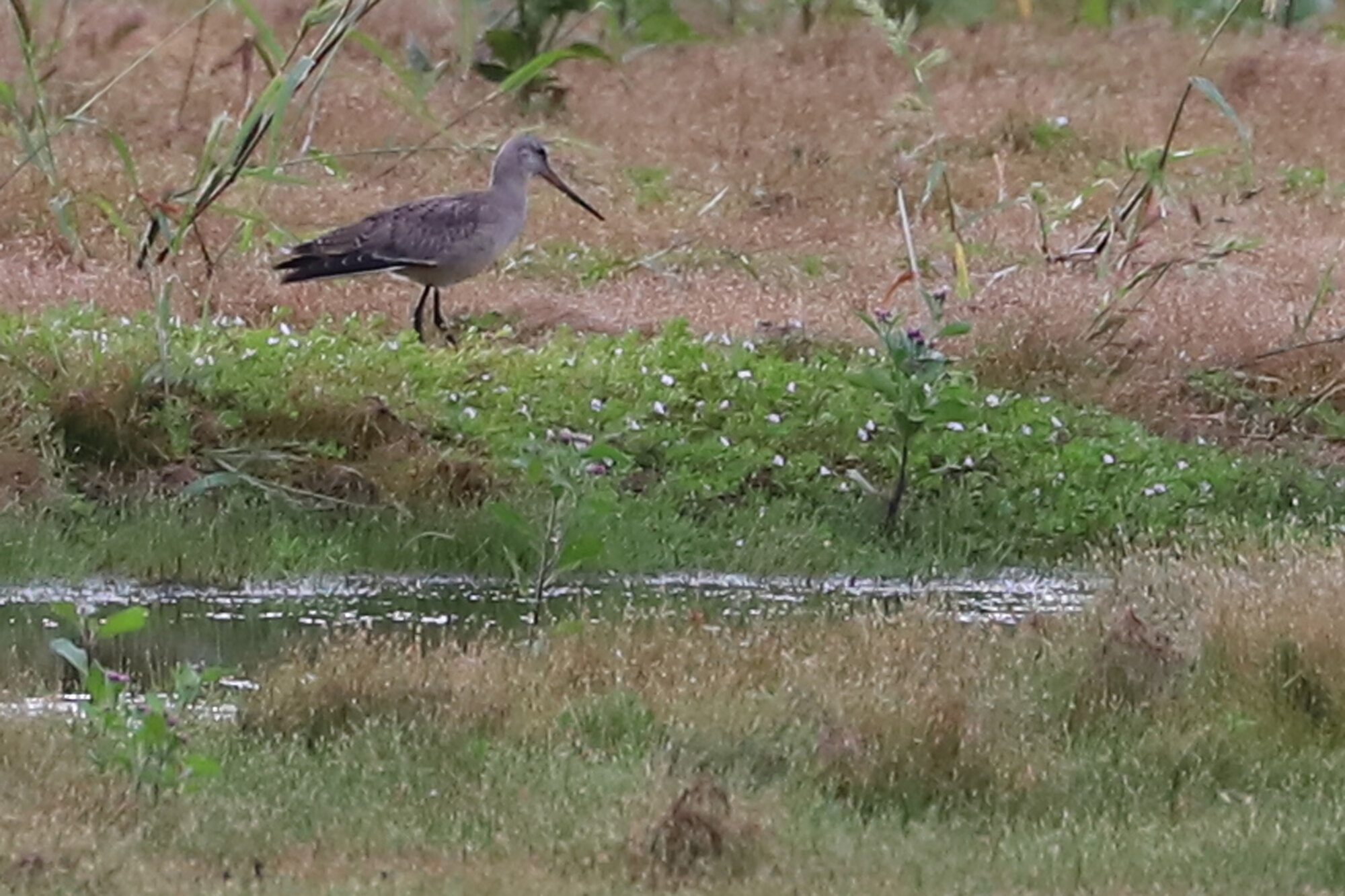
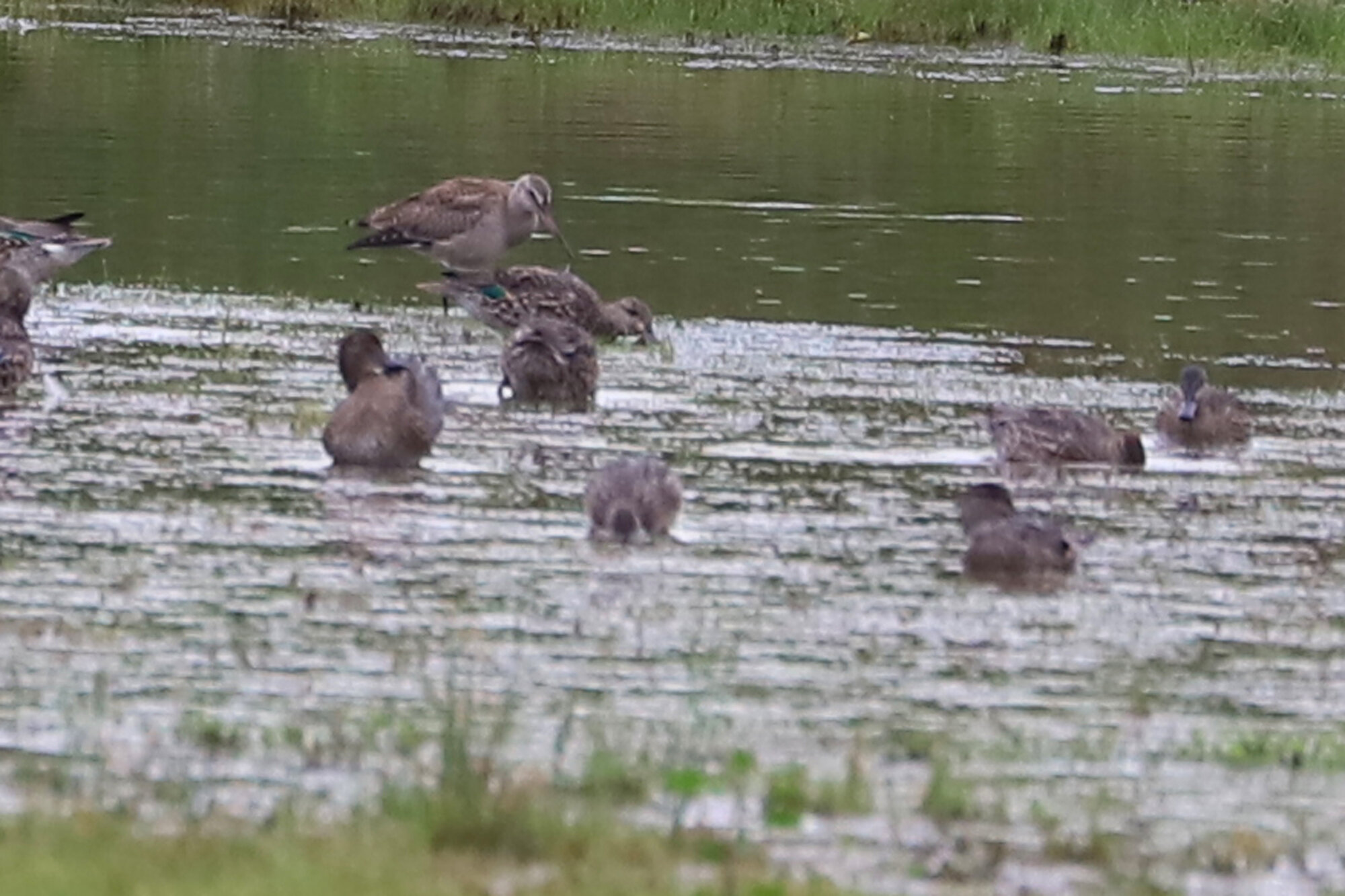
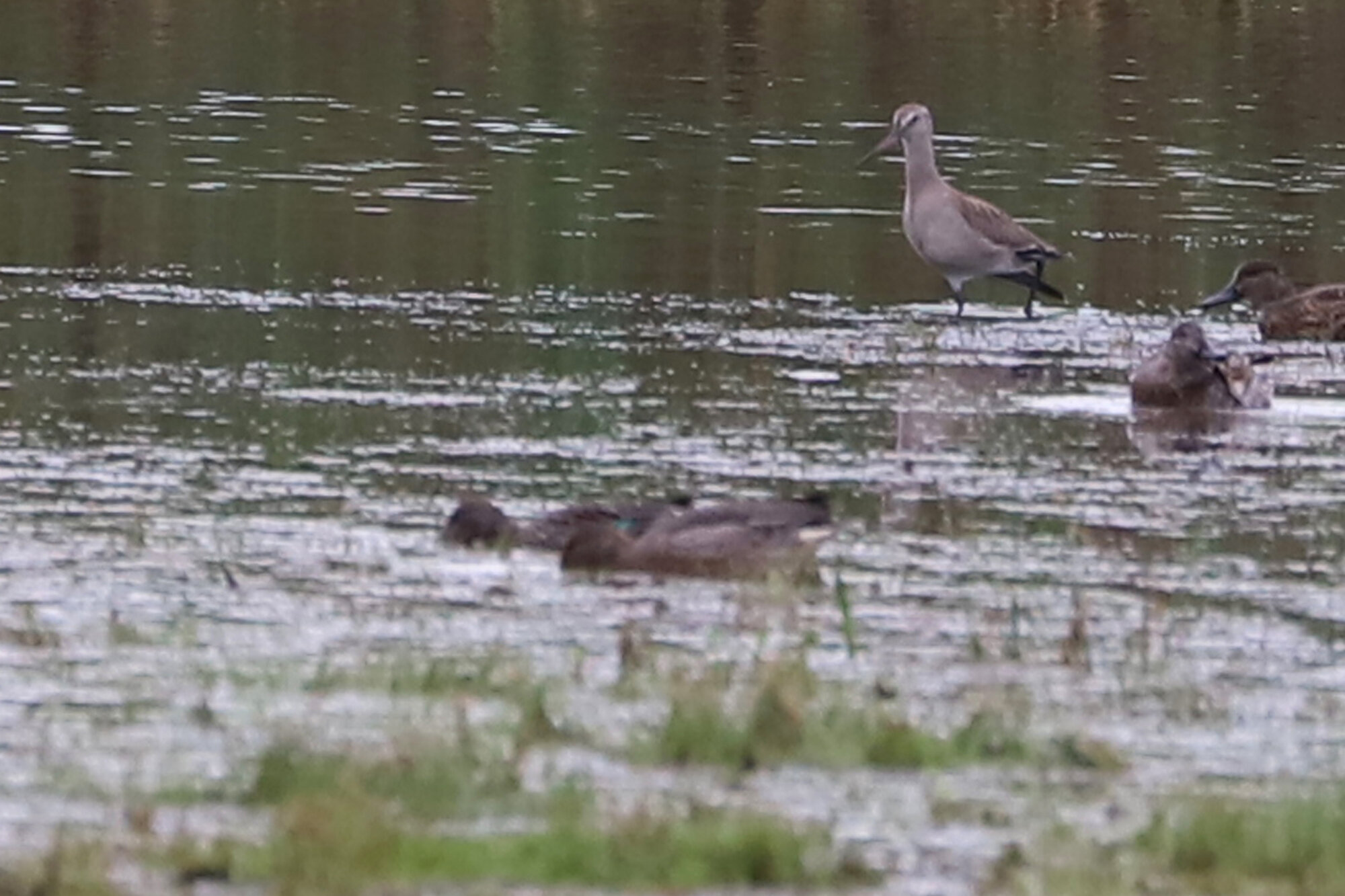
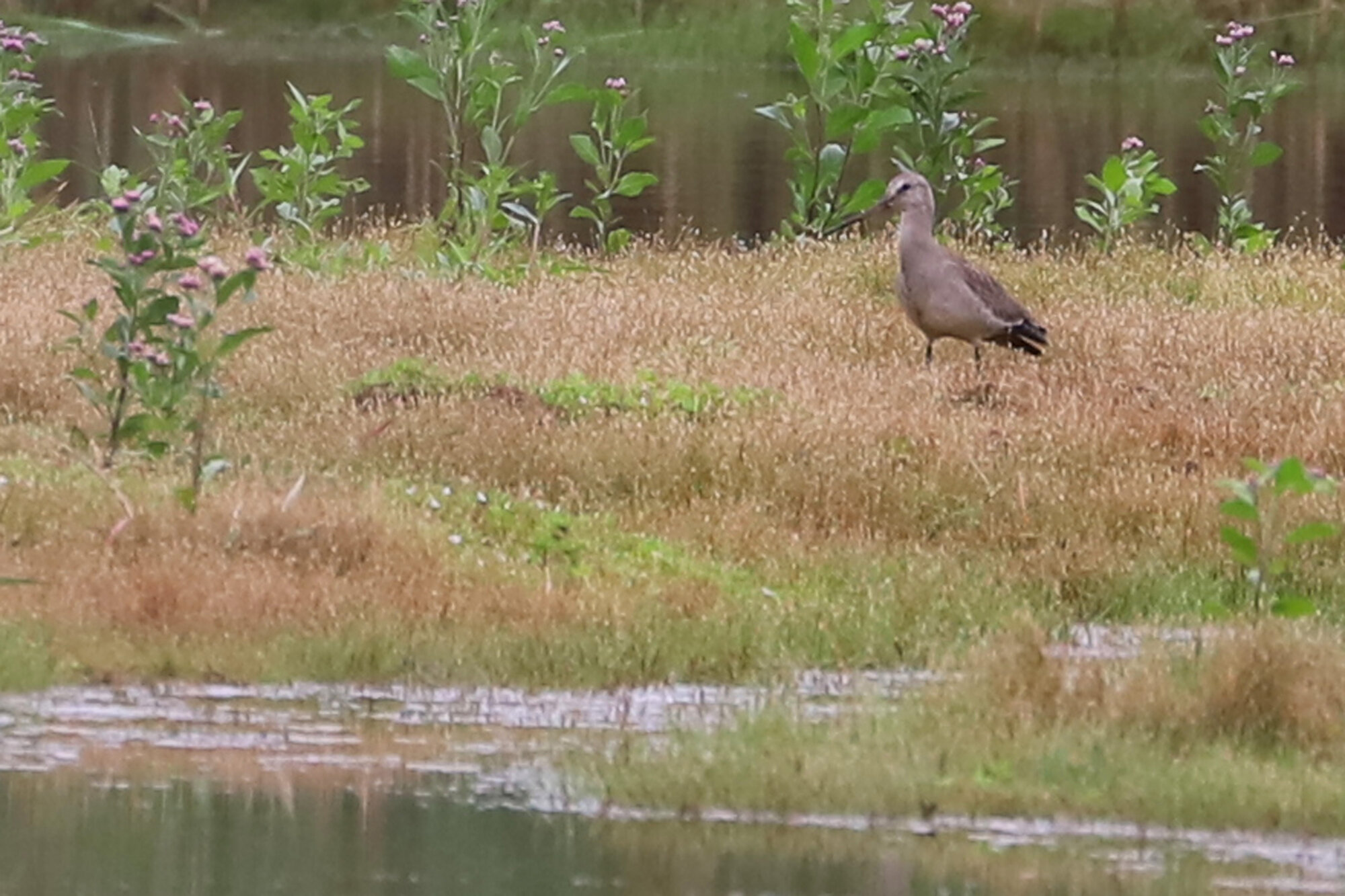
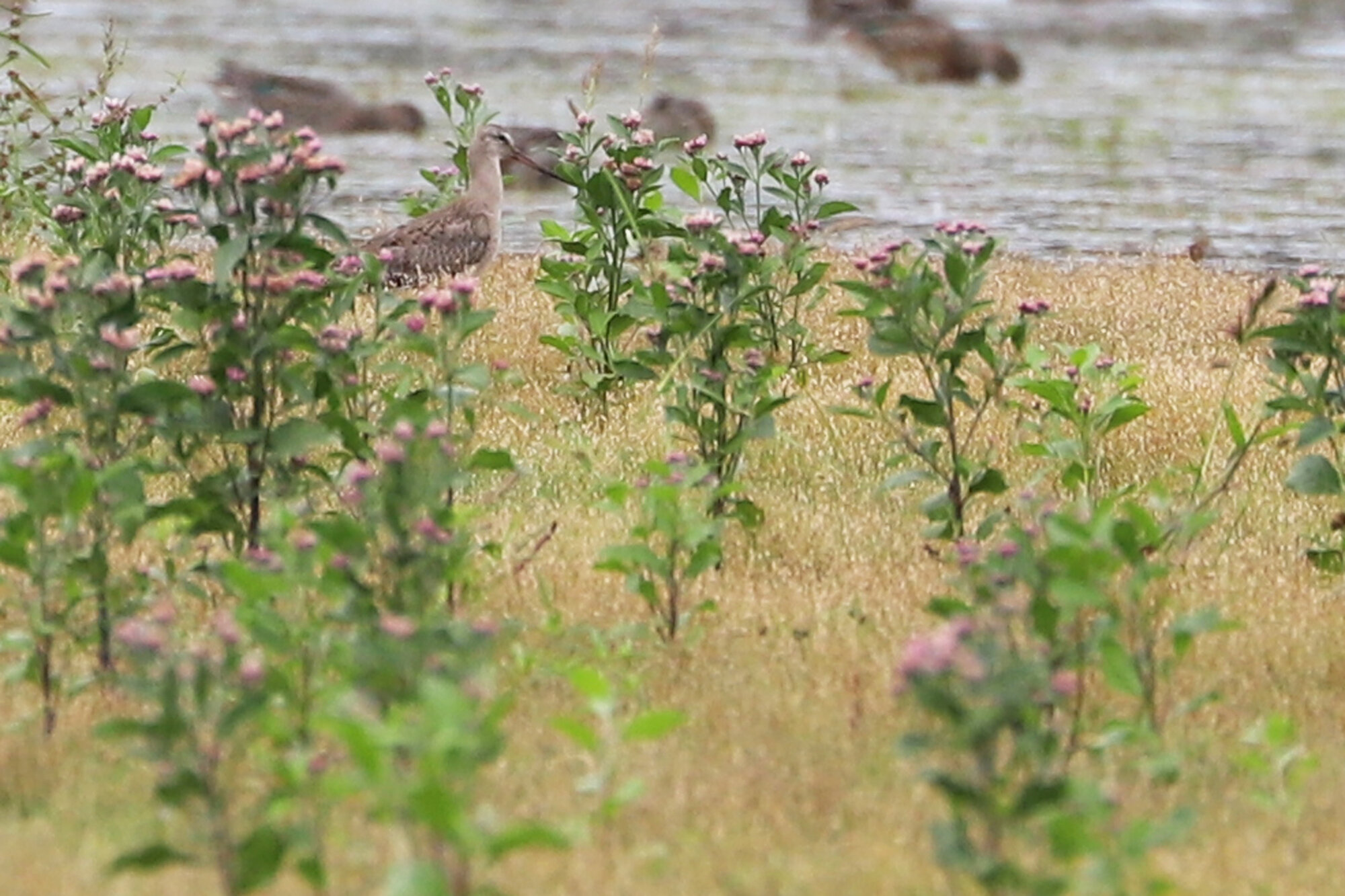
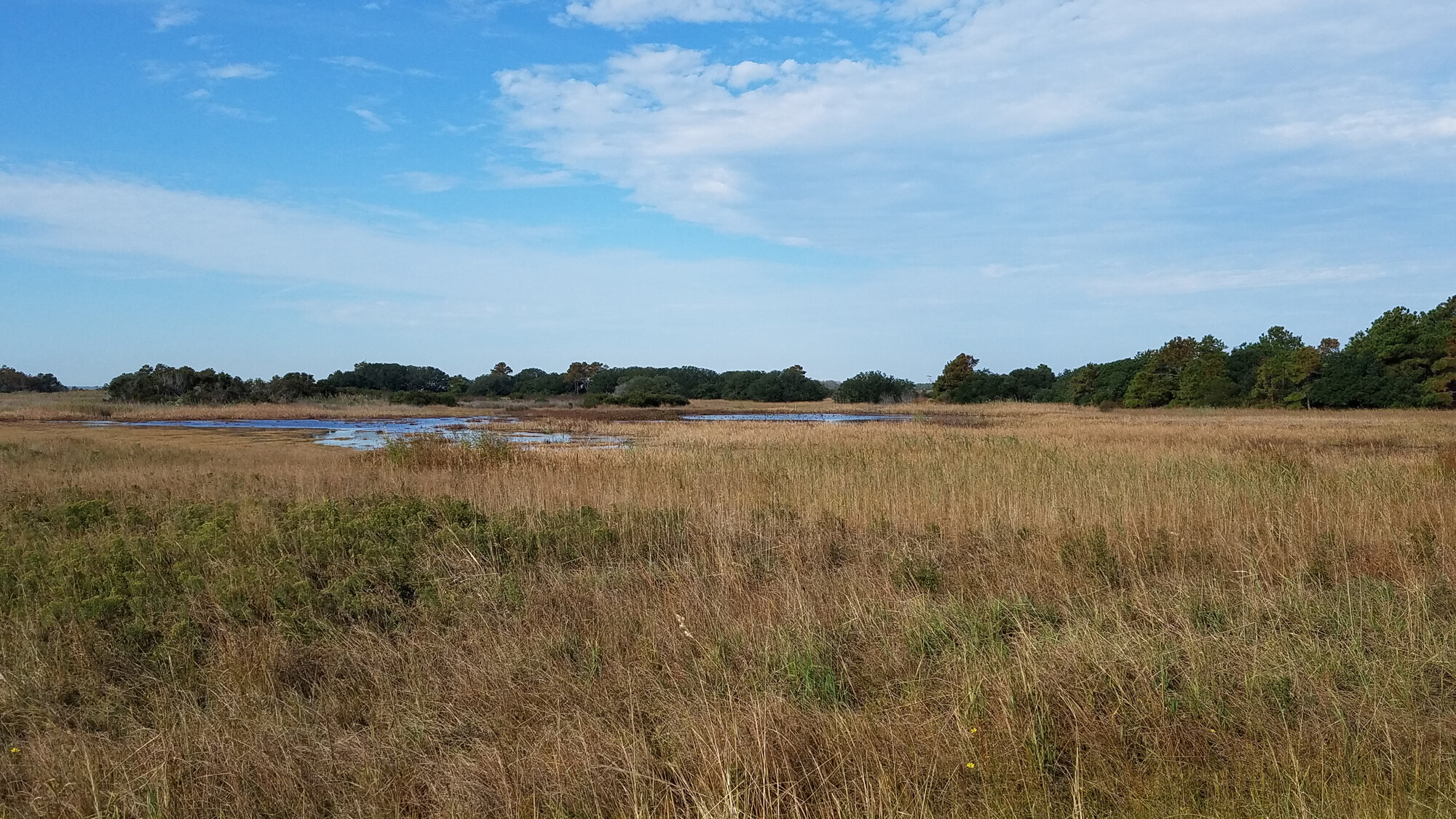
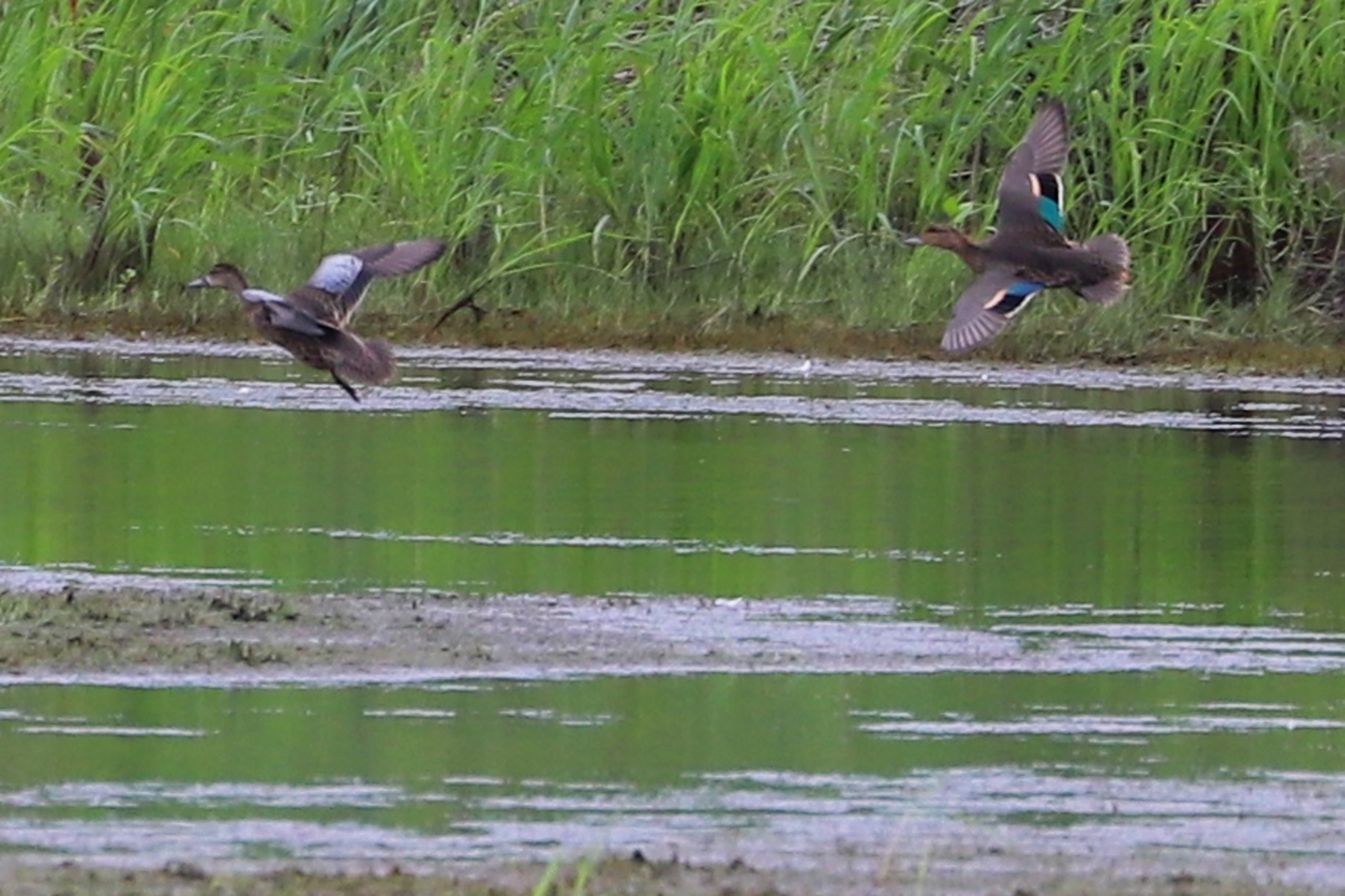
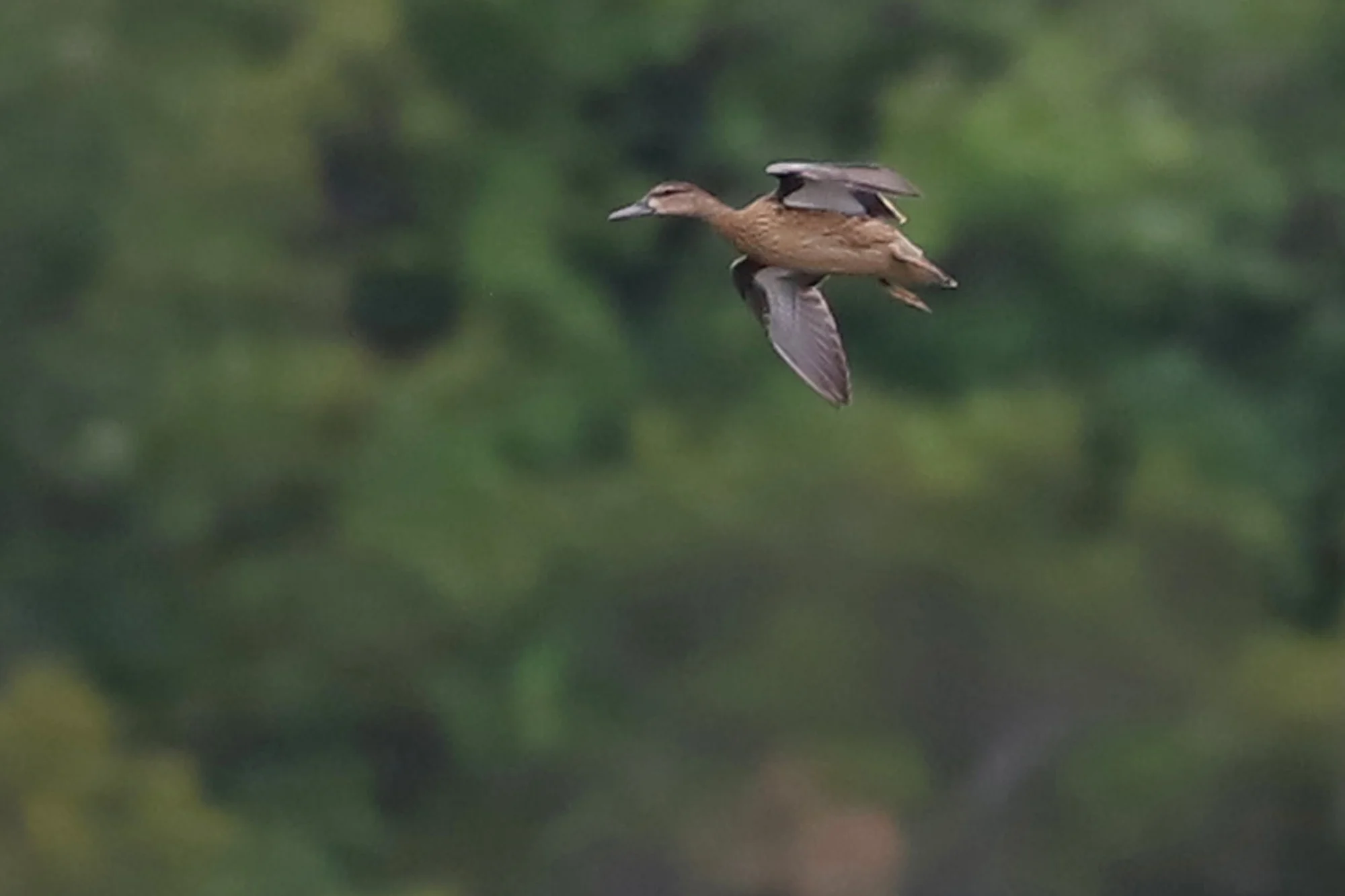
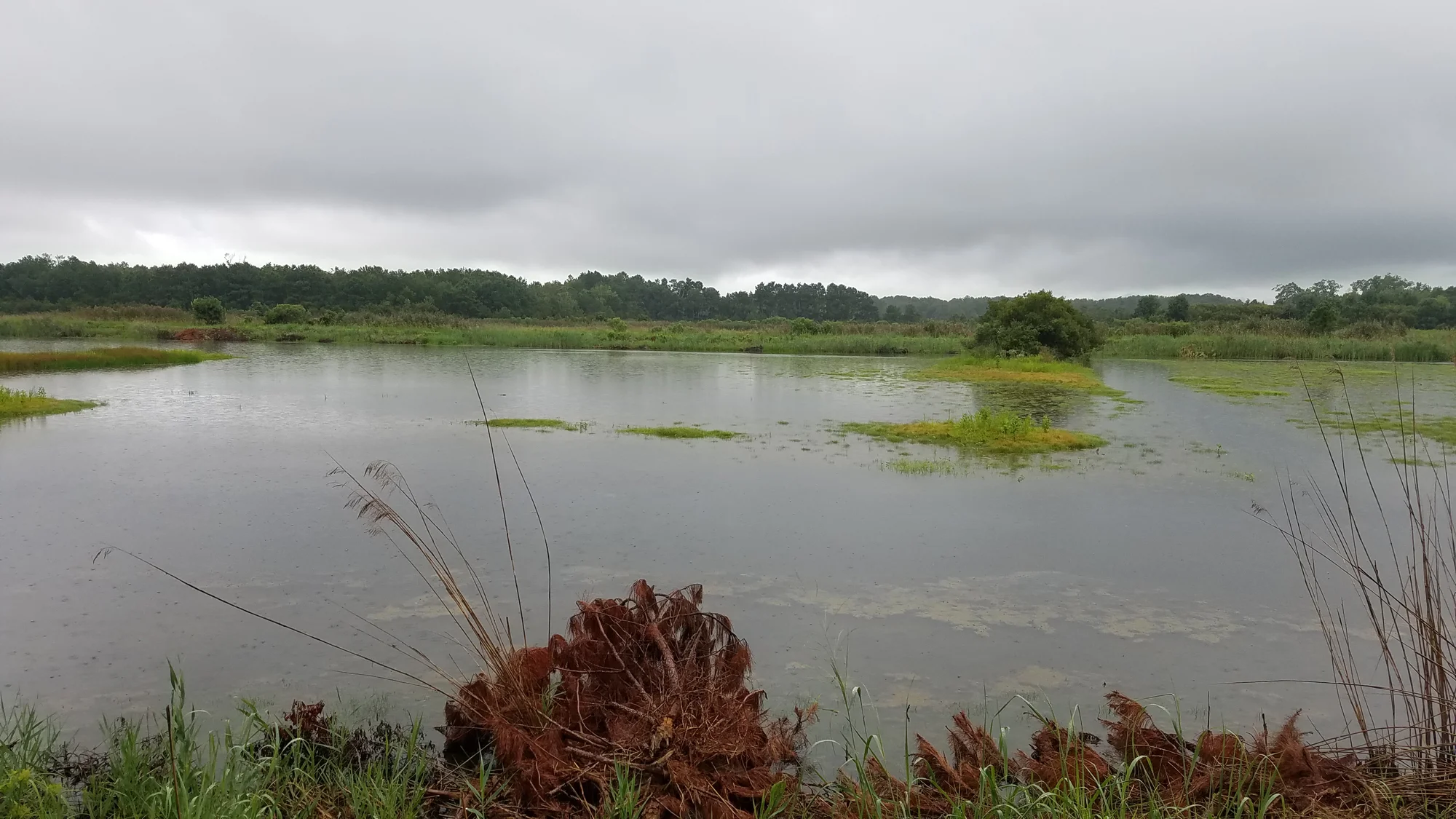
Next up on the list of highlights, and a species that could easily be the headliner in any other monthly report, Virginia Beach finally logged its very first eBird record for HUDSONIAN GODWIT when an individual was found at Princess Anne WMA Whitehurst Tract on 6 Oct (ph. Andrew Baldelli)! Hudsonian Godwit is a rare fall migrant across Virginia, most often observed in Sep/Oct, and geographically at locations like Chincoteague NWR, Hog Island WMA, and Craney Island Disposal Area. On that very note, so far this fall statewide we’ve only seen two records for this species, with an individual at Craney Island 19 Aug (also first vis. Andrew Baldelli, then by many obs.) and one at Hog Island WMA from 22-23 Aug (vis. Terri Cuthriell, later ph. Nancy Barnhart). Surprisingly, Chincoteague has not yet provided a record but there’s still time for that to happen. For a long time, it was suspected among birders here that our first record would likely occur in the impoundments at Back Bay NWR. Surprisingly, but also excitedly, Princess Anne WMA stepped in and stole that glory. In terms of the specific location, first off, Whitehurst Tract is divided into two halves (a northern & a southern half), split by a freshwater canal to Back Bay (which provides water for pumping to the impoundments) and pine forests on both sides. Conditions this summer & fall have not been ideal for shorebirds in the northern half of the tract due to overgrown grass and lack of appropriate mudflats, but the northernmost impoundment/cell in the southern half has provided quite a few shorebirds so long as the water level has been proper. The levels here fluctuate depending on rainfall/evaporation, as well as due to managed pumping/flooding by VDGIF staff, typically for waterfowl management purposes. On the day of the find, this cell was covered in short grass, with most water only existing in the perimeter ditch that surrounds it. The Hudsonian Godwit was observed foraging in the grassed over portions, at times mixing in near a group of Blue & Green-winged Teal. Word of this find was immediately circulated via the VA Birds Listserve (email based) and the VA Notable Bird Sightings & Discussion group on Facebook, and as a result, a total of 19 eBirders were able to view the bird. Like the Kirtland’s Warbler above, all of the photographs of this godwit can be viewed Here over at eBird!

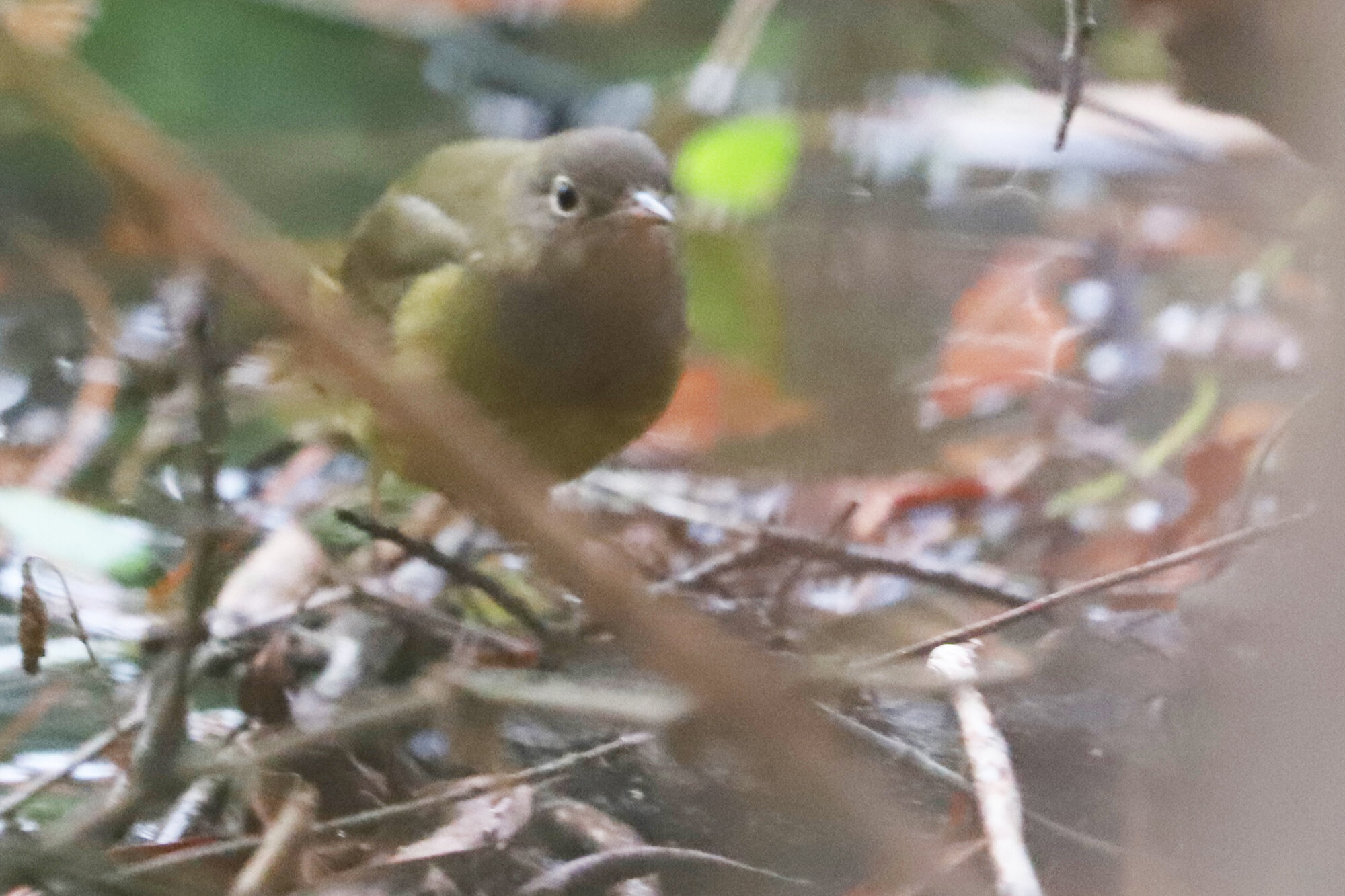
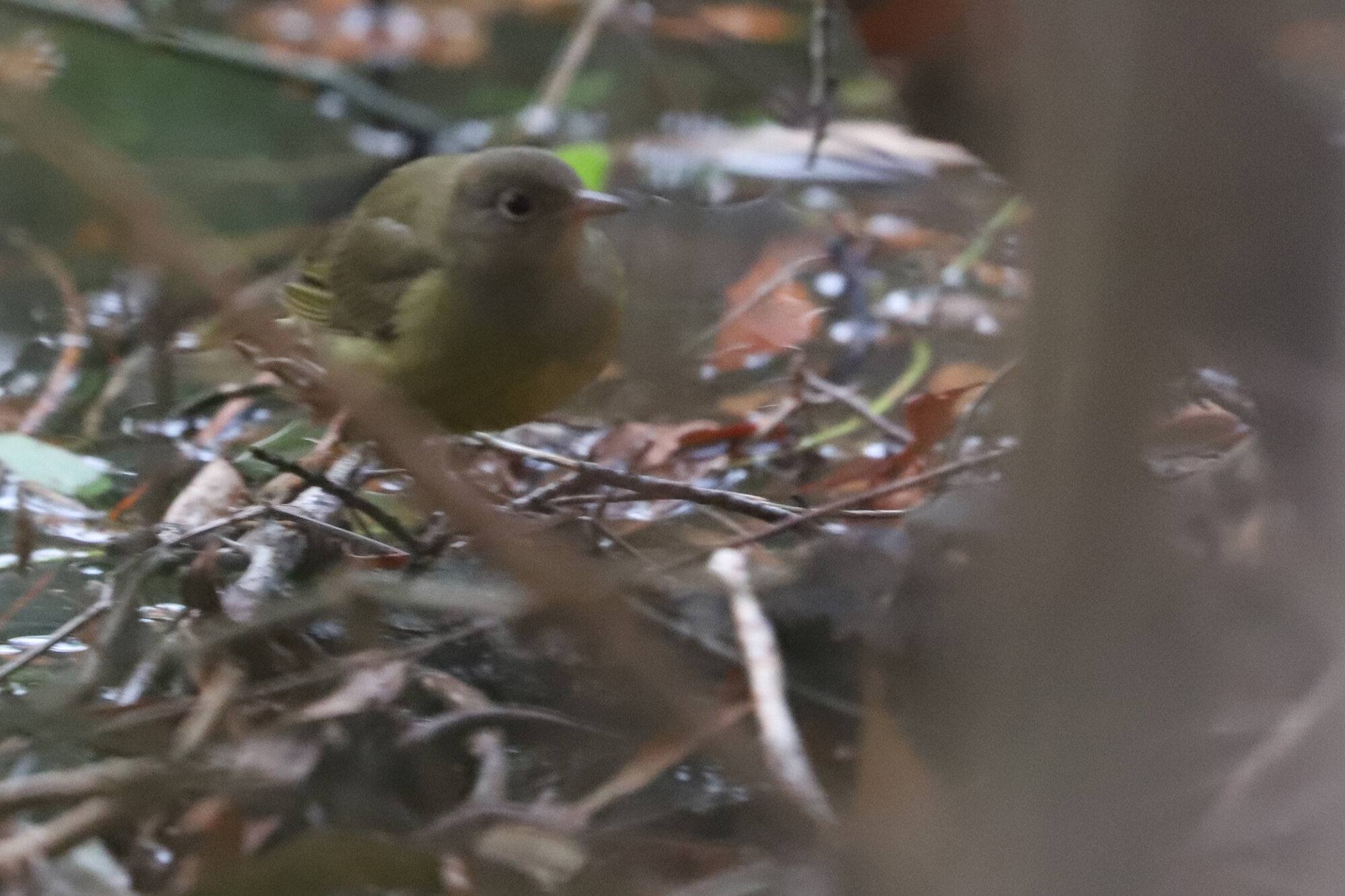
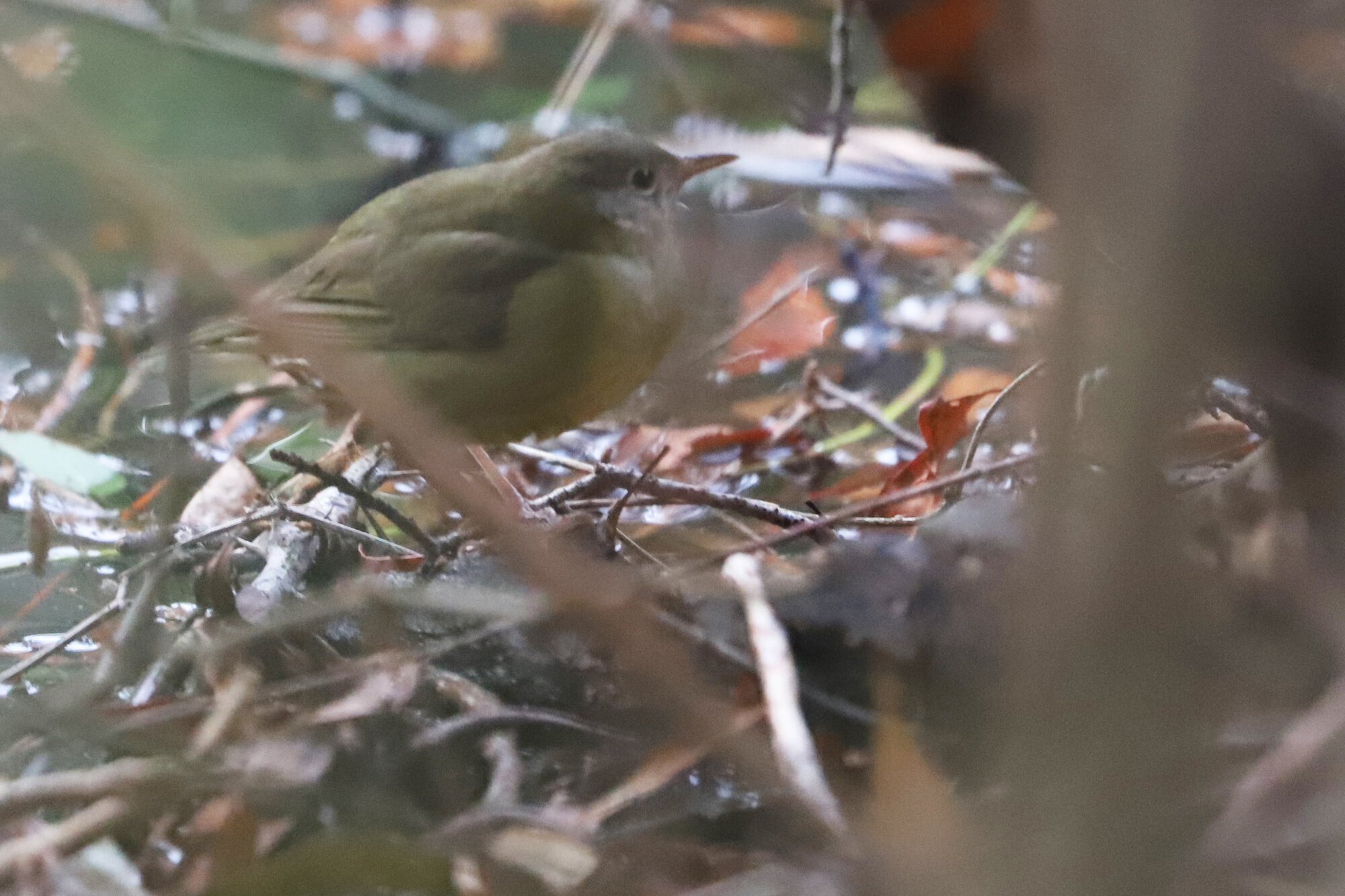
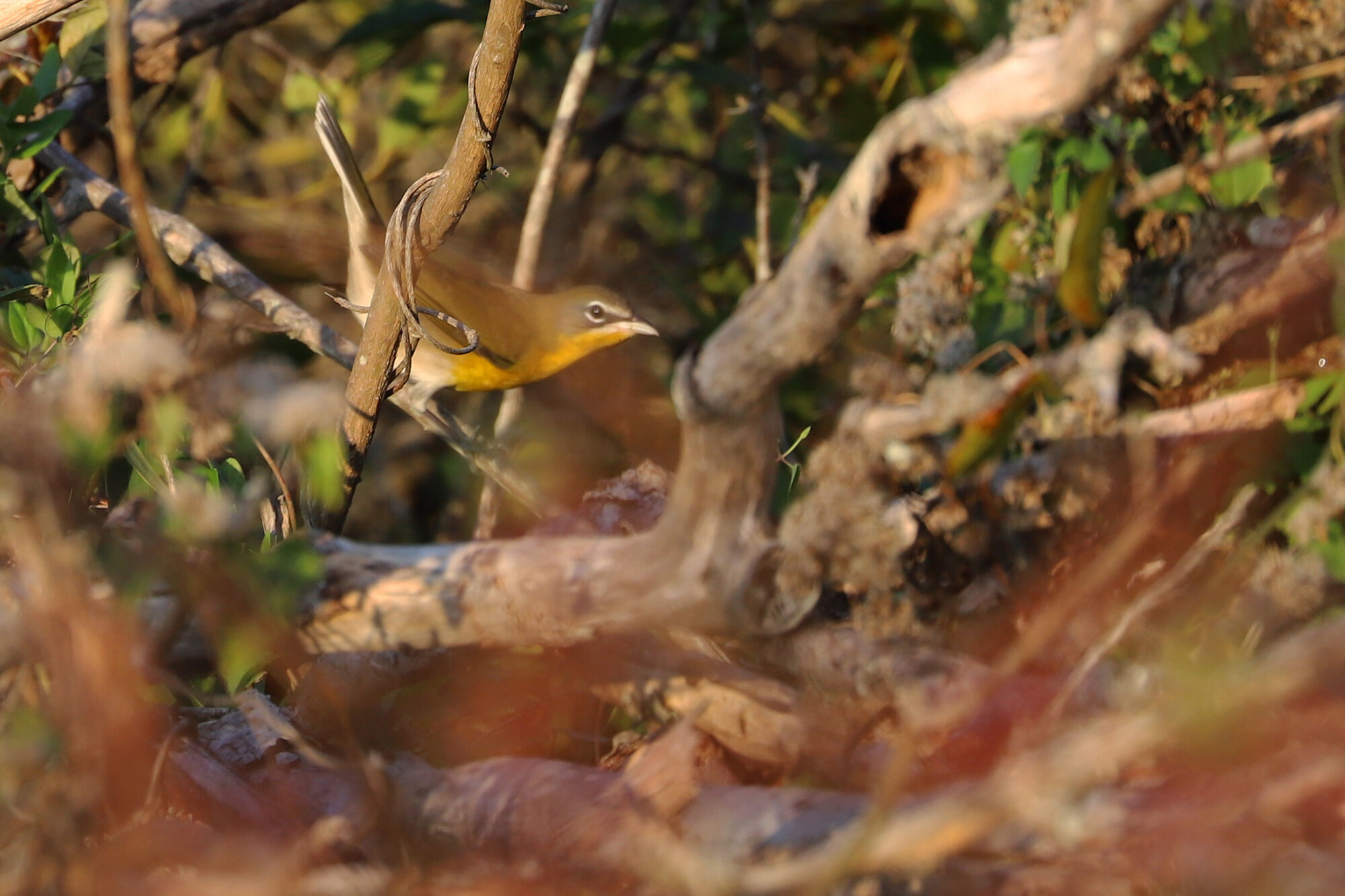
Only the second record in eBird for Virginia Beach, and the very first photographically documented, a CONNECTICUT WARBLER was found at Back Bay NWR late in the morning hours of 13 Oct (ph. Cindy Hamilton & June McDaniels)! An astonishing find, with Connecticut Warbler being one of the skulkiest passerines, typically sticking deep within dense vegetation during migration. This makes for yet another first eBird record at the Back Bay NWR hotspot as well, being the third such record with the past month (Gray Kingbird from September, and the Kirtland’s Warbler above being the other two). First observed around 10:40 AM, roughly midway down the Raptor Trail near the wooden bench, this very skulky warbler lingered throughout the day, being seen later in the afternoon around 2:45 PM (vis. Lisa Rose & Jason Strickland), and thanks to rain through the evening and overnight. Fortunately for many local birders, it was again photographed early on Monday morning, 14 Oct (ph. Mike Collins, Amy & Steve Myers). From that time forward, a good number of records came in throughout the morning, but then the bird seemed to disappear during the afternoon hours. Though, it could easily have just been ten feet further in the vegetation and no one would have known. Interestingly at this point in the day, the water levels of Back Bay had surged upward after sub-tropical storm Melissa’s onslaught of northeasterly winds had finally abated, and southerly winds had taken over the prior night, pushing all the bay’s waters back northward towards the refuge. Much of the vegetation alongside the Raptor Trail had been inundated with water, and the trail itself was even overtopped for a healthy length to the east. Fortunately, an hour or so prior to sunset, it was spotted for what would end up being its final show (vis. Karen Roberts), as it foraged on the ground deep with a tangle of roots and branches about 30 feet to the east of the wooden bench that rests at the mid-way point of the Raptor Trail. There it was observed until the sun had set and lack of light simply made further viewing impossible as it moved around on the ground deep in the thicket. While its introverted nature made it a much more difficult photo-target than the Kirtland’s Warbler above, there are certainly a few shots worth browsing, which can be found Here over at eBird! A truly remarkable find, and a bird that simply would not have been viewed by so many birders had the finders not immediately gotten word out!
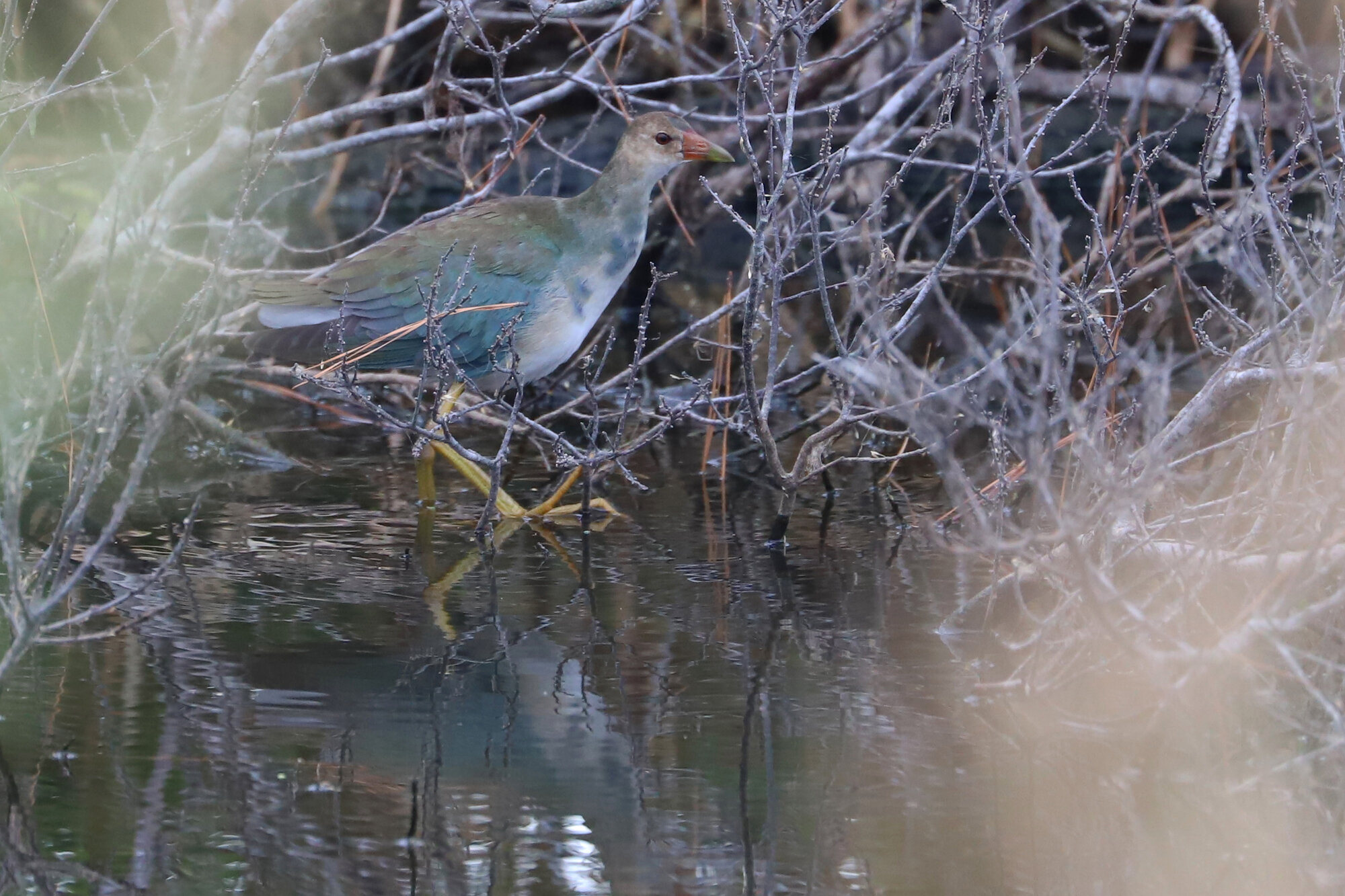
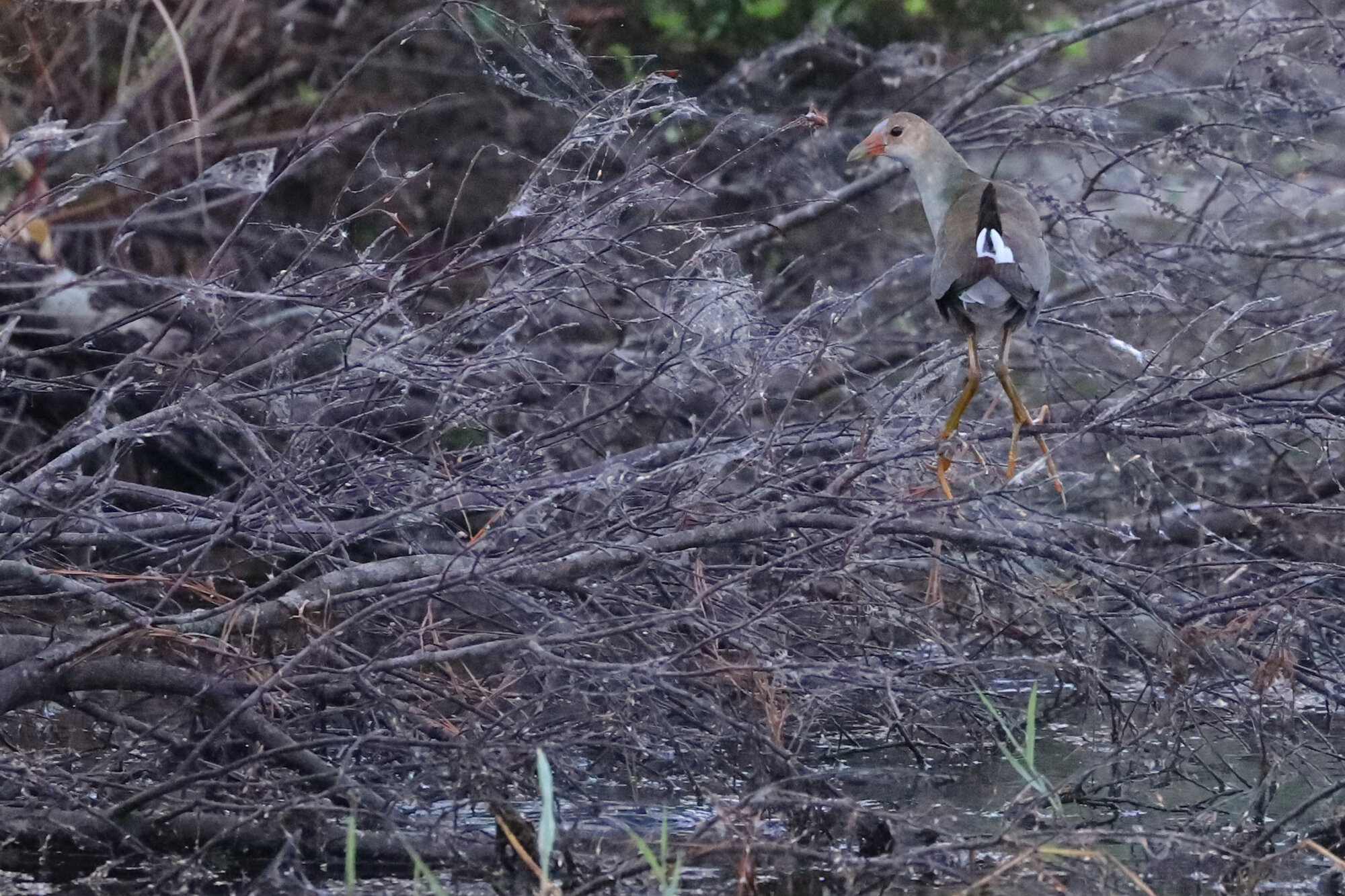
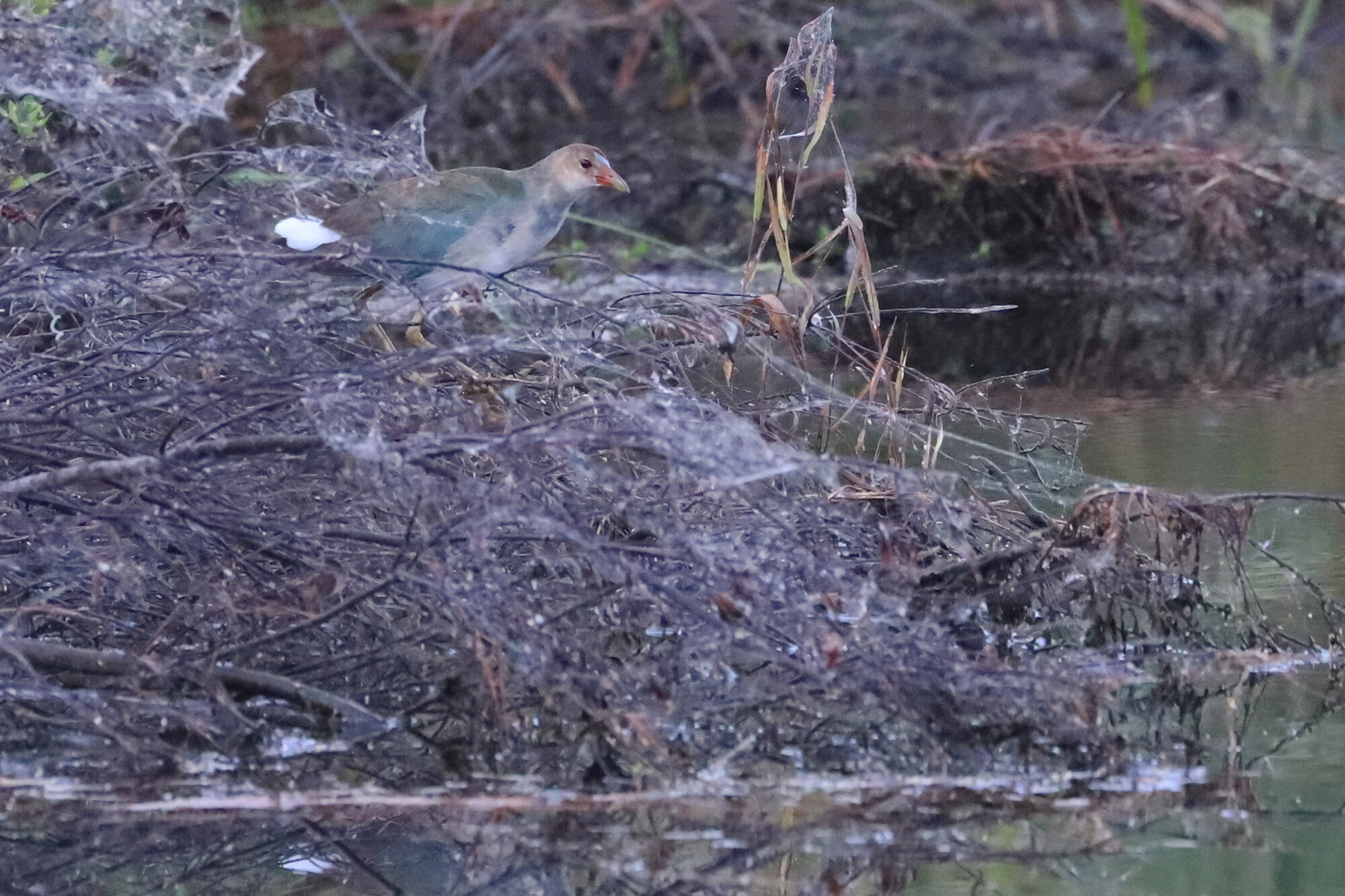
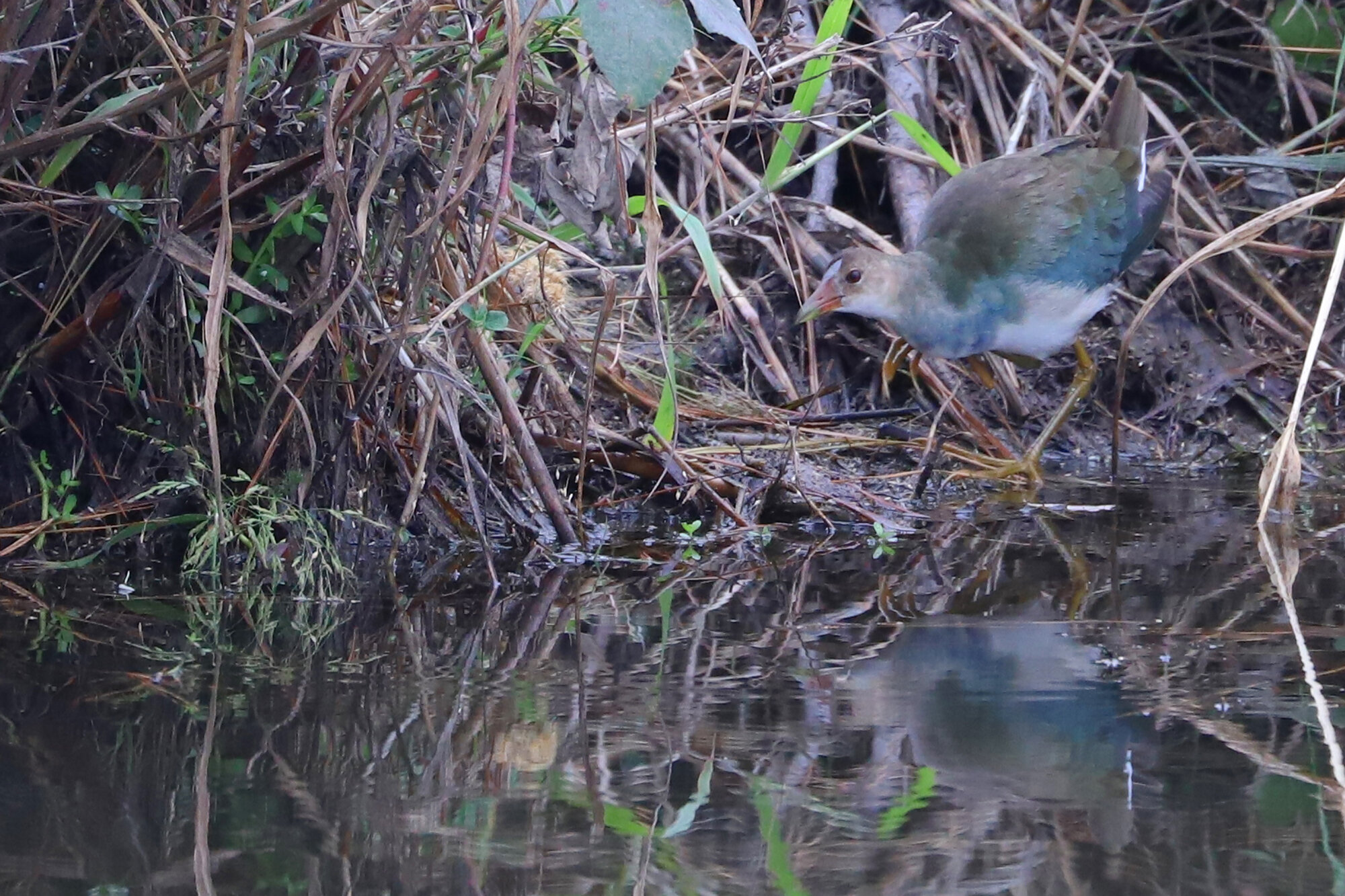
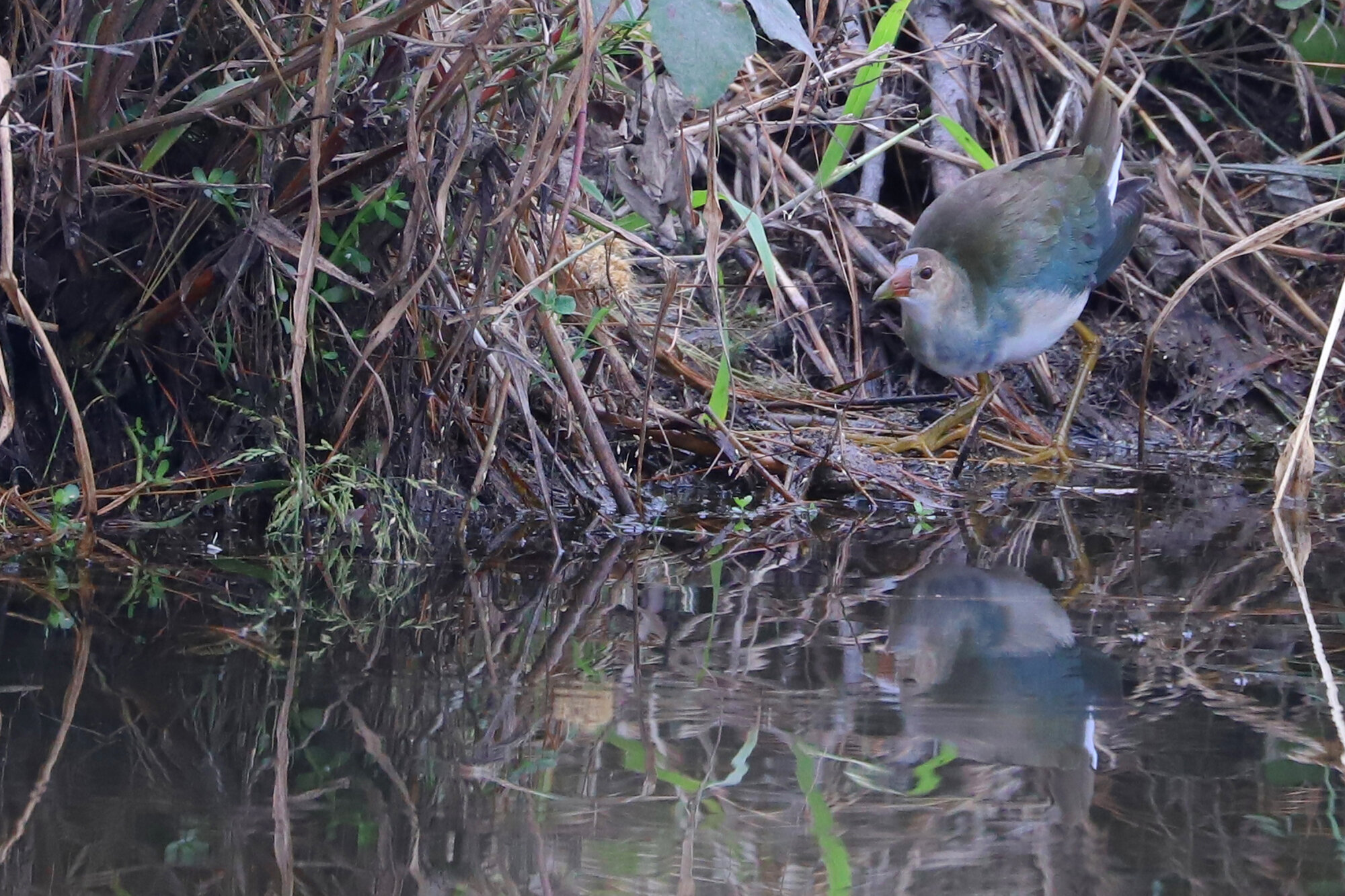
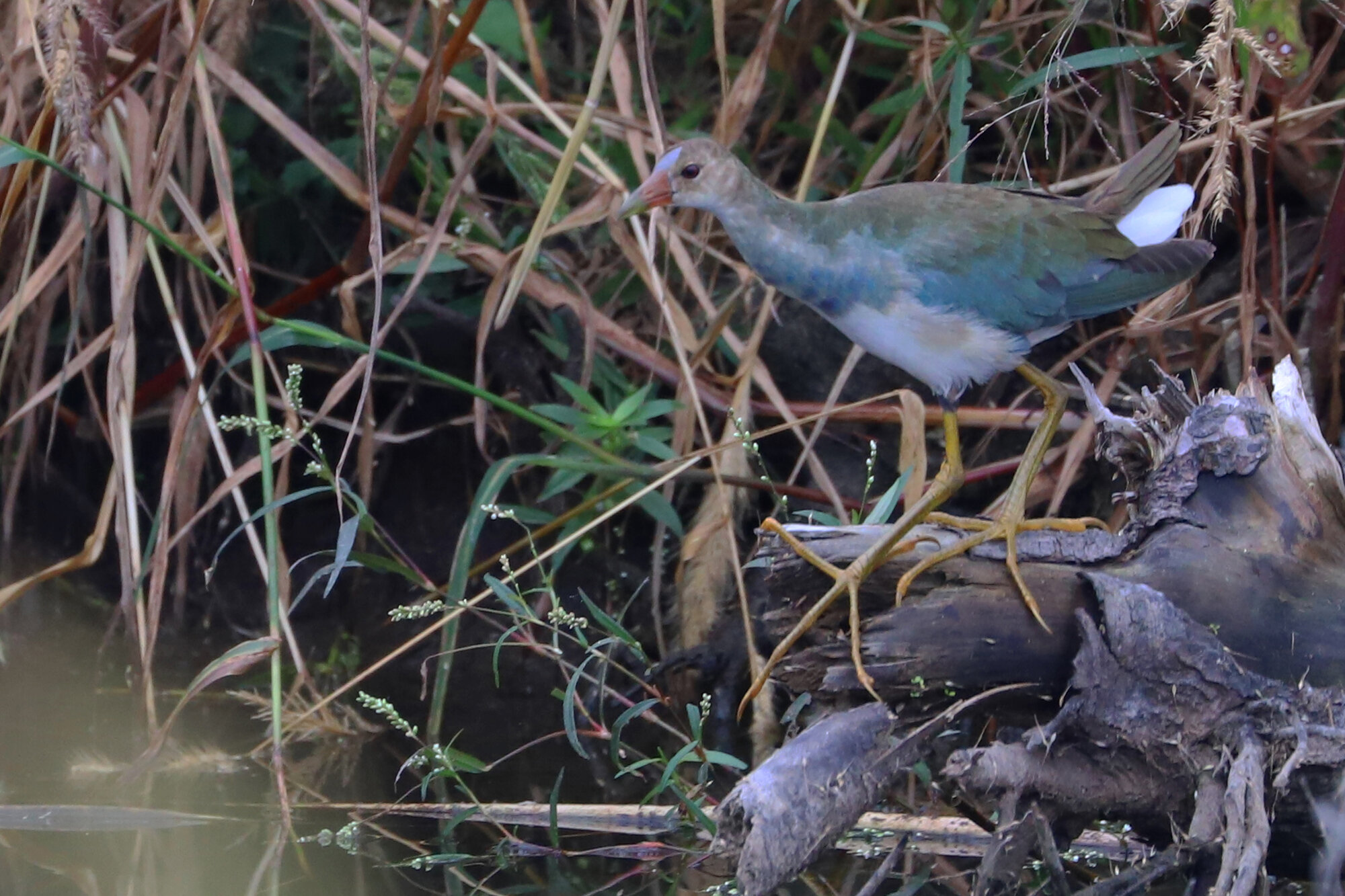
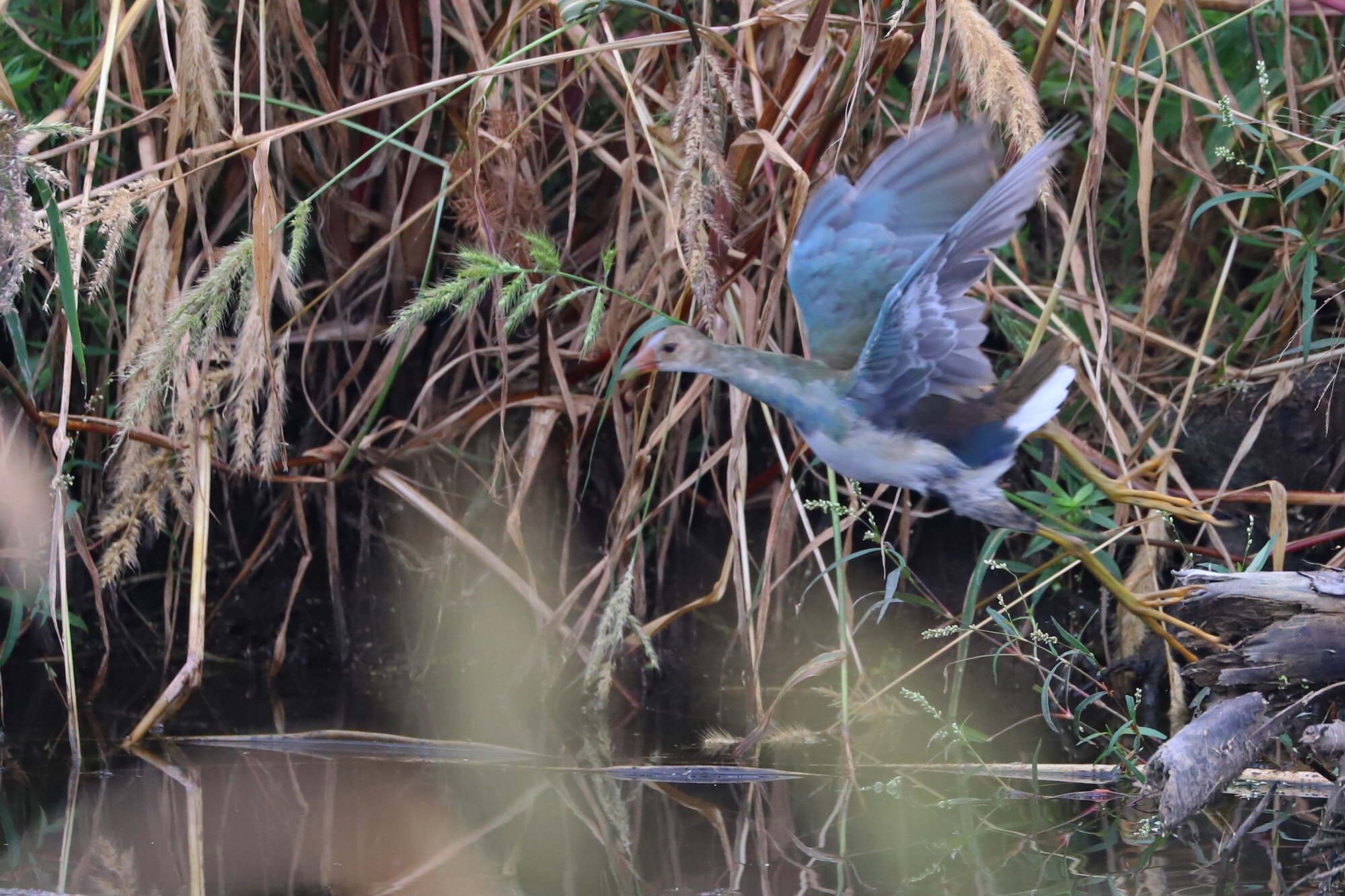
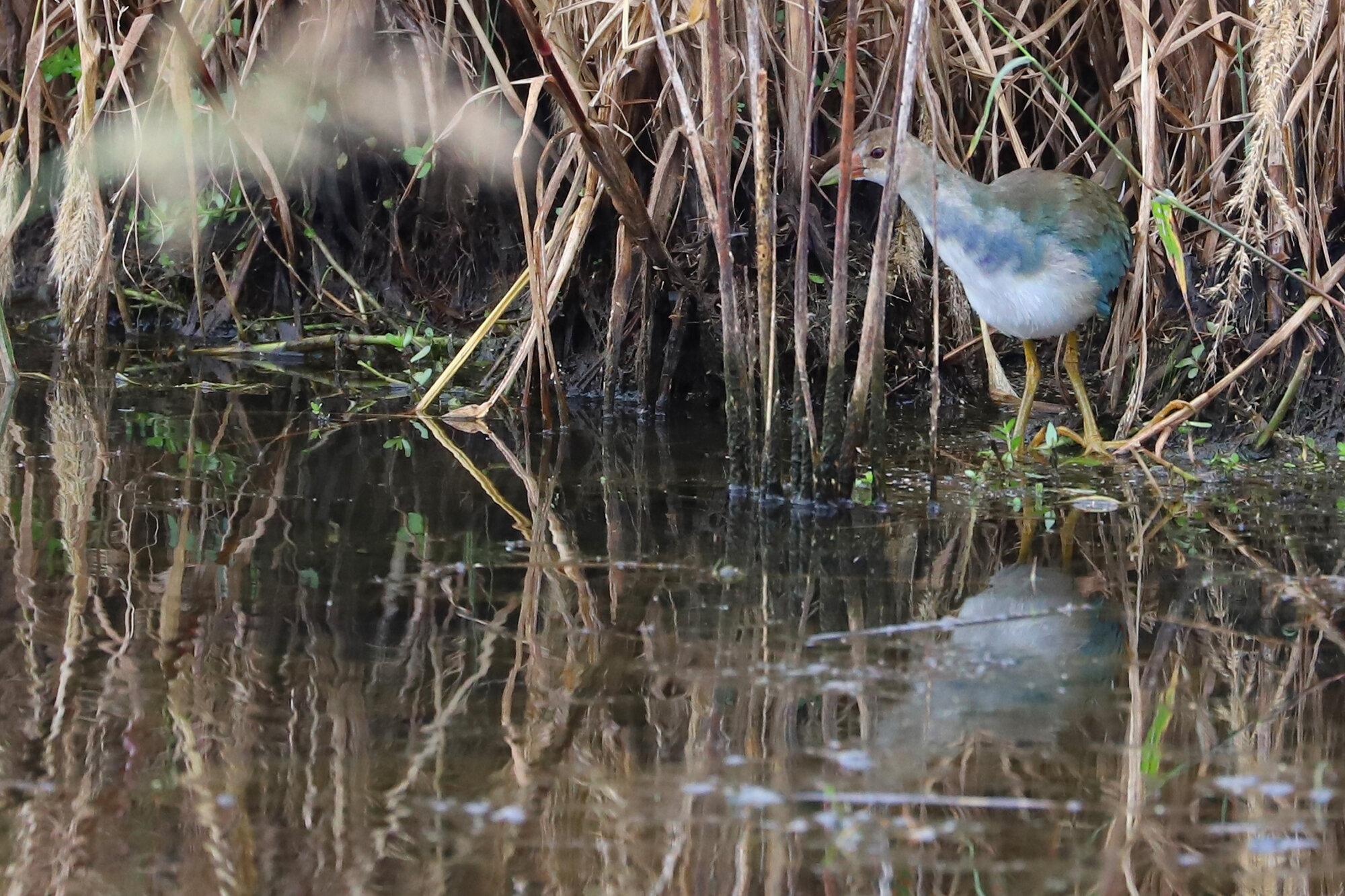
Amazingly, the godwit above wasn’t the only highlight species observed at Princess Anne WMA Whitehurst Tract, and chronologically speaking, it was actually the second rarity observed at the park, that same day! Right at dawn of the same morning, an immature PURPLE GALLINULE was discovered in the northern half of the tract (ph. Rob Bielawski) as it foraged among the dense shoreline vegetation of another perimeter ditch similar to the one described above. It was first observed in very low light, as it flushed from one side of the ditch, flying with long legs dangling, and landed in the brush on the opposing side. Like the godwit, within minutes of the sightings, word of the find was travelling at the speed of cellular service, and though it took almost an hour for the next observer to arrive, this site continued to see birders all the way up until dusk. In some ways, it was this find, that helped lead to the other find (the godwit), which was found shortly afterwards. This was the first record for Purple Gallinule in Virginia Beach since an adult was present not far away, across Munden Road in the Beasley Tract of Princess Anne WMA from 16-29 May 2016 (also ph. Rob Bielawski). Recorded less than annually in Virginia as a whole, but with an individual (or more) likely present somewhere in the state in any given year, Purple Gallinule is a species that should always be looked for especially here in the southeast. Aside from its gorgeous plumage and almost playful foraging style, it is also a statewide review species for the Virginia Avian Records Committee (VARCOM). Missed in Virginia during 2017 & 2018, it’s all the more exceptional that this was the second state record for 2019, with one occurring on private property in Caroline County on 9 Jun (ph. Charles Verdery), and likely a few days either side of that as observed by the property owner. As with the Kirtland’s Warbler & the Hudsonian Godwit, photographs from all 16 observers who made it out in time to see the Virginia Beach bird can be viewed Here over at eBird!

In addition to the Hudsonian Godwit, another shorebird rarity was also found in Virginia Beach this month. Our first BUFF-BREASTED SANDPIPER in over two years was discovered on the beach at Back Bay NWR, roughly a half mile south of the Dune Trail beach access, on 14 Oct (ph. Cindy Hamilton)! While this rare fall transient is observed annually in Virginia as a whole, this is only the fourth fall season to boast an eBird record within Virginia Beach. To make matters even more exciting, this might be the first one ever observed on one of Virginia Beach’s beaches, rather than on a grassy impoundments like those at Back Bay NWR given this species prefers drier, vegetated habitat (most records in the state tend to occur at turf farms, at Craney, or at Chincoteague). The last of its kind to be observed in the city also occurred at Back Bay NWR but on the C Storage Pool, back on 4 Sep 2017 (ph. Andrew Baldelli). Prior to that, one to two individuals were observed primarily on the H Pool along the East Dike from 25 Aug-1 Sep 2016 (ph. Robert Ake during the refuge’s late August impoundment survey). The only other city record thus far input to eBird was a pair, also at Back Bay NWR, on 21 Sep 2005 (ph. Adam D’Onofrio). With several records occurring on the C Storage Pool the following day on 15 Oct (vis. Robert Ake / Karen & Tom Beatty) during and after the refuge’s mid-Oct impoundment survey, it seems likely that this individual moved inland from the beach and found some better habitat to forage. In fact, it continued to be observed on 18 Oct, presumably on the H Pool (ph. Derek & Laurie Yoder), where it was again viewed on 19 Oct (ph. Steve Myers, ph. Cindy Hamilton & June McDaniels, ph. Tommy Maloney). The following day, impacts from post-Tropical Storm Nestor were felt across the region, and with considerable rainfall occurring, it is possible this sandpiper finally moved on from the refuge.
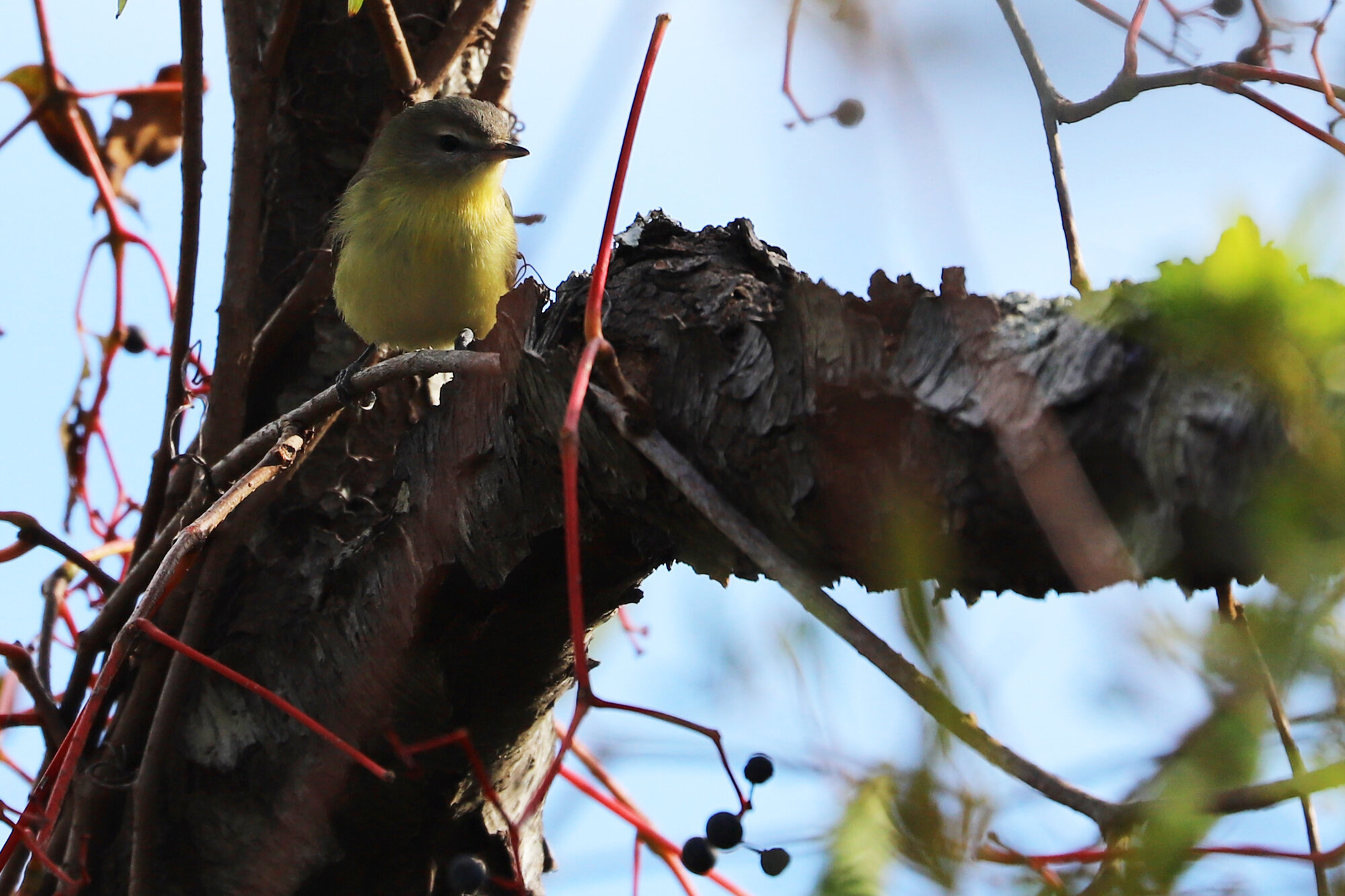
An exciting first record for 2019 in Virginia Beach, a YELLOW-THROATED VIREO was observed at Stumpy Lake NA on 7 Oct (vis. Dianne Hinch, ph. Reuben Rohn), making for yet another great addition to the city’s calendar year list! A rare, but likely annually occurring, spring & fall transient here on the coast, this marks the first record for the species in the city since one was observed at Back Bay NWR on 11 May 2018 during a massive morning fallout of migrant passerines (vis. Andrew Baldelli, later ph. Rob Bielawski). The bulk of our records here have occurred during the spring season, likely bolstered by the opportunity to find this species singing, which makes an October record quite interesting given their silent nature at this time of year. In fact, the last accepted fall record in eBird in Virginia Beach occurred at Camp Pendleton SMR (Restricted Access) back on 3 Oct 2016 (vis. Andrew Baldelli / Karen & Tom Beatty / Mary Catherine Miguez). The 2019 individual was observed right when entering the forest from the parking lot, just over the small foot bridge at the junction of the loop trail. However, it didn’t stay in place long, and no one else was able to pick it up later that day or afterwards at the natural area. This find marked the fourth year in a row where Virginia Beach had records for all six expected vireo species (Blue-headed, Philadelphia, Red-eyed, Warbling & White-eyed making up the other five).

Another calendar year first, a BAY-BREASTED WARBLER was photographed in a small stand of dense tree cover on the northwest corner of Lake Windsor on 22 Oct (ph. June McDaniels). A rare spring transient in Virginia Beach (records in only two of the prior five springs), fall records occur a bit more frequently (records each fall after 2014), but we still average just one or two annually. Most records do tend to occur during October, and this record was quite timely, falling almost a full year since the last city record back on 24 Oct 2018 (vis. Andrew Baldelli & Tracy Tate) at Little Island Park. Additionally, it fell just over a year after the last photographed record here of one at a Bellamy Manor private residence on 17 Oct 2018 (ph. Una Davenhill). With no other records for the year it seemed like this was going to be a missed species in 2019, so it came as a great surprise addition this late into the fall migration season. Fortunately, this individual remained through the evening hours nearby, though a bit farther west and south on the Mt. Trashmore Park property, but still adjacent to where Lake Windsor empties into the canal system. It gave excellent views (ph. Steve Myers, ph. Tommy Maloney, vis. Lisa Rose) while it foraged in the dense junipers that line that canal, moving back and forth over the water at will.
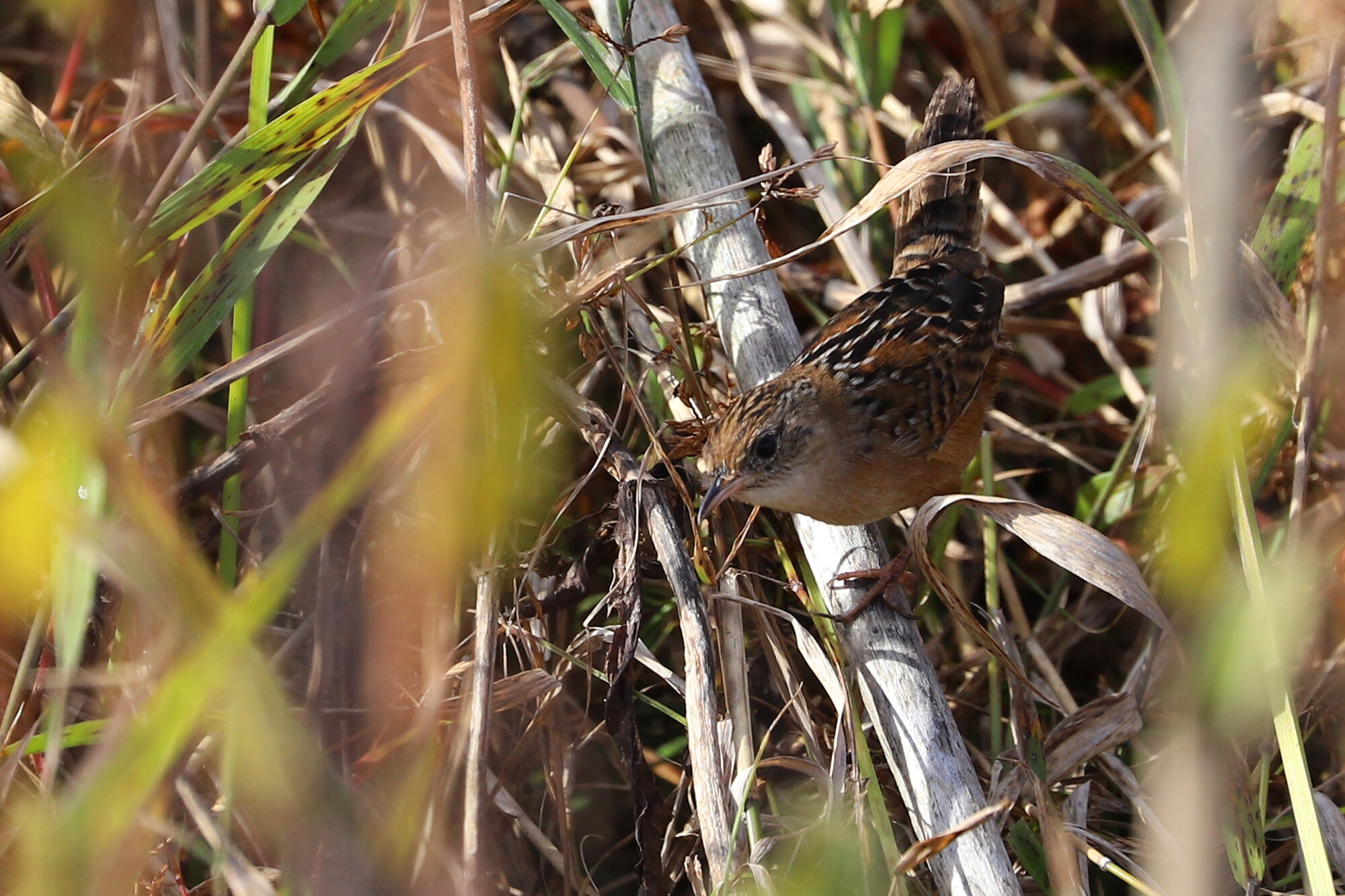
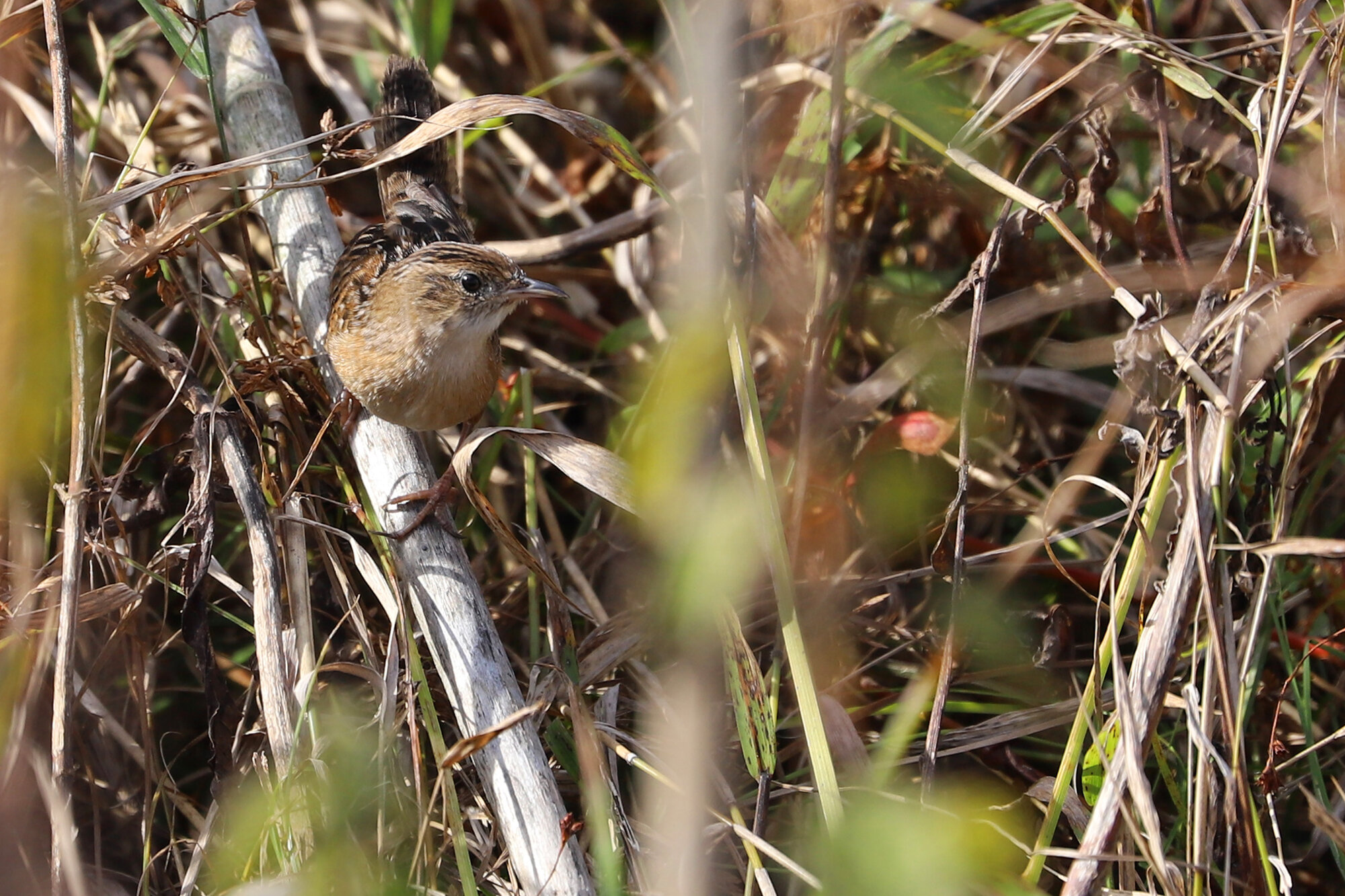
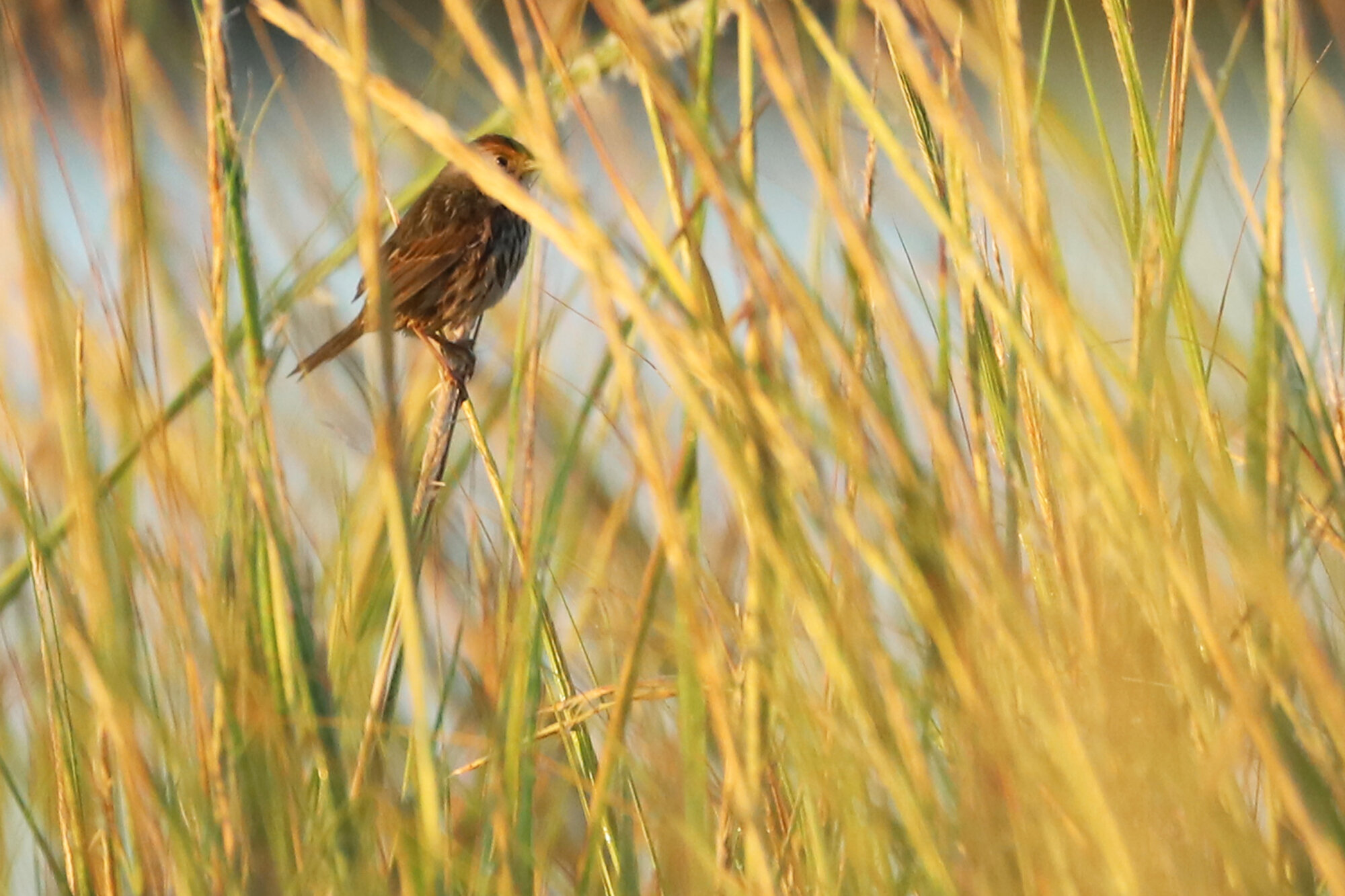
Another exciting first record for 2019 came in the form of a SALTMARSH SPARROW observed at Pleasure House Point NA on 11 Oct (ph. Karl Suttmann). Extreme high tides in the Lynnhaven River were induced by the counterclockwise spin generated from Sub-tropical Storm Melissa which was positioned off the New England coast for the previous several days. These tides tend to provide good views of sparrows at the natural area due to the reduction in available places for them to sneak away among the reeds. Saltmarsh and Nelson’s Sparrows tend to arrive here around the same time each fall, but Nelson’s seem to significantly outnumber Saltmarsh at this particular location for whatever reason. At least one other record was input at the site this month, with an individual photographed on 21 Oct (ph. June McDaniels). Due to the extreme similarities in physical field marks (they were once considered the same species, “Sharp-tailed Sparrow”), this species does flag as ‘rare’ here in eBird, but it is certainly a species to be expected in this proper saltmarsh habitat. Almost all our records hail from the Lynnhaven River estuary, but infrequently there are records that pop up of migrants on man-made, hardened shorelines, like at South Thimble Island (CBBT), Fort Story JEB, and at Rudee Inlet. However, the best place to look is certainly Pleasure House Point NA, near the southern tip of the shoreline trail where the marshy islands are closest.

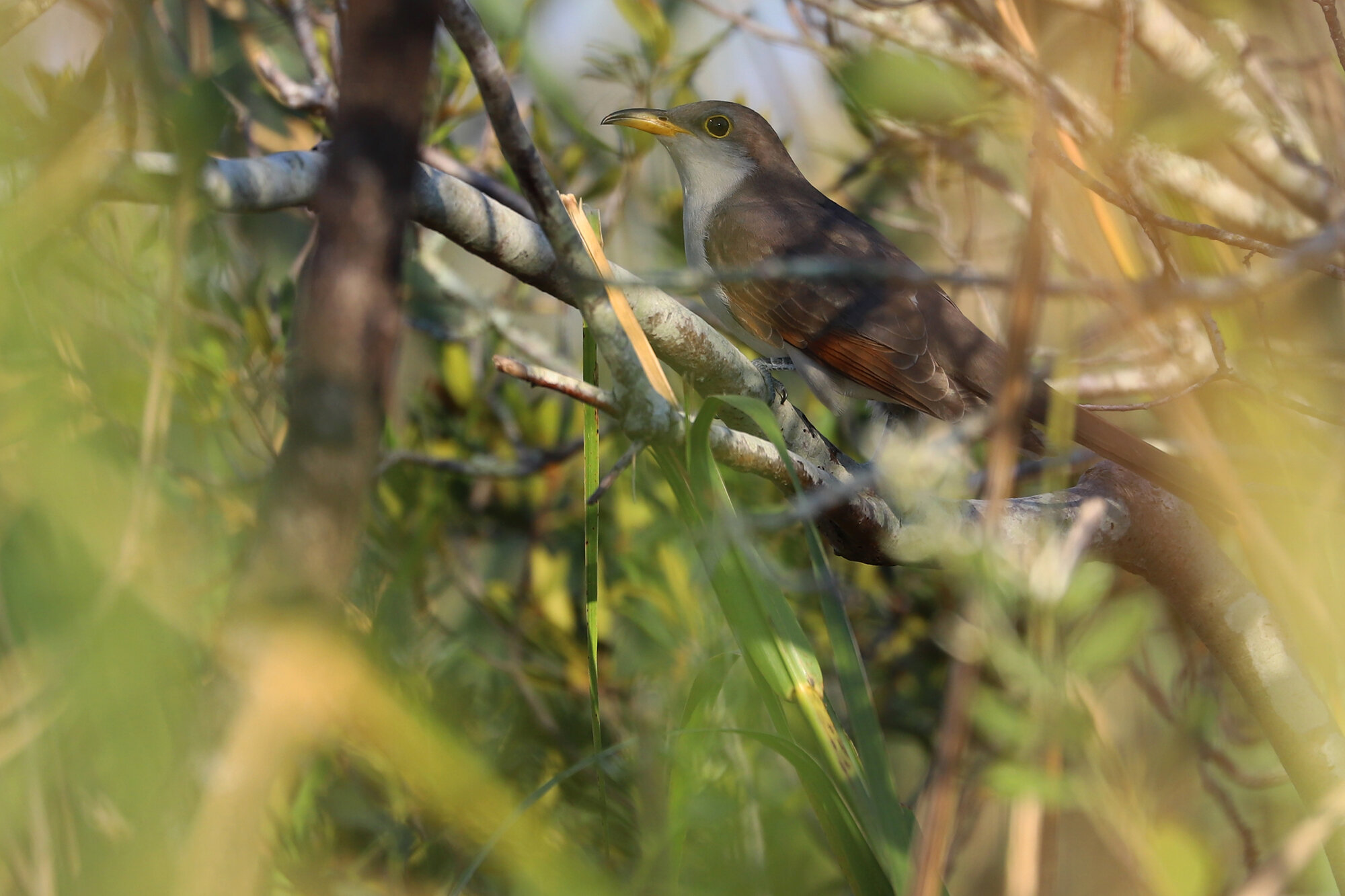
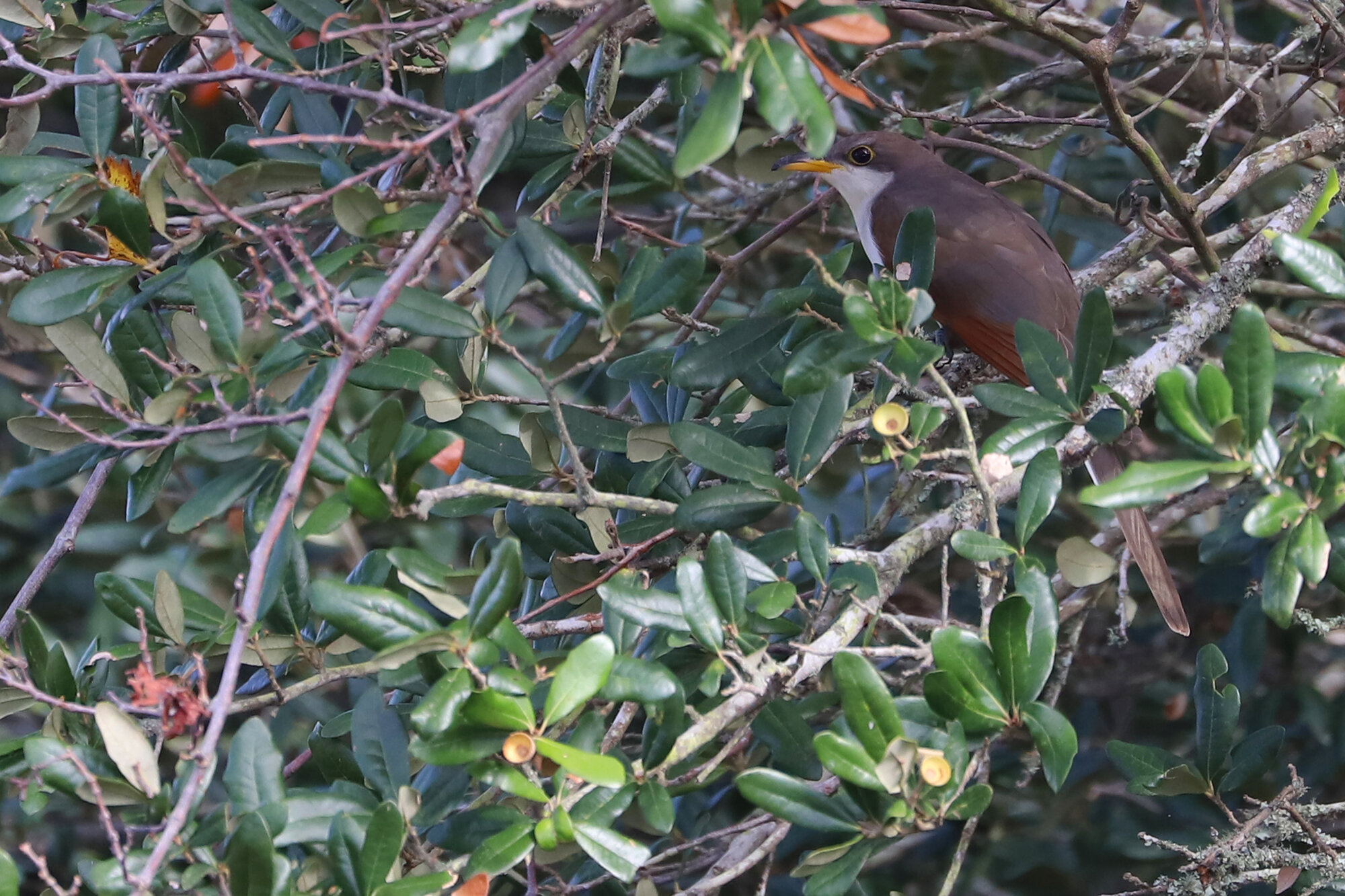
A first for the fall season since 2017, a single BLACK-BILLED CUCKOO was observed at a private residence in the Indian River section of Virginia Beach on 19 Oct (vis. George Harris). Also marking the very first time we’ve had an eBird record for the species during the month of October across all years, this record is a fascinating one. Black-billed Cuckoo is a scarce migrant on the coast, though likely an annual transient during spring & fall in very low numbers (most coastal Virginia records are in lower Northampton County during the fall at Sunset Beach and Kiptopeke SP). Any given year could produce records here in Virginia Beach though. While it is highly sought-after, records are still quite scant in the city though. In fall, hatch-year Yellow-billed Cuckoos can also show a black-bill, so other field marks are necessary to help secure the identity during this season, such as the red (rather than yellow) orbital ring around the eye, a lack of rufous coloration in the wings (obvious in flight and at rest), and a darker overall coloration to the undertail, lacking the heavy white sections of Yellow-billed. With only one other record for 2019, with an individual photographed this spring at Back Bay NWR on 18 May (found & ph. Tommy Maloney, later ph. Rob Bielawski), it’s great to see a second-for-the-year occurrence of this species in the city. In fact, the species was missed altogether in 2018 here, with the last record prior to this year being another Back Bay NWR individual, seen on 6 Aug 2017 (vis. David Clark), with the same observer also nabbing the only other 2017 record with one in the Virginia Beach portion of Knott’s Island on 13 May 2017 (ph. David Clark).
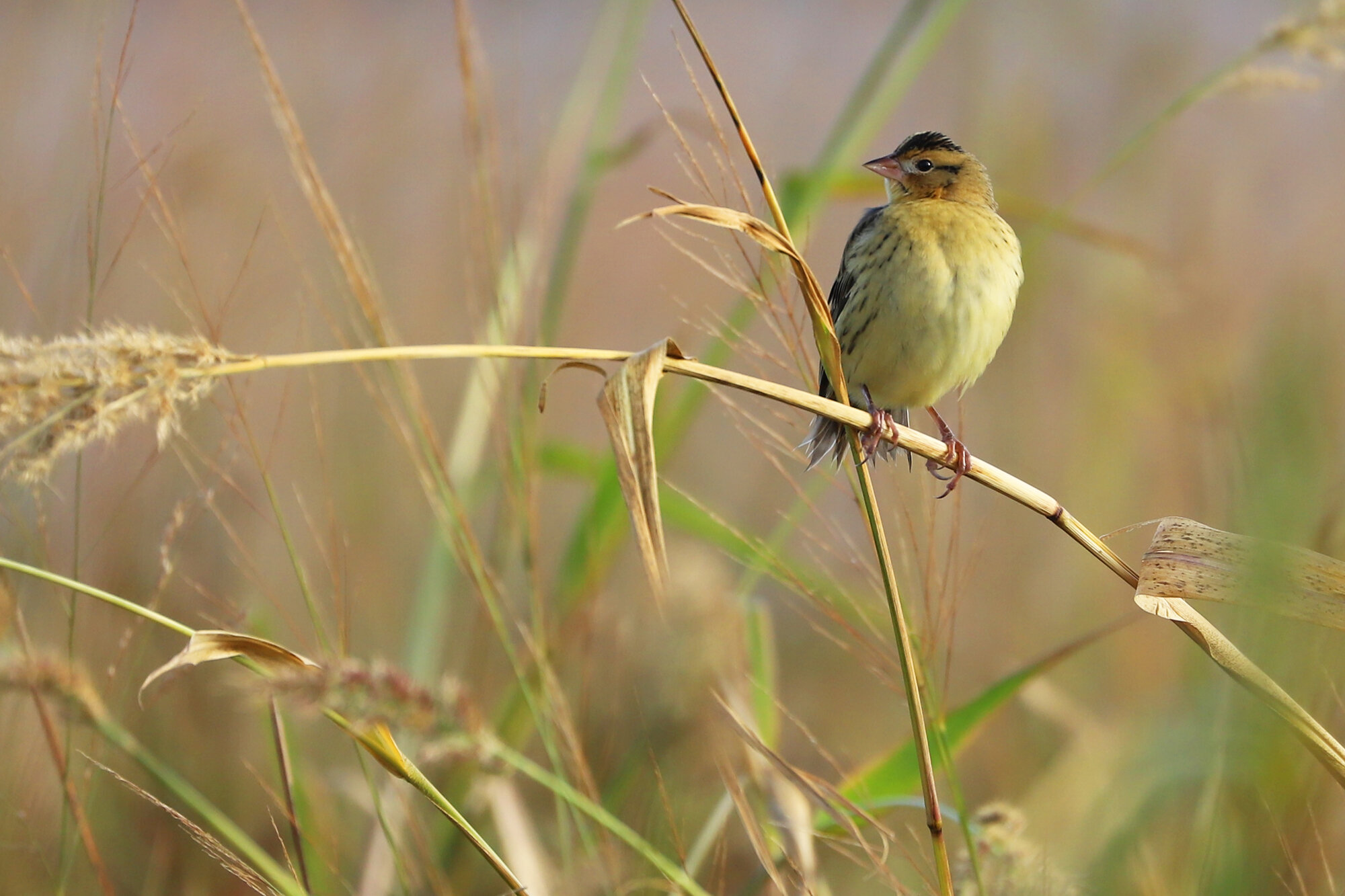
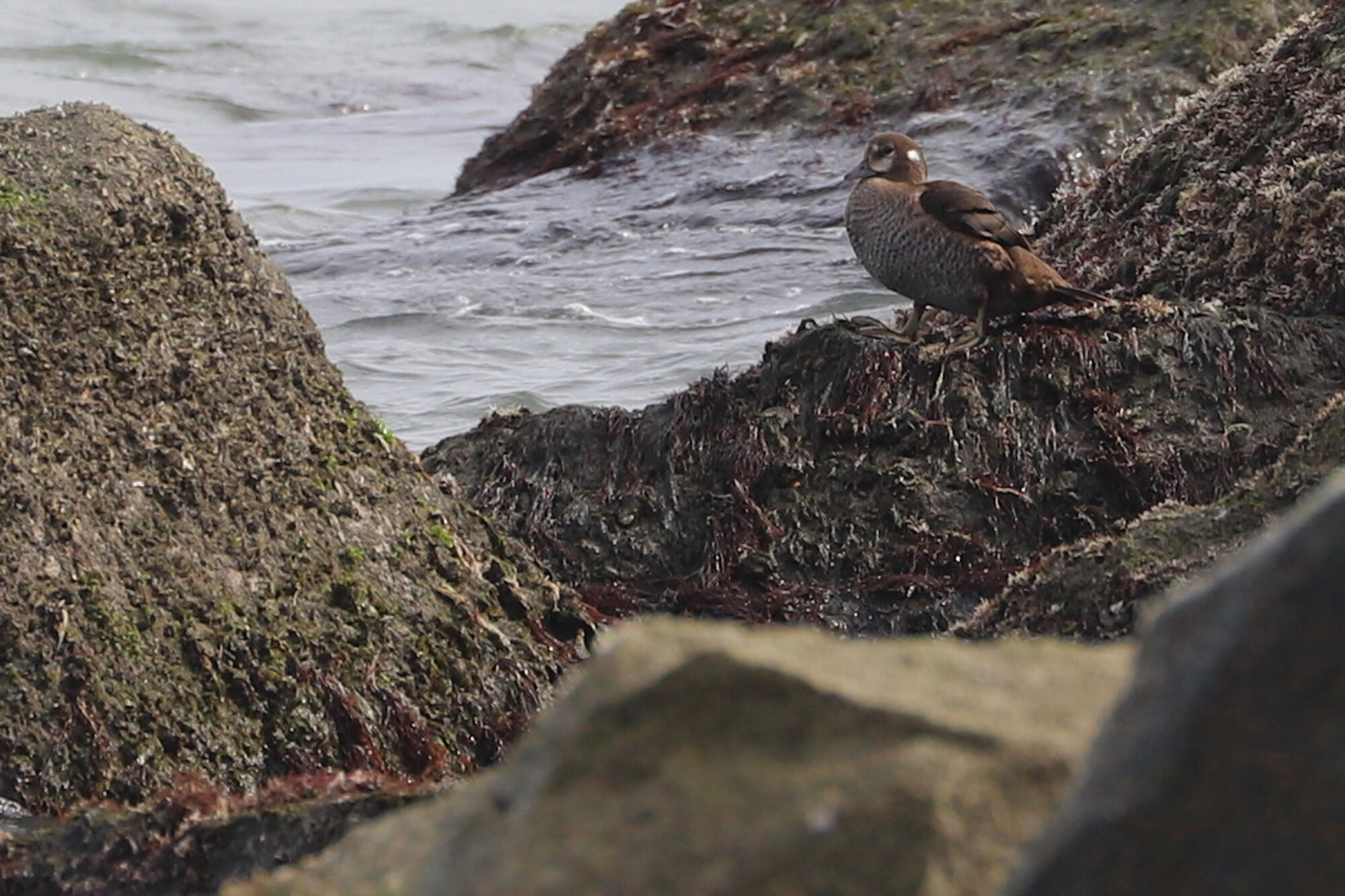
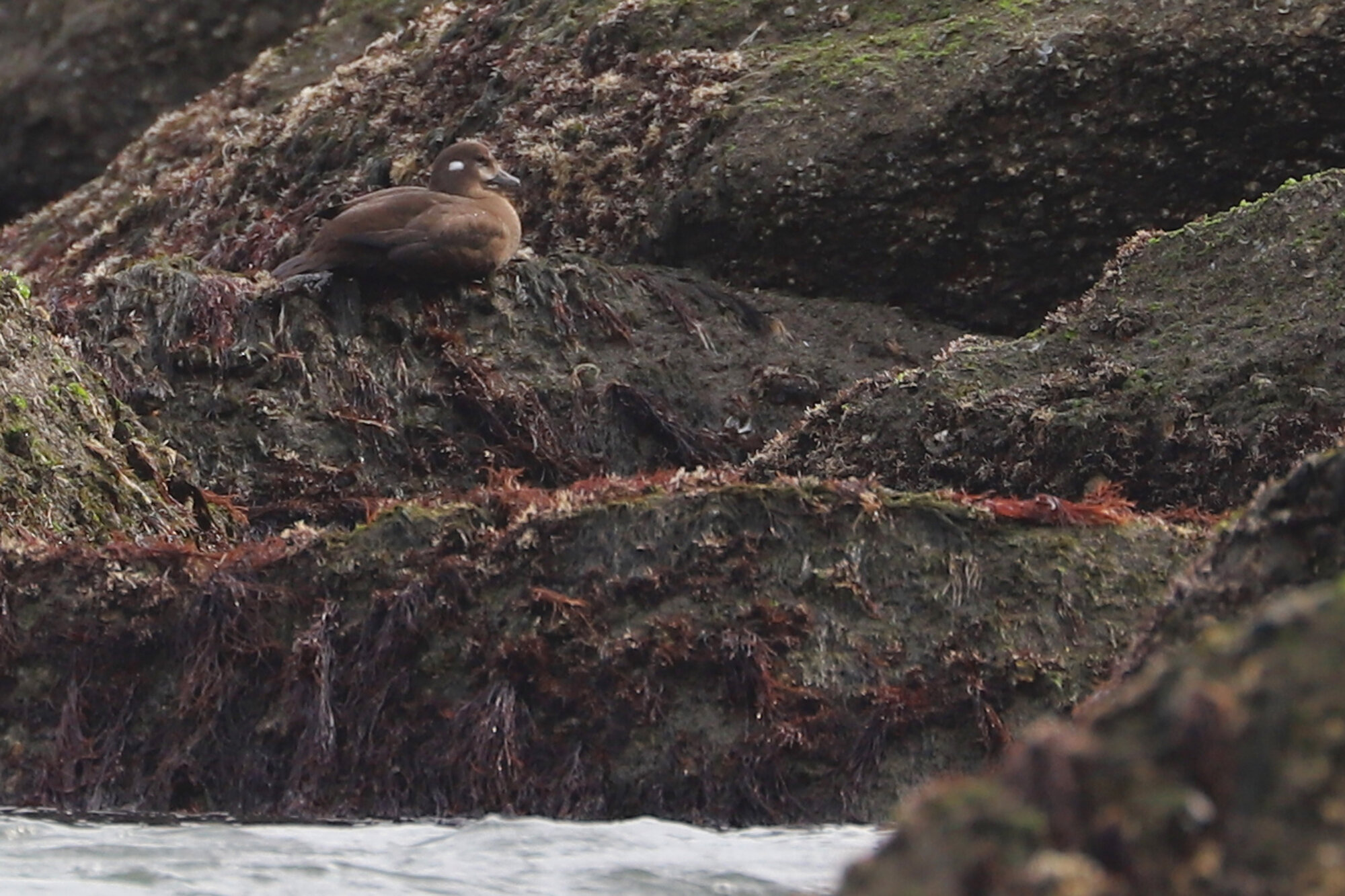
A female HARLEQUIN DUCK, the first of the fall season to be recorded in the state, popped up on the oceanside of the north jetty at Rudee Inlet early in the morning of 25 Oct (ph. Andrew Baldelli)! Marking a second record for the species here in 2019, the only other record in the city this year was an immature male that was first spotted during the Little Creek CBC on 31 Dec 2018 (vis. Andrew Baldelli, Linda Chittum & Lisa Rose; later ph. Adam D’Onofrio & Loretta Silvia). That young male lingered all the way through 6 Apr in the strongest currents where Long Creek hits the Lynnhaven Estuary on the east side of the inlet. The current Harlequin stayed at the inlet throughout the day (ph. Steve Myers, ph. Rob Bielawski, ph. Steve Keith), then seemed to vanish. However, it was picked up once again on 31 Oct from the Virginia Aquarium’s boat inside the inlet (ph. Taryn Paul). Outside of the Chesapeake Bay Bridge-Tunnel (CBBT) islands, which are sadly no longer accessible except by boat for the foreseeable future, Lynnhaven Inlet & Rudee Inlet seem to be the best locations for finding this species. With a very specific preference for fast moving water and rocky shorelines, these inlets benefit from higher water velocities not found elsewhere on the coast due to the rising and falling tides. These tidal transitions are severely amplified by the constriction in cross-sectional area between the two larger, connecting, bodies of water. Additionally, man-made bulkheads and oyster beds around Lynnhaven Inlet, as well as the armored north, south & offshore jetties at Rudee Inlet provide perfectly suitable perches for resting individuals, and foraging habitat for those feeding beneath the waves. Despite these two areas of prime habitat, the species is still quite difficult to come by in Virginia Beach, with only 1-2 records each year away from the CBBT. This female marked the very first record of any October for Virginia Beach input to eBird!

Only a second record for the year in Virginia Beach, a single AMERICAN AVOCET was photographed on the beach at Back Bay NWR on 2 Oct (ph. Eric Alton)! Previously in 2019, the only other record for the species also occurred at Back Bay NWR when one was observed in northbound flight over the refuge’s namesake freshwater bay, just west of the visitor contact station on 25 Jul (ph. Charlie Bruggemann). With records every year since 2013 input to eBird within the city, American Avocet is certainly an annual transient here, but it is a species for which we rarely see more than 1-2 individuals in a given year. The vast majority of records tend to occur in fall (mainly Aug/Sep, but with some in Jul & Oct), with few spring records to speak of (all are Mar records with one in Apr). This species shows some similarities with Marbled Godwit here, given both species are common at Pea Island NWR to our south in Dare County, NC. While the godwits are also common on the Eastern Shore lagoon system, especially at winter roosts sites such as Willis Wharf and Oyster, avocets tend to occur with highest frequency in Virginia at Craney Island Disposal Area in Portsmouth. Away from there, Chincoteague NWR in Accomack County, and Hog Island WMA in Surry County are the other prime spots to see the species during the fall season in Virginia. The vast majority of Virginia Beach records hail from Back Bay NWR, though Pleasure House Point NA held one in 2016 & the nearby Lynnhaven River marshes posted a record in 2018. Princess Anne WMA doesn’t yet have any records submitted to eBird, though the impoundments in either Whitehurst or Beasley are capable of a record if the conditions that particular season happen to be proper. Just something for local birders to keep in mind while out in those areas!
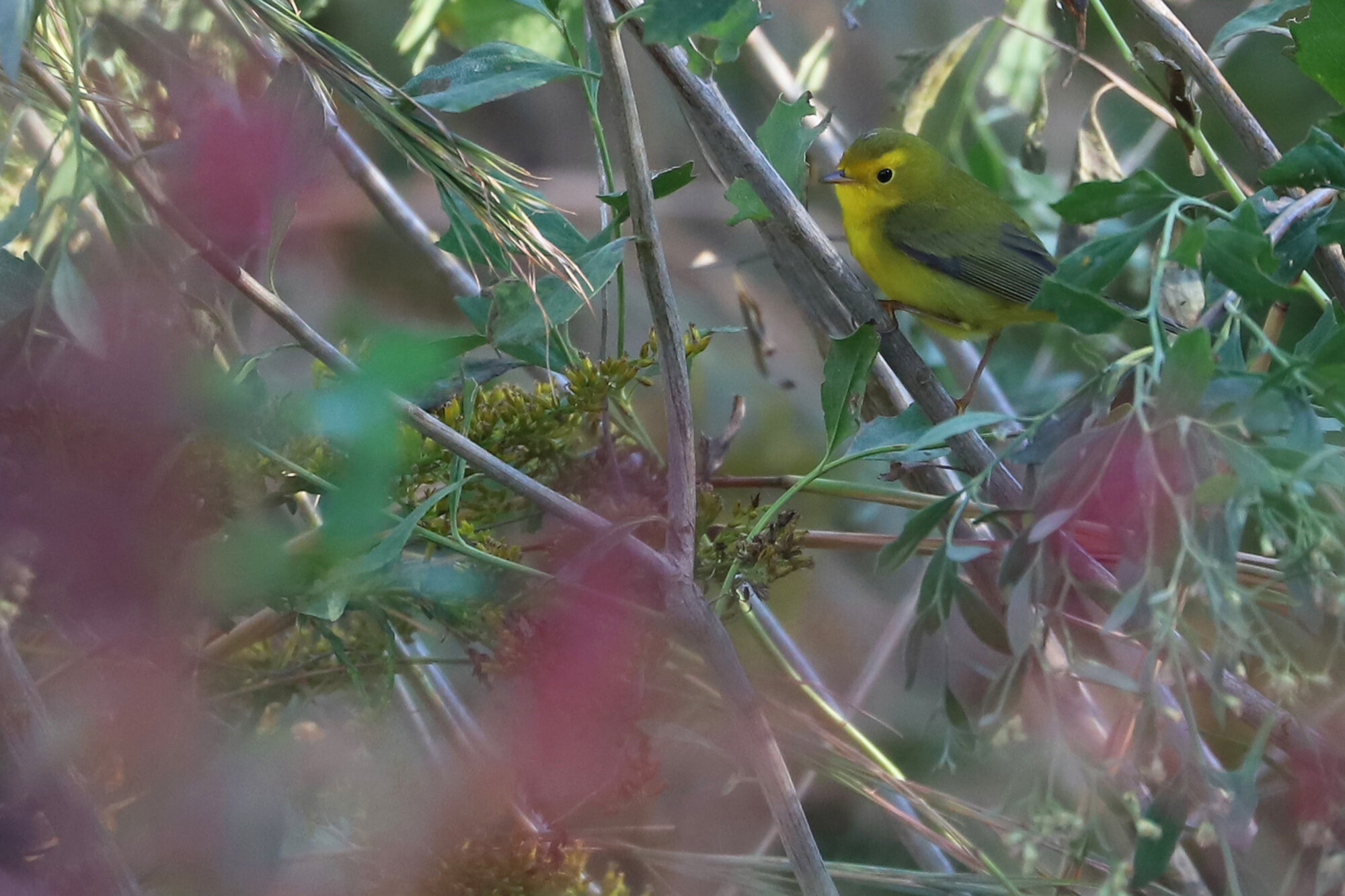
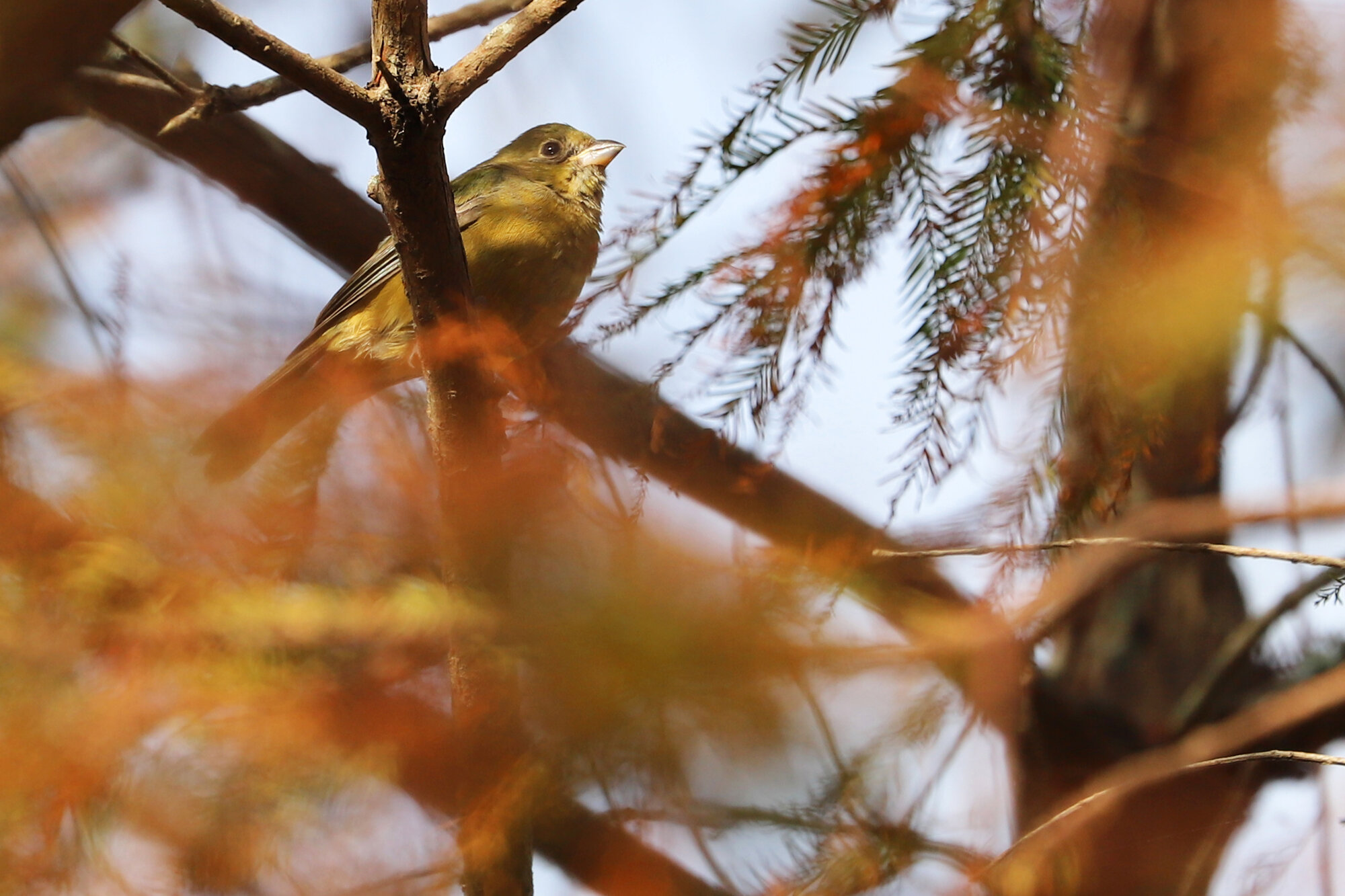
An unexpected PAINTED BUNTING also popped up this month, at Back Bay NWR on the morning of 12 Oct (ph. Rob Bielawski & Peggy DeRolf), marking the second earliest date one has ever been submitted to eBird for Virginia Beach! The record holder still stands at an individual photographed, also at Back Bay NWR, on 23 Sep 2017 (ph. Michael Mayer). Last Oct (2018), there wasn’t a single record for this species north of North Carolina, and similarly this record was the northernmost for the current Oct (2019) as well! Though this species is an annual winter resident in the city, its true distribution is obscured considerably since many homeowners prefer not to publicly report sightings of this highly sought-after species. While are several neighborhoods within Virginia Beach that host small groups of males & females each winter, it is always exciting when one shows up in a public location where other birds can attempt to view them as well. The last such record, of one in a public location also occurred at Back Bay NWR, back on 2 May 2018 (ph. Steve Myers), so the coastal scrub habitat that the refuge provides sure seems to be an excellent bet if seeking this species out in spring &/or fall migration! This most recent individual was showing the immature/female plumage as well, and while not quite as striking as that held by the adult males, its greenish coloration makes it unique among the species one will see in Virginia Beach. Though it was only observed, off-and-on, for about a half hour after the initial find around 9:30 AM, it gave good views near the large Bald Cypress trees roughly a hundred feet west of the base of the Raptor Trail.

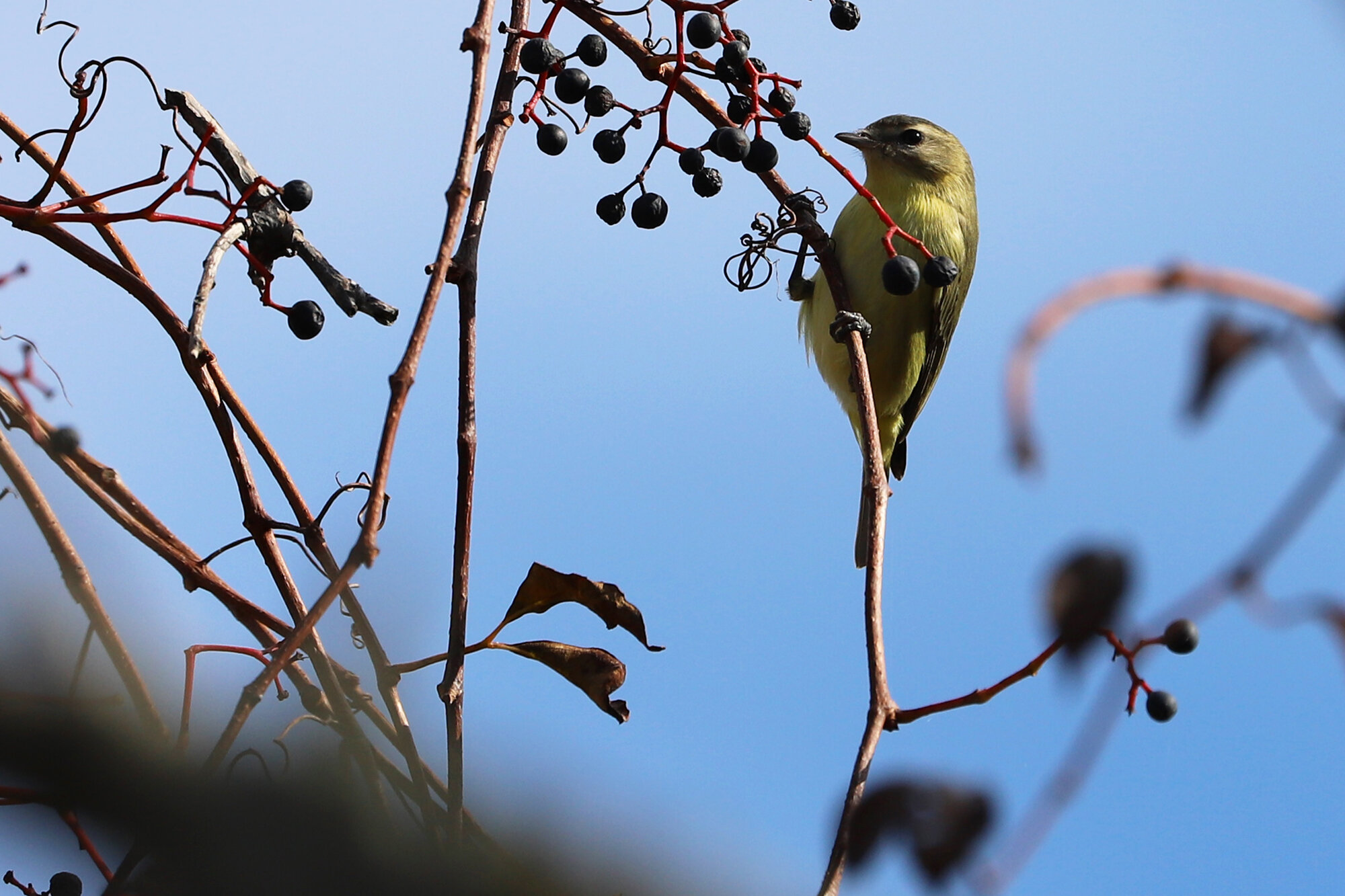
The second record for the fall season of PHILADELPHIA VIREO occurred this month when an individual was spotted at the base of the Raptor Trail at Back Bay NWR on 11 Oct (vis. Mike Collins). Extensively photographed near the same location on 12 Oct (ph. Rob Bielawski / Peggy DeRolf / Tommy Maloney), and lingering there through at least 13 Oct (ph. Steve Myers, ph. David Clark, vis. James Marcum), views of this individual were thoroughly enjoyed by many as it foraged an berries in good light. Falling right in line with recent fall season’s here in the city, we tend to average 1-2 records. The only other record this season was highlighted in the September journal, being an individual found at First Landing SP on 25 Sep (ph. June McDaniels). It would be a genuine surprise if any additions records pop up moving forward, as Sep/Oct tend to be the typical timeframe of their southbound passage through coastal Virginia. But, with three records now for the calendar year after an almost unheard of record occurred back in June at the same park (fittingly ph. June McDaniels), this has certainly been an exceptional year in Virginia Beach for the species!
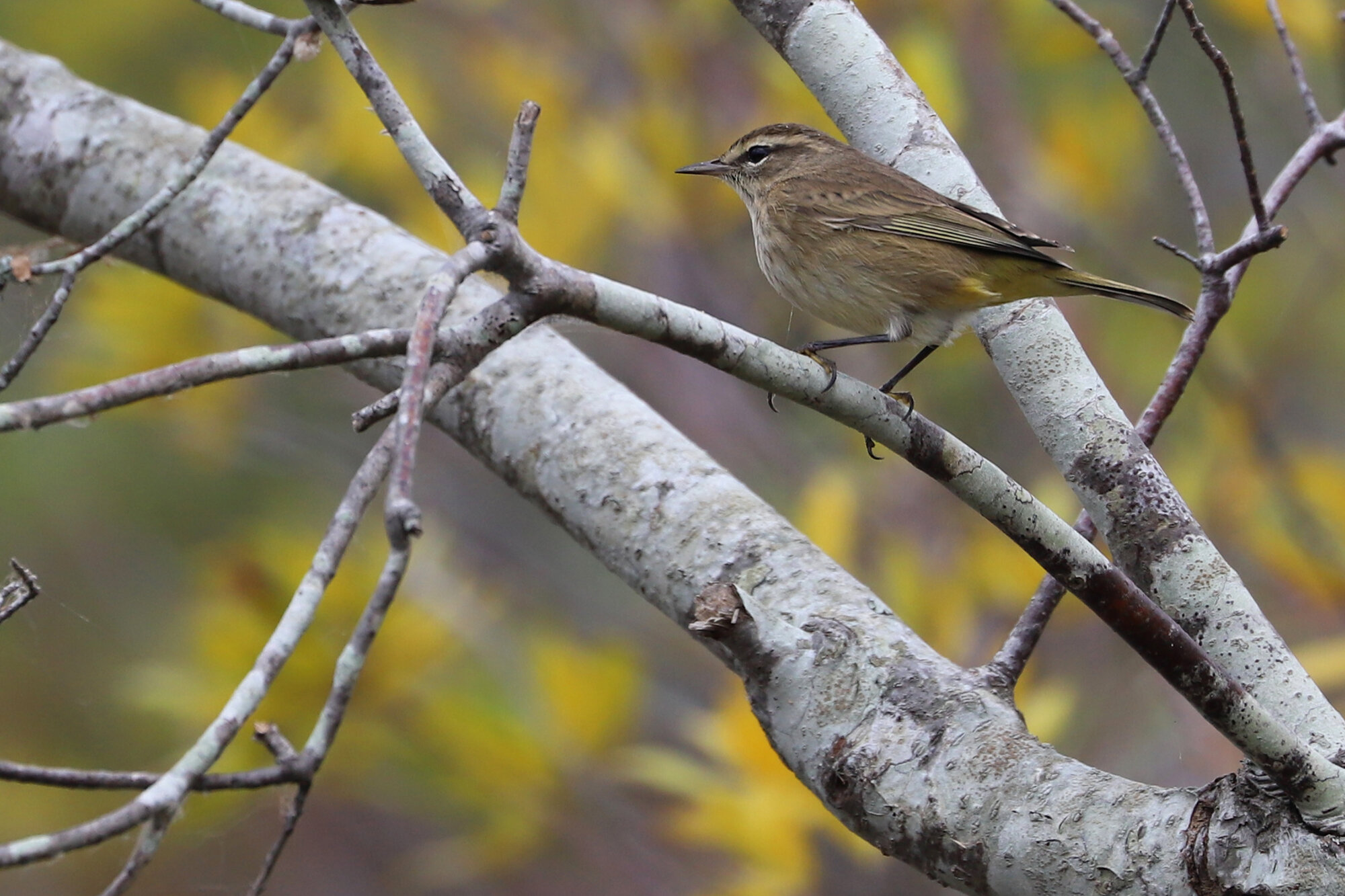
With a similar distributional patter to Philadelphia Vireo here in Virginia, we had our second CHESTNUT-SIDED WARBLER record for the fall season as well! Like the September record before it, this one was also an immature, and it was observed foraging among a mixed warbler flock on the north side of Kings Grant Road, roughly a quarter mile north of Witt Park, on 1 Oct (vis. Rob Bielawski). As highlighted in the September journal, there are quite a few species of warblers that tend to breed only at high elevations at the latitude of Virginia, and these tend to be the ones we have difficulty finding here on the coast during migration. Golden-winged, Blue-winged, Mourning, Cerulean, Blackburnian, Chestnut-sided and Canada Warblers all fit this mold nicely, so any records for these species tend to get the adrenaline churning amongst members of the birding community here.

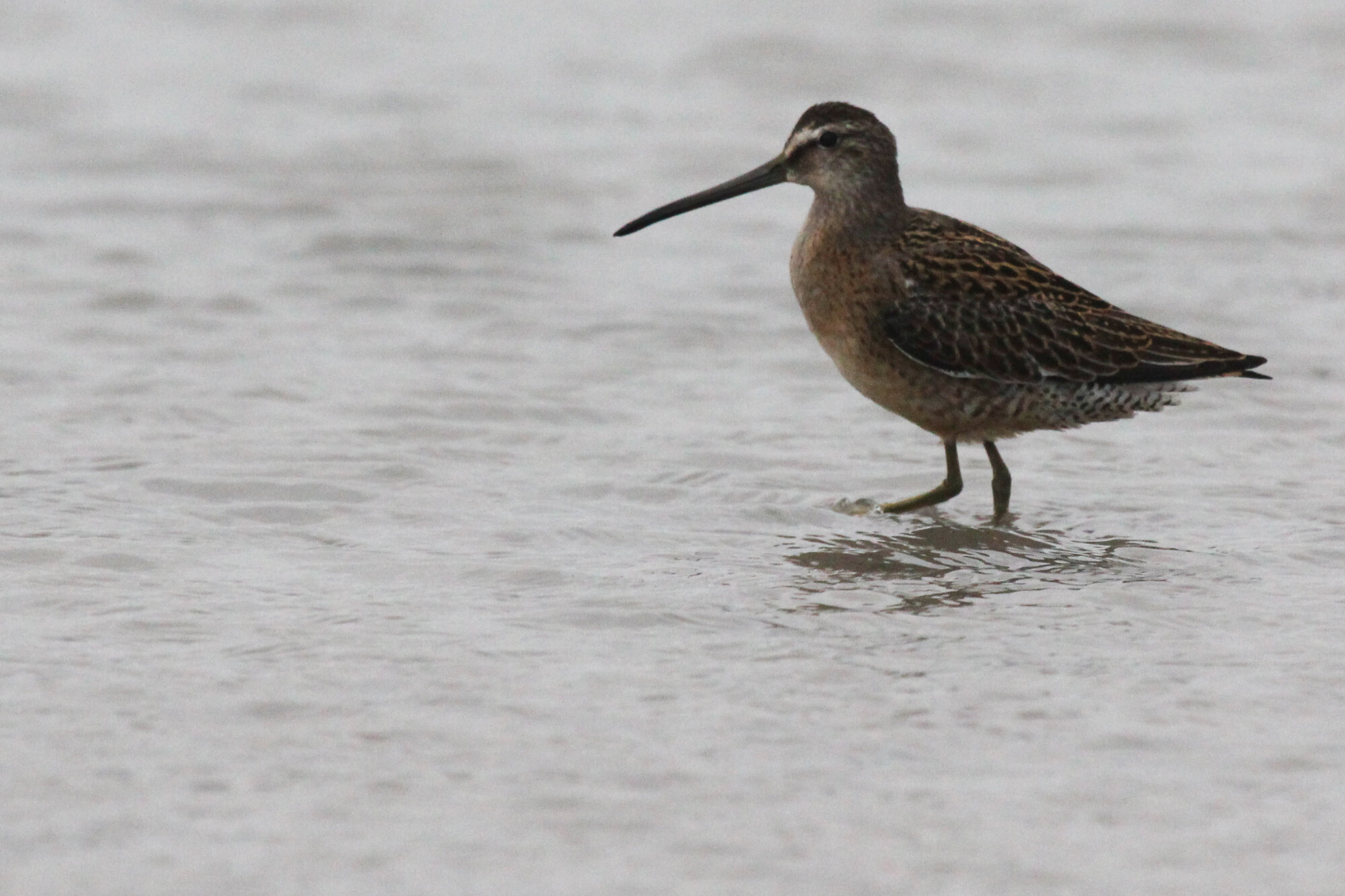
Following suit with September, we also had one report for LONG-BILLED DOWITCHER in October, with three sighted at Back Bay NWR on 28 Oct (vis. Al Hooks & Audrey Whitlock). This marks only the second report for the calendar year, after a single individual was located during the refuge’s mid-September improundment survey (vis. Andrew Baldelli). As mentioned last month, due to difficulty in separating Long & Short-billed Dowitcher in the field without excellent views, this species almost certainly goes unnoticed and is likely to be an annual transient in fall along our patch of coastline. This time of year, Long-billeds could even outnumber Short-billeds in terms of likelihood of presence. However, records are still few and far between in Virginia Beach since there just isn’t a great deal of accessible habitat, especially since the East Dike at Back Bay NWR closes after 31 Oct, and views of the C Storage Pool and H Pool are no longer available. From now through the winter season, this is a species that should be carefully looked for anytime a dowitcher is observed. Typically, the best way to separate the two in the field is by observing the shape of the bird while feeding. Long-billeds tend to be much chunkier, and when feeding will show an arch to the back reaching its top-most point in the middle. Short-billeds usually show this point over the shoulder, with a slimmer appearance and more linear slope to the back behind the shoulder. Bill length isn’t particularly useful since there is considerable overlap between females & males of the two species; just some notes to keep in mind.
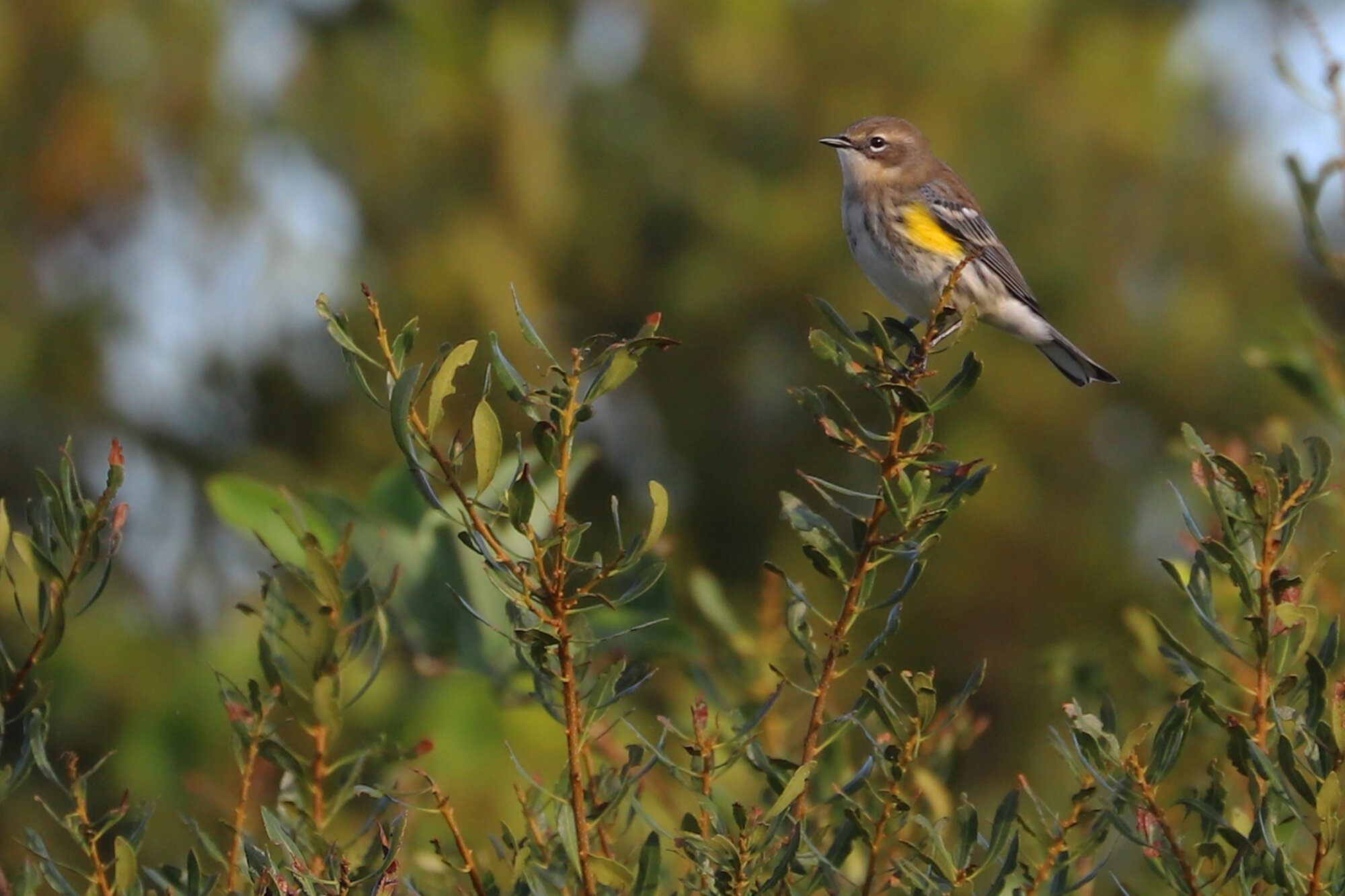
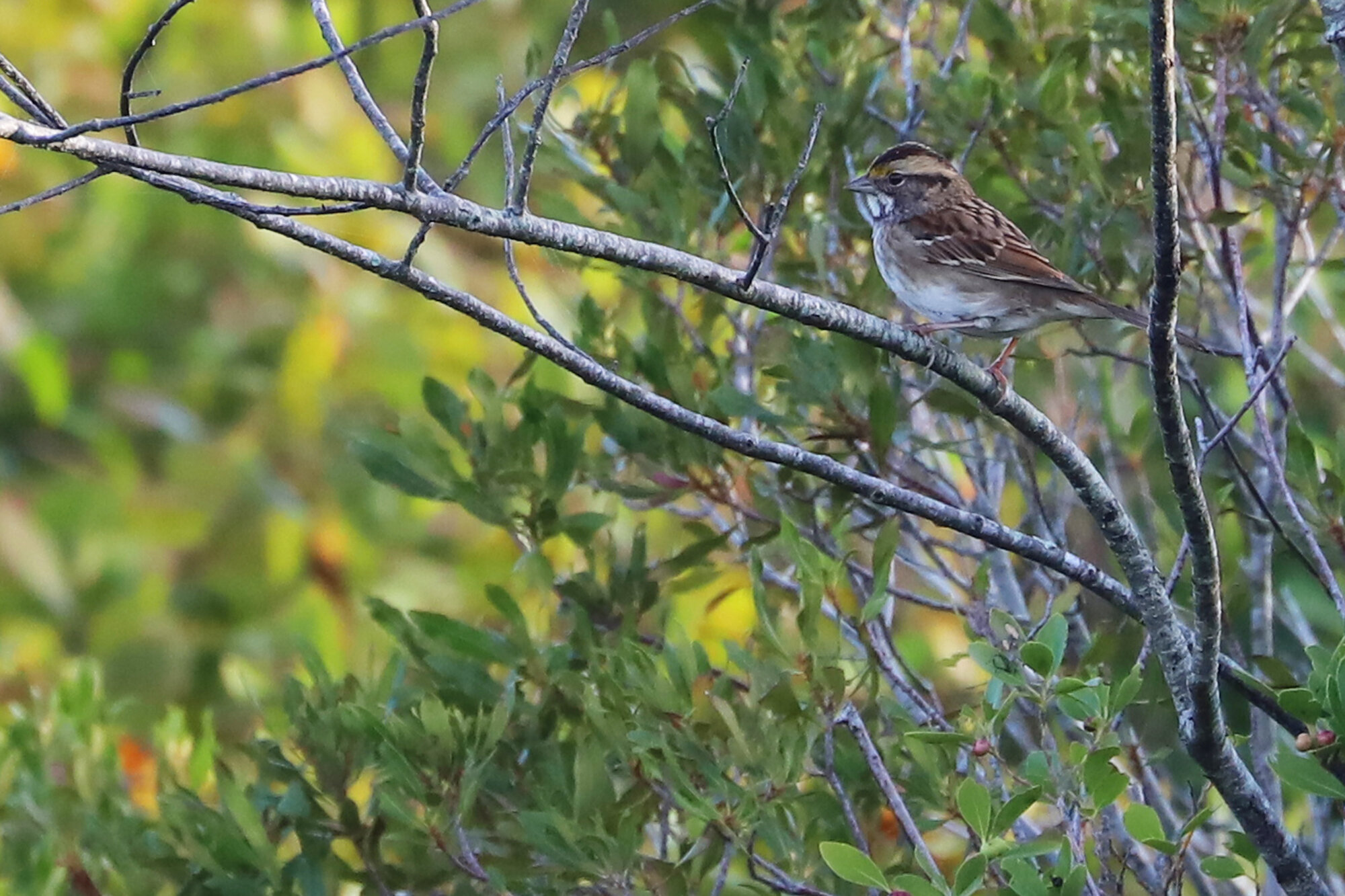
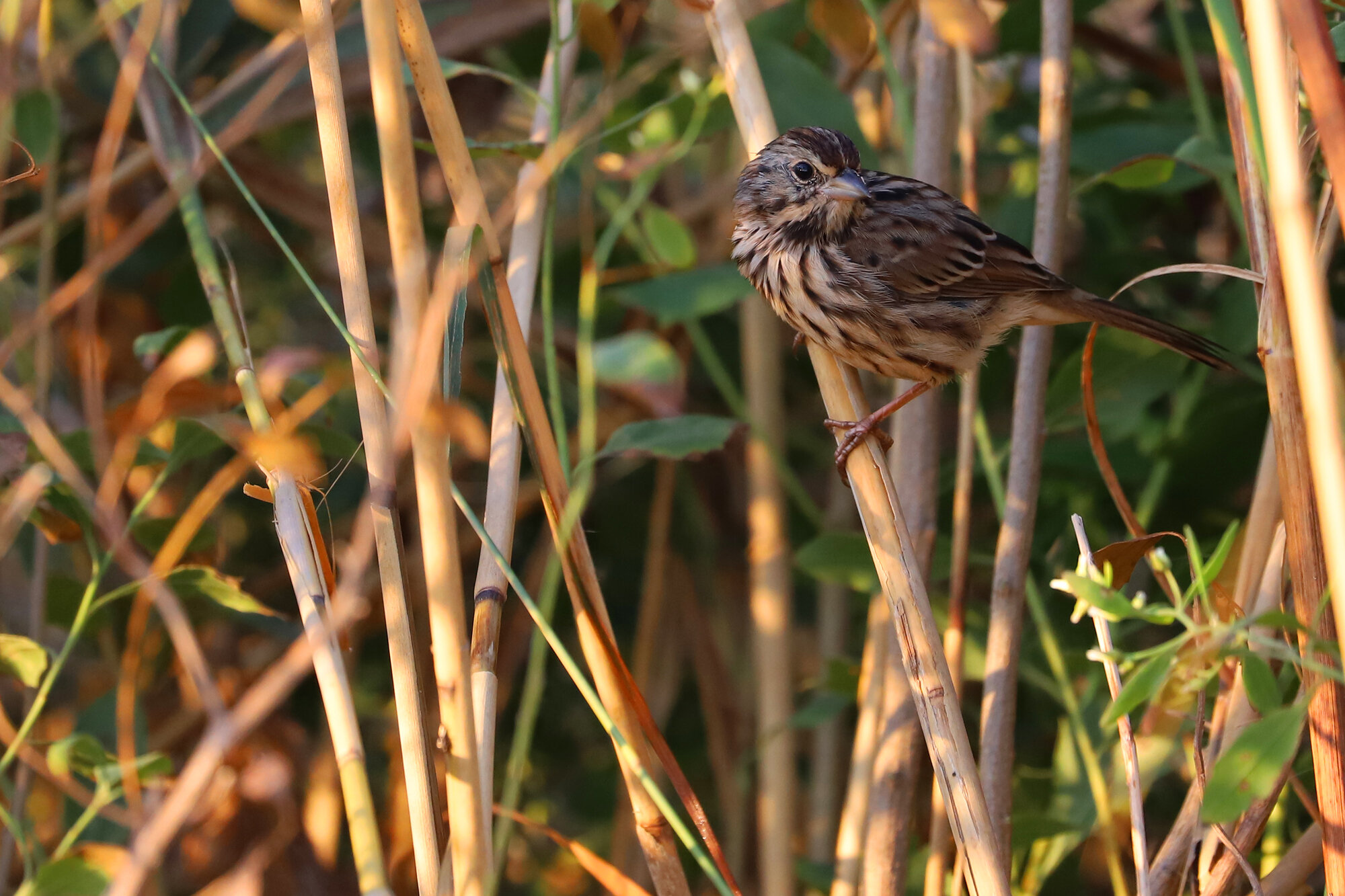
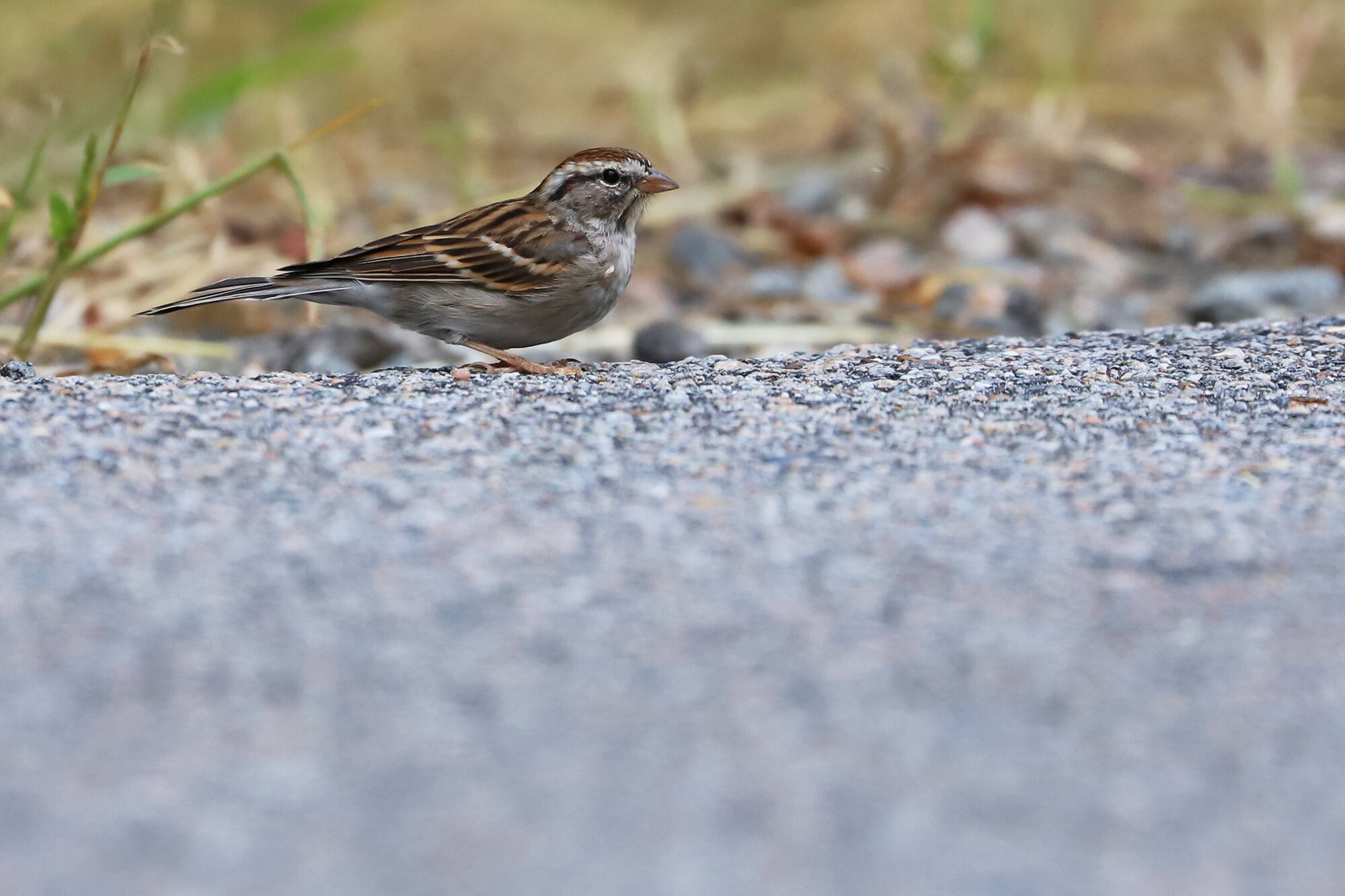
At least three different WHITE-CROWNED SPARROWS were observed in the city this month, with two records at Back Bay NWR and another at Little Island Park! The first to be found, an immature, was found near the base of the Raptor Trail not more than 100 feet from the southern parking lot, on 12 Oct (ph. June McDaniels), lingering through at least 14 Oct in the same location. The second, a surprising adult bird, was photographed in the “sparrow field” north of the visitor contact station on the morning of 13 Oct (ph. Andrew Baldelli, ph. Mike Collins, vis. David Clark), but unfortunately was not seen later in the day or thereafter. After the weather calmed down in the wake of post-Tropical Storm Nestor’s passage over the region on 20 Oct, another immature individual as observed at Little Island Park (vis. Tracy Tate). A third, fourth and fifth record for the calendar year, these are the first to be observed since the springtime when an adult was found at the Tidewater Arboretum on 26 Apr (ph. Andrew Baldelli), and prior to that an immature was viewed along Stuart Road in southern Virginia Beach on 14 Jan (vis. Karen & Tom Beatty). Most records in the city tend to be first-year individuals showing the immature plumage, and adults seem to be rarer for whatever reason. It’s interesting that in 2019 we’re currently split even with two of each. Along with Lincoln’s, Clay-colored & Lark Sparrows, this is a species to be looked for as we head into November since it is likely that one or more of each of these species attempt to spend the winter somewhere in the city in any year.

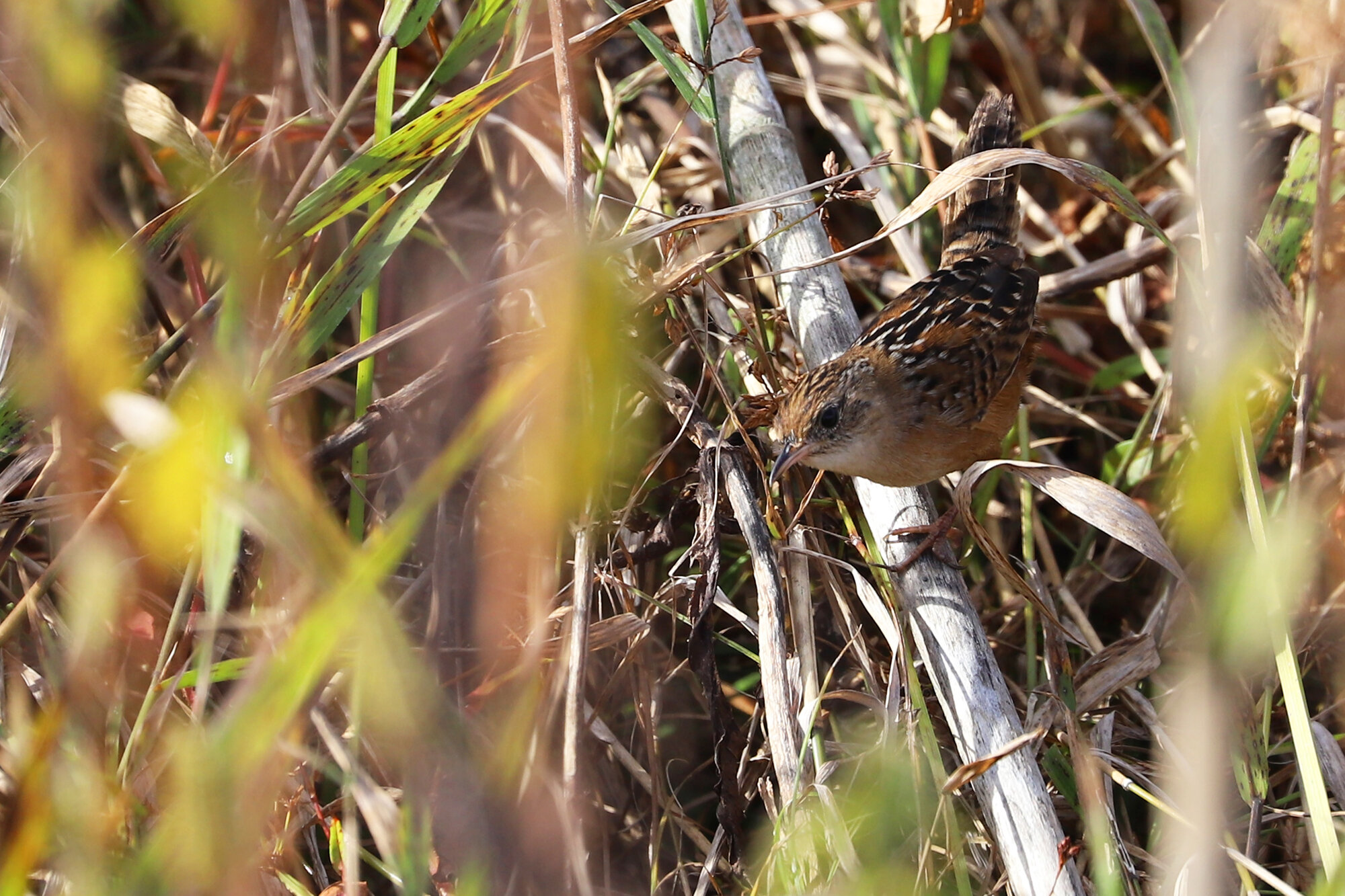
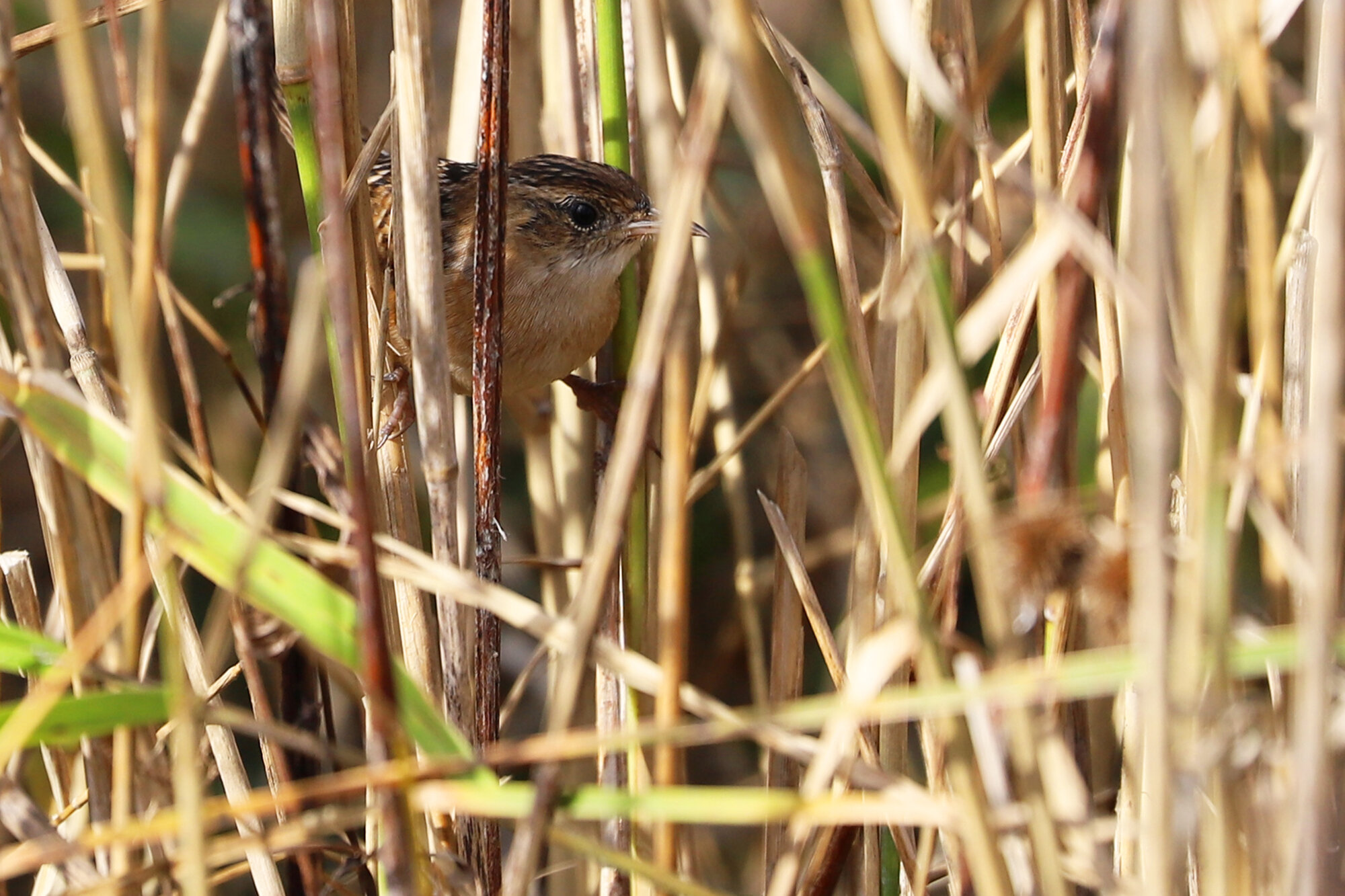
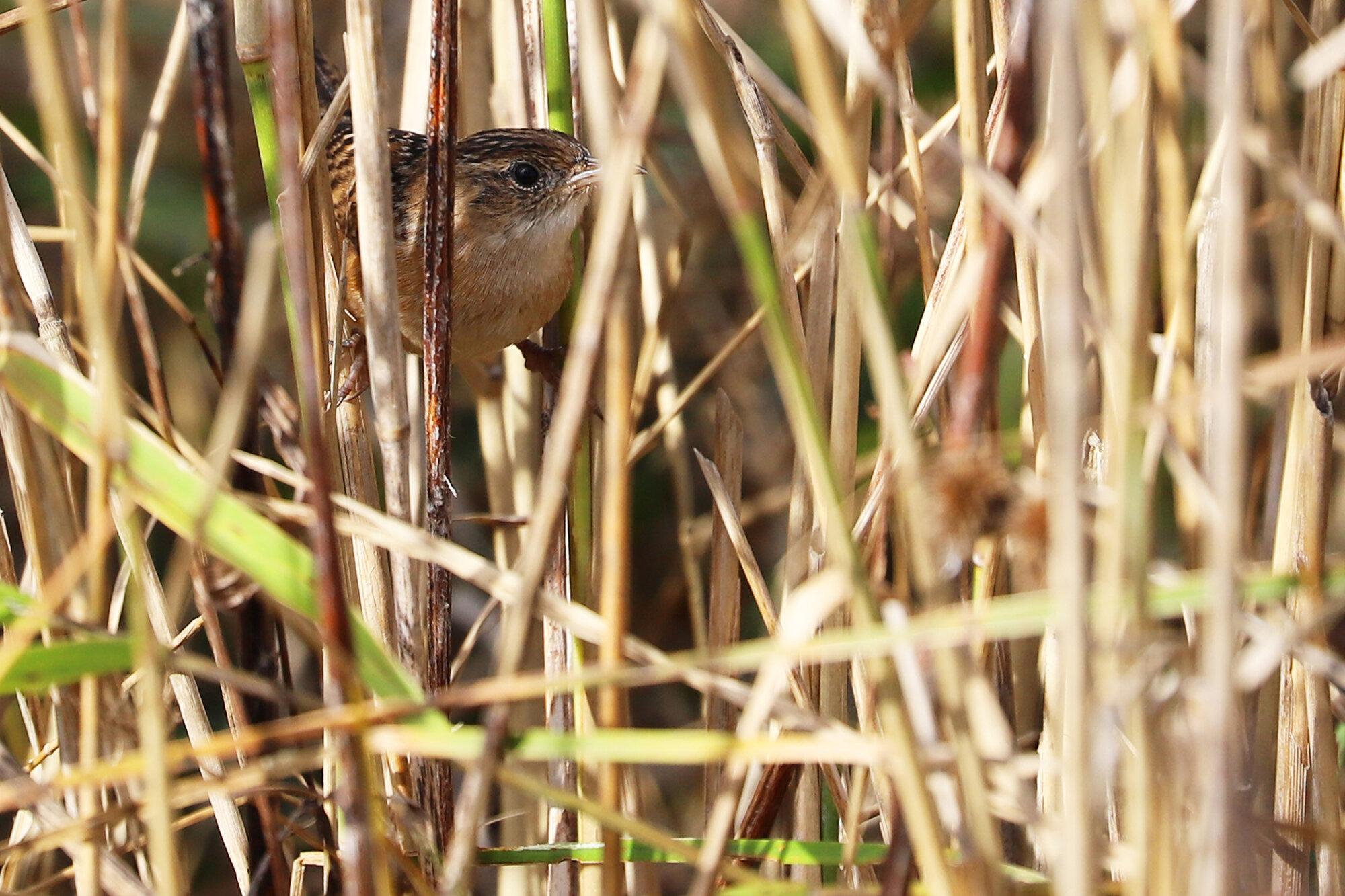
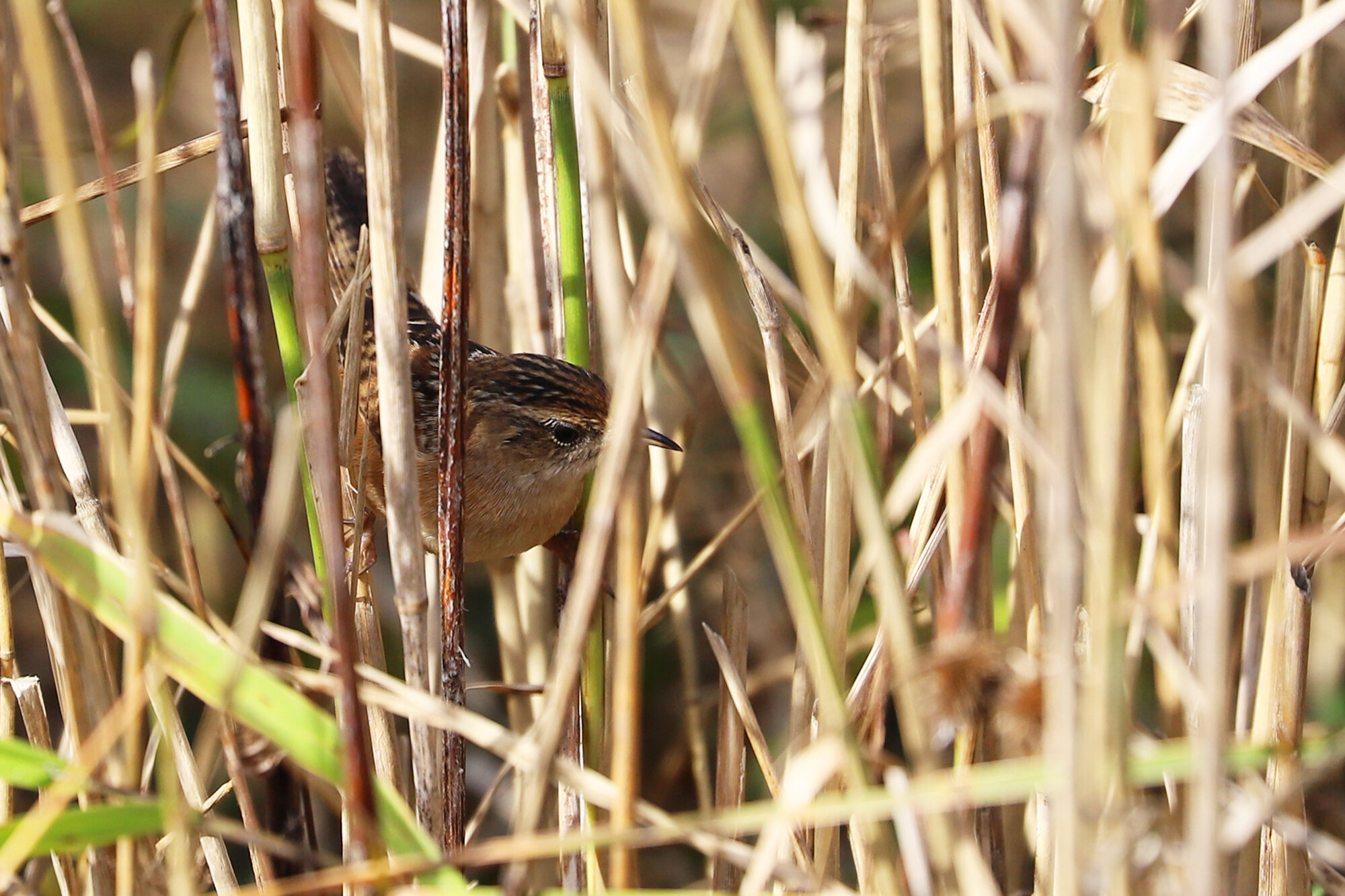
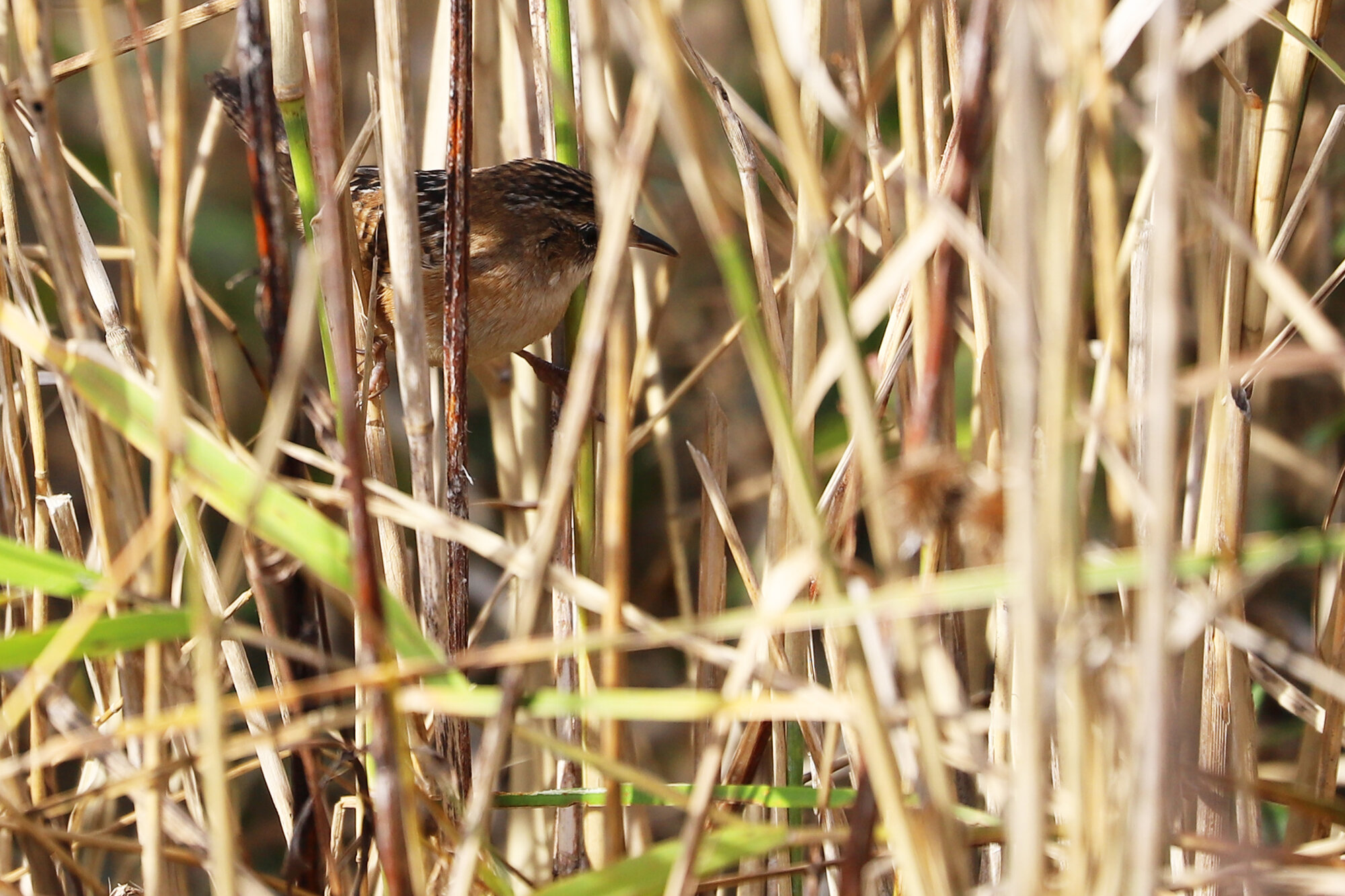
Several reports for SEDGE WREN surfaced during October, with the first being a well-described sight report at Back Bay NWR on 1 Oct (vis. Mike Carlo) and the next being a quick view of perhaps the same individual nearby in the “sparrow field” north of the visitor contact station on 5 Oct (vis. Mike Collins). Likely a separate individual, this time viewed across the East Dike from H Pool, one was photographed on 19 Oct (ph. Cindy Hamilton & June McDaniels) and remained at the location through at least 26 Oct (ph. Kim & Rob Bielawski). In similar fashion, the only other records for the year, at the time of these sightings, in Virginia Beach also hailed from Back Bay NWR, and were also close in terms of timing, with one photographed 13 Mar (ph. Reuben Rohn) and one viewed 15 Mar (vis. Edward Brinkley). Additionally, a sight report for two individuals in a weedy field at Green Run Neighborhood Park came in on 12 Oct (aud. & vis. Gary Witmer), marking the first record for the species at the park and one of few away from southern Virginia Beach in the city. A very cryptic species, and therefore a difficult one to pin down, Sedge Wren is probably more of an uncommon wintering species than a rarity, however with its preferred habitat occupying such a small percentage of the land area of Virginia Beach, all records reported to eBird do get flagged as rare and require review. Aside from Back Bay NWR, Princess Anne WMA typically has appropriate habitat, but still very few records are generated there with perhaps one or two on an annual basis. Catching this species during migration is the best chance for birders to observe it, especially given the closing of the East Dike at Back Bay NWR after Oct 31 severely limits access to its preferred habitat.
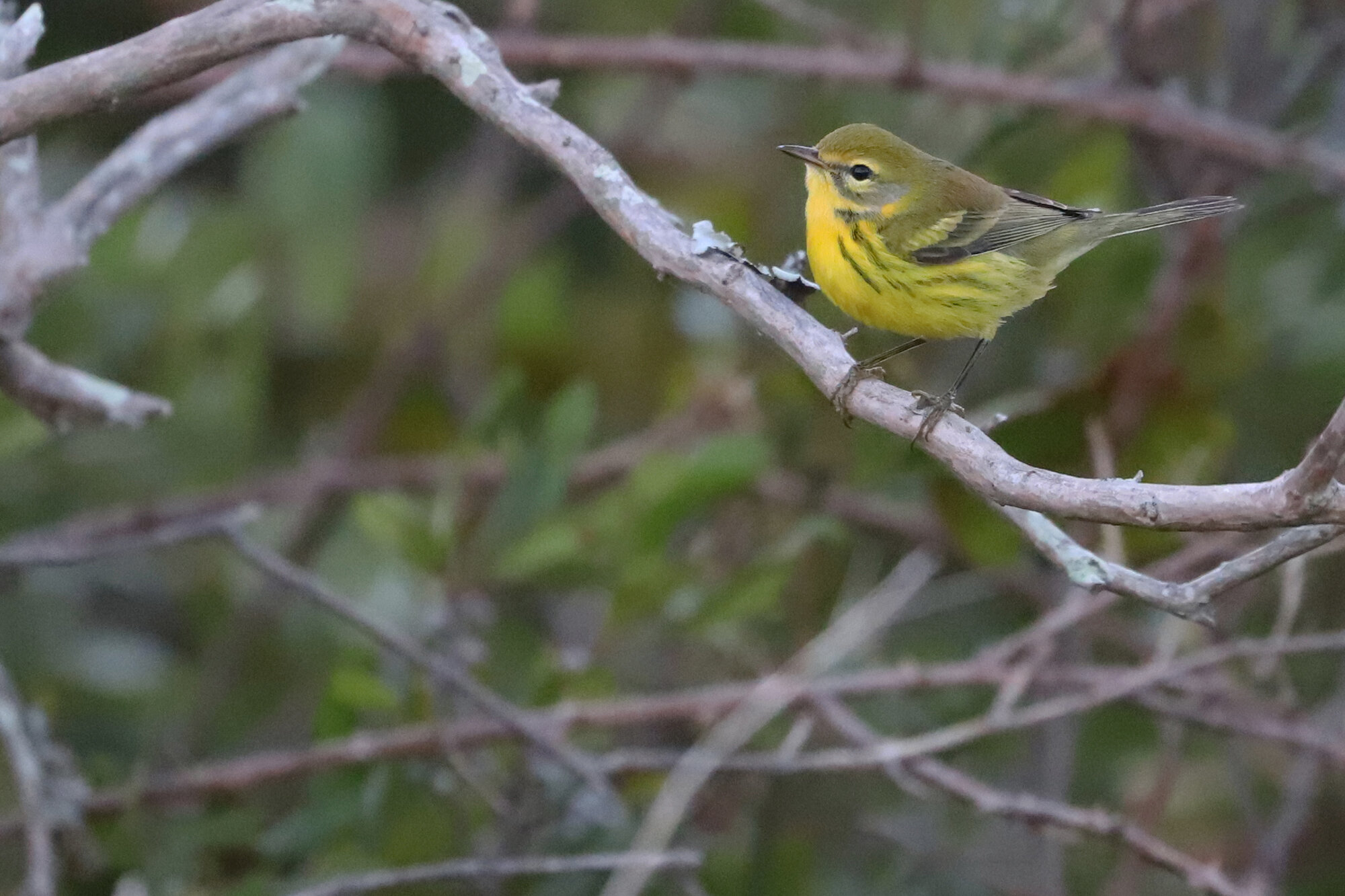
In what has been nothing short of an incredible fall season for YELLOW-THROATED WARBLER, yet another was observed, this time at First Landing SP on 5 Oct (ph. June McDaniels). This is now the sixth record for the season in Virginia Beach, after the fall migration season of 2018 yielded zero records, and the 2017 season had only a single report! Quite miraculous, as up until now there have been more reports of this species here in winter over the last several years than in fall. This fall (quoting the September journal entry), records for this species also occurred with one at a private residence in Bellamy Manor on 24 Aug (ph. Una Davenhill), one at Back Bay NWR (the first ever photographed in eBird at the refuge!) from 21-23 Sep (ph. Rob Bielawski & Lisa Rose), one at Lake Lawson & Lake Smith NA on 24 Sep (vis. Gigi DelPizzo), one at a private residence in Lake Smith Terrace on 25 Sep (vis. Tracy Tate), and finally one at a private residence in Oak Springs on 26 Sep (vis. Carolyn Page). If these trends continue, this species is a good candidate to be set as a spring & fall transient in eBird, and will no longer flag in fall.

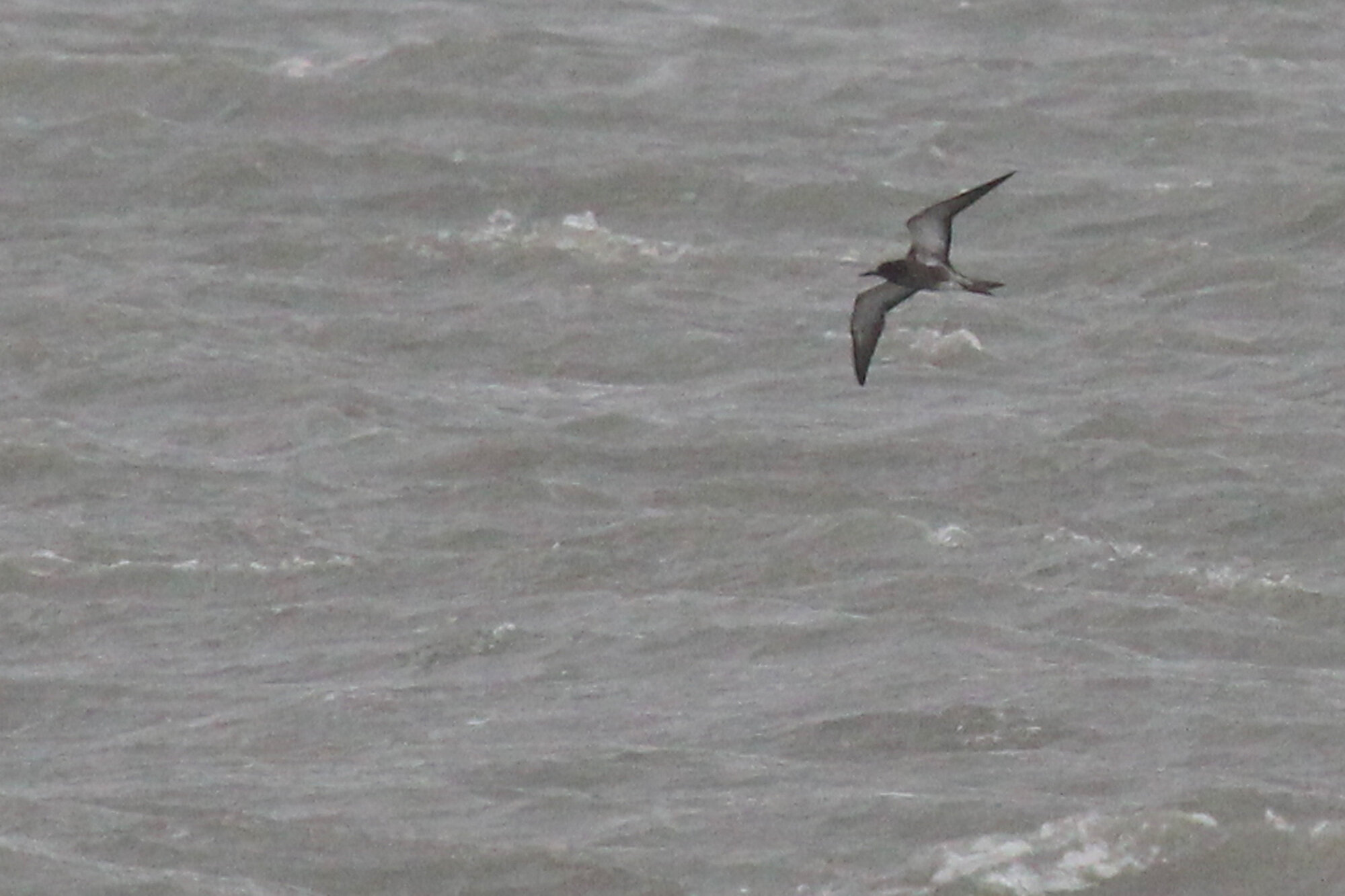
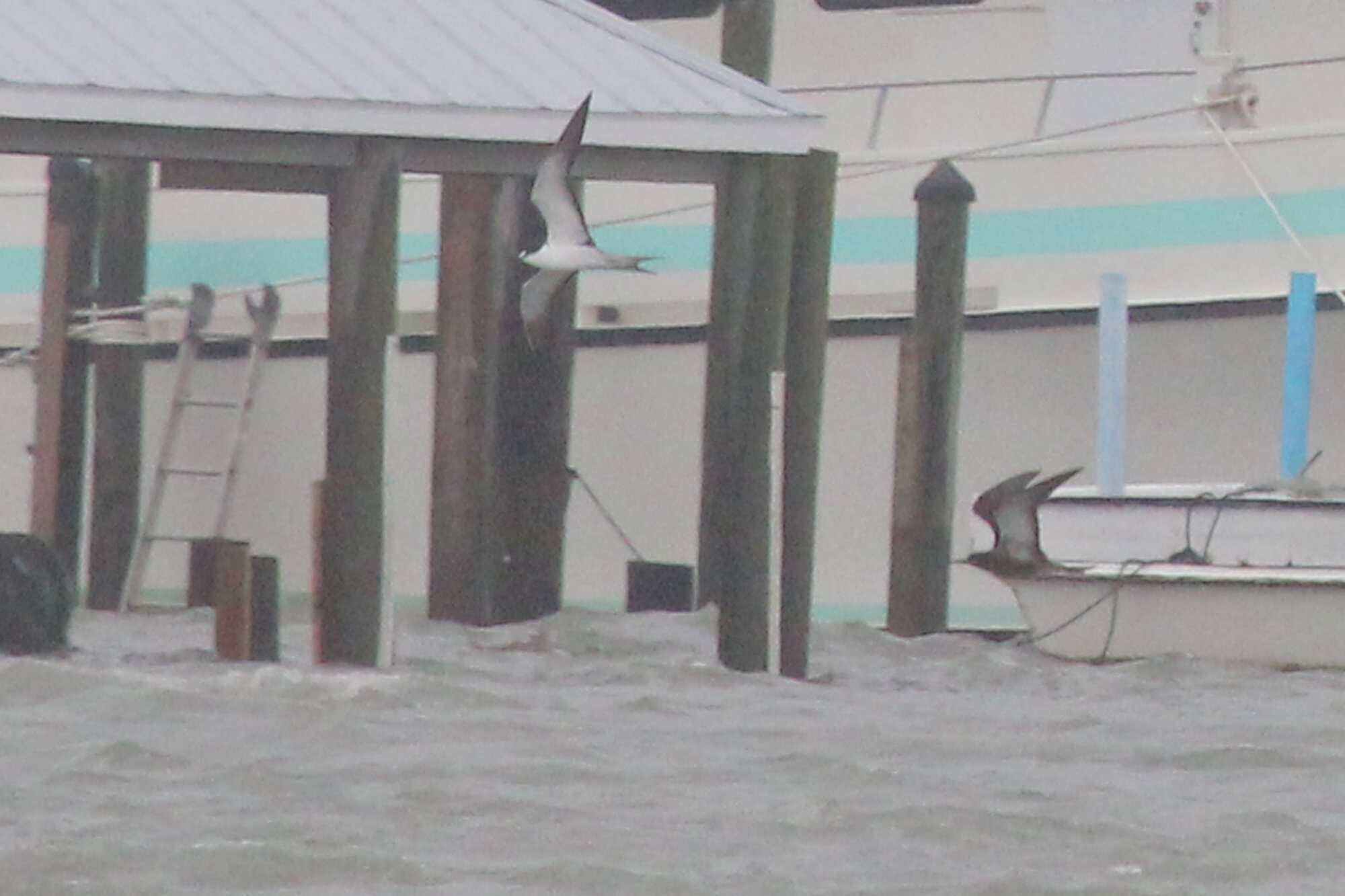
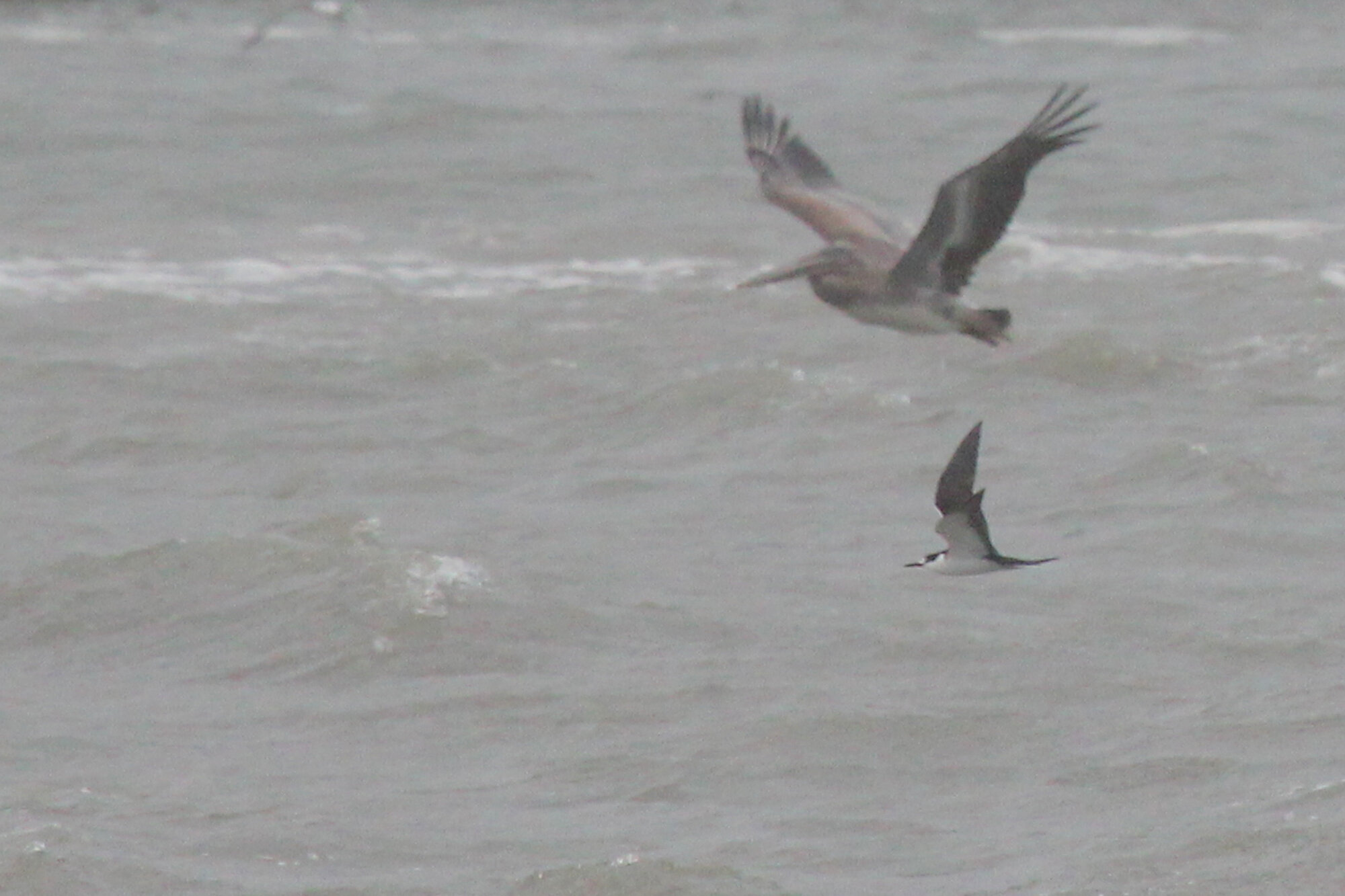
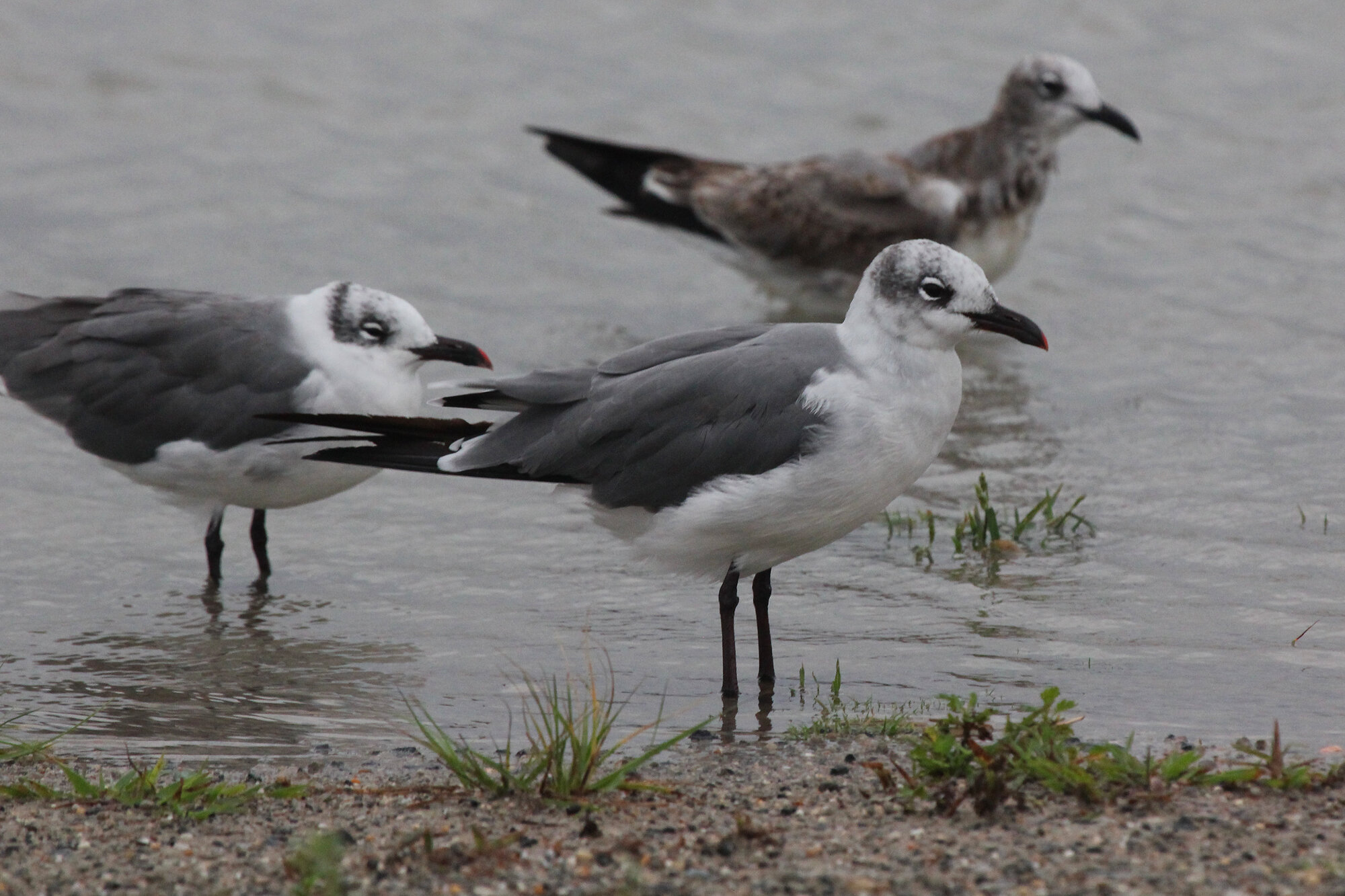
Just like in September, there was also one record for PARASITIC JAEGER during October, with a light morph individual photographed from the beach at Back Bay NWR on 27 Oct (ph. Mike Collins). Though the September reports hailed from Little Island Park just to the north, this was the first record for the refuge this fall. As mentioned in the prior journal entry, this species has been reasonably well recorded in 2019, with a few records during the height of winter in Jan/Feb, and on 20 Apr, a new state spring high count was achieved when 12 passed by Little Island Park (ph. Andrew Baldelli & Rob Bielawski) on the backside of a strong coastal low pressure system. It’s possible that this is a good sign for the coming Oct/Nov migration season of these species. Parasitic Jaegers breed in the arctic tundra and make their way to the coast, mostly during Sep-Nov, with many passing overland. Seawatching from locations like Rudee Inlet, Little Island Park and Back Bay NWR could yield some great observations of these birds, especially in November as Laughing Gulls are bailing out southbound for the winter and provide the jaegers with a perfect target to harass. An annual transient along the coast, but one that still requires time & effort to be input, any jaeger sighting is one to be excited about!
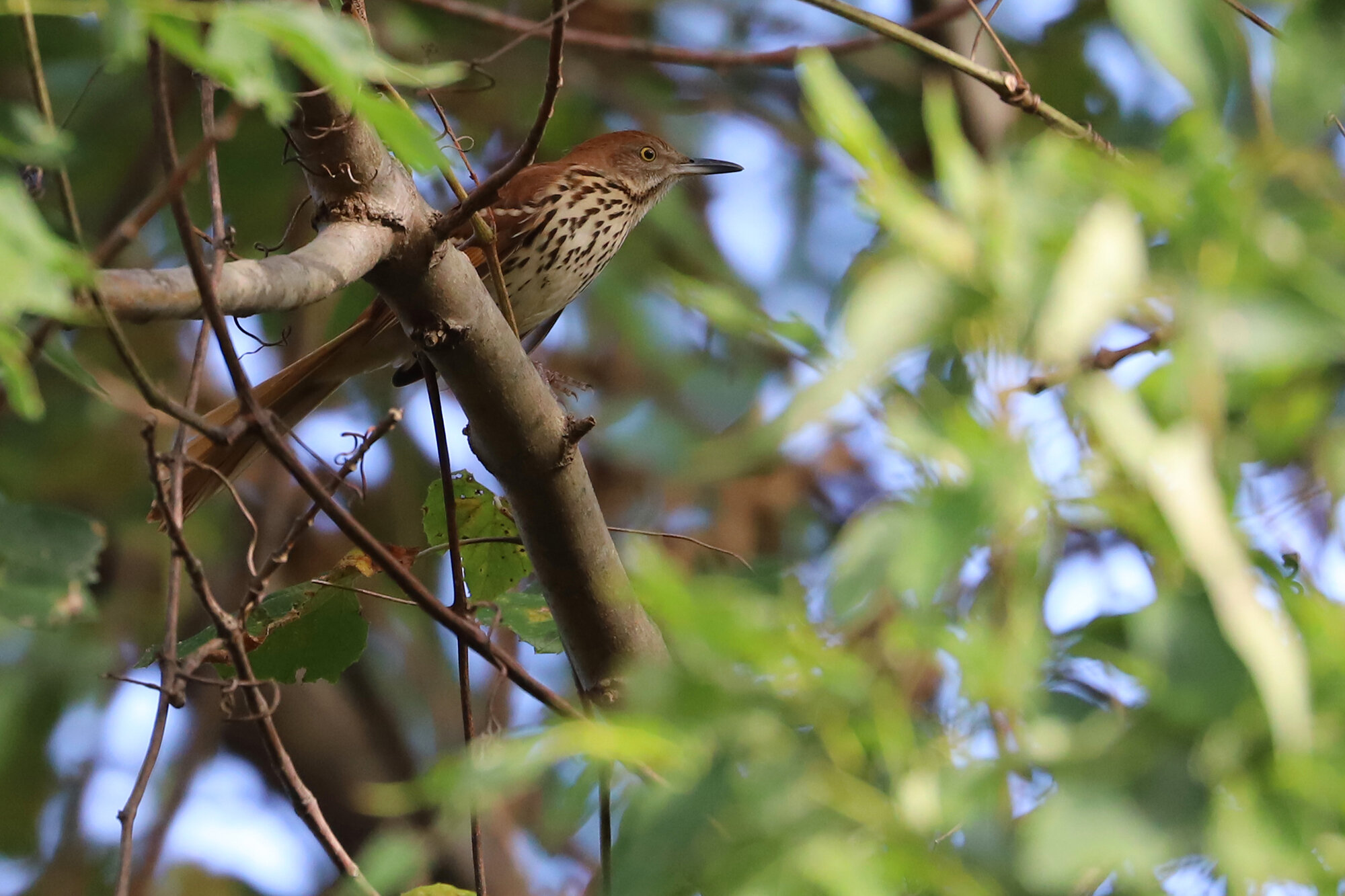
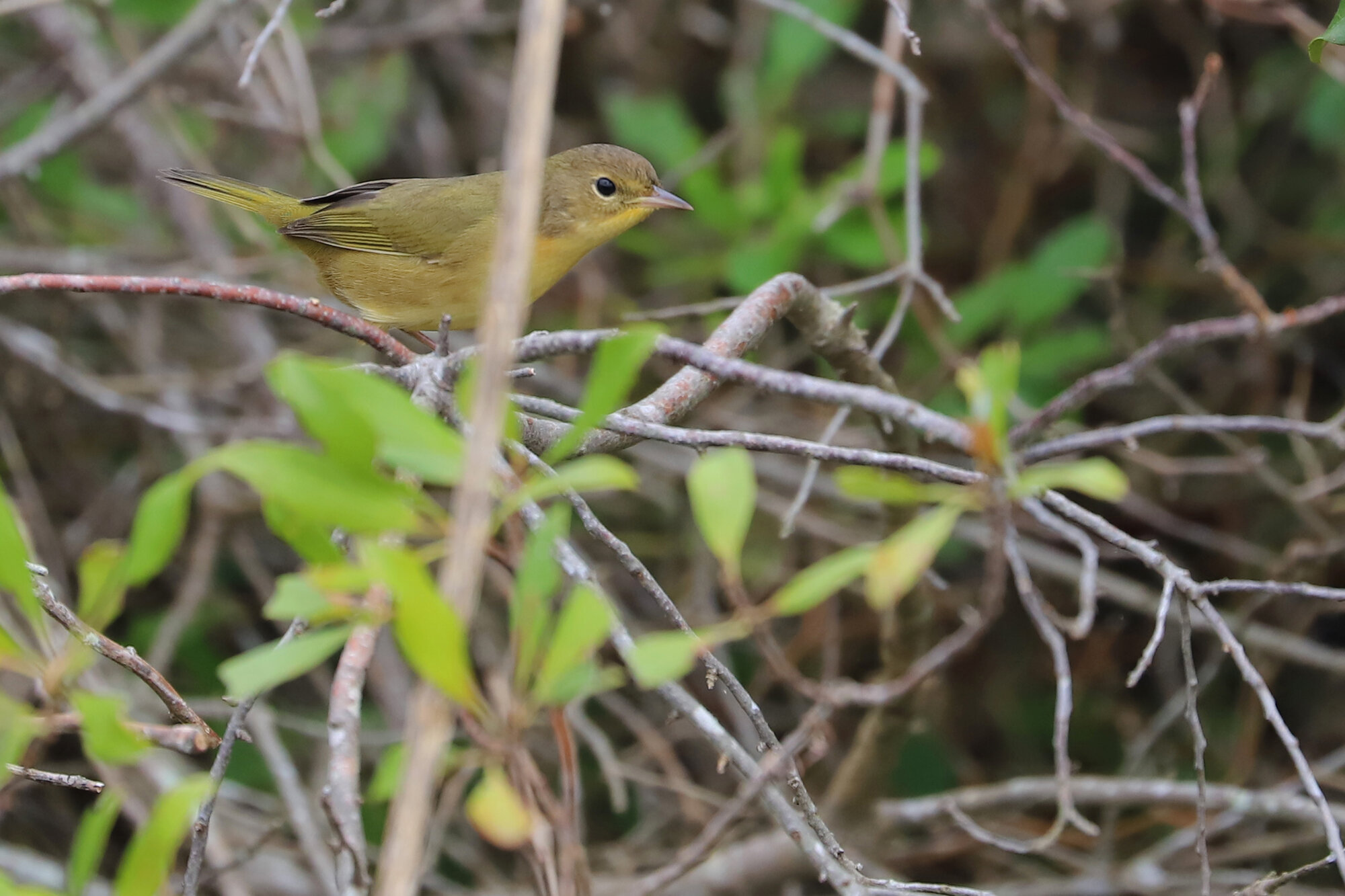
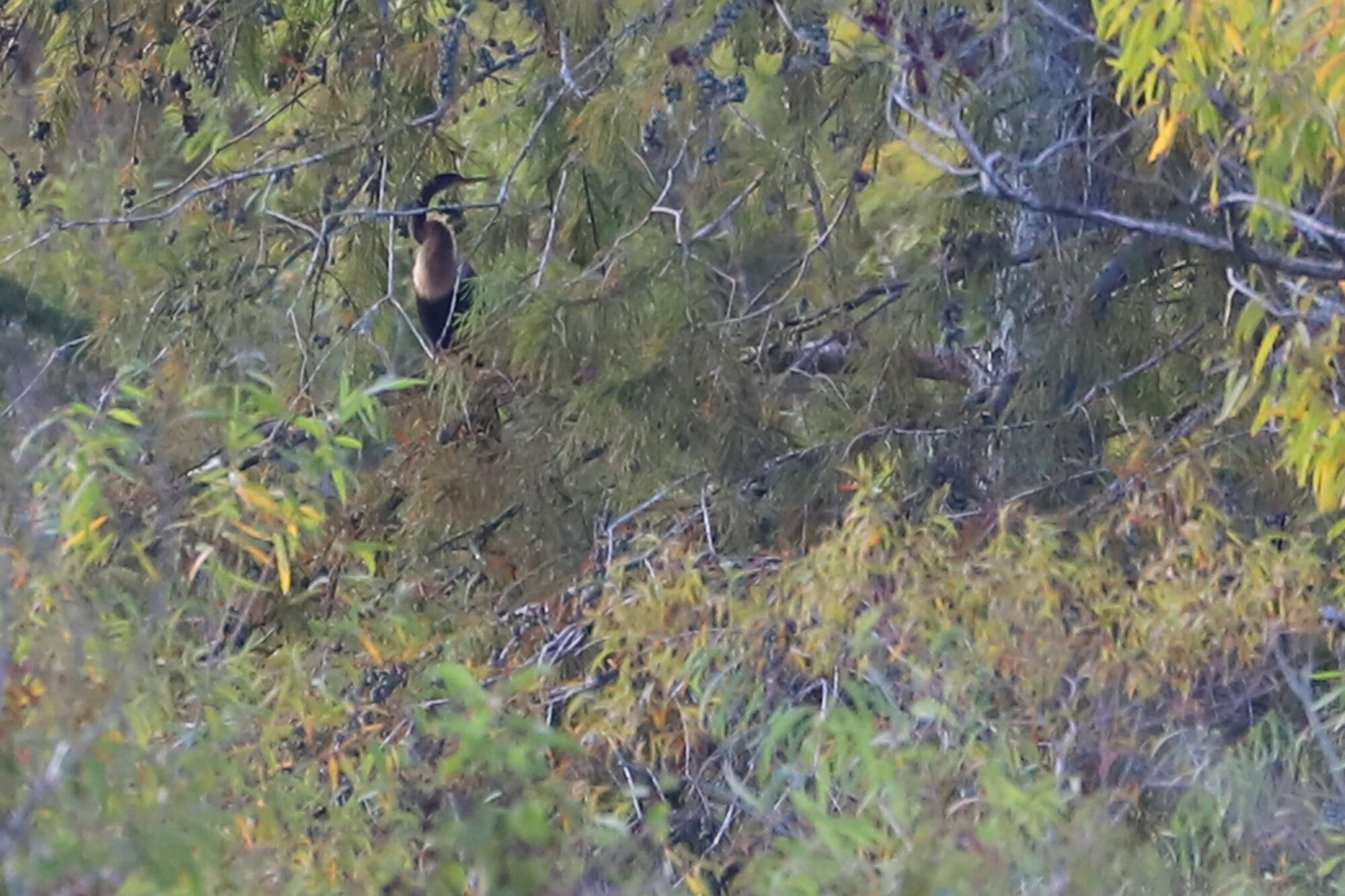
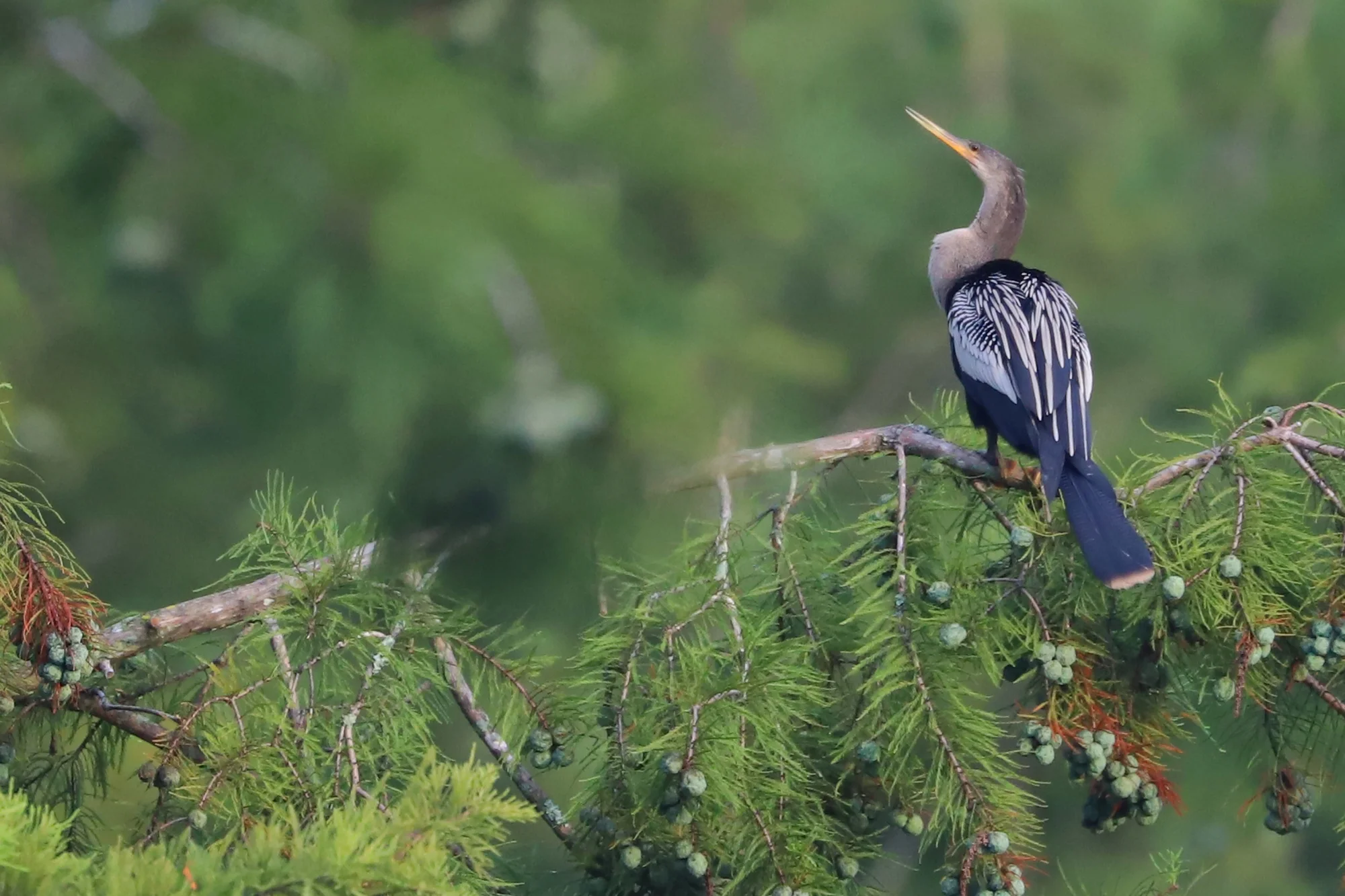
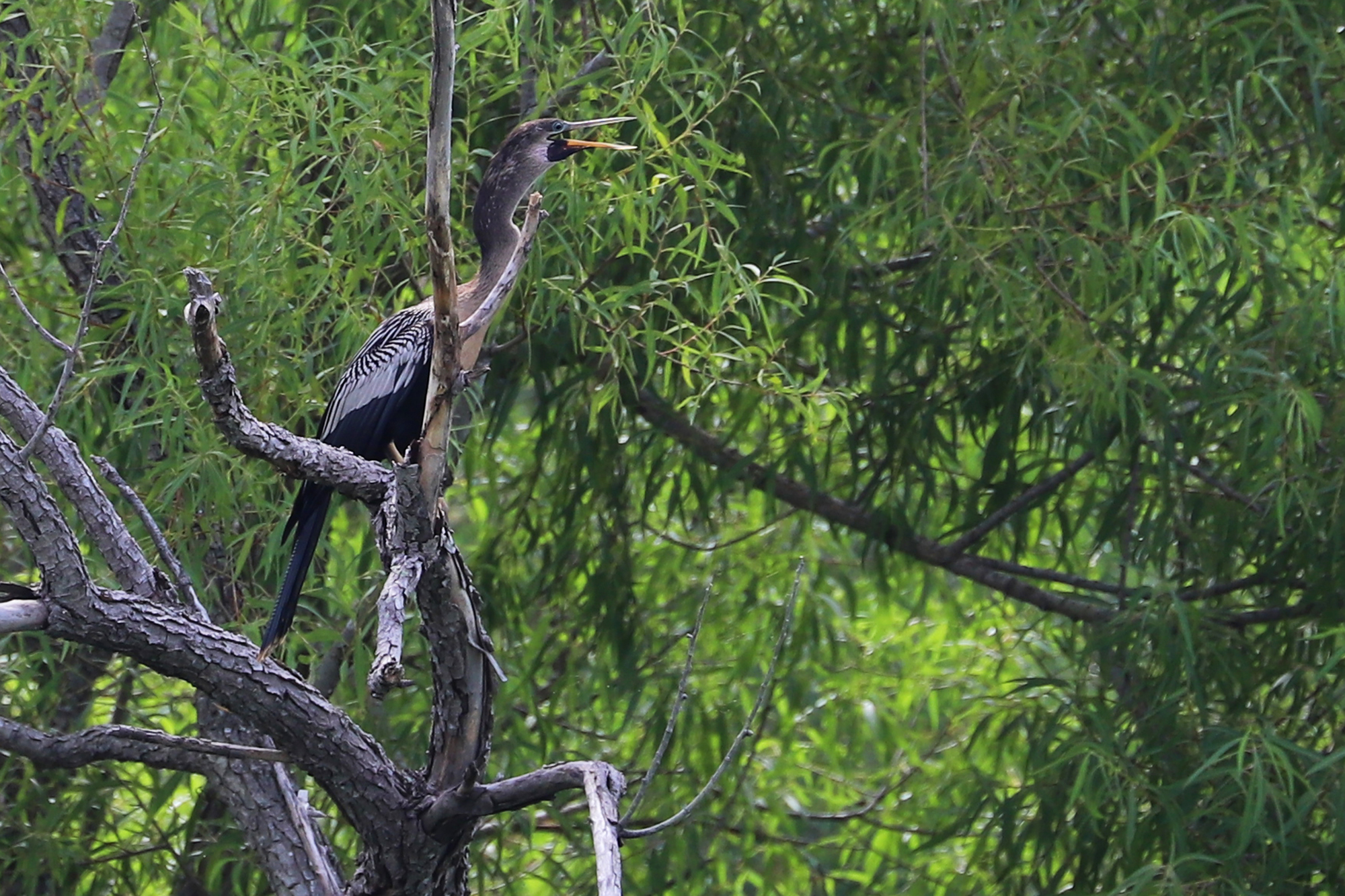
Just like in September, we had one continuing rarity this month, that being the ANHINGAS at Stumpy Lake NA! First observed at this location way back on 21 Apr (2, ph. Stephen Keith) as of the writing of the September journal it had appeared we’d seen the last of them, with records screeching to a halt after 19 Sep (ph. Jonathan Snyder). However, an individual was observed soaring over the entrance causeway late in the morning of 12 Oct (ph. Rob Bielawski & Peggy DeRolf), giving extended views as it rode thermals above the lake, at times alongside a Turkey Vulture for a really interesting comparison. After this sighting, there was mention that two individuals had been observed the day prior, 11 Oct (vis. Betty Sue Cohen & Clifton Seney), and though that record has not been input to eBird, it is worth mentioning here since both observers have extensively documented the species here throughout the summer. The next record for the species hailed from elsewhere in the city, with a surprise report for an individual soaring over Lake Smith on 23 Oct (vis. Debbie Schroeder)! To further the excitement, after another long lapse, a pair was again recorded at Stumpy Lake NA on 30 Oct (ph. Steve Myers) and remained present throughout the following day, 31 Oct. So, perhaps November could surprise us all with a record here, marking the 8th straight month this year? Thus far, no one has ever submitted a photographic record to eBird for this species in Virginia Beach, just something to keep in mind as the month rolls over!

In addition to all the great rarities observed during October, we also saw first-of-season records for twenty-nine of our annually expected species! Arrival records occurred this month for the following expected/regular species (sorted chronologically by first record):

  • Dunlin – First Observed & Photographed: 1, Back Bay NWR, 1 Oct (ph. Steve Myers).

  • Ruby-crowned Kinglet – First Observed: 1, First Landing SP, 2 Oct (obs. June McDaniels). First Photographed: 1, First Landing SP, 21 Oct (ph. June McDaniels).

  • Ruddy Duck – First Observed & Photographed: 1, Mt. Trashmore Park, 2 Oct (vis. Steve Myers, ph. Reuben Rohn, vis. Lisa Rose).

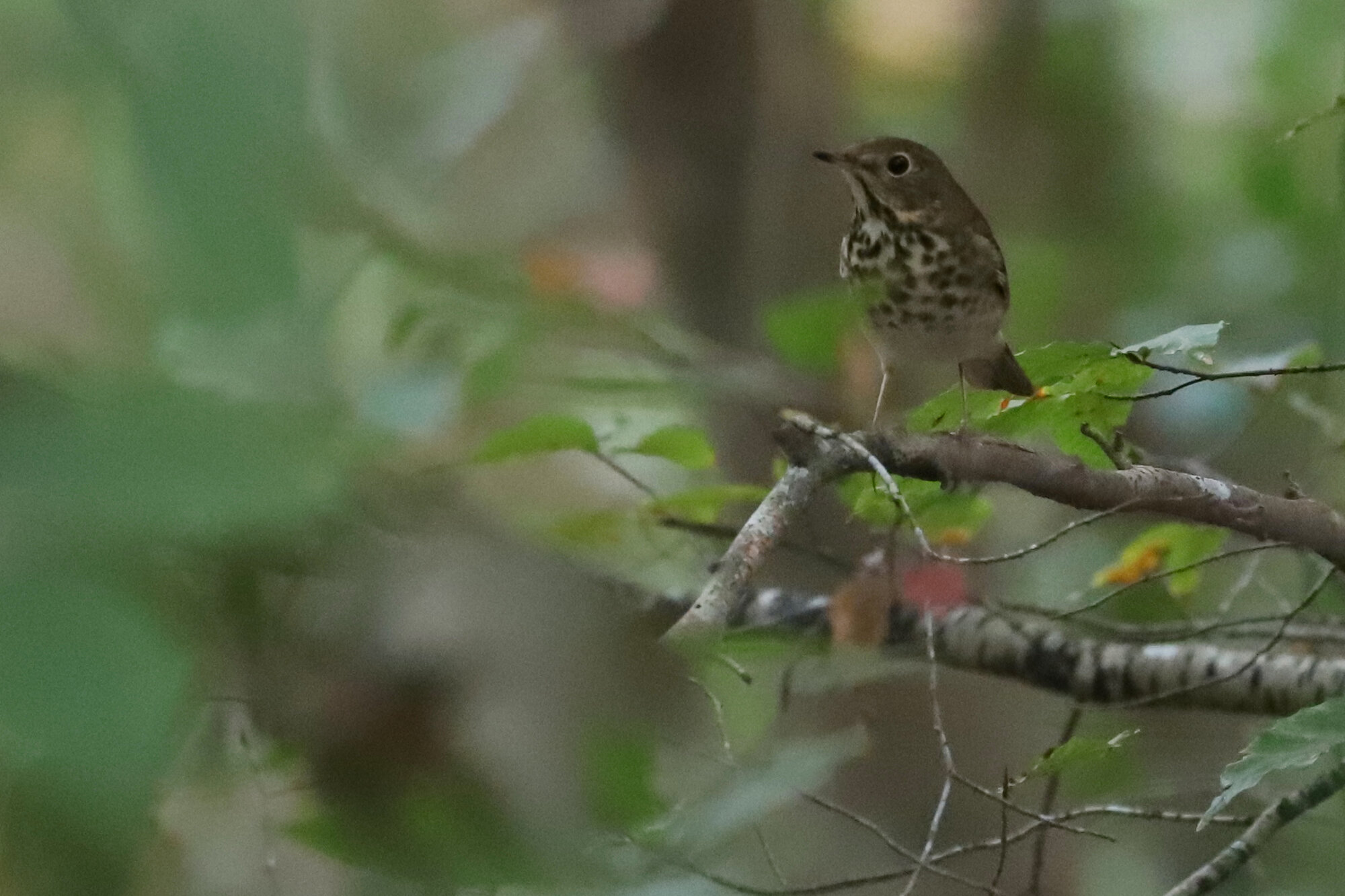
  • Hermit Thrush – First Observed: 1, Great Neck Estates (Private Residence), 4 Oct (vis. J.A.); First Photographed: 1, Stumpy Lake NA, 22 Oct (ph. Betty Sue Cohen).

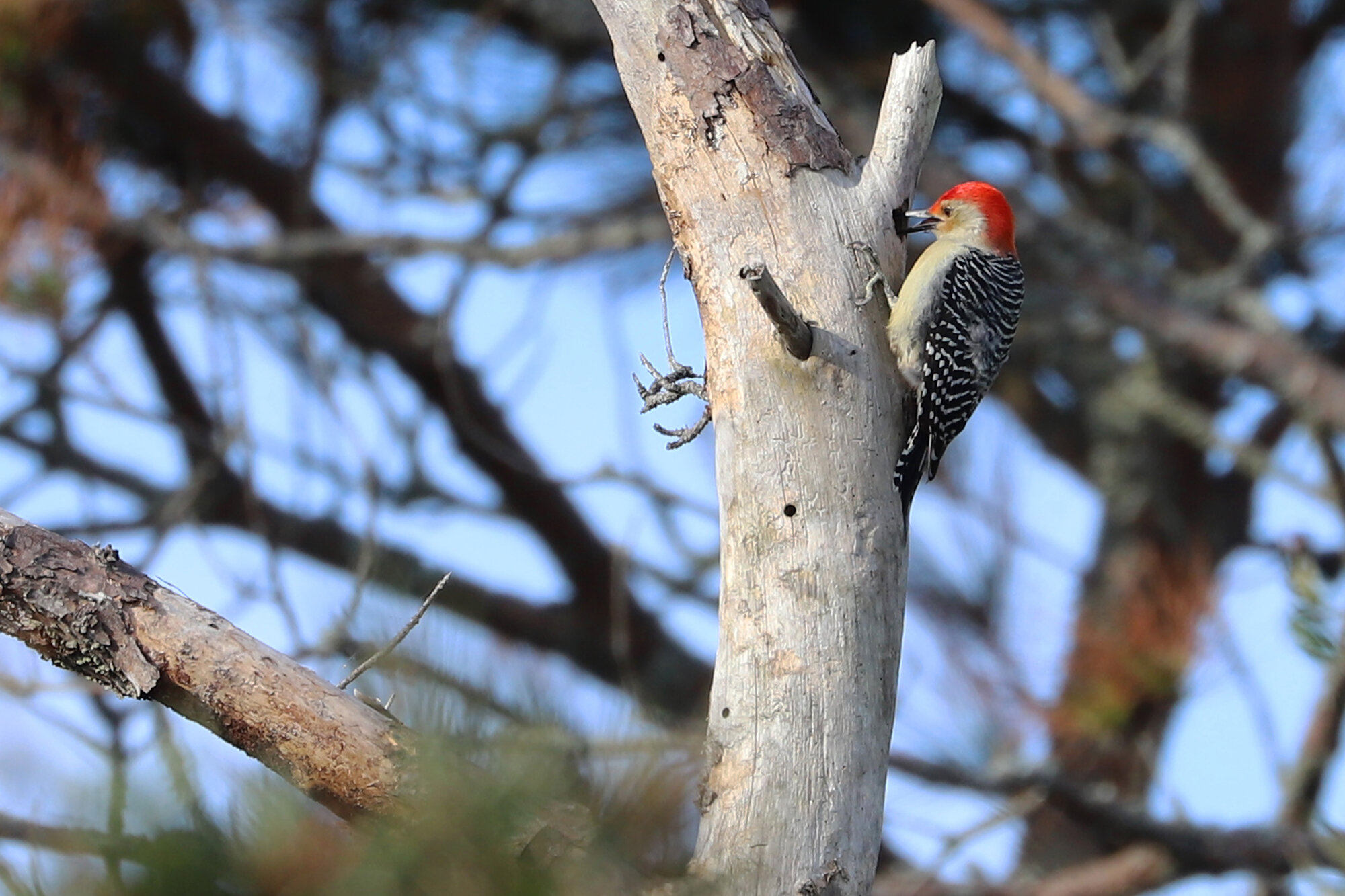
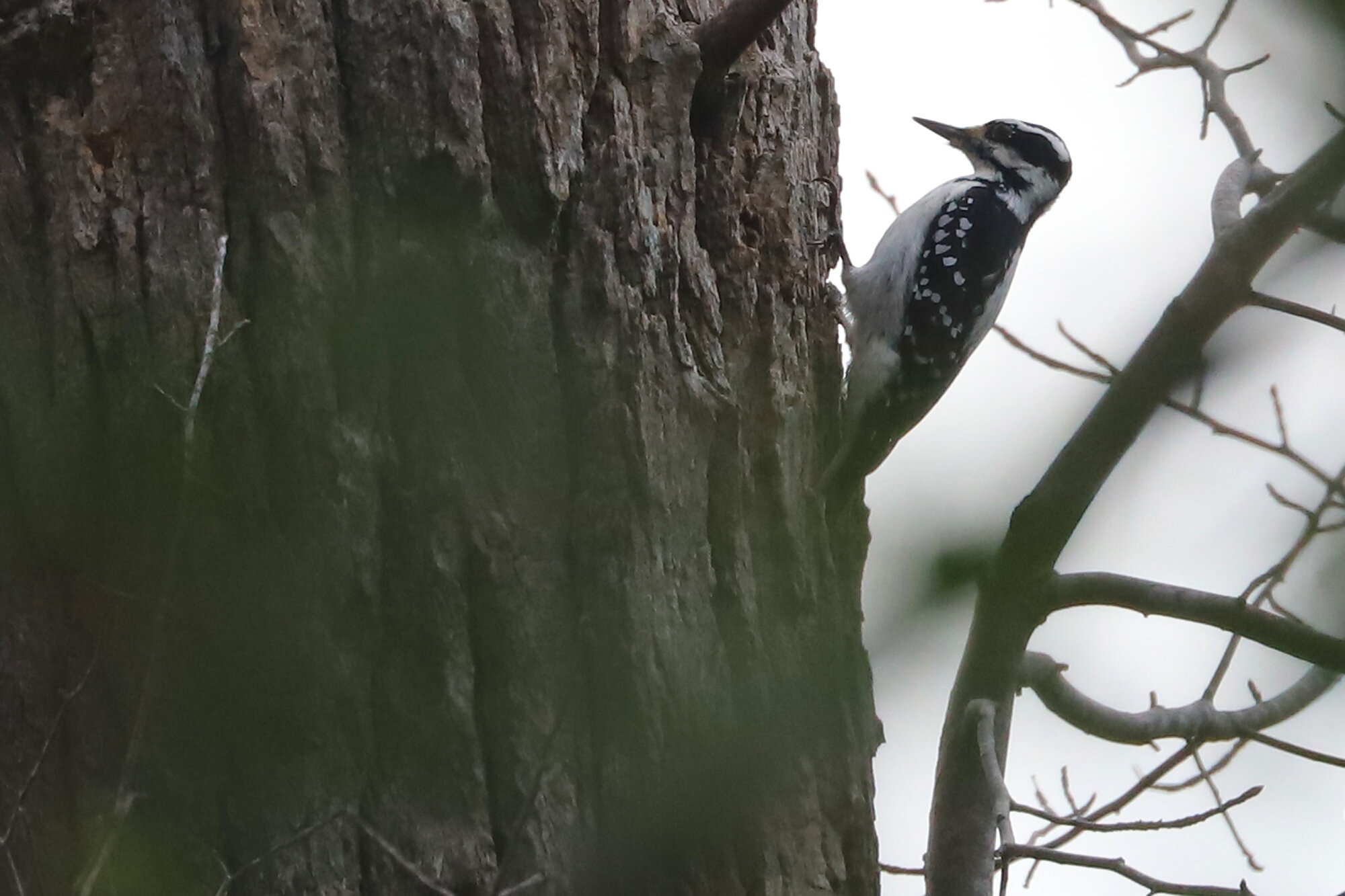
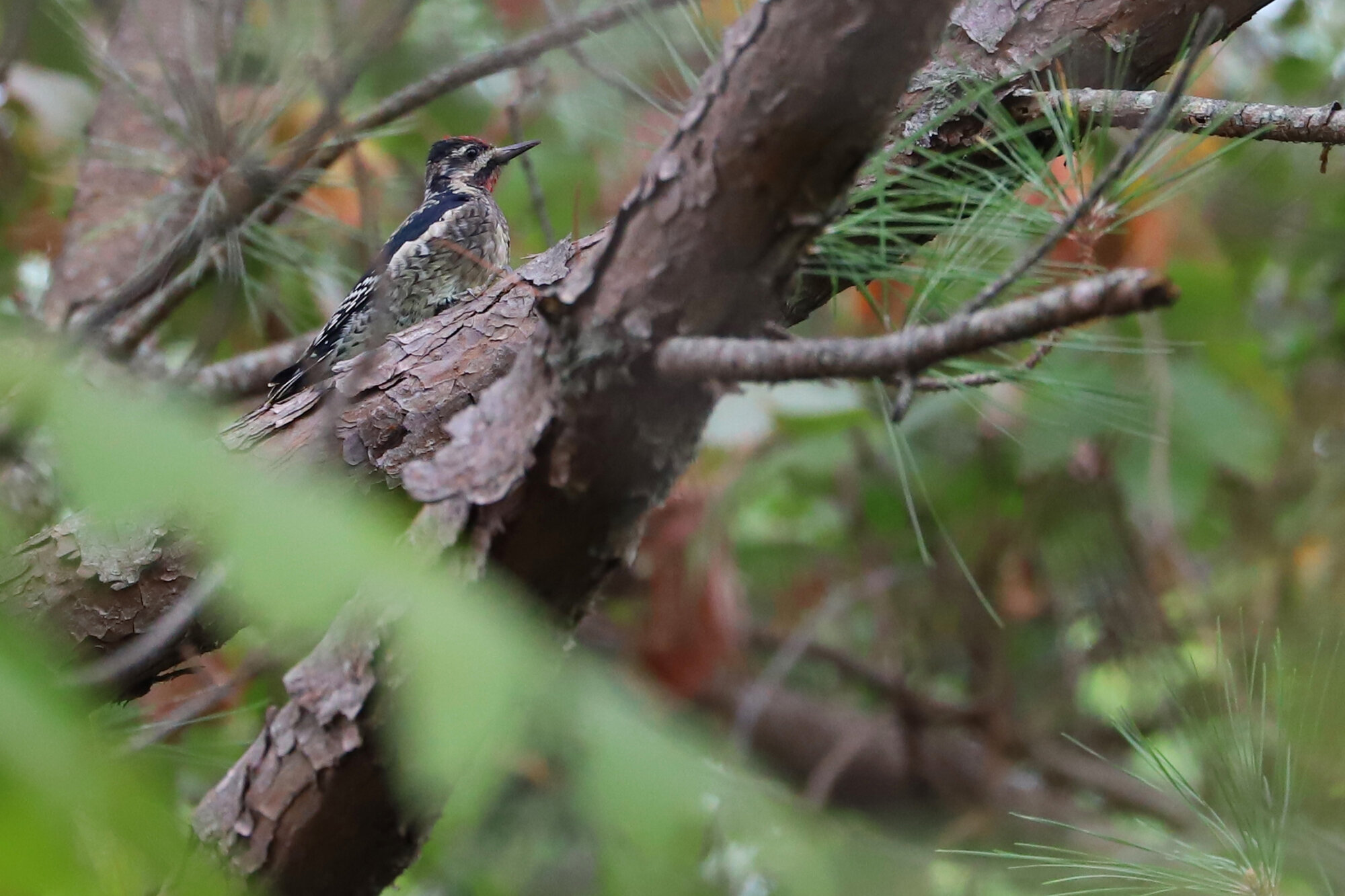
  • Yellow-bellied Sapsucker – First Observed: 2, First Landing SP, 5 Oct (vis. June McDaniels); First Photographed: 1, Pleasure House Point NA, 5 Oct (ph. Rob Bielawski).

  • Common Loon – First Observed: 1, Back Bay NWR, 5 Oct (vis. Lewis Barnett & John Ditto); First Photographed: 1, First Landing SP, 31 Oct (ph. Karen & Tom Beatty).

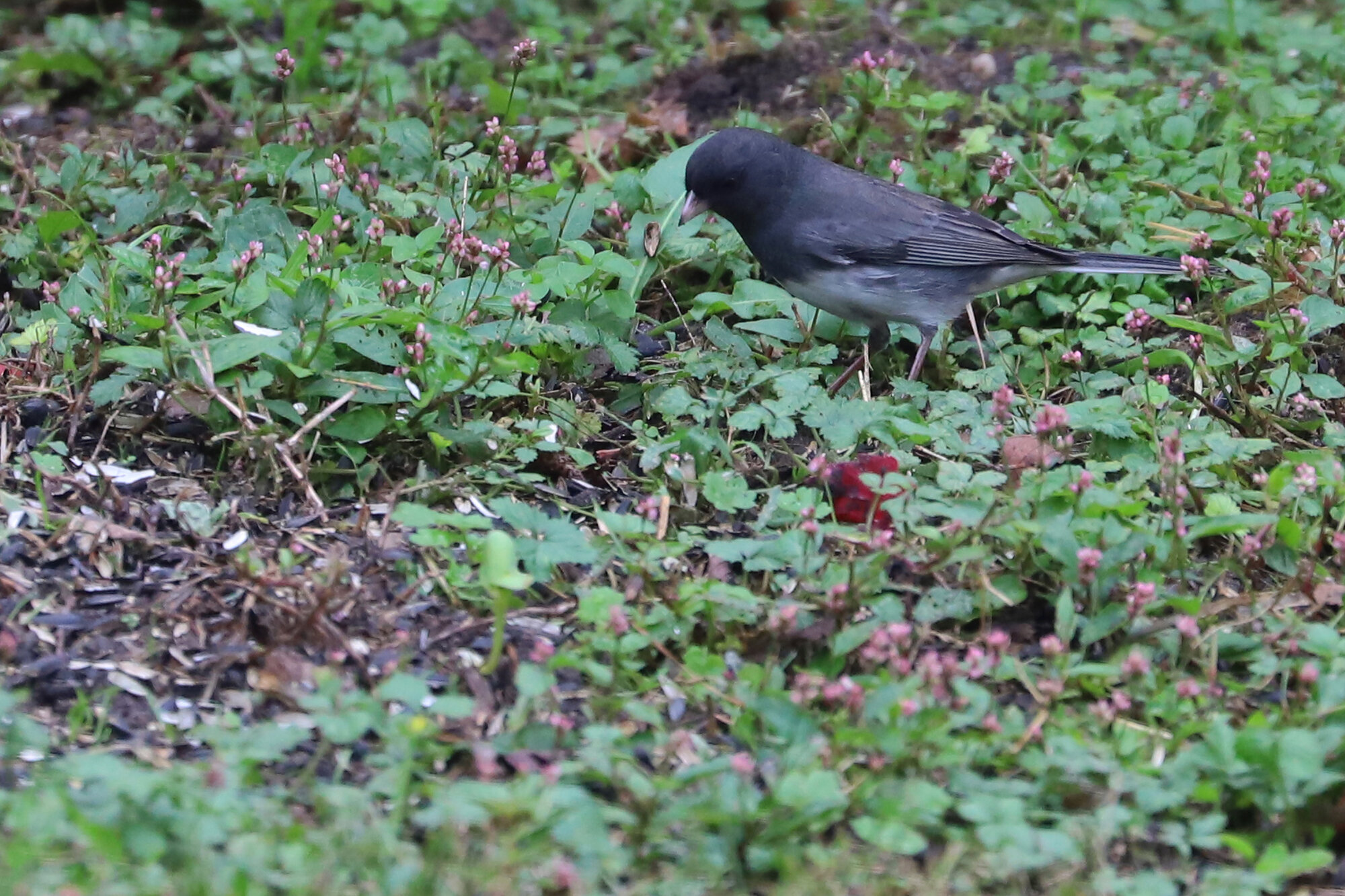
  • Dark-eyed Junco – First Observed: 2, Back Bay NWR, 6 Oct (vis. Eric Alton & Tammy Conklin) with no other records occurring until 24 Oct! First Photographed: 1, 27 Oct (ph. Kim & Rob Bielawski).

  • White-rumped Sandpiper – First Observed & Photographed: 1, Back Bay NWR, 6 Oct (ph. Jonathan Snyder).

  • Gadwall – First Observed: 6, Princess Anne WMA Whitehurst Tract, 6 Oct (vis. Robert Wood).

  • Black Scoter – First Observed: 6, Chesapeake Bay Mouth, 6 Oct (vis. Scott Schuette).

  • Orange-crowned Warbler – First Observed: 1, First Landing SP, 9 Oct (vis. J.A., vis. Jojo Morelli); First Photographed: 1, Pleasure House Point NA, 23 Oct (ph. Steve Myers).

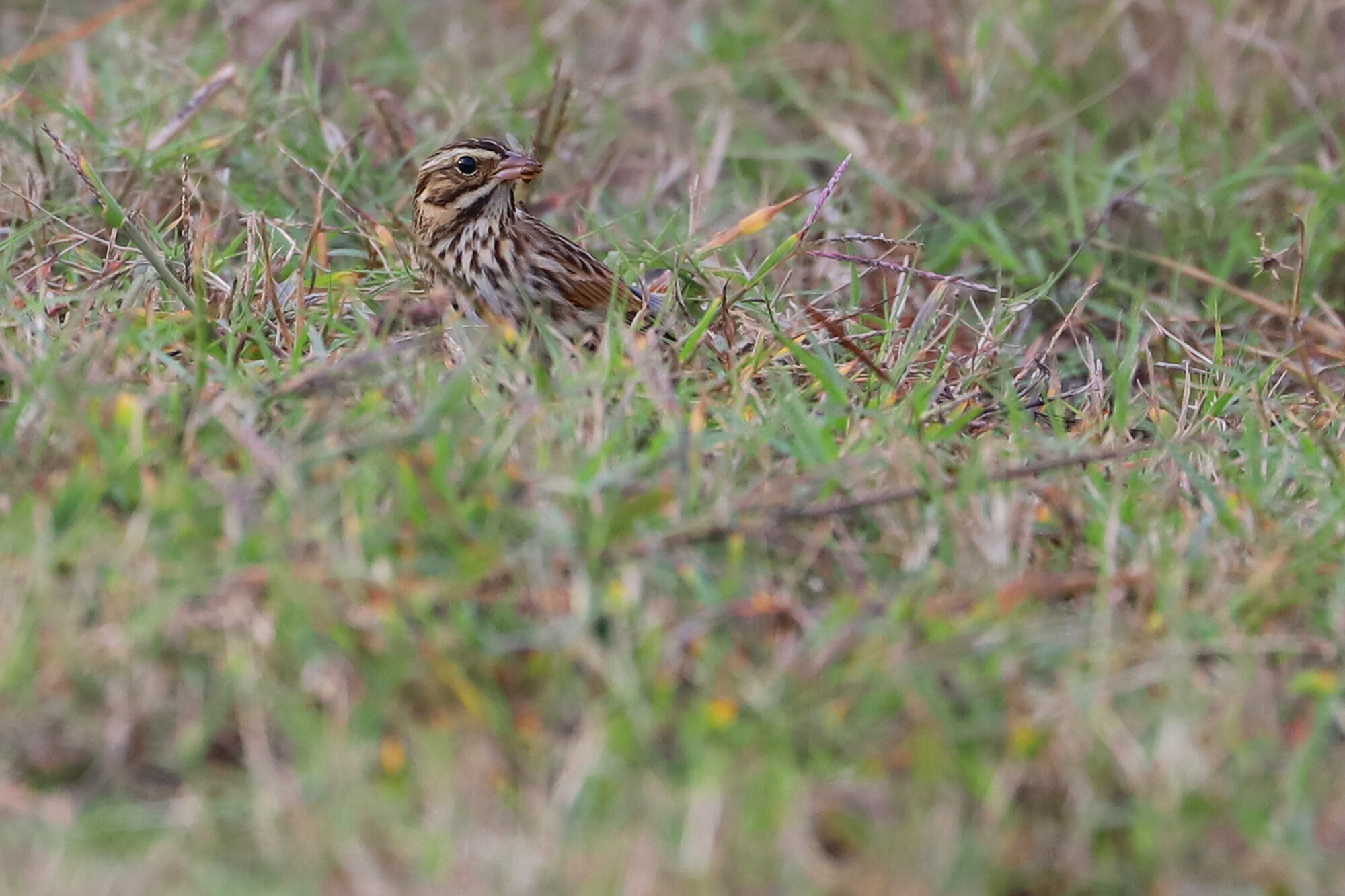
  • Swamp Sparrow – First Observed: 1, Horn Point Rd., 10 Oct (vis. Karen & Tom Beatty); First Photographed: 1, Back Bay NWR, 12 Oct (ph. Rob Bielawski & Peggy DeRolf).

  • Nelson’s Sparrow – First Observed & Photographed: 1, Pleasure House Point NA, 11 Oct (ph. Karl Suttmann).

  • White-throated Sparrow – First Observed: 1, Back Bay NWR, 11 Oct (vis. Mike Collins); First Photographed: 1, Back Bay NWR, 12 Oct (ph. Rob Bielawski & Peggy DeRolf).

  • Blue-headed Vireo – First Observed & Photographed: 1, Princess Anne WMA Whitehurst Tract, 13 Oct (ph. Rob Bielawski).

  • Snow Goose – First Observed: 6, Back Bay NWR, 13 Oct (vis. Allison Barber); First Photographed: 5, Back Bay Landing Rd., 20 Oct (ph. Lisa Rose).

  • American Wigeon – First Observed: 10, Back Bay NWR, 14 Oct (obs. David Clark).

  • Golden-crowned Kinglet – First Observed: 1, Back Bay NWR, 15 Oct (obs. Robert Ake / Karen & Tom Beatty); First Photographed: 1, Back Bay NWR, 19 Oct (ph. Andrew Baldelli / Rob Bielawski / Lisa Rose).

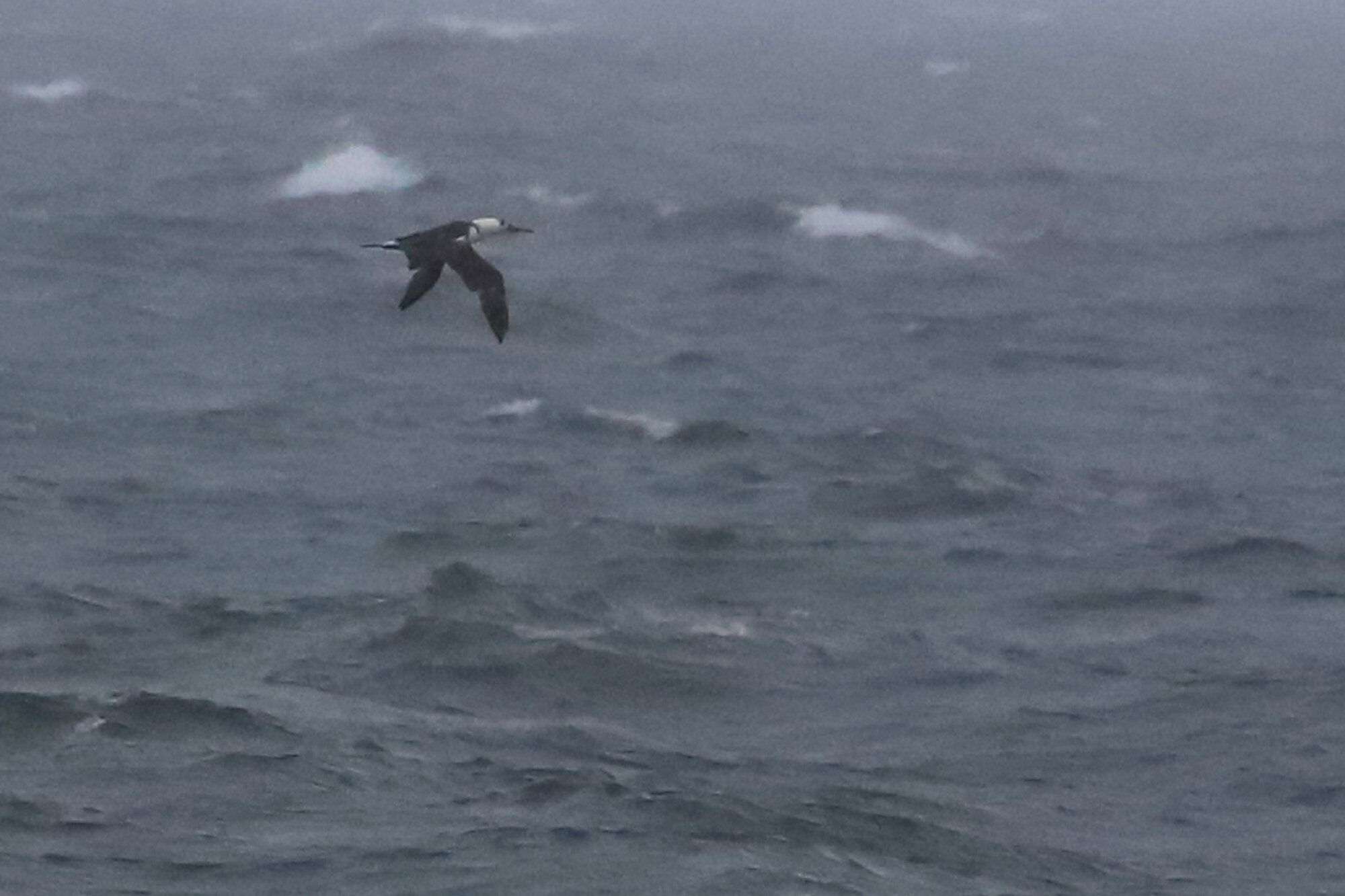
  • Northern Gannet – First Observed: 1, Back Bay NWR, 15 Oct (obs. Drew Avery); Photographed: 1, White Cap Ln. Beach Access, 20 Oct (ph. Andrew Baldelli & Rob Bielawski).

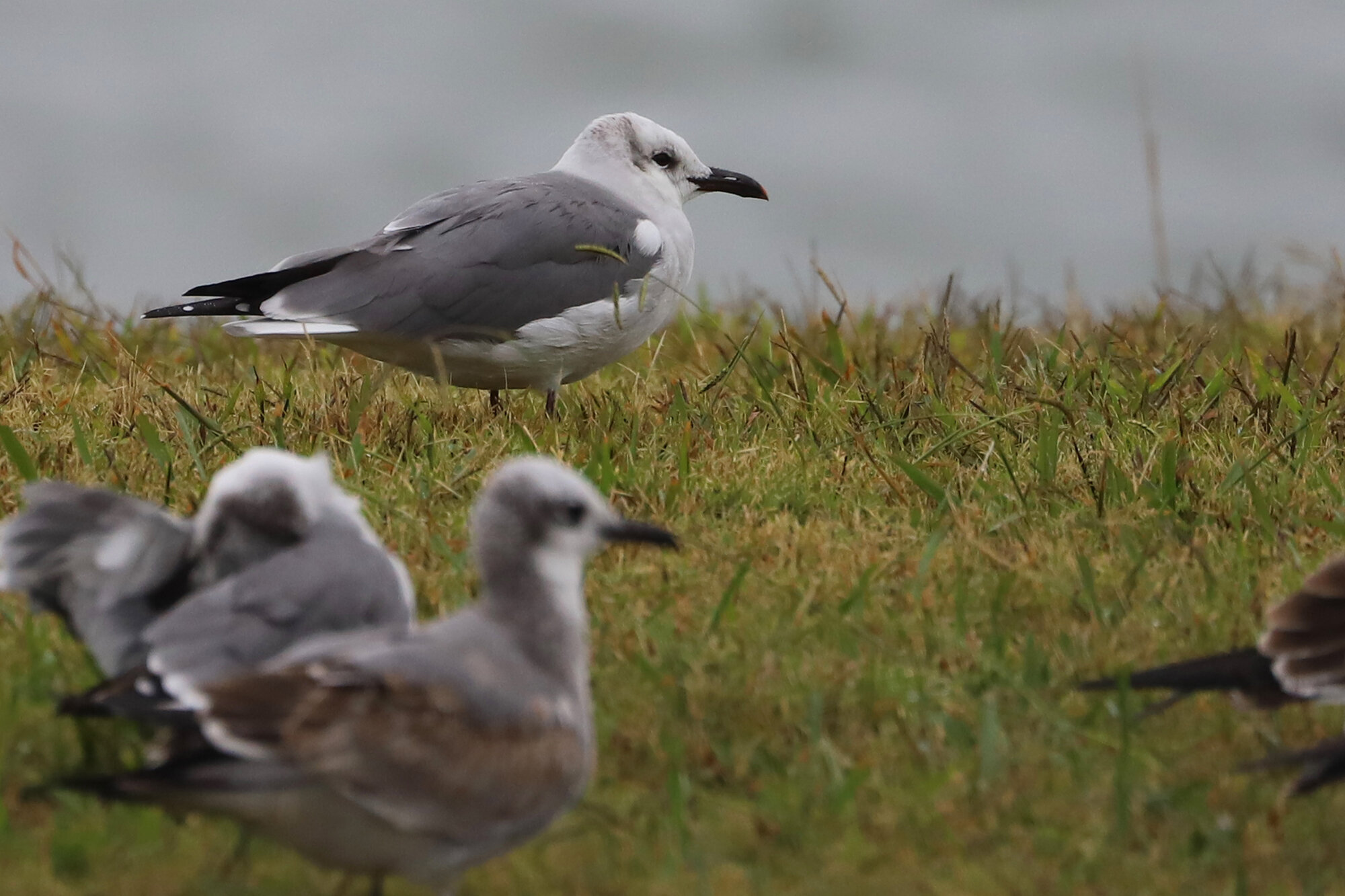
  • Bonaparte’s Gull – First Observed: 1, Back Bay NWR, 17 Oct (obs. Derek & Laurie Yoder).

  • Ring-necked Duck – First Observed & Photographed: 5, Sherwood Lakes (North Pond), 19 Oct (ph. Rob Bielawski).

  • American Coot – First Observed & Photographed: 1, Mt. Trashmore Park, 19 Oct (ph. Steve Myers).

  • Surf Scoter – First Observed: 2 (drake & hen), White Cap Ln. Beach Access, 20 Oct (vis. Andrew Baldelli & Rob Bielawski).

  • Red-breasted Nuthatch – First Observed: 1, Indian River (Private Residence), 22 Oct (vis. George Harris).

  • Winter Wren – First Observed: 1, Lake Lawson and Lake Smith NA, 22 Oct (aud. Tracy Tate).

  • Hooded Merganser – First Observed: 1 adult male, Great Neck Park, 24 Oct (vis. Kelly Creger & J.A.).

  • Red-throated Loon – First Observed & Photographed: 1, Broad Bay (First Landing SP), 27 Oct (ph. Kim & Rob Bielawski).

  • Brown Creeper – First Observed: 1, Stumpy Lake NA, 28 Oct (obs. Jonathan Snyder); First Photographed: 1, Stumpy Lake NA, 30 Oct (ph. Charlie Bruggemann).

  • Bufflehead – First Observed: 2, First Landing SP (Broad Bay), 31 Oct (vis. Karen & Tom Beatty).
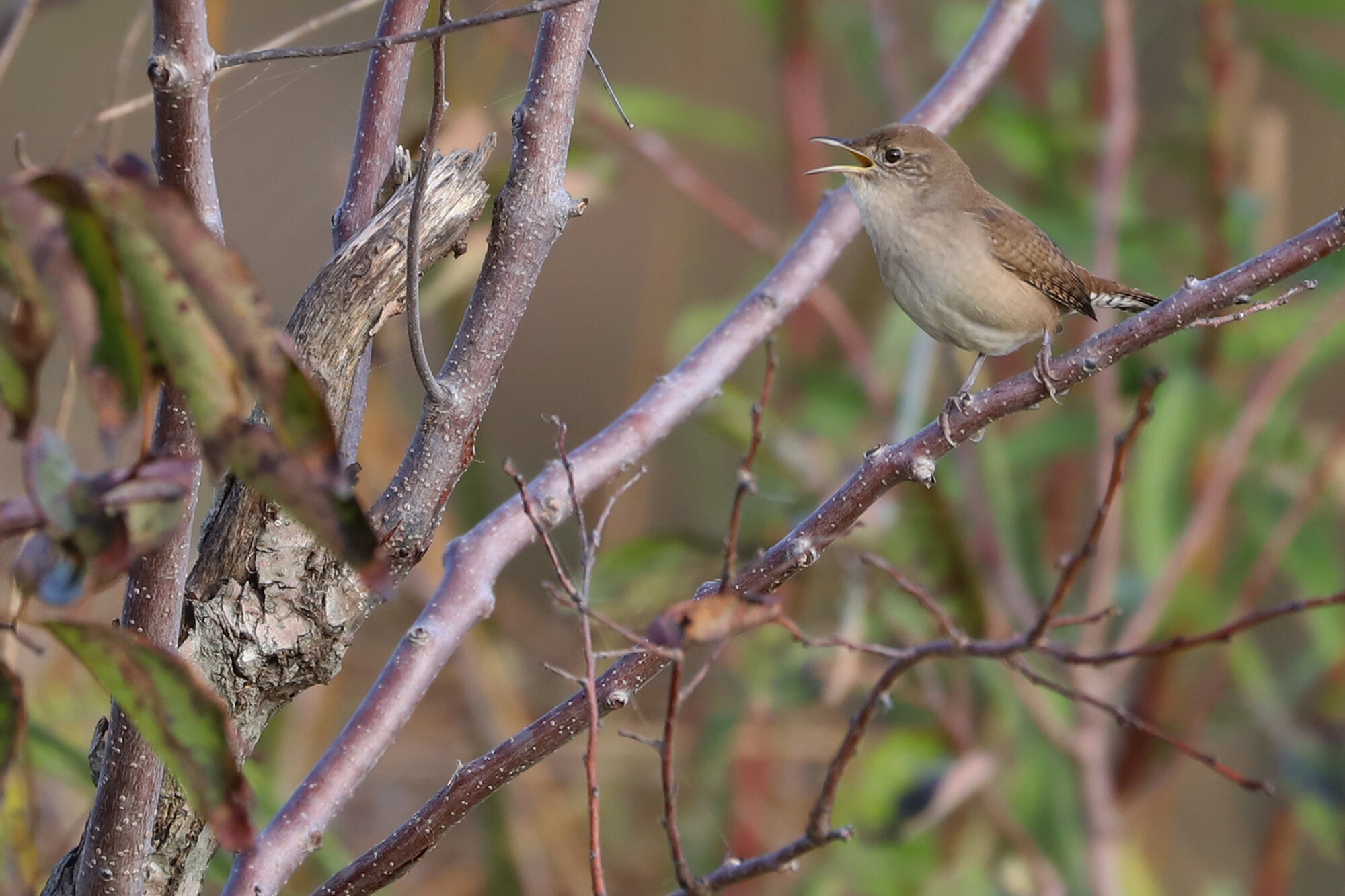
Also, with so many birders out and about during October, plenty of other exciting finds occurred! These records include early arriving & late lingering individuals observed ten or more days outside their expected dates, species found in locations of the city where they aren’t typically observed, and any other observations that seem worth calling attention to in a city-level journal such as this! Records of this nature for October were as follows:

  • The very first Nashville Warbler to be reported at Stumpy Lake NA occurred this month when an individual was observed on 3 Oct (obs. Kathy Spencer). At the time this record was input, this was the 198th species to be submitted to eBird at this hotspot!

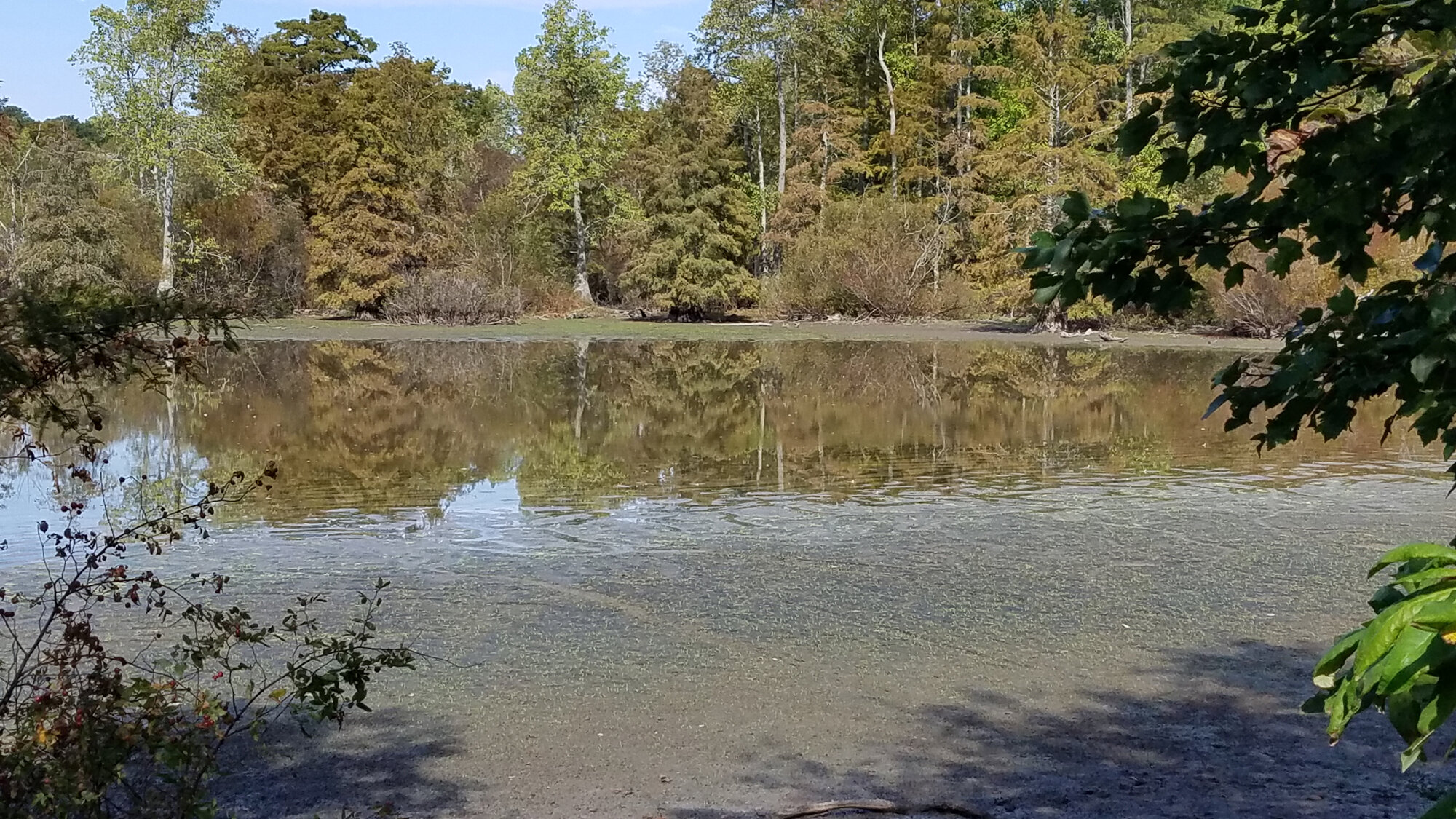
  • With drought conditions impacting the city for several weeks from mid-Sep to early Oct, Stumpy Lake’s surface levels reached the lowest elevations seen in recent memory. As a result of this, the portion of the lake north of the entrance causeway to the natural area & golf course showed extensive mudflats. Finding perfect habitat for migration, three Semipalmated Sandpipers were discovered foraging here on 5 Oct (vis. Lewis Barnett / John Ditto / Jacob Flynn, later ph. Rob Bielawski). In an interesting twist of fate, perhaps, the last time this species was recorded in eBird at the natural area was way back on 8 Sep 1995 by the father (vis. James Flynn) of one of the initial 2019 observers. Pretty neat! That particular checklist also had American Avocets on it, but so far we haven’t been fortunate enough to see this species at the park since then.

  • Highly unusual away from salt marshes on the immediate coast, a Seaside Sparrow photographed at Princess Anne WMA Whitehurst Tract around dawn on 6 Oct (ph. Rob Bielawski) made for a very first eBird record at the WMA. This is now the third Ammospiza (formerly Ammodramus) sparrow to be observed at the WMA, with several prior records for LeConte’s Sparrow, and a single Nelson’s Sparrow photographed in the Beasley Tract back on 11 Dec 2016 (ph. Adam Bollinger & Jason Strickland).

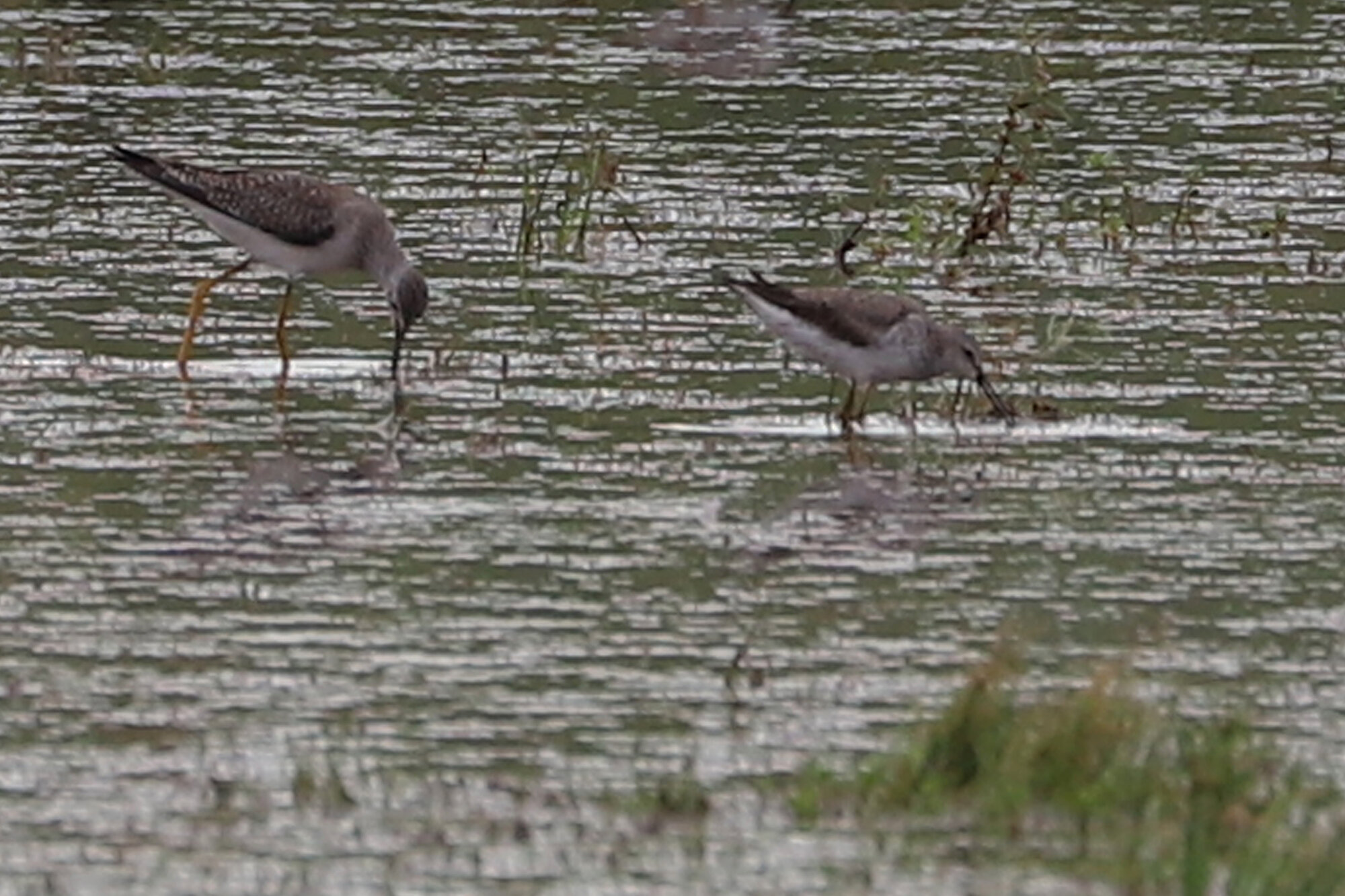
  • Our second Stilt Sandpiper of the calendar year appeared to have stayed put at Princess Anne WMA Whitehurst Tract after first being observed on 29 Sep (ph. Cindy Hamilton & June McDaniels). Likely the same individual was picked up again on the morning of 6 Oct and observed throughout the day by many birders who ventured to this area of the park in search of the Hudsonian Godwit discussed above.

  • The 224th species to be submitted at the Little Island Park hotspot in eBird, a single Scarlet Tanager, was observed on 11 Oct (vis. Andrew Baldelli)!

  • A first for Princess Anne WMA Whitehurst Tract’s hotspot in eBird, two Cape May Warblers were observed (one immature, one adult male) on the morning of 13 Oct (ph. Rob Bielawski). At the time of the record, this made for the 191st species logged at the hotspot thus far!

  • Though there is a past record for Blue-headed Vireo displayed at the Princess Anne WMA Whitehurst Tract hotspot in eBird, the first record to occur inside the Whitehurst Tract finally occurred on 13 Oct (ph. Rob Bielawski). The prior records actually occurred across Munden Road in the Beasley Tract, near the 90° bend on the entrance trail just north of the parking lot. Since the two hotspots are so close to one another, birders often check both tracts while on the same checklist, which isn’t necessarily incorrect. A Brown Creeper that same day also fits the bill of this issue, but maybe Whitehurst will get one of those soon as well.

  • A pair of records for Snow Goose occurred ten-or-more days prior to the average expected arrival date this year, with six observed over the East Dike at Back Bay NWR on 13 Oct (vis. Allison Barber), and a group of five (two blue-phase adults and three immatures) in a field off Back Bay Landing Road on 20 Oct during post-Tropical Storm Nestor’s passage (ph. Lisa Rose). Interestingly, another group of five consisting of the exact same composition was observed south of us at Cape Hatteras NS on 7 Oct (ph. A Downing), and it’d be interesting to know if this same group may have dispersed northward to Back Bay Landing Road during the strong southeasterly winds brought on by Nestor. Though it’s probably just five different Snow Geese, it’s fun to speculate!

  • Still within its expected timeframe, but a rather temporally-isolated record, two Piping Plovers were reported on the beach at Back Bay NWR on 14 Oct (obs. James Marcum). With most records in Jul/Aug, this is the first record since an immature was observed at dawn during Hurricane Dorian’s passage at Rudee Inlet on 6 Sep (ph. Andrew Baldelli & Rob Bielawski).

  • Only a second record for the city this fall, and the first photographed, a single Red Knot was observed on the beach at Back Bay NWR on 15 Oct (ph. Steve Myers). Quite late of this species typical 25 Sep departure date, this was the first record here since 21 Aug (vis. Karen & Tom Beatty). With most shorebirds being found in much higher numbers here during fall rather than spring, Red Knot is always a curious species since we see far more reports in the springtime though they certainly pass by us in fall as well.

  • With a remarkable scarcity of eBird records this year for Northern Bobwhite, it was exciting to finally see our first photographic record submitted when a male & female were spotted at a private residence off West Landing Road on 15 Oct (ph. Ashley Theroux). At the time of the record, this became the 279th photographed species to show up on Virginia Beach’s Illustrated Checklist for the calendar year! Miraculously, this is only the third record for the species in the city during 2019, with one sight record in Thalia, of all places, on 6 Jun (vis. Brandon Holland) and a singing male recorded at Ashville Park on 9 May (a.r. Karen & Tom Beatty). While this was once a common species throughout Virginia Beach, their present status is rather uncertain, so any sighting is worth getting input to eBird.

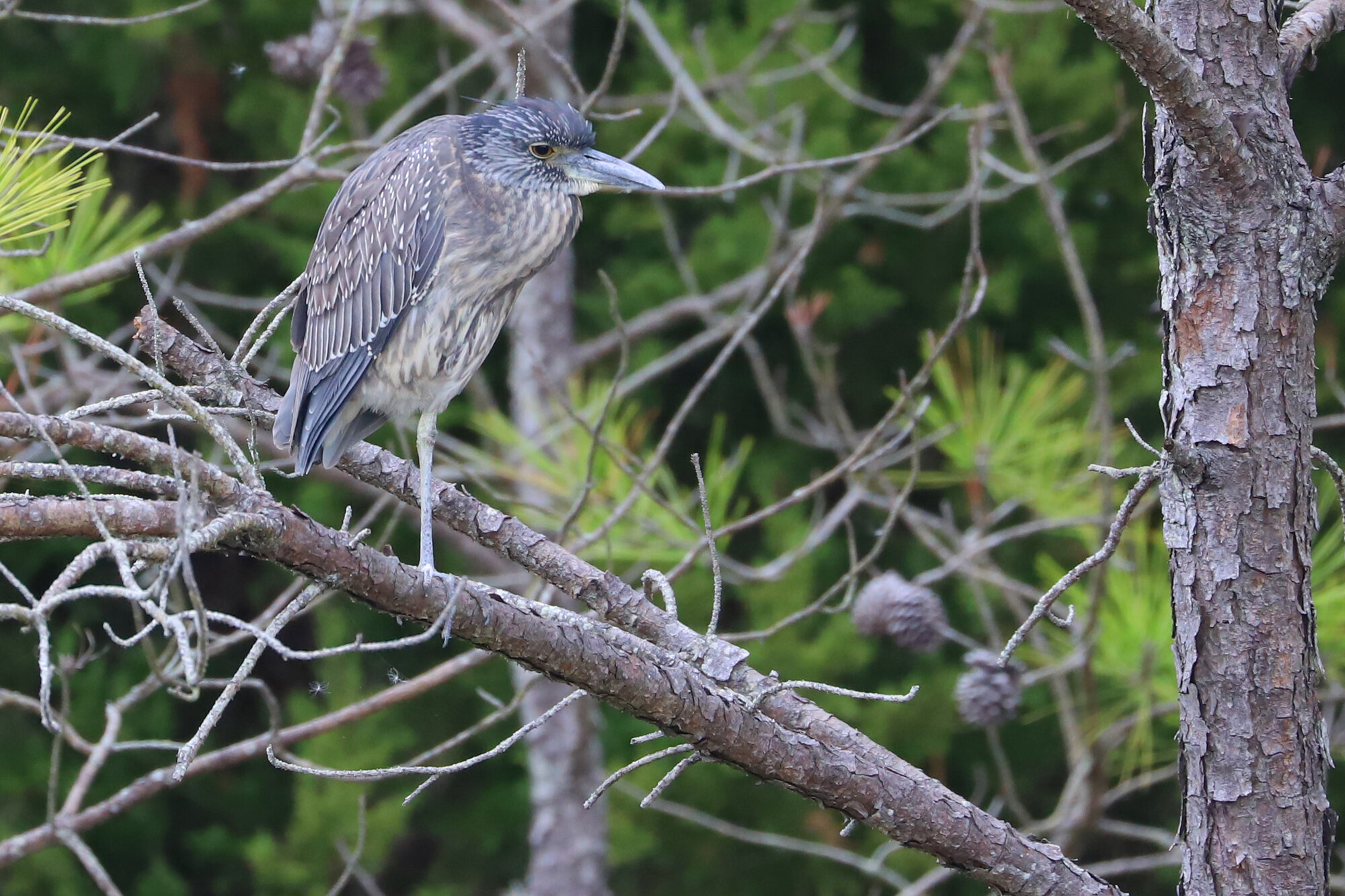
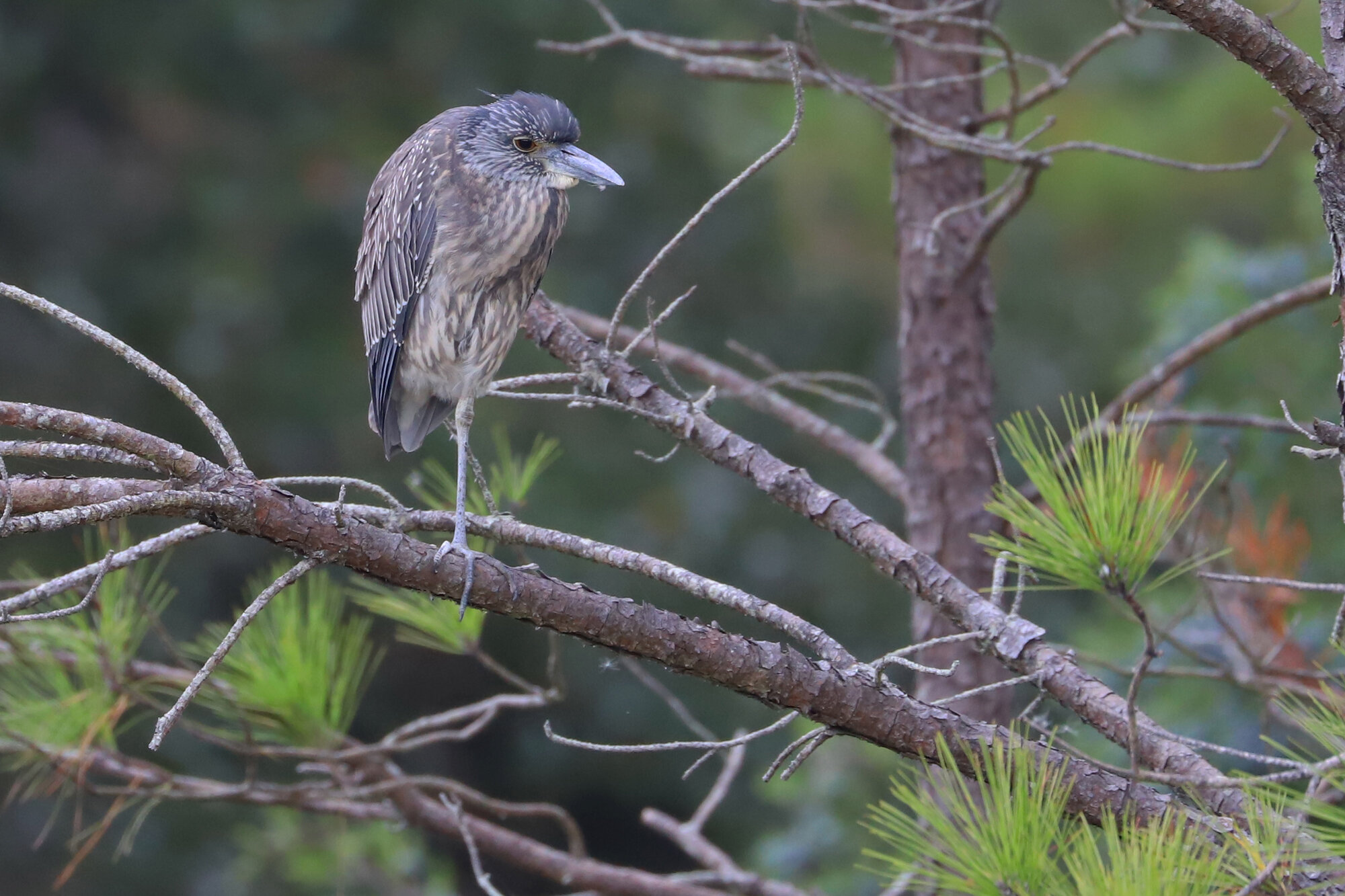
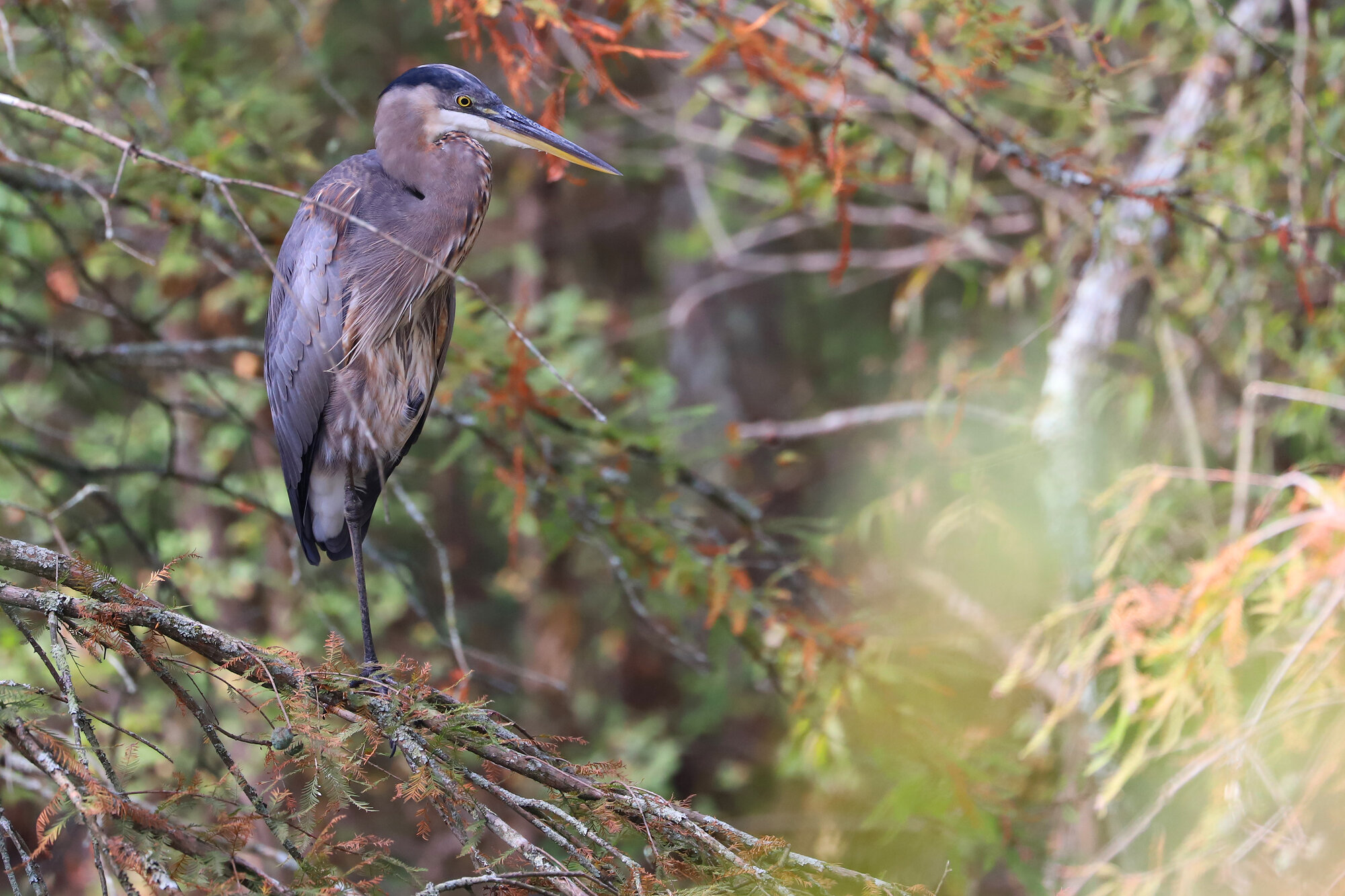
  • An immature Black-crowned Night-Heron was photographed at Stumpy Lake NA on 16 Oct (ph. Jonathan Snyder), making for the first record at the natural area going all the way back to 8 Nov 2013 when one was present (obs. David Clark).

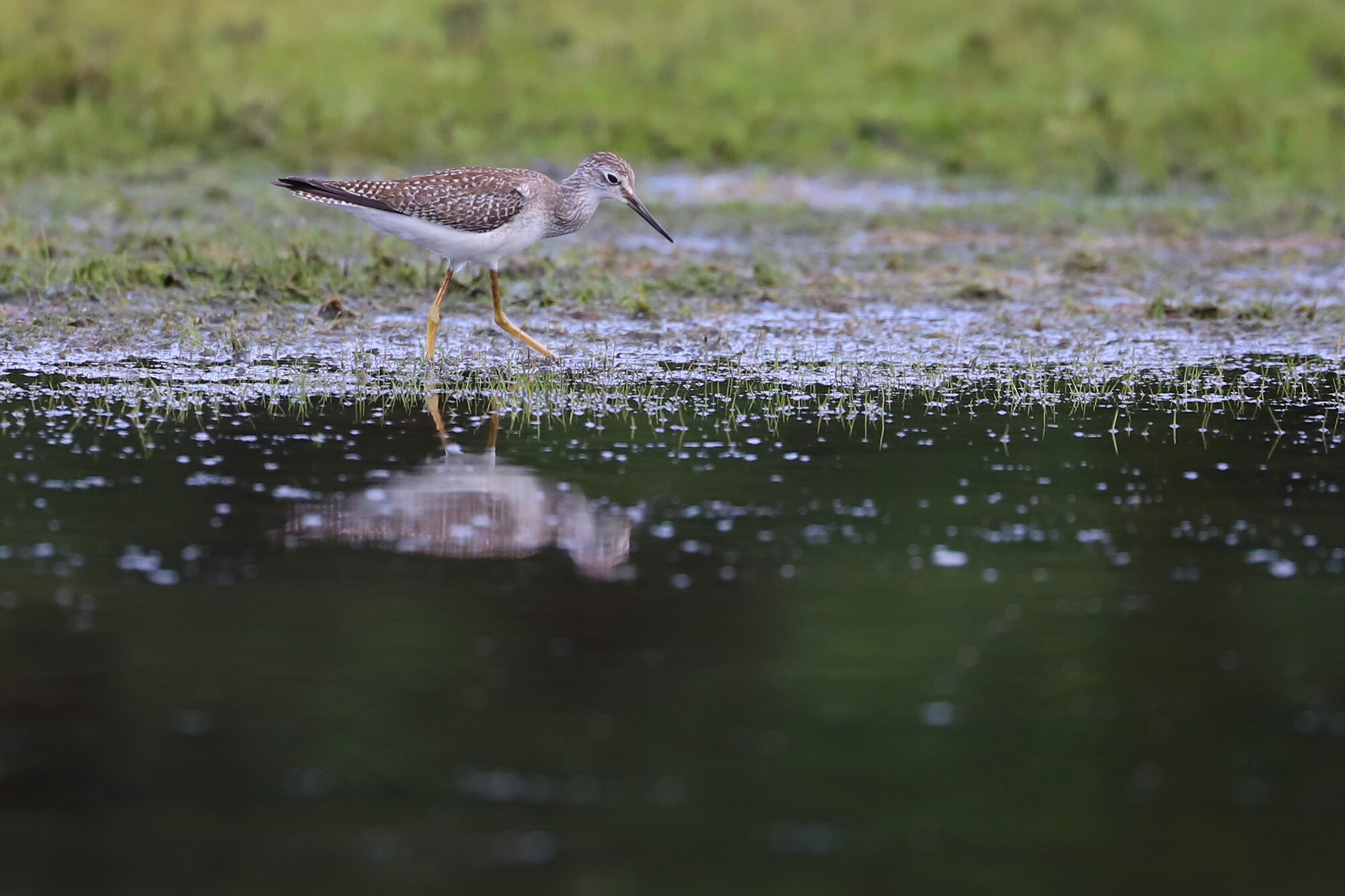
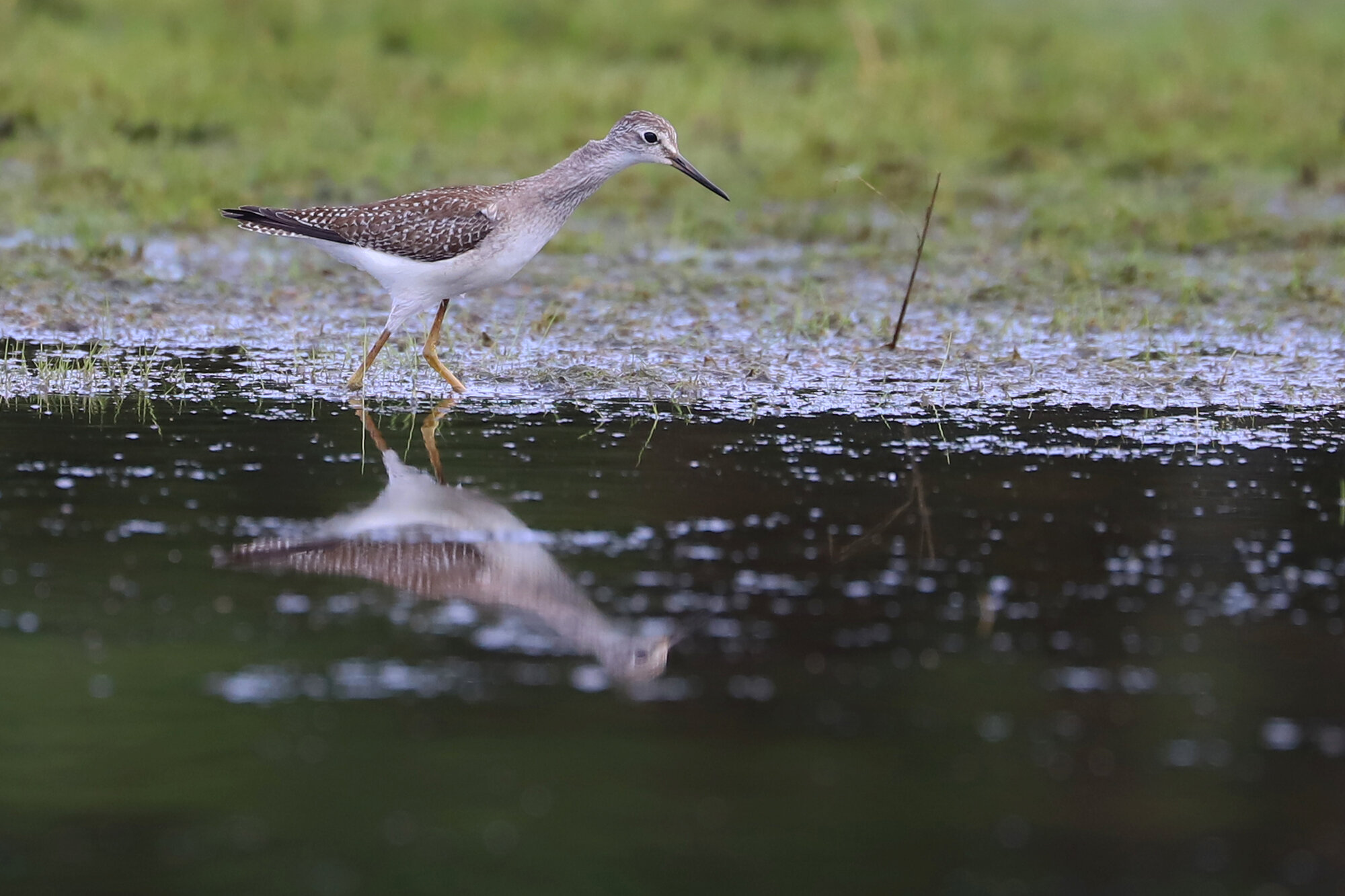
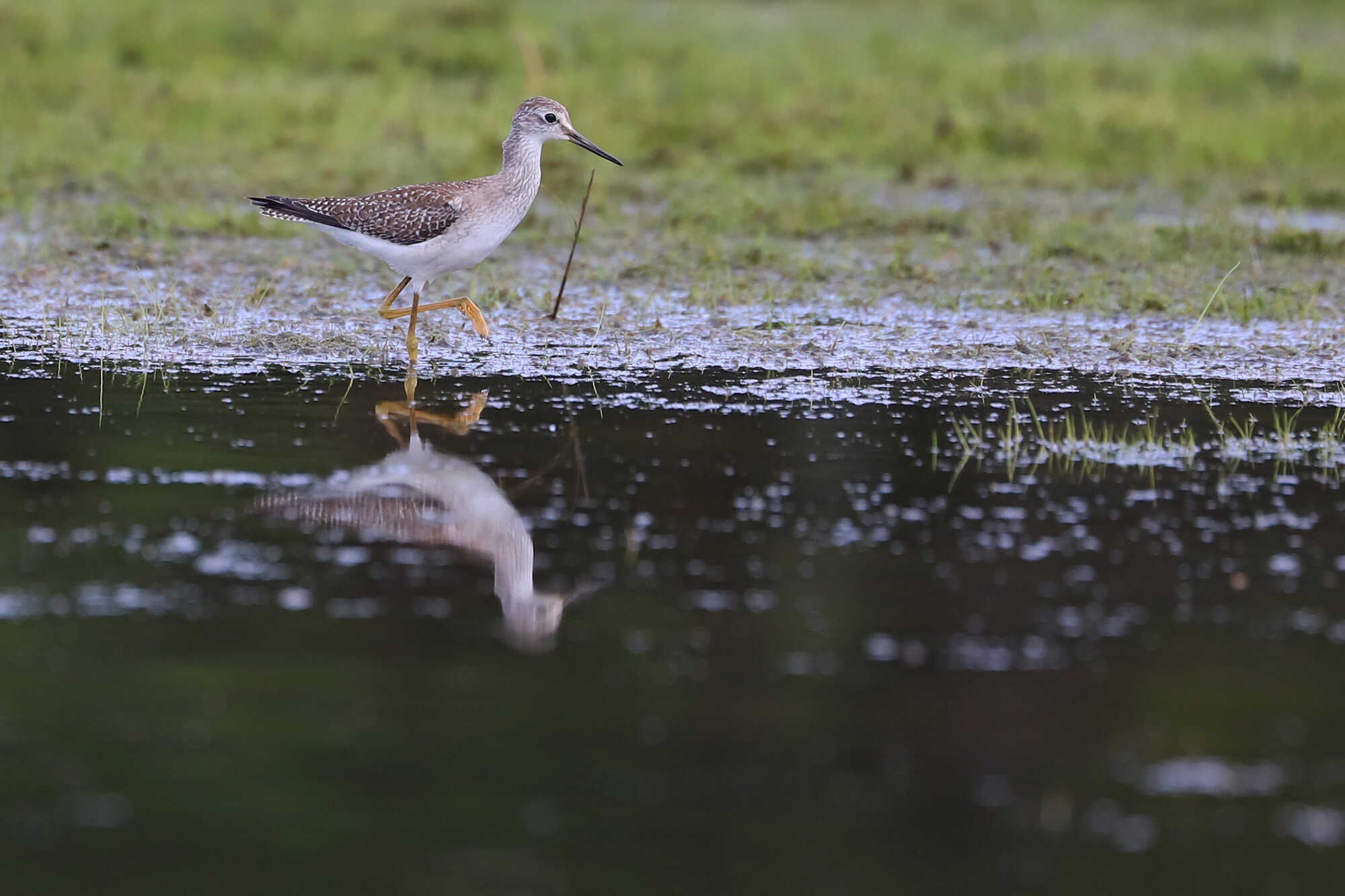
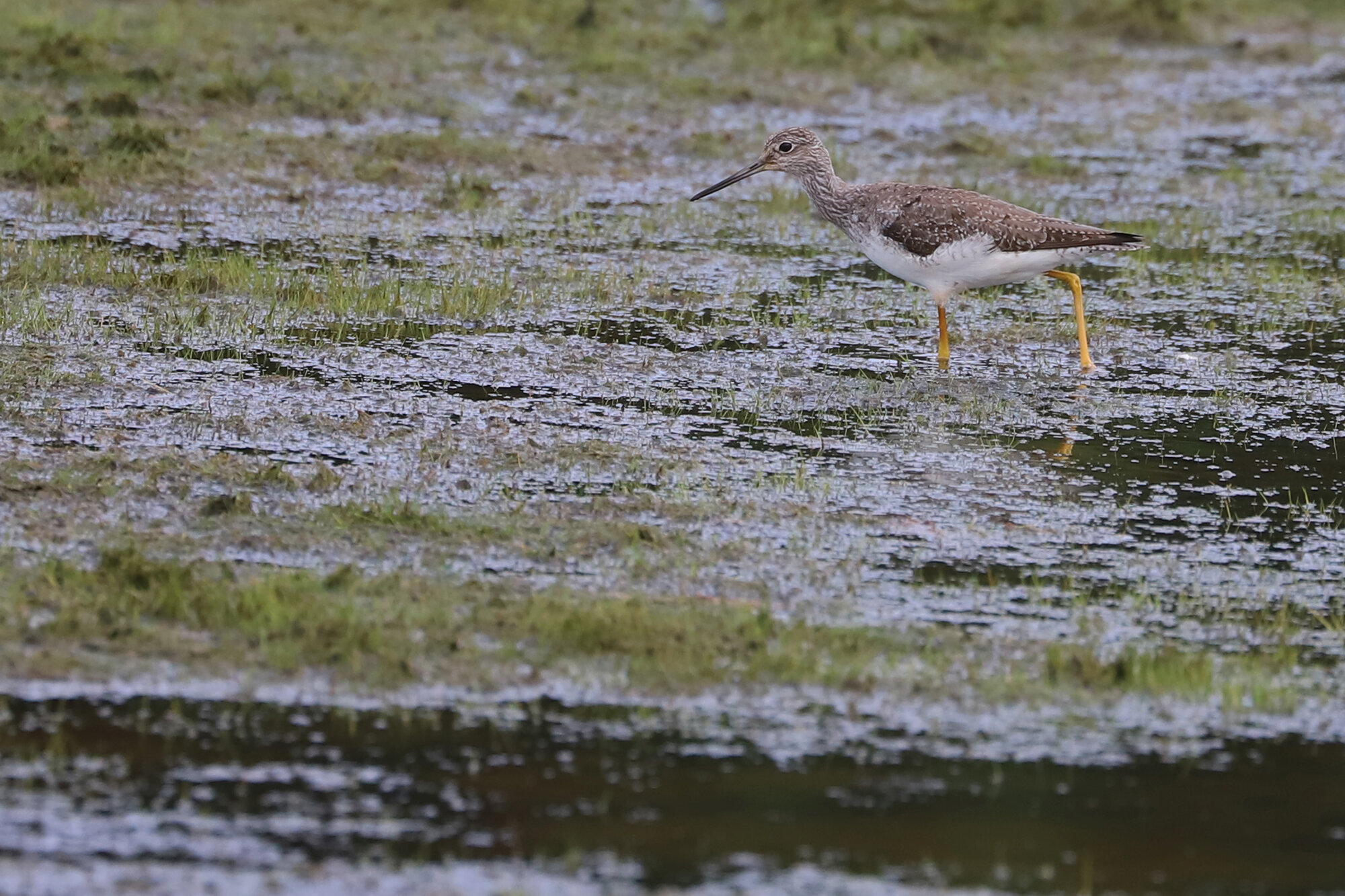
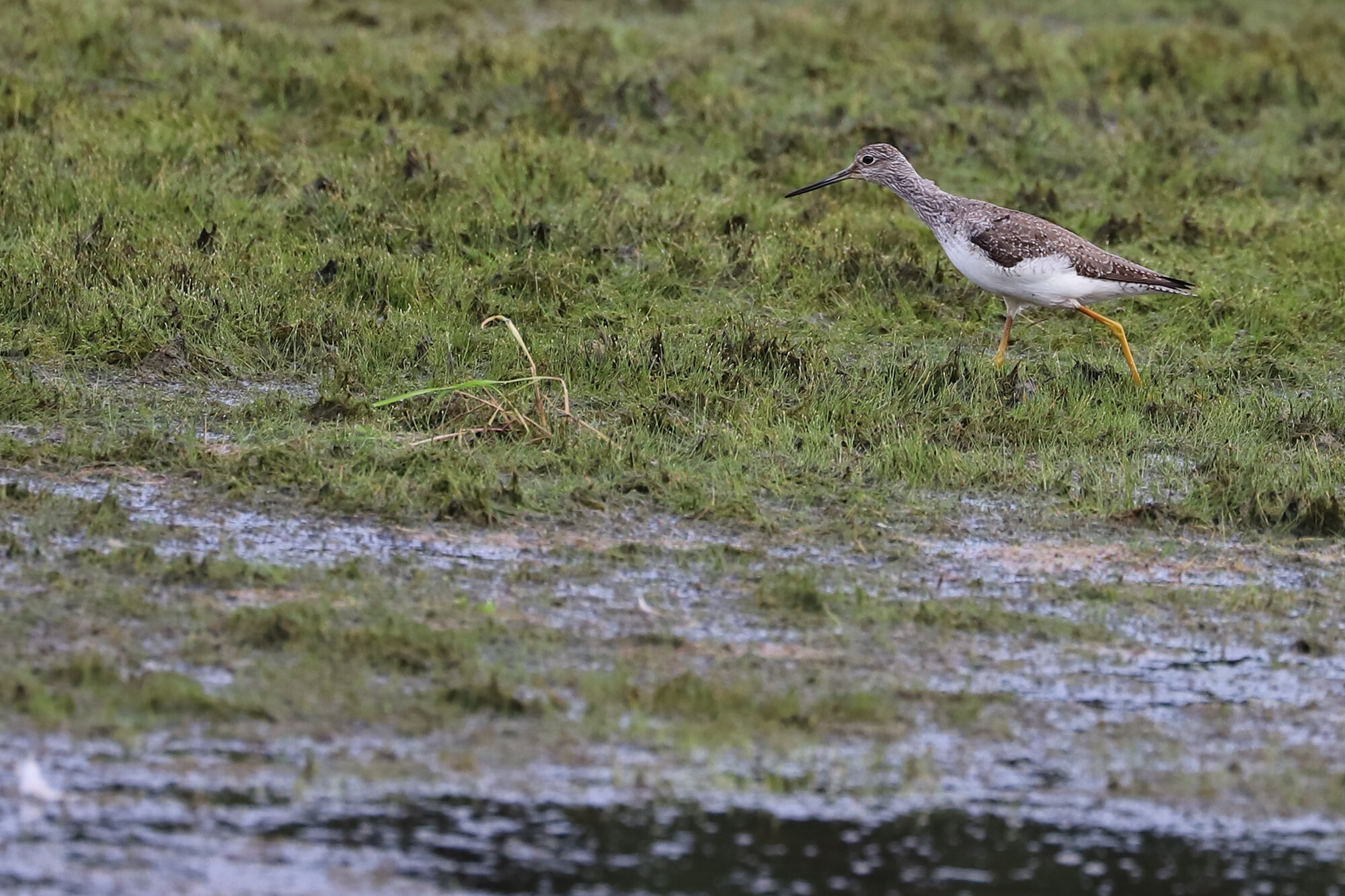
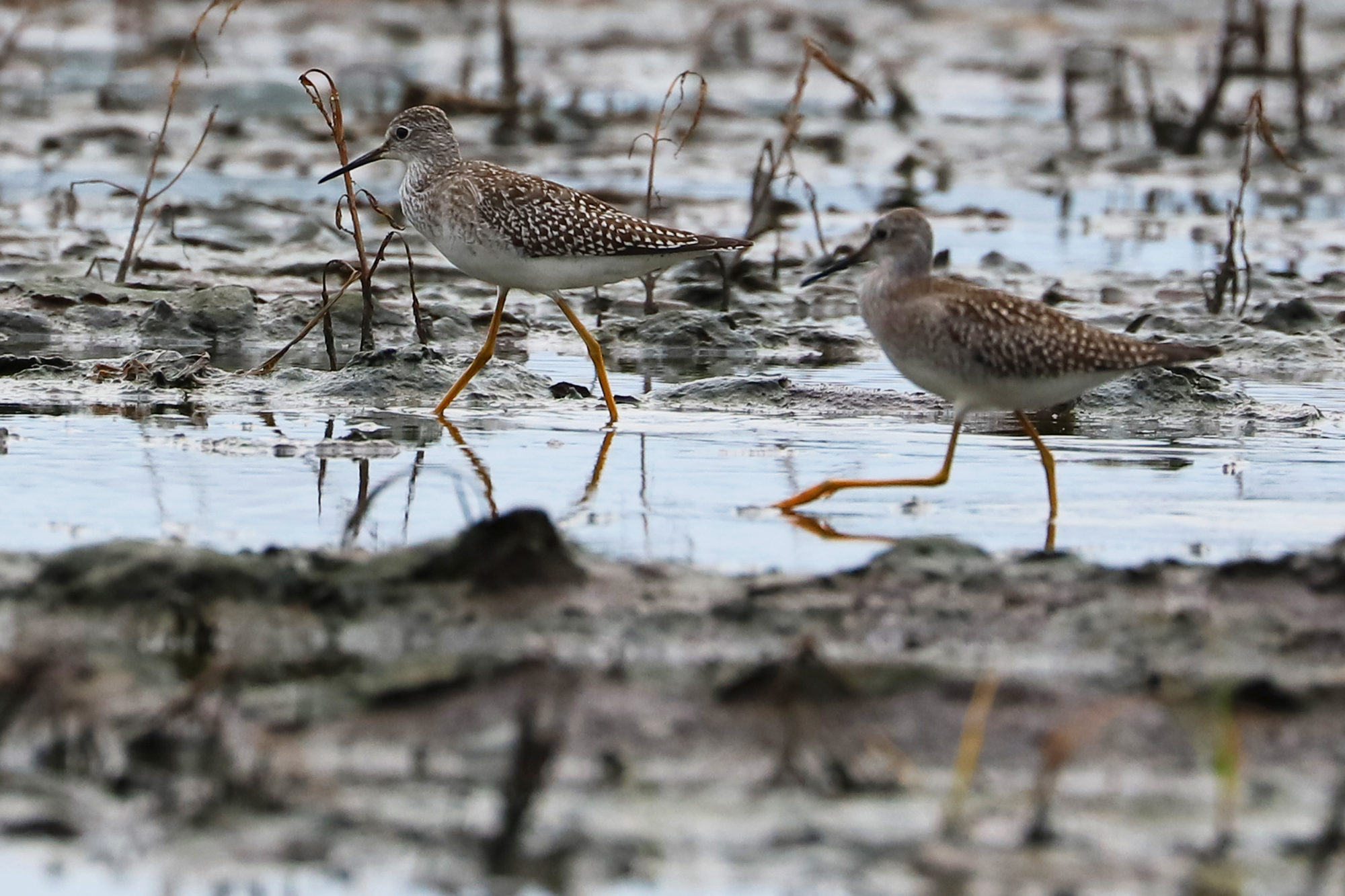
  • Also caused by the low water levels at Stumpy Lake, despite the heavy rains that occurred the previous day, a single Lesser Yellowlegs was photographed on 17 Oct (vis. Catherine Johnson, ph. Jonathan Snyder). Just like the Semipalmated Sandpiper report that tops this section of the journal, this is only the second record for Lesser Yellowlegs and the first at the natural area going all the way back to 8 Sep 1995, (vis. James Flynn)!

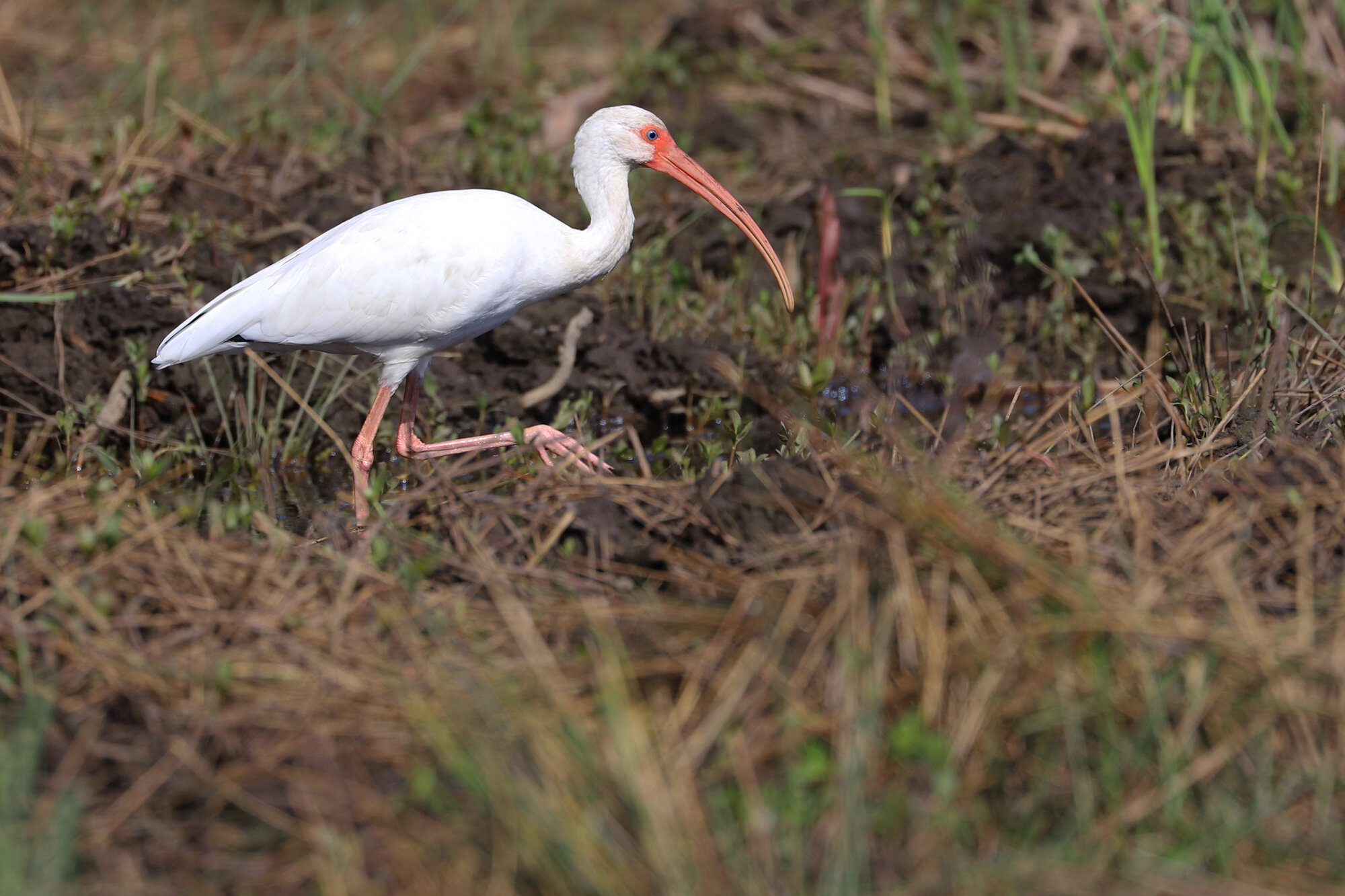
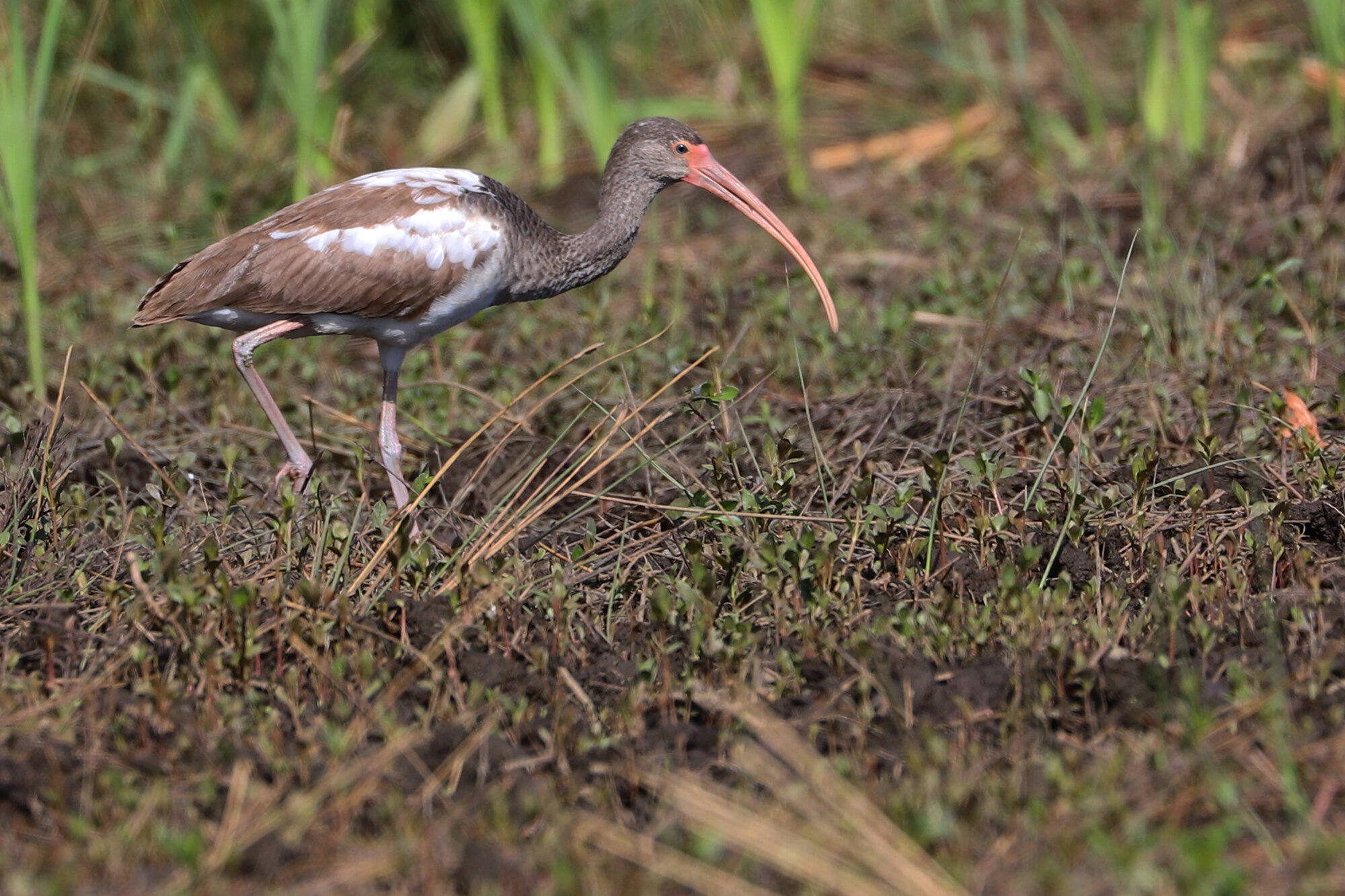
  • Late of its typical 5 Oct departure date by over ten days, a Glossy Ibis was observed in flight over Back Bay NWR on 17 Oct (ph. Derek & Laurie Yoder). Seen again the following day, and again on 19 Oct, this individual provided views for quite a few folks prior to the passage of post-Tropical Storm Nestor. Occasionally we do see lingering records for this species here, but typically there is only 1 or 2 records after mid-Oct. Last year, we had an individual recorded over Princess Anne WMA Whitehurst Tract on 28 Oct (ph. Steve Myers), and a miraculous group of 14 reported at Back Bay NWR on 6 Dec (vis. Robert Ake), so we should all be on the lookout for this species. Any sighting is worth documenting moving forward, and beware juvenile White Ibis viewed at a distance in flight, which in poor light can appear quite similar.

  • Another first hotspot record, a Blackpoll Warbler was logged to eBird at False Cape SP on 19 Oct (obs. Steve Myers)! With an expected species departure date currently set at 20 Oct in eBird, only one other record came later than this one, an individual observed along Burton Station Rd. on 24 Oct (vis. Andrew Baldelli).

  • At least two lingering Ruby-throated Hummingbirds were picked up ten-or-more days past the species’ average fall departure date of 20 Oct. An immature/female type hummingbird visited the feeders at a private residence in Hunt Club Forest on 30 Oct (vis. Karen & Tom Beatty), and it’s quite possible that it’ll linger into November. Another was observed the same morning quite far away at another private residence in Laurel Cove (vis. Loretta Silvia). It’s also likely that others will pop up throughout the city next month, but hopefully birders will keep a watchful eye for rarer species like Rufous, Allen’s, and Black-chinned Hummingbirds, which all have late fall/early winter records in Virginia!

  • A brief visit from a Rose-breasted Grosbeak at a South Shores Estates private residence on 30 Oct (vis. James Marcum) provided for both a very late record of the species and also the first since 7 Oct in the city. In fact, this marks the latest fall record we have currently in eBird for the city, though last year one made a surprise winter appearance at a Bellamy Manor private residence on 5 Dec (ph. Una Davenhill).

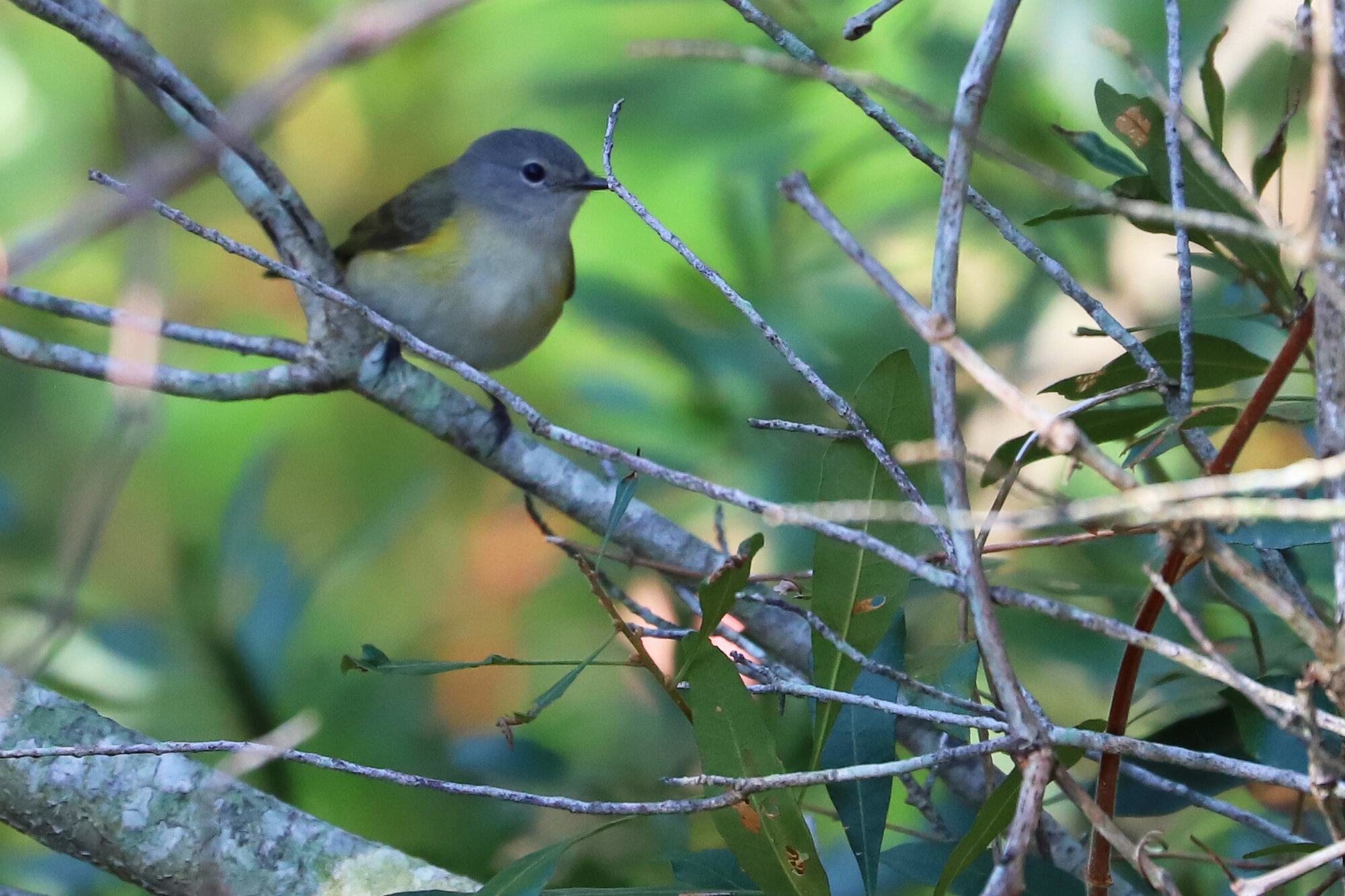
  • Ten days past its typical departure date of 20 Oct, a female/immature-type American Redstart was photographed at the very same residence (mentioned above) in Bellamy Manor on 30 Oct (ph. Una Davenhill). This marked the latest photographically documented record we have for the species currently in eBird for Virginia Beach! Only one sight report has occurred later, with two being reported at a private residence in Lake Smith Terrace on 9 Nov 2018 (vis. Tracy Tate).

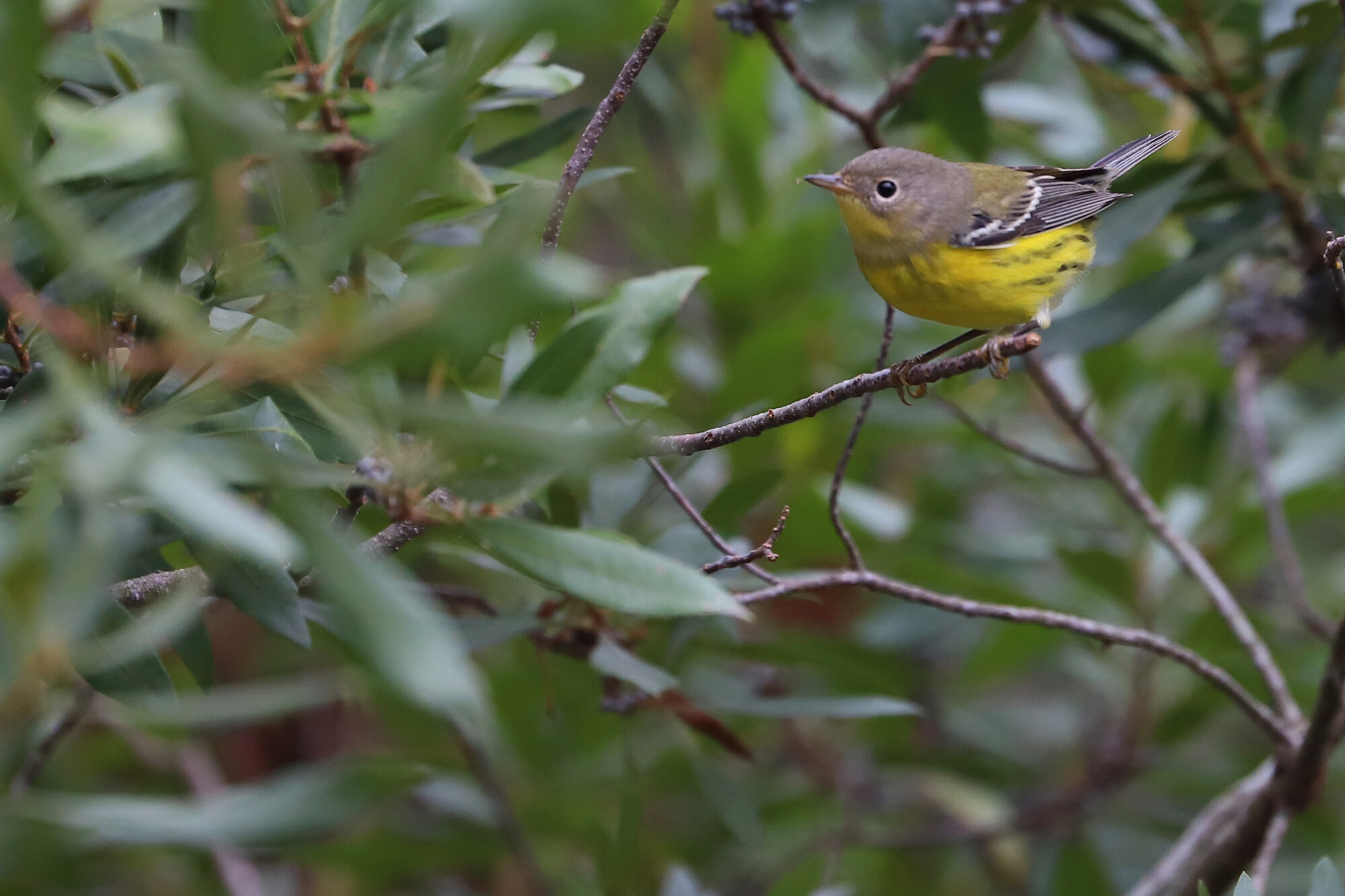
  • A third remarkable sighting for the same date of 30 Oct, a Magnolia Warbler was photographed at First Landing SP’s campground area in the evening hours (ph. June McDaniels). Fifteen days beyond the typical departure date for this species in Virginia Beach, 15 Oct, this record marked a new late date here in eBird! Last year, an individual was photographed at Back Bay NWR on 28 Oct 2018 (ph. Eric Alton & Tammy Conklin), but prior to that our latest record had been 19 Oct 2017 (vis. Tracy Tate), making this late October records all the more miraculous!
While the overall species count in October 2019 (‘this Oct’) was very close to that observed in October 2018 (‘last Oct’), there’s quite a few differences. The following species were recorded last Oct but were not found this Oct (species in all capital letters are those that flag as ‘rare’ in eBird here throughout Oct): Brant, Tundra Swan, EURASIAN WIGEON, Greater Scaup, Lesser Scaup, Common Eider, White-winged Scoter, Red-breasted Merganser, Horned Grebe, VIRGINIA RAIL, COMMON GALLINULE, Whimbrel, Western Sandpiper, RED PHALAROPE, PACIFIC LOON, AMERICAN WHITE PELICAN, Tricolored Heron, Veery, Swainson’s Thrush, Wood Thrush, American Pipit, PURPLE FINCH, Pine Siskin, CLAY-COLORED SPARROW & RUSTY BLACKBIRD.

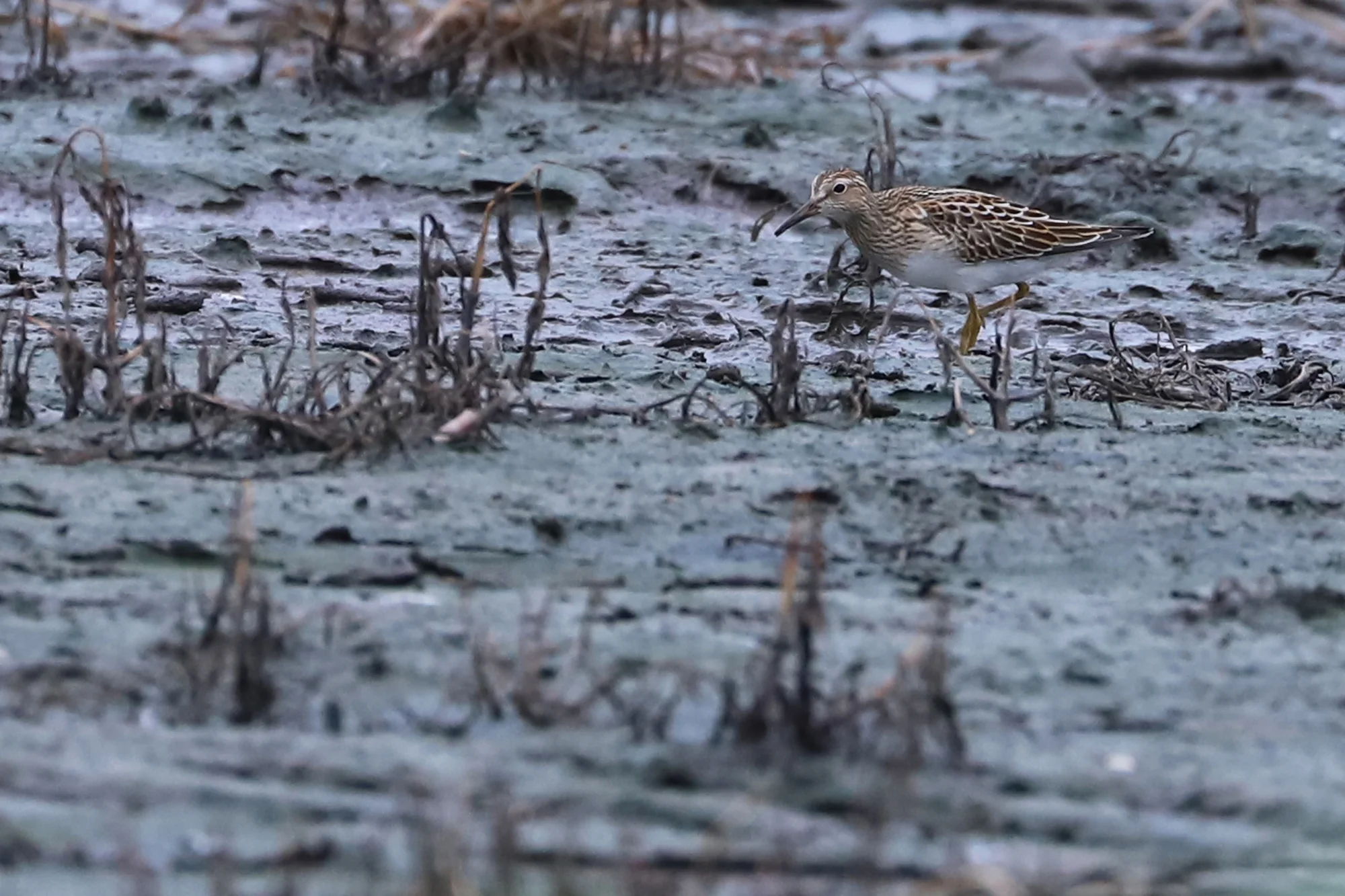
Conversely, we found the following species this Oct, but didn’t observe them last Oct: HARLEQUIN DUCK, Northern Bobwhite, BLACK-BILLED CUCKOO, PURPLE GALLINULE, AMERICAN AVOCET, HUDSONIAN GODWIT, Red Knot, Stilt Sandpiper, White-rumped Sandpiper, BUFF-BREASTED SANDPIPER, Pectoral Sandpiper, LONG-BILLED DOWITCHER, ANHINGA, Great Crested Flycatcher, YELLOW-THROATED VIREO, Ovenbird, CONNECTICUT WARBLER, KIRTLAND’S WARBLER, CHESTNUT-SIDED WARBLER, YELLOW-THROATED WARBLER, Scarlet Tanager, Rose-breasted Grosbeak & PAINTED BUNTING.
Something that quickly stands out is that last Oct produced 14 rarities that this Oct did not, while last Oct only produced 9 rarities that this Oct didn’t. Last Oct also proved to be a much more lucrative month for waterfowl, 8 species listed above, to only 1 species this Oct. We just didn’t see big movements of waterfowl for some reason this Oct, but hopefully when Nov rolls around we’ll see that straight. Warblers were found much more freely this Oct, with 5 species listed above to last Oct’s zero! Irruptives like Pine Siskin & Purple Finch were logged last Oct, but this Oct did not see movements of the two species in coastal Virginia (though we did have one Red-breasted Nuthatch record). Sparrows were also lacking this Oct, and like the waterfowl, we hope to make up for that in Nov. Of course, we’d all love to have logged another Red Phalarope or Pacific Loon like last Oct, but seeing county firsts for Kirtland’s Warbler and Hudsonian Godwit was more than a fair trade off! No matter how you sort the species, or how you analyze birding in general, Oct 2019 was just an all around incredible month here in Virginia Beach!

As always, a wide array of media (photos/audio/video) were submitted during the month in Virginia Beach, and eBird makes it incredibly easy to organize and browse all of these. For those hoping to view every photo/audio/video submitted for Virginia Beach during this period, please see the complete listing for the month of October located on eBird’s Media explorer by clicking here! Please remember, anyone with an eBird user account has the ability to rate these photographs/audio/video on a scale of 1-5 stars (based on these guidelines). Making use of the average rating for each media item is how eBird populates anything media-driven on the website, particularly the Illustrated Checklists. So, if you're one of the many folks who enjoy looking at photographs or watching/listening to video/audio recordings of birds, please take some time to rate their quality, it helps to make eBird more useful with each passing day!
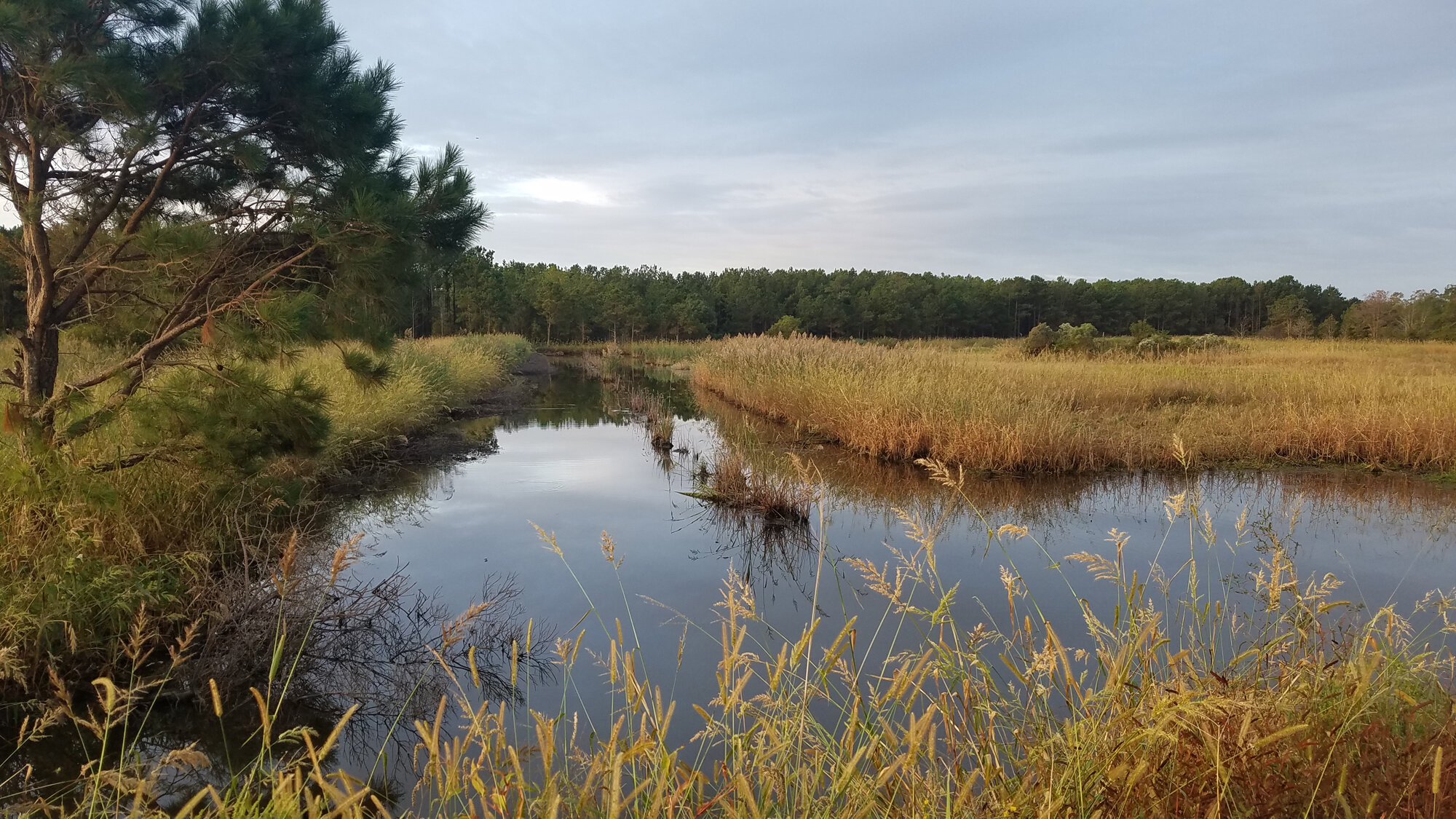
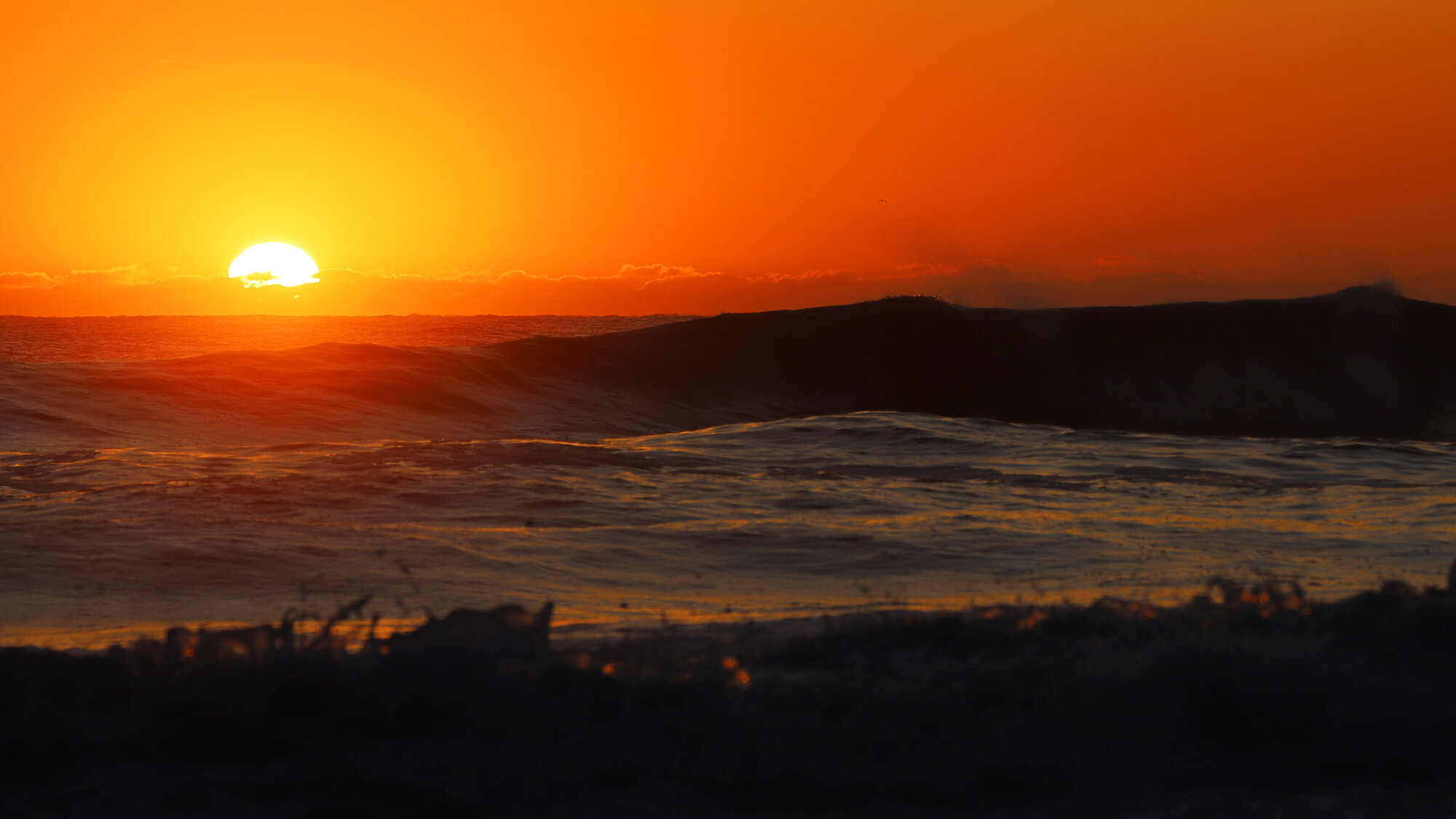
NOVEMBER LOOKAHEAD: While the timeframe for peak fall passerine migration (late September and early-mid October) has come and gone once again for Virginia Beach, November forces birders to switch gears a bit. Unfortunately for many birders, Daylight Saving Time ends at 2 AM on Sunday, 3 Nov which means that birding after typical weekday work hours is no longer in the cards. While Saturday, 2 Nov features a sunrise/sunset of 7:28 AM/6:05 PM, the sunrise and sunset for Sunday, 3 Nov will be 6:29 AM & 5:04 PM (be sure to update your cameras and other electronic gear appropriately)! With the sun now rising an hour earlier, those among us who hope to be out right at dawn will need to tweak our sleep habits a bit! This is what makes November (and December) two of the most exciting months of the year though, as the time table for many birders to be out in the field gets constricted, and we have to dig deep to find birds in the time available. Now, along the East Coast, November is known as the best month for finding western vagrants that have inadvertently reverse-migrated & ended up here. Quite a diverse list of rare species have records over the years during November in coastal Virginia. In recent years, the coast has seen records for the following species during November, and while these species are incredibly rare and unexpected, they are nonetheless worth being aware of: White-winged Dove, Sandhill Crane, Franklin’s Gull, American White Pelican, Crested Caracara, Say’s Phoebe, Ash-throated Flycatcher, Western Kingbird, Gray Kingbird, Scissor-tailed Flycatcher, Cave Swallow, Lesser Goldfinch, Lapland Longspur & Harris’s Sparrow. Surely, there are plenty of others as well. Yellow-headed Blackbird is a rarity that has a bit higher chance of being located here in November than those species mentioned above. Typically, the large, mixed flocks of Red-winged Blackbirds, Brown-headed Cowbirds, Common & Boat-tailed Grackles and European Starlings, that occur from Sherwood Lakes southward to the NC and Chesapeake borders are where these end up being discovered. Blackwater tends to be a great section of the city to look for flocks moving around farm fields, where they can often number in the thousands (or tens of thousands) and blanket the ground when foraging. Careful scrutiny of these foraging flocks, looking for the yellow head (when upright) or the brown vent (when tipped over feeding) could yield views of this species. Also, flocks often join at dusk to roost for the night, and disperse in early am, so these are good times to scan birds in flight, where Yellow-headed Blackbirds will show very bright, white wing patches (and of course, the yellow head). Our odds of finding any of these species aren’t super high, but with more eyes in the field looking, anything can happen in November.

Additionally, November is a great month to spend time seawatching, as waterfowl will be making a big push into & through the region during this month. Large morning flights observed from Rudee Inlet, Little Island Park and Back Bay NWR over the past few Novembers have produced loads of records for Black / Surf / White-winged Scoters, as well as Common Eiders & Harlequin Ducks. Neighborhood ponds are also worth checking throughout November, and interesting dabbling ducks like Eurasian Wigeon or Common Merganser can pop up at this time. It is also peak season for observing Parasitic & Pomarine Jaegers pass by our coastline, and as the 2017 season showed us, large numbers of the birds can be observed as long as they had a good breeding year in the arctic, and there are good numbers of Laughing Gulls & Royal Terns moving south for them to harass and scavenge from. Sparrows should continually be searched for in any scrubby habitat available (Back Bay NWR, Little Island Park, Princess Anne WMA especially), and rarer species like Clay-colored, Lincoln’s, White-crowned, Lark and Vesper Sparrow could all be found during November. In terms of marsh sparrows, all three species (Seaside, Nelson’s & Saltmarsh) should be present at Pleasure House Point NA and the surrounding brackish wetlands of the Lynnhaven River. Beaches are also worth checking frequently for Snow Buntings, which tend to pop up around mid-November if we’re going to see them. The vegetated dunes from about 40th Street and north to JEB Fort Story at the Oceanfront tends to be the location where these are observed with the most frequency. Lastly, for those folks who maintain hummingbird feeders throughout late fall, make sure to keep your eyes open for western vagrants like Rufous or Allen’s Hummingbirds, or even Black-chinned Hummingbird, all of which have records in Virginia during November!

The vast majority of fall arrivals are now behind us, but as of October’s ending, we have not yet logged first arrivals for the following species that were expected prior to November (typical arrival dates listed in parentheses after each species name):

Additionally, the following species all have expected fall arrival dates during the month of November and should be looked for throughout the month.

Hopefully over the course of the next 30 days, each of these species, and perhaps some unexpected species, can be found in the city. For those who may want their observations to be included in this journal please remember to submit your records to www.eBird.org, where they can be reviewed for accuracy by local experts and easily found by those of us interested in such things. Thank you to those who made it through the entirety of this October entry, and be sure to check back next month to see what Virginia Beach birders will have found in November!

Next Entry | Entry Index | Previous Entry

For further information regarding this monthly, online publication, please visit the Journal Overview Page which provides an in-depth explanation of the current format, layout and composition of the journal. As always, thank you for reading, and please leave me a comment below (you may use your Facebook, Gmail or other accounts to easily do so), or just click the Heart icon to the lower right of this post to let me know you stopped in!

September 2019

The momentum gained at August’s close continued throughout September, providing for one of the most exciting months of birding Virginia Beach in recent memory! The impacts of Hurricane Dorian on 6 Sep, and also of several cold fronts and their corresponding migration movements towards the end of the month bolstered diversity of species across the city. Over the course of its thirty days, a total of 183 species were logged to eBird, which was a significant increase from the 152 species logged during August as well as a hefty boost to the 177 species logged during September last year. With September now completed, Virginia Beach has logged records for 291 species to eBird during 2019 (a massive +12 compared with last year’s 279 species through the same timeframe), and the number of complete checklists submitted now sits at 7,908 (2018 produced 8,489 in total, the most of any year thus far) so we’re still on pace to top the 10,000 mark for the first time!

With the increase in species diversity came a corresponding rise in species highlights this month! Topping the list this month, rarity records occurred for hurricane-displaced species including Sabine’s Gull, Sooty Tern, Red-necked Phalarope, Roseate Tern as well as a pair of unexpected vagrants, namely Gray Kingbird & Western Kingbird. Additionally, we saw records for rare migrant passerines including Mourning Warbler, Least Flycatcher, Canada Warbler, Tennessee Warbler, Philadelphia Vireo, Blackburnian Warbler, Chestnut-sided Warbler, Worm-eating Warbler, Hooded Warbler & Yellow-throated Warbler as well as rare shorebirds like American Golden-Plover, Long-billed Dowitcher, Marbled Godwit and even exciting ‘from-shore’ records for both Pomarine & Parasitic Jaeger! Continuing since the springtime, Anhinga were also viewed through a good chunk of the month. Lastly, September provided the city with first-of-season records for expected fall arrivals which, in order of arrival date, included: Cape May Warbler, Black-throated Green Warbler, Common Nighthawk, American Bittern, Northern Harrier, Magnolia Warbler, Wilson’s Warbler, Merlin, Northern Pintail, Sharp-shinned Hawk, Swainson’s Thrush, Palm Warbler, Blackpoll Warbler, Northern Shoveler, Sora, Nashville Warbler, Veery, Savannah Sparrow, Scarlet Tanager, Rose-breasted Grosbeak, Yellow-rumped Warbler & Black-throated Blue Warbler!

With so many excellent observations this month, the rarities that occurred with Hurricane Dorian are going to be discussed here first just to provide some form of cohesion to this report. A more extensive article about the weather impacts from the storm, and a more in-depth look at the species displacements caused will be published under the Weather section of this website in the near future, but for the purposes of this monthly article, the focus will just be put on the rarest of the sightings. So, starting out, Hurricane Dorian made its passage over Hatteras Island, NC on the morning of 6 Sep, which provided strong onshore, northeasterly, winds across Virginia Beach. In anticipation of the potential for seabirds being blown inland, many birders were out throughout the day searching. Wind conditions were in the 40-50mph range most of the day, but rainfall was only heavy for a couple of hours, making conditions reasonably safe to be outdoors (fortunate for us).

Early on in the day, a single SABINE’S GULL was observed in flight outside of Lynnhaven Inlet (vis. Andrew Baldelli & Rob Bielawski), making for the very first eBird record for this species in Virginia Beach and bringing our city all-time tally up to 378 species! Worth noting, however, one was reported off Little Island Park a few years ago, but the record was not accepted by eBird or by the Virginia Avian Records Committee (VARCOM), though it was likely to have been a correct identification. This species is a rare offshore migrant during fall, with most records in Virginia being associated with tropical cyclones or strong onshore gales. Last year, a single individual was observed in the wake of Hurricane Florence out at Kerr Reservoir in Mecklenburg County from 15-17 Sep 2018 (ph. Jeffrey Blalock). However, the closest previous sighting to us here in Virginia Beach was an immature seen from the Chesapeake Bay Bridge-Tunnel’s fourth Island, North Thimble Island on 2 Sep 2006 (ph. Edward Brinkley) during the passage Tropical Depression Ernesto (previously was Hurricane Ernesto). With records submitted far less than annually in Virginia for this species, it is one of VARCOM’s statewide reviewable species, and a full report of the 2019 observation was submitted accordingly.

In addition to the Sabine’s Gull, it wasn’t long before other displaced rarities started popping up across the northern portion of the city. A juvenile SOOTY TERN was observed cruising around over the Lynnhaven estuary south of the Lesner Bridge in the afternoon (ph. Todd Day & Ian Topolsky). Interestingly, it wasn’t too long afterward that a second Sooty Tern, this one an adult, also joined in and immediately began associating with the juvenile in flight over the “shelted” waterway. Sooty Terns were also logged during the storm at Fort Monroe in Hampton, at King-Lincoln Park in Newport News, near the Granby Street Bridge in Norfolk, and also at Bill Jessee Park in Suffolk. Always one to look for during the fall season when tropical cyclones are in play, this species certainly did not let anyone down. The last records for Sooty Tern prior to Hurricane Dorian were of a single individual at Little Island Park, 14 Sep 2018 (vis. Andrew Baldelli & Tracy Tate) during Hurricane Florence’s landfall over North Carolina and perhaps as many as twenty observed from South Thimble Island (CBBT) during Tropical Storm Hermine on 3 Sep 2016 (first noted & ph. Arun Bose with many additional observers throughout the day).

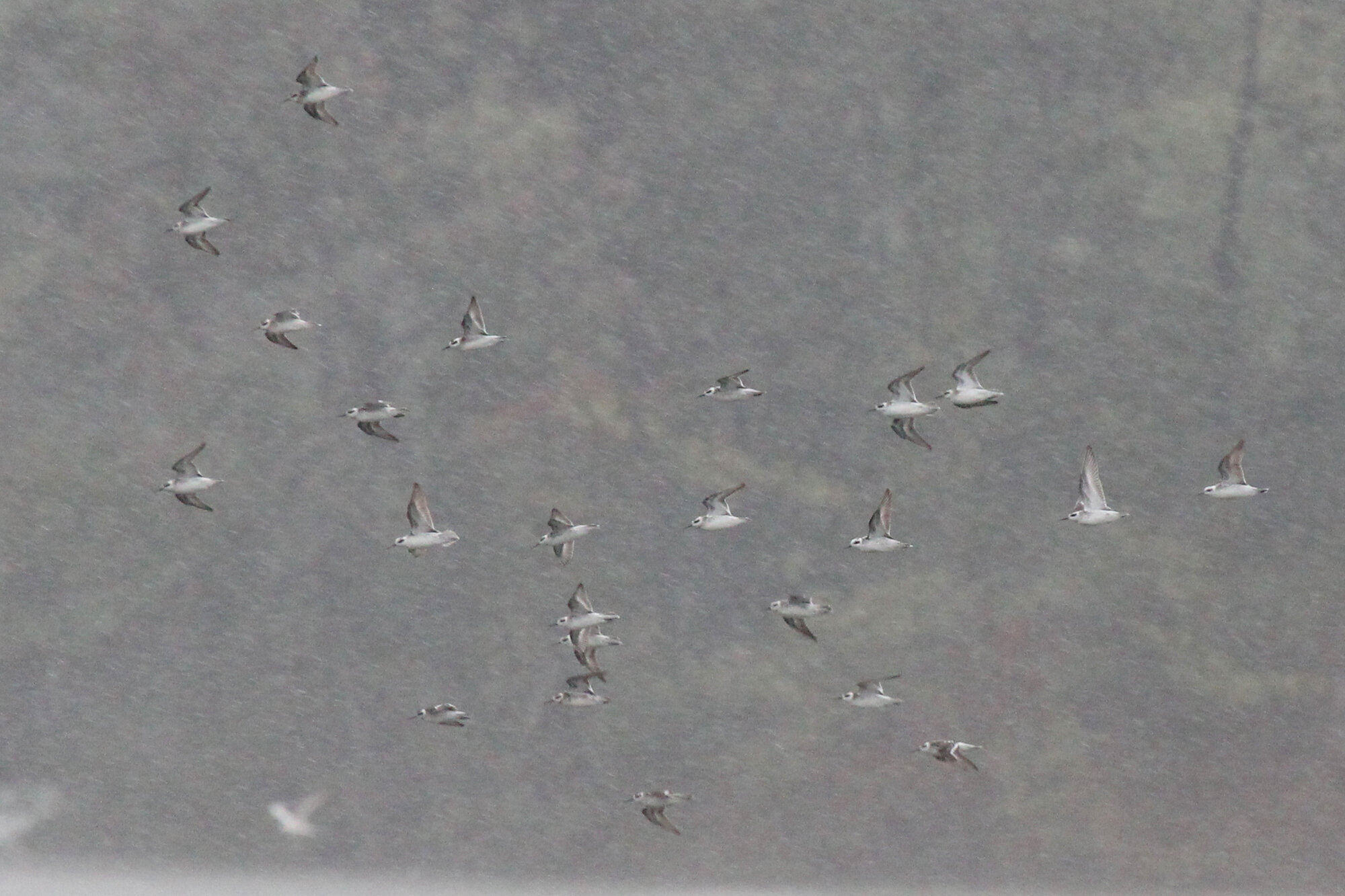
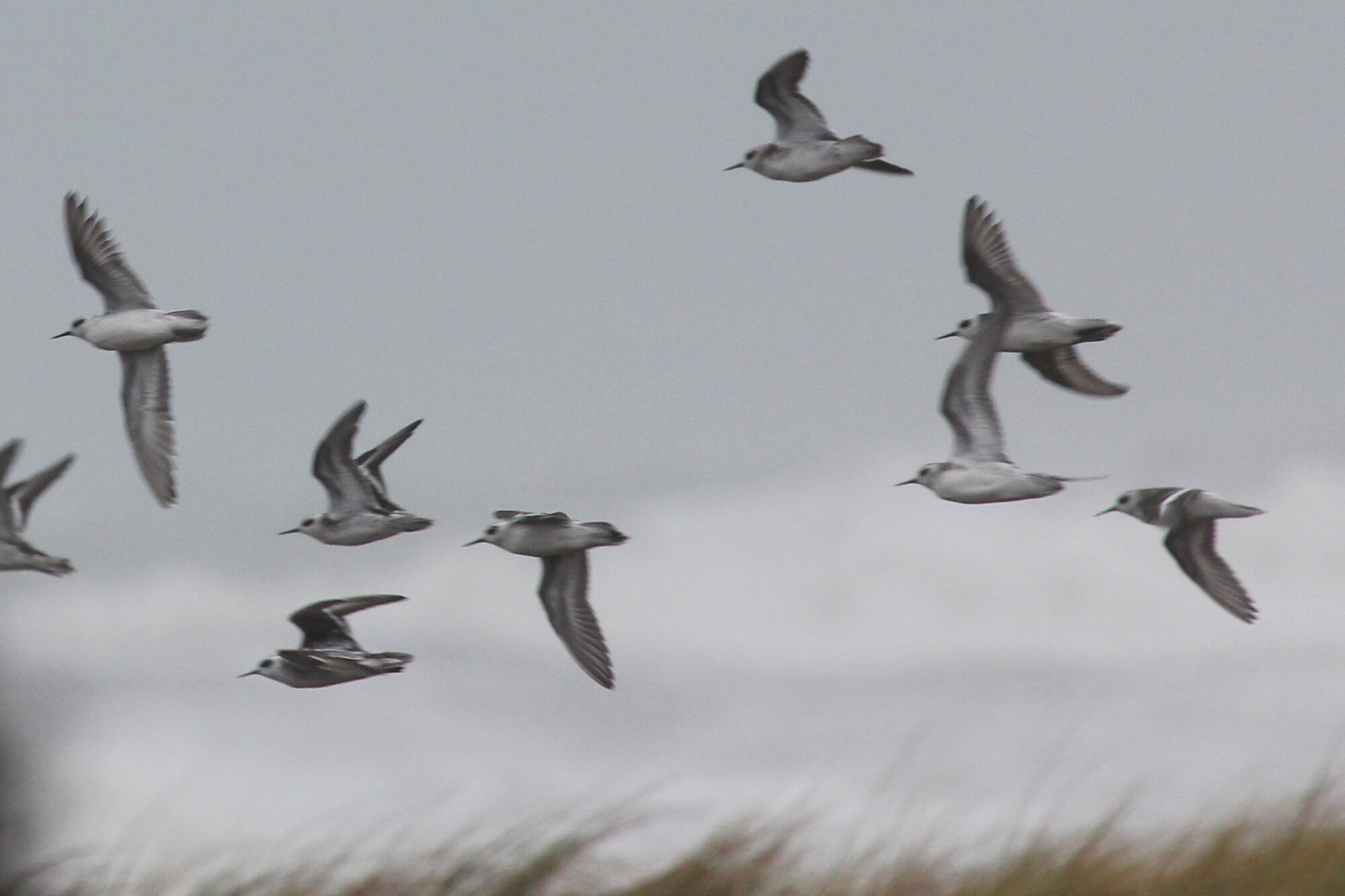
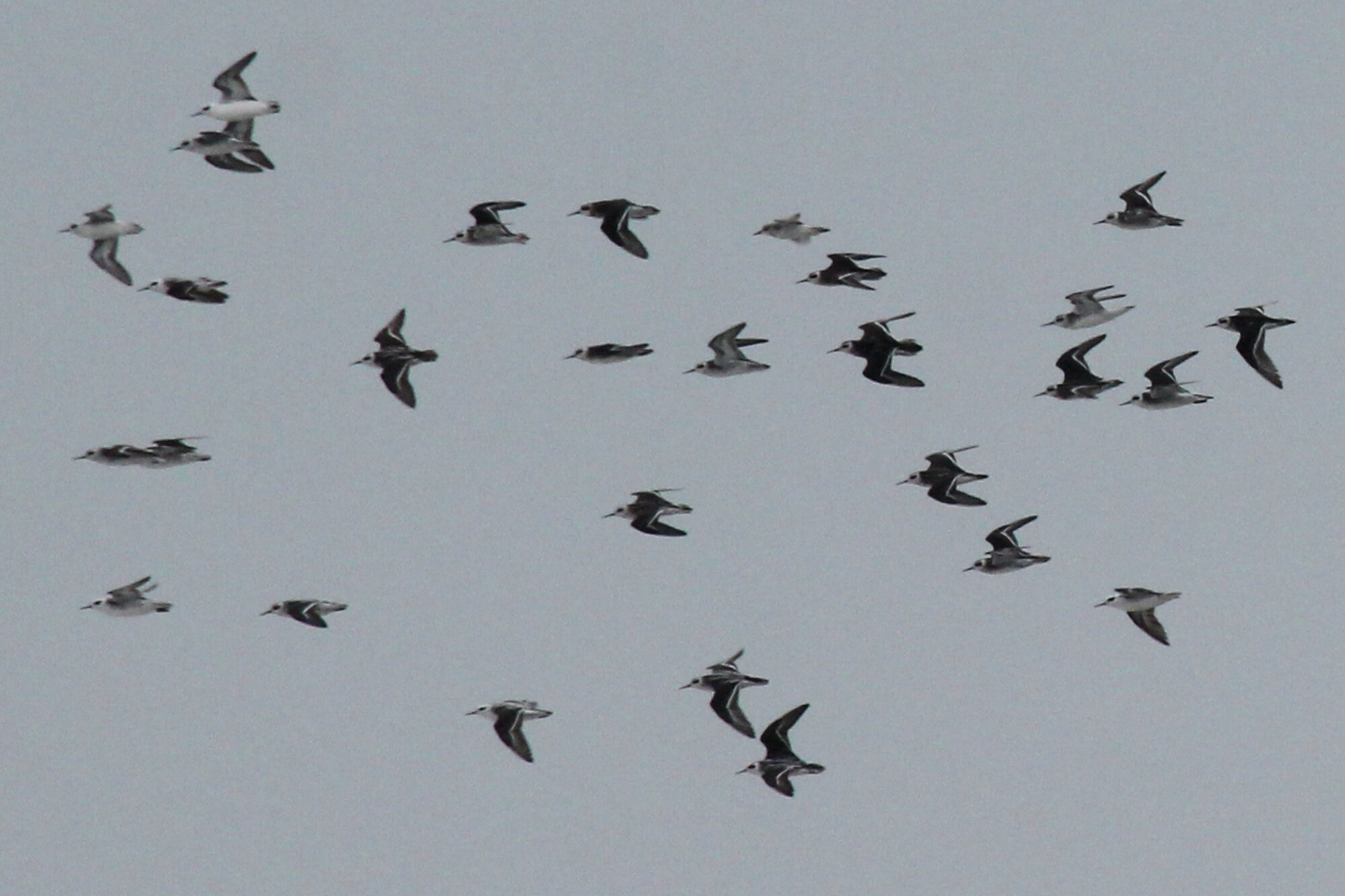
In the same vein of rareness as the Sooty Terns, a group of 23 RED-NECKED PHALAROPES was observed swirling around over Little Creek Reservoir from Shore Drive (ph. Andrew Baldelli / Rob Bielawski / Karl Suttmann). These birds had clearly been pushed inshore through Little Creek Inlet and found themselves over freshwater, or perhaps even had been pushed straight over land on the 40-50mph sustained winds that persisted most of the morning. In the early afternoon, several flocks at Fort Story JEB accounted for a total of 109 more Red-necked Phalaropes (ph. Andrew Baldelli / Rob Bielawski / Karl Suttmann) with the majority flying wildly out over the massive waves, but with a single group actually observed over the treetops trying desperately to get back out over water. Smaller numbers were also observed later in the afternoon from Lynnhaven Inlet, with counts of 2 (vis. Todd Day & Ian Topolsky) and 6 (vis. Ellison Orcutt) occurring. Prior to Hurricane Dorian, the last Red-necked Phalaropes observed in Virginia Beach were a pair associated with a strong nor’easter at Little Island Park on 9 Nov 2018 (vis. Andrew Baldelli & Tracy Tate) and a group of 5 viewed from South Thimble Island (CBBT) during Tropical Storm Hermine’s passage on 3 Sep 2016 (vis. Edward Brinkley). Surely a species that should be looked for during any extended periods of strong onshore winds, but typically one that truly requires tropical cyclone impacts to really provide the opportunity to view.

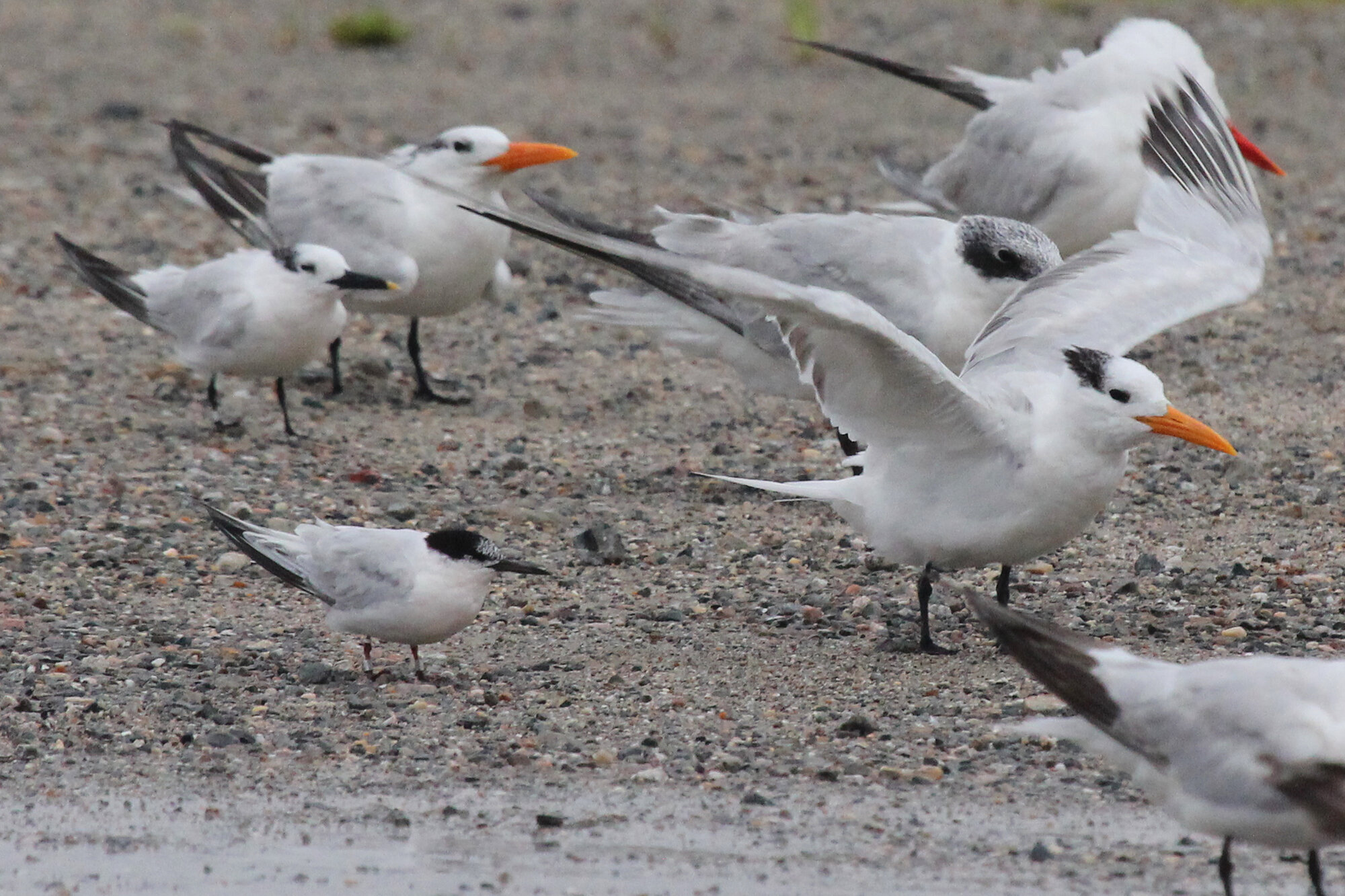
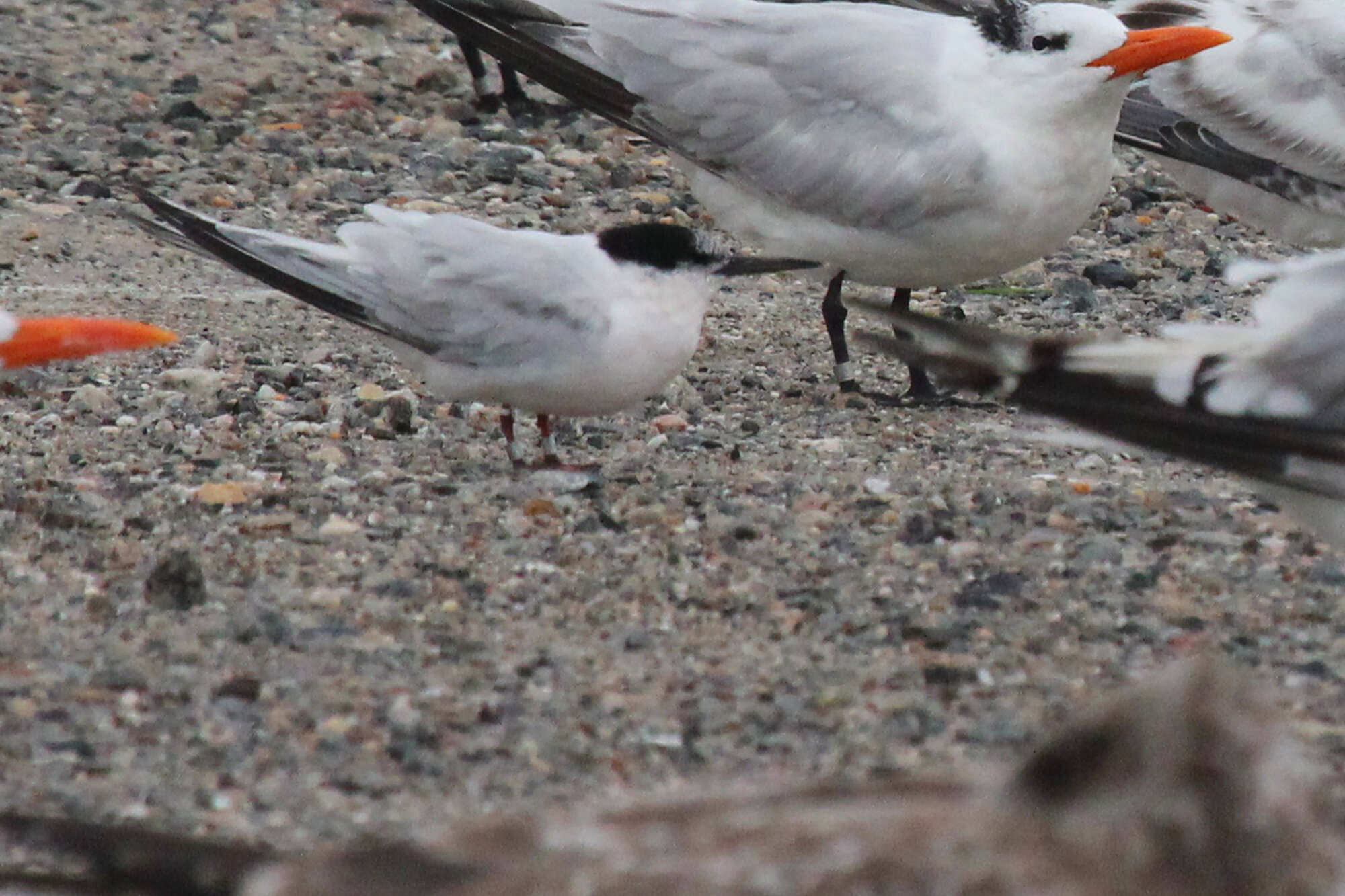
A second for Virginia Beach on the year, and a third for the state, a single ROSEATE TERN was observed mixed in with a large storm roost of terns/gulls/shorebirds at the Lynnhaven Boat Ramp during the later afternoon hours (ph. Andrew Rapp). With city facilities all closed for the day, the gravel area and sandy plateau south of the boat ramp provided a perfect spot for these birds to rest their wings a bit and hide from the strong winds (which had swung a bit north/northwesterly by this point). Here the birds were protected from the worst of the storm, as the rain had basically subsided. A number of birders were able to arrive and view the Roseate and all the other terns associating in the same area. In fact, the Lynnhaven Boat Ramp actually produced recorded for 10 species of terns, something that appears to have only occurred once before in Virginia (Kerr Reservoir during Hurricane Fran on 6 Sep 1996, obs. Brian Sullivan). With the last record for Roseate Tern occurring 1 Jun 2019 at Back Bay NWR (ph. Rob Bielawski & Lisa Rose), and with the species being missed altogether in Virginia (not just in Virginia Beach) during 2018, it was exciting to see this one get logged.

Extended southwesterly winds later in the month were likely the cause of another exciting pair of species to arrive in Virginia Beach. Early in the morning hours of 21 Sep, a single GRAY KINGBIRD was observed at Back Bay NWR (ph. Betty Sue Cohen) near the kayak launch just northwest of the visitor contact station. This being only the second eBird record the city, but with a few other records known from The Gold Book, provided quite a bit of excitement across Virginia Beach birders. While searching for the Gray Kingbird the following day, incredibly, an immature WESTERN KINGBIRD ended up being found located in the same area of the park (ph. Andrew Baldelli, ph. Karen & Tom Beatty, vis. Jason Schatti)! Like the Gray Kingbird, the Western ended up only being observed throughout that same day but couldn’t be relocated the following day. To make matters even stranger, on 25 Sep, perhaps a different GRAY KINGBIRD was found at the park (vis. Andrew Baldelli, vis. Karen & Tom Beatty, ph. Reuben Rohn). Now, there’s no way to say for sure whether it was, or wasn’t the same individual observed on 21 Sep that started off this sort of “kingbird madness”, but given the several day lack of records despite exhaustive searches by many birders, it seems plausible at least that this was a separate individual. Either way, this was an incredible set of circumstances, and it’s astonishing to think that over the last couple of years the park has now hosted both of these vagrant species of kingbirds, as well as Ash-throated, Fork-tailed & Scissor-tailed Flycatchers. Back Bay NWR truly is one of a kind.

An extremely rare spring & fall transient along the coast, MOURNING WARBLER was a remarkable surprise during September. A single individual was observed in a dense thicket near the parking area of Beach Garden Park on 24 Sep (vis. David Clark), marking the first time this species has been logged to eBird in the city since 13 Sep 1980 when one was at Back Bay NWR (vis. Edward Brinkley). Thus far, these are the only two accepted records for Virginia Beach in eBird. Breeding at the highest elevations in the state, with most recent records along the West Virginia border in the vicinity of Paddy Knob, all we can hope for here is strong southwest winds in the late spring and strong northwest winds in mid-fall to push a migrant Mourning Warbler towards the coastline. A singing male in Northampton County this spring gives us some hope that it could happen here, we just need a lot of eyes in the field at the right times, and some considerable luck. Several observers did make attempts to re-find this warbler at Beach Garden Park, but unfortunately all were unsuccessful and this one managed to get away from the birding community.

Another second record for the city, a single LEAST FLYCATCHER was observed in a Kings Grant private backyard on 25 Sep (vis. Ron Furnish). With our only other record in Virginia Beach having occurred at Back Bay NWR from 2-16 Sep 2017 (vis. Tommy Maloney, later ph. Rob Bielawski), any record for this rare transient is certainly noteworthy. Like the Mourning Warbler above, this species does breed in the state, but only at high elevation along the Blue Ridge and in the mountains west of the Shenandoah Valley. We’re therefore a bit outside it’s normal range for migrants, especially in the springtime, and really depend on that northwesterly wind in fall to bring them to the coast. It’s no coincidence that this one was seen just one day after the Mourning Warbler.

Not quite as rare as the Mourning Warbler, but in the same vein of transient passerines that haven’t been reported in Virginia Beach annually, a CANADA WARBLER viewed at a Cypress Point private residence also on 24 Sep (vis. Debbie Schroeder) proved to be an exceptional record. With the last accepted eBird record for this species occurring at Back Bay NWR on 21 Sep 2017 (vis. Karen & Tom Beatty), and only single fall and spring records in 2016 & 2015, respectively, Canada Warbler is such a low density migrant along the coast that any record is cause for celebration. A bit more expected at the southern tip of Northampton County in fall, the few seen there don’t seem to make the crossing of the Chesapeake Bay mouth and instead we likely see birds here following very strong northwest winds the move birds from inland Virginia towards the coast while migrating southward overnight. It’s surely no coincidence that this typically high elevation breeder showed up in Virginia Beach on the same day the Mourning Warbler did, as we had the proper wind setup the night before.

With just a few more records than the Canada Warbler above, a TENNESSEE WARBLER this month observed behind the visitor contact station at Back Bay NWR on 22 Sep (vis. Andrew Baldelli, ph. Rob Bielawski, vis. Mike Collins, vis. Lisa Rose) was also exceptional. Over the last five years, we’ve had at least one record in all but one, 2014, for this species, however they seem to alternate between spring and fall with neither season yielding records on an annual basis. Prior to this individual, the last accepted record for Virginia Beach was also at Back Bay NWR, where one was observed from 5-11 May 2018 (ph. June McDaniels). Now, it’s possible that more than one was present during that period, but there’s no way to tell for sure so all that can be said is that the species was logged at this location in that particular date range. The 2018 record was our first photographically documented eBird record for the species, and this 2019 record makes for a welcome second!

Up until 2016, there wasn’t a single record for PHILADELPHIA VIREO in eBird for the city, but, since that time we’ve managed to get a few good records in. All of these but one have fit into the Sep/Oct timeframe, so while one recorded at First Landing SP on 25 Sep (ph. June McDaniels) makes sense, it’s still an extremely rare find. Like the Mourning & Canada Warblers mentioned above, this individual was likely the result of a large-scale movement of passerines overnight on northwest winds that were driven towards the coastline. Amusingly, the only other records for 2019, was also photographed by this observer at the same park, but back in early June. That particular record was almost unheard of for this latitude, but it was very well documented (ph. June McDaniels), which is good because it would have been quite a bold claim otherwise! In fact, this was the first June or July record for Philadelphia Vireo in the state in eBird, and to make matters even wilder, not a single state that borders Virginia has any records during that timeframe either! Since 2016, we’ve been averaging between 1-2 reports for this species each year in the city, so hopefully this trend continues into the future as they’re a gorgeous species to view.

Another low density transient, BLACKBURNIAN WARBLER allowed for a first fall record when an immature individual was observed along the vegetated southern edge of Mt. Trashmore Park on 26 Sep (ph. Lisa Rose). This location proved to be excellent for transient warblers at the tail end of September, with a dozen-plus species being logged here, including a fairly rare Wilson’s Warbler on this same checklist. Blackburnians have been similar in reporting history to Tennessee Warblers, perhaps being reported annually, but not in either spring or fall in a predictable fashion. For example, there wasn’t a single record in the fall of 2018, but there was three records in the fall of 2017. We did have one record this past spring, with a singing male encountered at Pleasure House Point NA from 11-13 May (ph. Rob Bielawski, later much more clearly ph. Steve Myers). Looking at the past five years, the only year without a single record was 2015. At this point, this is yet another species we’re averaging somewhere around 1-2 reports per season, which keeps it as a candidate for “rare” status in eBird, but also means it’s a species that likely is passing by undetected in both spring and fall. Of course, in springtime, they can be singing along their migration, and their vibrant orange, black and white plumage can help make them a bit more easily observed. Fall seems to be the tougher season here, but it’s great to see us get one on the board this time around.

Yet another high elevation breeder in Virginia that tends be quite scarce here during migration, we managed to get our first record for the fall of CHESTNUT-SIDED WARBLER with an immature observed at Back Bay NWR on 23 Sep (vis. Dianne Hinch, ph. Cindy Hamilton). Missed completely in the fall season of 2018, and with only one record in the spring of 2019 (vis. Kathy Spencer), this was a great bird to get back onto our month list. The last fall record we’ve had in the city was back in 2017 when the species was observed at three different locations (Back Bay NWR, West Neck Creek NA, and Lago Mar). Slightly more reliable in spring than fall, records in either season are obviously noteworthy but early May and September have been the best timeframes for finding them.

Seasonally rare in fall in Virginia Beach, we had a miraculous three records for WORM-EATING WARBLER during September, all at different locations including one at a private residence in Bellamy Manor on 7 Sep (ph. Una Davenhill), one at Camp Pendleton SMR (Restricted Access) on 14 Sep (vis. Karen & Tom Beatty) and another at First Landing SP on 25 Sep (ph. June McDaniels). Coming off last fall, where only one was observed, at West Neck Creek NA on 22 Sep (ph. Rob Bielawski), having three records this fall just seems quite wild, but it still fits the mold of averaging about 2 records per season here in Virginia Beach, right along the same lines as Chestnut-sided Warbler above.      

Lastly for the warblers, both YELLOW-THROATED WARBLER and HOODED WARBLER have been tough birds to come by in fall, but have produced quite a number of records during the spring season. As a result, they’ve been set to flag as ‘rare’ in eBird during the fall season to ensure their records get proper attention from both observers and reviewers alike. A single Hooded Warbler record, one of a continuing singing male at First Landing SP came in on 14 Sep (aud. June McDaniels). Assuming this is the same individual, it has been present at the western fringe of the Long Creek Trail since late April (ph. June McDaniels), and was heard during both June and July in the same location. Now strangely, in fall 2018 there wasn’t a single migrant record for Yellow-throated Warbler, yet we had potentially two different individuals attempt wintering in the city, one of which likely made it all the way through after being logged from late November through March. This fall, records for this species occurred with one at a private residence in Bellamy Manor on 24 Aug (ph. Una Davenhill), one at Back Bay NWR (the first ever photographed in eBird at the refuge!) from 21-23 Sep (ph. Rob Bielawski & Lisa Rose), one at Lake Lawson & Lake Smith NA on 24 Sep (vis. Gigi DelPizzo), one at a private residence in Lake Smith Terrace on 25 Sep (vis. Tracy Tate), and finally one at a private residence in Oak Springs on 26 Sep (vis. Carolyn Page). If these trends continue, this species is a good candidate to be set as a spring & fall transient in eBird, and will no longer flag in fall.

September tends to be our first month of the fall season that truly features a mix of different groups of birds. While shorebird season began in July and continued through August, it isn’t until September that we start to get the passerine diversity mixed in. Many folks tend to start looking more for warblers during this month, and shorebird observations tend to drop as a result. However, this September proved that shorebirds still need to maintain a good deal of focus from birders in Virginia Beach. Near the end of the month, we had our rarest shorebird find of the season show itself in the form of a single AMERICAN GOLDEN-PLOVER found on the beach at Back Bay NWR on 29 Sep (ph. Jonathan Snyder & Amresh Vaidya). It had been just over a year since the last record for this species in Virginia Beach, when one was observed in the agricultural field at Shipps Cabin Road on 13 Sep 2018 (ph. Rob & Ruth Bielawski) during the passage of Hurricane Florence across North Carolina to our south. Additionally, it had been two years since the last record at Back Bay NWR, the most likely location in the city for this species to show up (with perhaps Princess Anne WMA’s Beasley &/or Whitehurst Tracts a close second).

Another rare shorebird find, we had our first LONG-BILLED DOWITCHER record for the calendar year when a single individual was located during the official impoundment survey at Back Bay NWR on 16 Sep (vis. Andrew Baldelli). Due to difficulty in separating Long & Short-billed Dowitcher in the field without excellent views, this species almost certainly goes unnoticed and is likely to be an annual transient in fall along our patch of coastline. However, records are few and far between in Virginia Beach, with the last record being of a flock of five viewed at Princess Anne WMA’s Whitehurst Tract on 22 Apr 2018 (ph. Rob Bielawski & Lisa Rose). From now through the winter season, this is a species that should be carefully looked for anytime a dowitcher is observed. Typically, the best way to separate the two in the field is by observing the shape of the bird while feeding. Long-billeds tend to be much chunkier, and when feeding will show an arch to the back reaching it’s top most point in the middle. Short-billeds usually show this point over the shoulder, with a slimmer appearance and more linear slope to the back behind the shoulder. Bill length isn’t particularly useful since there is considerable overlap between females & males of the two species; just something to keep in mind!

Last on the list of rare September shorebirds, a MARBLED GODWIT was observed on the beach at Back Bay NWR on 13 Sep (ph. Eric Alton & Tammy Conklin). Depending on how one looks at this, it could possibly be the third record for Virginia Beach this fall, with an individual observed in southbound flight past Rudee Inlet on 24 Aug (vis. Andrew Baldelli) and another logged at Dam Neck NA (Restricted Access) on 30 Aug (ph. Paul Block). Or, this could all be the same individual slowly working its way south along our coastal beaches? Impossible to say for certain, so given that there are records from three locations, it’s safest to assume this is a 3rd individual…but, you never know. Regardless of the count, it’s interesting to note that Aug/Sep have been the most reliable months for Marbled Godwit in Virginia Beach, with the last record outside that window having occurred back in June of 2017. While the species winters prolifically in the Eastern Shore barrier island lagoon system, notably at roosts like Willis Wharf and Oyster, as well as at Pea Island NWR south of us in North Carolina, records after September here are very tough to come by…but should be watched for!

Exciting to see from shore anytime of the year, we had our first POMARINE JAEGER report of the season as well, with an individual flying south along the beach at Sandbridge on 2 Sep (vis. David Clark). Our first such record in Virginia Beach going back to the historic jaeger flight during Nov 2017, this was an exciting addition to our calendar year list and just a great record overall. In addition to the Pomarine, there was also a record for PARASITIC JAEGER during September, with at least two observed from Little Island Park on 8 Sep (vis. Andrew Baldelli, ph. Tommy Maloney). This species had a few records during the height of winter in Jan/Feb, and on 20 Apr, a new state spring high count was achieved when 12 passed by Little Island Park (ph. Andrew Baldelli & Rob Bielawski) on the backside of a strong coastal low pressure system. It’s possible that this is a good sign for the coming Oct/Nov migration season of these species. Both breed in the arctic tundra and make their way to the coast, with many passing overland. Seawatching over the next couple of months could provide some great observations of these birds, especially in November as Laughing Gulls are bailing out southbound for the winter and provide the jaegers with a perfect target to harass.

Just like in August, we had one continuing rarity this month, that being the Anhingas at Stumpy Lake NA! First observed at this location way back on 21 Apr (2, ph. Stephen Keith), their occurrence alone has boosted the number of eBirders visiting Virginia Beach (and Stumpy Lake specifically) throughout the past several months. For the first time during the 2nd Virginia Breeding Bird Atlas (running 2016-2020), this species was confirmed as a breeder at Stumpy Lake! It truly has been an incredible year for the species being observed locally, with a minimum count of 27 individuals having been so far observed across five different locations in the city (though none away from Stumpy Lake during August). With almost 200 eBird reports now submitted for the species this year, the number of photographs that have been provided as documentation is also staggering. For anyone interested in browsing the 200+ photographs so far input, these can all be viewed by clicking Here! With the last sighting of these highly sought-after birds occurring 19 Sep (ph. Jonathan Snyder), it seems that they have finally moved south for the coming winter season. They will certainly be missed, but it will be exciting to see if they grace us with their presence once again next spring!

September typically showcases the arrival of most of our transient passerines, while it’s usually October before most of the wintering species begin to arrive. This month, regarding expected/annually occurring fall migrants, records occurred for the following first-of-season arrivals:

  • Cape May Warbler – First Observed: 1, Dam Neck NA (Restricted Access), 1 Sep (vis. Karen & Tom Beatty); First Photographed: 1, Back Bay NWR, 22 Sep (ph. Rob Bielawski).

  • Black-throated Green Warbler – First Observed: 1, First Landing SP, 1 Sep (obs. Chris Monahan); First Photographed: 1, Back Bay NWR, 21 Sep (ph. Betty Sue Cohen).

  • Common Nighthawk – First Observed: 1, NAS Oceana (Restricted Access), 4 Sep (vis. Karl Suttmann).

  • American Bittern – First Observed & Photographed: 1, Pleasure House Point NA, 7 Sep (ph. Rob Bielawski).

  • Northern Harrier – First Observed: 1, Lake Smith Terrace (Private Residence), 11 Sep (vis. Tracy Tate); First Photographed: 1, Back Bay NWR, 22 Sep (ph. Rob Bielawski).

  • Magnolia Warbler – First Observed: 1, Back Bay NWR, 13 Sep (obs. Richard Chirumbole); First Photographed: 2, Mt. Trashmore Park, 26 Sep (ph. Lisa Rose).

  • Wilson’s Warbler – First Observed & Photographed: 1, Kings Grant (Private Residence), 13 Sep (ph. Ron Furnish).

  • Merlin – First Observed: 1, Lake Smith Terrace (Private Residence), 15 Sep (vis. Tracy Tate); First Photographed: 1, Red Wing Park, 26 Sep (ph. Jacynthe Fortin).

  • Northern Pintail – First Observed: 1, Back Bay NWR, 16 Sep (vis. Andrew Baldelli).

  • Sharp-shinned Hawk – First Observed: 1, Lake Smith Terrace (Private Residence), 18 Sep (vis. Tracy Tate); First Photographed: 1, Back Bay NWR, 22 Sep (ph. Rob Bielawski).

  • Swainson’s Thrush – First Observed: 1, Chesapeake Beach (Private Residence), 18 Sep (vis. Kathy Spencer); First Photographed: 1, Mt. Trashmore Park, 26 Sep (ph. Lisa Rose).

  • Palm Warbler – First Observed: 1, First Landing SP, 21 Sep (vis. Cindy Hamilton); First Photographed: 1, Back Bay NWR, 25 Sep (ph. Karen & Tom Beatty, ph. Reuben Rohn).

  • Blackpoll Warbler – First Observed & Photographed: 1, Back Bay NWR, 21 Sep (ph. Rob Bielawski & Lisa Rose).

  • Northern Shoveler – First Observed & Photographed: 1, Back Bay NWR, 22 Sep (ph. Rob Bielawski).

  • Sora – First Observed: 1, Back Bay NWR, 22 Sep (obs. Jason Schatti).

  • Nashville Warbler – First Observed: 1, Back Bay NWR, 22 Sep (vis. Mike Collins / Tommy Maloney / Jason Schatti); First Photographed: 1, Back Bay NWR, 22 Sep (ph. Rob Bielawski).

  • Veery – First Observed & Photographed: 1, Kings Grant (Private Residence), 24 Sep (ph. Marie & Ron Furnish).

  • Savannah Sparrow – First Observed & Photographed: 1, Back Bay NWR, 25 Sep (ph. Karen & Tom Beatty, vis. Cindy Hamilton).

  • Scarlet Tanager – First Observed: 2, Back Bay NWR, 25 Sep (vis. Andrew Baldelli / Karen & Tom Beatty); First Photographed: 1, Witt Park, 25 Sep (ph. Rob Bielawski).

  • Rose-breasted Grosbeak – First Observed: 1, Oak Springs (Private Residence), 25 Sep (vis. Carolyn Page).

  • Yellow-rumped Warbler – First Observed: 1, Back Bay NWR, 25 Sep (vis. Karen & Tom Beatty, vis. Evan Standifer); First Photographed: 1, Back Bay NWR, 26 Sep (ph. Cindy Hamilton).

  • Black-throated Blue Warbler – First Observed: 1, Back Bay NWR, 25 Sep (vis. Andrew Baldelli / Karen & Tom Beatty) and 2, First Landing SP, 25 Sep (vis. June McDaniels); First Photographed: 1, Back Bay NWR, 25 Sep (ph. Reuben Rohn).

Aside from the wide variety of species that were observed this month and logged to eBird, sometimes it is just as interesting to look at which species expected to be present, managed to get missed altogether. Somehow, Virginia Beach eBirders managed to miss Wild Turkey for the month, with the last record occurring 31 Aug! Least Bittern was also missed, with the last record on 29 Aug, though this one is a bit more understandable since they’re typically done vocalizing by summer’s end, and being a cryptic species that hides in dense vegetation it would be easy to miss one if any were still lingering in the city. Another head scratcher, Eastern Meadowlark hasn’t been observed in the city since 14 Aug, and missing that for the month is incredibly surprising since they’re typically a reliable species along the roads in southern Virginia Beach. Perhaps no one was out looking, or listening for them in September? All the other species logged in August, but not in September, were species that one wouldn’t expect to find, so no harm there. It is a little surprising that we had an August record for Northern Gannet but none showed up in September. The same can be said for Black Scoter, though the August records were associated with a strong low pressure system, but we didn’t see any scoters inshore during Hurricane Dorian either so it just feels likely that none were around to be observed.

So, in terms of a comparison between what was logged in Sep 2019 vs. Sep 2018, there’s quite a few differences. The following species were recorded last Sep, but were not found this Sep: Gadwall, American Wigeon, Surf Scoter, Black Scoter, Wild Turkey, Dunlin, Baird’s Sandpiper, White-rumped Sandpiper, Red Phalarope, Common Loon, Red-breasted Nuthatch, Purple Finch, Clay-colored Sparrow, Lark Sparrow, Nelson’s Sparrow, Saltmarsh Sparrow, Eastern Meadowlark, Orchard Oriole, Orange-crowned Warbler & Dickcissel.

Vice versa, we found the following species this Sep, but didn’t observe them last Sep: Northern Shoveler, Sora, Stilt Sandpiper, Long-billed Dowitcher, Wilson’s Snipe, Red-necked Phalarope, Pomarine Jaeger, Parasitic Jaeger, Sabine’s Gull, Gull-billed Tern, Roseate Tern, Anhinga, Sharp-shinned Hawk, Great Horned Owl, Least Flycatcher, Western Kingbird, Gray Kingbird, Philadelphia Vireo, Veery, Tennessee Warbler, Mourning Warbler, Blackburnian Warbler, Chestnut-sided Warbler, Yellow-throated Warbler, Canada Warbler & Wilson’s Warbler.

Looking at these differences, it’s quite obvious that: 1). The displacements caused by Hurricane Dorian caused a spike of rarities this year. 2). We had much better success with warblers in 2019, whether it was due to better migration conditions which brought us more diversity of species, or due to better coverage is unable to be quantified. 3). Sparrows and waterfowl were found in better diversity last year, and perhaps the record-breaking heat we experienced this Sep was partially to blame for that. Whatever the cause might be for the above, it was certainly fascinating to take an in-depth look at, and we’ll see what changes next Sep!

As always, a wide array of media (photos/audio/video) were submitted during the month in Virginia Beach, and eBird makes it incredibly easy to organize and browse all of these. For those hoping to view every photo/audio/video submitted for Virginia Beach during this period, please see the complete listing for the month of September located on eBird’s Media explorer by clicking here! Please remember, anyone with an eBird user account has the ability to rate these photographs/audio/video on a scale of 1-5 stars (based on these guidelines). Making use of the average rating for each media item is how eBird populates anything media-driven on the website, particularly the Illustrated Checklists. So, if you're one of the many folks who enjoy looking at photographs or watching/listening to video/audio recordings of birds, please take some time to rate their quality, it helps to make eBird more useful with each passing day!
OCTOBER LOOKAHEAD: Since this monthly report was issued a bit late, the lookahead is a little more constricted. Early October is prime-time for passerine migration, and any mornings following north or northwest winds could provide large bursts of songbirds. They tend to be most easily viewed in the first three to four hours of daylight, though feeding flocks can be encountered throughout the day for those who put in the hours. These birds are looking for dense vegetation in fall, and coastal scrub is the ideal spot to find them, meaning places like Back Bay NWR, Little Island Park, the military bases on the coast, and dense tangles anywhere else could hold them. Sparrows tend to take over by mid-October, and waterfowl will be getting into the swings of things by then as well. All parks are worth checking in October, though as mentioned, those with a variety of habitats and those with dense vegetation are going to be the places most likely to produce the best diversity of species.

At the close of September, we have not yet logged first arrivals for the following species with expected arrival dates (listed in parentheses after each species name) prior to October:

Additionally, the following species all have expected fall arrival dates during the month of October and should be looked for throughout the month.

Hopefully over the course of the next 31 days, each of these species, and perhaps some unexpected species, can be found in the city. For those who may want their observations to be included in this journal please remember to submit your records to www.eBird.org, where they can be reviewed for accuracy by local experts and easily found by those of us interested in such things. Thank you to those who made it through the entirety of this September entry, and be sure to check back next month to see what Virginia Beach birders will have found in October!

Next Entry | Entry Index | Previous Entry

For further information regarding this monthly, online publication, please visit the Journal Overview Page which provides an in-depth explanation of the current format, layout and composition of the journal. As always, thank you for reading, and please leave me a comment below (you may use your Facebook, Gmail or other accounts to easily do so), or just click the Heart icon to the lower right of this post to let me know you stopped in!

August 2019

Over the years, this journal has gone through several format modifications. Reasons for these modifications have certainly varied. Several years ago, switching from a personal journal, which this all began as, to a format that celebrated the finds of all Virginia Beach observers during a weekly period afforded me the opportunity to better showcase what was being observed by the full community, not just what was seen through my own eyes. Later, changing from a weekly to a thrice-monthly format allowed for a more scientific comparison across different years during the same timeframe, to better showcase which species would be observed, and what weather patterns were present as well as how the differed year to year. I’ve always maintained that as birders or simply as observers of the natural world, we have a responsibility to document what we see & hear while outdoors. Information is a powerful entity, perhaps more so nowadays than ever. Hopeful of continuing the tradition I’ve set forth with this journal over the years, but also mindful of the time constraints put on me as an individual, I’ve opted to transition the thrice-monthly journal to a full Monthly Journal format. Through this format I hope to give the local birding community a thorough summary of bird sightings and a discussion of weather patterns affection their distribution just as before, but without the personal handcuff of publishing a new edition every ten or so days. Photographs require editing time; reports require time to research; time spent in the field is priceless. Essentially, good things take time to complete, and to do properly. This new format will certainly showcase the highest quality information and photographs available, and with that said, please enjoy what is hopefully the first of many monthly entries to come!

August proved to be a worthwhile period to start fresh with. Over the course of its thirty-one days, a total of 153 species were logged to eBird, which was an increase from the 142 species logged during July and also was an increase (+1) on the 152 species logged during August last year. With August now complete, Virginia Beach has now logged records for 278 species to eBird during 2019 (+5 compared with last year’s 273 through the same timeframe), and the number of complete checklists now sits at 7,304 (2018 produced 8,489 in total, the most of any year thus far). Species highlights this month included new rarity records for Cliff Swallow, Marbled Godwit & Common Gallinule, continuing rarity records for Anhinga, new unseasonal records for Yellow-throated Warbler & Black Scoter, continuing unseasonal records for Common Eider, offshore records for Cory’s & Audubon’s Shearwater and Wilson’s Storm-Petrel, early first-of-season records for Bank Swallow, Wilson’s Snipe & Blue-winged Teal, first-of-season records within expected dates for Black Tern, Yellow Warbler, Black-and-white Warbler, American Redstart, Northern Waterthrush, Red Knot, Stilt Sandpiper, Green-winged Teal, Peregrine Falcon, Bobolink & Baltimore Oriole, and interesting records for Wild Turkey, Least Bittern, Mississippi Kite & Sandwich Tern!

Notable for the month of August in Virginia Beach, the first Cliff Swallow of the year was observed in flight at Back Bay NWR on 29 Aug (vis. Andrew Baldelli). Mixed in with a sizeable group of Barn Swallows, this swallow was observed early in the morning following a night of northwesterly winds, which likely helped provide a tailwind for southbound migrants. This same overnight wind setup cause first-of-season Baltimore Orioles, several Bank Swallows and high counts of Eastern Kingbirds to be observed as well though strangely didn’t bring any new warbler species to our portion of the coastline. Cliff Swallow is a low-density migrant on the immediate coastline, maybe slightly more expected in fall than in springtime, though most fall records in coastal Virginia seem to occur in Northampton. The last time one was recorded in Virginia Beach quite a while ago, way back on 17 Apr 2018, when an individual was photographed over a flooded field between the double 90° bends along Back Bay Landing Road (ph. Rob Bielawski). Certainly this species occurs more frequently during the appropriate migration time-windows (the Gold Book lists 25 Apr-20 May & 10 Jul-20 Sep for the Coastal Plain) than eBird reports suggest but with the scarcity of records during either season, any sighting of this species is highly noteworthy in Virginia Beach. Perhaps the key takeaway from this particular record is that nights featuring northwesterly winds during Aug/Sep are key to finding this species mixed among larger scale movements of other, more expected swallow species (Barn Swallow in this case).

Next up on the list of new rarities was the occurrence of a single Marbled Godwit observed flying south along the coast at Rudee Inlet on 24 Aug (vis. Andrew Baldelli). Strong onshore winds associated with a low pressure system may have assisted in kicking this individual closer inshore where it could be observed. A few days later, on 31 Aug, potentially this same individual was photographed along the beach not far south of Rudee at Dam Neck NA (Restricted Access) (ph. Paul Block), so perhaps it’ll continue to be observed into September. It had been almost a full year since the last record for this species occurred in Virginia Beach! Last year, an individual was recorded on the beach at Back Bay NWR from 6 Aug 2018 (vis. David Hughes & Lauren Mowbray) through 6 Sep 2018 with two individuals present together on 2 Sep (vis. James Marcum). The only other record for 2018 was a group of 3 observed in flight over Princess Anne WMA Whitehurst Tract on 12 Aug (ph. Rob Bielawski). August and September have proven to be the best time for us to observed this species in Virginia Beach, though they do winter north of here throughout the Eastern Shore in large numbers (Oyster, Willis Wharf, Chincoteague), and at Pea Island NWR in Dare County, NC not far south of us. We seem to observe them only as fall transients, and any year we get more than 1 or 2 is an excellent year.

Also notable for the month was a single Common Gallinule observed during the early August impoundment survey at Back Bay NWR on 6 Aug (vis. Andrew Baldelli). This made for the second report of the species in Virginia Beach for 2019, with the first occurring nearby at False Cape SP on 24 May (vis. Drew Avery & Tracy Tate). While we have struggled a bit finding this species in 2019, last year was actually a banner year here for this species, with records at several locations in spring & fall. This included a pair of adults at Princess Anne WMA Whitehurst Tract (south section) from 15 Apr-5 May 2018 (ph. Rob Bielawski), one adult along the Raptor Trail (formerly Bay Trail) at Back Bay NWR from 14-25 May 2018 (vis. Cindy Hamilton), perhaps a repeat adult at Princess Anne WMA Whitehurst Tract (north section) from 17-27 May 2018 (vis. Karen & Tom Beatty), an immature on the impoundments at Back Bay NWR on 5 Oct 2018 (ph. Robert Ake), and a single adult on private property north of Little Island Park on 30 Aug 2018 (vis. Andrew Baldelli & Tracy Tate). The cryptic nature of this species makes observation difficult though, and it is likely that quite a few are present in the city in any given year. We do seem to be at the northern limit of their wintering range, with individuals often being records just across the North Carolina border at Mackay Island NWR during Dec-Feb. Typically our first records are in April, which might also have something to do with the opening of the East or West Dikes at Back Bay NWR, giving the public a chance to view the impoundments that have been closed since the start of November.

In terms of continuing rarities, the Anhingas at Stumpy Lake NA continued to put on a show for a wide array of observers throughout the month of August. First observed at this location way back on 21 Apr (2, ph. Stephen Keith), their occurrence alone has boosted the number of eBirders visiting Virginia Beach throughout the summer months. For the first time during the 2nd Virginia Breeding Bird Atlas (running 2016-2020), this species was confirmed as a breeder at Stumpy Lake! It truly has been an incredible year for the species being observed locally, with a minimum count of 27 individuals having been so far observed across five different locations in the city (though none away from Stumpy Lake during August). With almost 200 eBird reports now submitted for the species this year, the number of photographs that have been provided as documentation is also staggering. For anyone interested in browsing the 200+ photographs so far input, these can all be viewed by clicking Here!

Several unseasonal finds during August also proved to be quite exciting and from a month-birding perspective might be just as rare or unexpected as the species listed above in this report! A single Yellow-throated Warbler was beautifully photographed in a private backyard in the Bellamy Manor neighborhood on 24 Aug (ph. Una Davenhill). That record makes for the first observation of the species in Virginia Beach since 18 May, and perhaps benefits from its location being towards the western side of the city. In 2018, we only had a single fall record for Yellow-throated Warbler, coming all the way at the end of the season on 28 Nov 2018 (vis. Tracy Tate). Interestingly, this is certainly not the first time an excellent warbler has been observed at this Bellamy Manor household, with our only Hooded Warbler of the fall season in 2018 also photographed there (ph. Una Davenhill). Both of these species are scarce in Virginia Beach after the spring season, and any report is noteworthy. Last month, there was a singing male Hooded Warbler at First Landing SP, the first summering record in quite some time here, but it didn’t persist into August.

A strong low pressure system off the coast on 24 Aug that sent us strong onshore winds also provided unseasonal observations of several Black Scoters, the first records for the species in the city since 18 Jul. Recorded from two separate locations along the immediate coast and all heading northbound, three females were photographed at Back Bay NWR (ph. Rob Bielawski) and a mixed group of five females & males were photographed at Camp Pendleton SMR (ph. Steve Myers). Over the last few years, records for this species lingering into the summer months along the coastline have become more and more prevalent. However, there is usually a gap in records during August & September, after the lingerers have either departed or perished, but before southbound migrants start showing back up in early October. Any August record for the species is therefore exciting. It is also worth noting that a single female was observed the following day, 25 Aug (ph. Rob Bielawski) further inland at Grandview NP in Hampton flying north along the western shore of the Chesapeake Bay (the only western bayshore record since early April). So these strong onshore winds could potentially push coastal lingerers into the bay.

Last of the unseasonals for August, a single adult female Common Eider present since spring managed to linger into this month. Though it was only noted once this month, on 3 Aug (ph. Justin Fuller & Alexis Rabon fide Virginia Aquarium & Marine Science Center), this individual had been present at Rudee Inlet and along the shoreline of Lake Rudee / Owl’s Creek going all the way back to 16 Jun (vis. Andrew Baldelli). It was presumed that this was the same adult female that had been observed around Lynnhaven Inlet from Apr into early June. In particular, the Virginia Aquarium did an excellent job documenting this eider through the summer months as their Dolphin Discovery Sea Adventure tours went in & out of the inlet. Even beyond eBird, many photographs of this female were posted to the Birding Virginia Facebook group by Justin Fuller, Alexis Rabon & Taryn Paul. Records for other similarly-plumaged adult female Common Eiders (with apparently injuries to wing/flight feathers) also popped up in neighboring Northampton in late July (ph. Warren Rofe), Currituck in mid-July (John Manual & Manual Morales) and Dare in mid-August (ph. Karen Lebing). It’d be curious to know if this same individual account for more than just the Rudee Inlet reports, though, it is impossible to tell for sure from the photographs in eBird.

A private birding & fishing trip to Virginia’s offshore waters occurred on 31 Aug and ended up spending a little bit of time inside Virginia Beach waters (as defined by eBird’s Closest Point of Land Policy). Departing from Rudee Inlet around 5 AM, the group of six (Matt Anthony, Rob Bielawski, Ned Brinkley, James Fox, Nick Newberry & Jason Strickland) spent 12-13 hours offshore & was able to observe at least two species within Virginia Beach waters, Cory’s & Audubon’s Shearwaters and Wilson’s Storm-Petrel, with the Cory’s being documented by GPS embedded photographs & the Audubon’s being mixed in with the same group but not photographed before it flew off. Great Shearwater was also observed in the same vicinity but either fell in Northampton County or Currituck County waters when the photo GPS coordinates were checked against eBird. It is possible that one flew through our airspace, but unfortunately there was no photographic documentation to prove this. Each of these species are certainly expected to be found during this time of year offshore along the continental shelf break, but it’s still exciting to see them logged into eBird. Currently, all of these do flag as rare in eBird, since we do not have a pelagic data filter and since any inshore (or onshore) sighting would be remarkable, though it is possible ahead of, or in the aftermath of tropical cyclones.

While July really kicks off the season of Fall Arrivals (mostly shorebirds), August tends to be the first month in which passerines are on the move. This month, regarding expected/annually occurring fall migrants, records occurred for the following first-of-season arrivals (dates listed in parentheses after the species name are the expected/average dates of fall arrival):

  • Black Tern (10 Jul) – First Observed: 1, Back Bay NWR, 5 Aug (vis. Tracy Tate); First Photographed: 2, Back Bay NWR, 18 Aug (ph. Rob Bielawski).

  • Yellow Warbler (5 Aug) – First Observed & Photographed: 2, Back Bay NWR, 6 Aug (ph. Karen & Tom Beatty).

  • Bank Swallow (10 Aug) – First Observed & Photographed: 1, Muddy Creek Rd. at Shipps Cabin Rd., 7 Aug (ph. Rob Bielawski).

  • Black-and-white Warbler (10 Aug) – First Observed & Photographed: 1, Back Bay NWR, 10 Aug (ph. Rob Bielawski).

  • American Redstart (5 Aug) – First Observed: 1 adult female, Oak Springs (Private Residence), 12 Aug (vis. Carolyn Page); First Photographed: 2, Stumpy Lake NA, 25 Aug (ph. Betty Sue Cohen).

  • Northern Waterthrush (5 Aug) – First Observed: 1, Back Bay NWR, 15 Aug (vis. Andrew Baldelli). Species not yet photographed for the Fall season!

  • Red Knot (20 Jul) – First Observed: 1, Back Bay NWR, 21 Aug (vis. Karen & Tom Beatty). Species not yet photographed for the Fall season!

  • Stilt Sandpiper (20 Jul) – First Observed & Photographed: 1, Muddy Creek Rd. at Shipps Cabin Rd., 23 Aug (ph. Karen & Tom Beatty). Please note: This was also the very first record for Stilt Sandpiper in Virginia Beach for 2019 after not a single one was logged during spring migration and it took over a month beyond their expected fall arrival date for the first (and still only) to show up!

  • Wilson’s Snipe (5 Sep) – First Observed & Photographed: 1, Muddy Creek Rd. at Shipps Cabin Rd., 23 Aug (ph. Karen & Tom Beatty).

  • Blue-winged Teal (25 Aug) – First Observed & Photographed: 1, Princess Anne WMA, 24 Aug (ph. Steve Myers).

  • Green-winged Teal (25 Aug) – First Observed & Photographed: 1, Princess Anne WMA Whitehurst Tract, 25 Aug (ph. Rob Bielawski).

  • Peregrine Falcon (15 Aug) – First Observed: 1, Pleasure House Point NA, 25 Aug (vis. Tracy Tate). Species not yet photographed for the Fall season!

  • Bobolink (20 Aug) – First Observed & Photographed: 56, Princess Anne WMA Whitehurst Tract, 28 Aug (ph. Rob Bielawski).

  • Baltimore Oriole (15 Aug) – First Observed: 9, Back Bay NWR, 29 Aug (vis. Andrew Baldelli). Species not yet photographed for the Fall season!

In additional to all the rarities, unseasonals, and first-of-season finds, there were also some expected species found in some unexpected places around the city. Kicking off the month, a single Sandwich Tern was recorded at Lake Trashmore on 1 Aug (vis. Jason Schatti) making for the furthest inland record this year for the species in Virginia Beach. Typically it’ll take some intense winds to fling these terns to inland locations such as the freshwater Lake Trashmore. It is certainly a species to look for over freshwater following the passage of low pressure systems that yield strong onshore winds along the coast… definitely something to try for on a rainy day. Though they have nested in Thoroughgood over the last few years, Mississippi Kites tend to be difficult to find south of I-264. However, one was photographed this month at Marsh View Park on 4 Aug (ph. Stephen Keith), only the third such record to fall south of the interstate this year. For a second straight summer season, at least one Least Bittern appears to have set up a breeding territory in the marshy islands of the Lynnhaven River’s brackish estuary south of Pleasure House Point NA. With a single individual first logged here back on 31 May (vis. Bob Swiader) it was exciting to see additional reports continue into August. One sight record occurred 1 Aug (vis. Andrew Baldelli) with a followup on 10 Aug (vis. Jeff Souther), and the very first photographic record at this location (all years) finally occurred 18 Aug (ph. Rob Bielawski, later viewed alongside Tommy Maloney). In 2018, a confirmation of breeding was achieved here on 21 Jun when an adult was observed feeding young, and vocalizations of the adult were recorded (a.r. Andrew Baldelli). That record marked the first breeding confirmation in Virginia Beach for Least Bittern for the 2nd Virginia Breeding Bird Atlas, and also the first “coded” entries away from the Back Bay watershed where they’re expected. Lastly, a single Brown Pelican observed soaring over London Bridge Creek at the bridge on Lynnhaven Parkway (near Holland Road) on 28 Aug (vis. Rob Bielawski) made for an unexpectedly far inland record for the species. Outside of a group of 4 Brown Pelicans observed at Stumpy Lake way back on 26 Feb (vis. June McDaniels), this is the most isolated record for the species in the city this year so far.

Aside from the wide variety of species that were observed this month and logged to eBird, sometimes it is just as interesting to look at which species expected to be present, managed to get missed altogether. For example, Wood Thrush was not recorded to eBird during August, most likely because they stopped singing sometime in July and are difficult to detect without their song belting through the forest. Similarly, the last Ovenbird logged in the city occurred way back on 6 Jul at Princess Anne WMA Whitehurst Tract of all places. This species most certainly breeds at forested parks like Stumpy Lake NA, West Neck Creek NA, Red Wing Park and First Landing SP, but like the Wood Thrush, its silence this time of year makes it tough to track down following the nesting season. Several other species more likely to be noticed by ear than by eye were missed as well, including: Barred & Great Horned Owl, Chuck-will’s-widow and Northern Bobwhite. Three of these being primarily nocturnal species likely means that birders simply weren’t out in the dark searching for them. However, Chuck-will’s-widows may have stopped calling by the end of July as well, and the best places to find them (False Cape SP & Back Bay NWR) are inaccessible past dusk, unless camping, so there is some extra effort required there beyond the norm. Northern Bobwhite has been reported very few times this year, which seems surprising, but the species may also have been extirpated from Virginia Beach. It is unknown whether the individuals we see & hear are released birds or of wild descent.

So, in terms of a comparison between what was logged in August 2019 vs. August 2018, there’s quite a few interesting differences. For starters, last August we didn’t log records for these species, but did find them this August: Green-winged Teal, Common Eider, Black Scoter, Common Gallinule, Wilson’s Snipe, Peregrine Falcon & Yellow-throated Warbler. On the flip side, we did find these birds last August, but could not repeat that success this August: Northern Bobwhite, Common Nighthawk, American Avocet, American Bittern, Northern Harrier, Great Horned Owl, Barred Owl, Lark Sparrow & Hooded Warbler. Interesting that we had 3 waterfowl species this August that went unseen last August, two being lingering and one being an arriving species.

As always, a wide array of media (photos/audio/video) were submitted during the month in Virginia Beach, and eBird makes it incredibly easy to organize and browse all of these. For those hoping to view every photo/audio/video submitted for Virginia Beach during this period, please see the complete listing for the month of August located on eBird’s Media explorer by clicking here! Please remember, anyone with an eBird user account has the ability to rate these photographs/audio/video on a scale of 1-5 stars (based on these guidelines). Making use of the average rating for each media item is how eBird populates anything media-driven on the website, particularly the Illustrated Checklists. So, if you're one of the many folks who enjoy looking at photographs or watching/listening to video/audio recordings of birds, please take some time to rate their quality, it helps to make eBird more useful with each passing day!
SEPTEMBER LOOKAHEAD: Waterfowl should begin showing up with increasing diversity. As far as dabblers go, we’ve already added both Blue & Green-winged Teal onto our typically present Mallard, Wood Duck & American Black Ducks. The impoundments at Princess Anne WMA Whitehurst Tract and Back Bay NWR should be the best spots to hold them. Throughout the month though, any neighborhood pond could pick up some neat ducks and lakes in Kings Grant, North Witchduck, and at Sherwood Lakes should all be checked out frequently. There could always be some Black or Surf Scoters lingering somewhere along the coast and it isn’t out of the question to find a Red-breasted Merganser, though none have been documented since springtime here. Waders should continue with their post-dispersal movements away from breeding colonies. Large numbers of Great Blue Herons, Great Egrets, Snowy Egrets, Little Blue Herons & Tricolored Herons are likely to be seen at Back Bay NWR in the coming weeks. Yellow-crowned & Black-crowned Night-Herons are likely to pop up in unusual locations, and Cattle Egrets have begun gathering in larger flocks in southern Virginia Beach (Muddy Creek, Nanney’s Creek, Gum Bridge, Morris Neck Roads are good areas to check).

Shorebirds, terns and gulls should continue to be observed with strong diversity of species and counts of individuals along the immediate coastline at places like Pleasure House Point NA, First Landing SP’s beachfront, Fort Story JEB (Restricted), the Resort Area beaches, Rudee Inlet, Camp Pendleton SMR (Restricted), Sandbridge, Little Island Park, Back Bay NWR & False Cape SP. Special attention to the coast should be given during days featuring onshore winds (easterlies), which can help bring these species closer inshore. Heavy rainfall events tend to also help concentrate these species onto the beaches and can cause shorebirds to “fallout” into flooded fields in the southern interior of the city. Currently, the only agricultural field known in Virginia Beach to be holding shorebirds after rainfall events though is the field at the junction of Shipps Cabin Road with Muddy Creek Road. This field has stayed mostly mud due to its very low elevation, as wind tide flooding from adjacent Back Bay tributary ditches has resulted in the loss of crops here leaving the ground open for ponding & as a result, for shorebirds to congregate. Crops elsewhere (primarily corn & soy beans) have not yet been cultivated except in a couple of locations (Nanney’s Creek and Munden Roads). Please remember that this field is private property and can be viewed only from the roadway, with caution! September can be an excellent month for rainfall-induced shorebird fallouts, and any field where crops have been cultivated can provide proper habitat. The northern-most impoundment in Princess Anne WMA’s southern half is suitable for shorebirds, depending on the water levels on any given day that is. However, please know that the park is now only open to birding / wildlife viewing on Sundays until May!

Passerines should be on the move any night that has northerly winds featuring a westerly component. The stronger northwest, the better the odds that the overnight flight will bring migrants into the city. The first three or so hours of daylight following these flights will yield the most birds. Migrant traps like the visitor contact station area at Back Bay NWR, Marsh View Park, the campgrounds at First Landing SP, Chesapeake Beach Park, the public shared-use path on Shore Drive near Taste (the restaurant), and the heavy vegetation along Marlin Bay Drive at Pleasure House Point NA are all worthwhile places to check. Migrant passerines in fall tend to stick to dense vegetation, so anywhere you can find it, you may find something noteworthy.

At the close of August, we have not yet logged first arrivals for the following species with expected arrival dates (listed in parentheses after each species name) prior to September:

Additionally, the following species all have expected fall arrival dates during the month of September and should be looked for throughout the month. Thus far, the only September arrival we have logged is Wilson’s Snipe and all the others still await their first Virginia Beach record for the season:

Hopefully over the course of the next 30 days, each of these species, and perhaps some unexpected species, can be found in the city. For those who may want their observations to be included in this journal please remember to submit your records to www.eBird.org, where they can be reviewed for accuracy by local experts and easily found by those of us interested in such things. Thank you to those who made it through the entirety of this August entry, and be sure to check back next month to see what Virginia Beach birders will have found in September!

Next Entry | Entry Index | Previous Year | Previous Entry

For further information regarding this monthly, online publication, please visit the Journal Overview Page which provides an in-depth explanation of the current format, layout and composition of the journal. As always, thank you for reading, and please leave me a comment below (you may use your Facebook, Gmail or other accounts to easily do so), or just click the Heart icon to the lower right of this post to let me know you stopped in!
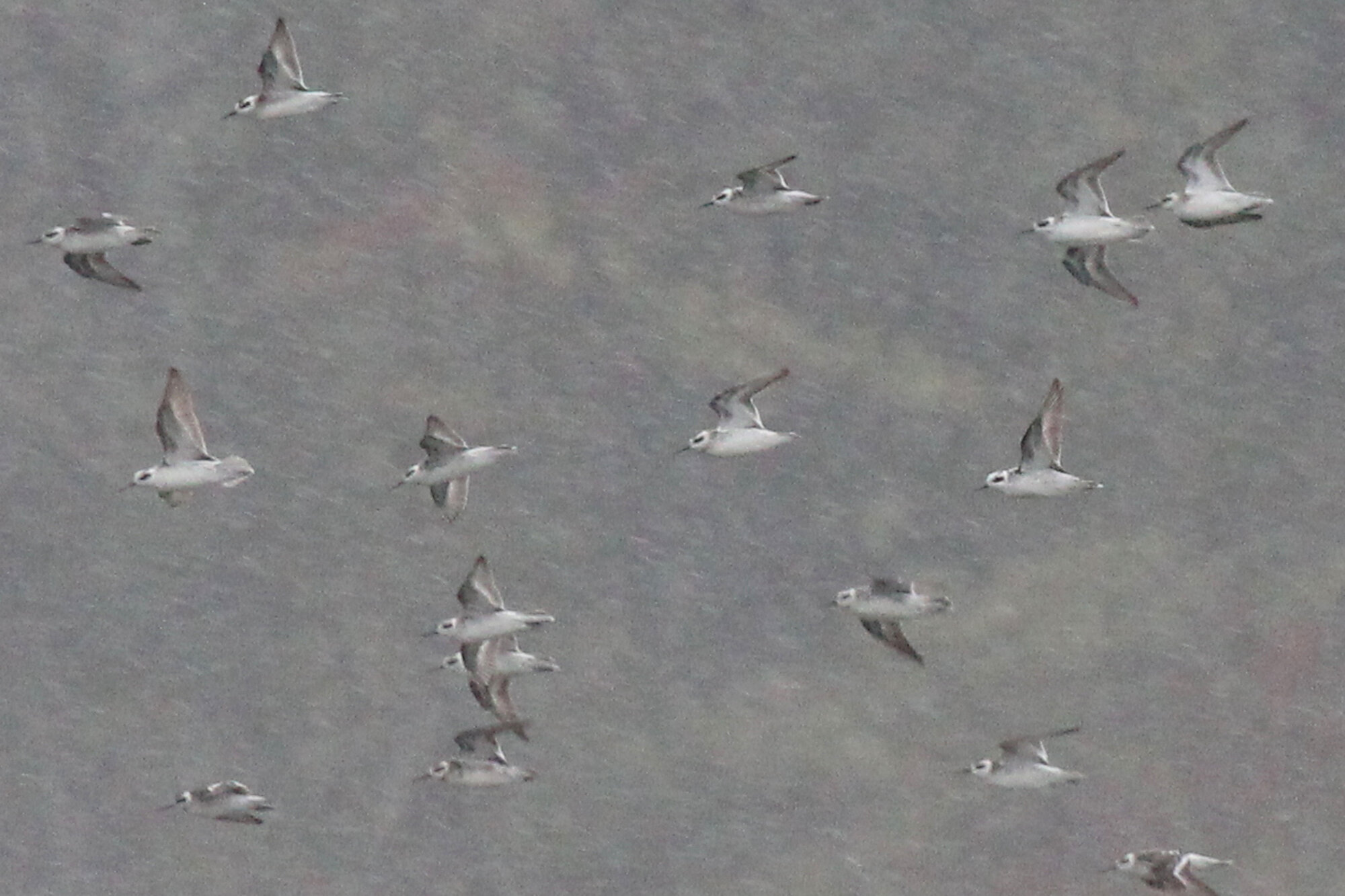
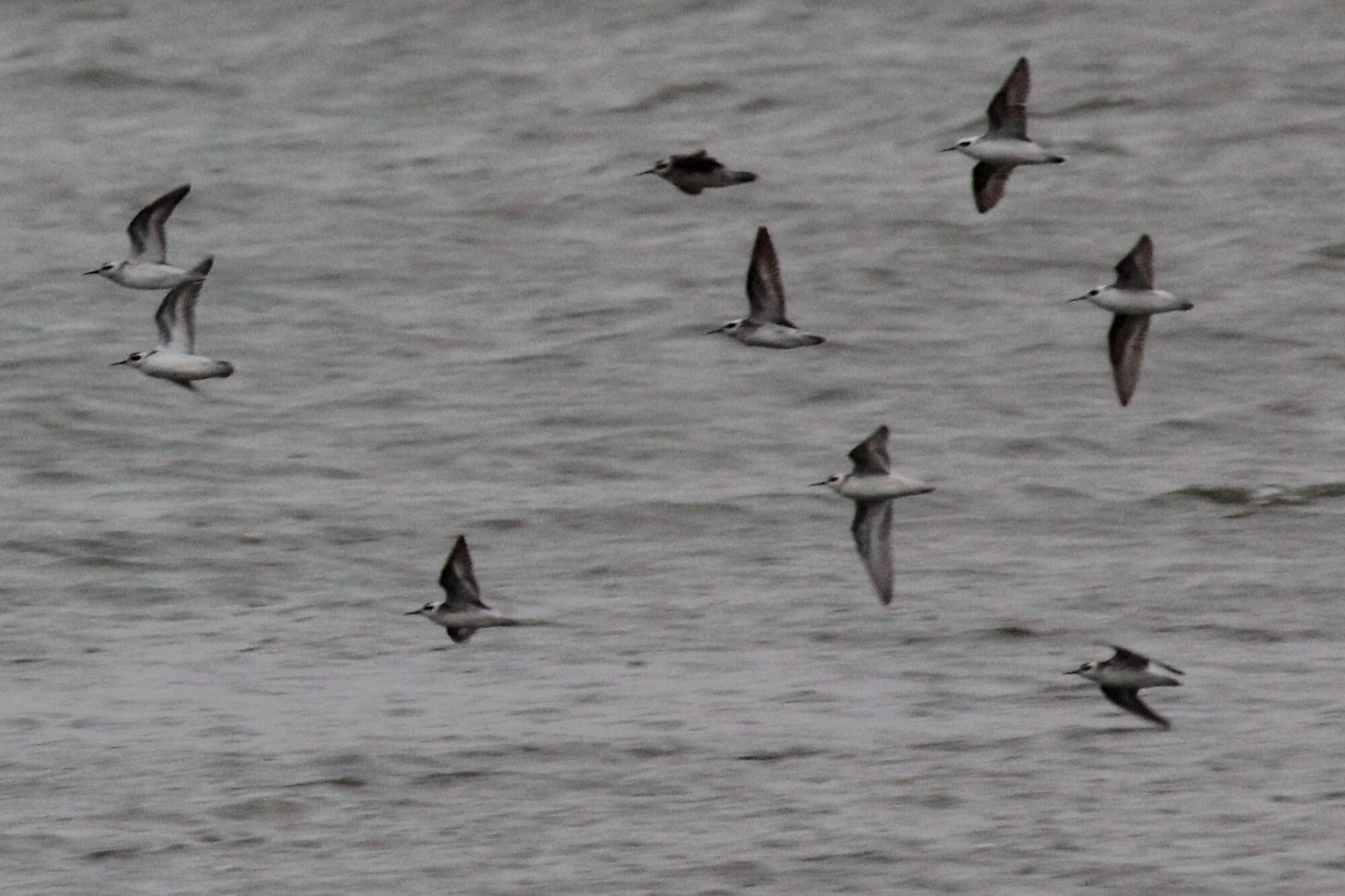
Early July 2019 (1st-10th)

The early July period typically marks the beginning of fall migration for shorebirds into Virginia Beach, and while birding overall can still be a bit slow since passerines and waterfowl are still a ways off, the incoming shorebird are cause for excitement even in the typical hot & humid weather of July. In contrast to June, where diversity tends to drop steadily as late spring lingerers disappear, leaving behind only the true breeders, July is a month to truly celebrate as these shorebirds begin to trickle in and overall diversity of species therefore increases throughout the month! In total, 123 species were logged to eBird during the early July period, topping the 120 species logged during the same period last year. Highlights included continuing rarity records for WARBLING VIREO & ANHINGA, new unseasonal records for AMERICAN BLACK DUCK & SURF SCOTER, continuing unseasonal records for HOODED WARBLER, early first-of-season records for SPOTTED SANDPIPER & WHIMBREL, first-of-season records within expected dates for LEAST SANDPIPER & SHORT-BILLED DOWITCHER, and interesting records for CHUCK-WILL’S-WIDOW, WILD TURKEY & OVENBIRD!

Most notable for this period were ongoing reports for a nesting pair of WARBLING VIREOS in the Ashville Park neighborhood just north of Pungo. With the first individual, a singing male, noted at this location 19 Jun (a.r. Karen & Tom Beatty), and shortly after, a female observed staying close to the male, it seemed probable that the pair were nesting somewhere nearby. Fast forward a couple of weeks and excitedly, a nest was indeed found in the neighborhood 1 Jul (vis. Andrew Baldelli and ph. Karen & Tom Beatty), making for an incredible first breeding confirmation for this species in coastal Virginia for the 2nd Virginia Breeding Bird Atlas! Thus far for the project, which runs from 2016-2020, the only other confirmation for Warbling Vireo within the Coastal Plain region of Virginia occurred at Dyke Marsh Wildlife Preserve / Belle Haven Park in Fairfax County, roughly 150 miles away! The Atlas Map for Warbling Vireo really showcases the rareness of this record more than any words being typed here can, so be sure to check it out when you have the time! Additionally, this represents the first Warbling Vireo record during the month of July in a coastal county south of New Jersey (as far as eBird goes)! These rarities were further documented by photographs & audio recordings on 2 Jul (2, ph. Emily Johnson & Nathaniel Watkins), 5 Jul (ph. & a.r. Reuben Rohn) and on 6 Jul (2, ph. Rob Bielawski) which is the most recent report logged to eBird.

The summering ANHINGA population at Stumpy Lake NA first noted way back on 21 Apr (2, ph. Stephen Keith) continued to be observed throughout the period with a high count of 3 individuals logged, and photographic records occurring 1 Jul (3, ph. Reuben Rohn), 2 Jul (1, ph. Rob Bielawski) and 4 Jul (3, ph. Jonathan Snyder; 2, ph. David Clark). Additionally, a new location, Rock Creek Recreation Area roughly 2.5 miles to the east of Stumpy Lake yielded records for Anhinga as well, and it is possible these may be some of the same individuals or a separate group. Reported initially by Nilda Schwartzwalder to Mary Reid Barrow (long-time author of the Close Encounters wildlife section of the Virginian Pilot), the first eBird record for the species at this location was input 1 Jul (1, Pamela Monahan), with another record on 4 Jul (2, Rob Bielawski). Surprisingly, this species has apparently been present at this location for several summers, starting back in 2014 as mentioned in this article in the Virginia Pilot! It would be truly interesting to find out whether the species has bred somewhere in the neighborhood along the shorelines of the collection of storm water retention ponds. At least 3 individuals have been observed here this summer (1 male, 2 female/immatures).

We had a pair of unseasonal waterfowl species reported this period, with a single AMERICAN BLACK DUCK observed at Pleasure House Point NA on 5 Jul (vis. Adam Sell), and also a single SURF SCOTER along the coast at False Cape SP during the early July survey for Back Bay NWR on the same date (ph. Drew Avery & Edward Brinkley). Additionally in the realm of unseasonals, a male HOODED WARBLER continues to be heard along the upper reaches of the Long Creek Trail at First Landing SP, with records logged this period on 2 Jul (aud. June McDaniels) and again on 7 Jul (aud. Cindy Hamilton & June McDaniels). This individual was first documented back on 23 Jun (ph. June McDaniels) in the same area, which marked Virginia Beach’s first summer (Jun/Jul) record for Hooded Warbler in eBird going all the way back to 1979! This individual also earned a “probable” breeding code for the 2nd Virginia Breeding Bird Atlas, the highest code for the species in the city so far submitted to the project.

As mentioned above, early July is the first period to showcase fall arrivals, typically in the form of southbound shorebirds that have departed from their northerly breeding grounds. Four such species occurred this period, two on the early side of the expected dates, and two within their expected range. Our first records for SPOTTED SANDPIPER occurred just a day on the early side of the expected 5 Jul arrival with one individual observed at Back Bay NWR on 4 Jul (vis. Adam Sell) in the early morning hours, and another was found later in the day at Princess Anne WMA (ph. Rob Bielawski). In similar fashion, the first WHIMBREL of the season was documented at Back Bay NWR on 9 Jul (ph. Cindy Hamilton), just a day ahead of its typical 10 Jul arrival date. In terms of arrivals that fell within expected date ranges, the first was LEAST SANDPIPER with an individual found at Princess Anne WMA on 7 Jul (ph. Rob Bielawski), two days after the expected 5 Jul arrival date. Additionally, our first SHORT-BILLED DOWITCHER of the season showed up at Back Bay NWR on 9 Jul (ph. Cindy Hamilton), just four days after the expected arrival date.

Several interesting records also popped up during the early July period, led by an incredible high count of 22 CHUCK-WILL’S-WIDOWS heard vocalizing overnight at False Cape SP on 1 Jul (aud. Tracy Tate) as part of Atlasing outing. A WILD TURKEY was reported at the Adventureworks Wetland Zipline Park near Red Wing Golf Course on 2 Jul (obs. Shawn Callahan), which is quite unusual given how scarce this species is north of Indiana River & Sandbridge Roads. Lastly, a vocalizing OVENBIRD at Princess Anne WMA Whitehurst Tract on 6 Jul (aud. Rob Bielawski) marked the first time one had been recorded during the summer (Jun/Jul) at the WMA for eBird. It’s possible this is already a very early post-breeding dispersal, but it is also possible that the individual is breeding in the small forested area that lines the west side of the tract. Either way, it’s exciting this time of year.

Breeding bird observations were still going strong through early July and the 2nd Virginia Breeding Bird Atlas has continued to steam ahead with full momentum! Scattered breeding bird confirmations were photographically documented around the city this period as follows: a pair of recently fledged KILLDEER along Shipps Cabin Rd. on 1 Jul (ph. Karen & Tom Beatty, and later also 6 Jul, ph. Rob Bielawski); a recently fledged BLUE JAY & BROWN-HEADED COWBIRD off Holland Rd. on 1 Jul (ph. Carolyn Page); recently fledged TUFTED TITMOUSE & OVENBIRD at Stumpy Lake NA on 2 Jul (ph. Rob Bielawski); an occupied nest of GREAT BLUE HERONS at First Landing SP on 4 Jul (ph. Rob Bielawski); and recently fledged CLAPPER RAILS at Pleasure House Point on 4 Jul (ph. Rob Bielawski). Keep up all the great work Atlasing folks, and please remember, if you have any questions regarding the project, please check out the 2nd Virginia Breeding Bird Atlas Website, the official Atlas Facebook Page, or the Facebook Group for more information!
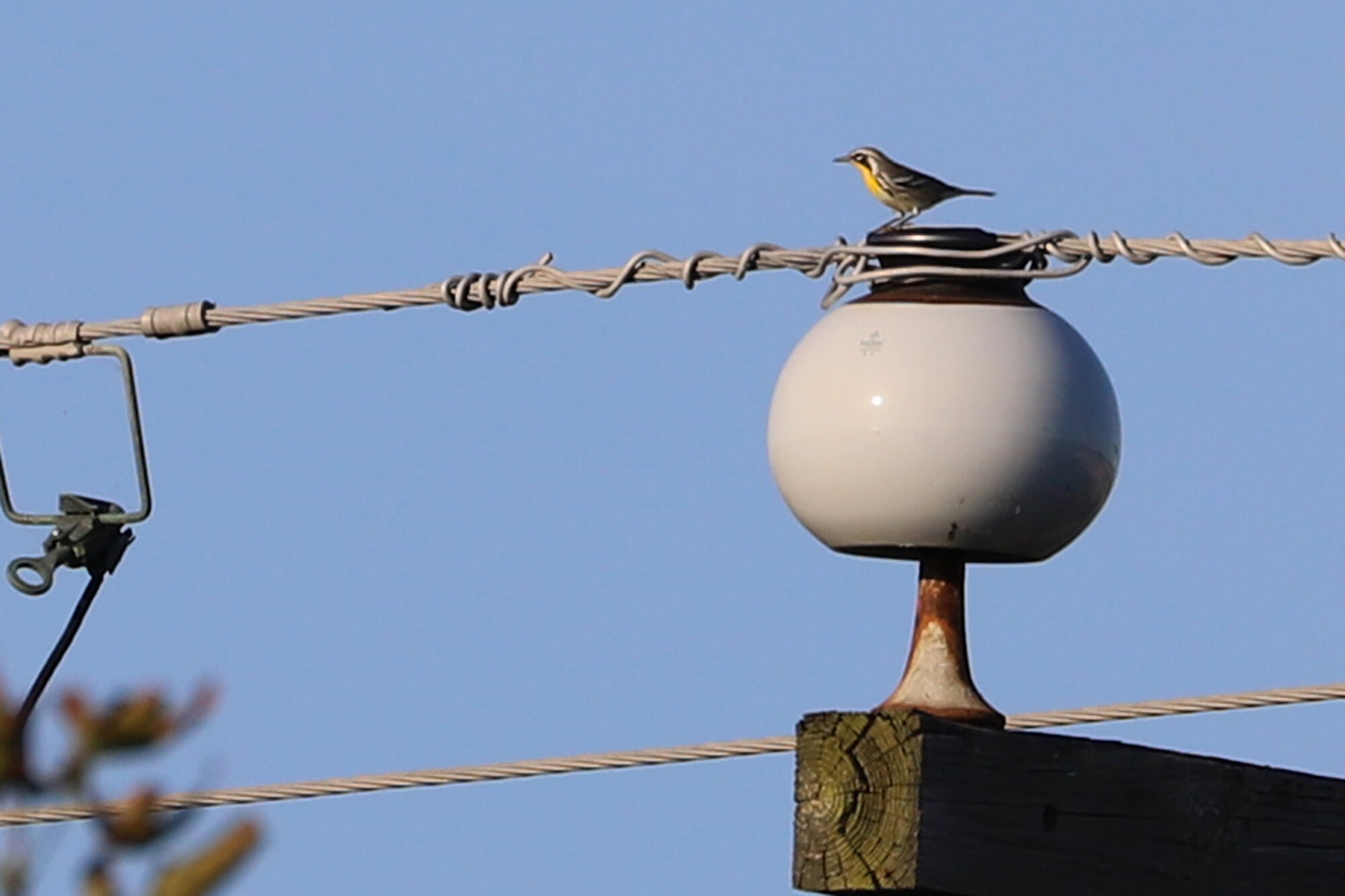
For those hoping to view every photograph submitted for Virginia Beach during this period, please see the complete listing for the month of July located on eBird’s Media explorer by clicking here! Please remember, anyone with an eBird account also has the ability to rate these photographs (1-5 stars), and based on the average rating, this is how eBird populates anything media-driven on the website, particularly the Illustrated Checklists! So, if you're one of the many folks who enjoy looking at photographs of birds, take some time to click them all and rate them, it helps make eBird better and better each day!
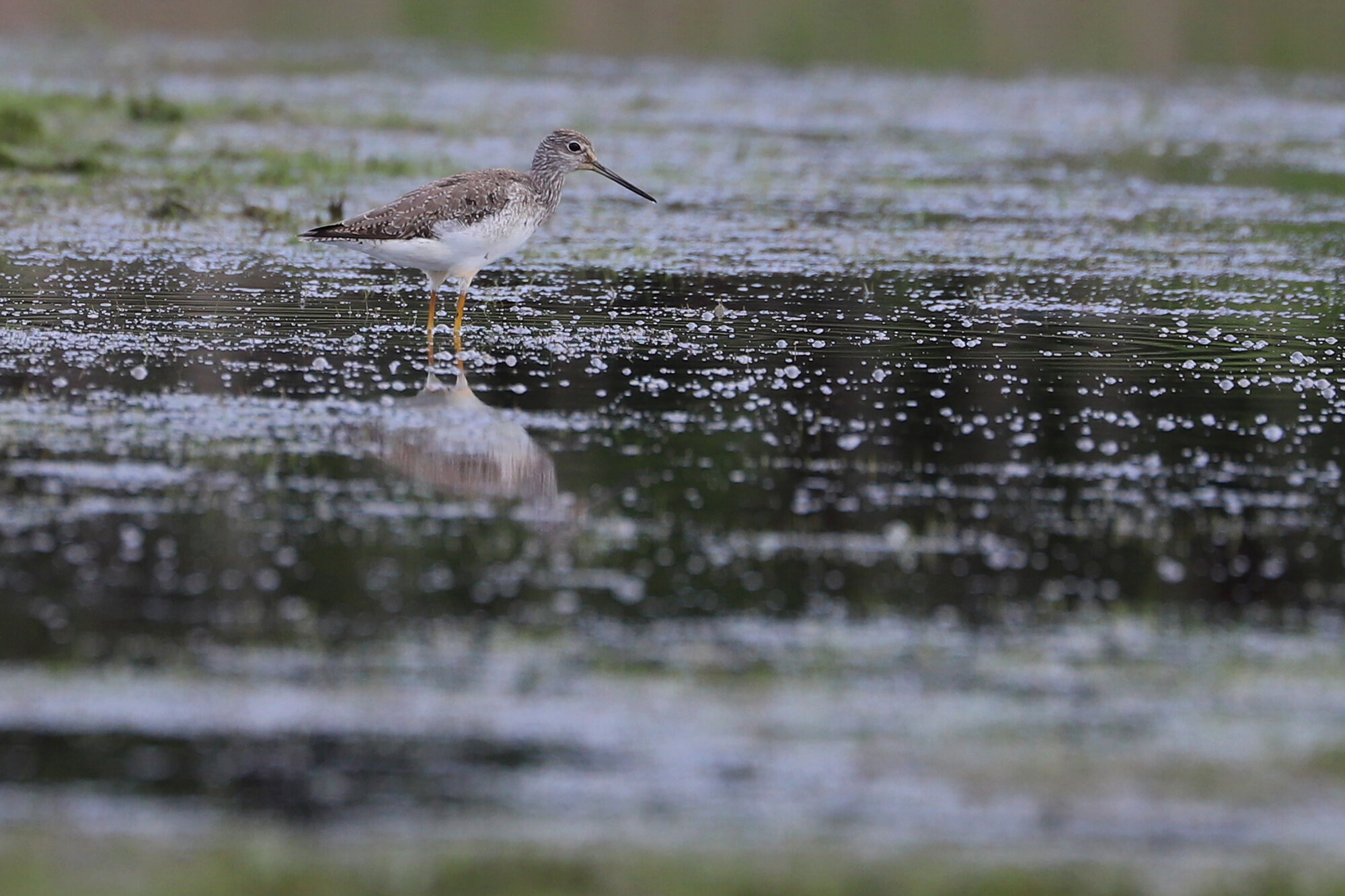
LOOKAHEAD: With regard to annually expected fall arrivals, as of the reporting period close date, we have not yet logged first arrivals for GULL-BILLED TERN (5 Jul average expected arrivals), BLACK TERN, WESTERN SANDPIPER, LESSER YELLOWLEGS, PIED-BILLED GREBE & RUDDY TURNSTONE (10 Jul), PIPING PLOVER, SOLITARY SANDPIPER, SEMIPALMATED PLOVER, PECTORAL SANDPIPER & BLACK-BELLIED PLOVER (15 Jul) and RED KNOT & STILT SANDPIPER (20 Jul). Since passerines aren’t yet on the move, this month is truly dedicated to a search for shorebirds! The coastal beaches of First Landing SP, the Resort Area & North End, Little Island Park and Back Bay NWR, as well as any low-tide marshes like those at Pleasure House Point NA and flooded fields will become highly sought-after locations to search for shorebirds as we move deeper into July. Depending on the winds, and potential for rainfall, Back Bay NWR’s H Pool (along the currently open East Dike), and a pair of impoundments at Princess Anne WMA Whitehurst Tract could provide for shorebirds.

Next Entry | Entry Index | Previous Year | Previous Entry

For further information regarding this thrice-monthly, online publication, please visit the Journal Overview Page which provides an in-depth explanation of the format, layout and composition of the journal. As always, thank you for reading, and please leave me a comment below (you may use your Facebook, Gmail or other accounts to easily do so), or just click the Heart icon to the lower right of this post to let me know you stopped in!