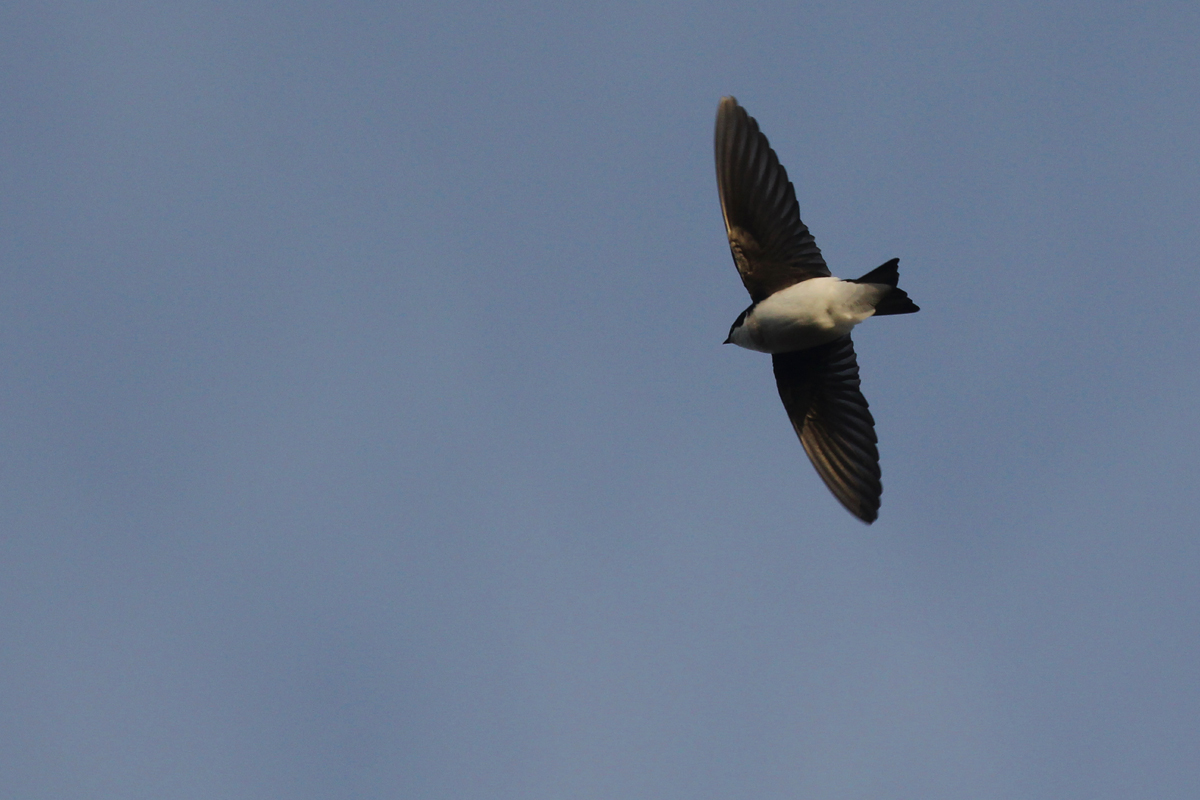
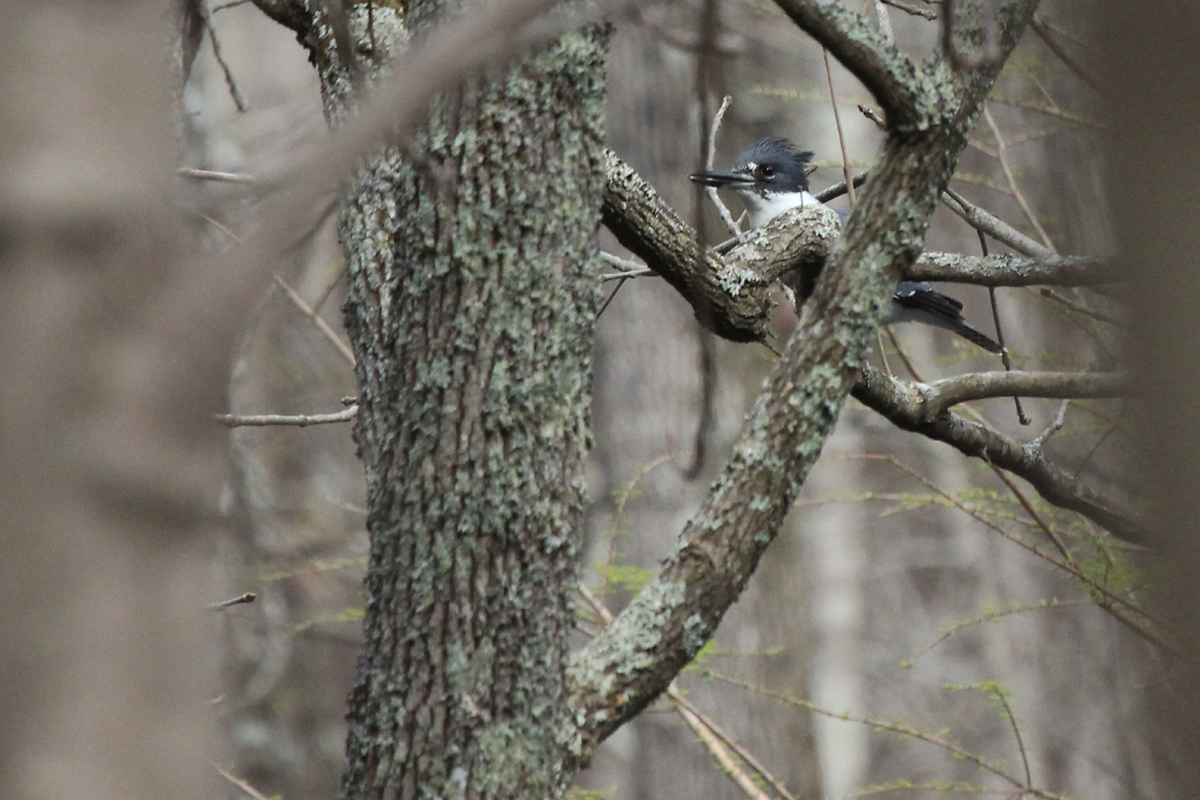
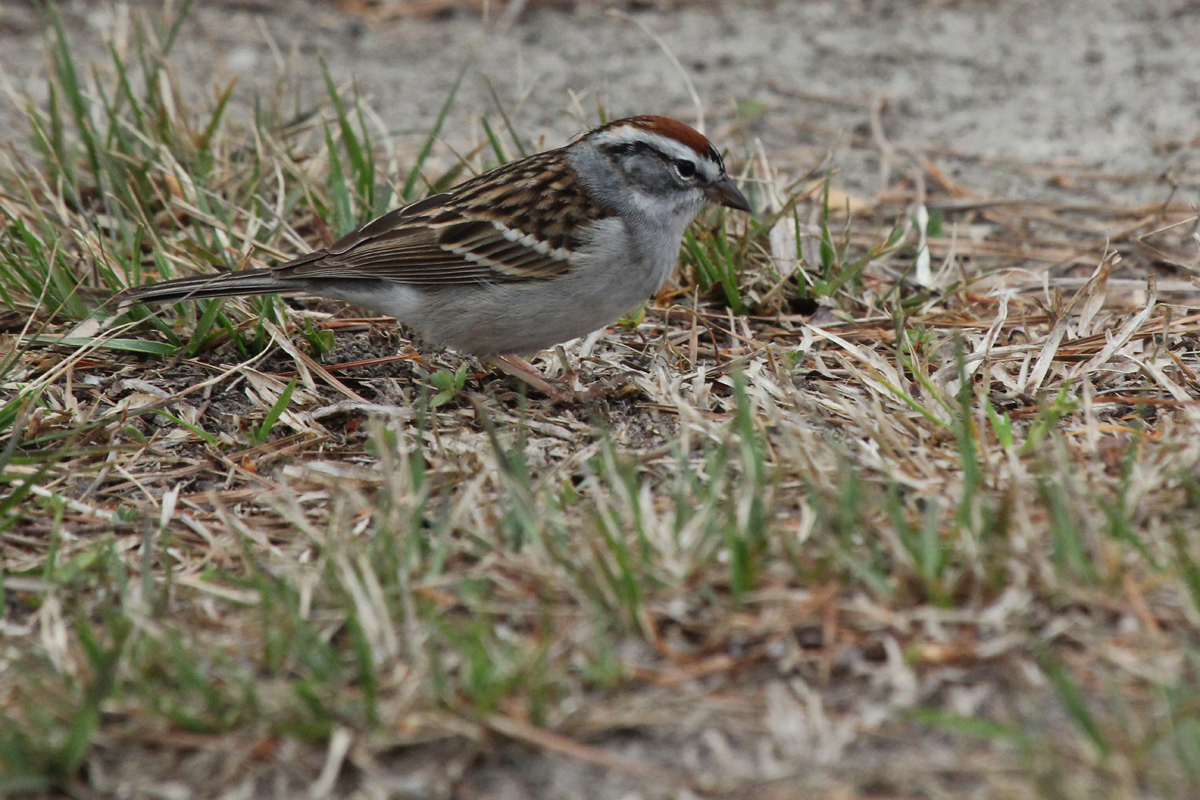
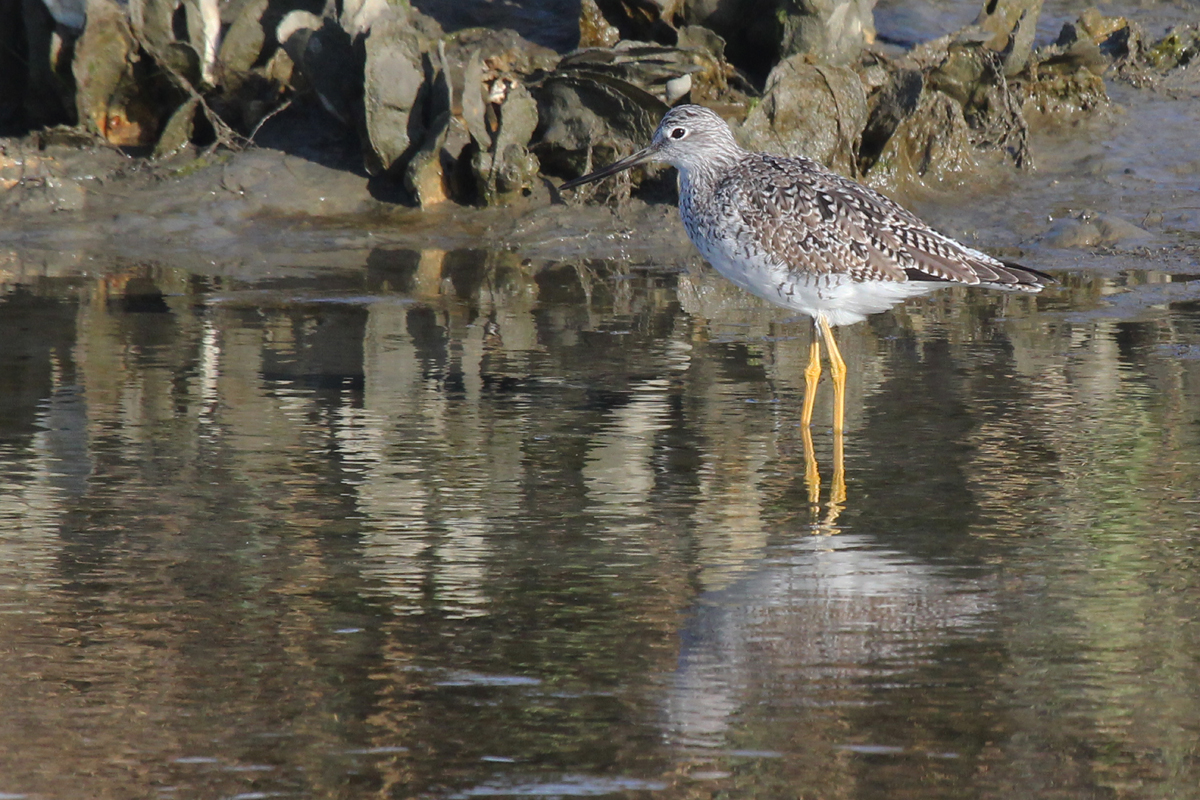
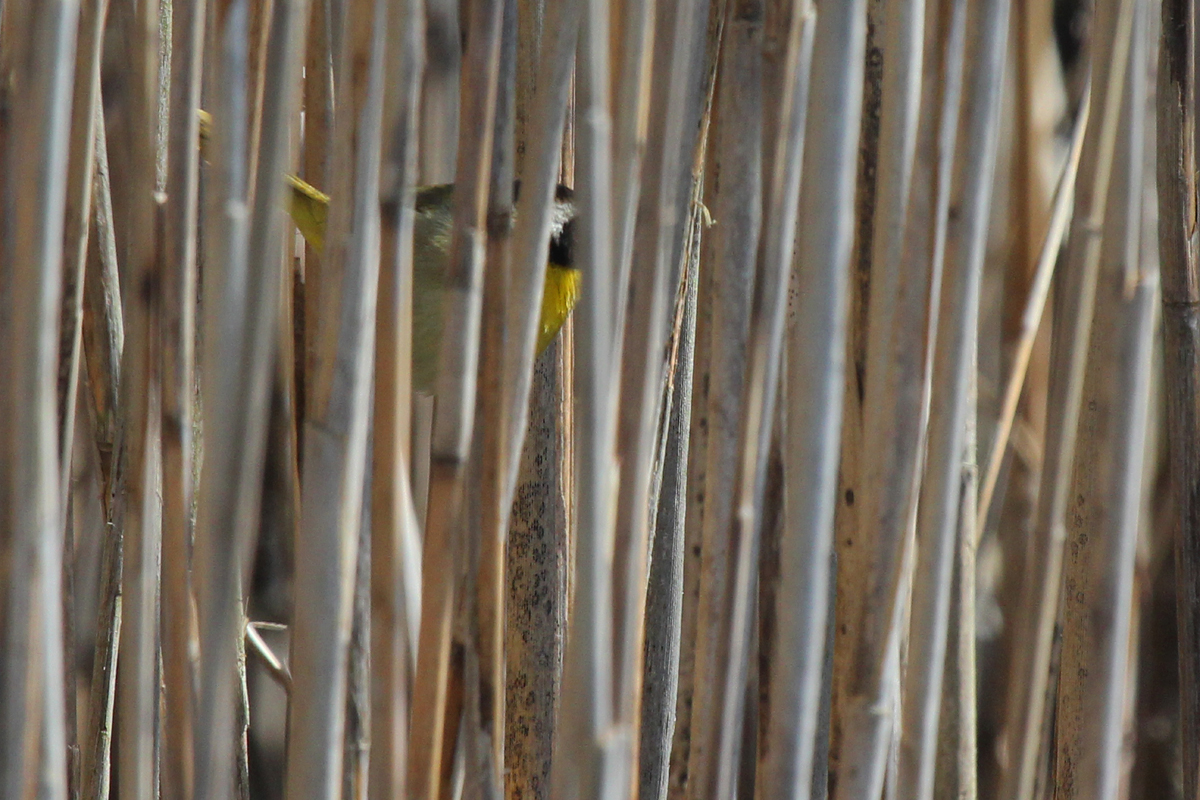
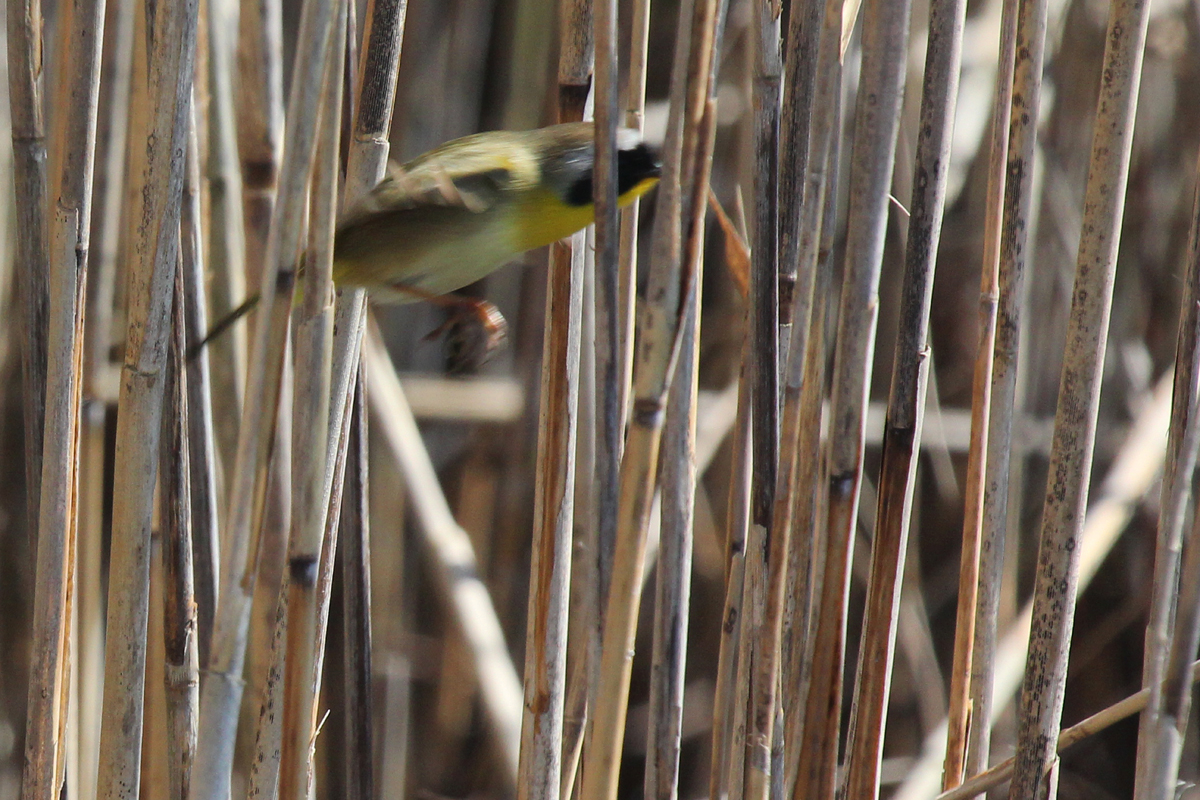
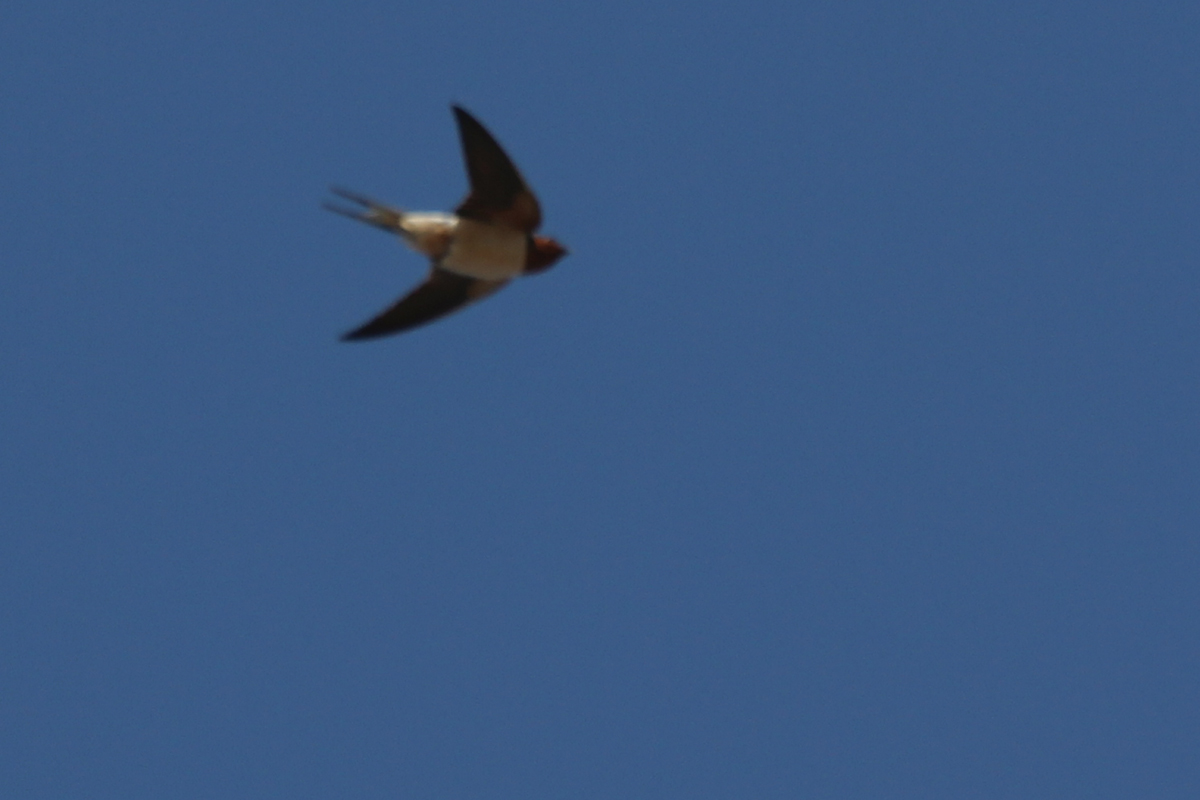
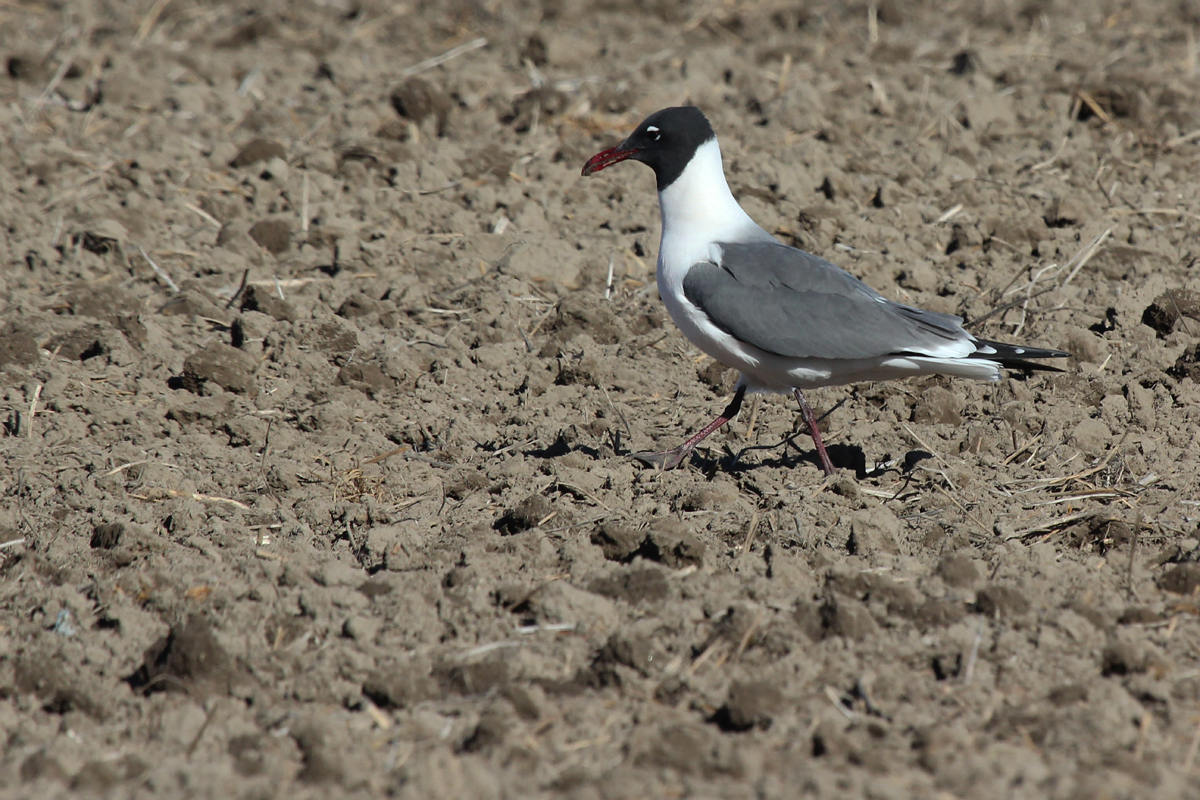
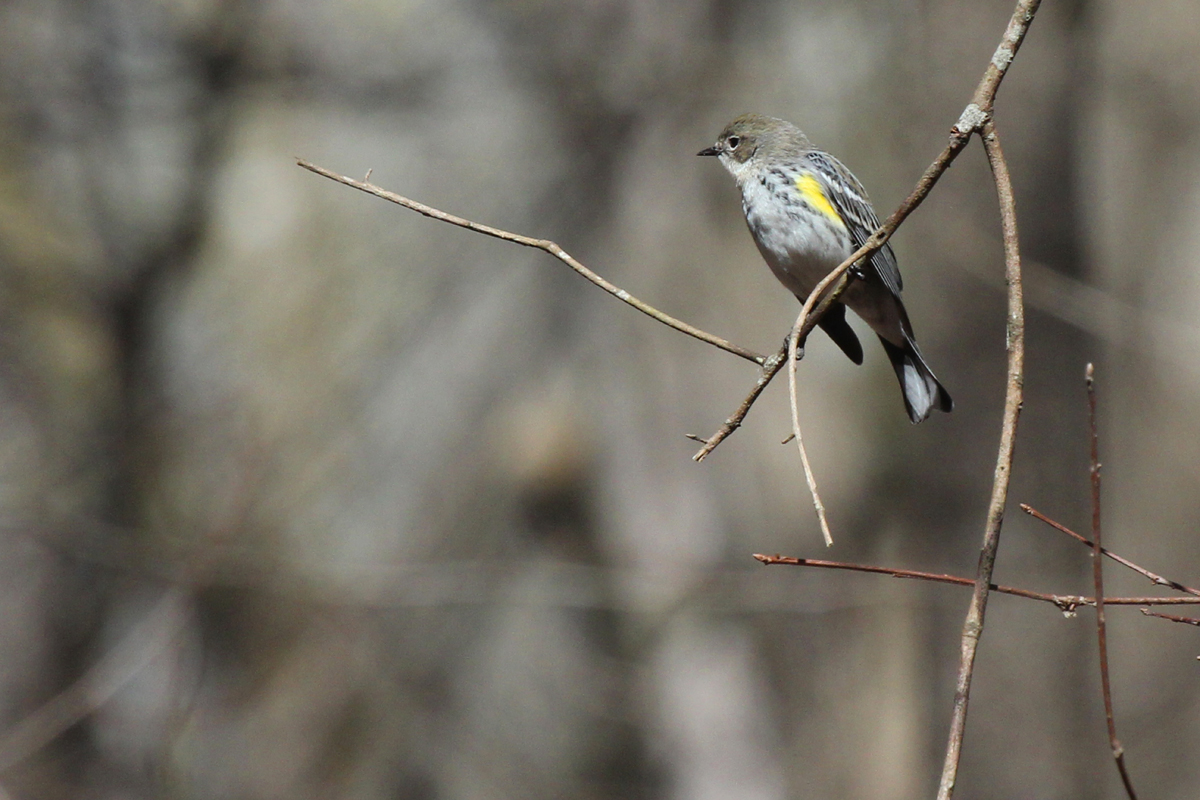
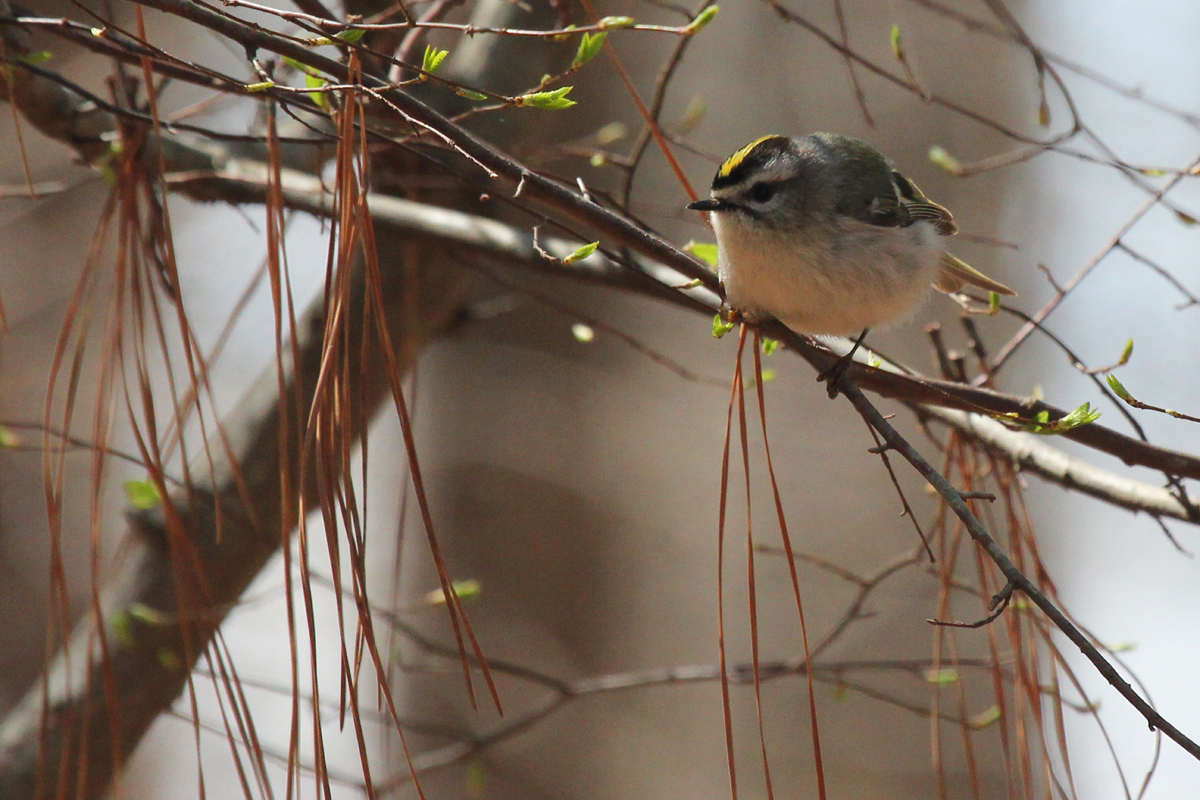
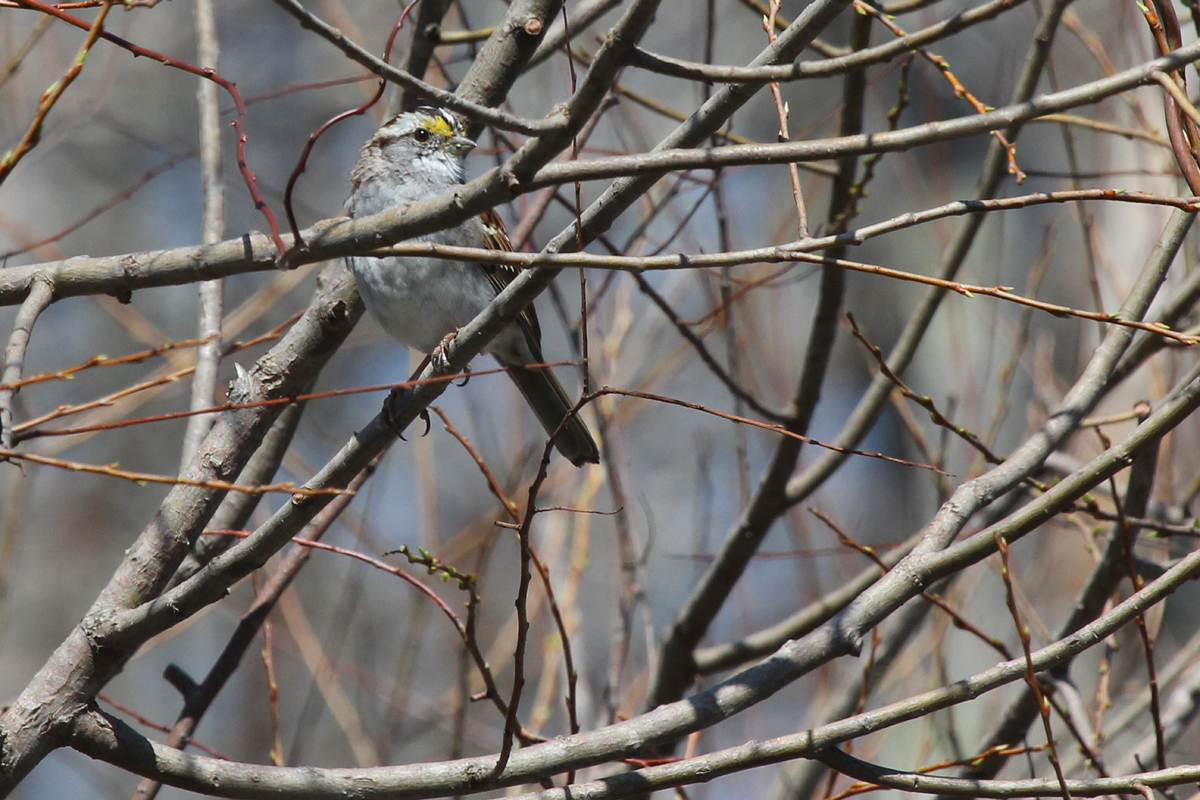
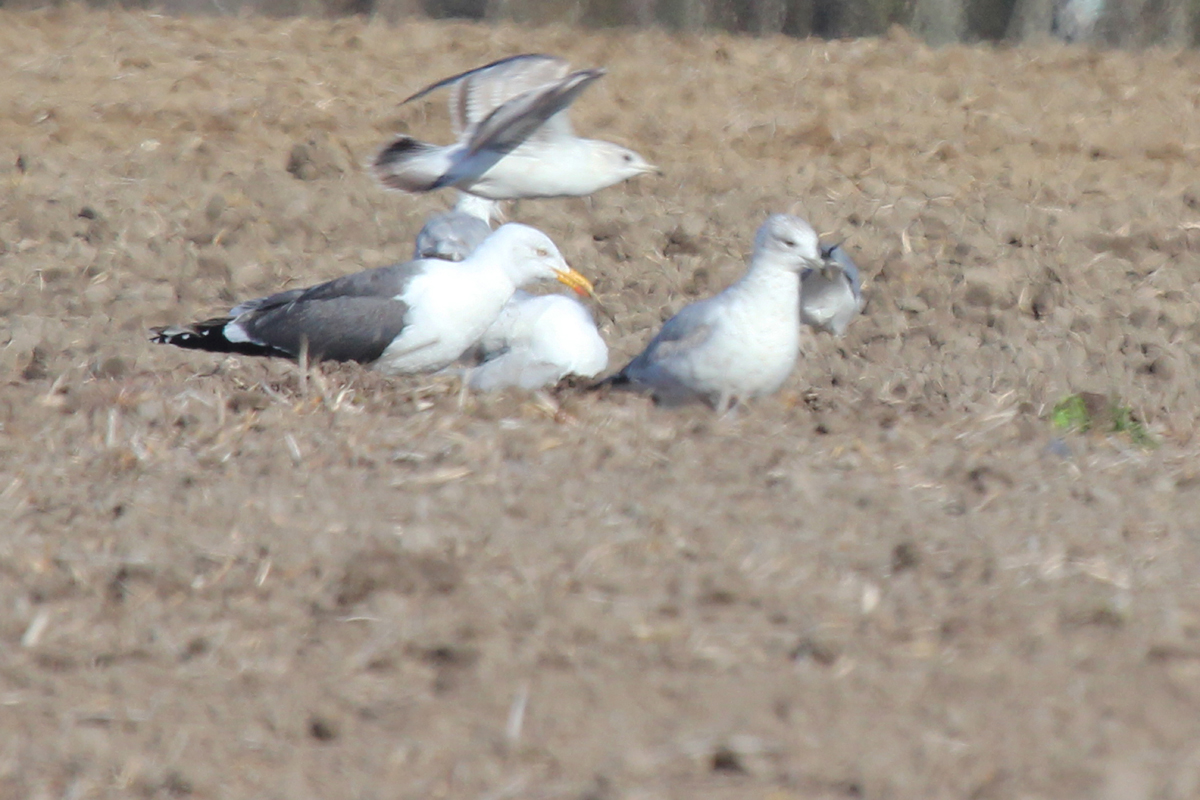
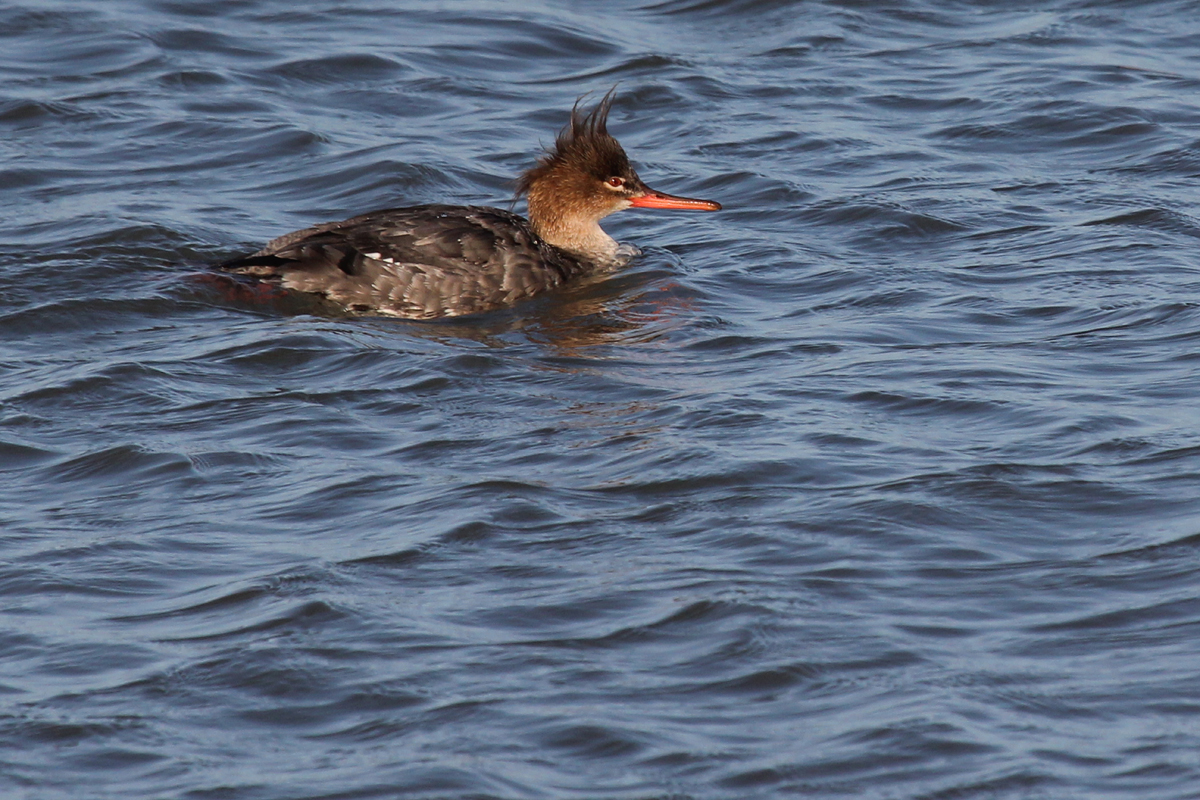
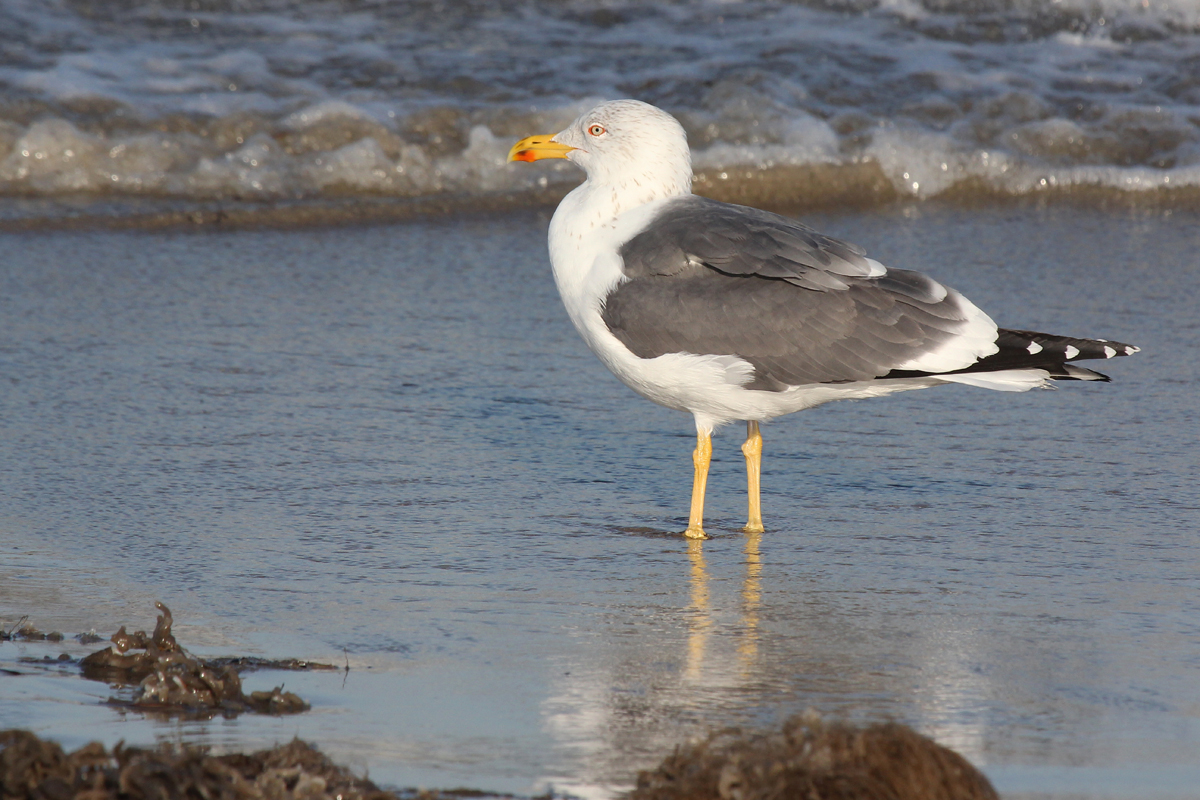
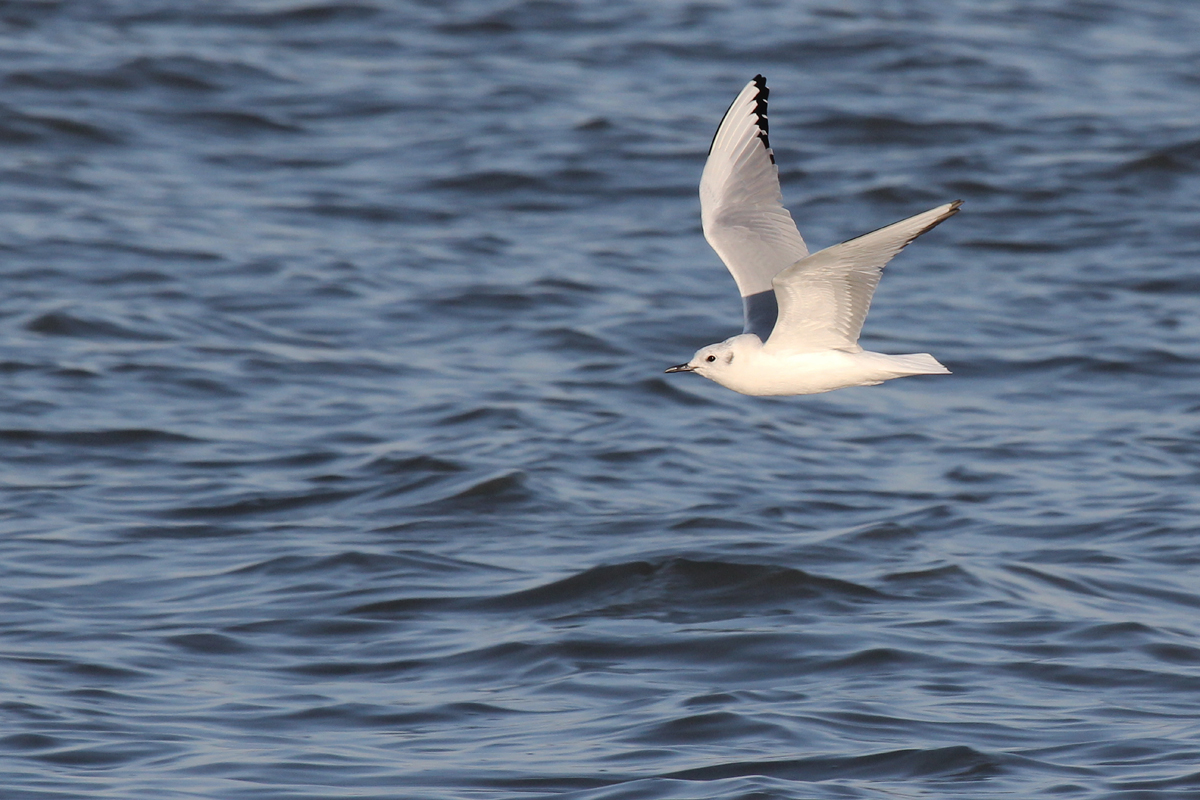
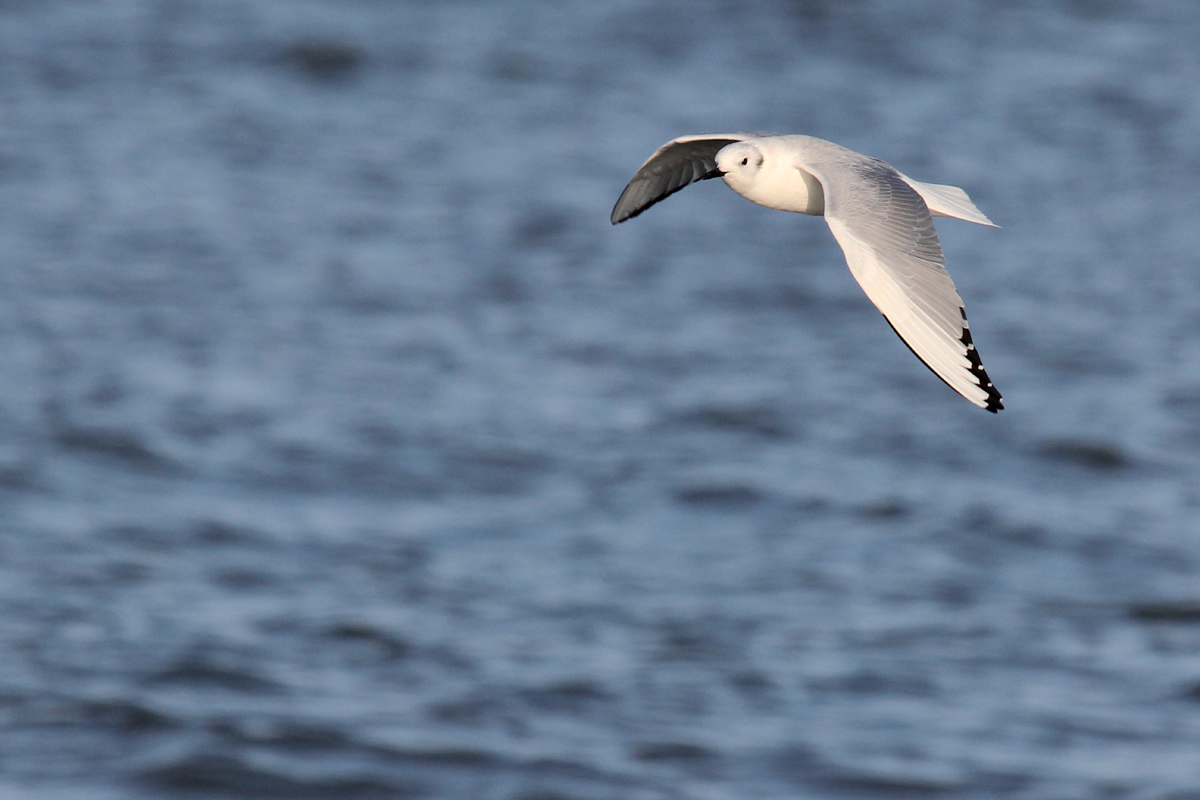
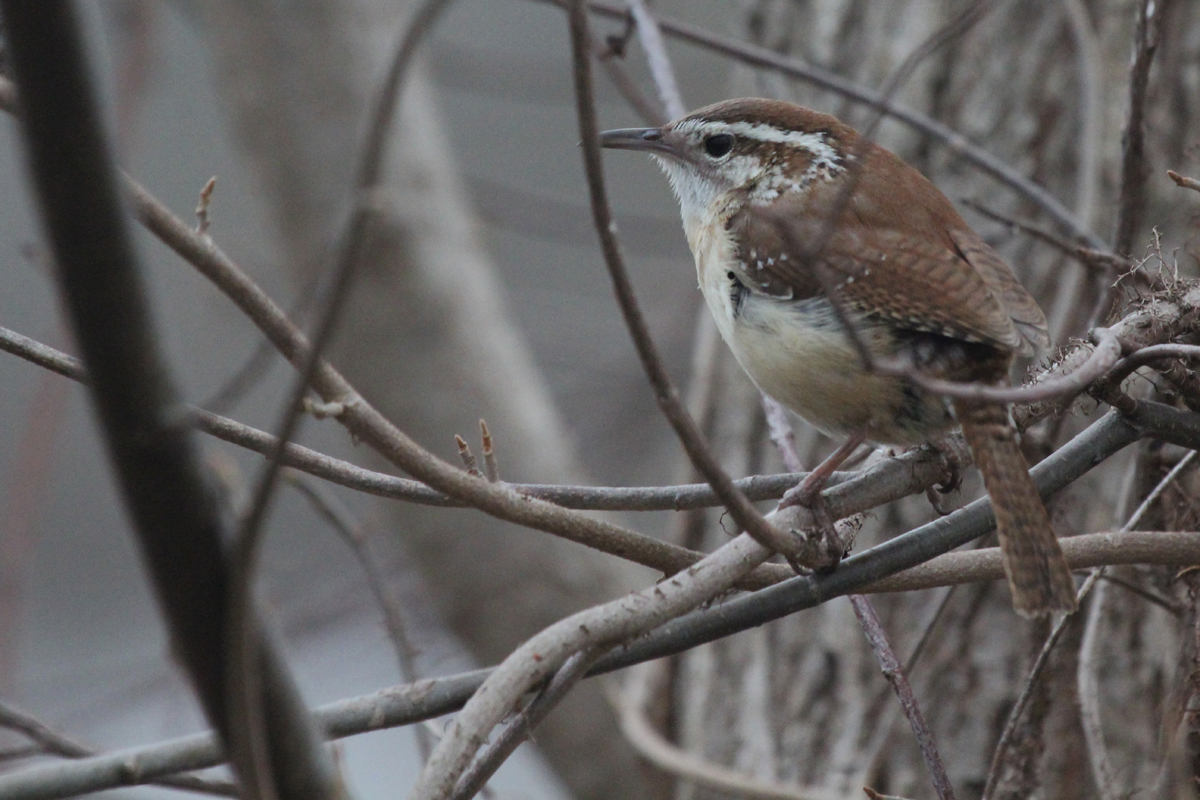
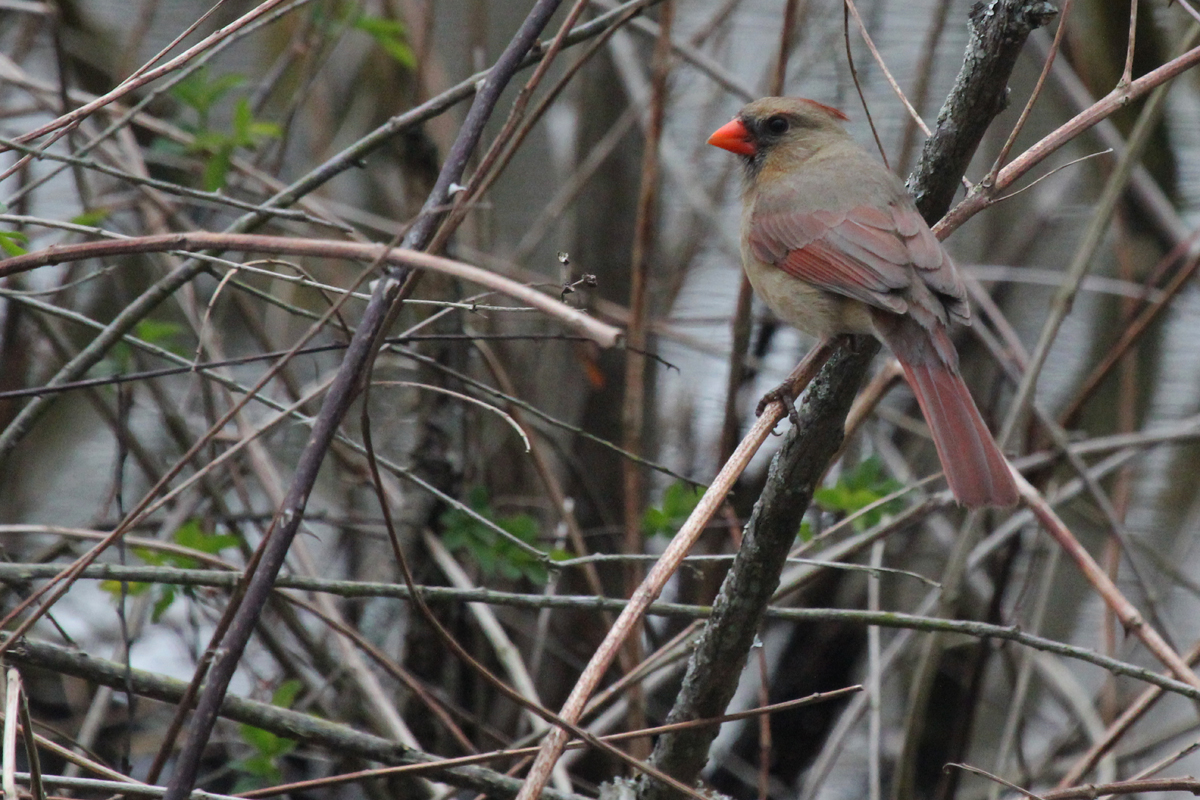
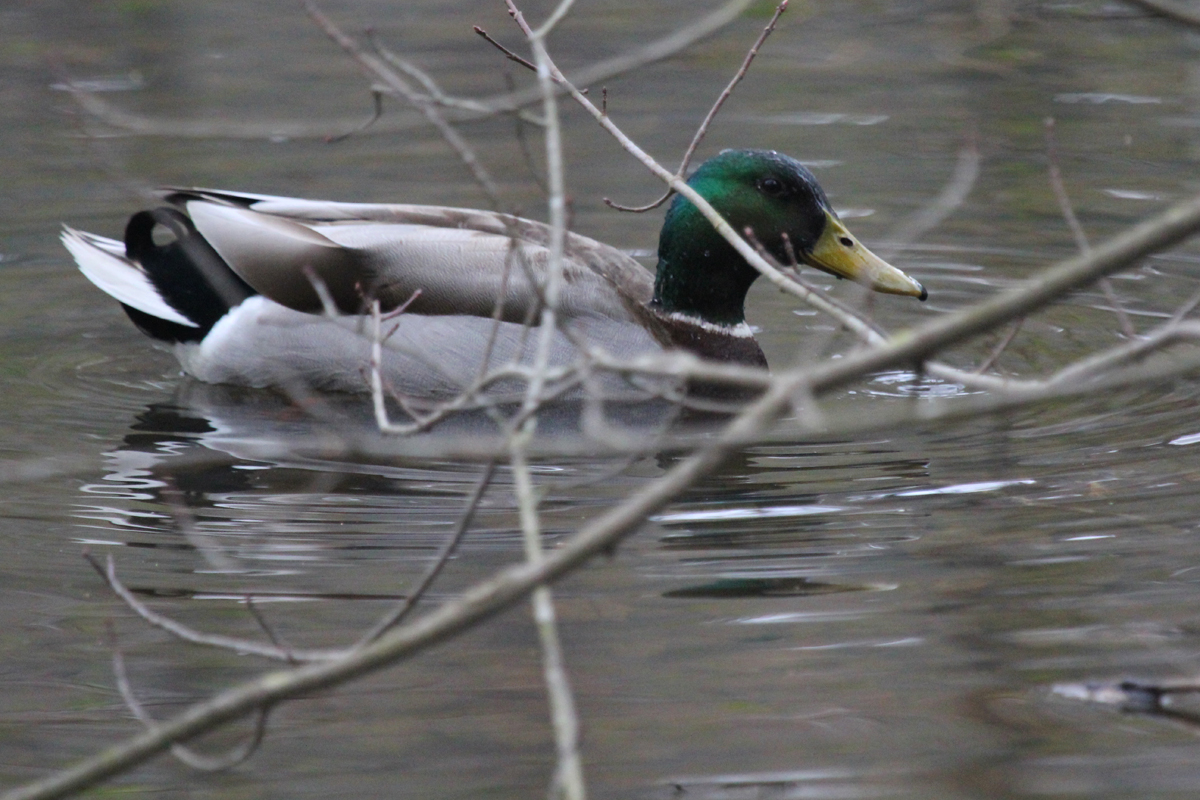
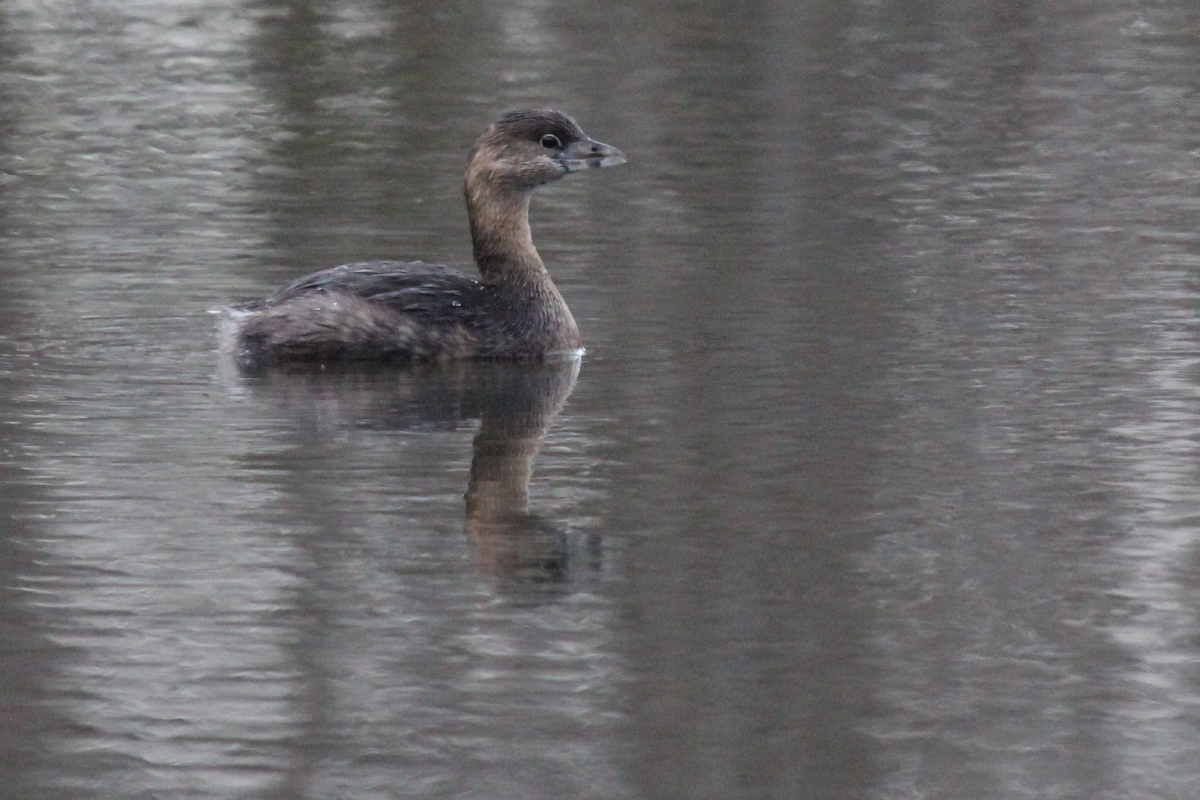
Early April 2018 (1st-10th)

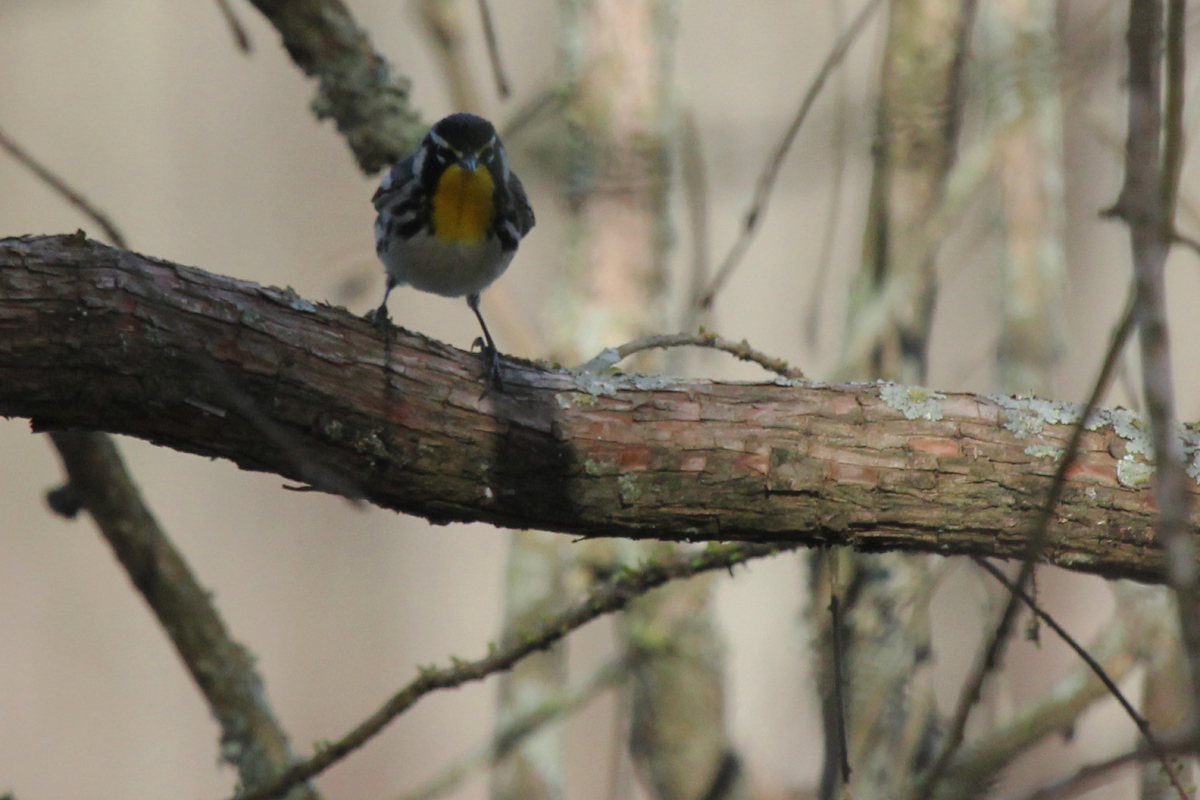
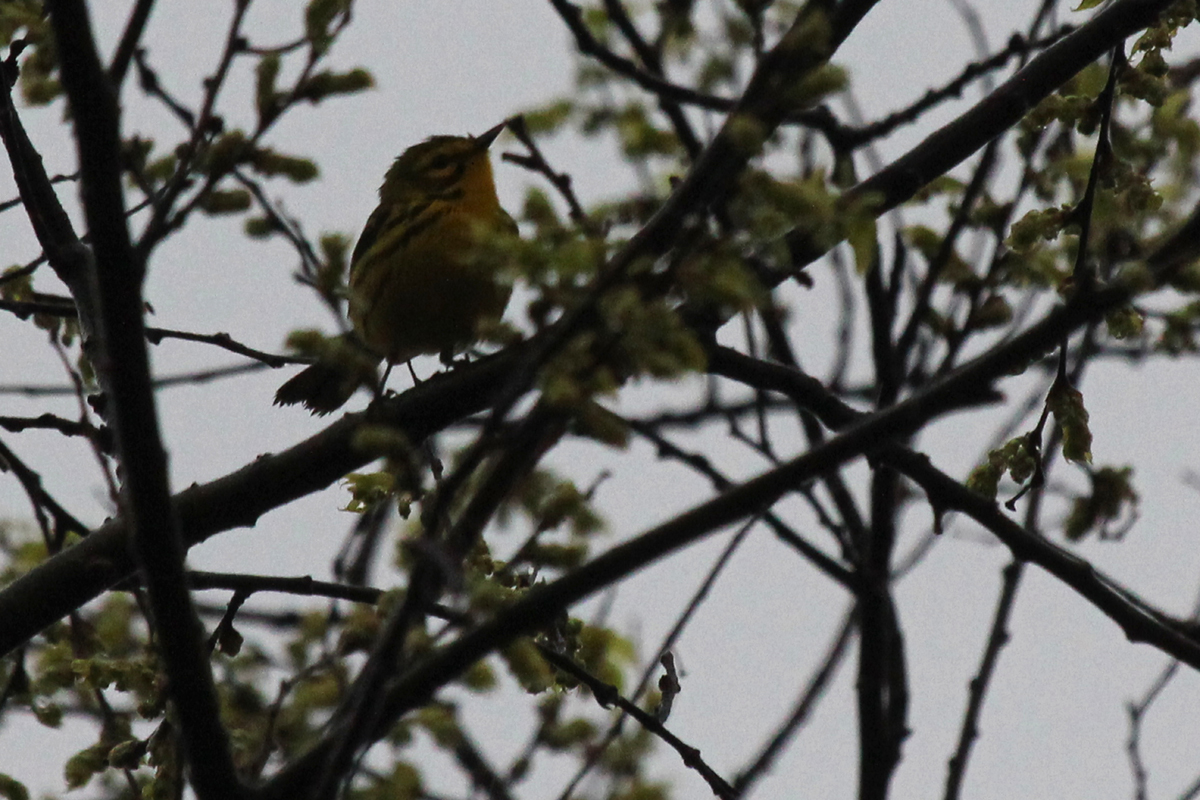
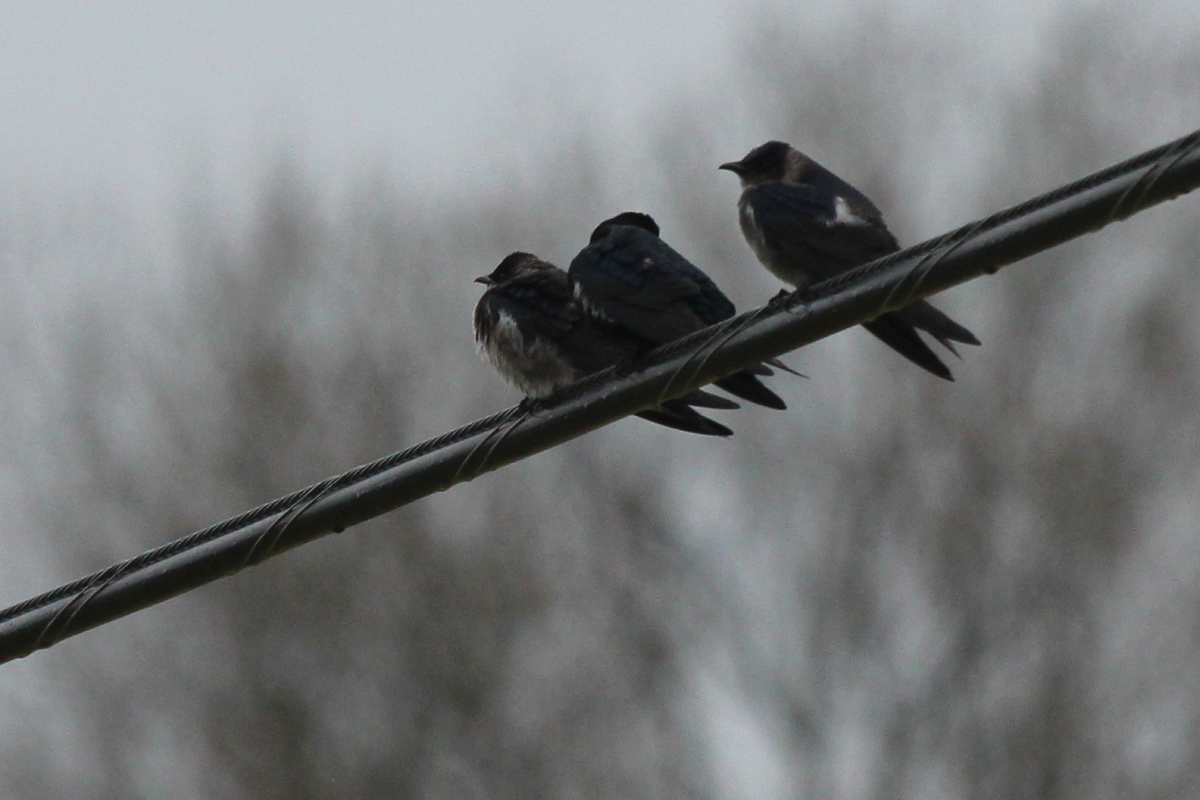
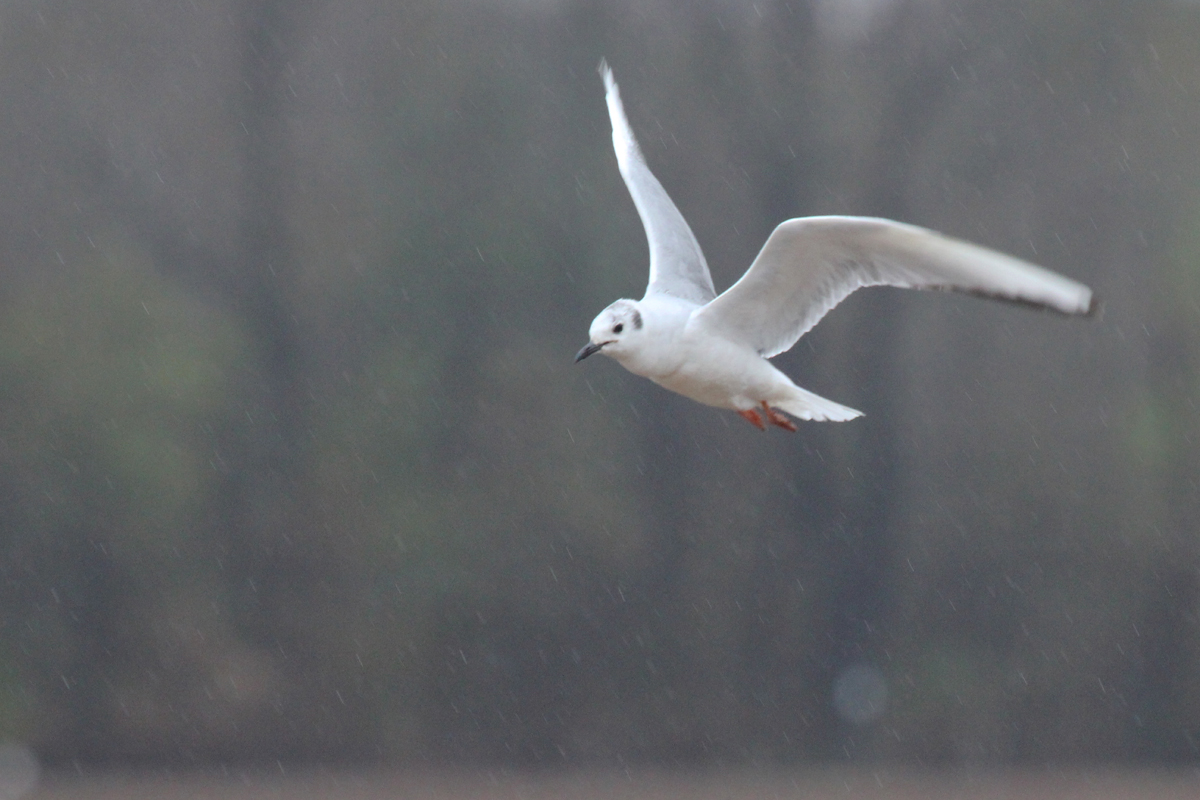
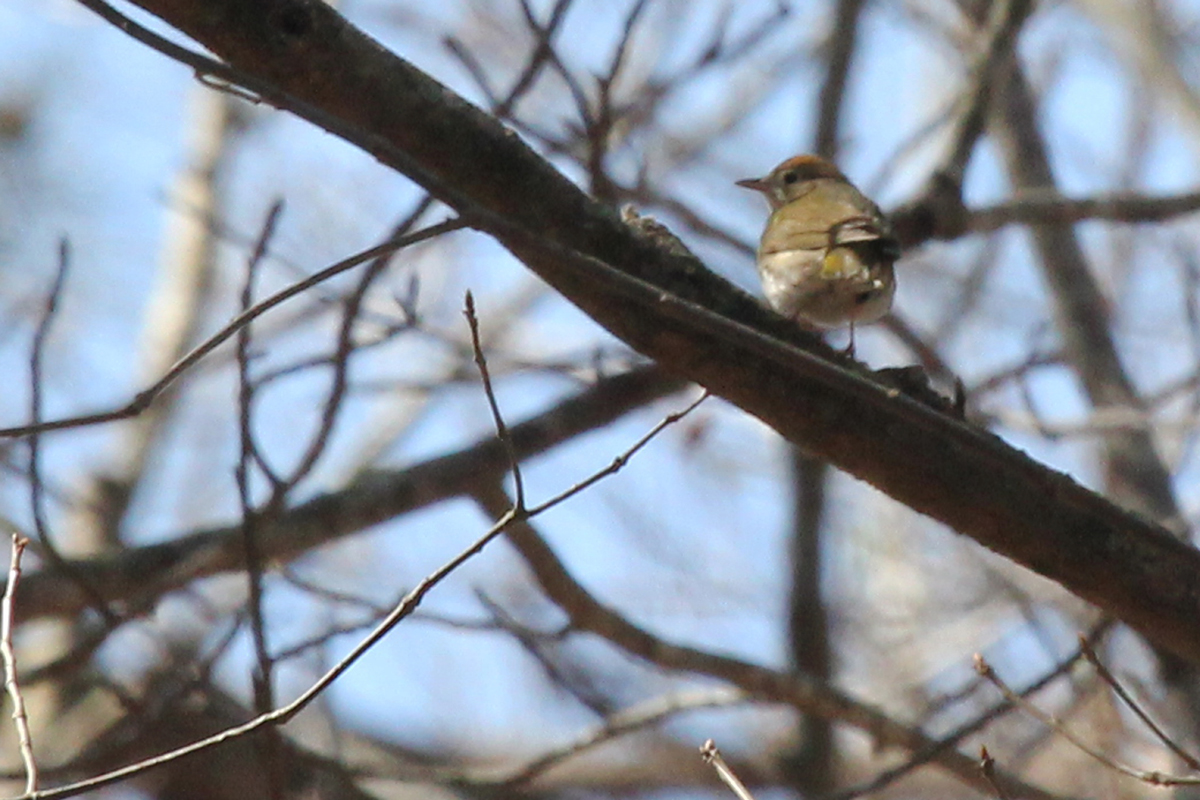
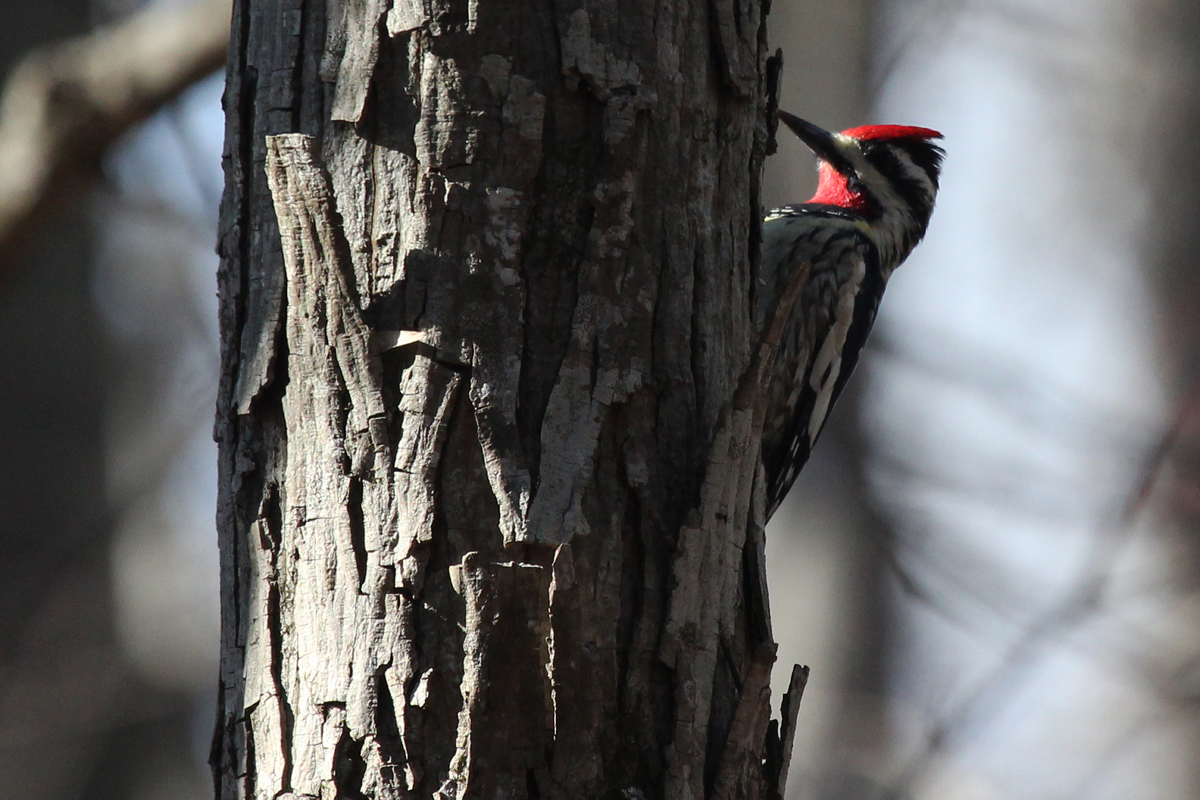
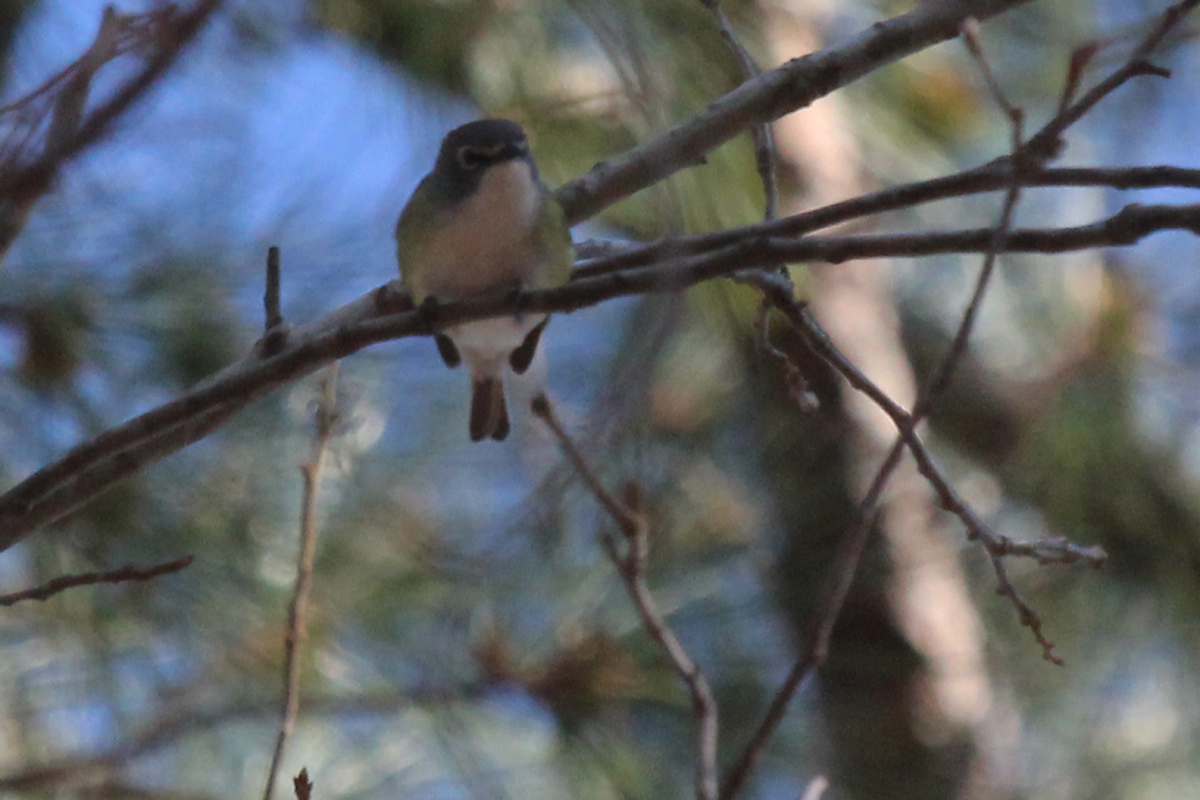
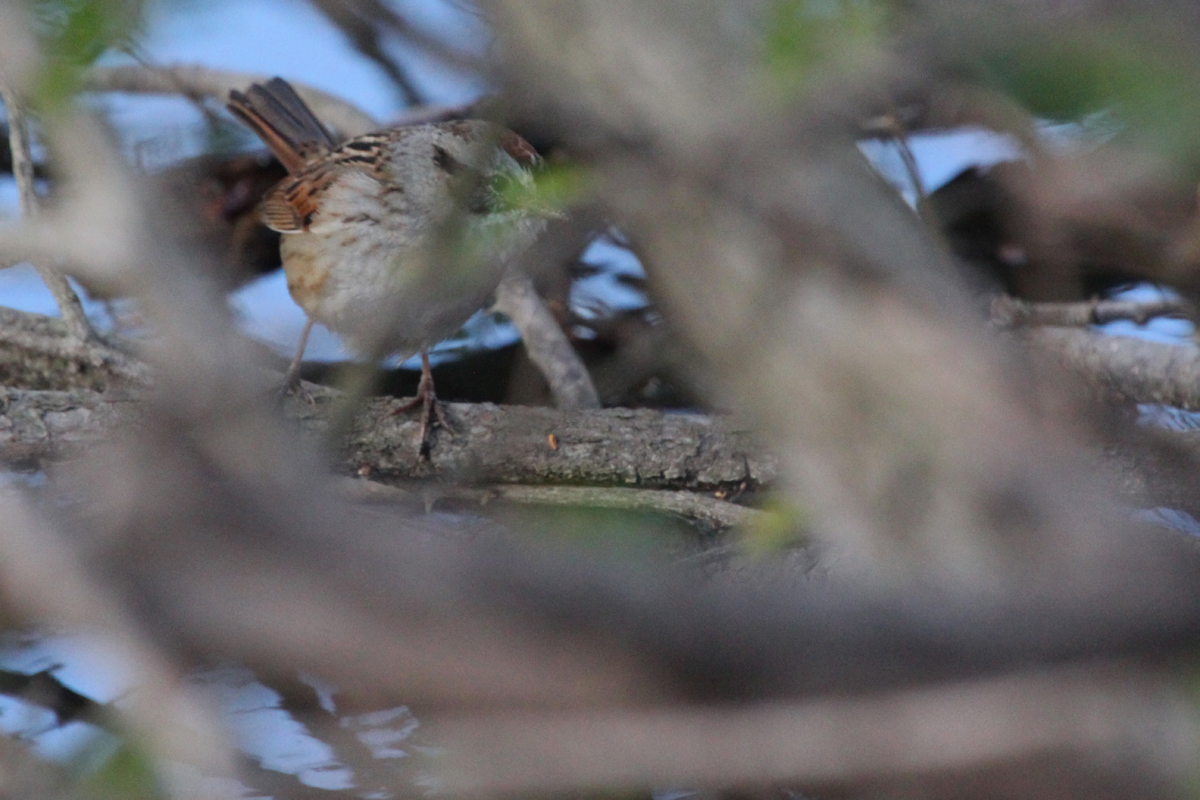
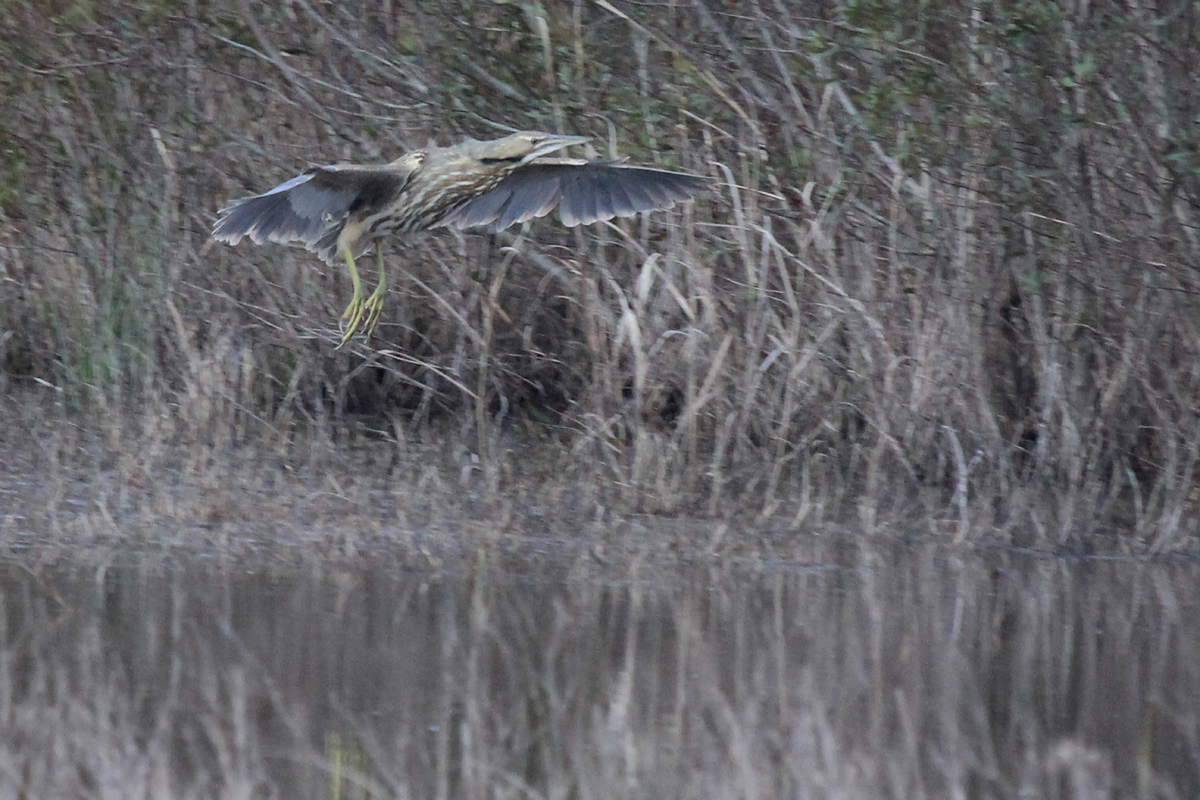
While temperatures continued to remain below average for this time of year, and the leaves have not yet begun filling out most deciduous trees across the city, spring migration still managed to take another leap forward during early April! Top records for this reporting period in Virginia Beach included new rarity reports for ANHINGA, WESTERN GREBE, LOUISIANA WATERTHRUSH & WESTERN TANAGER, continuing rarity reports for RUSTY BLACKBIRD and an unseasonal occurrence for RED KNOT! In addition to these species, expected spring migrants are being reported with increasing diversity and during the reporting period, we saw early first-of-season (FOS) records for BLACK-THROATED GREEN WARBLER, LEAST BITTERN, PROTHONOTARY WARBLER, LEAST SANDPIPER, SOLITARY SANDPIPER, NORTHERN PARULA & GREAT CRESTED FLYCATCHER. Additionally, springtime arrivals within average expected dates also occurred for LITTLE BLUE HERON, CATTLE EGRET, SHORT-BILLED DOWITCHER & STILT SANDPIPER. Early reports (for species that had first arrivals in a prior period) continued as well for a potential CHUCK-WILL’SWIDOW and also for RUBY-THROATED HUMMINGBIRD, WHITE-EYED VIREO, CHIMNEY SWIFT, OVENBIRD, BLACK-AND-WHITE WARBLER & PRAIRIE WARBLER.
Leading the list this period was our first ANHINGA report of 2018 when an individual was observed flying southeasterly over Stumpy Lake NA on 2 Apr (obs. Andrew Baldelli). Potentially the same individual was observed perched in a cypress tree from the causeway on 5 Apr (obs. Jason Schatti). Historically, Stumpy Lake has been one of (if not the) most reliable locations in the state for observing this species, and last year, as many as 6 were observed at the park from 14 Apr 2017 (ph. Rob Bielawski & Ron Furnish) through 2 May 2017 (obs. Karen & Tom Beatty). Just as a quick reminder, if you are birding from the causeway and trying to spot this species atop the cypress trees to the north and south, please be respectful of the vehicles driving into the golf course. Every year it becomes an issue when folks set up tripods or scopes on the asphalt roadway surface and block traffic; please stay on the gravel shoulders at all times before we lose access to this (as fishermen already have)!

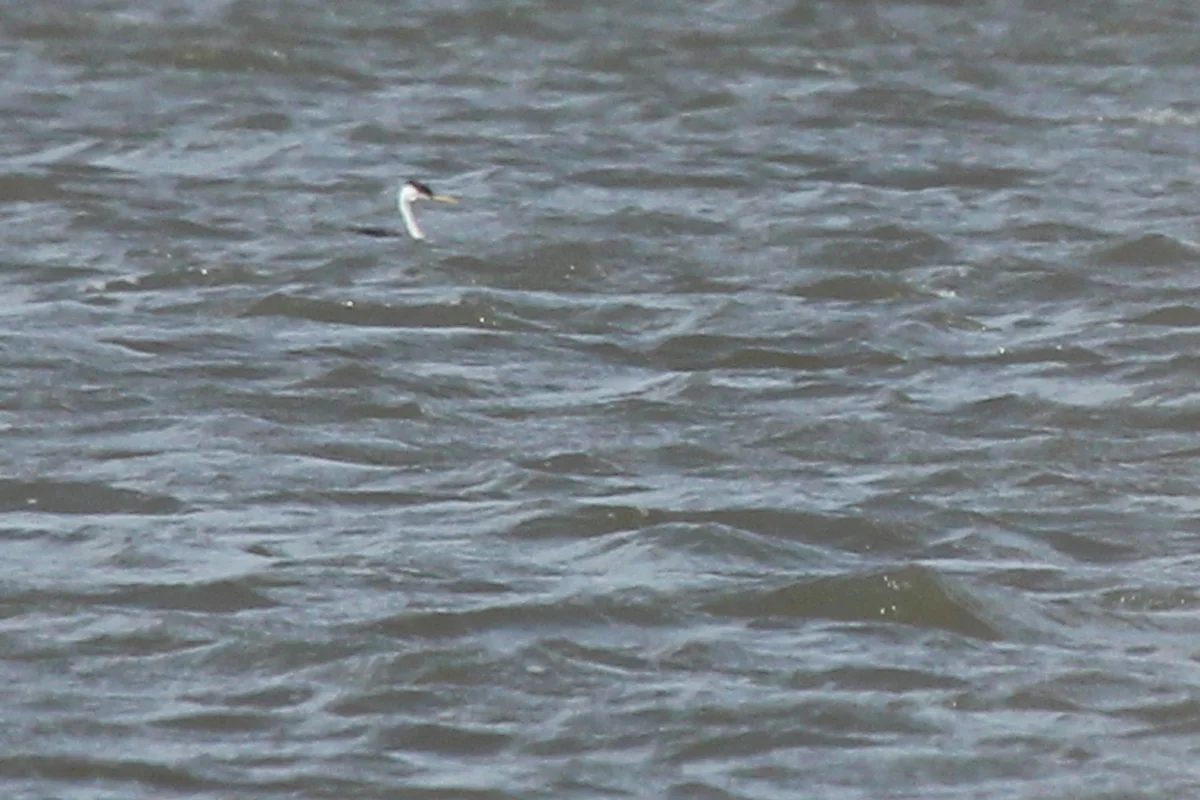
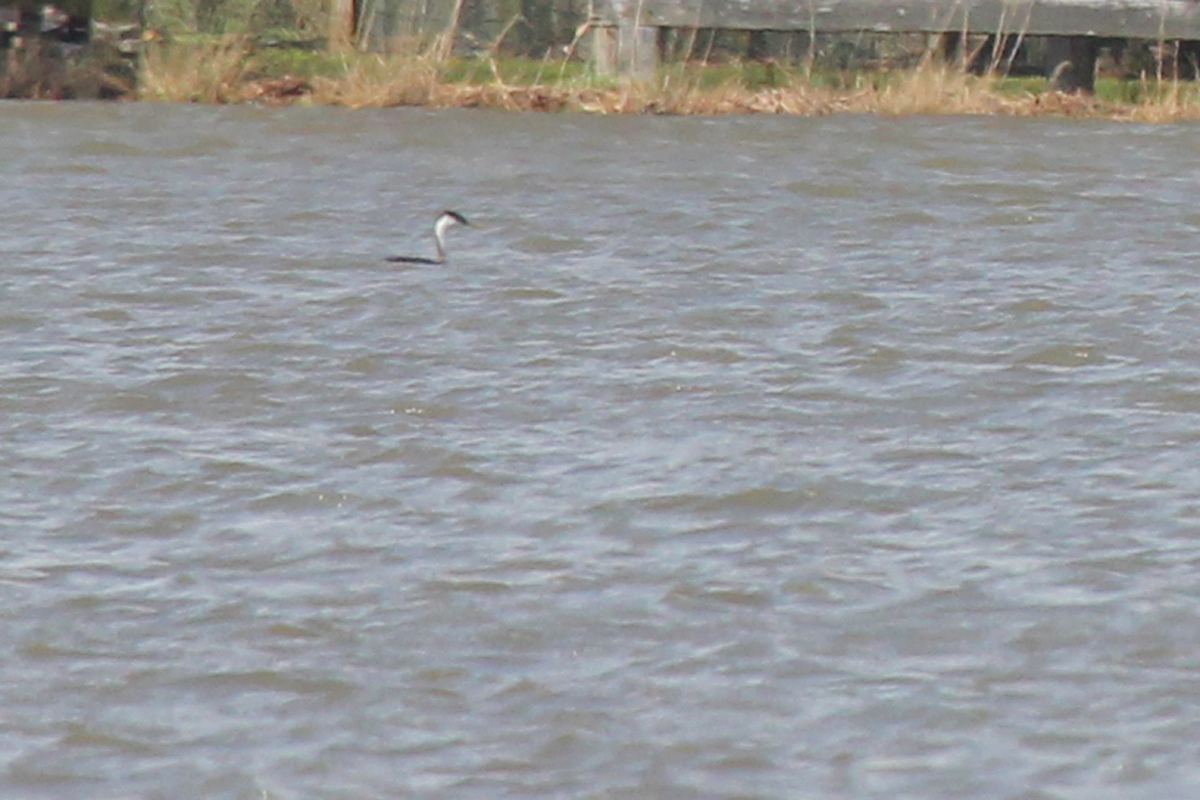
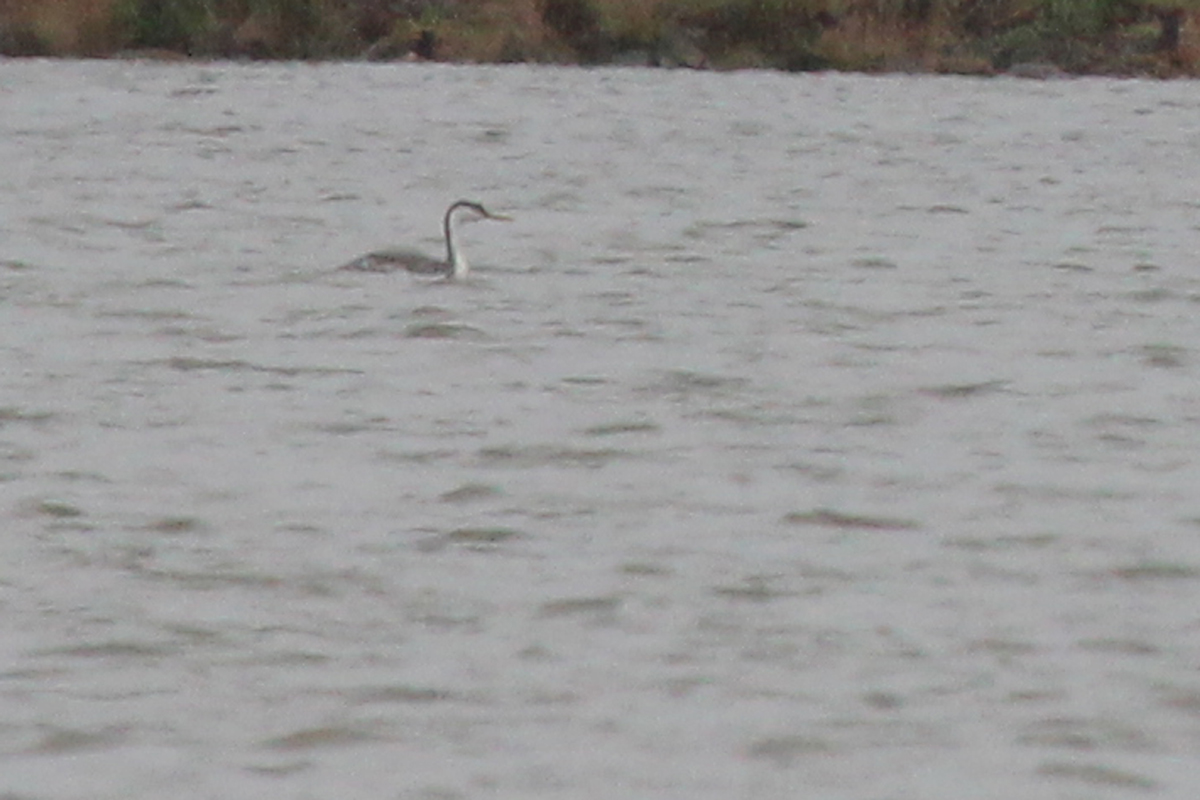
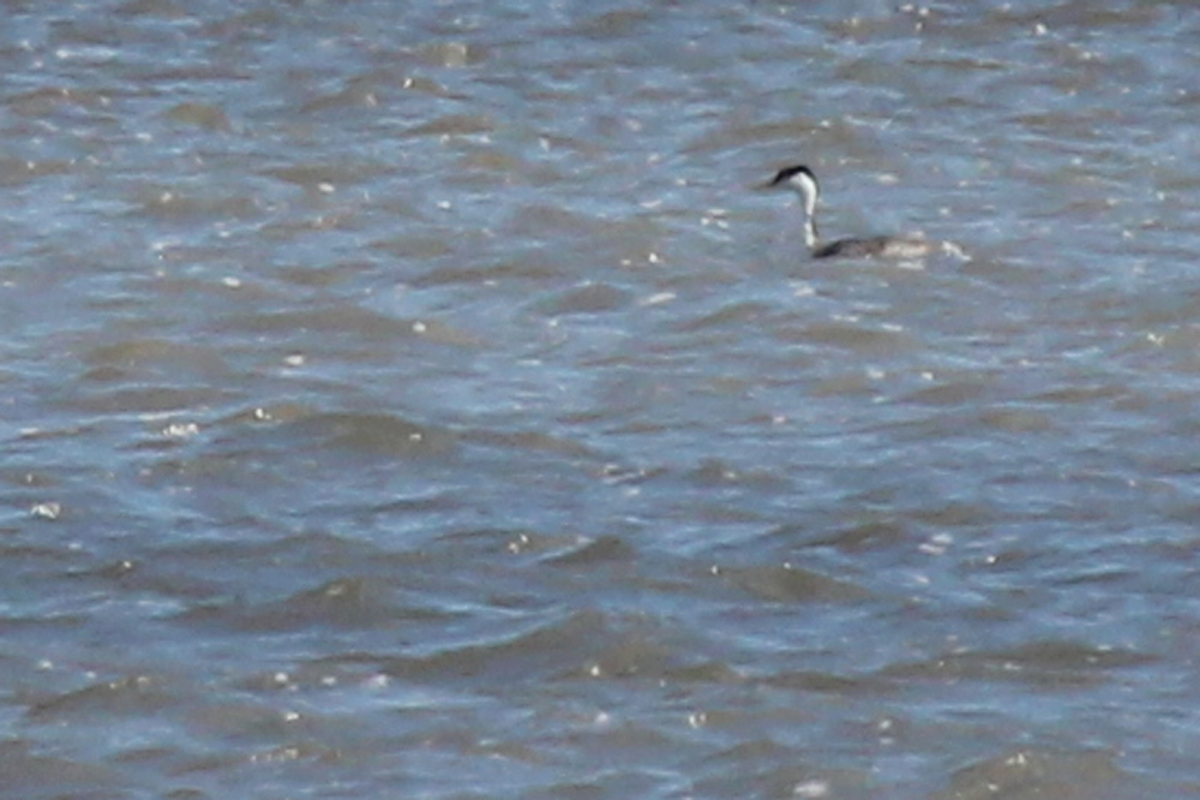
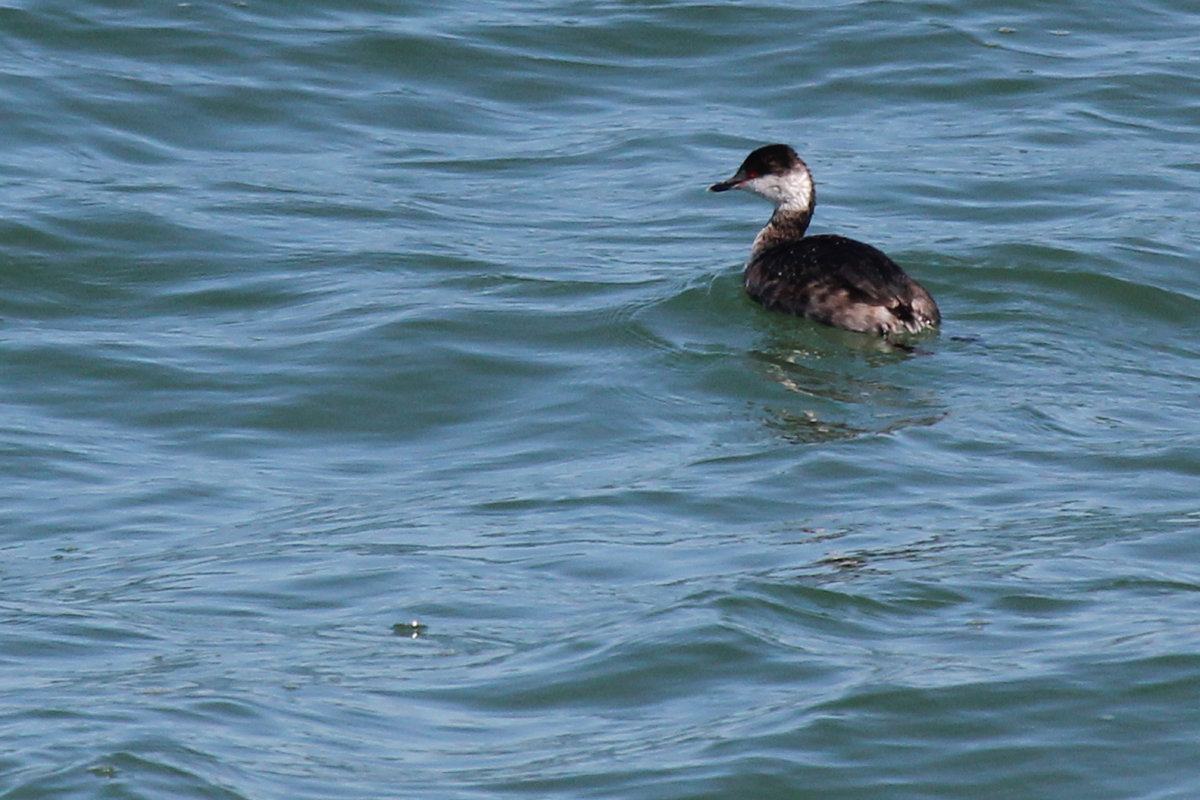
While technically a second report for the species in 2018, a single WESTERN GREBE found from the Horn Point Road Boat Ramp on 6 Apr (ph. Karen & Tom Beatty & Kathy Louthan) could potentially be the same individual observed 11 Feb flying past Little Island Park (obs. Andrew Baldelli). With very few of these birds on the East Coast in any given year, it is difficult to say whether this might be a second individual, or a new record for the same bird. It is even possible that this is the same bird that wintered off our coast last winter, though there is certainly no way to say for sure. Another Western Grebe was photographed on the Eastern Shore on 17 Mar (ph. Edward Brinkley), and another was observed this winter in Maryland, but aside from that, the closest record this year is in New York state! With records for the Virginia Beach individual occurring every day through 9 Apr (last report, obs. James Marcum), it is likely that this bird is still present somewhere around the shoreline of Back Bay.

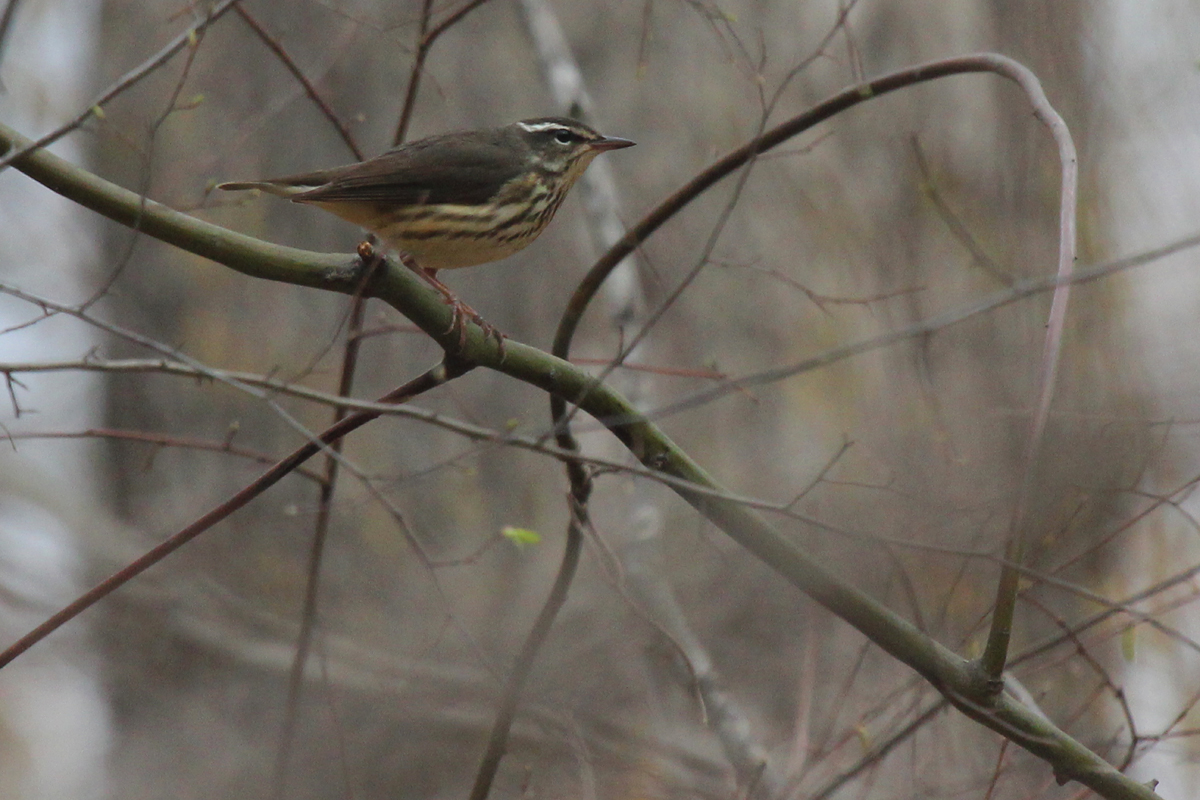
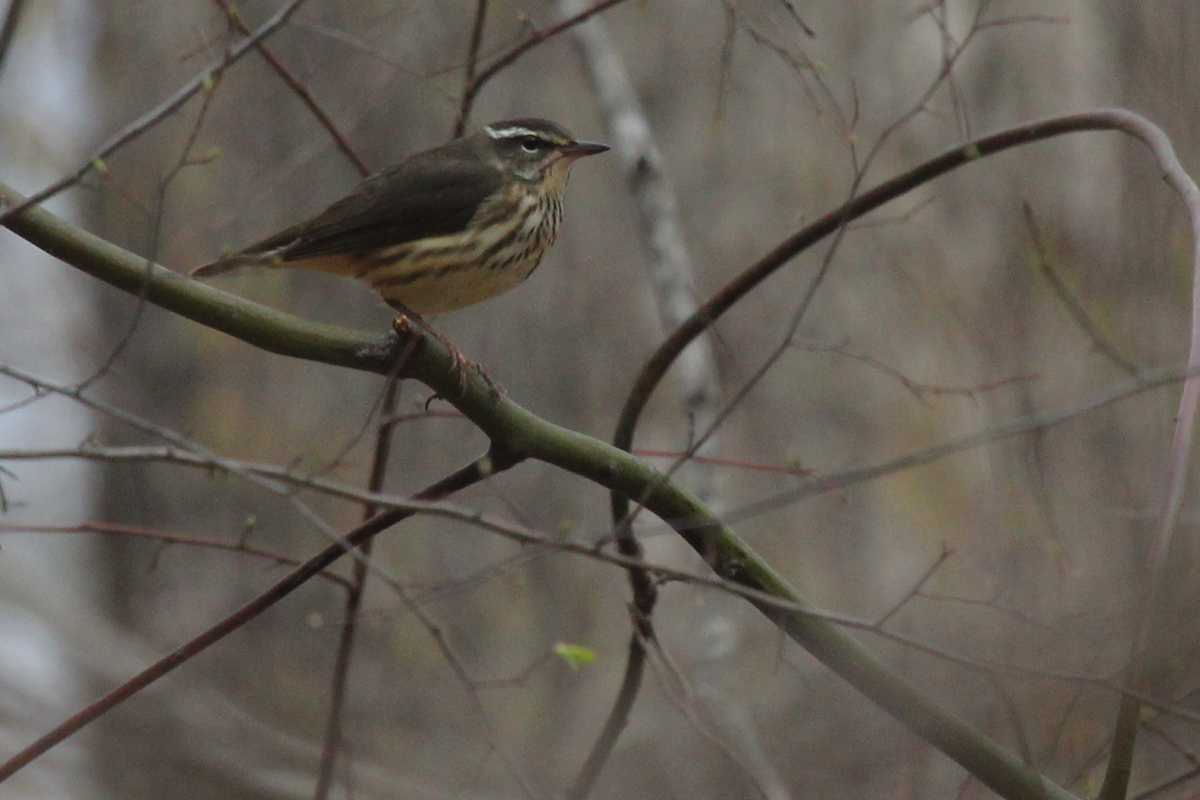
At least two LOUISIANA WATERTHRUSHES were observed during the period, and while this is the prime time for their passage, the species is still a rarely reported bird here during the spring season. The first was found at Stumpy Lake NA on 1 Apr (ph. Rob Bielawski, later ph. Mary Catherine Miguez), while the second individual was observed at West Neck Creek NA on 6 Apr (obs. Karen & Tom Beatty & Kathy Louthan). In recent years (according to eBird), we’ve seen roughly one or two individuals in Virginia Beach, so with our three different individuals so far in 2018, this has been an excellent spring season for the species. However, it is still one that many birders haven’t been able to get on, since all three occurrences have been short stays. As we head into mid-April, the chances for finding this species start to drop quickly, and it will be interesting to see if any others pop up. Marshy habitat like at the parks listed above, and perhaps also at First Landing SP or Lake Smith & Lake Lawson NA might hold a migrant for a short duration.

Potentially one of the wintering birds, a WESTERN TANAGER reported at Loch Haven Park near Pleasure House Point NA on 5 Apr (ph. Jonathan Snyder) represents an interesting late season record. With counts of at least two individuals at a feeder in Alanton earlier in 2018, and a roaming individual observed at several locations along the Shore Drive corridor, it is possible that this newly found bird might actually be one that has been previously documented, just in other locations. With the species becoming an annual winterer in low numbers here along the coast, it would truly be interesting to find out just how many might be present each winter, and how many are returning individuals.

Single-individual reports of RUSTY BLACKBIRDS continued this period, with one being reported at a private residence near the Chesapeake city line on 2 Apr (obs. George Harris), and another observed in the flooded forest at Stumpy Lake NA on 3 Apr (obs. Andrew Baldelli & Mary Catherine Miguez). While this species is commonly seen around the Great Dismal Swamp not too far away to our west, it is a tough species to find within publicly accessible areas of Virginia Beach, hence its being listed here as a rarity. At the time of this writing, with 210 species currently observed for the year in Virginia Beach, this species remains one of only 26 species that hasn’t had a photograph submitted to eBird for it yet! As the time is winding down for their residence here, hopefully someone is able to capture a shot of one for our 2018 Illustrated Checklist.

An interesting, and unseasonal report came in during a seawatch at Rudee Inlet on 3 Apr when a pair of RED KNOTS were observed in northbound flight with a mixed flock of shorebirds (obs. Andrew Baldelli). Red Knots are typically one of our latest arrivals in the spring, with an average expected date of 10 May, followed by a quick passage through the region as they head up towards Delaware Bay and beyond. Individuals have been known to winter occasionally on the Eastern Shore, and in the Outer Banks, so perhaps these were a pair that wintered nearby (we’ve even had Jan/Feb records along our outer coast in year’s past). Continued seawatching might reveal more of these between now and May, but the bulk of observations for this species here are still a ways off.
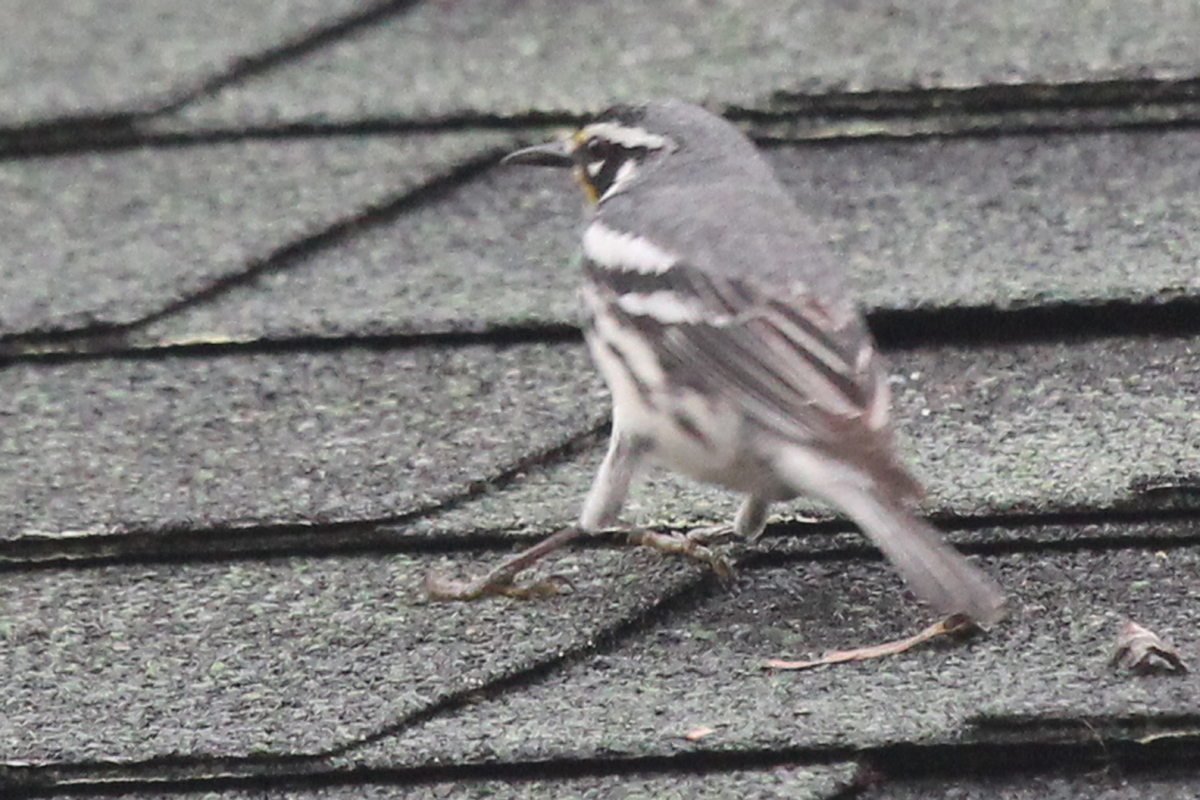
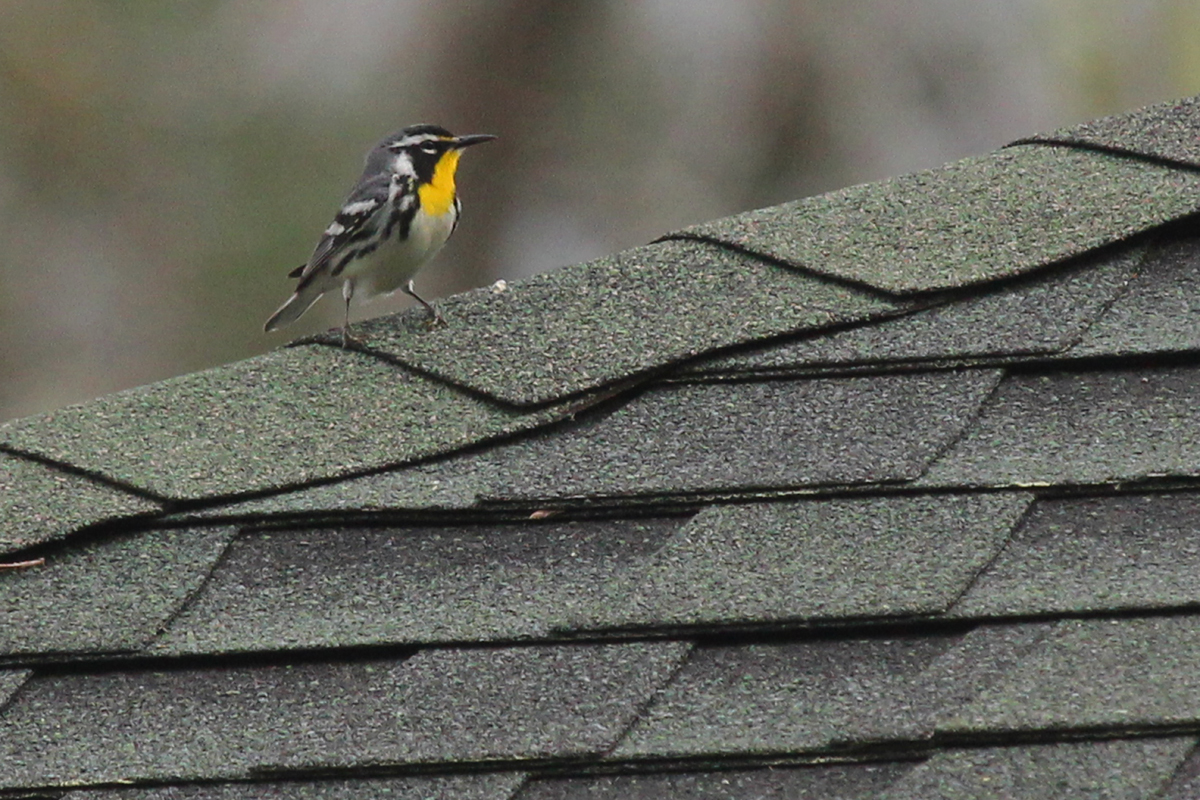
When “early first-of-season arrivals” are mentioned, this simply refers to species for which the first reported occurrence in the city takes place prior to their “average expected arrival date” (based on the Gold Book coastal plain dates and supplemented with more recent eBird data. First on the list goes to our first BLACK-THROATED GREEN WARBLER of the season. Typically observed beginning around 20 Apr, a singing individual near Munden Point Park on 7 Apr (obs. David Clark) represents a very early record for the city, and may pertain to the “Wayne’s Warbler” race mentioned in the Gold Book as an earlier migrant than other forms of the species. This race has been known to breed in the Great Dismal Swamp, though records had been decreasing quickly during the Gold Book’s publication.

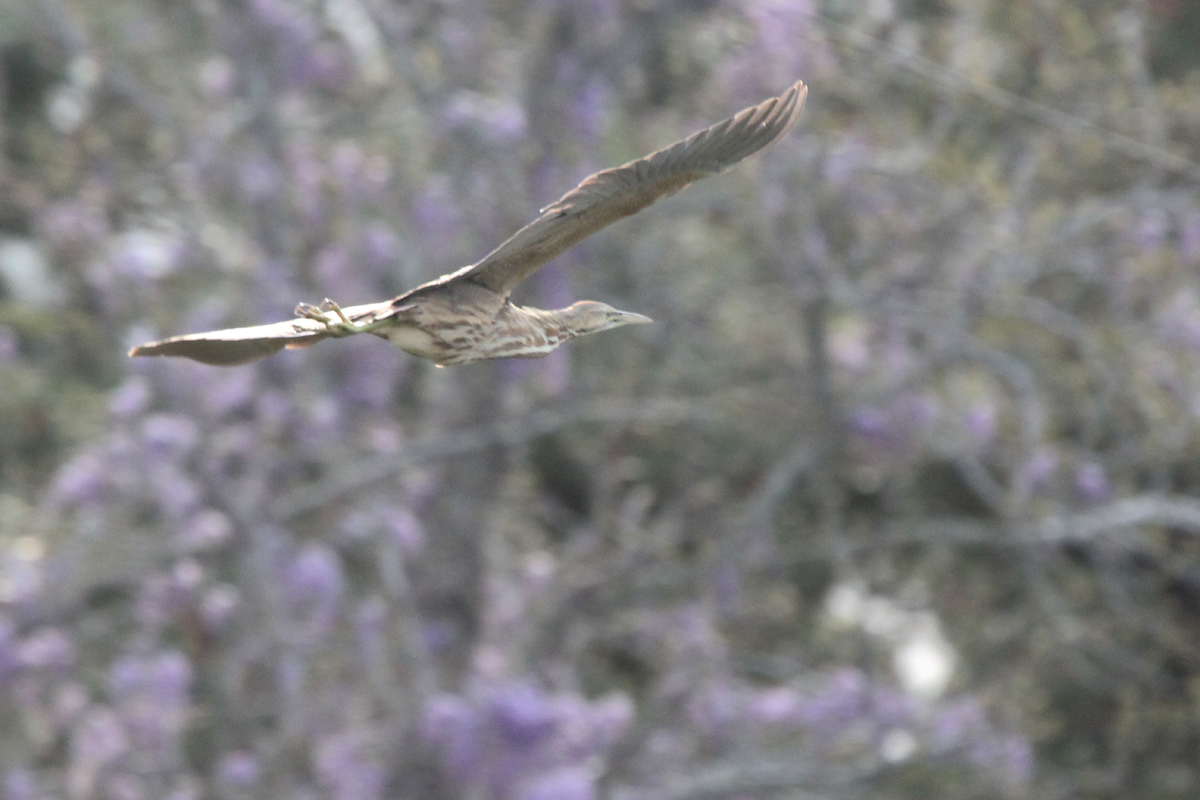
Equally early was a first LEAST BITTERN report from Back Bay NWR on 2 Apr (obs. Robert Wood), since this species has an expected arrival date of 15 Apr in Virginia Beach. Given that at least a pair of Least Bitterns was photographically documented nearby in January at Little Island Park, it seems likely that others may have attempted wintering in the freshwater marshes that surround Back Bay, and perhaps this very early record pertains to an individual who someone survived the frigid winter? Or, this is just an early spring arrival to the region, though at the time of the report, there wasn’t a single record known even from North Carolina, and this is by far the most northeasterly spring report so far!

Falling eight days ahead of the usual arrival date of 10 Apr, an early PROTHONOTARY WARBLER found at Stumpy Lake NA on 2 Apr (ph. Charlie Bruggemann) created a new earliest date ever for the species in Virginia Beach! Comparatively, last year’s 9 Apr arrival at the same location is the only other year in eBird data that preceded the expected 10 Apr date. This likely means there is a lot of missing data, but or that birders aren’t out in swampy habitat looking for this species typically yet by early April. Future years might help clarify exactly when the species tends to show up, and it may very well be closer to the beginning of those month like this, but for now, this early record is quite the outlier!

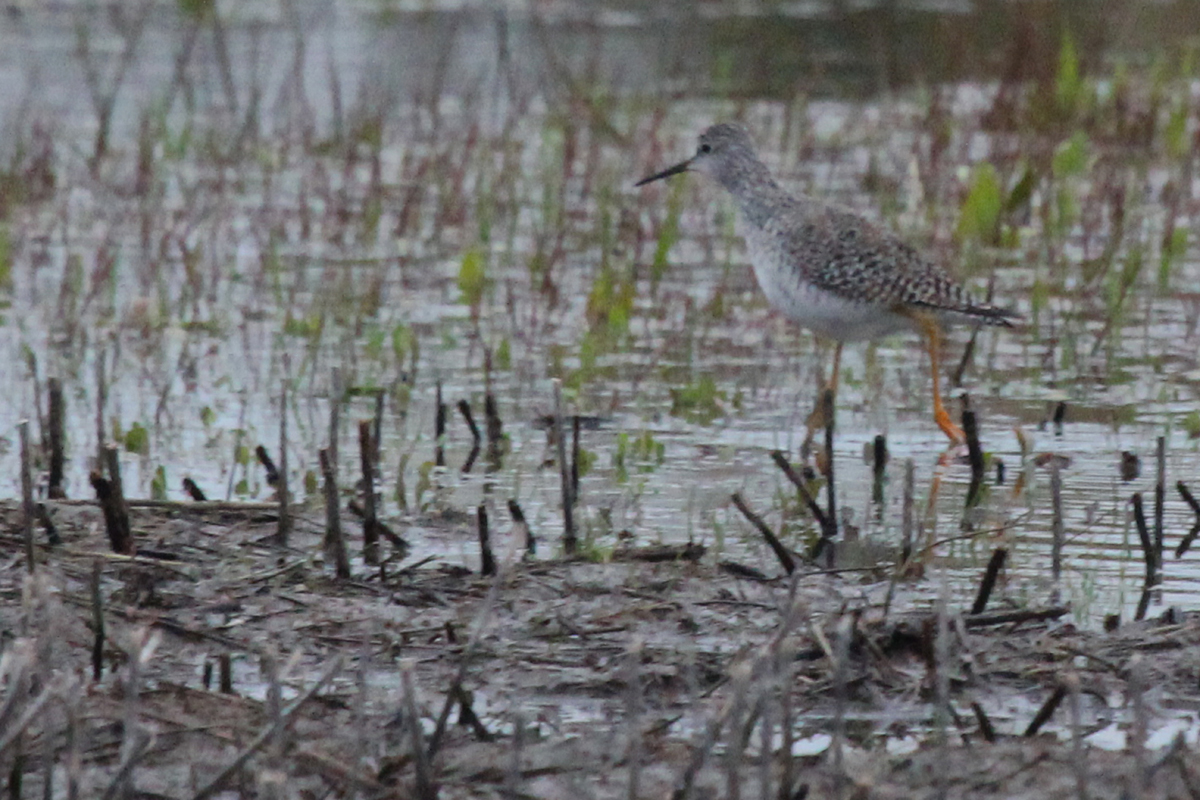
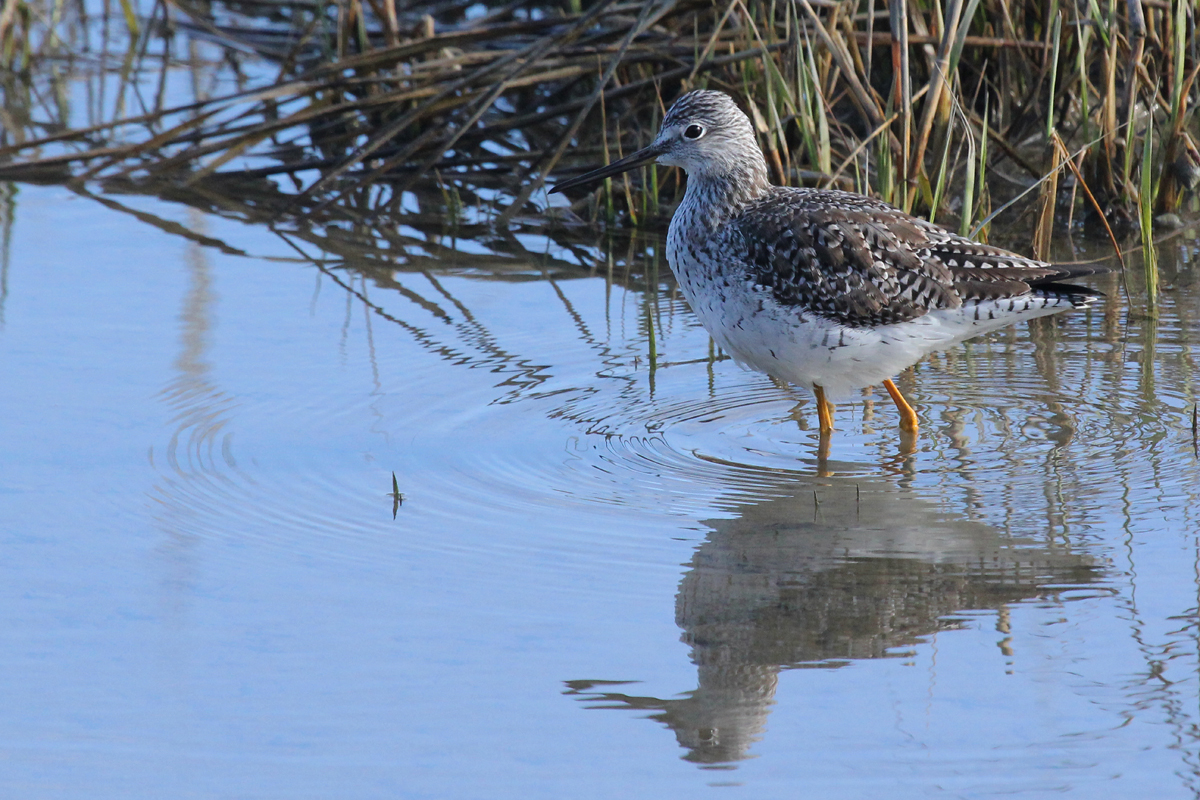
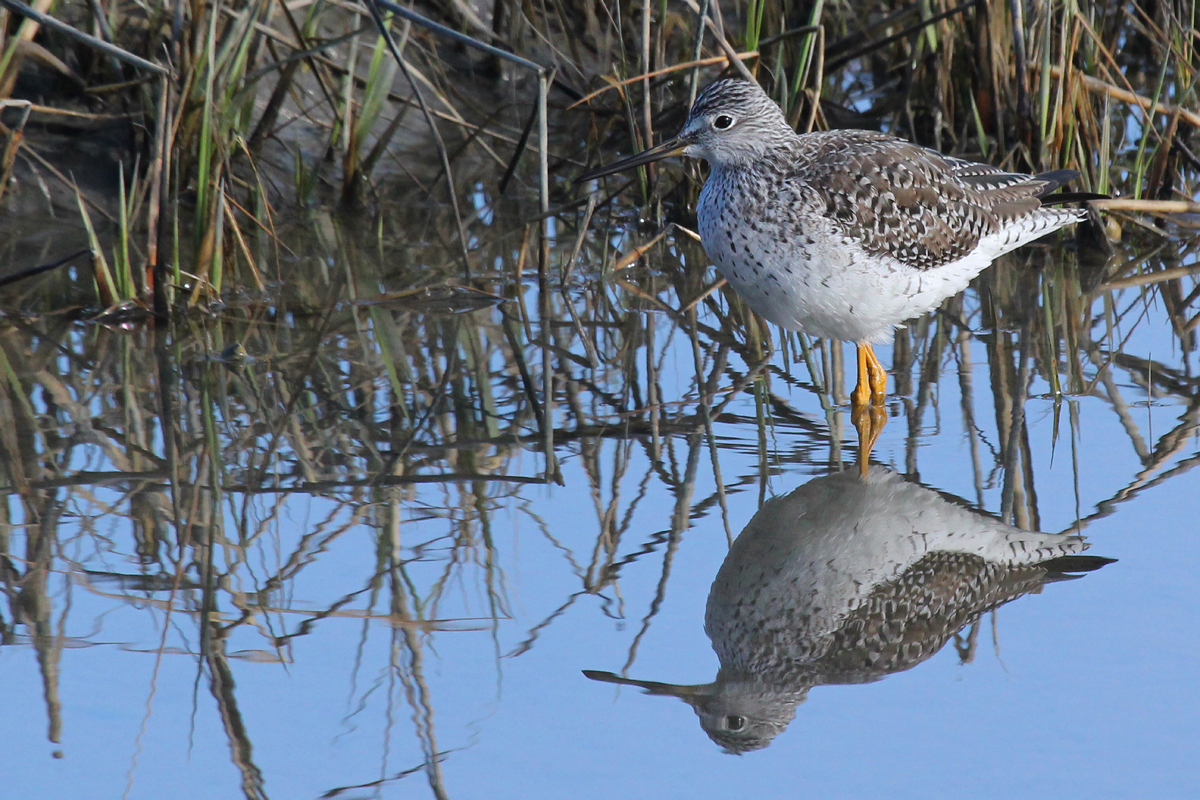
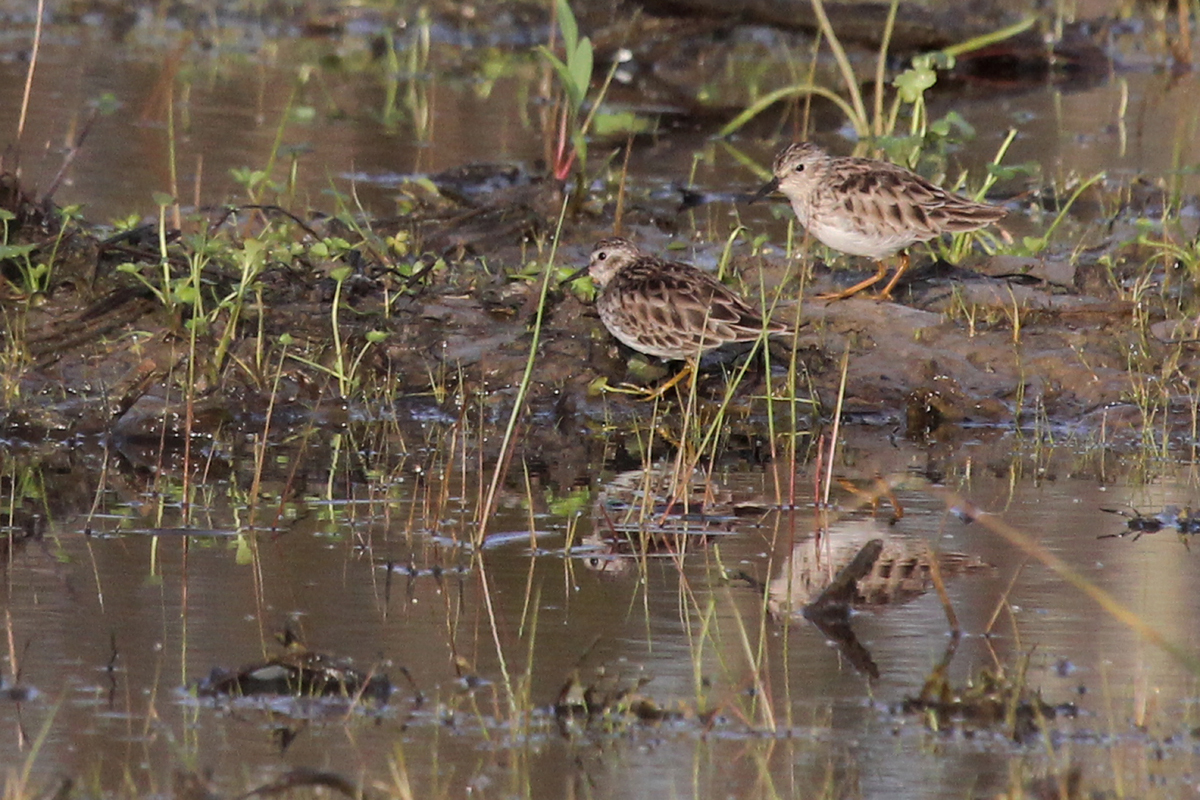
The remainder of the ‘early arrivals’ were all very close to the expected dates, with LEAST SANDPIPER falling farthest outside of its 5 Apr expected date with a first record for three individuals at Princess Anne WMA Whitehurst Tract on 1 Apr (ph. Rob Bielawski). The southwestern impoundment of the northern half of the tract was where these and several Greater Yellowlegs were observed, and on Sundays throughout April, this location will be worth keeping tabs on for shorebirds. Once we hit May, the park opens up to allow daily birding through the fall. An access permit is required, but can be purchased on the VDGIF website.

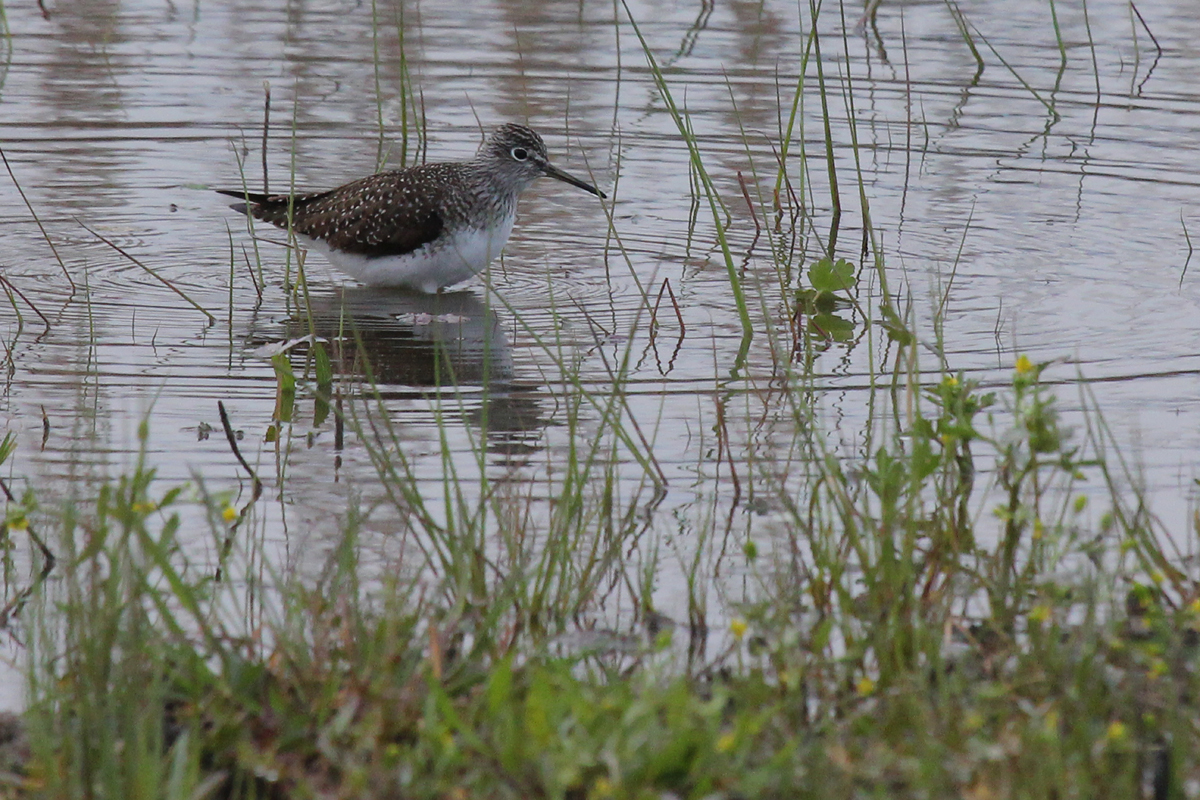
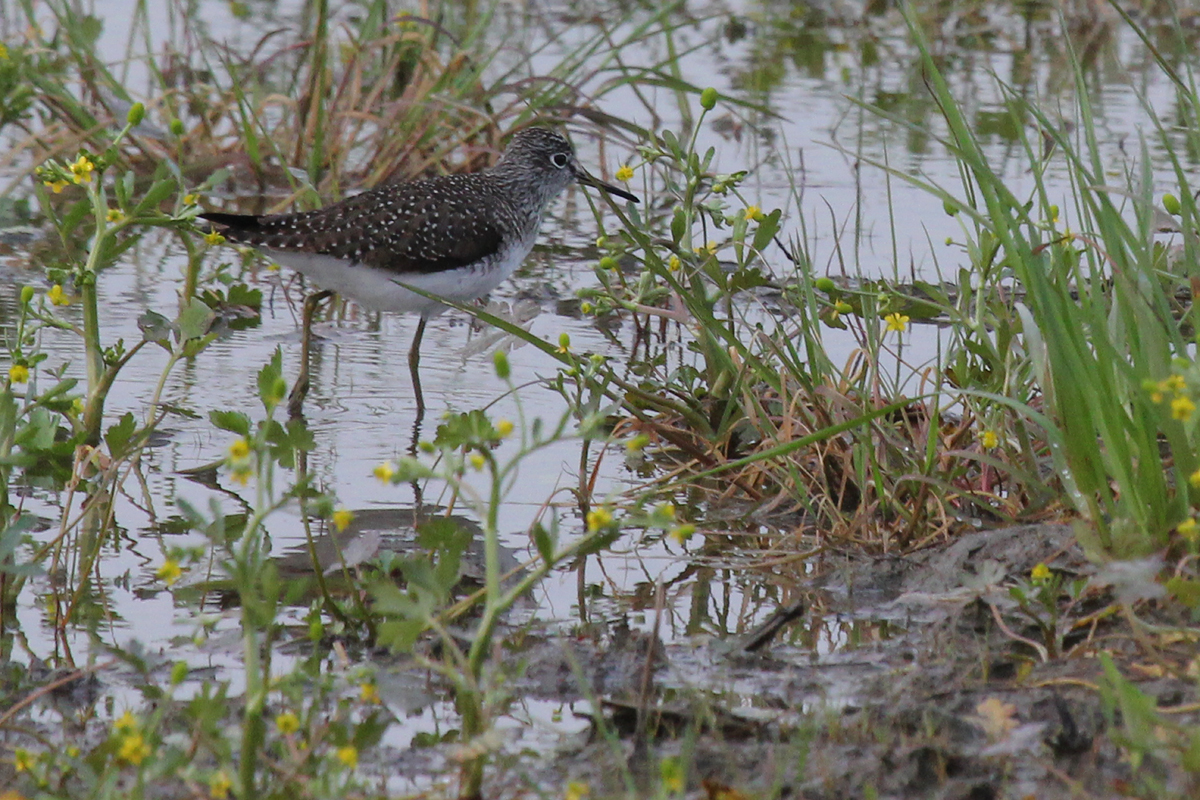
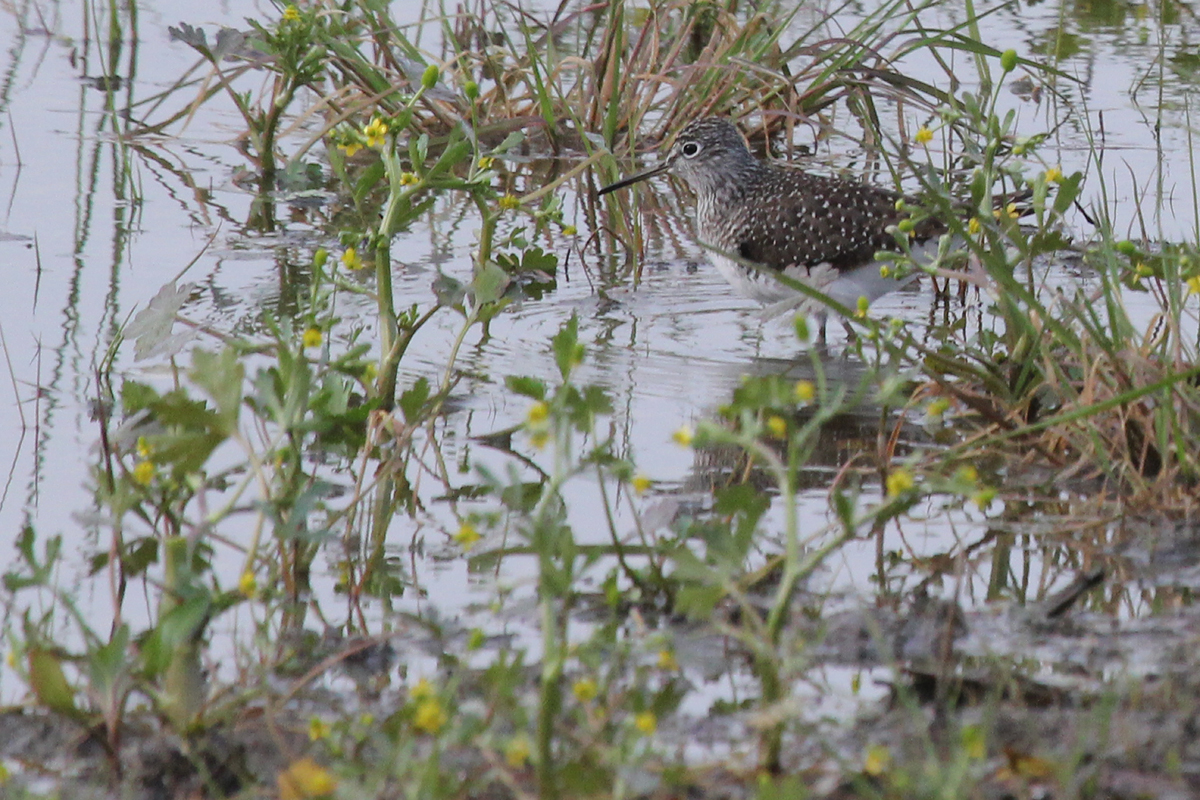
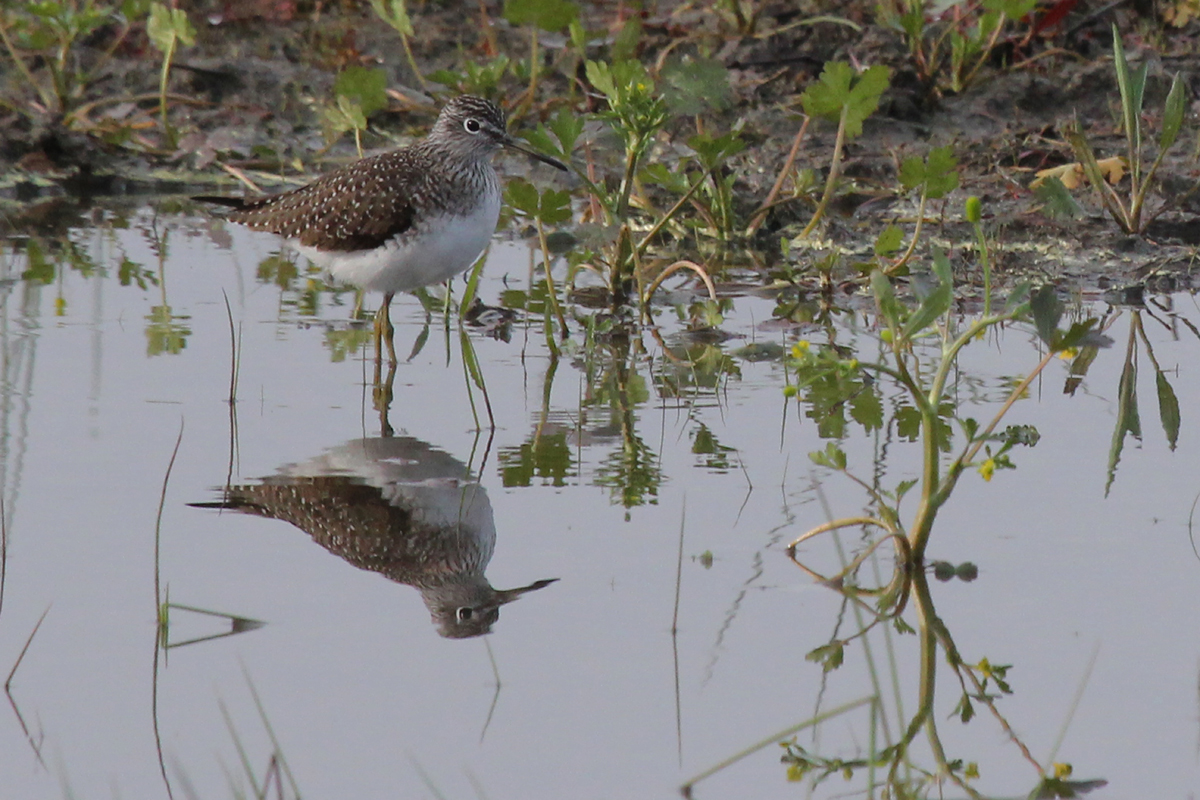
With an expected arrival date of 10 Apr, a first SOLITARY SANDPIPER of the spring season on 8 Apr was remarkably close to a match with recent year’s data in eBird. This individual, found at Princess Anne WMA Beasley Tract (ph. Andrew Baldelli & Rob Bielawski, later ph. Steve Myers) fits in well with 8 Apr arrivals in 2016 & 2014 that help average their arrival out to the 10th. Located at the northeast corner of the southern impoundment, this individual was foraging along the edges of the remnant pool near the outflow pipe that helps to drain the impoundment into the connecting ditch to Back Bay. Depending on how much rain we receive in the next few weeks, this is another spot worth looking at on Sundays when the park is open, as it is likely to hold some other species of shorebirds, Spotted Sandpiper being one of the soon to be expecteds.

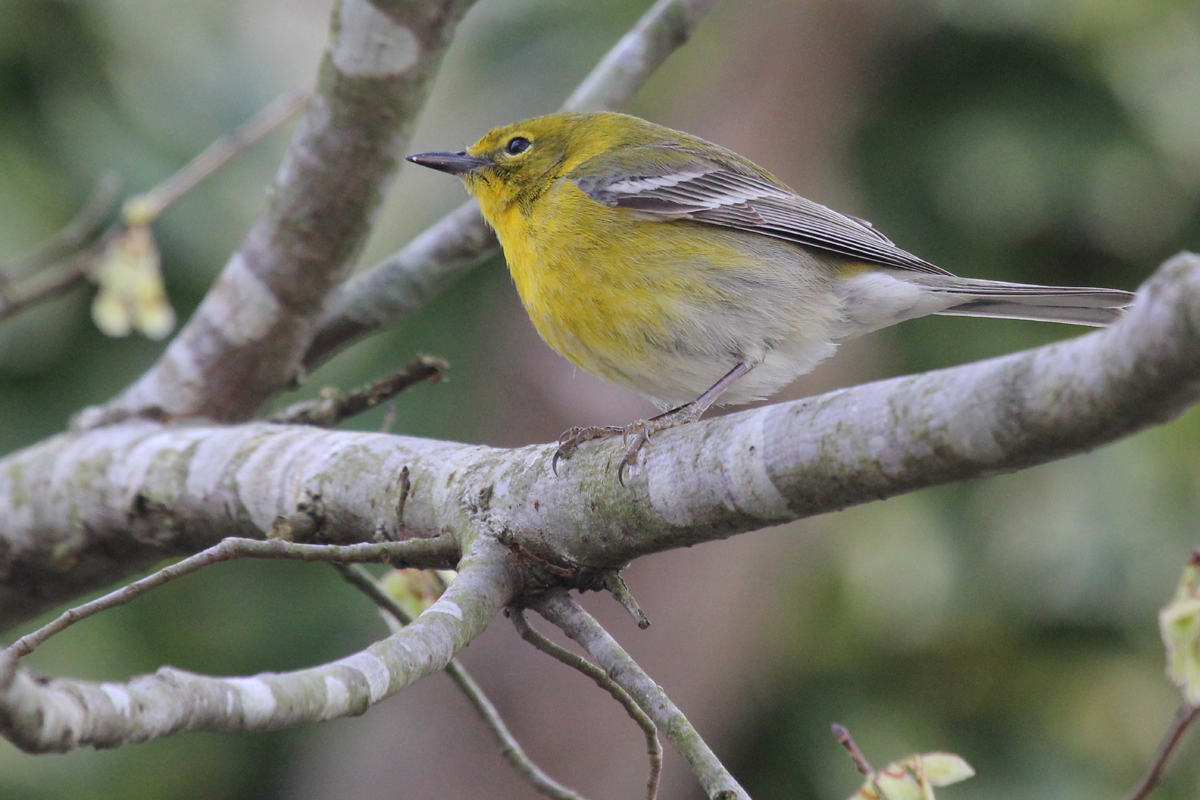
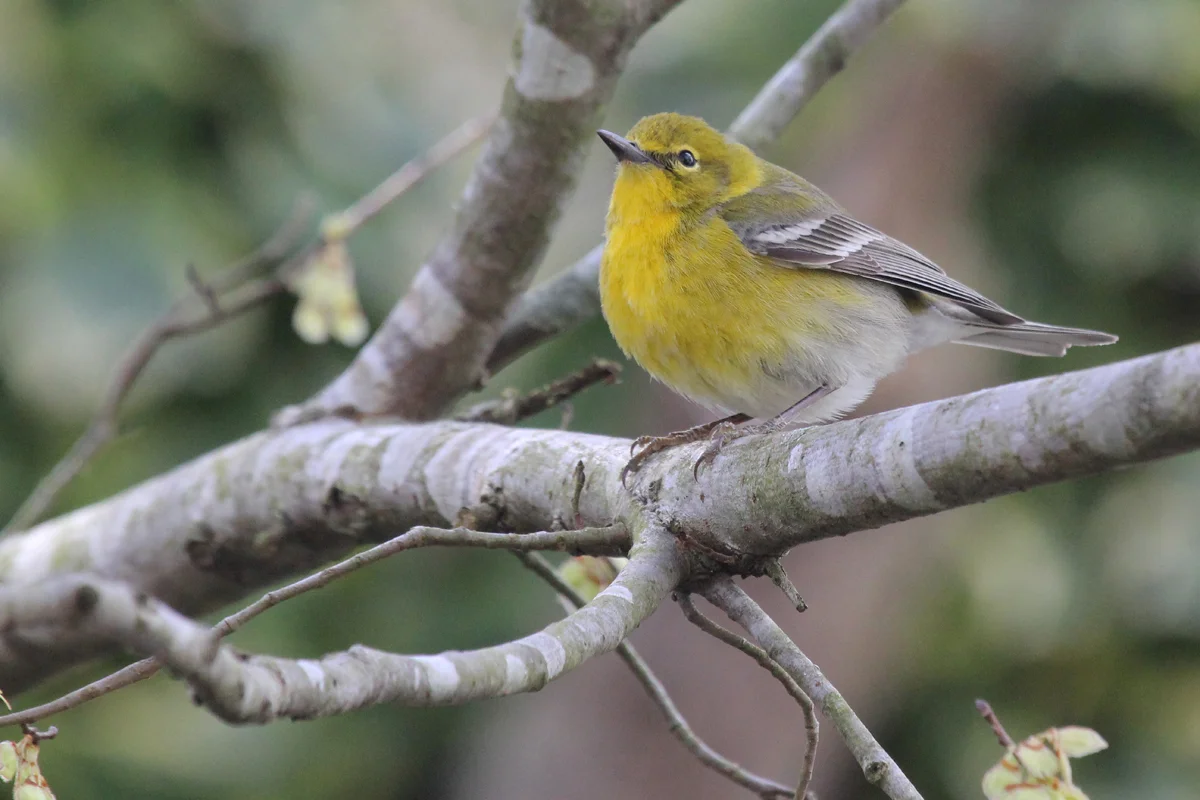
Several NORTHERN PARULAS were detected a day ahead of schedule at First Landing SP on 4 Apr (ph. June McDaniels), which fits in nicely with last year’s 5 Apr arrival, as well as 2015’s 4 Apr date. This park is typically the first in the city to see this species, probably because it is also the area where most Northern Parulas here will attempt to breed due to the abundance of Spanish Moss which the species uses for nesting purposes. The Osmanthus Trail in particular is where the species is often observed on the arrival edge, but the Long Creek Trail is also an excellent place to view the species.

The final early arrival came just before the close of the reporting period, with a single GREAT CRESTED FLYCATCHER found at Marshview Park on 9 Apr (ph. June McDaniels, later ph. Mary Catherine Miguez). With an expected date of 10 Apr, this one was almost right on target, and soon the forests of Virginia Beach should be filled with the raucous “breeeeeep” or “wheeep” call that these birds make from the canopy, the easiest way to locate them among the leaves (once the leaves actually come out that is). Interestingly, due to their vocalizations being so widely known, this is  one of the most commonly reported birds here during spring and summer in eBird.

Along with the early first-of-season arrivals, we had four species that made their spring arrival after their average expected dates. The first of these, sorted by how late they were first detected, is the LITTLE BLUE HERON. Setting dates for this species can be a bit problematic due to the reality that some members of this species do actual winter in Virginia Beach from time to time. Most winter records occur on the impoundments at Back Bay NWR, which is closed to the public through the winter except for private groups and paid tram trips to False Cape SP that are offered occasionally on weekends. However, in an average winter, the likelihood of an accurate record of Little Blue Heron isn’t enough to warrant allowing this bird without review. So a spring date has been set to 30 Mar hoping to narrow down when true spring arrivals start flowing into the city. The first this year occurred on 1 Apr at Princess Anne WMA Whitehurst Tract (ph. Andrew Hawkins), and though there was what I’d call an unseasonal occurrence back in late February, this bird marks the first of the true arrivals.

Six days later than expected, a first of season SHORT-BILLED DOWITCHER was finally detected at Back Bay NWR on 5 Apr (obs. Robert Ake). While low numbers of this species tend to winter in other counties near and along the coast like Northampton, Accomack, Hampton and York, reports in Virginia Beach are very scarce after late fall. In fact, the rarer Long-billed Dowitcher is almost equally expected here during the winter, so any dowitcher observed from Nov to Mar should really be closely studied to verify which species it is. Of course, when both species are in non-breeding plumage, identification becomes a bit more complicated, and perhaps not even possible with many individuals. For that reason, this is why eBird offers the Short-billed/Long-billed Dowitcher ‘slash’ option.

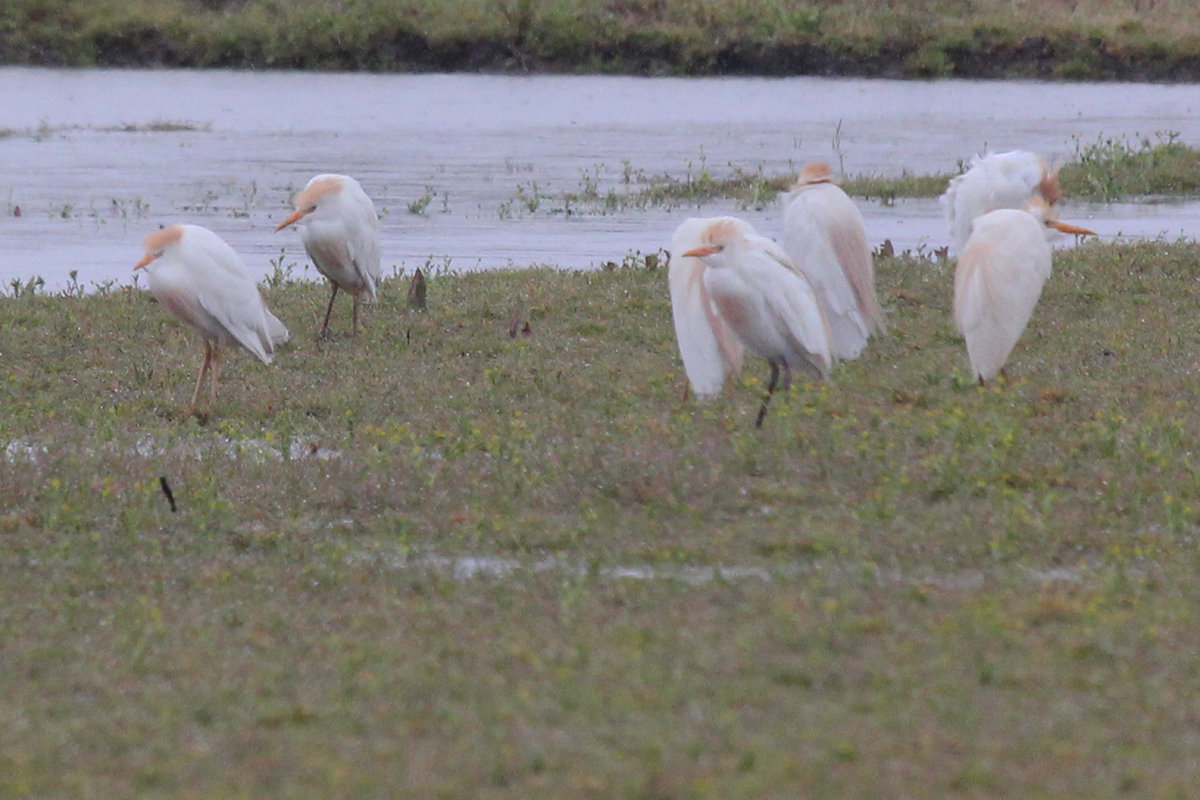
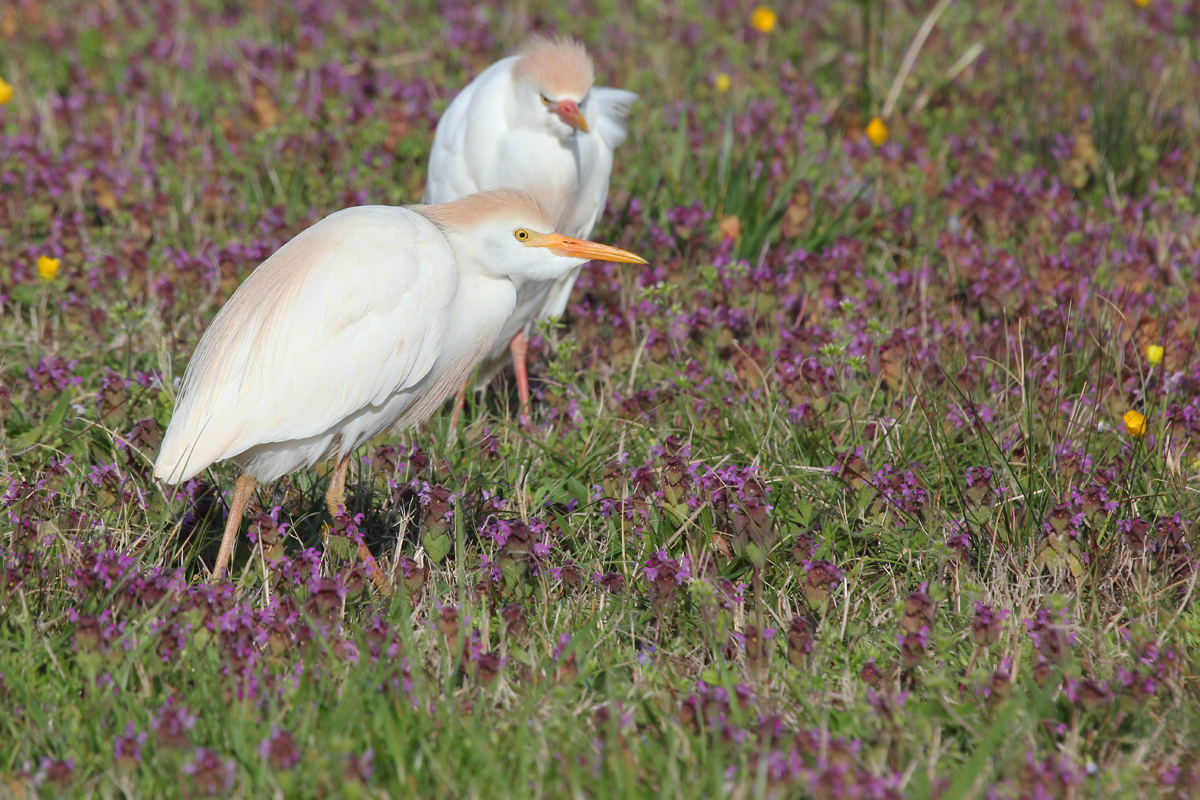
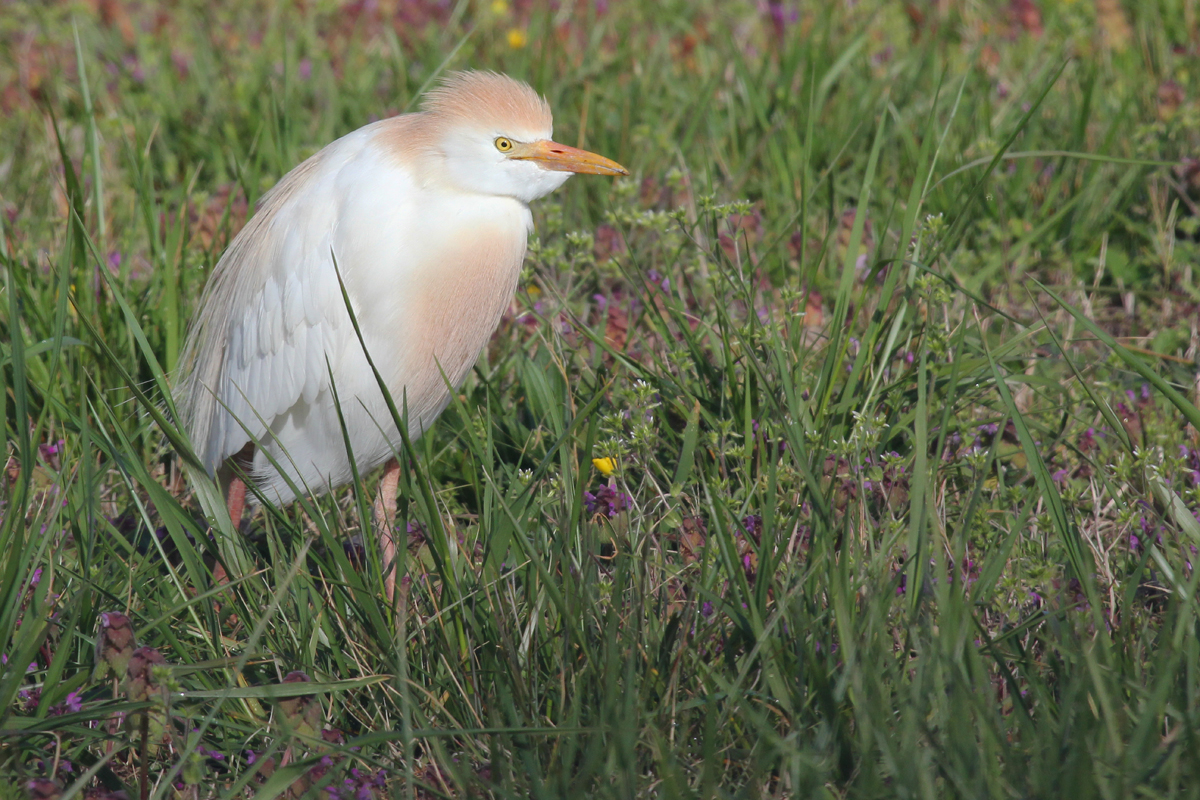
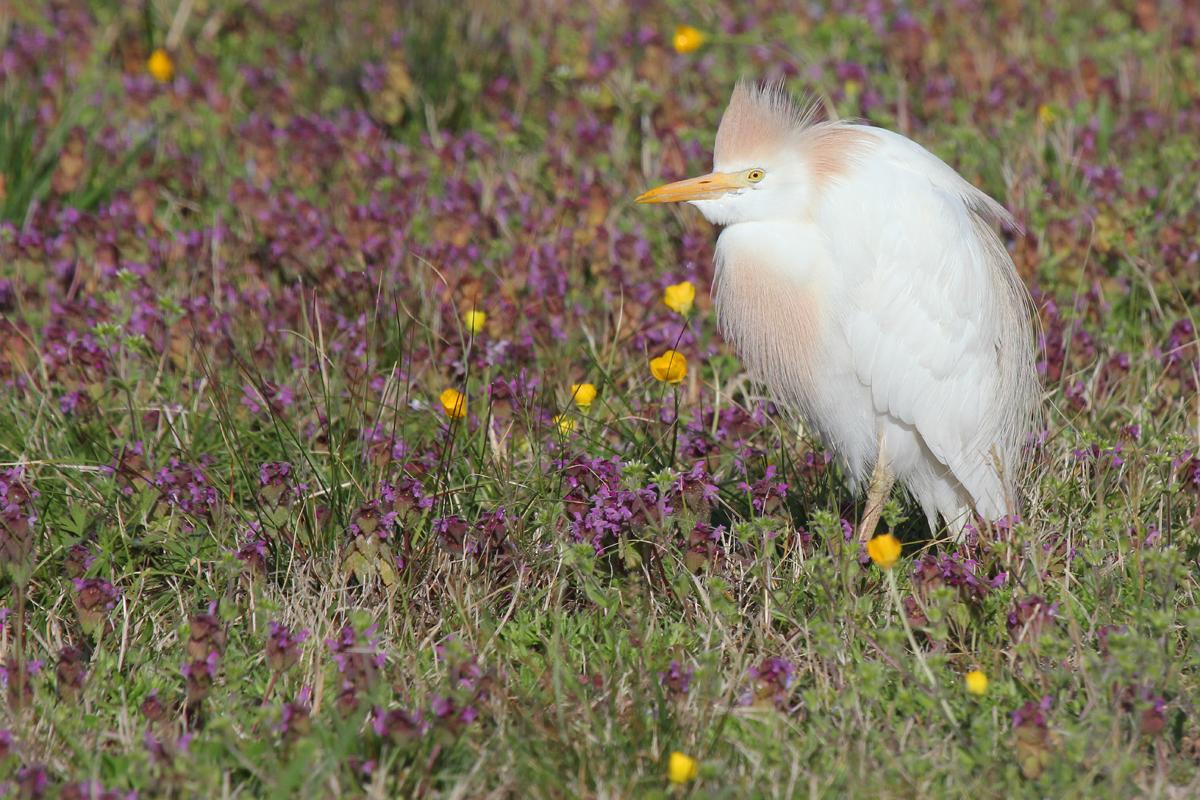
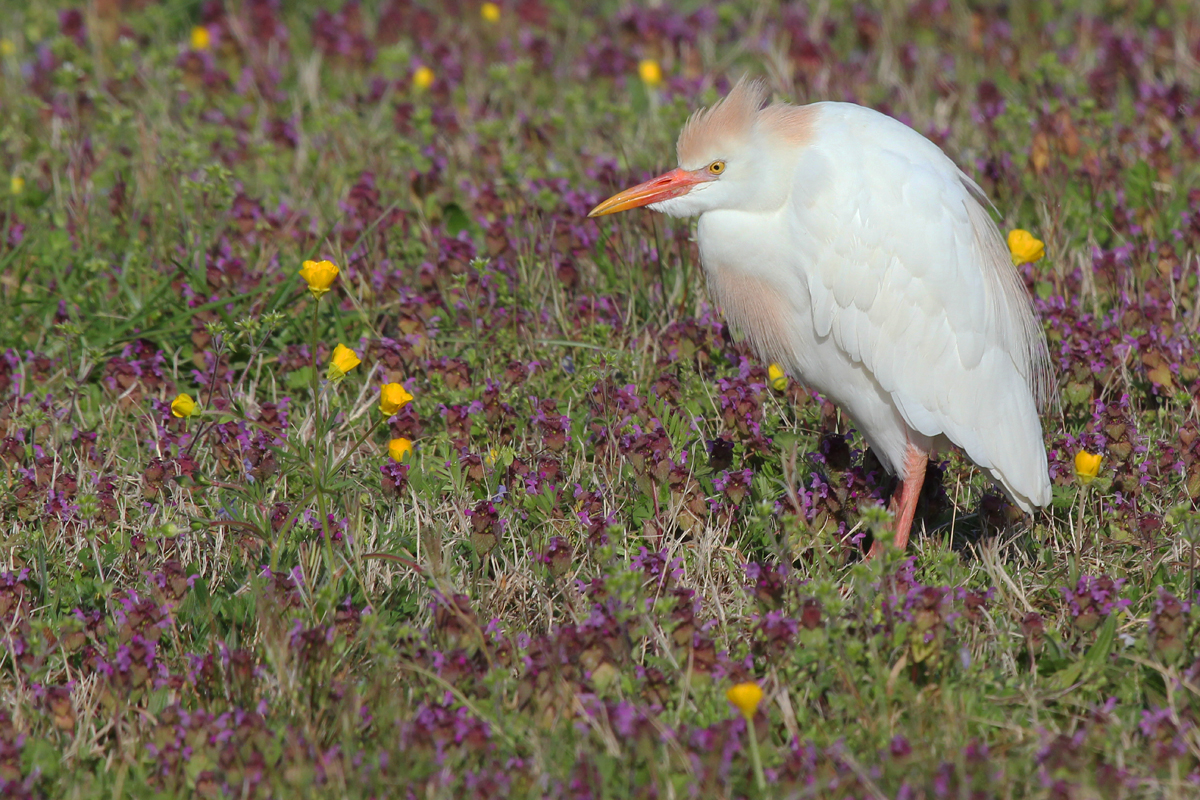
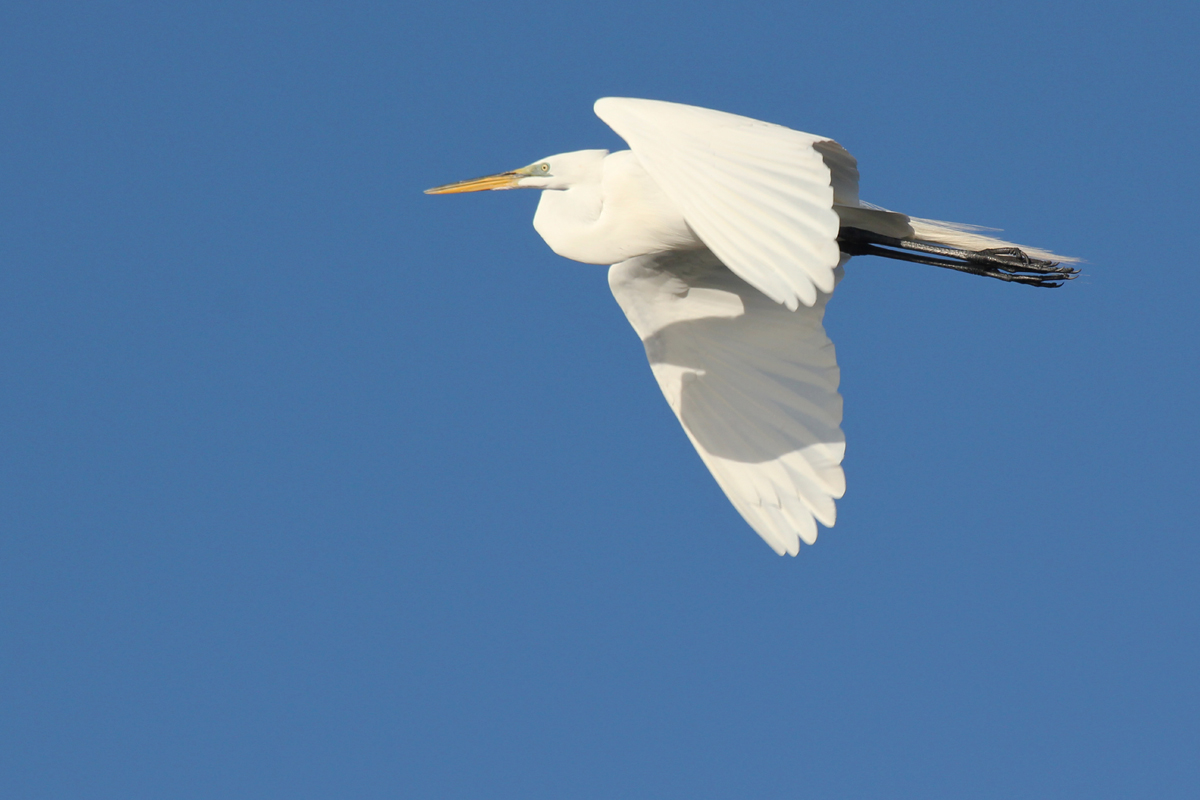
CATTLE EGRET, another arrival for the reporting period, is another wading bird species that tends to have winter reports in the city. However, in most winters, the first snowfall event of the year forces these birds south, and like clockwork in 2018, the last report occurred just hours the blizzard event of 3/4 Jan commencing (ph. Karen & Tom Beatty). With the species absent since, the first documented spring record occurred on 2 Apr, barely behind the expected 30 Mar arrival date, when two individuals (sporting breeding plumage) were observed along Munden Road near Princess Anne WMA (ph. Mary Catherine Miguez, later ph. Karen & Tom Beatty). Over the next month, some individuals of this species may be observed exciting their ‘high’ breeding plumage, where their facial skin and half the bill turn to a bright magenta, while their head, neck and chest plumes also retain the rufous coloration typical of standard breeding plumage. These features make this species quite exquisite during April & May (see an example from 8 Apr in this checklist). For anyone hoping to view this species, simply driving around Morris Neck, Mill Landing, Nanney’s Creek, Muddy Creek and Charity Neck Roads will often yield sightings of flocks of Cattle Egrets foraging in roadside ditches/fields.

The last of our spring arrivals was one very beautiful species of shorebird, the STILT SANDPIPER! Any chance to view this species is worth the effort, and a report on 6 Apr of three individuals on what sounds like the C Storage Pool at Back Bay NWR (obs. Greg Tito) makes for an excellent first installment for the species in Virginia Beach this spring. With a typical 5 Apr arrival date, this records comes just one day late, so, essentially on-time for eBird purposes. With the West Dike now open daily to visitors (since 1 Apr), the C Pool, C Storage, B Storage, and A Pool are all accessible once again, and though the water levels have been reported to be too high to maximize shorebird habitat, the shorelines can still hold these birds. So, for anyone venturing out to Back Bay NWR, make sure to scan the water’s edge, and maybe you’ll pick one of these up!
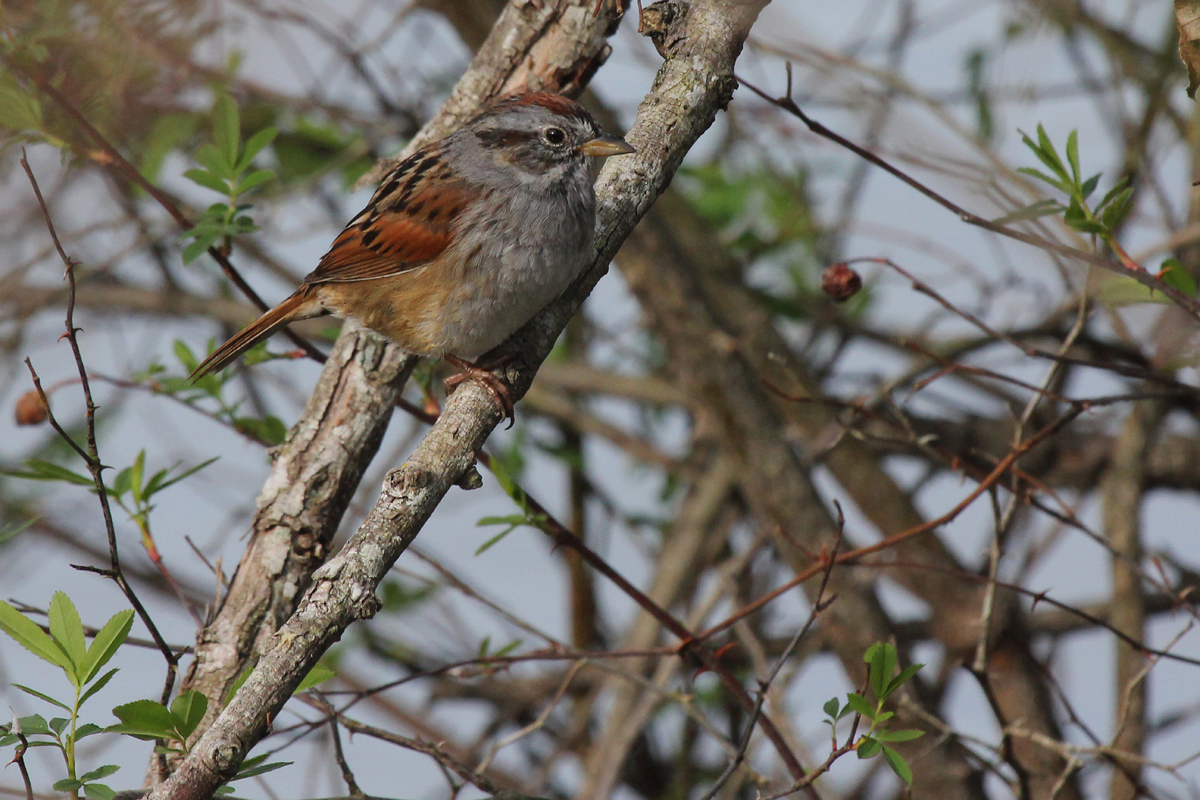
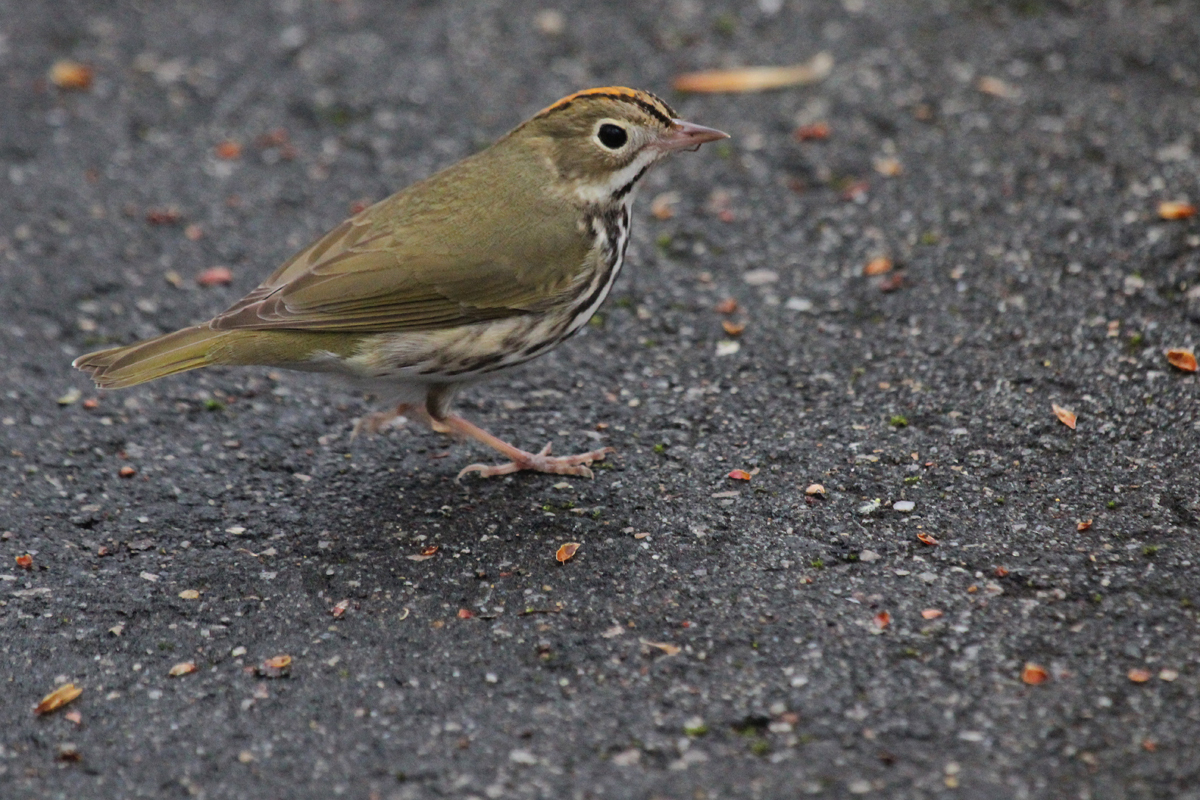
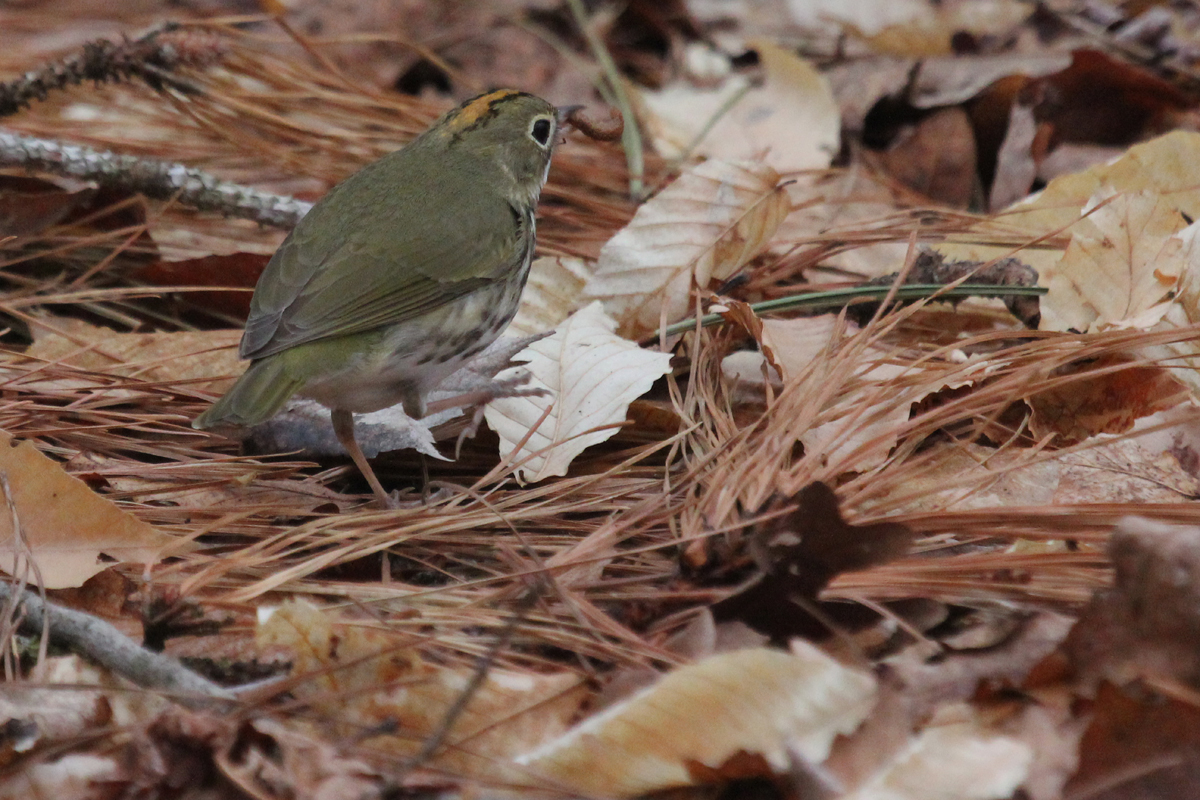
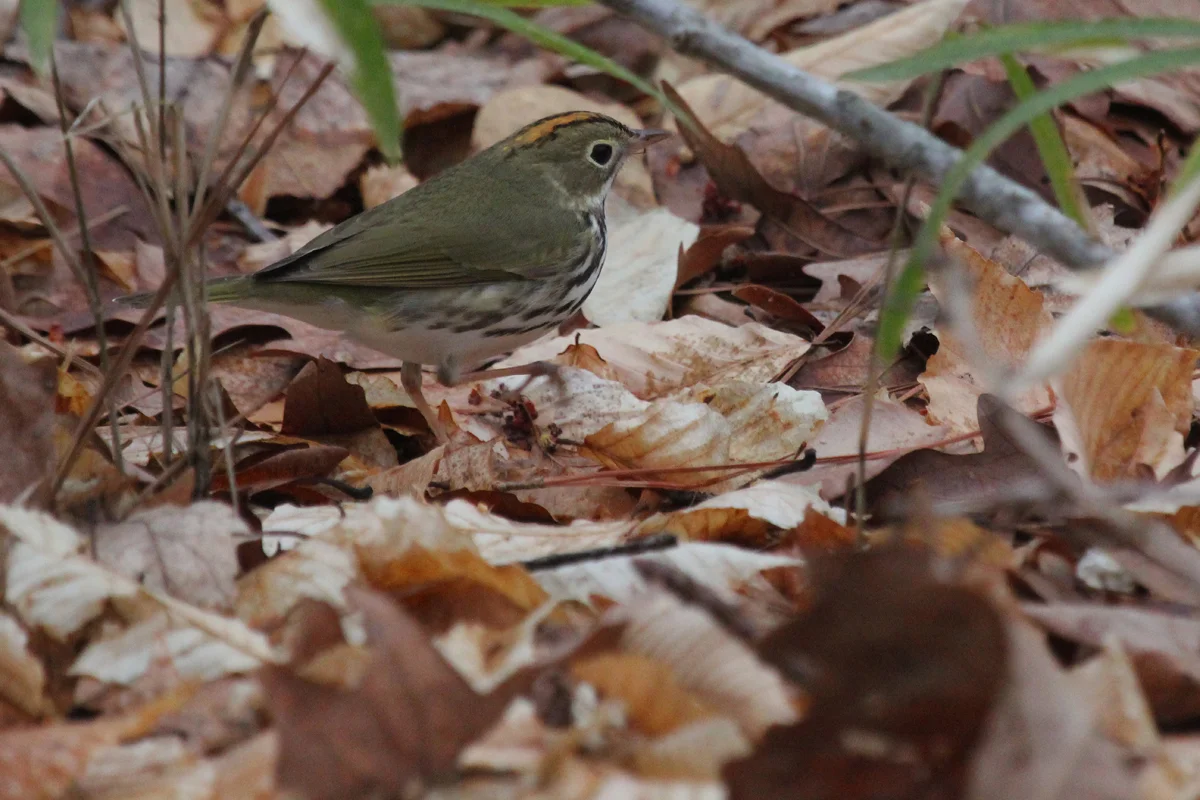
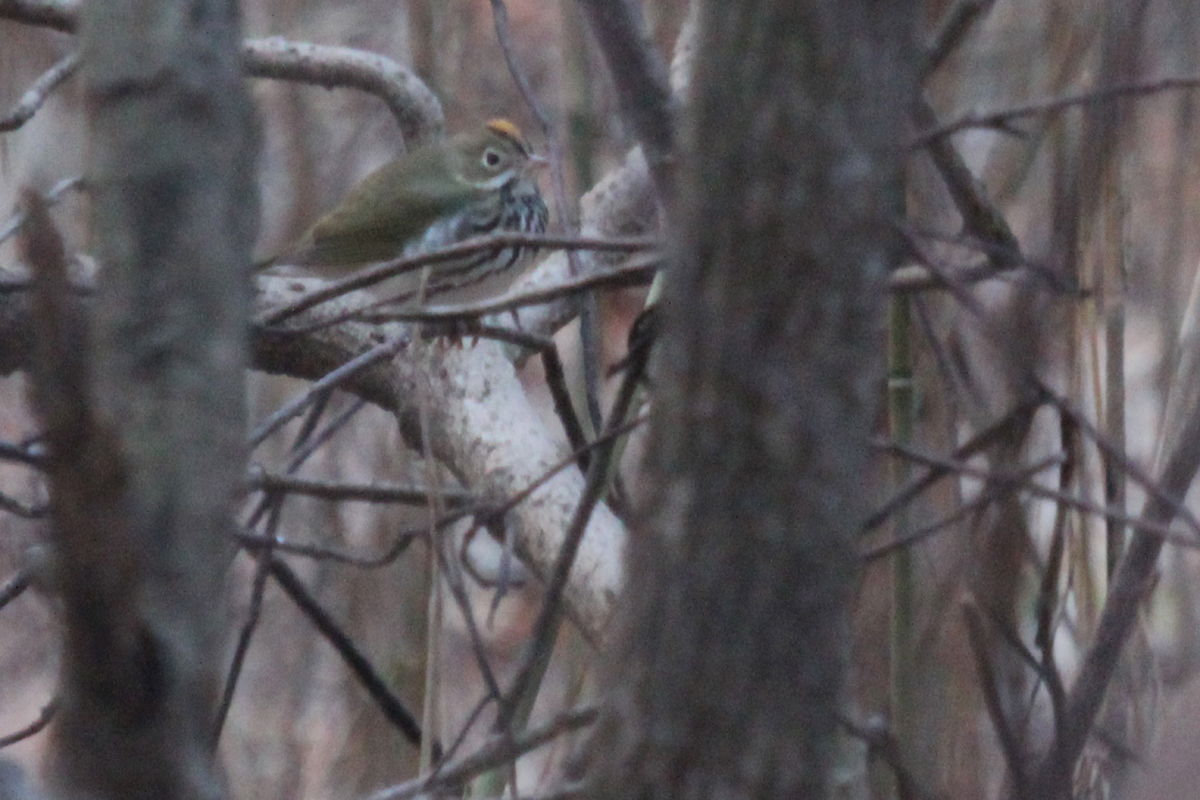
In the late March journal entry, quite a few species were noted with early arrival dates. Many of those species continued to be observed into early April, before their expected date was finally reached (and records input into eBird finally stopped flagging as ‘rare’). Having this information input to the database helps make the expected dates more accurate each year, and in 2019, some arrival dates will likely be shifted as a result. For example, OVENBIRD has been set with a 5 Apr arrival date based on recent years’ data, but for a second straight spring, the species has showed up on 29 Mar, and records have been abundant from there onward. In early April this early, there was 15 reports of the species submitted to eBird, ranging in location from Stumpy Lake NA, Princess Anne WMA Whitehurst Tract, Lake Lawson & Lake Smith NA, West Nek Creek NA and First Landing SP. If we again see a March arrival next spring, this species will have its arrival date changed to 30 Mar. The importance of this? Clearly, many species simply lack data in the system that helps warrant the extension of acceptable dates. More eyes in the field, and more knowledgeable folks submitting data, helps those of us interested in status & distribution garner a much more accurate vision of exactly when species start to arrive. So the more information provided, the better the eBird experience for all those involved, from users to reviewers, to researchers who can use the data from a conservation aspect.

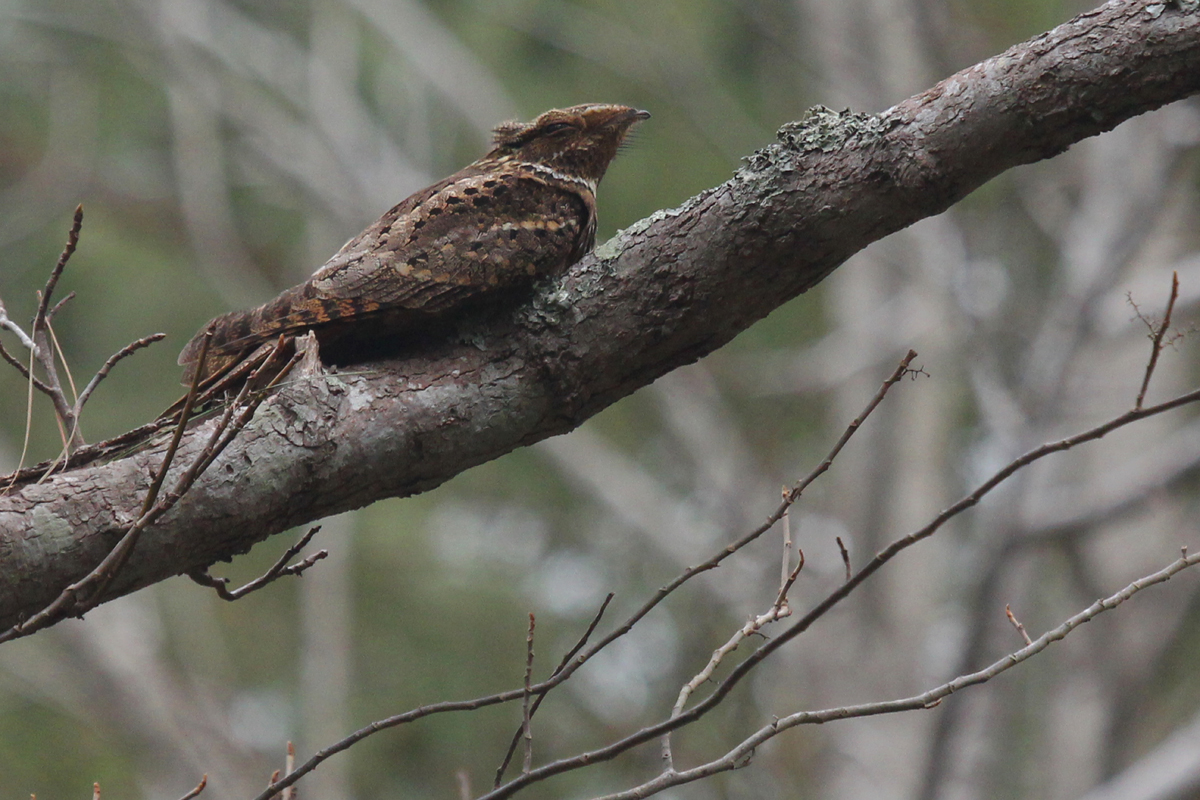
Ovenbirds weren’t the only species that appeared in prior reporting periods, and continued to be reported through the expected arrival dates. BLACK-AND-WHITE WARBLERS, CHIMNEY SWIFTS, PRAIRIE WARBLERS, WHITE-EYED VIREOS, RUBY-THROATED HUMMINGBIRDS and even a potential CHUCK-WILL’S-WIDOW (presently awaiting audio recording upload to the eBird list) all fit the bill this period as well and each provided for great excitement across Virginia Beach in early April! As well as these ongoing early reports, we had several other interesting reports pop up that are worth mentioning here.

It took us a painful 96 days, but we finally got our first record for BLACK SKIMMER in 2018 when a pair was photographed at Pleasure House Point NA on 6 Apr (ph. Kathy Louthan). This is the first time since the winter of 2014 where no Jan-Mar records were submitted to eBird for Virginia Beach. In most winters (or in an average one) there is a flock that stays typically into February around Lynnhaven Inlet / Pleasure House Point, departing sometimes for a couple of weeks before returning again in March. With the extreme winter weather that impacted the coast in early 2018, this flock of skimmers either departed for warmer waters to the south, or could have been killed off completely during the first blizzard of the year (last eBird record was on 27 Dec, just prior to the Little Creek Christmas Bird Count). If any CBCers happened to log this species during the count on the 31st, please get it submitted to eBird to help firm up the departure date!

Another first of year bird was finally logged this report period, when a NORTHERN BOBWHITE was heard repeatedly vocalizing at Princess Anne WMA (obs. Rob Bielawski) on 1 Apr. This species is surely present year-round throughout the southern half of the city, but none have apparently been calling within earshot of any eBirders so far in 2018. Of course, with this species, provenance is a concern, and we have no real way of knowing which birds are true wild birds, versus which have been simply let loose for hunting purposes on private land and have managed to cover some distance. In either case though, this was another species for the city’s 2018 list, which after the period stands at 210 observed species, and 184 photographed species.

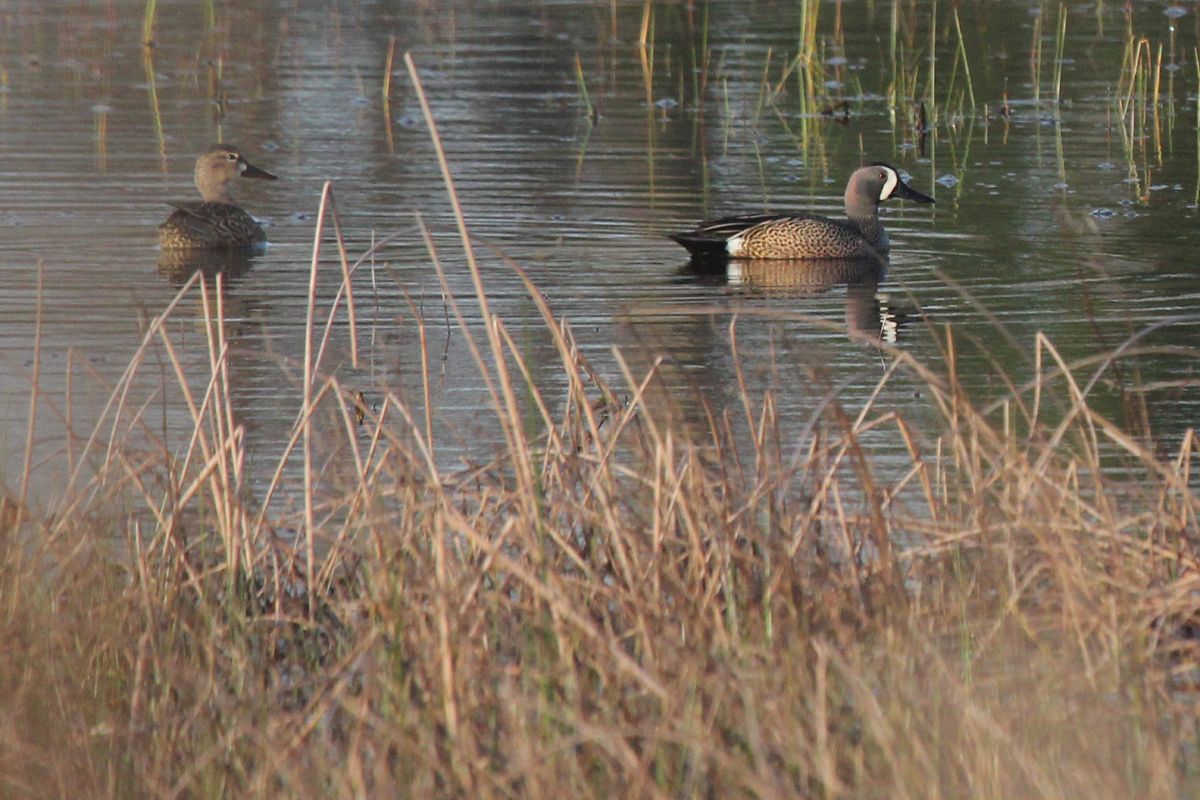
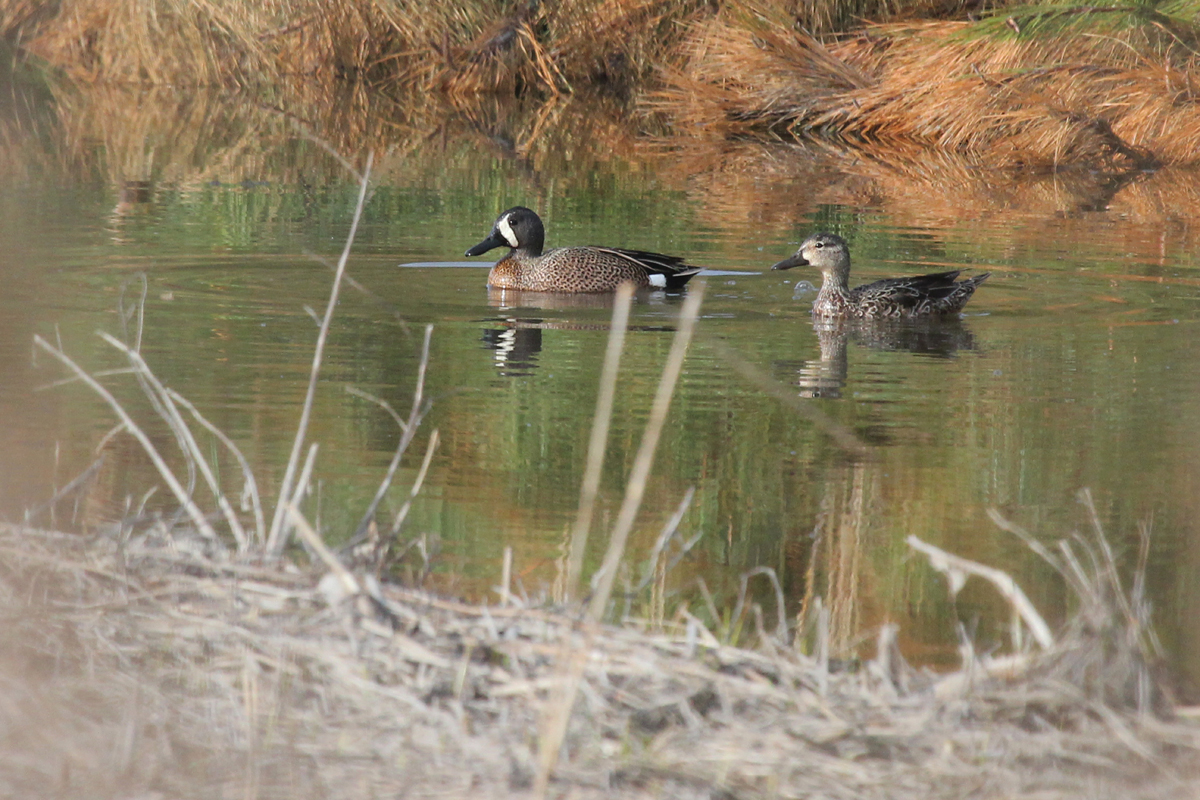
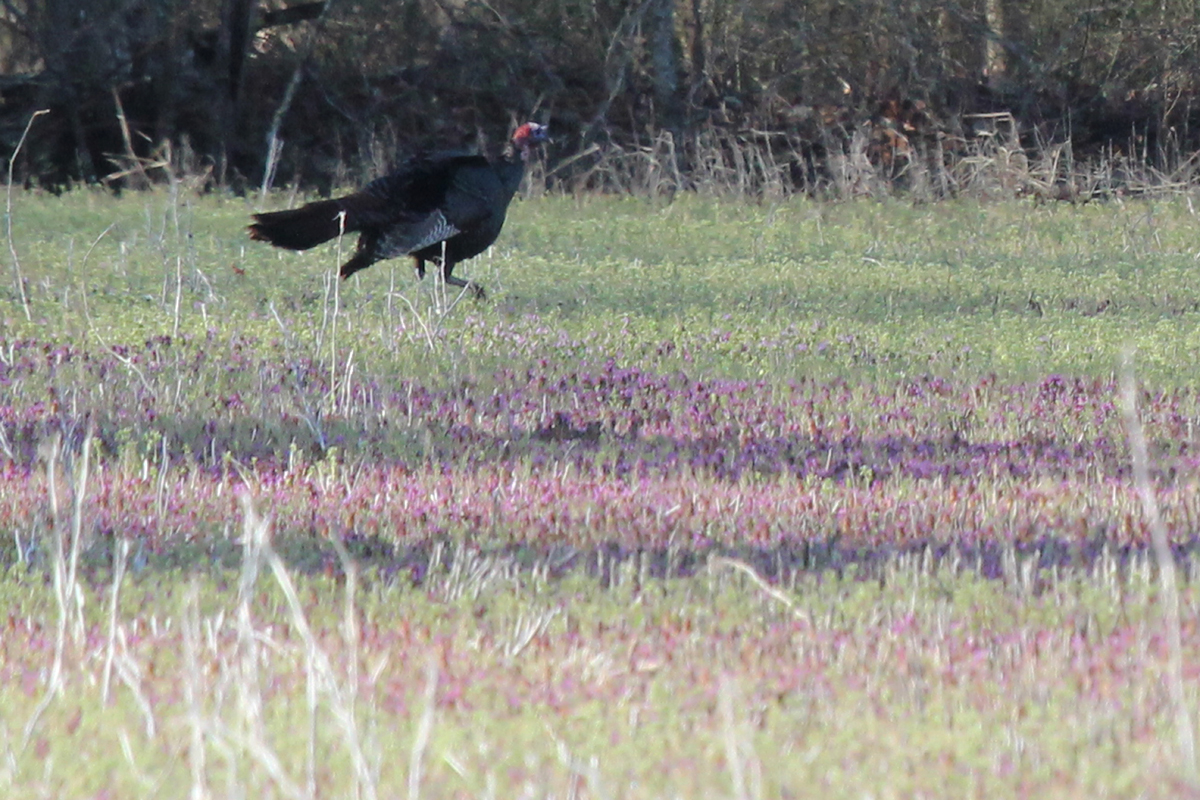
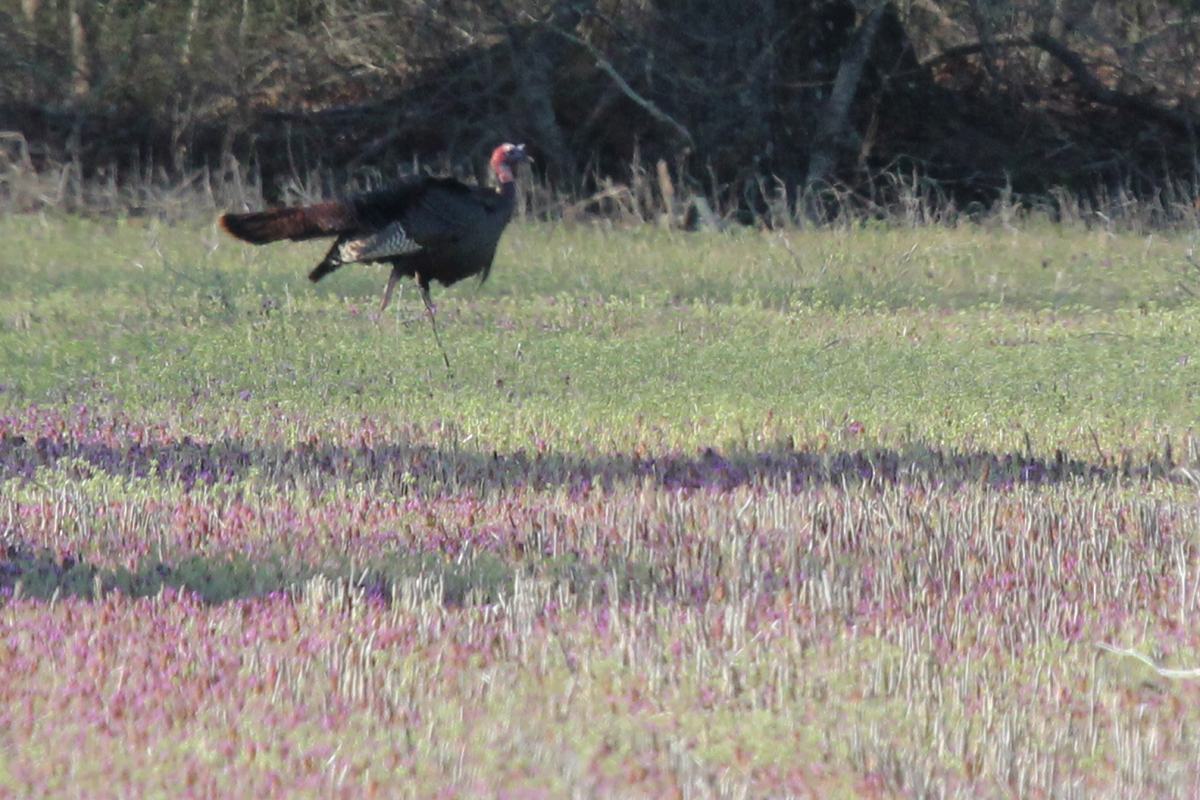
On 9 Apr, a pair of WILD TURKEYS were viewed at Marshview Park (obs. June McDaniels), which is a miraculous find so close to the Oceanfront / Resort Area. At least one was heard on 10 Apr at the same location (obs. Karen & Tom Beatty), but so far no photographs have come in for this one (not necessary, but would be very neat). This area of the city, near the Shadowlawn neighborhood has seen some unusual visitors over the years, with a Black Bear being captured here at one point, so clearly, the wildlife have found ways to reach the wooded areas on the outskirts of the developments that also wrap around Lake Rudee. A male BLUE-WINGED TEAL was viewed at Stumpy Lake NA on 6 Apr (obs. Rob Bielawski), marking the first record of this species at the park in eBird dating all the way back to 15 Apr 1978 (obs. Edward Brinkley). Lastly, perhaps SEASIDE SPARROWS might be starting to move, as one was observed at Rudee Inlet on 9 Apr (obs. Chrissy Barton). Typically once these birds start being detected on the jetty rocks (where I assume this was), that means they are passing through in search of more suitable marsh habitat.
WEATHER:  Continuously winds throughout the period made for difficult birding, and we didn’t see any major migration movements unfortunately. But, average daily high temperatures rose a bit again, increasing 8.9° from 55.5° F to 63.4° (-4.1° from prior 10-year average), with average daily low temperatures also slightly increasing 1.2° from 40.9° to 42.1° F (-5.5° from prior 10-year average). Overall, temperatures ranged from a minimum of 35° F (8 Apr) to a maximum of 79° (4 Apr). A total of 1.00” of rain fell during the period, spread across three days with measurement amounts, with a maximum of 0.69” falling on Saturday, 7 Apr. Matching last period exactly, maximum sustained winds at Oceana this period were 26 mph and gusts reached 37 mph (4 Apr). For the first period in a while, no surge events affected the Sewell’s Point tide gauge. Sunrise/sunsets varied from 6:49 AM/7:26 PM (21 Mar) to 6:37 AM/7:34 PM (10 Apr), which means we gained 20 minutes of daylight during this period with a total of 12 hours, 57 minutes of ‘Length of Day’ to close the period!

For those hoping to view every photograph submitted for Virginia Beach during this period, please see the complete listing for the month of April located on eBird’s Media explorer by clicking here! Please remember, anyone with an eBird account also has the ability to rate these photographs (1-5 stars), and based on the average rating, this is how eBird populates anything media-driven on the website, particularly the Illustrated Checklists! So, if you're one of the many folks who enjoy looking at photographs of birds, take some time to click them all and rate them, it helps make eBird better and better each day!

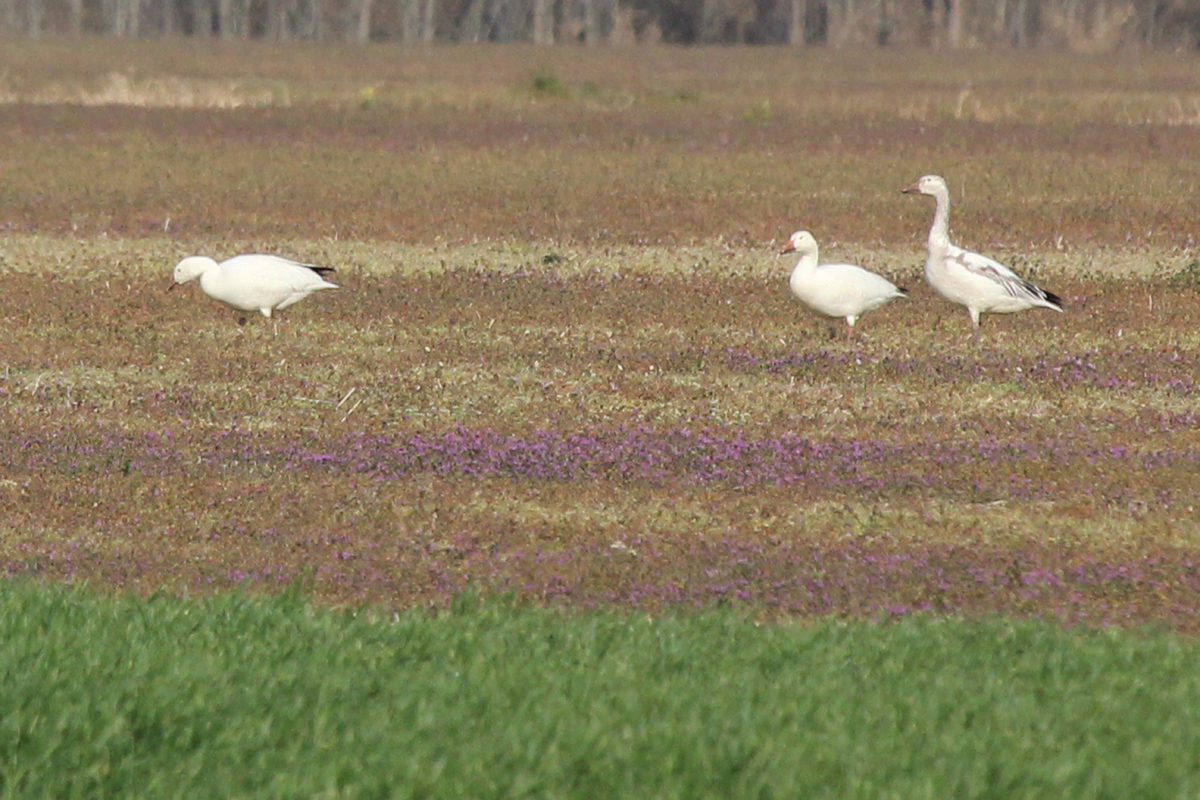
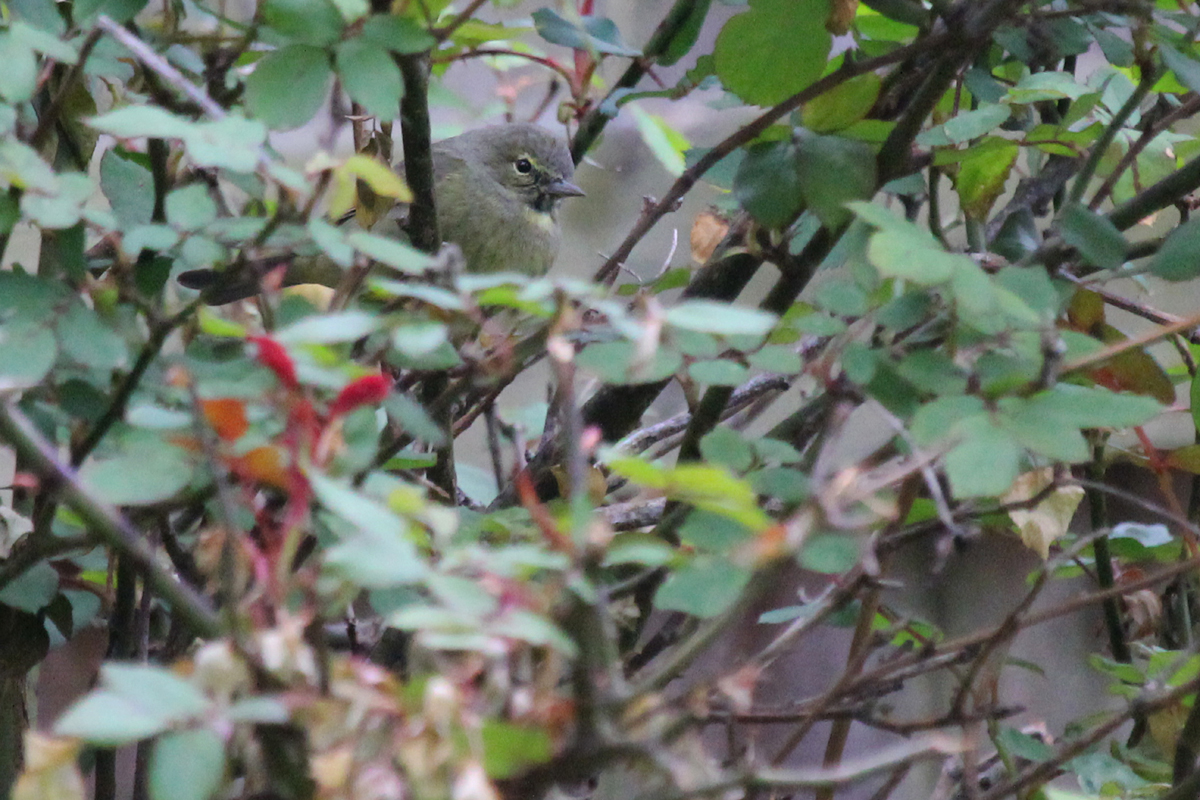
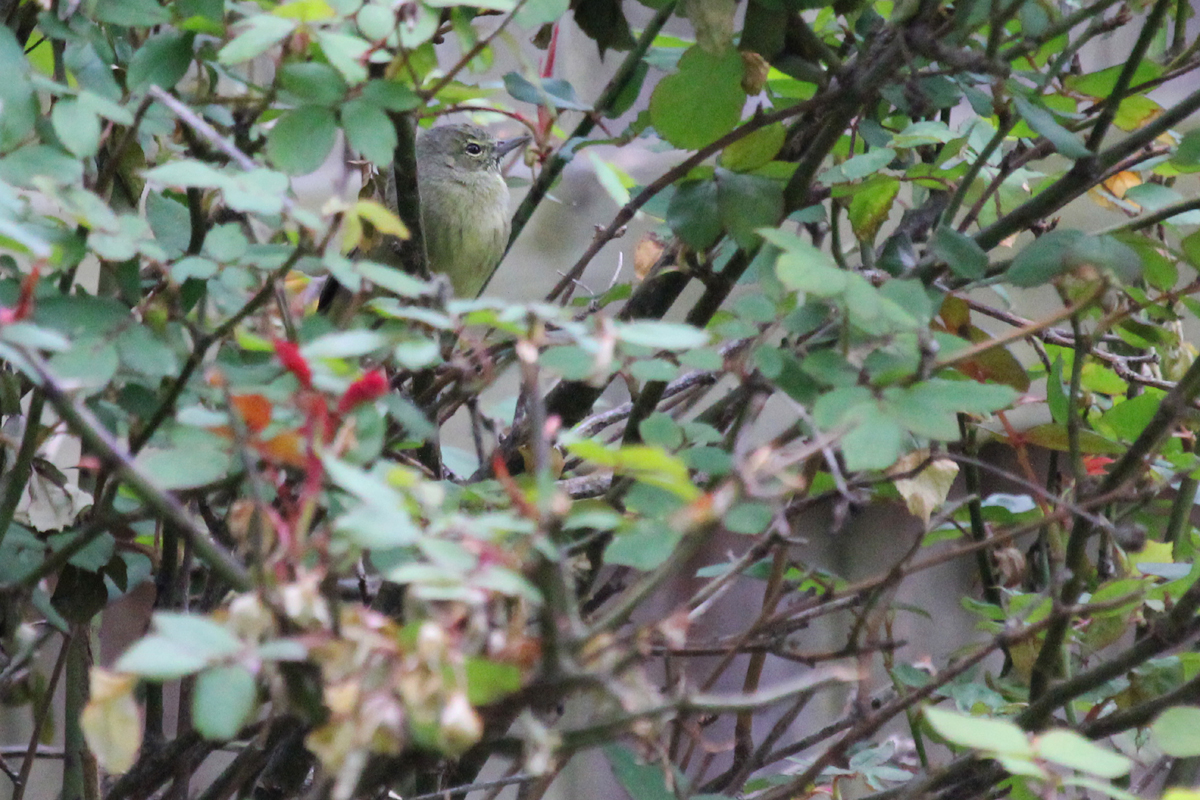
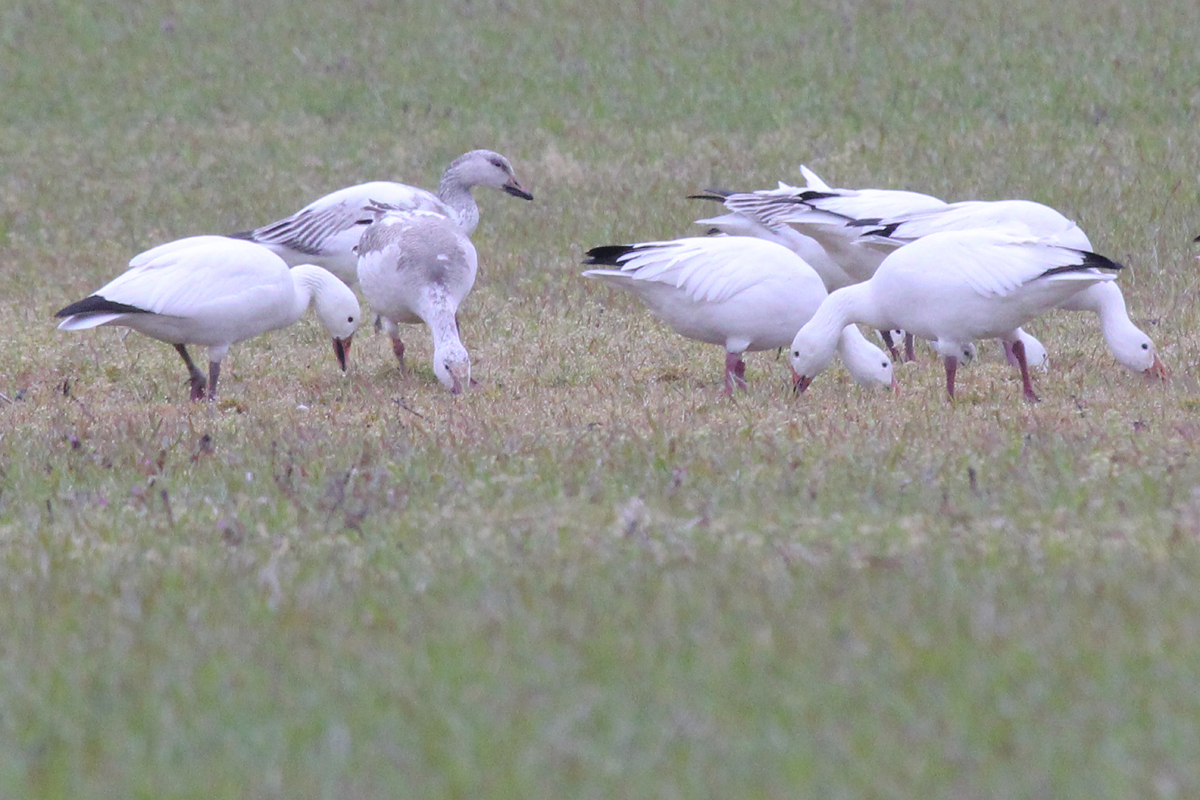
LOOKAHEAD: In early April, we bid farewell to Snow Goose, Tundra Swan, Canvasback, Red-necked Grebe & Orange-crowned Warbler (10 Apr expected departure). Any records for these species moving forward will flag in eBird as ‘rare’, but really they are flagging for being found past their usual date of departure. In mid-April, we have typical departure dates for Northern Pintail, Redhead, Ring-necked Duck, Long-tailed Duck, Great Cormorant, Brown Creeper, Golden-crowned Kinglet & Dark-eyed Junco (15 Apr) and Greater Scaup, Lesser Scaup, American Woodcock & Winter Wren (20 Apr), so make sure to try for your last sightings of the season on these species while you can! If you observe any of these species near or after those dates, please try to document their occurrence to the best of your ability; it helps make eBird data & filters more accurate! For annually expected spring arrivals, as of the reporting period close date, we have not yet logged arrivals for Broad-winged Hawk (30 Mar expected arrival), Common Tern (5 Apr), Hooded Warbler, Semipalmated Plover, Orchard Oriole & Eastern Kingbird (10 Apr), Whimbrel, Bank Swallow, American Redstart, Yellow Warbler, Spotted Sandpiper, Red-eyed Vireo, Wood Thrush & Semipalmated Sandpiper (15 Apr) and Least Tern, Sandwich Tern, Blue Grosbeak & Indigo Bunting (20 Apr). As with the departures mentioned at the start of this section, if you observe one of these arrival species before the date listed, please try to document the sightings as best as you can! As always, make sure to report your finds to eBird so the data can be used to adjust the expected arrival dates and to view the full listing of each species’ average expected spring arrival dates, as well as the average expected spring departure dates! LASTLY, for those devoted birders who do follow this journal, please know that a Facebook Group that complements all these sightings has been created, titled the Virginia Beach Bird Sightings & Discussion group. For anyone with a sincere interest in our city’s rich tapestry of bird species, please feel free to check it out, by requesting to join at the link above (and by answering the three questions required for approval).

Next Entry | Entry Index | Previous Entry

For further information regarding this thrice-monthly, online publication, please visit the Journal Overview Page which provides an in-depth explanation of the format, layout and composition of the journal. As always, thank you for reading, and please leave me a comment below (you may use your Facebook, Gmail or other accounts to easily do so), or just click the Heart icon to the lower right of this post to let me know you stopped in!
Late March 2018 (21st-31st)

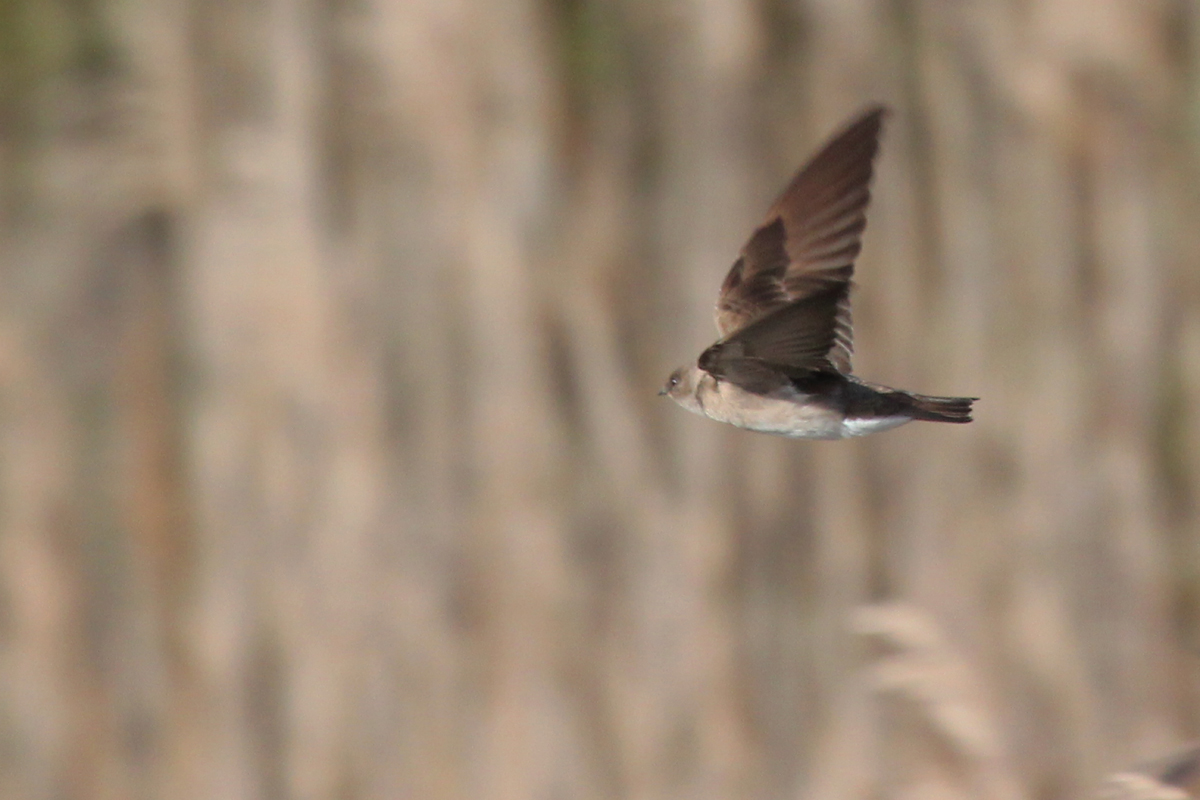
With a wild set of weather featuring 4 coastal nor’easters in early and mid-March this year, we really didn’t know what to expect as far as migrant arrivals were concerned heading into the late portion of the month. After what seemed to many of us like an eternity, the northerly winds finally abated and we received several days and nights of southerly winds that helped push our first major batch of spring birds north into the city! Most notable were the strong southwesterly winds overnight on 28/29 Mar (a Wed/Thurs night), that aided in funneling migrants northward and towards the coast rather than straight through the central part of the state as often happens with more common southerly winds. While top records for the period included new rarity reports for SWALLOW-TAILED KITE, CHUCK-WILL’S-WIDOW, LOUISIANA WATERTHRUSH, RUSTY BLACKBIRD & AMERICAN WHITE PELICAN as well as continuing rarity reports for Lake Joyce’s drake EURASIAN WIGEON, it was the springtime arrivals that likely had more folks excited in Late March! Early first-of-season (FOS) reports occurred for RUBY-THROATED HUMMINGBIRD (10 Apr expected arrival), GREEN HERON, OVENBIRD, BLACK-AND-WHITE WARBLER, PRAIRIE WARBLER & CHIMNEY SWIFT (5 Apr expected) as well as for CASPIAN TERN & BARN SWALLOW (30 Mar expected). Additionally, arrivals within expected dates were reported for TRICOLORED HEREON (30 Mar expected), PECTORAL SANDPIPER (25 Mar expected), also LESSER YELLOWLEGS, NORTHERN ROUGH-WINGED SWALLOW, YELLOW-THROATED WARBLER & GLOSSY IBIS (20 Mar expected) and finally our first PURPLE MARTIN (15 Mar expected). Lastly, we even had our first “late” report, of a single FOX SPARROW (30 Mar expected departure).

The true highlight of the period came right at the close, with a SWALLOW-TAILED KITE being reported at Back Bay NWR in the morning hours of 31 Mar (obs. Eddie DuRant). This record gives us 5 of the last 6 years now with spring records of single individuals effortlessly sailing northward. All records in Virginia Beach in eBird are contained within a time frame of 23 Mar – 14 May, so it would seem that the next 4 or 5 weeks could produce another sighting. On this same date, another individual was observed and photographed out in Roanoke, VA as well, a clear sign that the species as a whole is on the move right now!

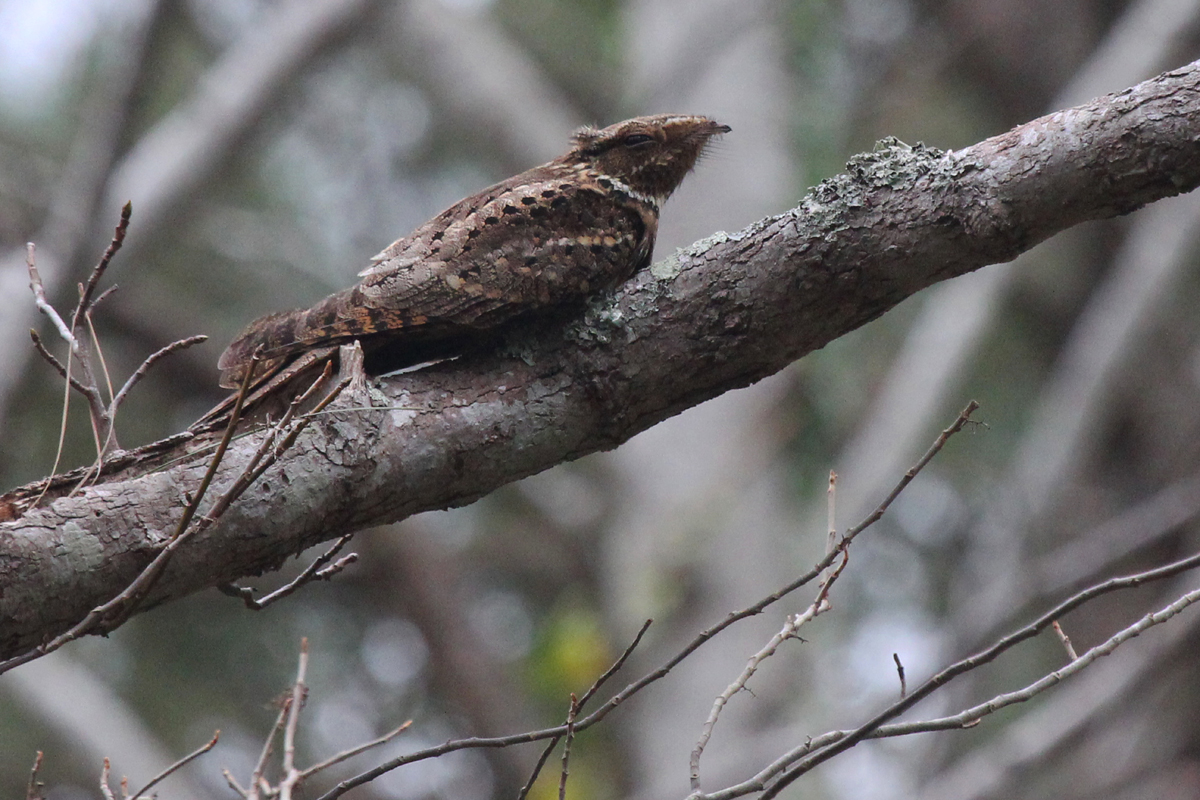
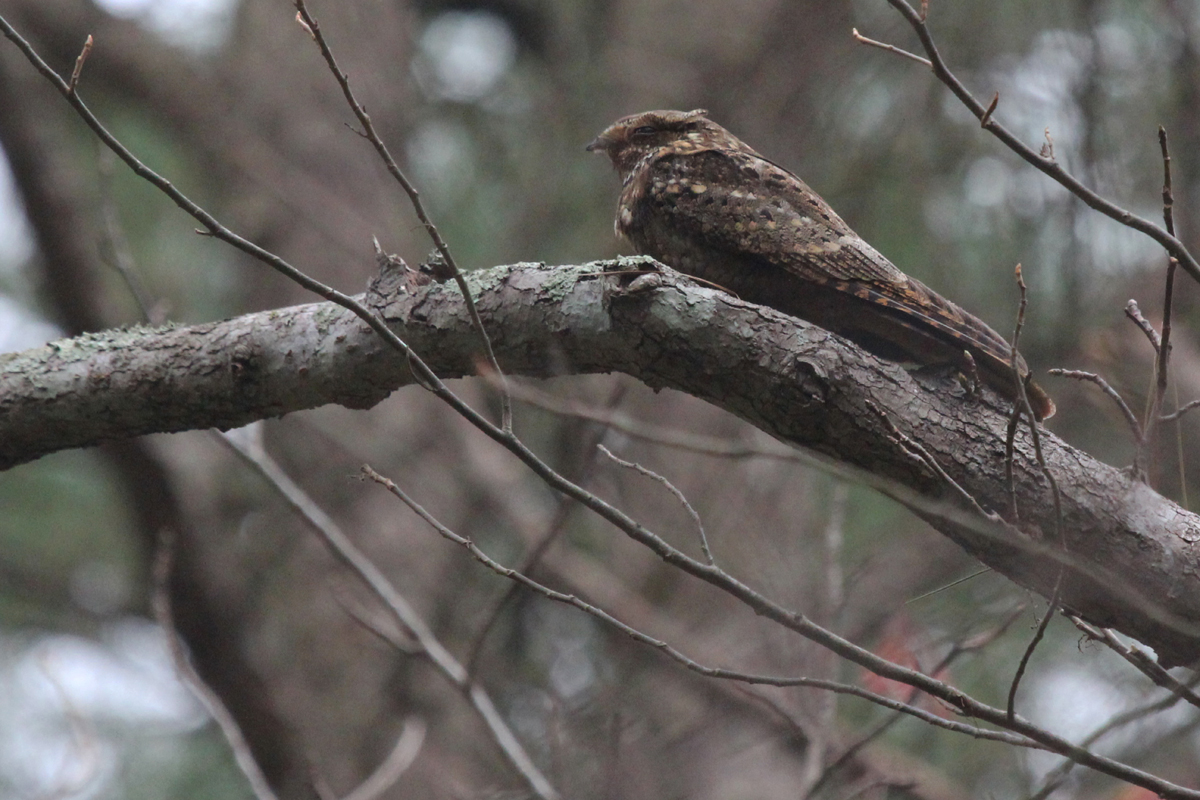
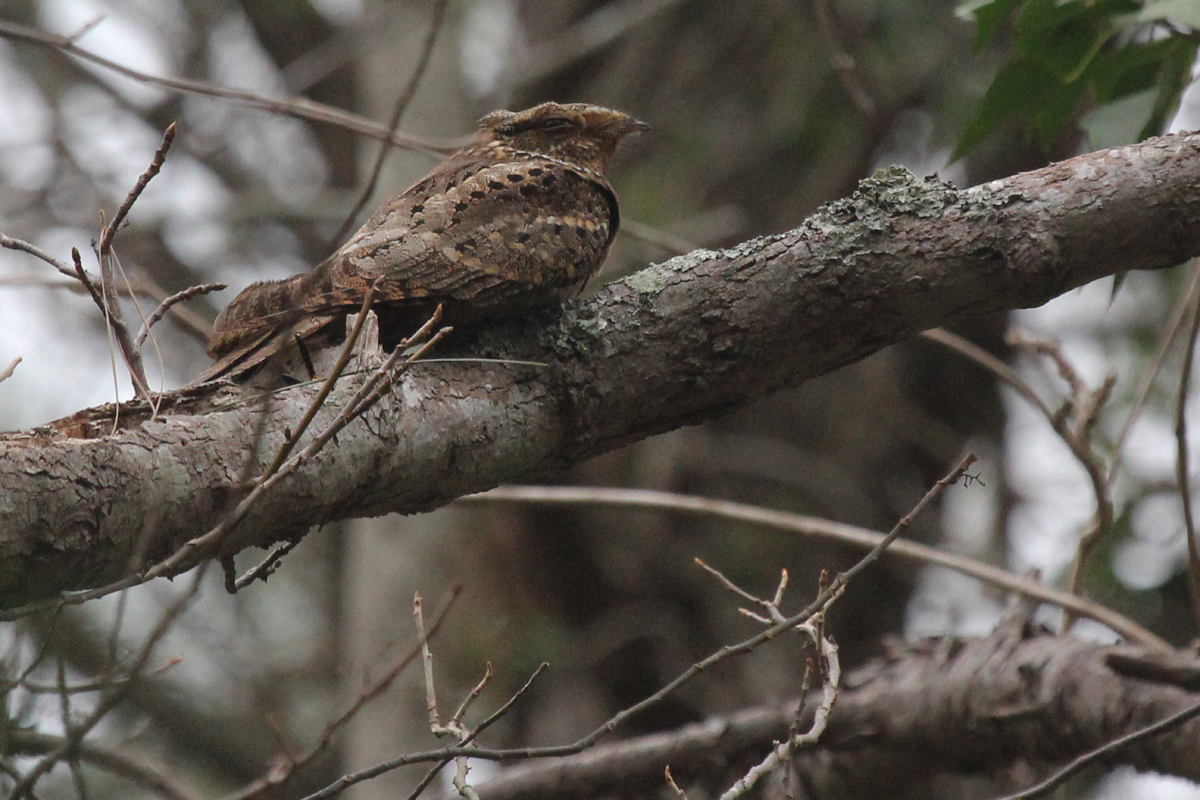
An incredibly early record for CHUCK-WILL’S-WIDOW occurred when one was found at Marshview Park on 30 Mar (ph. Andrew Baldelli, later ph. Rob Bielawski & Mary Catherine Miguez). Initially the bird flushed from the ground, then teed up on a branch overhanging the main asphalt path roughly 25-30 feet in the air. Occurring considerably earlier than the previous early date of 8 Apr (from 2017) for Virginia Beach, notably, this is actually the only record for the species in Virginia as a whole, during the Jan-Mar timeframe! Incredibly, the only Jan-Mar record in eBird north of this one, is a 1968 record from Maryland! The Gold Book does list an extreme early date of 11 Mar, but no further details are noted and this report surely is not entered into eBird at this time. For a species that typically arrives around 15 Apr, it is utterly remarkable, and one wonders whether it arrived along with many other migrants on 29 Mar, or if it had potentially been here for even longer?

With only an average of one or two reports each year in the city, another highlight this reporting period was a LOUISIANA WATERTHRUSH reported on the shores of Lake Smith on 31 Mar (obs. Tracy Tate). The only record of this species in Virginia Beach in 2017 was a single individual at Back Bay NWR on 1 Apr (obs. Karen & Tom Beatty), and in 2016 there was a miraculous fall record at Camp Pendleton SMR on 23 Sep (ph. Mary Catherine Miguez & obs. Karen Beatty). While this is an expected early spring migrant through Virginia, records have been so few and far between here on the coast that I still treat this as a true rarity, as it is certainly a species that birders in the area will chase when one is located!

An unexpected surprise this period occurred when a group a five AMERICAN WHITE PELICANS was observed in transit over Lynnhaven Inlet on 28 Mar (obs. Adam Sell). This species is rare along the coast, though it is reported annually as flocks and individuals travel between locations like Hog Island WMA (VA), Pea Island NWR (NC) and Blackwater NWR (MD). Recently there have been reports of 50+ individuals at Hog Island WMA in Surry County, though it seems like the ones occurring on the coast are probably traveling between Pea Island and either Blackwater or Prime/Bombay Hooks in Delaware. In any event, this was the first report for the species in the city since early February, and represents the first March record for Virginia Beach in eBird dating all the way back to 2007!

Difficult to find in the city limits, a report of 15+ RUSTY BLACKBIRDS at False Cape SP on 31 Mar (obs. Karen Kearney) made for an exciting find! Moving forward, this park will be accessible via the West Dike of Back Bay NWR, so birders might have a shot at reaching this birds, rather than relying on tram trips to and from the isolated state park at our most extreme southeast corner. Another report of a single Rusty Blackbird also came in from Stumpy Lake NA on 29 Mar (obs. George Harris), which marks the second report for the park this year.

As far as continuing rarities go, the drake EURASIAN WIGEON first found at Pleasure House Point NA on 11 Feb (obs. Jason Schatti), and then re-found roughly a mile to the west at Lake Joyce near Shore Drive on 19 Feb (ph. Timothy Barry) continued to be noted through 26 Mar (ph. June McDaniels). It has continued to be most reliable on the tributary finger of Lake Joyce immediately north of Shore Drive.

When “early first-of-season arrivals” are mentioned, this simply refers to species for which the first reported occurrence in the city takes place prior to their “average expected arrival date” (based on the Gold Book coastal plain dates and supplemented with more recent eBird data. First on the list goes to our first RUBY-THROATED HUMMINGBIRD of the season, reported off Burrough’s Road in Thoroughgood on 30 Mar (obs. Tracy Tate). Given the winter we had this year, it seems unlikely that this bird survived here from January to now, but with hummingbirds it is always a possibility. In 2017, one stayed the entirety of winter in Alanton, and these sorts of reports obscure the determination of true spring arrival dates. Currently, 10 Apr is the expected arrival date for migrants, but with the early arrivals across the board for many species, this one could also be a true spring arrival.

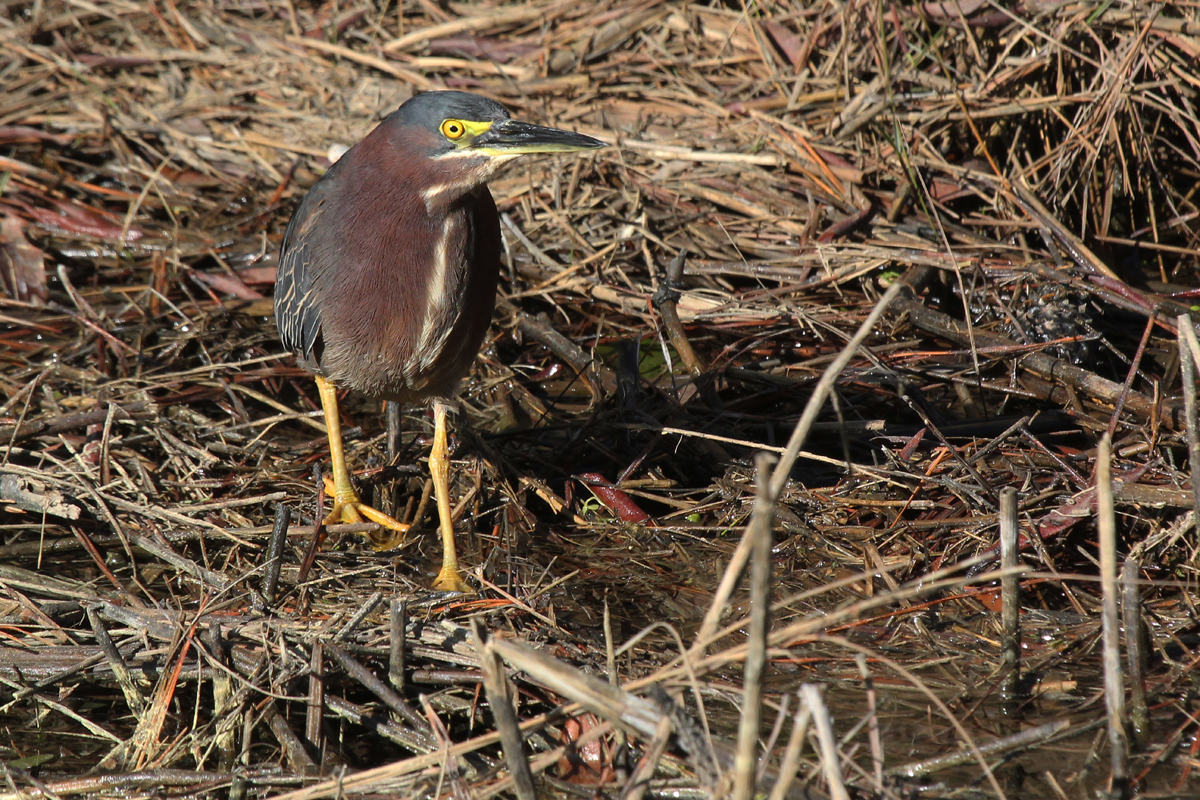
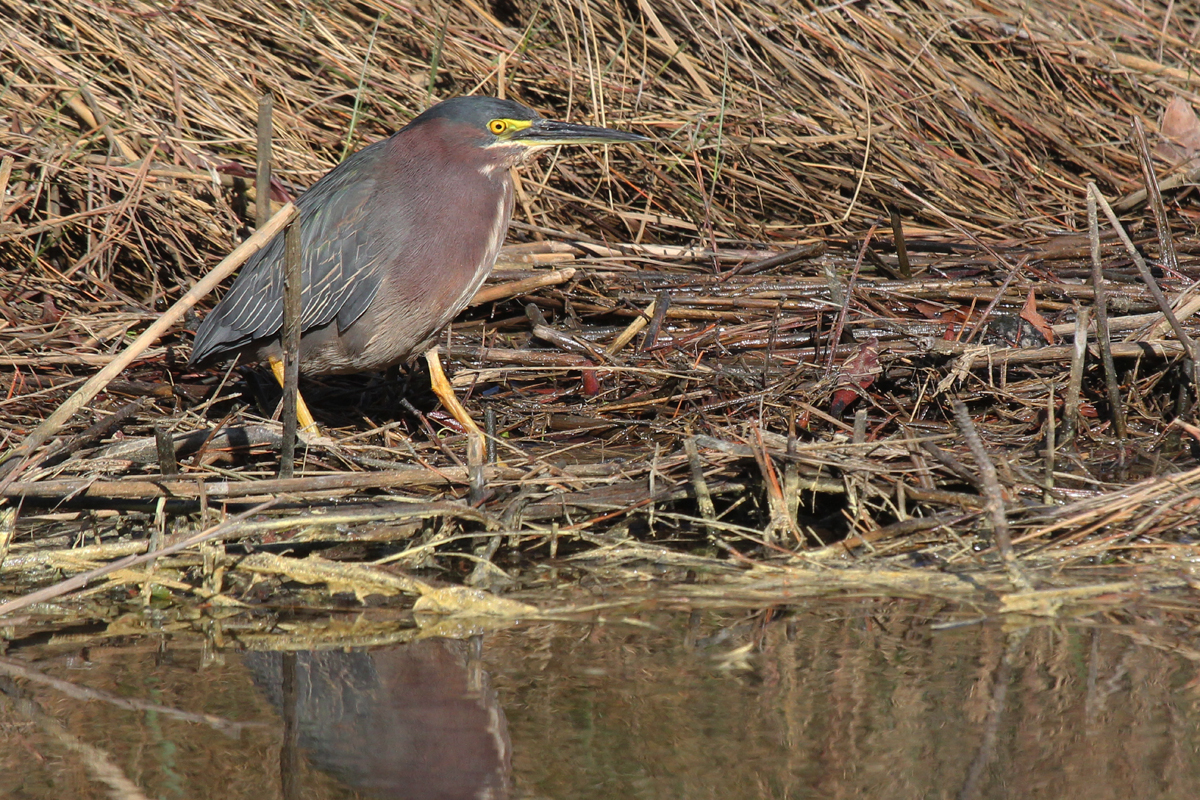
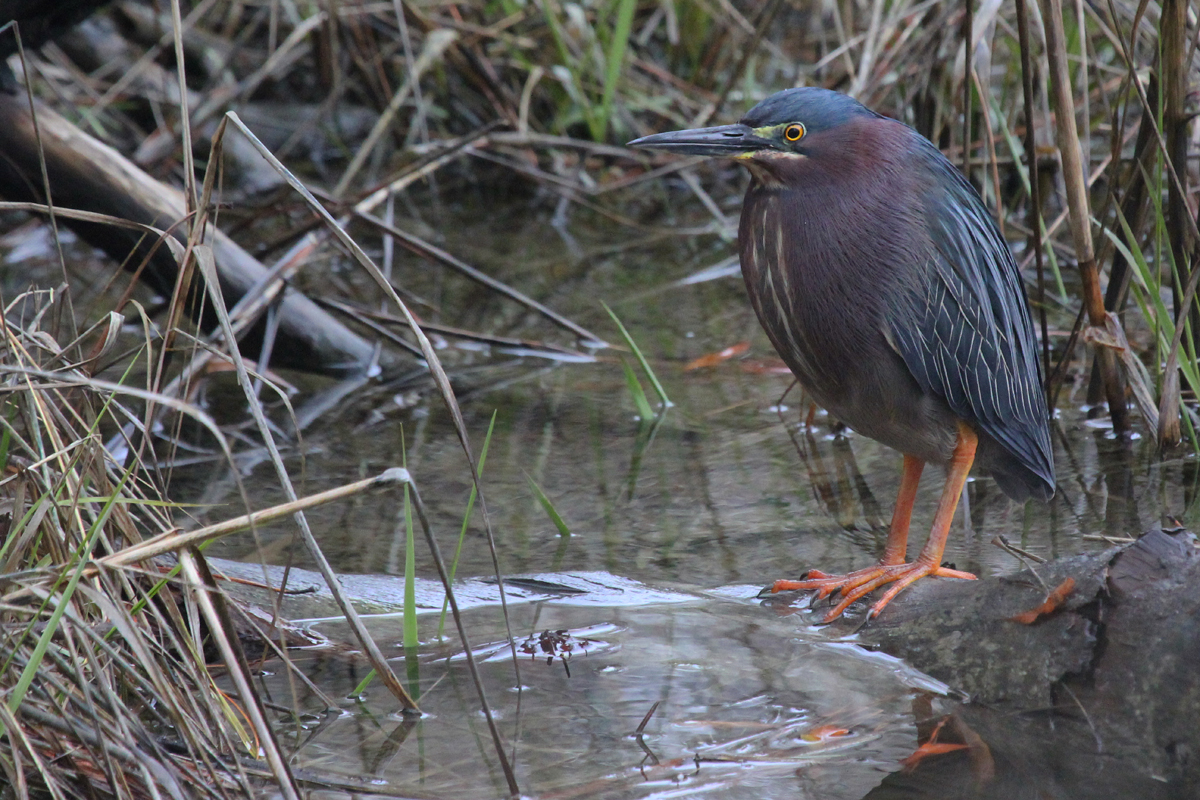
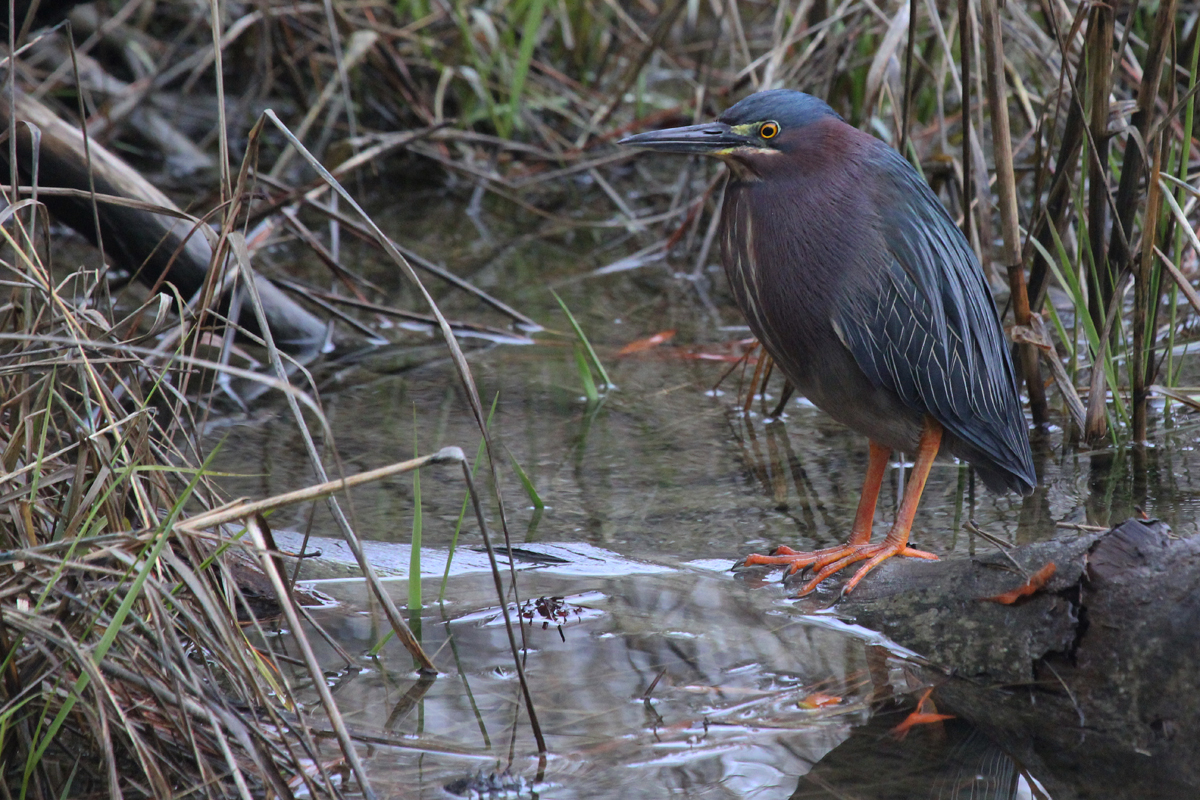
Next on the list goes to our first GREEN HERON of the season, reported at Pleasure House Point NA on 25 Mar (ph. Nancy Barnhart), which is our second earliest arrival for the species in recent years (in 2015 the arrival was also at this location, but on 22 Mar, obs. Melinda Carr). Typical arrival in an average year for this species here has been 5 Apr, though if trends continue and we get March records again next year, this may shift to 30 Mar moving forward. Interestingly, the only other year to showcase a March arrival for this species in eBird goes all the way back to 1978, when our earliest arrival date, 21 Mar occurred, this time at Back Bay NWR (obs. Edward Brinkley). The 2018 individual at Pleasure House Point was also reported on 27 Mar (ph. Steve Myers, ph. Rob Bielawski). Surprisingly, this turned out not to be the only individual reported so early, with perhaps three other individuals all reported from various locations on 29 Mar, including one at Camp Pendleton SMR (obs. Karen & Tom Beatty), one at Back Bay NWR (obs. Mike Collins) and one at Lake Smith (obs. Tracy Tate). Heading into April, it is likely that we’ll see a few more before the eBird filter trip date of the 5th, so just keep adding notes to reports until then, we certainly are aware that the species as a whole has returned early this season.

A second species that typically arrives around 5 Apr to Virginia was also noted in late March, that bird being the fan favorite OVENBIRD! Early in the morning on 29 Mar, a single individual was detected singing along the asphalt path at West Neck Creek NA (ph. Rob Bielawski). In a feat of amazing timing, this matches the exact same date when in 2017, our first of season Ovenbird was photographed at this exact same location (ph. Mary Catherine Miguez)! Both records represent the earliest known arrival date for Virginia Beach, and each is very close to the earliest record for Virginia as a whole, with that date shown in eBird as 27 Mar at Great Dismal Swamp a few years back. To add to this story, later in the morning, two Ovenbirds were noted, with one being viewed and a second individual singing within earshot (ph. Karen & Tom Beatty and Mary Catherine Miguez). Lastly, another was detected at Stumpy Lake NA on 31 Mar (ph. Rob Bielawski), marking the earliest known date of arrival for this particular park.

Yet another expected 5 Apr arrival species, BLACK-AND-WHITE WARBLER, managed to make its way into the city during late March as well! At least two individuals were reported on 29 Mar, one at Camp Pendleton SMR (obs. Karen & Tom Beatty) and one at First Landing SP (obs. Jason Schatti). Incredibly, these represent the earliest arrivals ever noted for Virginia Beach in eBird, and they’re the first March arrivals to boot! As a quick comparison, 2017’s first record came on 5 Apr, 2015’s was 1 Apr, and 2014’s was 3 Apr; other recent years have all occurred after the expected 5 Apr date. Other early reports for the period included one at Marshview Park on 30 Mar (obs. Tommy Maloney & Jason Schatti), one at First Landing SP on 31 Mar (ph. June McDaniels) and two at Marshview Park on 31 Mar (ph. Nancy Barnhart / Shirley Devan / Jan Lockwood / Joyce Lowry).

A first ever March arrival for PRAIRIE WARBLER occurred on 31 Mar in the Lago Mar neighborhood of central Virginia Beach (ph./a.r. Mary Catherine Miguez). This record also marked the first for the state of Virginia in 2018. In year’s past, occasionally this species has been known to attempt wintering, with a few January reports, however, our last report before this came on 24 Nov at First Landing SP (obs. Brandon Holland). With an average arrival date of 5 Apr, it is pretty remarkable to get this bird for the reporting period, and as mentioned, it is the first time as far as eBird records go.

Comically referred to as “flying cigars”, the tiny CHIMNEY SWIFT provided the last of the expected 5 Apr arrival species, with the first report occurring 30 Mar at Stumpy Lake NA (obs. Debbie Schroeder). This marks a third year in a row where the species was noted during late March, and as a result, the 5 Apr expected arrival date will likely slide back to 30 Mar for next year’s migration.

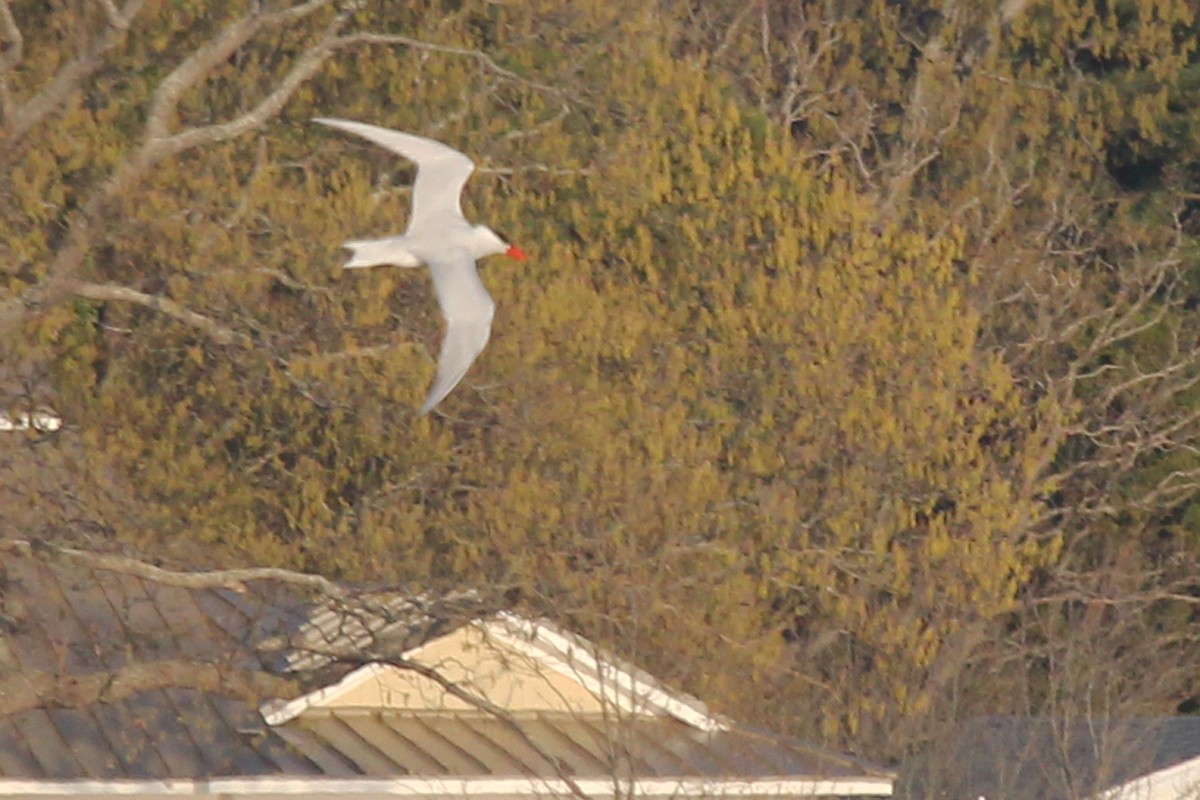
More expected during late March, several species did beat their typical 30 Mar arrival date, the first one being CASPIAN TERN! During a seawatch at Rudee Inlet in the early morning hours of 29 Mar, 4 different individuals were viewed passing north (obs. Andrew Baldelli). Additionally, 9 first-of-season BARN SWALLOWS were observed during that same outing, while another individual was viewed around the same time at Camp Pendleton SMR (obs. Karen & Tom Beatty), and another morning bird was viewed at Back Bay NWR (obs. Mike Collins). Given that both of these species are expected around 30 Mar, seeing them a day on the early side shows that our arrival dates can be pretty accurate given enough data year-to-year! At least one other Barn Swallow was noted later in the day in Sandbridge as well (ph. Mary Catherine Miguez, later obs. Karen & Tom Beatty). Only one other Ovenbird report appeared before the end of the reporting period, with a single individual being found 30 Mar at Marshview Park (obs. Andrew Baldelli).

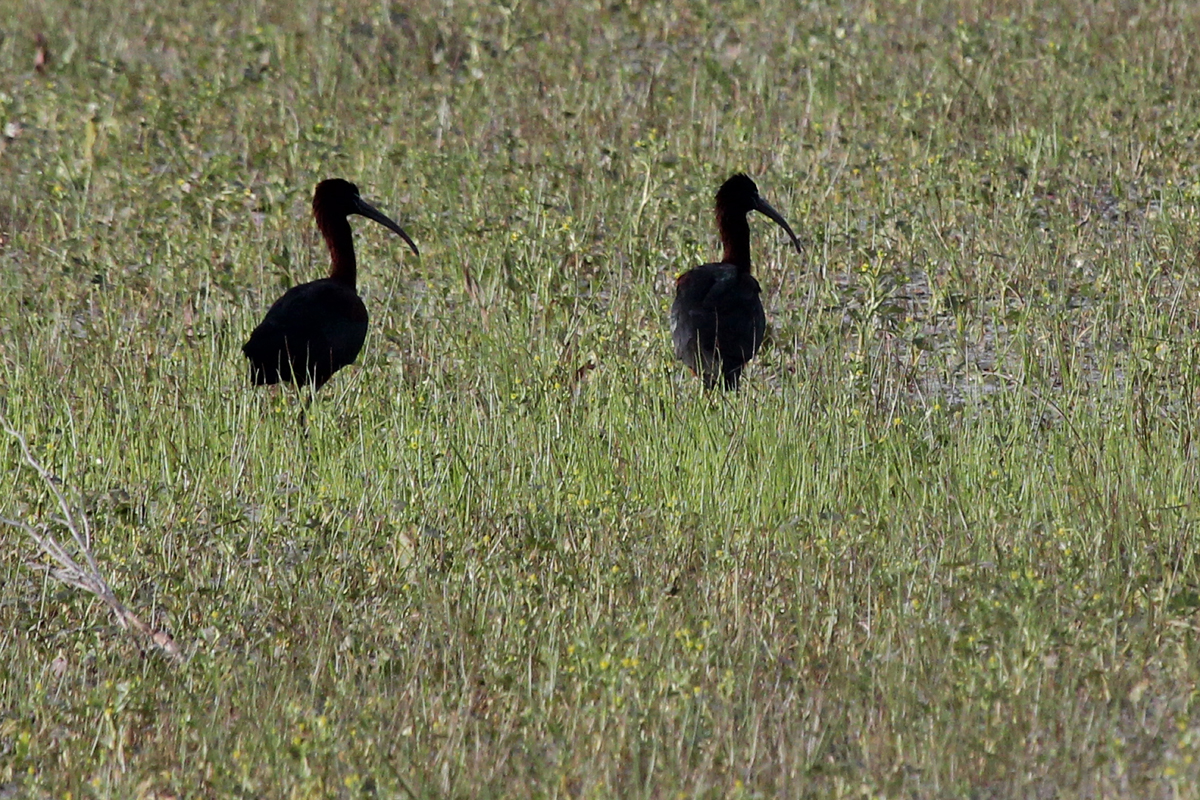
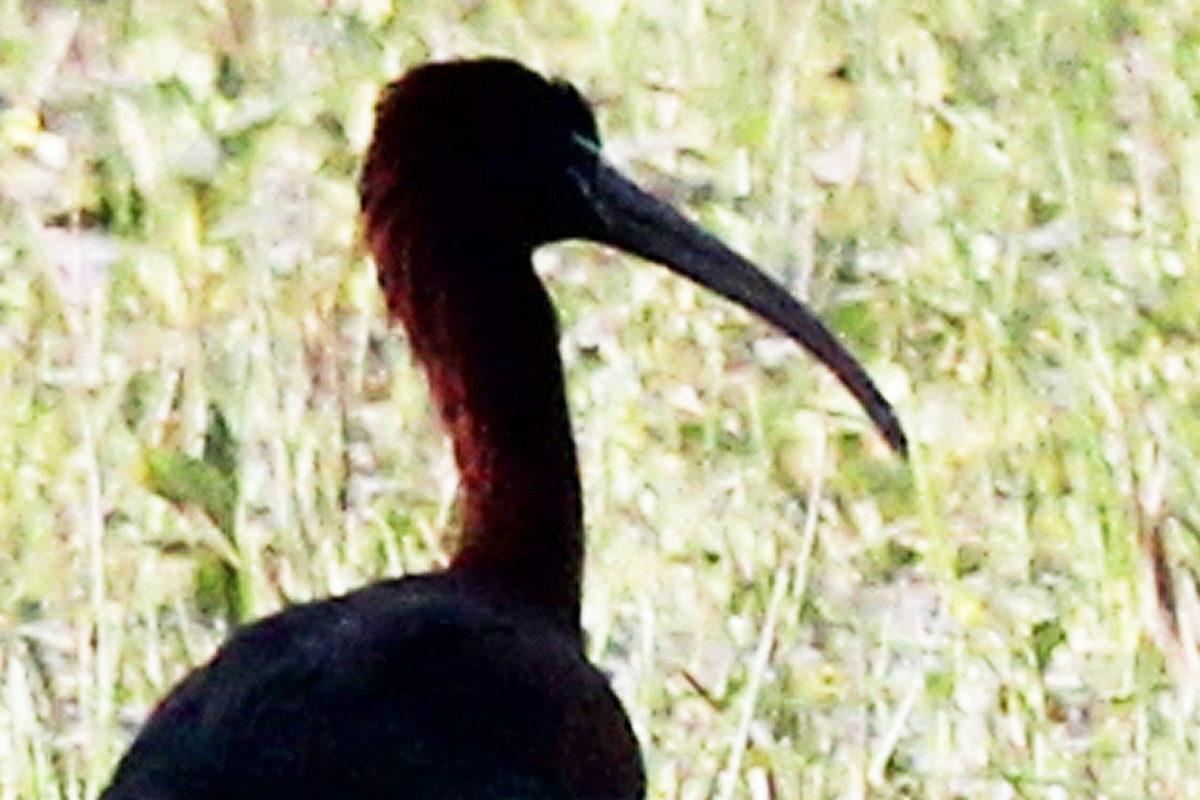
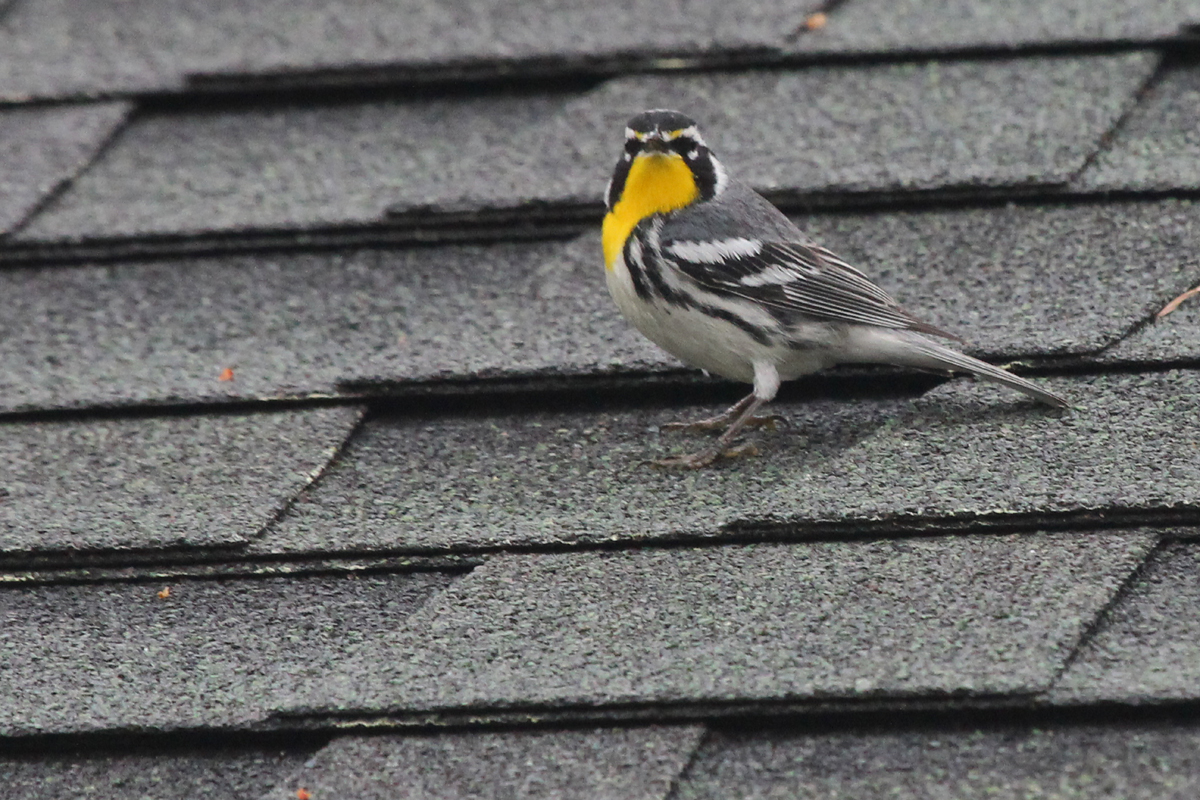
Moving on to first-of-season arrivals that appeared in the city on or after their expected date, we had a first TRICOLORED HERON reported on 30 Mar (right on the expected date) at Back Bay NWR (obs. Robert Wood). Additionally, a PECTORAL SANDPIPER was reported on 25 Mar (right on the expected date) at Princess Anne WMA Whitehurst Track (ph. Andrew Baldelli & Rob Bielawski). Additionally, with expected dates of 20 Mar, we had the following remaining arrivals: LESSER YELLOWLEGS on 24 Mar at Back Bay NWR (obs. Pamela Monahan), NORTHERN ROUGH-WINGED SWALLOW on 25 Mar at Princess Anne WMA Whitehurst Track (ph. Andrew Baldelli & Rob Bielawski), YELLOW-THROATED WARBLER on 28 Mar at Red Wing Park (obs. Mary Catherine Miguez) and GLOSSY IBIS on 29 Mar at Rudee Inlet (obs. Andrew Baldelli). Last of the on-time arrivals, we finally had our first record for PURPLE MARTIN on 25 Mar at Mt. Trashmore Park (obs. Ken Oeser). This species is typically observed around 15 Mar, so it appeared to show up a bit behind schedule this year, most likely due to the pair of nor’easter that were impacting the region around that expected date!

Our first late lingerer was that of a single FOX SPARROW reported at First Landing SP on 31 Mar (ph. June McDaniels). This species has a typical departure date of 30 Mar currently set, so while this was only one day late, it may very well represent the final record for the season of this species in Virginia Beach! With each reporting period moving forward through May, we’ll see more and more departures, which opens the potential for more late, lingers.

Lastly, what is assumed to be the same early arriving WHITE-EYED VIREO first photographed at Camp Pendleton SMR on 18 Mar (ph. Karen & Tom Beatty), was observed again on 28 Mar (ph. Mary Catherine Miguez).  Camp Pendleton SMR (a military-access-only restricted site) also afforded Virginia Beach with an incredible high count of 18 PIPING PLOVERS! Initially, a flock of 8 birds was observed (ph. Karen & Tom Beatty), and then in a miraculous feat of photography, a group of 18 was captured in the same view (ph. Mary Catherine Miguez). The only other record in eBird currently for the city with more than an 18-count of this species is a record from 19 Apr 1930! That should put into perspective just how incredible this occurrence is. Unfortunately, all these birds are passing through, some of which may nest on the Eastern Shore barrier islands, but the species does not spend the summer here on our beaches. A couple final reports that may be of interest are the first SORA for 2018 at Back Bay NWR on 27 Mar (ph. Mary Catherine Miguez), and the first multi-count of WILLET for Virginia Beach as a whole in 2018 on 22 Mar at Camp Pendleton SMR (obs. Karen & Tom Beatty).

WEATHER:  We finally had our first batch of spring weather towards the later half of the period, but overall temperatures remain below average. Average daily high temperatures rose a bit, increasing 5.2° from 50.3° F to 55.5° (-6.0° from prior 10-year average), with average daily low temperatures also increasing 7.3° from 33.6° to 40.9° F (-2.7° from prior 10-year average). Overall, temperatures ranged from a minimum of 35° F (on 21 & 22 Mar) to a maximum of 82° (on 29 Mar). A total of 0.17” of rain fell during the period, spread across two days with measurement amounts, with a maximum of 0.15” falling on Wednesday, 21 Mar. Maximum sustained winds at Oceana this period were 26 mph and gusts reached 37 mph (30 Mar). A maximum tide level at Sewell’s Point of 5.0 feet above mean-lower-low-water (MLLW) was achieved on 21 Mar at 00:00 AM during Winter Storm Toby, and exceeded the previous 2018 high mark of 4.736 feet on 7 Mar at 1:06 AM. Sunrise/sunsets varied from 7:06 AM/7:16 PM (21 Mar) to 6:51 AM/7:25 PM (31 Mar), which means we gained 24 minutes of daylight during this period with a total of 12 hours, 34 minutes of ‘Length of Day’ to close the period!

For those hoping to view every photograph submitted for Virginia Beach during this period, please see the complete listing for the month of March located on eBird’s Media explorer by clicking here! Please remember, anyone with an eBird account also has the ability to rate these photographs (1-5 stars), and based on the average rating, this is how eBird populates anything media-driven on the website, particularly the Illustrated Checklists! So, if you're one of the many folks who enjoy looking at photographs of birds, take some time to click them all and rate them, it helps make eBird better and better each day!

LOOKAHEAD: In late March, we bid farewell to Razorbill (25 Mar expected departure) and Common Eider, Common Goldeneye & Fox Sparrow (30 Mar). Any records for these species moving forward will flag in eBird as ‘rare’, but really they are flagging for being found past their usual date of departure. In early April, we have typical departure dates for Snow Goose, Tundra Swan, Canvasback, Red-necked Grebe & Orange-crowned Warbler (10 Apr), so make sure to try for your last sightings of the season on these species while you can! If you observe any of these species near or after those dates, please try to document their occurrence to the best of your ability; it helps make eBird data & filters more accurate! For annually expected spring arrivals, as of the reporting period close date, we have not yet logged arrivals for Little Blue Heron (25 Mar expected arrival date), Broad-winged Hawk, Short-billed Dowitcher & Cattle Egret (30 Mar), Stilt Sandpiper, Least Sandpiper, Northern Parula & Common Tern (5 Apr) and Solitary Sandpiper, Hooded Warbler, Semipalmated Plover, Orchard Oriole, Prothonotary Warbler, Great Crested Flycatcher & Eastern Kingbird (10 Apr). As with the departures mentioned at the start of this section, if you observe one of these arrival species before the date listed, please try to document the sightings as best as you can! As always, make sure to report your finds to eBird so the data can be used to adjust the expected arrival dates and to view the full listing of each species’ average expected spring arrival dates, as well as the average expected spring departure dates! LASTLY, for those devoted birders who do follow this journal, please know that a Facebook Group that complements all these sightings has been created, titled the Virginia Beach Bird Sightings & Discussion group. For anyone with a sincere interest in our city’s rich tapestry of bird species, please feel free to check it out, by requesting to join at the link above.

Next Entry | Entry Index | Previous Entry

For further information regarding this thrice-monthly, online publication, please visit the Journal Overview Page which provides an in-depth explanation of the format, layout and composition of the journal. As always, thank you for reading, and please leave me a comment below (you may use your Facebook, Gmail or other accounts to easily do so), or just click the Heart icon to the lower right of this post to let me know you stopped in!
Mid-March 2018 (11th-20th)

After enduring the effects of back-to-back nor’easters in early March, we were frustratingly subjected to yet another pair of coastal storms this reporting period. The first of the storms (dubbed Winter Storm Skylar by The Weather Channel) was responsible for up to a couple of inches of snow falling throughout the city on the evening of Monday, 12 Mar, just when we all thought winter might be reaching an end! At the closing of the period, strong onshore winds and intense rainfall hit the city due to the offshore passage of a staggering 4th nor’easter of the month (dubbed Toby this time). As always, the weather didn’t stop birders from giving it their best efforts. Top records for the period included a new rarity report for a Back Bay AMERICAN AVOCET, as well as continuing rarity reports for Lake Joyce’s drake EURASIAN WIGEON & both the immature and adult ICELAND GULLS at the Oceanfront. A very early first-of-season (FOS) arrival was logged for WHITE-EYED VIREO, and an on-time arrival was reported for YELLOW-CROWNED NIGHT-HERON!

Our first AMERICAN AVOCET of 2018 was the clear highlight during the reporting period, having been found during the scheduled private impoundment survey at Back Bay NWR on 15 Mar (obs. David Hughes / Loretta Silvia / Darol & Tony Wood). This is the American Avocet eBirded in the city limits since one was found (also at Back Bay NWR) on 23 Sep 2017 (obs. Andrew Baldelli & Tracy Tate). Even more interesting though, this is the first spring record for the species in the city dating all the way back to 2014, when one was reported on 25 Apr (obs. Richard Taylor). In Virginia, this species is noted almost exclusively at Craney Island in Portsmouth, but transients are noted annual in the coastal counties. One was observed recently in Hampton as well, so the species is clearly on the move right now, and needs to be watched for in any appropriate habitat (aside from Back Bay, Princess Anne WMA’s Whitehurst & Beasley Tracts come to mind as potential locations).

As far as continuing rarities go, the drake EURASIAN WIGEON first found at Pleasure House Point NA on 11 Feb (obs. Jason Schatti), and then re-found roughly a mile to the west at Lake Joyce near Shore Drive on 19 Feb (ph. Timothy Barry) continued to be noted through 18 Mar (obs. Kathy Spencer), and last photographed 16 Mar (ph. June McDaniels). It has continued to be most reliable on the tributary finger of Lake Joyce immediately north of Shore Drive, to the east of Dubay Properties / Law Offices, with all records during this period occurring at this location, as far as I know.

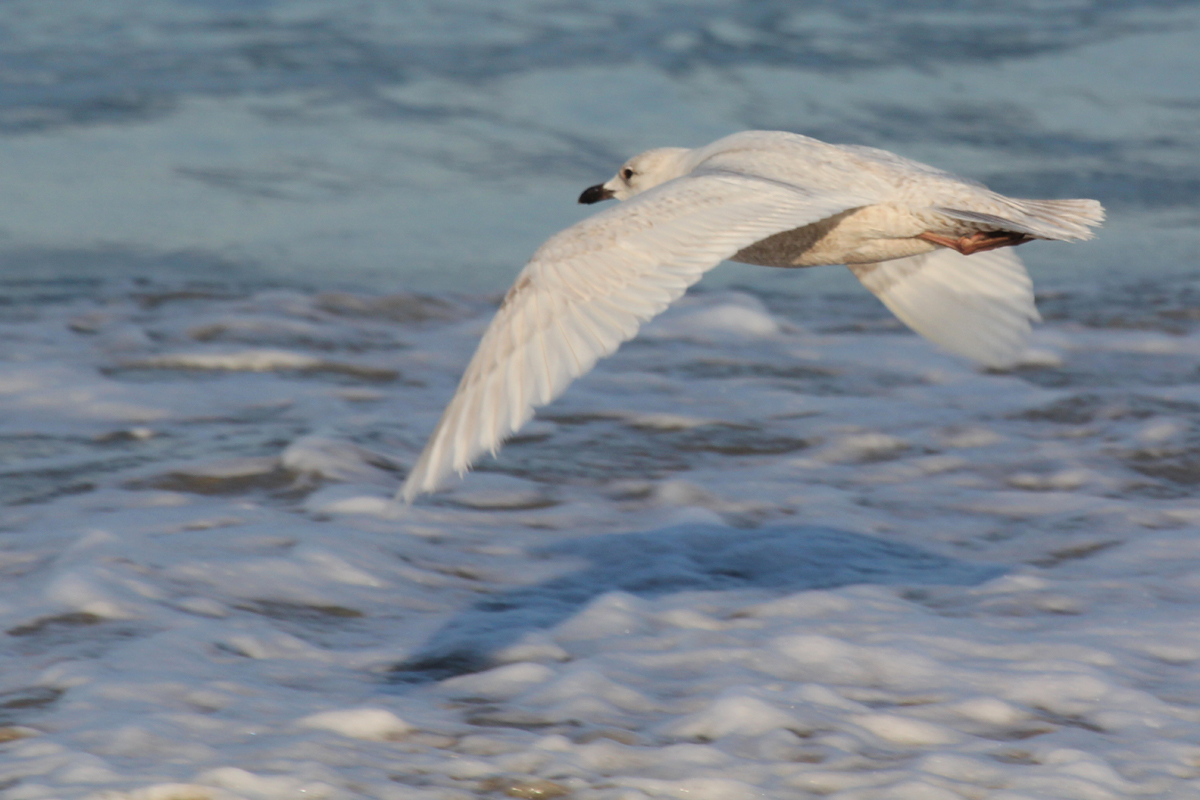
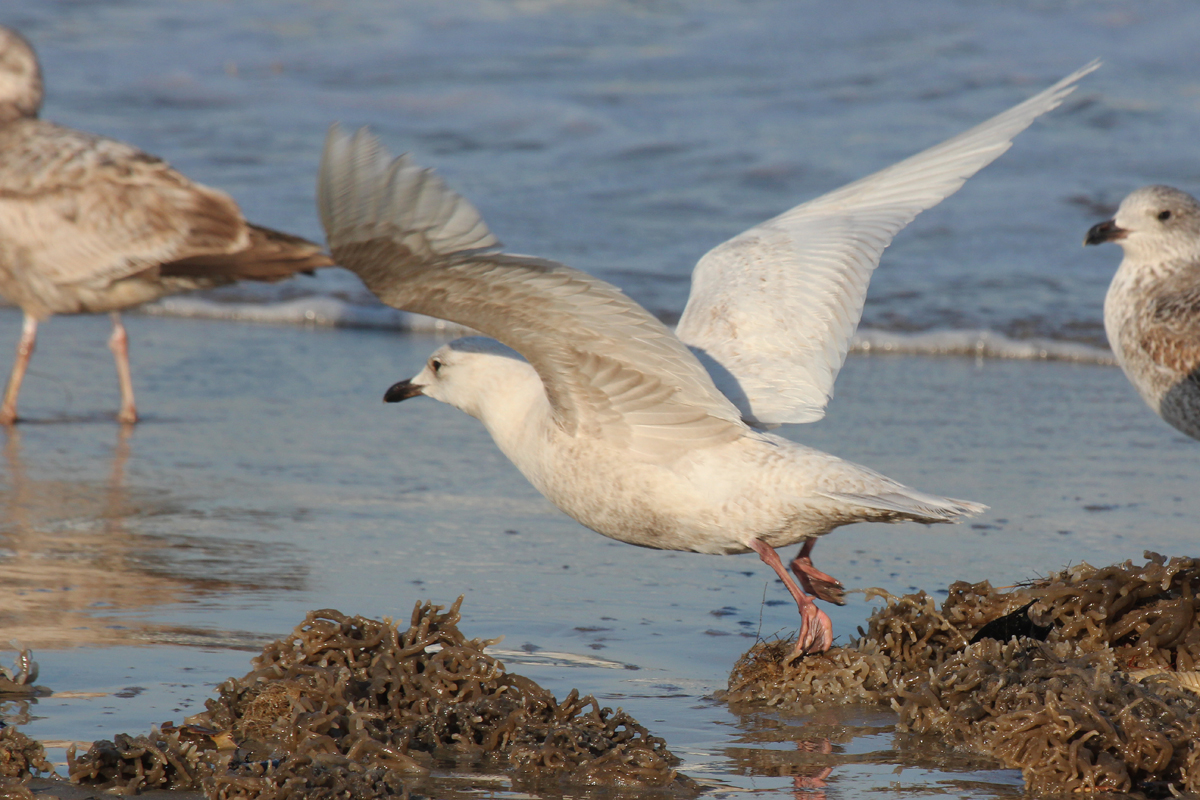
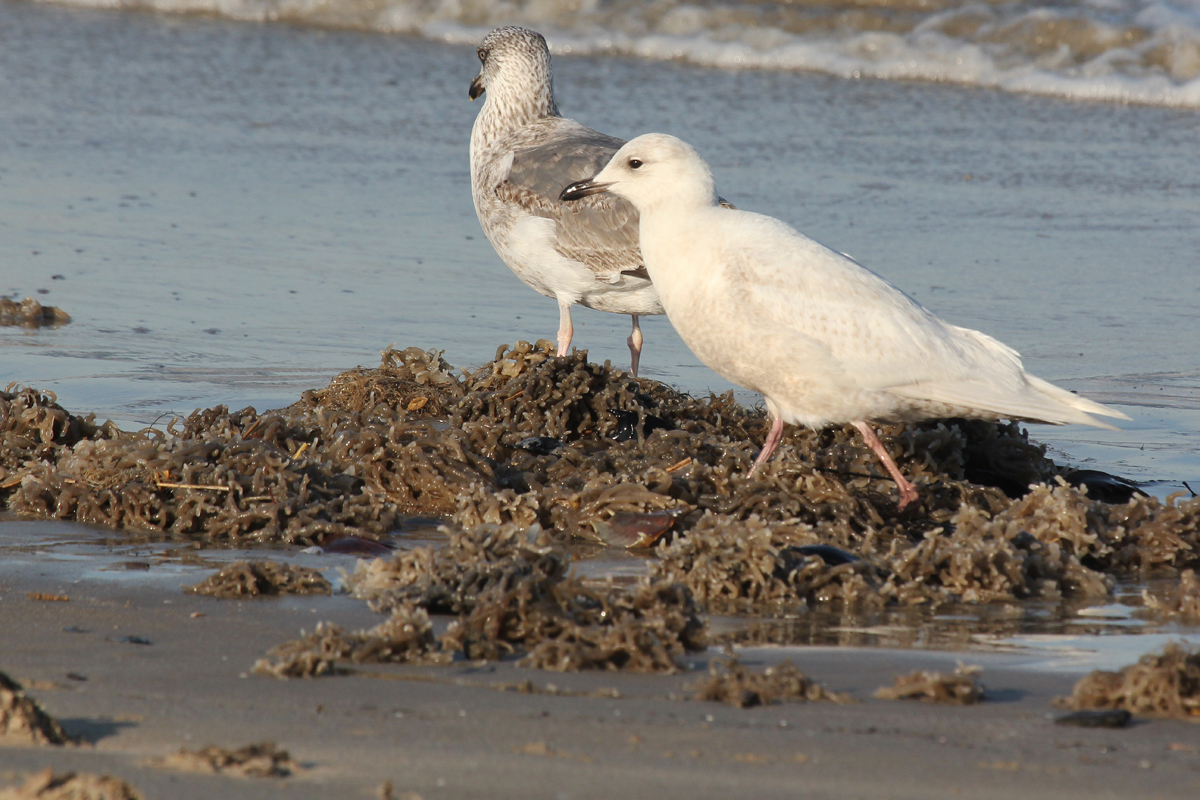
Each of the previously found ICELAND GULLS were observed again during mid-March! The immature (first cycle) found at 76th Street Beach (obs. Jason Schatti, later ph. Jason Schatti on 10 Mar) was photographed at 82nd Street Beach on 15 Mar (ph Rob Bielawski), and the adult Kumlien’s-race individual found 9 Mar at 57th Street Beach (obs. Andrew Baldelli, later ph. Karen & Tom Beatty) was observed again on 11 Mar (last ph. Steve Myers). As mentioned last period, the adult is likely the same bird that has been present along the north end of the Oceanfront since 20 Dec (ph. Andrew Baldelli), and the younger bird could be a new record, or one that has been reported anywhere from Rudee Inlet to Lynnhaven Beach to the Chesapeake Bay Bridge-Tunnel Islands throughout the winter; unfortunately no way to tell for sure. 57th Street is an ideal spot to continually check since there is available (free) public parking on the street. On 15 Mar, the gull flock was dispersed anywhere from about 80th Street on up to the southern limit of Fort Story. These birds are likely still present, or will be once the most recent nor’easter lets up, so if you haven’t given them a shot yet, go try to see them before they depart; they are truly a lovely gull species.

Extremely early for the species to arrive in Virginia Beach, a WHITE-EYED VIREO photographed at Camp Pendleton SMR (Restricted Access) on 18 Mar (ph. Karen & Tom Beatty) matched the earliest eBird record for Virginia Beach, with a 2016 arrival on the same date at Back Bay NWR (obs. Karen & Tom Beatty). Typical arrival for this species here is currently set at 5 Apr, so it will be interesting to see just how long we wait for a second record to pop up somewhere away from the first (so we know it isn’t likely the same individual). With this species, it is also possible that the individual managed to winter in the city, or very close by. In most winters, this species is known to occur at Great Dismal Swamp not too far west of here, so it is plausible. However, with the brutal conditions birds were faced with on the coast since December, it seems more likely that this is just an early arriving bird (which hopefully survives the current nor’easter).

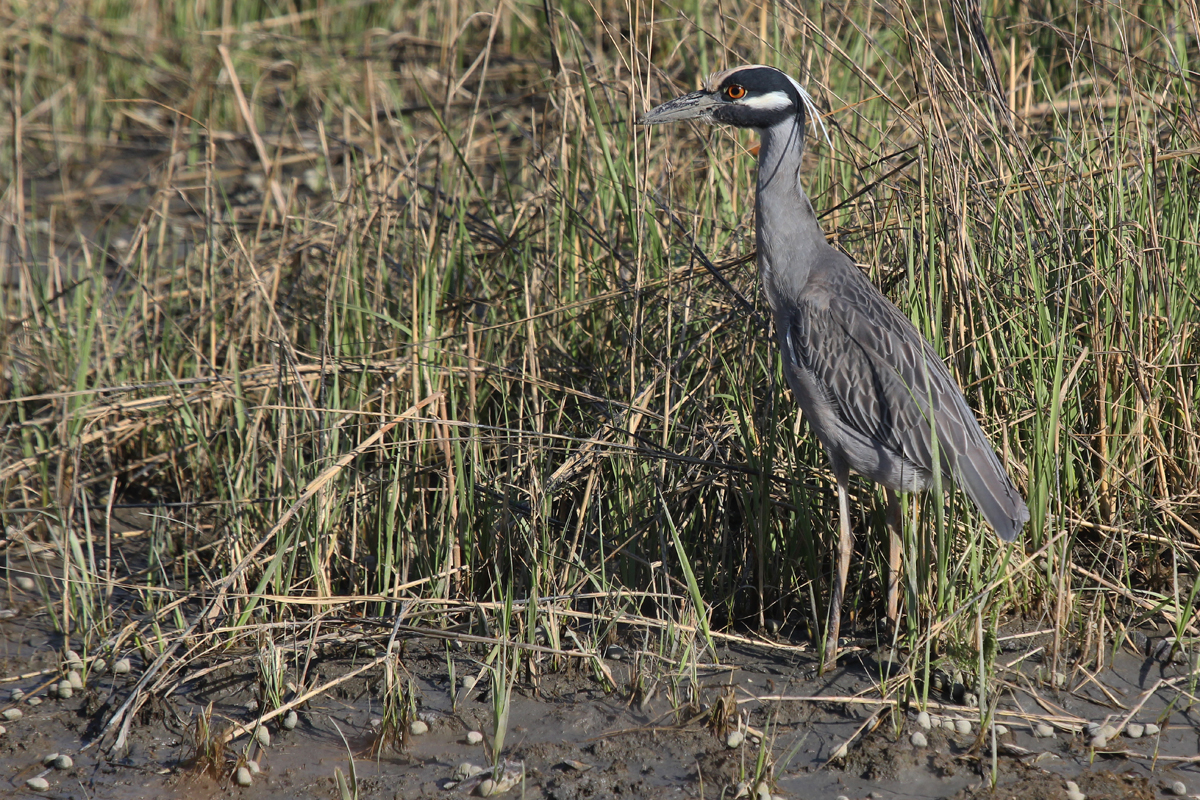
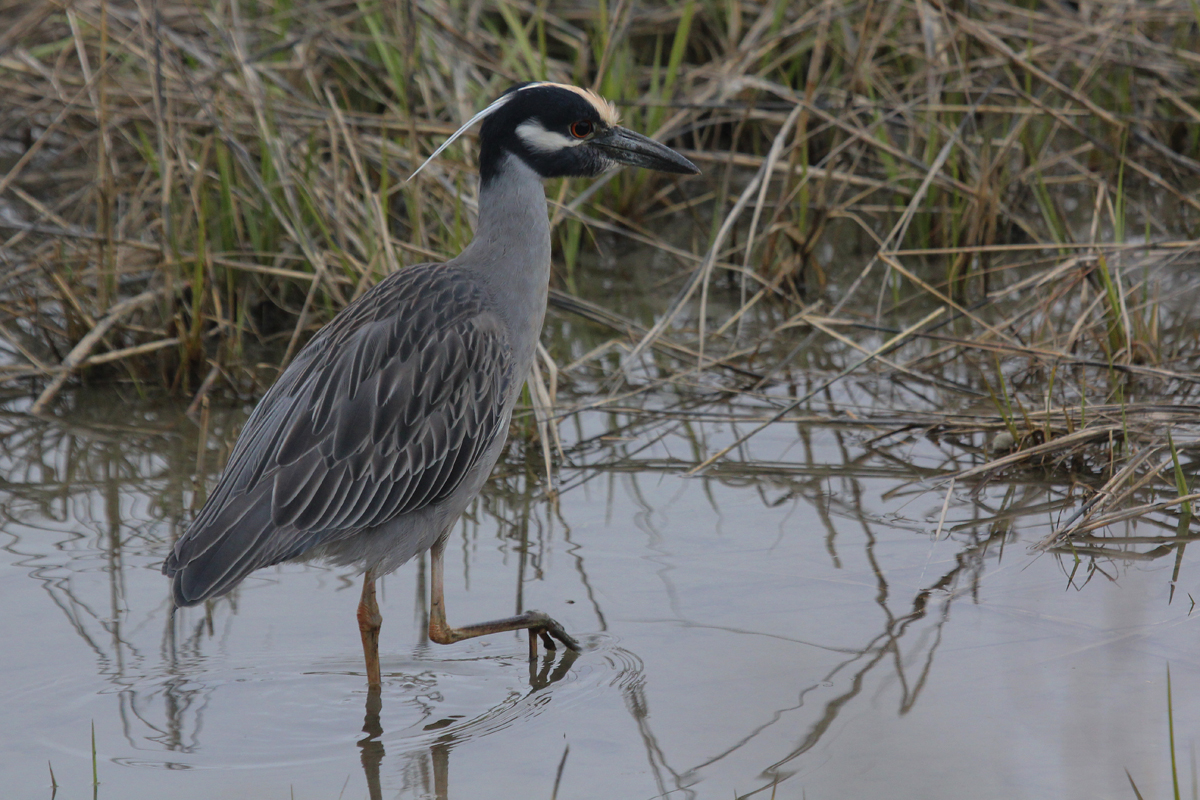
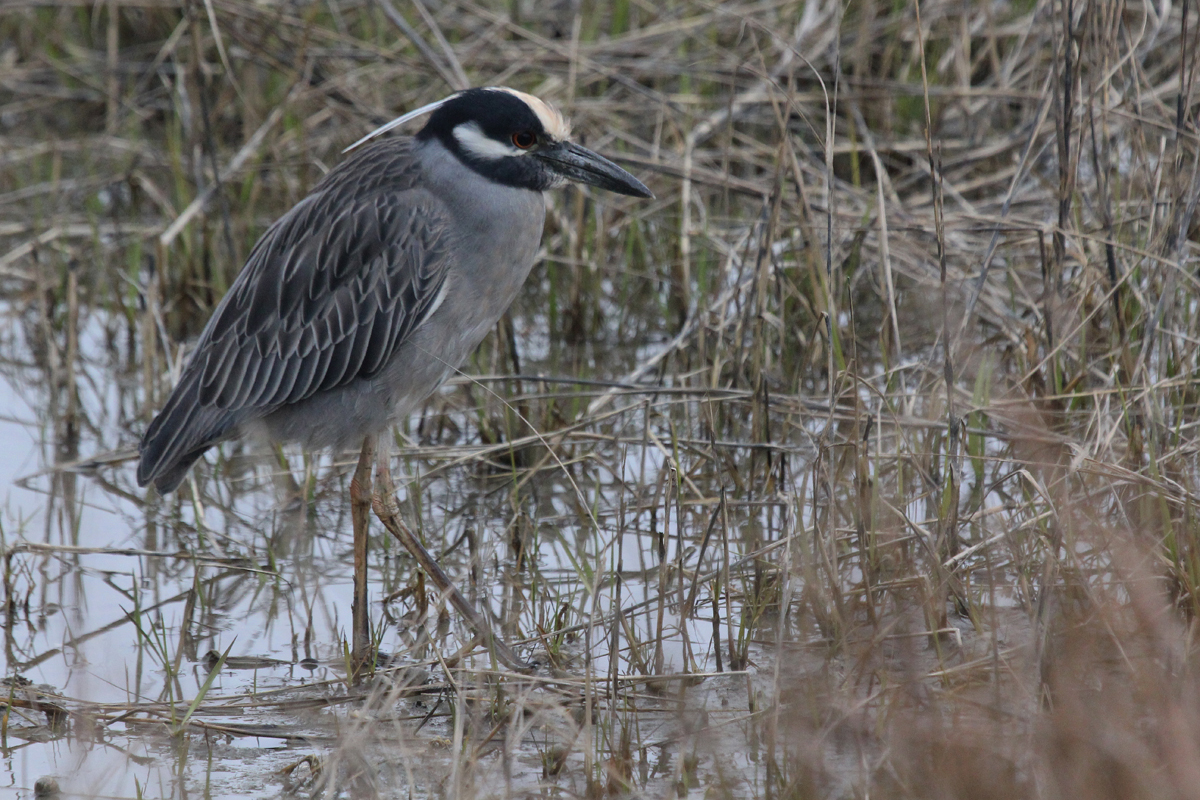
An almost-perfect arrival date was achieved for YELLOW-CROWNED NIGHT-HERON when an adult bird was observed at Pleasure House Point NA on 19 Mar (obs. Bob Swaider, later obs. Jeffrey Marcum). This beat the average arrival date of 20 Mar by just a single day, and moving forward, the species will not flag in eBird until late October (or if someone reports a very high count before then, though 40+ are expected on lists at the park in Jul/Aug!). Last year’s first arrival for the species occurred at the rookery in Thalia, along Dale Drive (please be respectful of this nesting area if you visit). So, it was interesting to get the first report this year from Pleasure House, where they typically start being reported closer to the 1st of April. This species is truly our iconic summer wader, and many have enjoyed snapping a photo (or a thousand) or them as they forage along the banks of the Lynnhaven. Amazingly, at the time of this find, there hadn’t been a single report for the species along the coastline north of Charleston, SC!

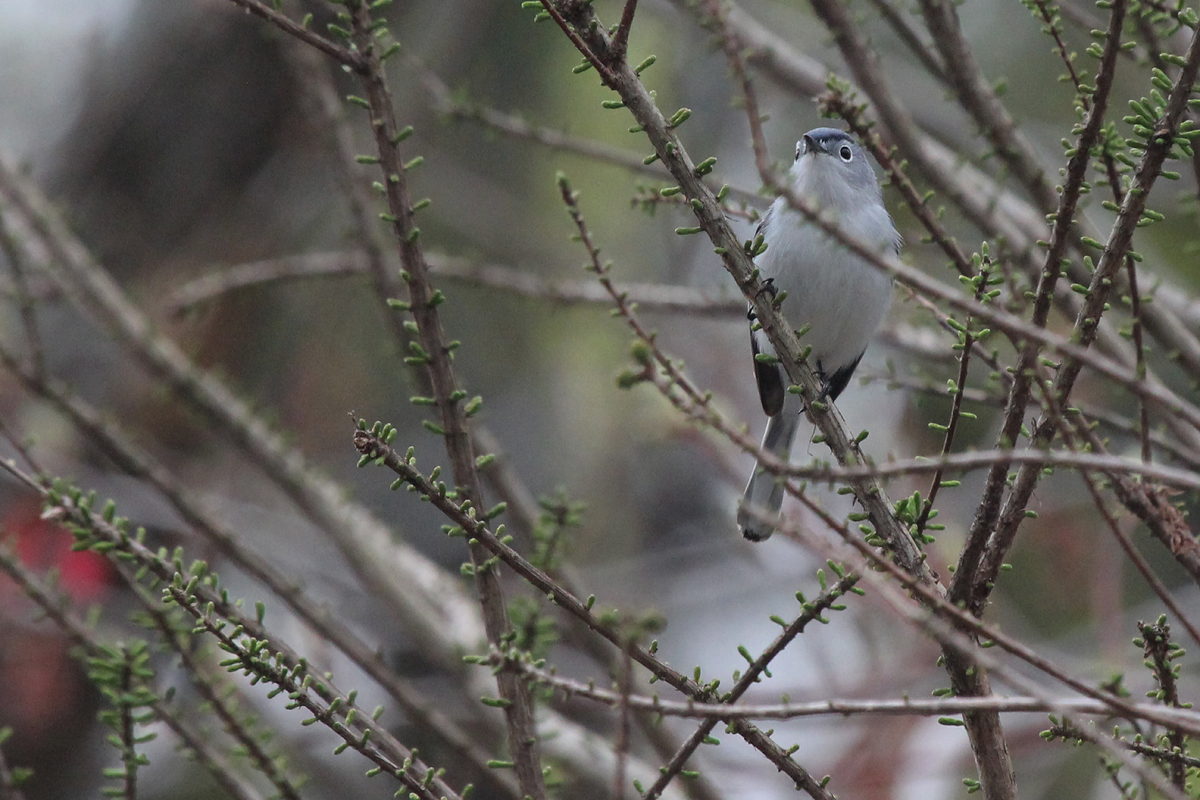
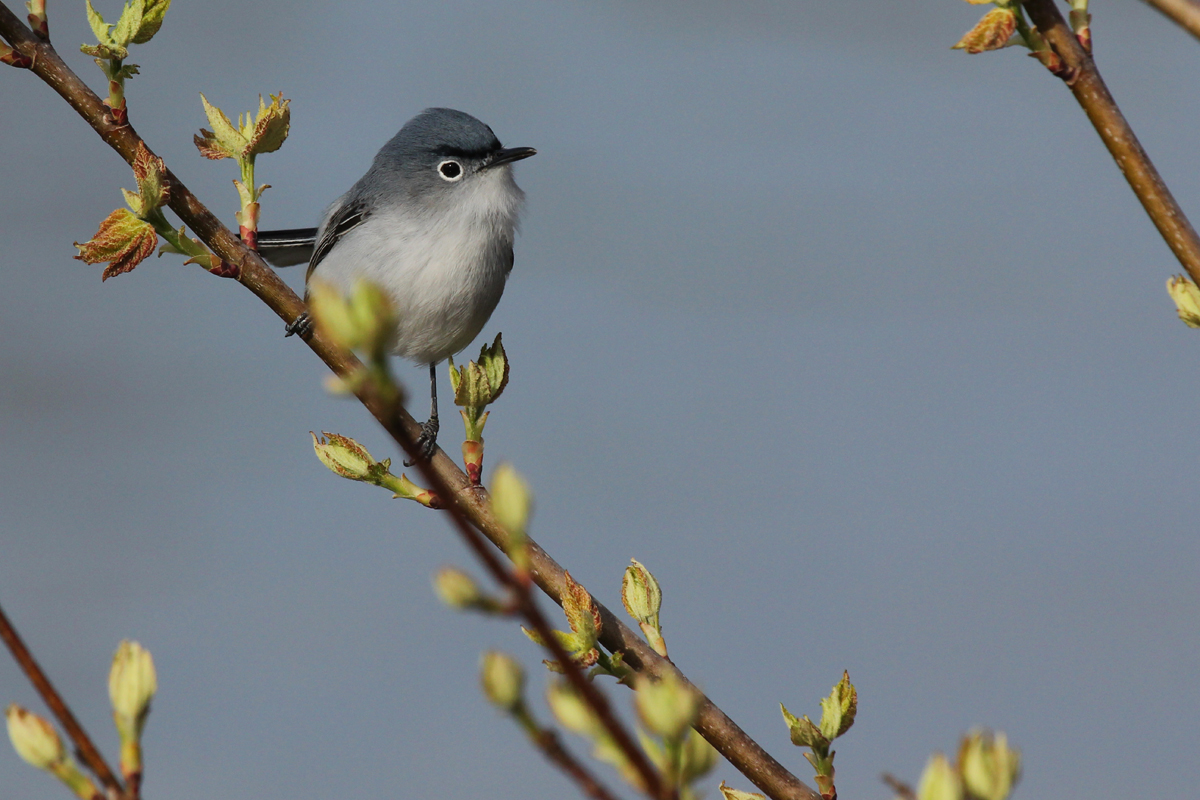
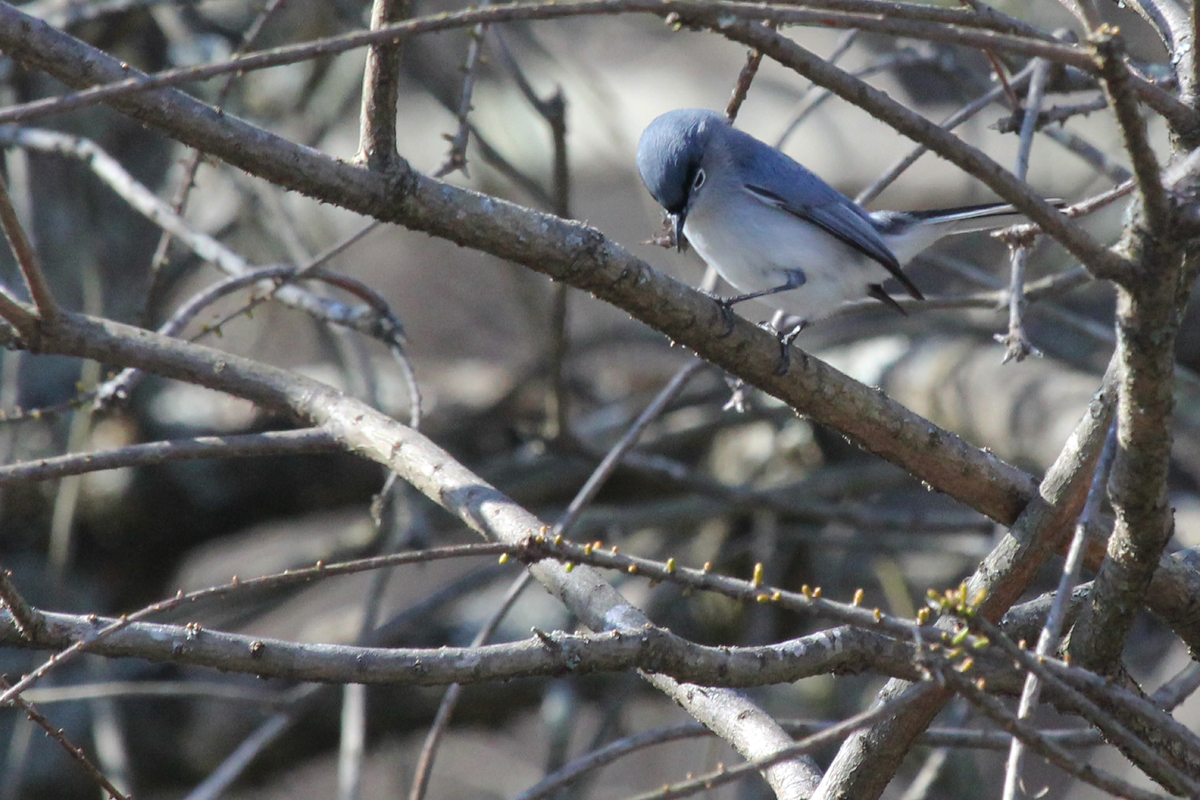
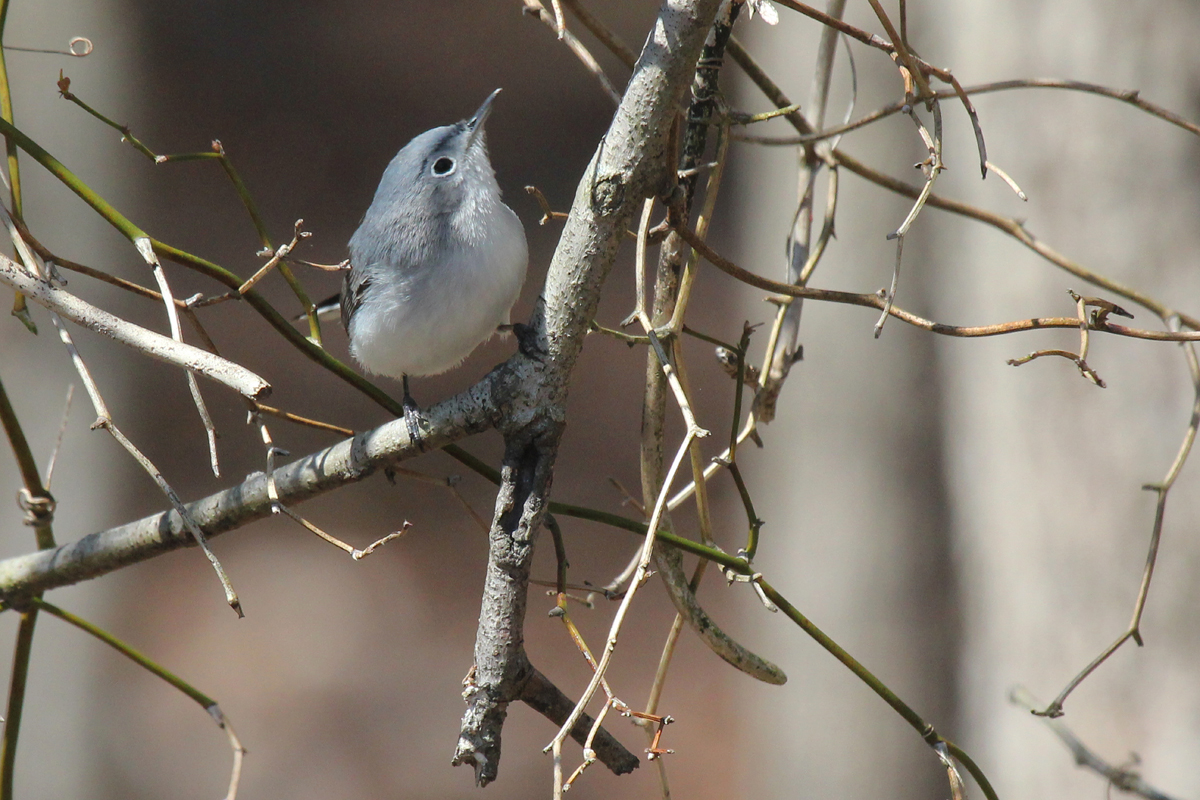
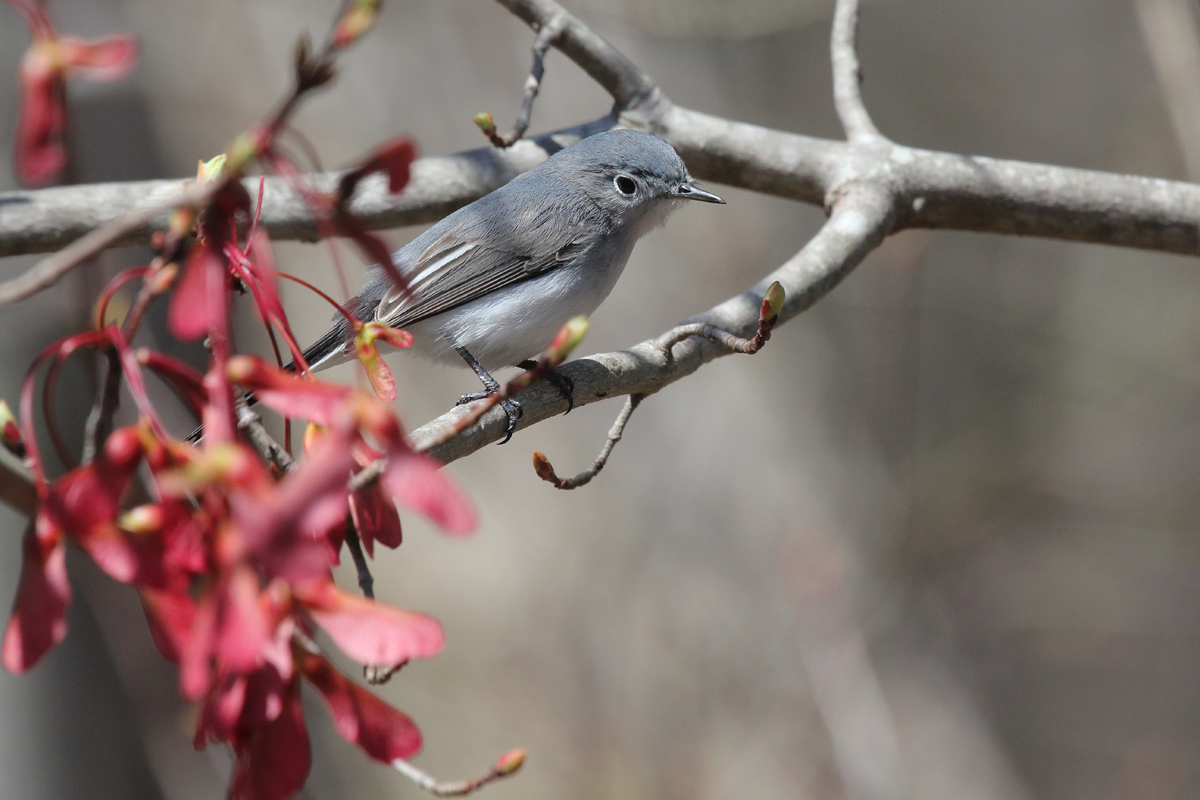
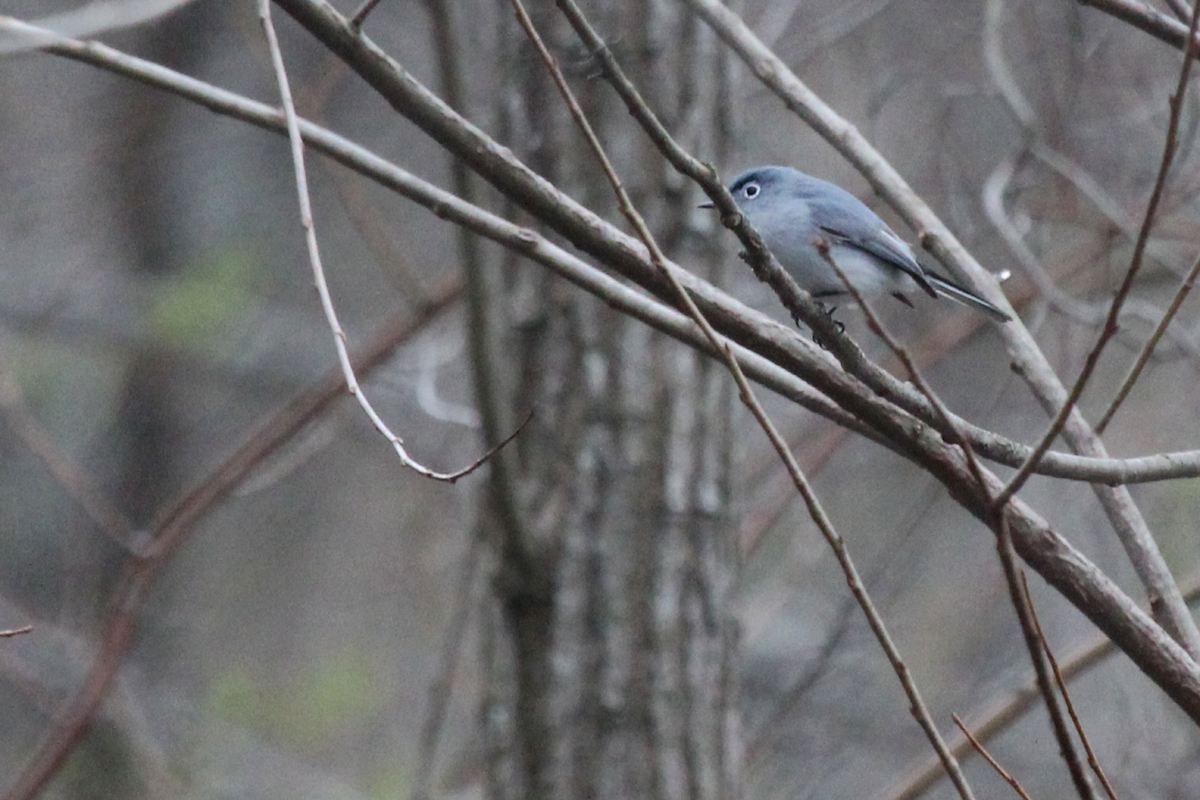
Something I hadn’t previously gotten much into with these journal entries was first-of-season, photographically documented records, but I see some usefulness in mentioning these as I always prefer records on the edge (first/last of seasons, high counts, rarities, etc.) to have hard documentation that will stand up to scrutiny over time. This period, we had several such records, with the first photographed PIPING PLOVER occurring at Back Bay NWR on 15 Mar (ph. Jonathan Snyder). This is actually their exactly set arrival date in eBird for the county, and the overall average here, though the first sight record came last period on 9 Mar. On the same day, but up on the north end of the Oceanfront, a first photo for ROYAL TERN was taken (ph. Rob Bielawski), with the first sight record also having occurred in early March. Lastly in this category, a pair of BLUE-GRAY GNATCATCHERS were photographed at Stumpy Lake on 19 Mar (ph. Rob Bielawski), marking the first arrivals to the park, though a pair was observed on 9 Mar at First Landing SP for the true first-of-season report.

We had quite a few interesting records that are also worth noting here, starting with a photographed occurrence of a GREAT CORMORANT at Rudee Inlet on 11 Mar (ph. Andrew Baldelli / Jason Strickland / Tracy Tate). This record is of interest because the species is very rarely documented away from the area immediately adjacent to the Chesapeake Bay Bridge-Tunnel, and this represents the only individual photographed away from there in the city so far in 2018! What I’d describe more as a first-of-year sighting than a first-of-season sighting for HOUSE WREN goes to an individual heard singing at Back Bay NWR on 16 Mar (obs. Karen & Tom Beatty). Typically, there are reports each winter here along the coast, but this especially brutal winter may have caused a large-scale die-off of this species starting with the blizzard event of early January, or there may have been a mass exodus of birds to the south and out of the path of the storm. For whatever reason, we saw no documented records in Jan/Feb, which seems remarkable! The first BLUE-WINGED TEAL observed away from the closed-to-the-public impoundments at Back Bay NWR occurred on 19 Mar when a pair was reported at Pleasure House Point NA (obs. Jeffrey Marcum). This species is likely present at Princess Anne WMA right now, but with the two main tracts (Beasley & Whitehurst) only open Sundays, it simply lacks in coverage. A COMMON EIDER was reported off of First Landing SP on 11 Mar (obs. Janet Paisley). Two were reported at Rudee Inlet on 4 Mar, but prior to that, the species wasn’t observed previously dating back to 27 Jan when one was at Back Bay NWR. Seawatching at Rudee Inlet on 14 Mar yielded a first Dowitcher sp. report, though it wasn’t certain as to which species (Short-billed vs. Long-billed) this pertained to (obs. Andrew Baldelli), and a 16 Mar seawatch there yielded good numbers (14) of WHITE-WINGED SCOTER as well as a high count (4) of RED-NECKED GREBES in northbound transit (obs. Andrew Baldelli).

WEATHER:  Yet another pair of nor’easters impacted the region during this period (Winter Storms Skylar & Toby). Average daily high temperatures rose a bit after the sharp drop in early March, increasing 1.2° from 49.1° F to 50.3° (-11.0° from prior 10-year average), with average daily low temperatures remarkably dropping 3.4° from 37.0° to 33.6° F (-9.4° from prior 10-year average). Overall, temperatures ranged from a minimum of 27° F (on 17 Mar) to a maximum of 60° (on 16 & 19 Mar). A total of 1.58” of rain fell during the period, spread across four days with measurement amounts, with a maximum of 1.22” falling on Wednesday, 20 Mar. Maximum sustained winds at Oceana this period were 32 mph and gusts reached 46 mph (12 Mar during the nor’easter / winter storm Skylar). A maximum tide level at Sewell’s Point of 4.995 feet above mean-lower-low-water (MLLW) was achieved on 20 Mar at 11:54 PM (rose slightly higher into the next day, more on that next reporting period though). This was associated with Witner Storm Toby, and exceeded the previous 2018 high mark of 4.736 feet on 7 Mar at 1:06 AM. With Daylight Savings Time officially beginning on 11 Mar, Sunrise/sunsets varied from 7:20 AM/7:07 PM (11 Mar) to 7:07 AM/7:15 PM (20 Mar), which means we gained 21 minutes of daylight during this period with a total of 12 hours, 8 minutes of ‘Length of Day’ to close the period!

For those hoping to view every photograph submitted for Virginia Beach during this period, please see the complete listing for the month of March located on eBird’s Media explorer by clicking here! Please remember, anyone with an eBird account also has the ability to rate these photographs (1-5 stars), and based on the average rating, this is how eBird populates anything media-driven on the website, particularly the Illustrated Checklists! So, if you're one of the many folks who enjoy looking at photographs of birds, take some time to click them all and rate them, it helps make eBird better and better each day!

LOOKAHEAD: First arrivals have already been logged for Yellow-crowned Night-Heron, Piping Plover, Blue-gray Gnatcatcher, White-eyed Vireo & Royal Terns so it would be good to check the proper habitat for these as soon as possible! In late March, we have typical departure dates for Razorbill (25 Mar), and for Common Eider, Common Goldeneye & Fox Sparrow (30 Mar). If you observe any of these species near or after those dates, please try to document their occurrence to the best of your ability; it helps make eBird data & filters more accurate! For annually expected spring arrivals, so far we have not yet logged include Purple Martin (15 Mar expected arrival), Lesser Yellowlegs, Yellow-throated Warbler, Glossy Ibis & Northern Rough-winged Swallow (20 Mar), Pectoral Sandpiper & Little Blue Heron (25 Mar), and Broad-winged Hawk, Short-billed Dowitcher, Barn Swallow, Tricolored Heron, Caspian Tern & Cattle Egret (30 Mar). If you observe one of these species before the date listed, please try to document the sightings as best as you can! As always, make sure to report your finds to eBird so the data can be used to adjust the expected arrival dates and to view the full listing of each species’ average expected spring arrival dates, as well as the average expected spring departure datesLASTLY, for those devoted birders who do follow this journal, please know that a Facebook Group that complements all these sightings has been created, titled the Virginia Beach Bird Sightings & Discussion group. For anyone with a sincere interest in our city’s rich tapestry of bird species, please feel free to check it out, by requesting to join at the link above.

Next Entry | Entry Index | Previous Entry

For further information regarding this thrice-monthly, online publication, please visit the Journal Overview Page which provides an in-depth explanation of the format, layout and composition of the journal. As always, thank you for reading, and please leave me a comment below (you may use your Facebook, Gmail or other accounts to easily do so), or just click the Heart icon to the lower right of this post to let me know you stopped in!
Early March 2018 (1st-10th)

After record-setting heat during the late February reporting period, temperatures plummeted in early March, recalling a similar situation in 2017. A pair of nor’easters (dubbed Winter Storm ‘Riley’ and ‘Quinn’ by The Weather Channel and affiliates) impacted the region during this period, bringing impressive northwest and eventually north winds to our coastline. Fortunately, not much in the way of precipitation occurred here, though New England witnessed the more extreme side of the storm. Unfortunately, the wind field (which amazingly caused the Chesapeake Bay Bridge-Tunnel to close for an entire day) didn’t seem to bring many birds inshore, rather, it appeared to push all the coastal birds further offshore and also forced all the land birds to seek refuge wherever possible. With this difficult weather, observations of unusual birds were tough to come by locally, that is, until the final two days of the period when spring arrival and rarity records suddenly blossomed! Top records for the period did include new rarity reports for DOVEKIE, WHITE-CROWNED SPARROW & RUSTY BLACKBIRD, continuing rarity reports for EURASIAN WIGEON, BLACK-HEADED GULL & ICELAND GULL and early first-of-season (FOS) reports for PIPING PLOVER, BLUE-GRAY GNATCATCHER & ROYAL TERN!

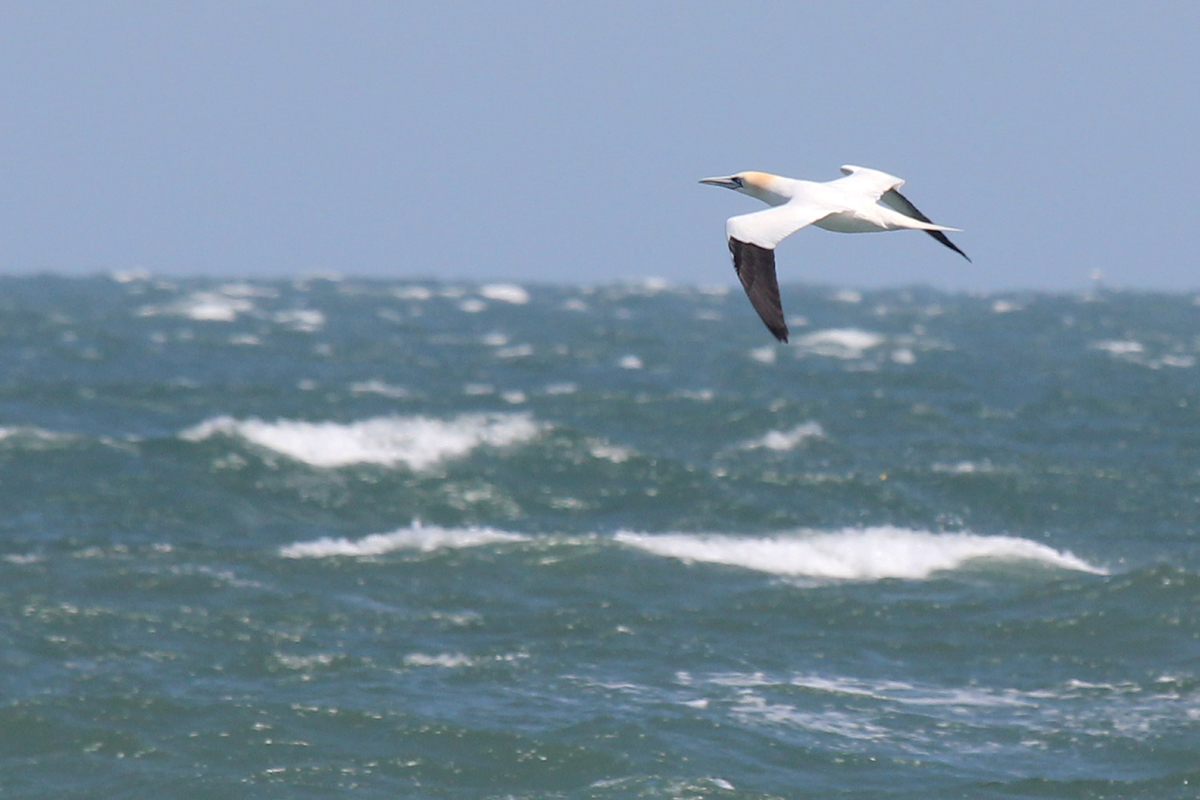
Photographs above were all taken 3 Mar at Rudee Inlet during the first of a pair of Nor'easters to impact the region during early March! Still waiting on my camera to be repaired & returned by Canon so sadly, all I have is some scenery photos off my wife's point & shoot for this entry. I hope to be back in business in mid-March.

Yet again, the top bird for the period was produced at Little Island Park, this time being a single flyby DOVEKIE (obs. Andrew Baldelli & Tracy Tate) on 9 Mar! Not seen in Virginia Beach since very early in the ‘winter’ season, when an individual was reported at this same location on 4 Nov, this newer report currently represents the only known occurrence in the state for 2018. Of course, there’s probably quite a few of the birds hanging around offshore, but unfortunately there was no pelagic birding trips assembled to go look for this and other seafaring species. Last year, some 25+ Dovekies were tallied during the large-scale alcid movement that also brought us a state first Ancient Murrelet, but conditions this year didn’t follow suit, with even Razorbills numbers just a tiny fraction of what was observed last year. That said, it’s great to get this species up on the Virginia Beach list for 2018!

The first adult WHITE-CROWNED SPARROW to be observed in the city this year was found on 9 Mar at Dam Neck NA (obs. Karen & Tom Beatty). Typically, we see far more immature birds than the adults here, with most adults occurring during the species peak fall migration movements in mid to late October. Earlier this winter on 18 Jan an immature bird was seen in the same general area which could indicate either that the habitat is good for the species, and more than one could have been present all winter, or that the immature bird has gone through an early molt, and is now the adult plumaged bird that was observed.

As with last period, a single RUSTY BLACKBIRD occurrence was noted during early March, this time at Red Wing Park on 1 Mar (obs. Karen & Tom Beatty). This is now only the second individual reported in Virginia Beach since the spring of 2017, and like the one at Stumpy Lake NA reported before it, this one also occurred in a freshwater flooded forest habitat. With large numbers of the birds usually wintering in the Great Dismal Swamp not far to our west, it is always surprising that so few are reported within Virginia Beach, but they’re likely present at First Landing SP as well since the habitat is another match. With the large flocks of mixed blackbirds roaming around southern Virginia Beach, one would think there’d be a few of these associated with the groups also, but the eBird data doesn’t seem to support that thought for whatever reason.

As far as continuing rarities go, the drake EURASIAN WIGEON first found at Pleasure House Point NA on 11 Feb (obs. Jason Schatti), and then re-found roughly a mile to the west at Lake Joyce near Shore Drive on 19 Feb (ph. Timothy Barry) continued to be noted through the end of the period (last ph. Logan Anderson & George Burruss). It has continued to be most reliable on the tributary finger of Lake Joyce immediately north of Shore Drive, to the east of Dubay Properties / Law Offices, with all records during this period occurring at this location.

Thought to be long gone, the first cycle BLACK-HEADED GULL first identified 31 Jan (ph. Andrew Baldelli), and later found to have been present dating back to 28 Jan (ph. Marie & Ron Furnish) was again seen at Rudee Inlet on 2 Mar (ph. Andrew Baldelli) after having not been reported since 17 Feb! However, it was not seen again during early March, and it is possible that it has moved on (maybe).

At least two different ICELAND GULLS were observed at the tail end of the period, with an immature (first cycle) found at 76th Street Beach (obs. Jason Schatti, later ph. Jason Schatti on 10 Mar) on 9 Mar and an adult Kumlien’s-race individual seen at 57th Street Beach (obs. Andrew Baldelli & Tracy Tate, later ph. Karen & Tom Beatty) on 10 Mar. The adult is likely the same bird that has been present along the north end of the Oceanfront since 20 Dec (ph. Andrew Baldelli), and the younger bird could be a new record, or one that has been reported anywhere from Rudee Inlet to Lynnhaven Beach to the Chesapeake Bay Bridge-Tunnel Islands throughout the winter; unfortunately no way to tell for sure. 57th Street is an ideal spot to continually check since there is available (free) public parking on the street. Gulls seemed to be concentrated around this location and up near 76th Street where a large amount of vegetation has washed ashore with the strong winds over the last few days.

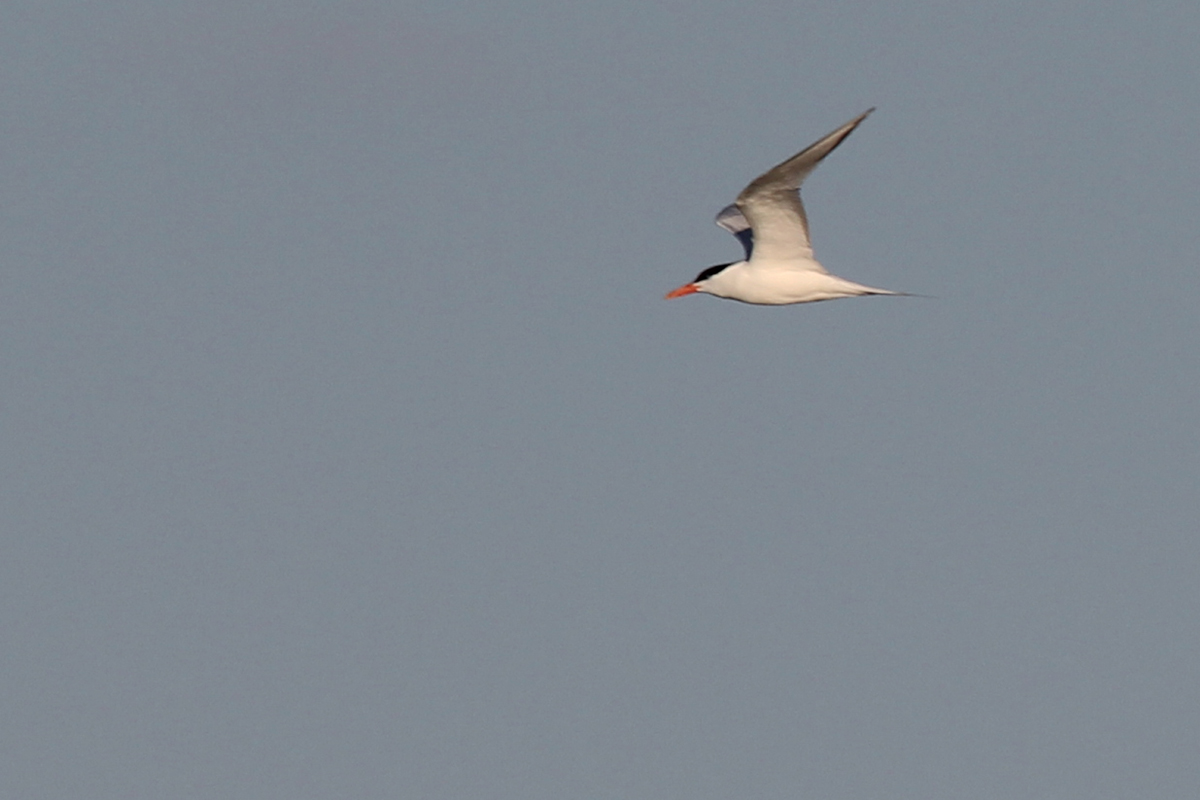
Though you wouldn’t be able to tell from the recent weather (or the upcoming couple of days for that matter), spring really has started to arrive. With it, comes some first of season arrivals this period! On Friday, 9 Mar, a pair of PIPING PLOVERS was observed at False Cape SP (obs. Abby Walter). Typical arrival date for this species is 15 Mar, so these are a few days on the early side (last year’s first record was 17 Mar, and 2016's was 25 Mar for a quick comparison). Also, on Saturday, 10 Mar, two BLUE-GRAY GNATCATCHERS were reported at First Landing SP (obs. Eric Gehring), which means the species is likely already present in locations like Stumpy Lake NA and perhaps West Neck Creek NA. With an average expected arrival date of 20 Mar, these are certainly early, though given this species typically winters just to our south in North Carolina, it is usually the first of the passerines to return each year (last year’s arrival date was 21 Mar, a bit later than 2016’s date of 14 Mar). The last of the new arrivals was that of two ROYAL TERNS observed flying northbound past Rudee Inlet on 10 Mar (obs. Andrew Baldelli & Tracy Tate). Like the Piping Plovers above, this species has an average arrival date of 15 Mar, so we’re a tad early on these too (last year’s arrival was 17 Mar, and 2016’s was 12 Mar). Moving forward, we’ll see an ever-increasing number of arrivals through May, so we have a lot to be excited about now that the mid-Feb to early March doldrums have come and gone!

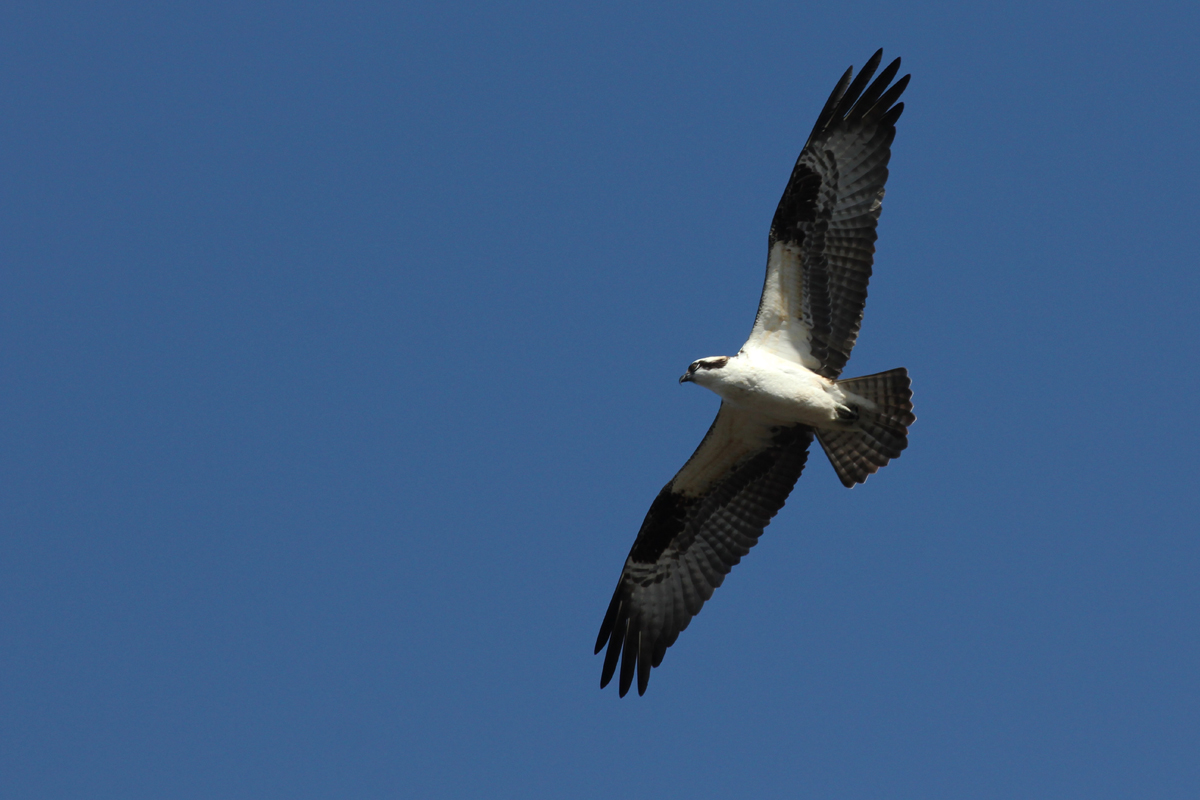
In addition to all the rarities and new arrivals, several species currently in migration were noted. Snow Geese were observed in southern Virginia Beach in large gatherings, with 4,300 reported along Morris Neck Road on 1 Mar (obs. Andrew Baldelli) with 2,000 observed at the same location on 3 Mar (ph. Karen & Tom Beatty). A pair of Common Eiders was observed flying with a group of scoters at Rudee Inlet on 4 Mar (obs. Tracy Tate), making this the first report of the species dating back to 27 Jan when one individual was viewed at Back Bay NWR (obs. Matt Anthony / Rob Bielawski / Todd Day). Perhaps as many as 4 or 5 Red-necked Grebes were reported during the period, with a pair off Little Island Park 6 Mar (obs. Andrew Baldelli), and 1-2 at Rudee Inlet (obs. Elaine Hendricks). A seawatch to kick off the period on 1 Mar showed American Oystercathers, Black-bellied Plovers and Razorbills in motion as well (obs. Andrew Baldelli). Lastly, Ospreys began popping up at locations around the city where they weren’t observed through the winter, including one at Little Island Park on 1 Mar (obs. Andrew Baldelli), one at Camp Penleton SMR on 3 Mar (obs. Karen & Tom Beatty), and another at Stumpy Lake NA on 4 Mar (obs. Jonathan Snyder). A pair of first-of-year Saltmarsh Sparrows was also found at Pleasure House Point NA on 8 Mar (ph. Doug Graham)!

WEATHER:  After enduring record setting heat in late February, the mercury plummeted in early March due to the passage of a pair of nor’easters. Average daily high temperatures dropped an incredible 18.2° from 67.3° F in late February to 49.1° (-6.9° from prior 10-year average), with average daily low temperatures also dropping 8.5° from 45.5° to 37.0° F (matching the prior 10-year average). Overall, temperatures ranged from a minimum of 28° F (on 9 Mar) to a maximum of 57° (on 1 Mar, riding on late February’s heat). A total of 0.84” of rain fell during the period, spread across three days with measurement amounts, with a maximum of 0.54” falling on Tuesday, 6 Mar. Maximum sustained winds at Oceana this period were 39 mph and gusts reached an impressive 53 mph (2 Mar during a coastal nor’easter). A maximum tide level at Sewell’s Point of 4.736 feet above mean-lower-low-water (MLLW) was achieved on 7 Mar at 1:06 AM as a nor’easter scraped up the coast. This is a new high mark for the year. Sunrise/sunsets varied from 6:34 AM/5:58 PM (1 Mar) to 6:22 AM/6:06 PM (10 Mar), which means we gained 20 minutes of daylight during this period!

For those hoping to view every photograph submitted for Virginia Beach during this period, please see the complete listing for the month of March located on eBird’s Media explorer by clicking here! Please remember, anyone with an eBird account also has the ability to rate these photographs (1-5 stars), and based on the average rating, this is how eBird populates anything media-driven on the website, particularly the Illustrated Checklists! So, if you're one of the many folks who enjoy looking at photographs of birds, take some time to click them all and rate them, it helps make eBird better and better each day!

LOOKAHEAD: The biggest cause for excitement in mid-March has to be knowing that Daylight Savings Time starts in the early morning hours of 11 Mar (has already happened by the time this is being posted!), so post-workday birding will once again become a reality for many of us very soon! Also, a 3rd March Nor'easter is expected to hit the area on the 12th/13th, and the onshore winds could bring in something interesting! As to the birds, somehow, we’ve yet to log a single Black Skimmer in the city so far in 2018! Usually there is a small population of these birds hanging around Lynnhaven Inlet through the winter, though sometimes departing for up to a month in the coldest parts of the winter. That said, it seems a bit crazy that heading into mid-March, the species has yet to be observed here, and in the state as a whole! Perhaps we’ll finally see their return in the coming days. Arrivals were already logged for Piping Plover, Blue-gray Gnatcatcher & Royal Terns so it would be good to check the proper habitat for these as soon as possible! Mid-March is the first period where we have expected spring departures, with Snow Goose considered late beyond 20 Mar, so if you haven’t been out to Pungo recently, your time is running out to see these birds before the flocks move north. Fortunately, mid-March also kicks off the time of expected spring arrivals for annually occurring species (only those not yet logged are provided here) which include Purple Martin (15 Mar) as well as Lesser Yellowlegs, Yellow-throated Warbler, Glossy Ibis, Northern Rough-winged Swallow & Yellow-crowned Night-Heron (all 20 Mar). If you observe one of these species before the date listed, please try to document the sightings as best as you can, since it’ll flag as ‘rare’ in eBird. As always, make sure to report your finds to eBird so the data can be used to adjust the expected arrival dates and to view the full listing of each species’ average expected spring arrival dates, as well as the average expected spring departure dates!
Next Entry | Entry Index | Previous Entry

For further information regarding this thrice-monthly, online publication, please visit the Journal Overview Page which provides an in-depth explanation of the format, layout and composition of the journal. As always, thank you for reading, and please leave me a comment below (you may use your Facebook, Gmail or other accounts to easily do so), or just click the Heart icon to the lower right of this post to let me know you stopped in!